Archive | biography RSS feed for this section

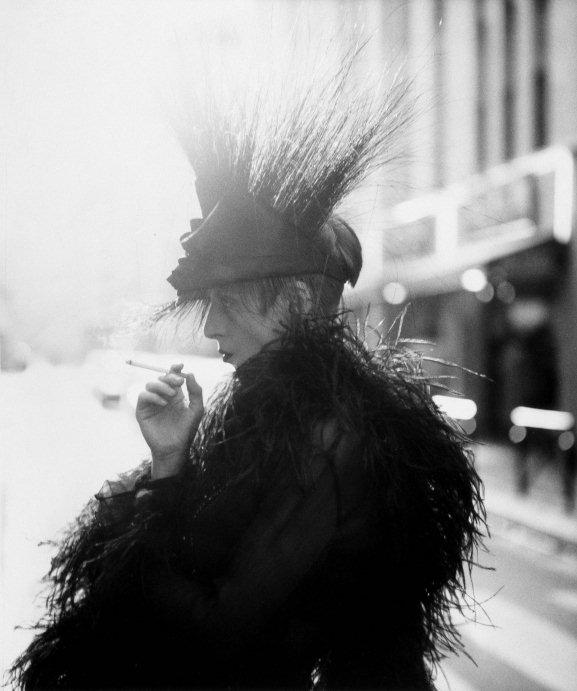
Isabella Blow lived fashion like no other

18 Nov

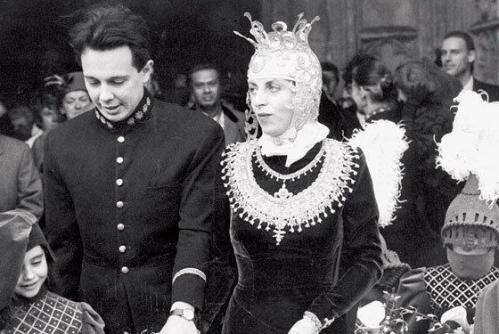
Dressed as Joan of Arc in costume armour with a  chain mail headdress, it was a typically dramatic picture of Isabella Blow and  as part of a prestigious feature on British fashion icons in Vanity Fair  magazine, it should have been one of the crowning glories of a legendary career.
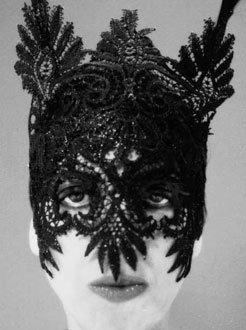
 

Isabella Delves Broughton (Issie) was born 19 November 1958  in Marylebone, London. Isabella had two sisters, Julia and Lavinia, and a brother, John, who drowned in the family’s swimming pool at the age of two. In 1972, when she was 14, her parents separated and her mother left the household, bidding each daughter farewell with a handshake. Her parents divorced two years later. Isabella did not get along with her father, who bequeathed her only £5,000 from his estate, which was worth more than one million pounds.
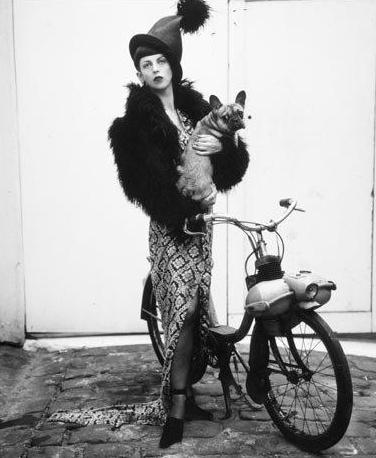
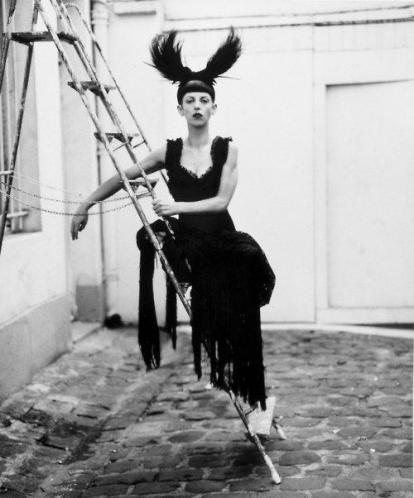
Isabella Blow……I‘ve done the most peculiar jobs. I was working in a scone shop for years, selling apricot-studded scones. I was a cleaner in London for two years. I wore a handkerchief with knots on the side, and my cousin saw me in the post office and said, What are you doing? I said, What do you think I look like I’m doing? I’m a cleaner!

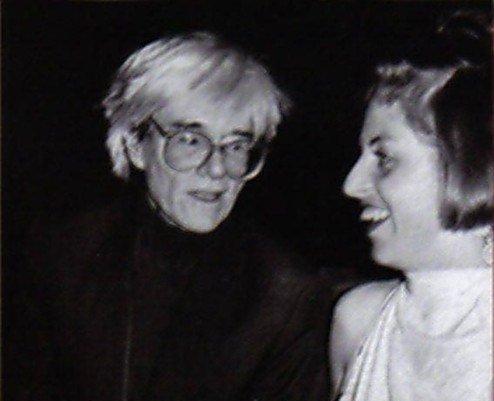
In 1979 Isabella moved to New York to study Ancient Chinese Art at Columbia University and shared a flat with the actress Catherine Oxenberg. A year later she moved to Texas and worked for Guy Laroche. In 1981, Issie married her first husband, Nicholas Taylor (whom she divorced in 1983), and was introduced to the fashion director of American Vogue, Anna Wintour. She was hired initially as Wintour’s assistant, but it was not long before she was assisting Andre Leon Talley, now Vogue’s editor-at-large. While working in New York, she befriended Andy Warhol and Jean-Michel Basquiat. Both ended up doing assignments for Vogue as a result of  Issie’s introductions.
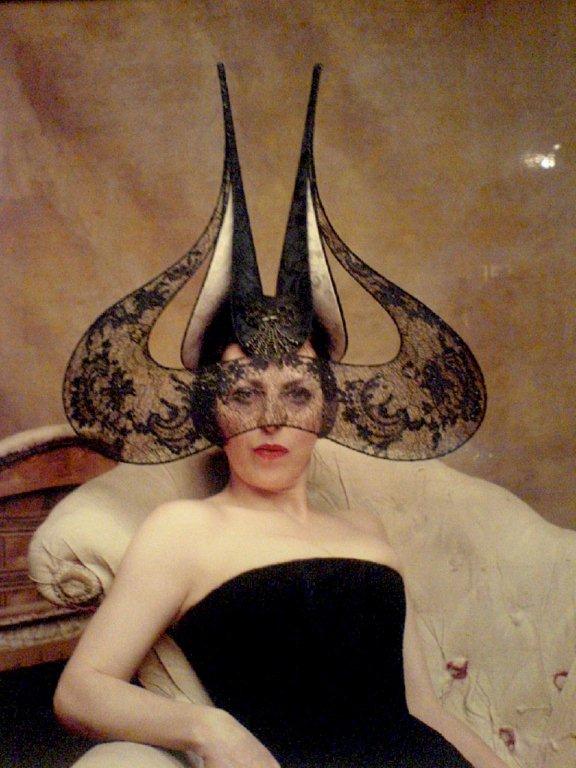
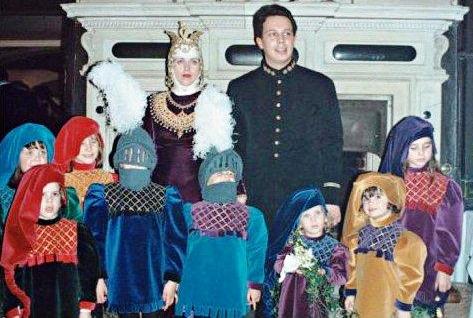
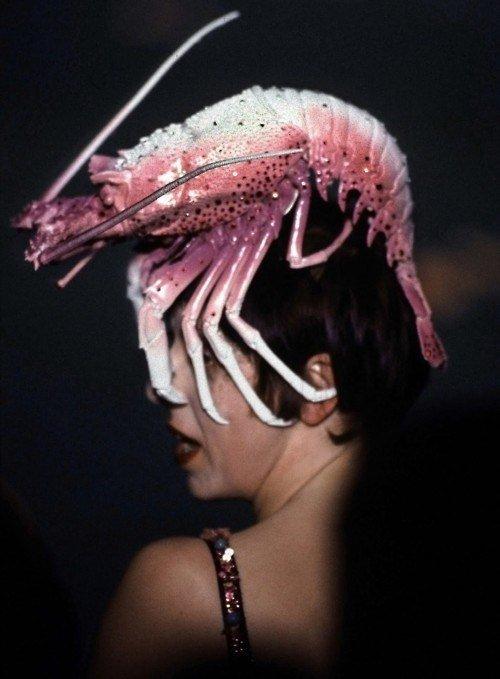
In 1986, Isabella Blow returned to London and worked for fashion director Michael Roberts (Tatler and the Sunday Times Style magazine). Two years later she married her second husband, art dealer Detmar Hamilton Blow (he is a grandson and namesake of the early 20th-century society architect Detmar Blow). Milliner Philip Treacy designed the bride’s wedding headdress and a now-famous fashion relationship was forged.
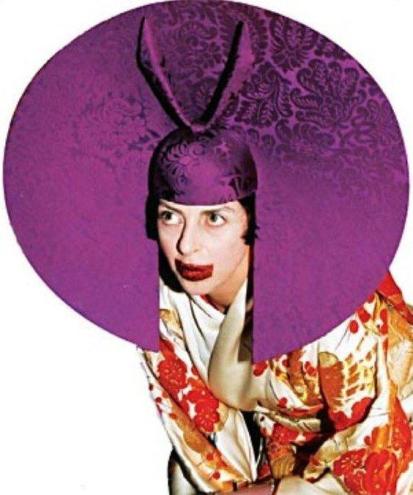
Why  the hats? ‘ ….to keep everyone away from me. They say, Oh, can I kiss you?  I say, No, thank you very much. That’s why I’ve worn the hat. Goodbye. I don’t want to be kissed by all and sundry. I want to be kissed by the people I love.

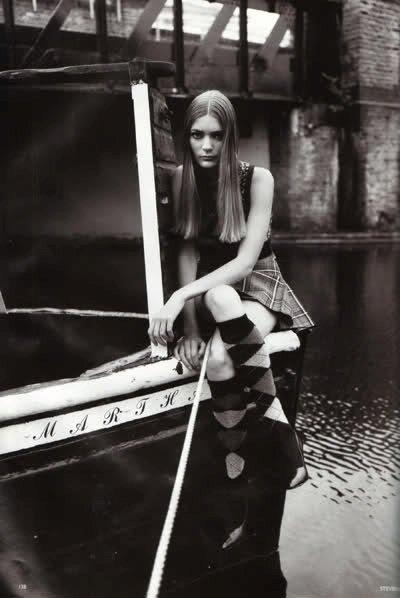
In 1993, Isabella worked with photographer Steven Meisel producing the Babes in London shoot featuring Stella Tennant, Plum Sykes, Bella Freud and Honor Fraser. Isabella had a natural sense of style and a good feeling for future fashion directions. Spotting Sophie Dahl, she described Dahl as “a blow up doll with brains”, and launched the model’s career. During the Babes shoot, Issie told Stella Tennant, ‘If I  make you famous, I want a bottle of my favourite perfume.’ A bottle of Fracas duly arrived. 

Isabella Blow & Alexander McQueen

Detmar Blow……One of the main reasons my wife became the fashion icon she did was because of her passion for combing the streets in her endless quest for new designers. And her biggest discovery was undoubtedly the incredible talent of Alexander McQueen. I clearly recall how she returned home in London’s Pimlico one evening in  June 1992, enraptured by the graduate show of a 23-year-old student from Central  St Martins College of Art and Design. There had been no seats left, so Issie simply sat on the stairs and watched  the clothes go past her. The student’s name was Lee Alexander McQueen. ‘Det, his clothes move like birds,’ she told me. ‘He can cut material like a god.’ From that very first moment, Issie, who was 33, knew that here was a fashion  genius, the likes of which are seen just once in a lifetime.

Isabella bought his entire postgraduate collection, which he presented to her in a binbag, for £5,000, paying in weekly installments of £100, and made herself part of his world. She introduced her favourite milliner to her favourite fashion designer, and the two have collaborated ever since. ‘They both love birds,‘ she explains.
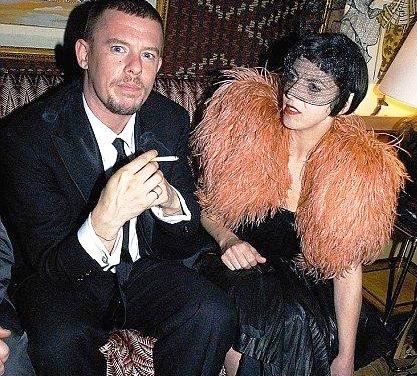
Detmar Blow, recalls the deep bond that united the designer and his muse. I first met Alexander when Isabella invited him to live with us at 67 Elizabeth Street in Belgravia. We were on the top floor, Philip Treacy on the first, and Alexander was on the ground. Issie was working at British Vogue at the time.

Detmar Blow …Issie was the one who suggested that McQueen use his middle name, Alexander, for his designs, as she thought it sounded nobler  –  like Alexander the  Great. And she was a deeply significant creative influence for him, as he acknowledged when he dedicated his fourth show in 1994 to her.

In 1996 Alexander McQueen became chief designer at Givenchy, certainly not without Isabella’s help and determination. But Alexander didn’t give her a job, instead he took Katy England with him to Givenchy. Isabella was very hurt.

Detmar Blow…. his treatment of her, once he hit the big time as chief  designer at Givenchy in 1996, all the more deplorable. Brutally, after all the help she had given him, McQueen did not find a role  to give Issie at the fashion house. But, despite the hurt, Issie was determined to stay friends with her former protégé. She would continue to be given pride of place in the front row of his  shows and he was always welcome down at Hilles. But the balance of power had shifted….
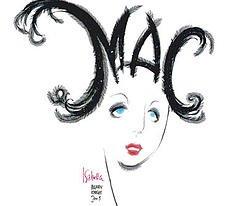
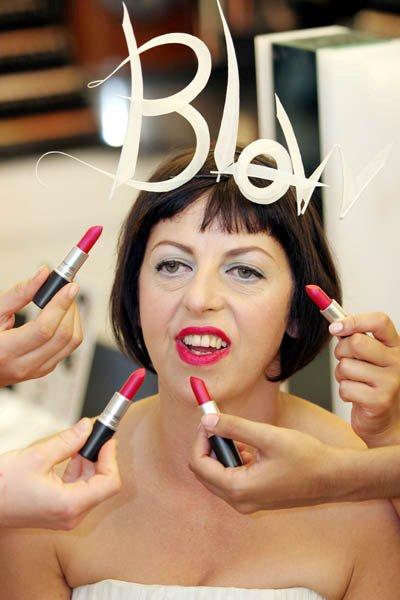
Isabella became fashion director of Tatler and consulted for DuPont Lycra, Lacoste, and Swarovski. In 2002, she became the subject of an exhibition entitled When Philip met Isabella, featuring sketches and photographs of her wearing Treacy’s hat designs. In 2004, she had a brief acting cameo in the film The Life Aquatic with Steve Zissou and in 2005 she starred in a project by artist Matthieu Laurette, commissioned and produced by Frieze Projects 2005 and entitled “What Do They Wear at Frieze Art Fair”. In the same year MAC cosmetics honoured her with a lipstick (named of course): Isabella. 
Toward the end of her life, Isabella had become seriously depressed and was reportedly anguished over her inability to “find a home in a world she influenced“. Although Isabella continued to produce incredibly creative shoots, her depression really took hold. In 2003, she had her first spell in a mental health clinic. On 6 May 2007 Isabella made her seventh suicide attempt. When Detmar got to her hospital bedside after she had swallowed poison (weedkiller), he dared hope she might survive, even though a nurse told me she was dying.

After her death, Detmar Blow confirmed that his wife suffered from depression and that she had once declared, “I’m fighting depression and I can’t beat it”.
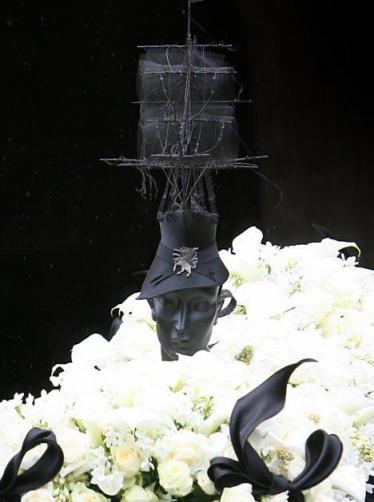
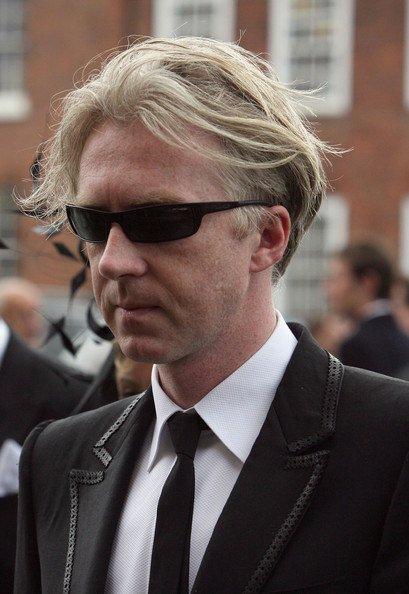
At the funeral in 2007, Alexander McQueen was utterly devastated, distraught. Isabella was buried in McQueen, in a red-and-gold brocade dress. Alexander McQueen, Philip Treacy and her sister Julia helped dress the body.
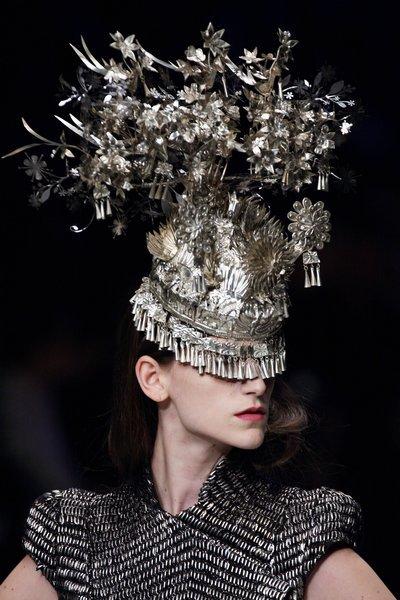
Alexander McQueen tribute Spring 2008 show: La Dame Bleue

On entering the white-on-white space the mood had an affectionate nostalgia for Issie Blow, whose favourite Robert Paguet scent, Fracas had been sprayed liberally around the room and pink boxes containing fragrance were on the seats: all denoted that this would be a fitting tribute ~ love was in the air. As her two most successful discoveries and close friends, Philip Treacy and Alexander McQueen collaborated on the show in tribute to Issie
.

.

The brilliantly eccentric, beautiful and iconic Isabella Blow lived fashion like no other.

.

.
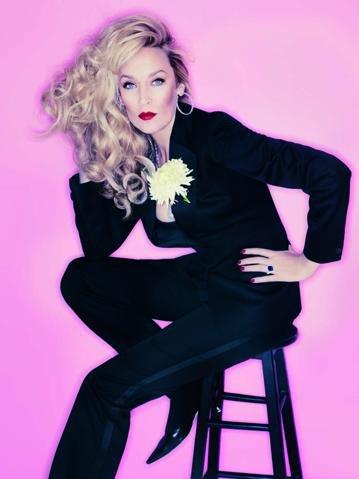
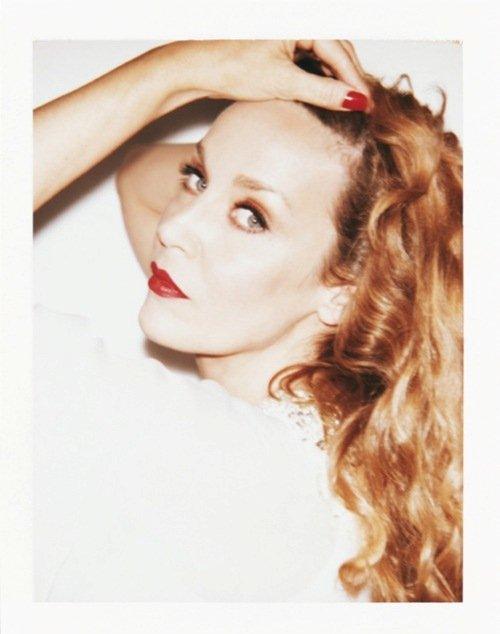
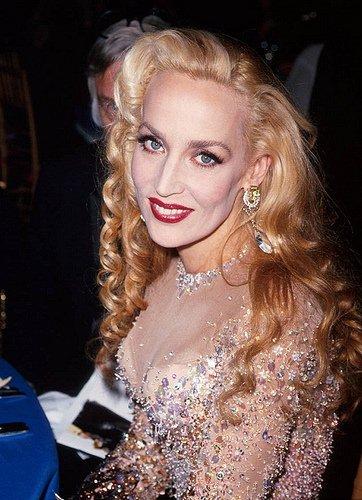
Jerry Hall, first generation supermodel

4 Nov

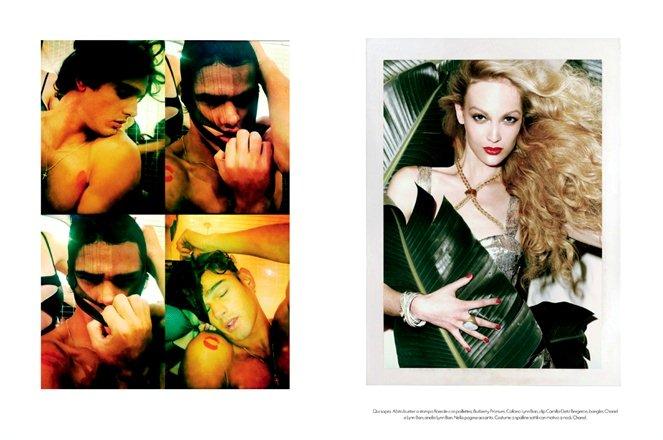
Watching photographs of Jerry Hall in the book Antonio Lopez: Art, Sex & Disco a memory popped in my head: when I was fifteen, I covered my bedroom with her magazine covers and fashion pictures. Those days Jerry was the it girl. After a while I’d gathered lots of pictures in which the main colour was blue (blue sky, blue bathing suit, blue dress or blue eye make-up) and I decorated a whole wall with them. (I was already a very stylish girl) The Vogue cover underneath was in the centre of my ‘Blue Jerry Hall Wall’. I assume Jerry Hall was my first muse….

Jerry Faye Hall and her twin sister Terry were born on July 2, 1956 in Gonzales, Texas. Still young she attended the Kim Dawson Modeling Agency and at sixteen, she used the insurance money she received following a car accident, to move to France (with a suitcase full of Frederick’s Of Hollywood knockoffs made by her mum).

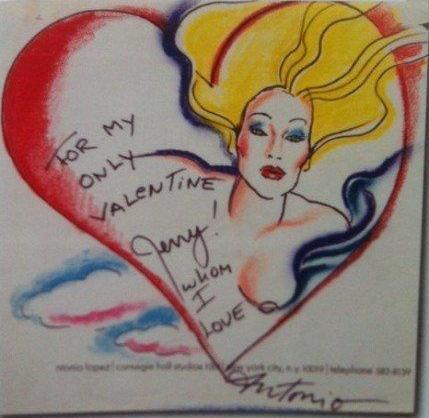
Jerry was staying at the French Riviera, when she was discovered sunbathing on a Saint Tropez beach by fashion agent Claude Haddad. Soon she moved to Paris where she shared an appartement with Grace Jones, who was also pursuing a modeling career. Together Jerry and Grace immersed themselves in the Parisian nightlife, often performing risqué cabaret acts in clubs and at parties. In famous Club Sept Jerry mesmerized fashion illustrator Antonio Lopez , who immediately started working with her.


To Antonio Lopez, Jerry was the personification of his illustrations and with the changes he made in her appearance, she became the model everybody wanted to work with. It wasn’t the first time, Antonio had discovered and transformed a girl into a sought-after model. Jerry moved in with Antonio. She fell in love with him and because he didn’t want to lose her to another illustrator or photographer they got engaged. They were the couple everybody wanted to be acquainted with. The engagement only lasted  a few months.

Jerry Hall’s first fashion show was Yves Saint Laurent at which she wore his famous tuxedo and her first photographer was Helmut Newton. Her modeling career took off instantly. At nineteen she appeared on the cover of Roxy Music’s album Siren. Five months later, lead singer Bryan Ferry gave her an engagement ring, Jerry was 19 and Bryan Ferry 30She also appeared in the video for his solo hit ‘Let’s Stick Together’. By 1977 Jerry had been on forty magazine covers including Italian Vogue and made thousands of dollars a week. She was the face of Yves saint Laurent Opium perfume and Revlon cosmetics.

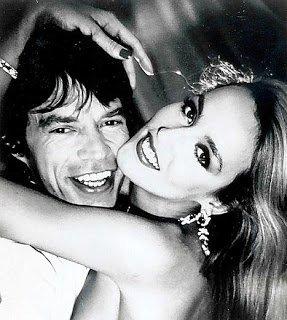
Jerry Hall and Bryan Ferry were the coolest couple in London and invited everywhere, including to dinner by Mick Jagger. Bryan saw that Mick was smitten with Jerry and at the end of the evening Mick brushed his leg next to hers. “I felt an electric jolt!”, Jerry remembers. Mick Jagger began turning up regularly at the home Jerry and Bryan shared. One night, while Bryan was on tour, Jerry was seated between Jagger and Warren Beatty at a dinner in New York City. “It was May 21, 1977… We would celebrate that day for the next 23 years”, Jerry wrote in her biography. They began an affair.

When Bryan Ferry’s tour ended later that summer, he took Jerry with him to Los Angeles, but Jagger was relentless. When Jerry saw Mick again in Paris, she knew she wanted to be with him. Not much later Jerry and Bryan Ferry ended things and she was free to move in with Jagger. She tried not to worry about the small detail that Mick was technically married to Bianca. On a David Letterman show she famously said:”My mother taught me, the way to keep a man, you must be a maid in the living room, a cook in the kitchen and a whore in the bedroom. I said I’d hire the other two and take care of the bedroom bit myself.”

Jerry and Mick became regulars at their favorite nightspot Studio 54. “It was wonderful. You’d see Martha Graham, Rudolf Nureyev, Truman Capote, Tennessee Williams, Elisabeth Taylor’.

The couple finally married on Bali, Indonesia, and had four children. For many years Jerry was plagued with doubts about the relationship, “Mick was a dangerous sexual predator and I felt very unsure of him. I had weaned him off drugs, but they had been replaced by sex… By the time we had children, I would read about Mick’s dalliances in the newspapers.” Two years after the birth of their fourth child, Brazilian model Luciana Morad announced she was pregnant by Mick, Jerry filed for divorce. Mick claimed their Hindu beach wedding wasn’t valid under English law. The relationship ended after 23 years.

Through all ups and downs, Jerry’s career stayed on track. She walked countless catwalks, worked with most famous photographers and became a muse for Thierry Mugler and Vivienne Westwood. Her signature style was all over the spring 2011 collections. Her youngest daughter Georgia May has followed in her footsteps and although Jerry herself is more focussed on acting the last decade, she still appears on the cover and in fashion stories of magazines. Jerry Hall went from supermodel to icon.
.

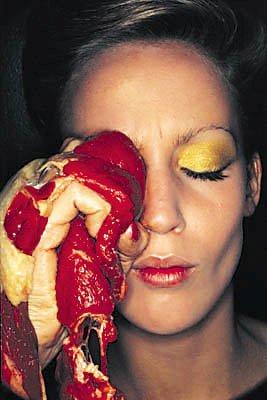
Jerry Hall, The Supermodel

       (I don’t like ‘models with meat’, but this picture is from 1974 and therefore revolutionary)
.

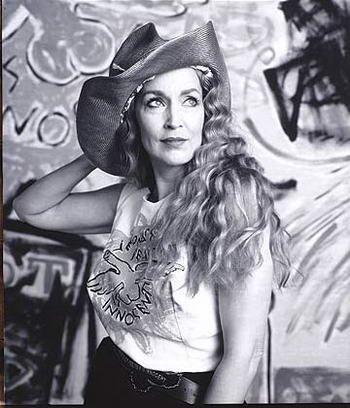
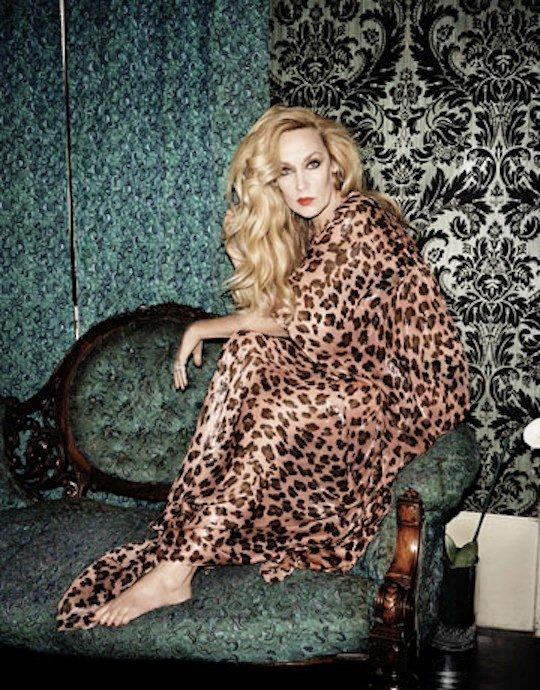
Jerry Hall  The Icon

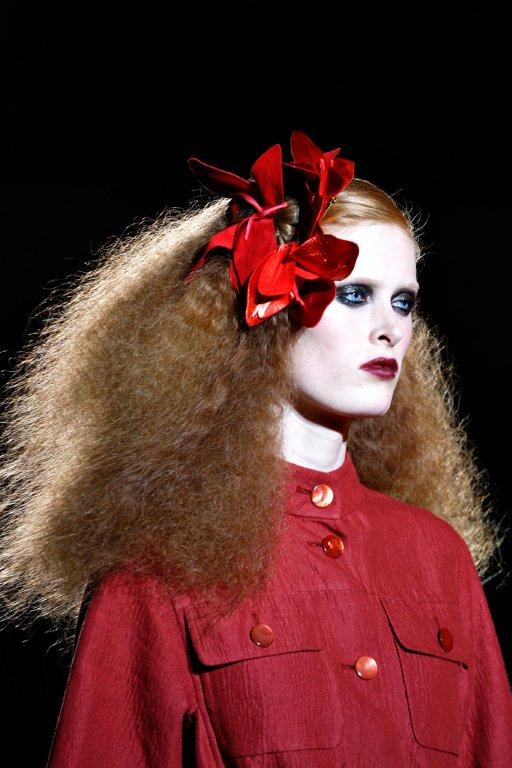
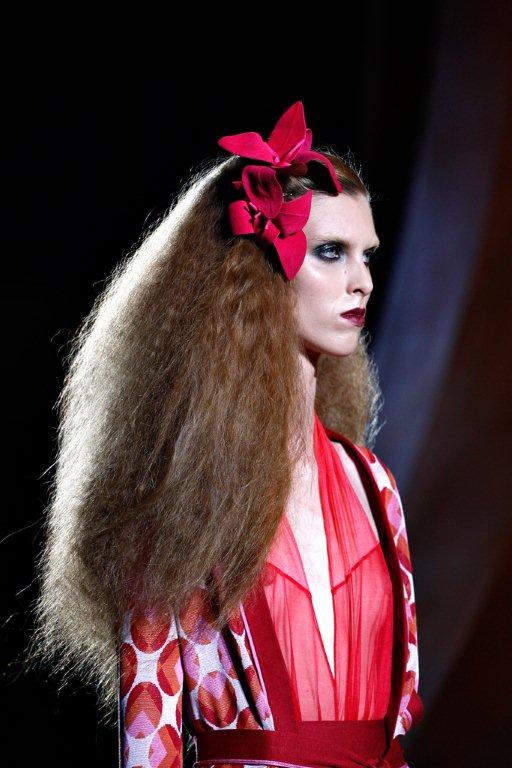
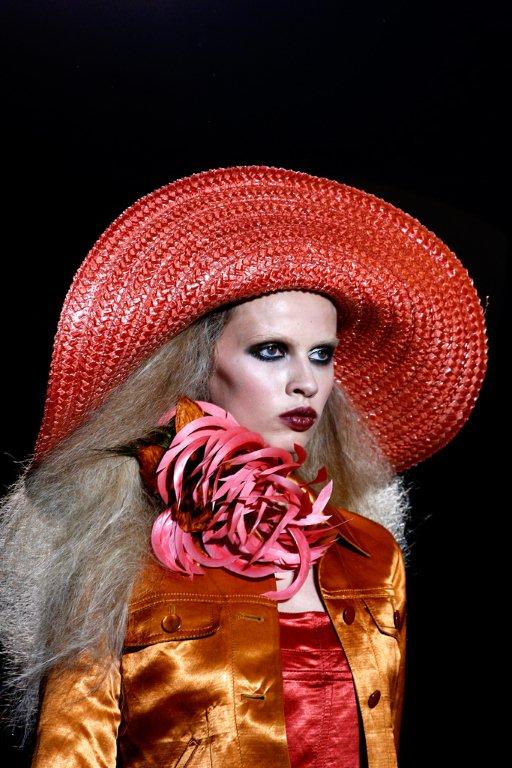
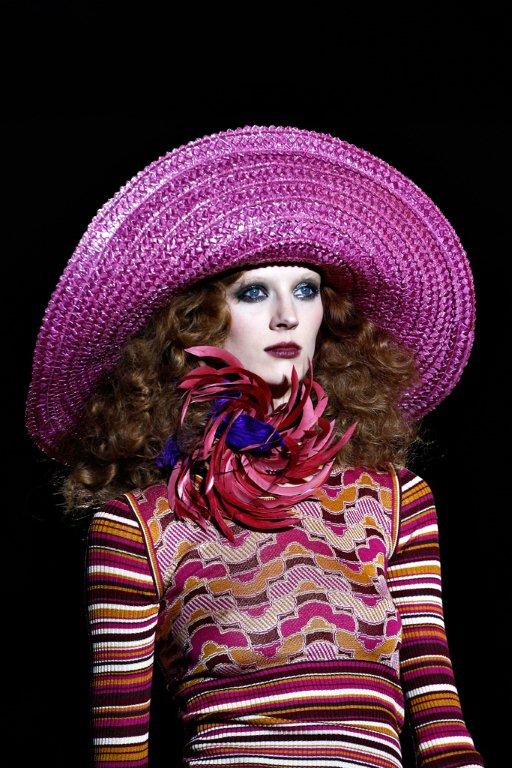
Marc Jacobs was inspired by the Jerry Hall-look for his S/S collection 2011

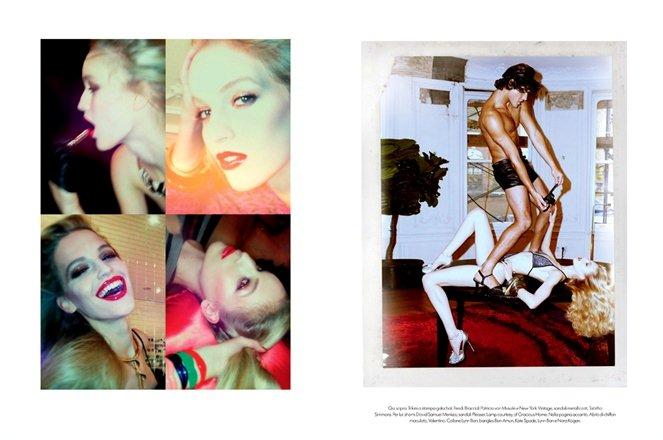
Steven Meisel was inspired by Jerry Hall & Antonio Lopez for the ‘High Gloss’ story in Vogue Italia december 2012

cover Vogue Italia by Steven Meisel

Vogue Italia

vogue italia

 Vogue Italia

Vogue Italia

Vogue Italia

Vogue Italia

Vogue Italia

Vogue Italia

Vogue Italia

Vogue italia

I end this post with a picture that could have been part of my Blue Jerry Hall Wall’……

Antonio Lopez and exciting times in fashion (Part 1)

21 Oct

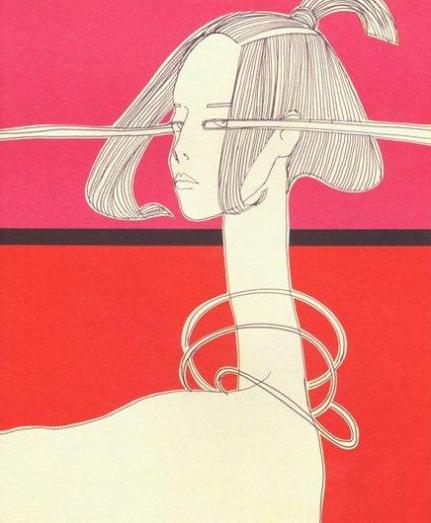
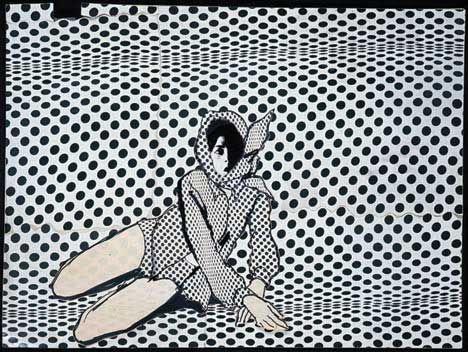
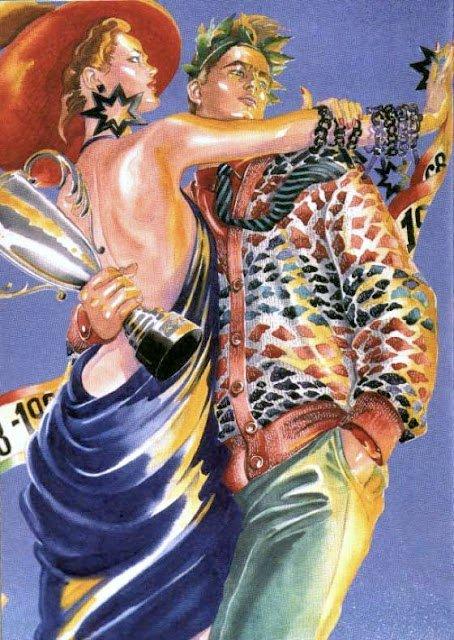
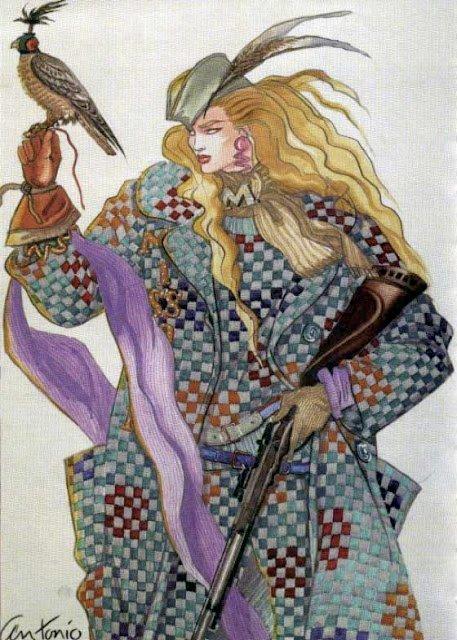
When I was reading the book Antonio Lopez; Fashion, Art, Sex & Disco’,  I immediately knew I wanted to write about Antonio, but where to start? The man wasn’t only a fashion visionary and a brilliant illustrator, he ‘invented’ the new model: not the perfect pretty girl, but the girl with attitude, sex and a portion of craziness, later called  Antonio’s Girls. He changed the garments he drew and by doing so inspired designers for their next collection. He changed fashion illustration and photography by blending the models into the outside world, making them move, having fun and being sexy. Antonio, like Andy Warhol, had his own entourage including models, make-up artists, fashion designers and the rich&famous, who went out on the town (first New York, later Paris) and dictated nightlife.

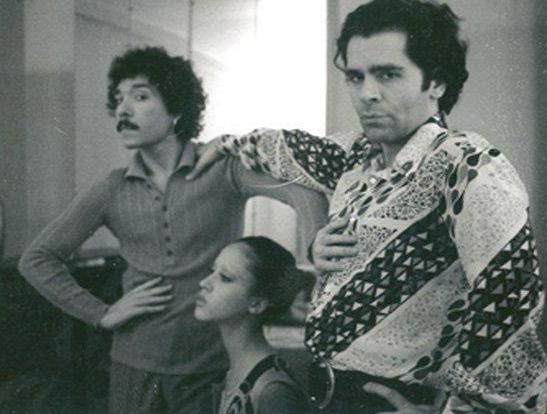
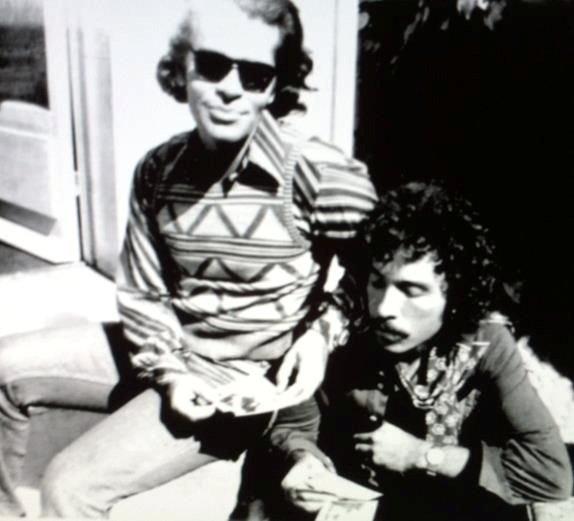
Born in Puerto Rico in 1943, Antonio Lopez came to New York when he was seven. His mother was a dressmaker, his father sculpted mannequins. At the High School of Art and Design, he studied illustration. Here he met Juan Ramos, also born in Puerto Rico and immigrated to the States, who studied interior design. They stayed together from that moment on, first as lovers-collaborators,later being best friends-collaborators, Antonio as illustrator and Juan as art-director. Antonio’s genius was recognized early and by the time he was 22, he earned $ 1,000 an illustration( we are talking 1965….) !!!

Maybe Lopez’s edge was honed by his engagement with the world outside fashion. It’s as if his illustrations were equivalent in line of what photographers like Davis Bailey were doing with film. There was energy and movement and feel for the street. Andy Warhol, who’d forged an equally successful but rather more whimsical career in fashion illustration a decade earlier, praised Antonio for his ‘journalist’s eye’.

Even when Lopez referred to Pop Art, or took on the swirling, psychedelic clichés of hippiedom, he did it his own way. “What one recognized in his illustrations, was in the end, more than just a dress”, said photographer Peter Knapp, with whom Antonio worked. It was a state of mind””.

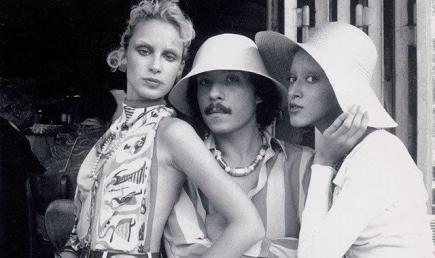
Antonio Lopez was always obsessed with models. ‘Antonio’s girls’ were to Lopez as the Superstars were to Warhol. He remade and remodeled them to fit his particular idea. “He was never interested in the girl next door,” Juan Ramos remembered later. “Healthy wasn’t his thing. He wanted exotic, weird, a little fucked up.”And when Antonio got what he wanted, he made it a little more weird. Like Jane Forth, she was 15 when Antonio and Juan found her in Central Park in the mid-sixties. After her came Pat Cleveland, Donna Jordan, Jerry Hall, Grace Jones, Jessica Lang and Tina Chow, each one an archetype. “Antonio was like an employment agency,” said Juan Ramos. “They all had their stories. He loved that. He’d listen to their problems for hours. Most of them ended up living with us”.

At the end of the sixties, Antonio, Juan Ramos and entourage decamped to Paris for seven years. You could say it was all about a shift in the zeitgeist, but that’s a fancy way to gloss the spectacular efficiency with which Antonio and co. turned uptight Paris into the world’s biggest party town. Their all-night amphetamine energy and radical chic sent a shiver down the local scene’s collective spine. Karl Lagerfeld was an early adopter. Antonio illustrated his collections for Chloé. The entourage, fueled by crossovers with Warhol’s crowd, provided Karl Lagerfeld with a gang of his own to counterbalance rival Yves Saint Laurent’s decadent set. The Americans were quite the match of the French in that area. “We hung out 24 hours a day and had nothing to do except be out of our minds and immersed in fashion,” said a surprisingly together Pat Cleveland years later.

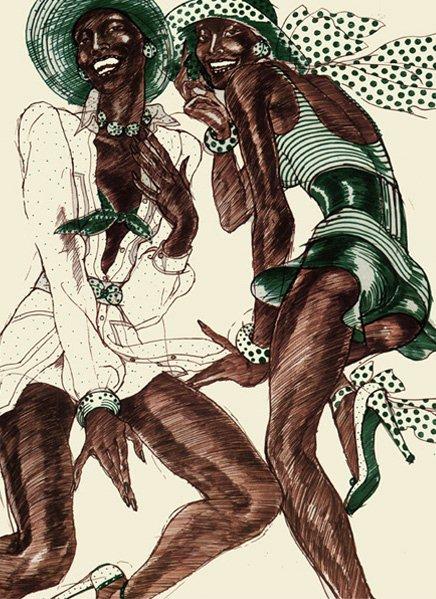
In one area at least, Paris was much freer than New York. There was less bias in the French fashion world, so Antonio was able to use models of color (during those days, Yves Saint Laurent presented the first black model on the catwalk). Antonio’s Paris saw the apotheosis of Pat Cleveland, the glory of Grace Jones, and the Josephine Baker-like brio of this girl, Carol LaBrie.

Antonio drew fast, but the speed of life in Paris demanded something faster. In 1973, he first picked up an Instamatic (never a Polaroid: “too complicated,” he said) to make a visual diary of his life, but, typically, it turned into a whole new body of portraiture. Last year’s Twin Palms tome Instamatics did a brilliant job of collecting a lot of previously unseen photos. Here’s Lopez’s favorite subject, Jerry Hall.

In her autobio Tall Tales, Jerry Hall called Lopez “my first boyfriend and the first man I ever lived with.” This was how it happened, under a disco moon in Paris. Hall was 16 at the time, barely off the plane from Texas, with her dollars running low. “I first met him at the Club Sept…I had on this gold satin suit of my mother’s—real tight of course—and this blue feather boa she’d found for me at the Sewing Centre in Mesquite. Then I had gold feathers pasted across my forehead, and my platform shoes. Already I’m five feet ten and a half inches, and with these shoes I was like six-foot-three or something. Plus I’d curled my hair. It was like a mane—all frizzy. And then I had on lots of makeup and glitter as well as the feathers…I guess that’s why Antonio noticed me.” You think? Under Antonio’s obsessive tutelage, Jerry Hall transformed into one of the most successful cover girls of the seventies.

Antonio had a shoe fetish. Figures. The sculpted form of the shoe molding the supple flesh of the foot—almost to the point of discomfort—is a tidy enough analogy for the erotic alchemy he explored with his ‘girls’.  He even did a series of images where gorgeous women transmogrified into dominatrix heels. The atmosphere of perfervid eroticism steadily thickened as Antonio’s career advanced. All appetites were fully indulged and absolutely sated. As far as it being a more ‘innocent’ time, Antonio’s work at the end of the seventies and beginning of the eighties feels very much of a transgressive muchness with his pals Guy Bourdin and Helmut Newton. The mood was darkening, the party was almost over.

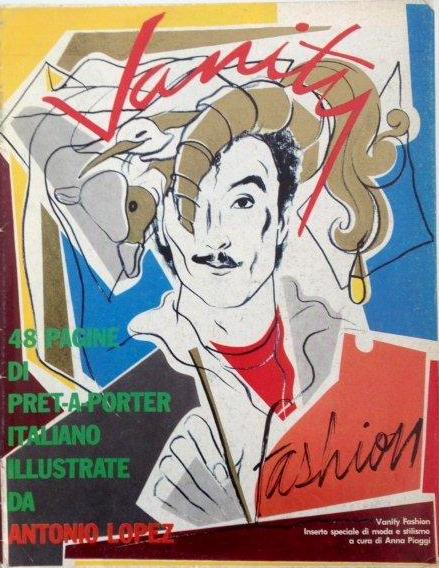
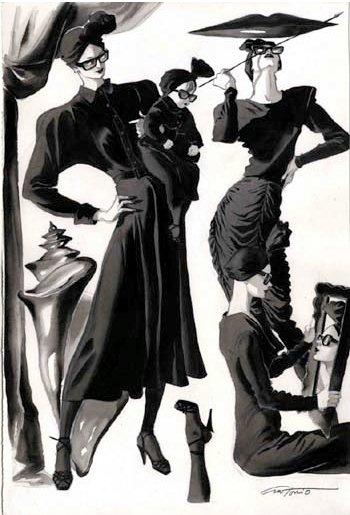
The recent death of Anna Piaggi cast a spotlight on the magazine she and Antonio created at the beginning of the 1980s, Vanity. In its fiercely idiosyncratic curation of fashion past, present, and future, it was so far ahead of its time that it now exists outside time in a beautiful ephemeral bubble…if you can even find it.

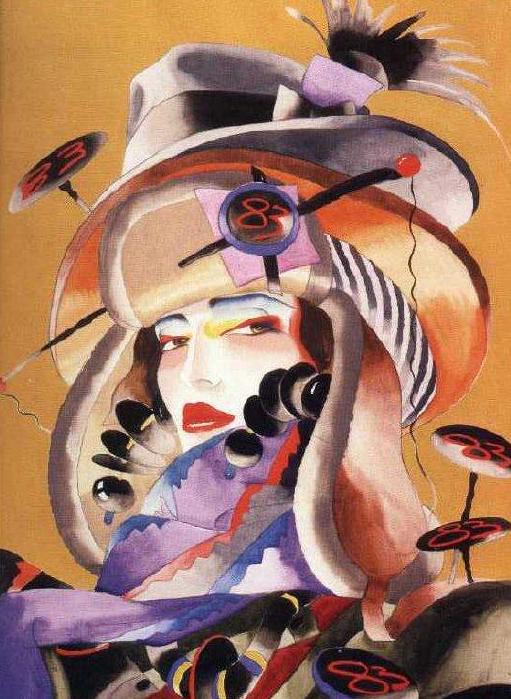
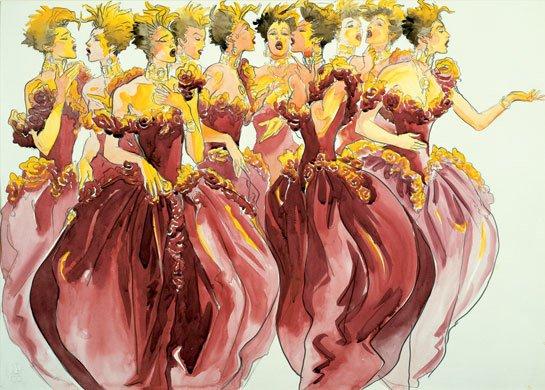
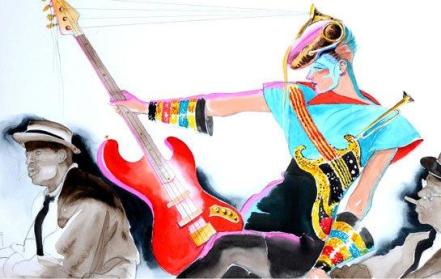
As Antonio Lopez and Juan Ramos started to lose close friends to AIDS in the early eighties, a somber, more sculptural tone began to insinuate itself into the work. ‘Antonio Lopez; Fashion, Art, Sex & Disco’  point to other ways in which AIDS made its presence felt in Antonio’s illustrations, but it’s logical enough to assume that the idea of legacy began to loom its head in the light of current events. It became increasingly obvious that Antonio Lopez wanted to be taken seriously as a fine artist, not just with a project like his illustrated edition of Sir Richard F. Burton’s The Thousand and One Nights (rebranded as Antonio’s Tales From the Thousand and One Nights) but also in the increasingly studied nature and growing complexity of his pictures.

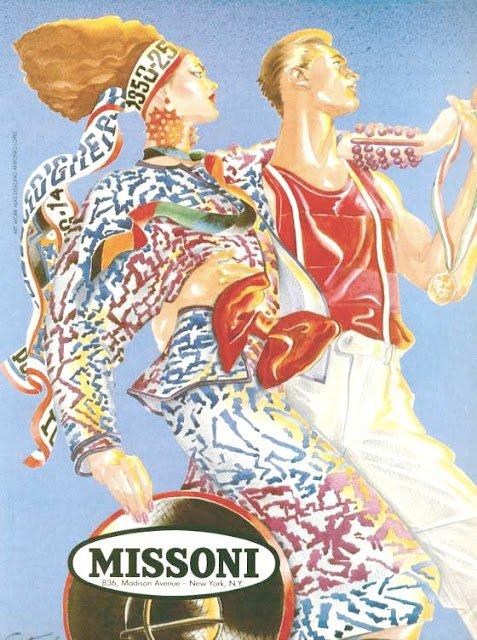
Antonio’s campaigns for Missoni endure as one of the great artist/designer collaborations. It was Anna Piaggi who suggested him to her friend Rosita Missoni. Daughter Angela remembers him arriving at the Via Salvini showroom in Milan (it’s now a family apartment), clearing out the space, and staying there for a week, working obsessively on images like this, from a campaign launched at the same time as the 1984 Olympics. But her memories are tinged with sadness because Lopez was already ill by this point. “He was always cold. Juan and he would be building the set and doing a big research on casting, Anna would be styling, Vern Lambert was overseeing the whole thing. Antonio would always sketch in black and white before making the finished picture, like doing a Polaroid. And he always drew big, never small.” The Missoni images are a reminder of how men were as important as women in Antonio’s visual vocabulary. That was a rare thing in the annals of fashion illustration.

So, about that legacy. Two recent major collections name-checked Lopez. For Fall 2012, Kim Jones used some of the more emblematic “Antonio” visual flourishes as detailing on his sophomore menswear collection for Louis Vuitton. And for Spring 2012, Anna Sui set out to evoke the headiness of the Club Sept days, with printed forties-style dresses like the ones Donna Jordan and Jane Forth used to wear when they were out and about in Paris. “It was revolutionary to wear vintage then,” says Anna Sui, especially when one of the designers checking out the antics—and the outfits—of the Lopez-Ramos entourage was Yves Saint Laurent, who channeled his fascination into his forties-influenced collection du Scandale in 1971. And what a scandal it caused. I’m sure if you sift through the past few decades, you’ll find more examples. In  ‘Antonio Lopez; Fashion, Art, Sex & Disco’ it’s written that Norma Kamali, for instance, based her reputation-making sleeping bag coat on shoots where Lopez swathed his models in sleeping bags from Paragon sporting goods, just down the street from his studio in New York. Then there was John Galliano, who, inspired by “Antonio,” went to Central Saint Martins to study fashion illustration, before a visionary tutor steered him toward design. And in the bigger picture, every time a fashion scene starts to swirl, doesn’t it raise the specter of the world that Antonio Lopez and  Juan Ramos made? 

Antonio Lopez died in 1987 at 44 from AIDS and despite his fame and influence, has faded from the public consciousness. Partially to blame is the stigma associated with AIDS at the time of his death.

Watch this video about Antonio and his work

Next week more drawings, pictures, video’s and stories about Antonio Lopez and his entourage

Hairstylist Didier Malige, the Master

14 Oct

Didier Malige grew up in Paris and was not particularly interested in hair, still he chose to become a hairdresser. His mother ,who worked in a veterinary clinic where one of the Carita sisters was a costumer, got him an apprenticeship in the Carita salon. This was pretty much the way he became involved in fashion.

Didier started working at the Carita salon in the mid-sixties, while he was still living with his parents. At that time Carita was one of the top beauty salons, with about 125 employees. Women who could afford it, would come back every two or three days to get a ‘do’. It was a set, with teasing and hairspray (Elnett was huge those days). In France they were a little bit backwards when it came to trends: the leading country was definitely England, where everybody wanted to be a hairdresser, manager or musician.

At that time for photoshoots, it was a different system: ‘You used to go to the studio, you did the hair and you left. They were using a lot of hairspray, doing up-do’s, nothing was really moving, so there was nothing more to do once you set the hair.’ Models were also more handy and could correct their hair themselves, also because it wasn’t as precise as nowadays.’

After his apprenticeship at Carita’s, Didier went to another really big salon, Jean Louis David, who also came from Carita. He was still assisting other hairdressers and didn’t really have any customers. Around that time there began a demand for hairdressers for magazine work and that was the beginning of Didier Malige’s career as a hairstylist. Not many were working as a hairstylist and he very quickly began working with Helmut Newton, Bob Richardson (father of Terry) and sometimes Guy Bourdin. Because Didier didn’t speak much English, there wasn’t much verbal communication, it was more about naming a movie as a reference.

In the seventies Didier went to America and worked for Glamour and Mademoiselle. ‘Photographers are very opinionated about what a woman should look like. Some give you a little bit more freedom than the other, but they definitely see a woman one way. Helmut Newton’s woman may have shorter or longer hair, but it was always the woman who goes to the hairdresser every day, who doesn’t really have an occupation except maybe taking care of certain man. (laughs) Or be taken care of. You had to be technically very good for that hairstyle.’

Over the decades Didier Malige collaborated with many famous photographers including Patrick Demarchelier, Athur Elgort, Annie Leibovitz, Mario Sorrenti, Inez van Lamsweerde & Vinoodh Matadin, David Sims and Mario Testino. His ability to not only style, but flawlessly sculpt both men’s and women’s hair led to develop long-standing relationships with the houses of Dior, Dior Homme, Helmut Lang, Jil Sander, Raf Simons and Hedi Simane. As chef-de-cabine, recently Didier worked with Hedi Slimane on Slimane’s first women’s fashion show for Yves Saint Laurent.

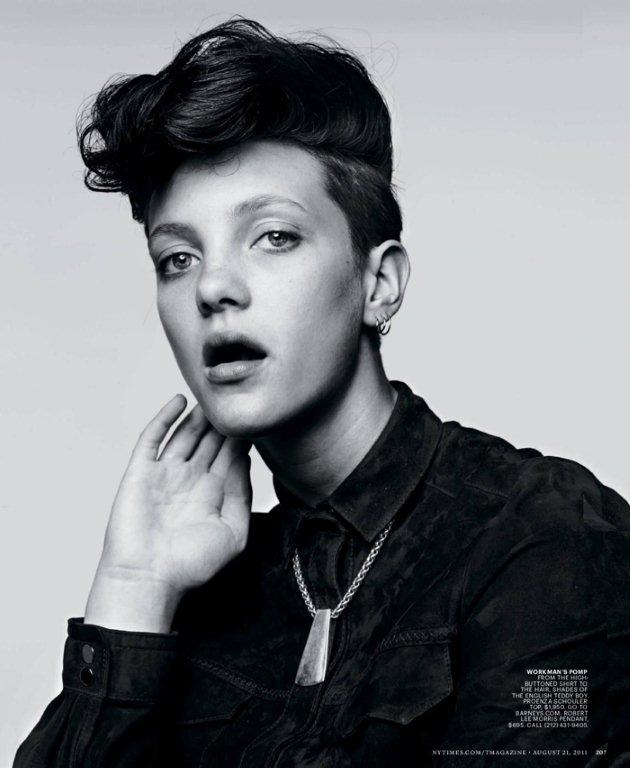
BOY CRAZY. Photography: Hedi Slimane for NY TIMES T magazine fall 2011

Prada Homme campaign photography: David Sims

Prada perfume, Candy 

Vogue Italia cover photography: Nathaniel Goldberg

I-D cover with Lara Stone photography: David Bailey

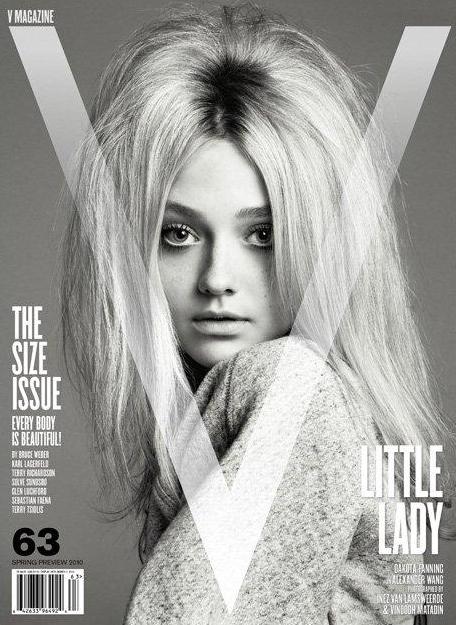
V magazine cover photography: Inez Van Lamsweerde & Vinoodh Matadin

Didier Malige loves to do fashionshows, deciding together with the designers on the look for the models in the catwalk. He worked with Proenza Schouler, Giorgio Armani, Philosophy, Prada, Miu Miu, Louis Vuitton, Botega Veneta and many others. He has a collaboration with (another hairstylist/hairdresser) Frederic Fekkai and his brand for over two decades.

Didier Malige is an undisputed master of his craft and especially enjoys collaborating with photographers and editors who allow him the freedom to realize his vision. He believes that the biggest compliment he has received is learning that someone has become a hairstylist because they were inspired by his work.

He is living together with his partner Grace Coddington (read:  Grace Coddington, a legend in her own time, part 1&2) for over 25 years, whose style he describes as very feminine and fashionable without being too obvious.

I admire Didier Malige, specially for keeping a ‘young vision in his work’ all those years. If you look at his recent work, it’s hard to believe he’s already in the business for many decades, this is probably also the reason why younger people in fashion love to work with him!

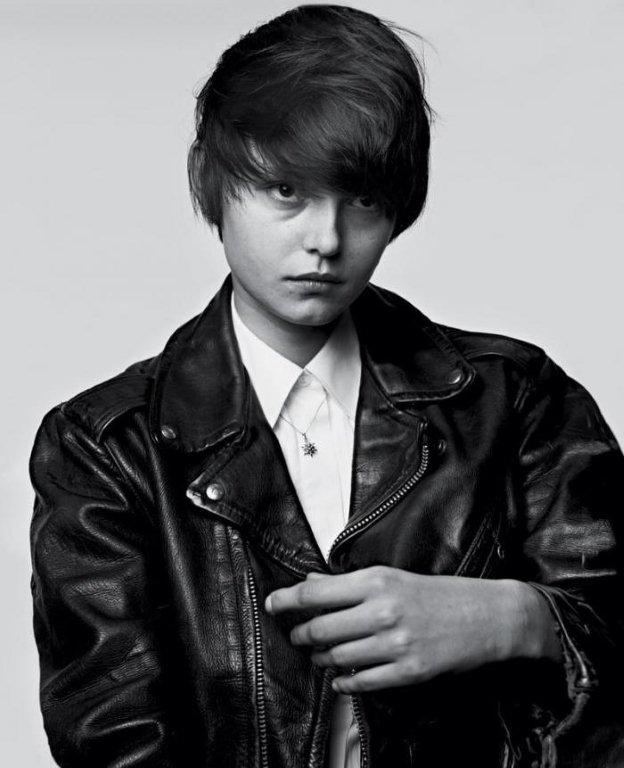
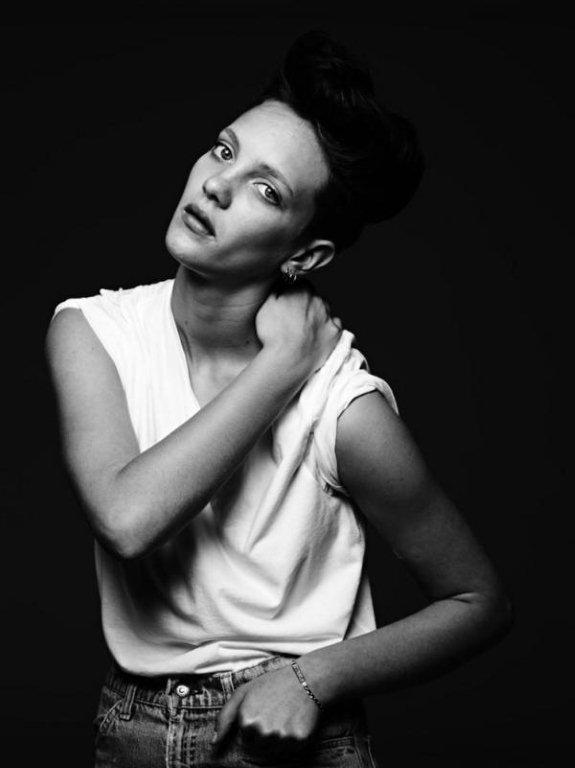
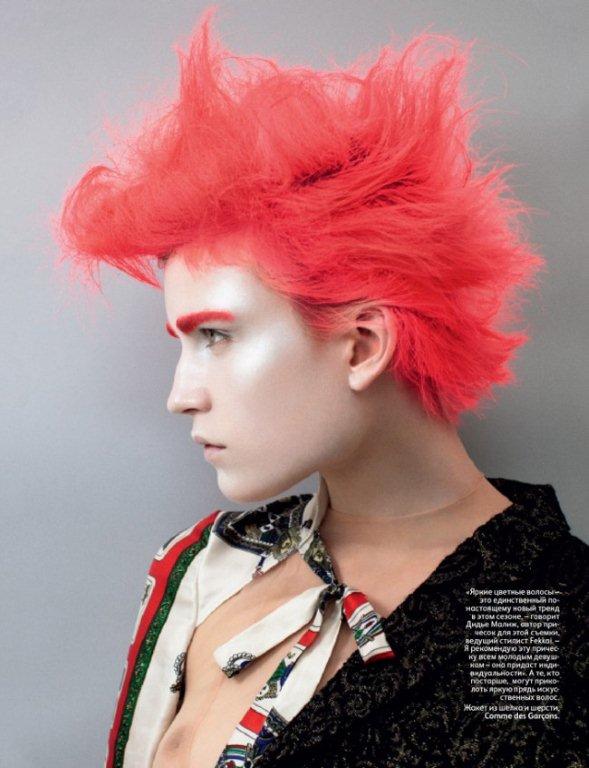
A variety of recent work

Didier Malige, The Master

Grace Coddington, a legend in her own time (part 2)

7 Oct

Patsy Stone, television character in Absolutely Fabulous, referred to Grace, her idol, as ‘Fash Ed. Supreme’.

Julie Kavanagh, Grace Coddington’s assistant in the 1970s and a friend ever since:‘Working for Grace converted me to fashion overnight. It was simply the power of Grace’s personality and style. “Fashion isn’t just frocks,” Grace has always maintained. “It’s how we do our houses, our gardens, it’s what we eat and drink.” 

Documentary The September Issue

In January 2009 the documentary The September Issue premieres at the Sundance Film Festival. The documentary, about the making of the important September issue of American Vogue (2007), highlights Grace Coddington instead of her boss Anna Wintour.

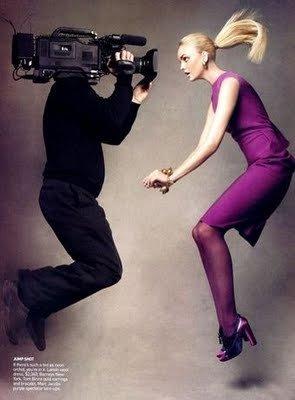
Amongst other things the documentary features a difference of opinion between Anna Wintour and Grace Coddington. During a photo shoot Grace asks the camera man of the film crew to star in the shoot together with the model, jumping and filming at the same time. When Anna Wintour views the photo, she doesn’t approve of the camara men’s ‘ big belly’ and orders it to be photoshopped. Grace gets furious when she is informed about this and persuades the staff member not to photoshop the picture…

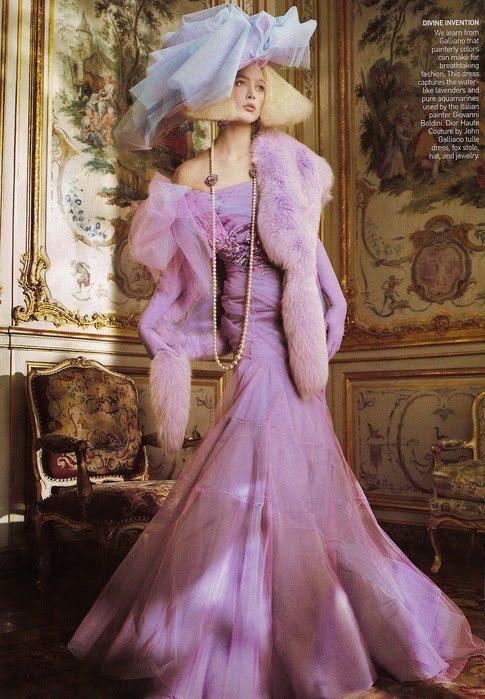
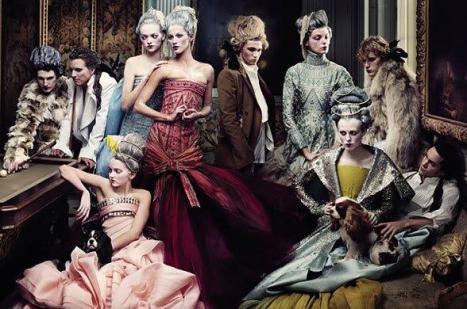
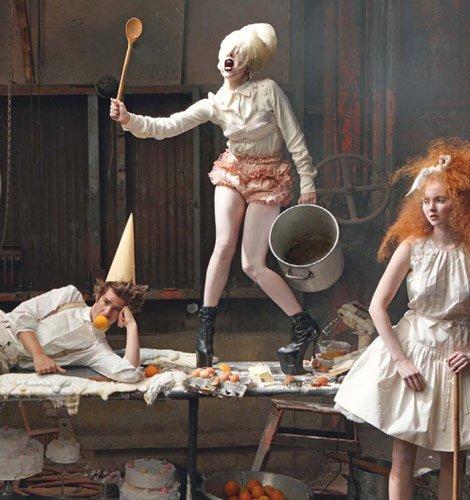
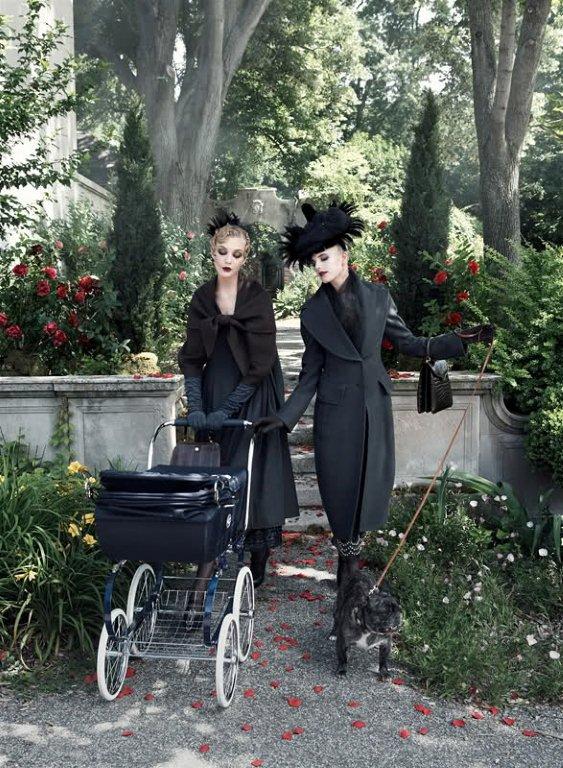
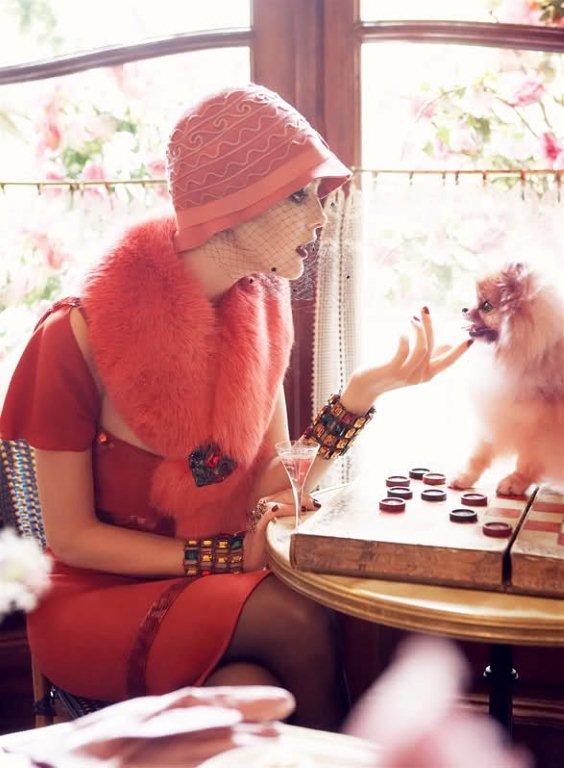
Some of Grace’s work for Vogue

Vogue colleagues and collaborators on Grace and her work


Some quotes from an interview with Grace Coddington on Huffington Post.com , posted October 22, 2009 by author, journalist, contributing style editor Lesley Blume.

On photographer Irving Penn:

“It was one the great joys of my life to work with him.  He had a tiny, tiny studio, minimal lights, minimal people.  Everyone was very focused and he produced these extraordinary pictures.  I don’t know how he did it …  He was the last of those great photographers like Avedon and Helmut and all those guys; I’m sad to see them go … It’s our challenge now to find more and more and something different [and] I know we’ll find another way, but there will never be another Penn.”

On photographer Bruce Weber:

“He taught me so much about America, [and gave me] a whole new way of looking at things.  He was really responsible for scrubbing everyone’s faces, for fresh-looking women who you could touch, making them look vulnerable.”

On photographer David Sims:

“He’s much younger than me, and it’s a challenge.  I have to keep on my toes and be modern and keep up with him.  He’ll talk for three hours about a white background and I’m trying to go along with him and understand, and then we end up with a white background.  But I could do the same shot with a different photographer and it wouldn’t look the same.  He has that undefinable modern edge.”

On how celebrity culture is affecting the fashion world:

“I have the reputation of not working with [celebrities] … I just feel more comfortable working with models because I can push them around.   But I do work with them; I took Keira Knightley to Africa and you have to like someone to do that.  [However,] I hope it doesn’t go completely to the celebs because it will kill off the models, but it’s not my call.  It’s all your call.  It’s what you all are asking for.”

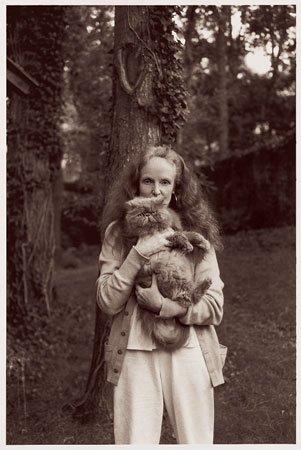
Grace and her beloved cats

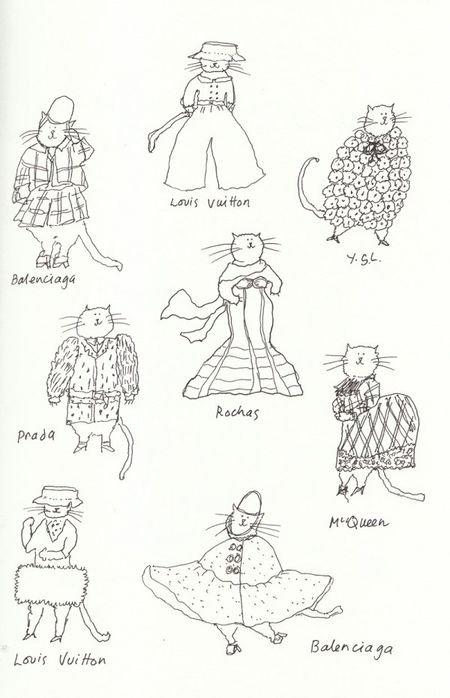
In 2006 the book The Catwalk Cats was published. It is based on 20 years’ worth of sketches and notes she has faxed to her husband while they were apart. “Instead of calling him when I was in Milan or when he was traveling in India, I would do a sketch of where I was and put the cats in my place”. Didier Malige (her husband) photographs accompany Grace’s drawings throughout the book. Grace is well-known for her love for cats and so is Didier.

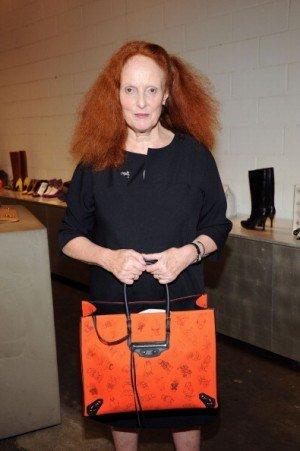
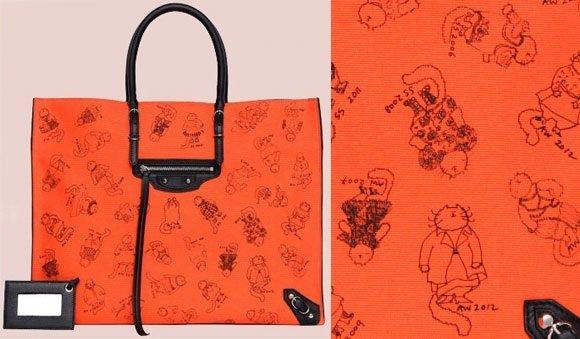
In 2012 Grace has designed a capsule collection with Nicolas Ghesquiere for Balenciaga named after her cat, Pumpkin. The line of scarves and bags will feature Coddington’s drawings of her petit chat modeling various Balenciaga looks from the past decade. Central to the new accessories line is the “Pumpkin Papier” tote bag and two printed “Pumpkin” scarves round out the collection, one in a classic silk twill and one in fringed wool and silk. (20 percent of the proceeds will be donated to the Animal Rescue Fund of the Hamptons)

Books on Grace Coddington’s work and life:
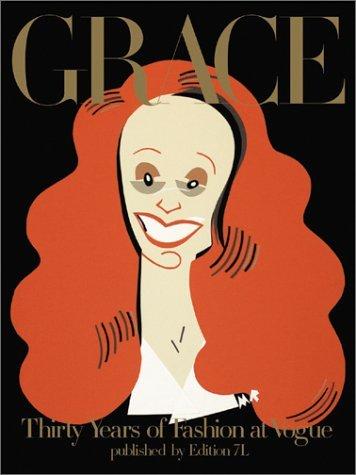
Grace, Thirty years of Fashion at Vogue was published in 2002.
It’s not only a collection of Coddington’s greatest work, it is a visual reminiscence of her life in fashion.

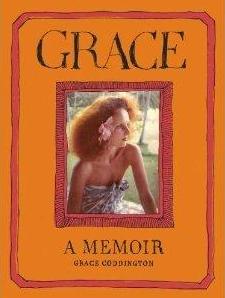
Grace, A Memoir will be published November 20, 2012   ( ISBN: 978-0-8129-9335-6)

Random House has offered Coddington a reported $1.2 million book deal for a tell-all memoir…. If Wintour is the Pope . . . Coddington is Michelangelo, trying to paint a fresh version of the Sistine Chapel twelve times a year.”—Time

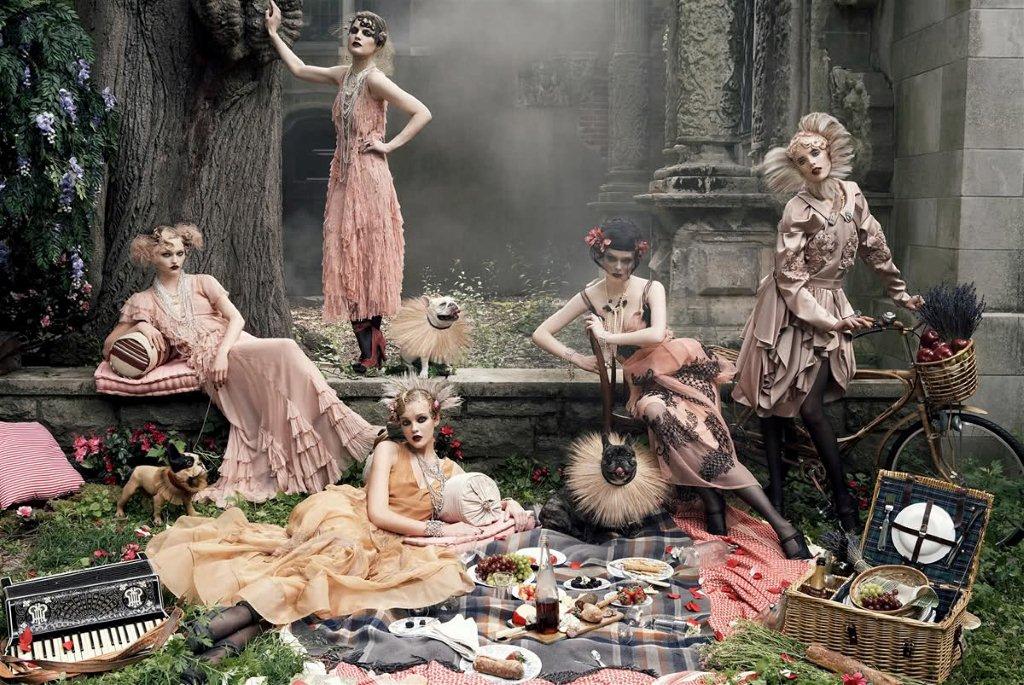
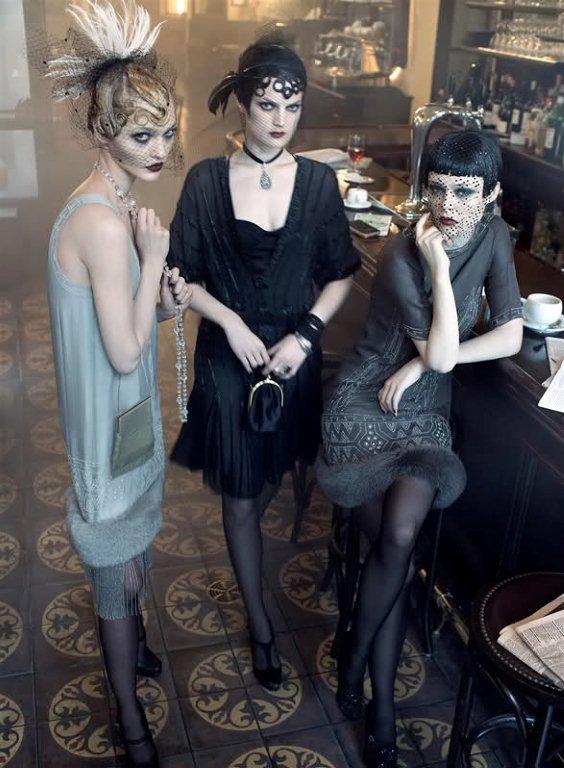
The divine Brassai-inspired 1920s-in-Paris spread. Title: Paris, je t’aime  Photographer: Steven Meisel