Bill Gibb, a forgotten Fashion Hero from the Scottish Highlands

21 Feb

Bill_Gibb

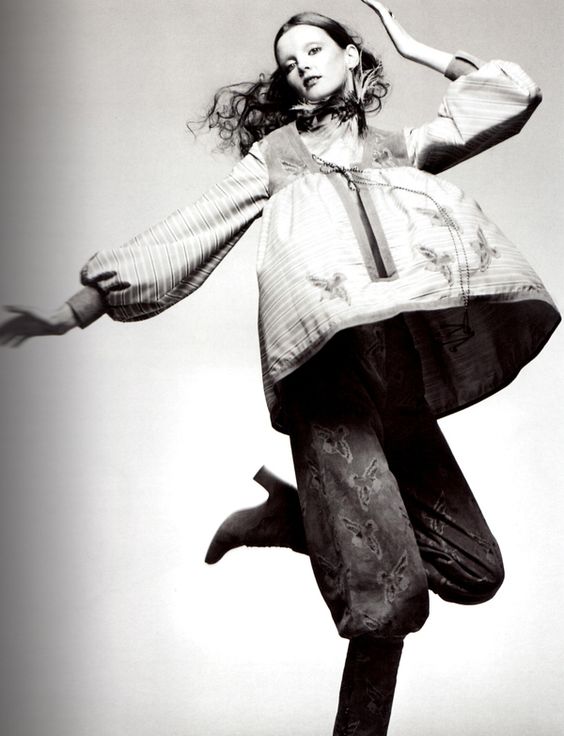
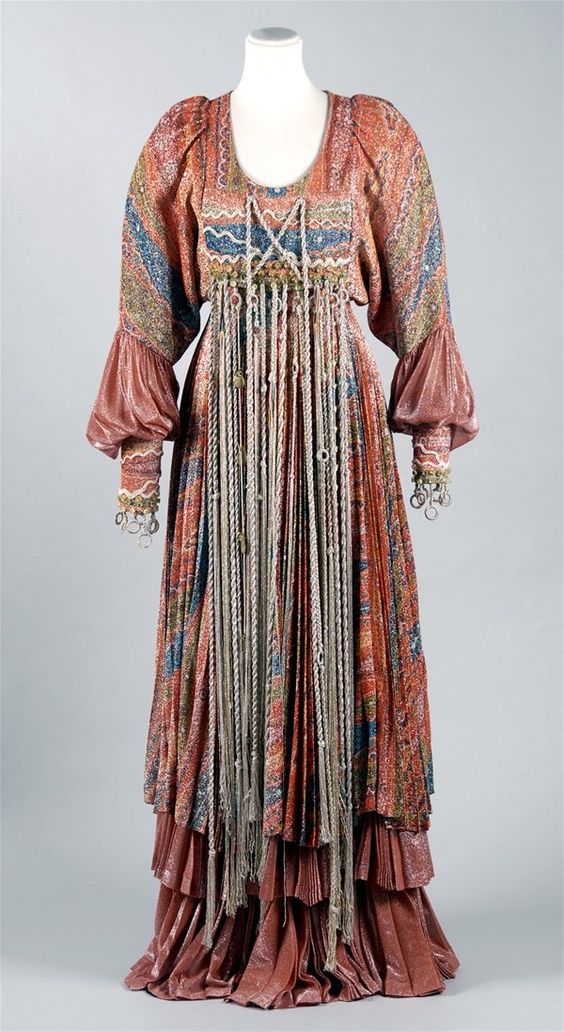
Bill Gibb, a forgotten fashion hero from the Scottish Highlands, incarnated the romantic essence of British style – according to John Galliano. “British designers are storytellers, dreamers, and I think this was really the essence of Bill Gibb”.

With the encouragement of his grandmother, a landscape painter, Gibb moved from dressing up his sisters with bedcovers and curtains to the Central Saint Martin’s school in London and ultimately to the Royal College of Art. His fellow fashion students were Ossie Clark and Zandra Rhodes, who shared an unbridled vision of “fabulosity.”

His story could be played in London like a broken record: a designer comes from nowhere (or, in his case, from a farming family in the far north of the British Isles), becomes famous and feted, dresses high society and rockers, loses his backer and goes bust. Fade out of this familiar film without a happy ending…

.B

Biography

Born near New Pitsligo, a small village in Aberdeenshire in Scotland Gibb went to school in nearby Fraserburgh. His teachers at Fraserburgh Academy encouraged him to go to art school in London, and so, in 1962, Gibb went to Saint Martin’s School of Art. After graduating top of his class, Gibb was awarded a scholarship to the Royal College of Art, but before completing his degree, he left to start up in business.

Bill Gibb and Kaffe Fassett, 1960sBill Gibb and Kaffe Fassett, 1960s
.

In 1967 Gibb was one of six young designers invited to present their designs in New York, which led to a three-month research tour of the United States with his then boyfriend, the artist and textile designer Kaffe Fassett, who would remain a very close friend and design collaborator. On his return to London, Gibb and a group of friends had co-founded the Alice Paul boutique, for which Gibb designed typically late 1960s outfits of miniskirts and long coats, whilst his friends handled the marketing and manufacture. Between 1969–1972, as a freelance designer, Gibb designed for the London fashion house Baccarat. In 1972 Gibb launched his own company, Bill Gibb Fashion Group, which ran until 1988, and in 1975 he opened his first shop in London, on Bond Street.
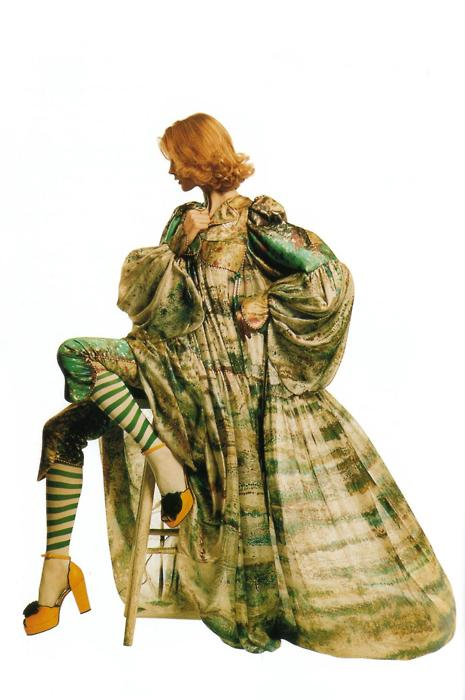
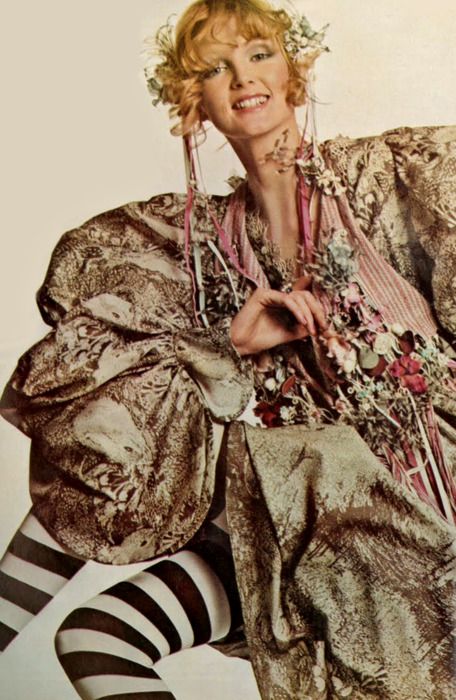
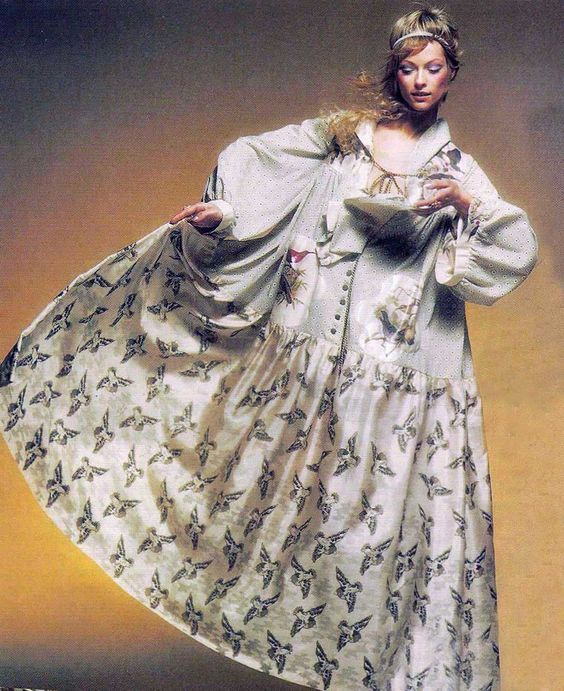
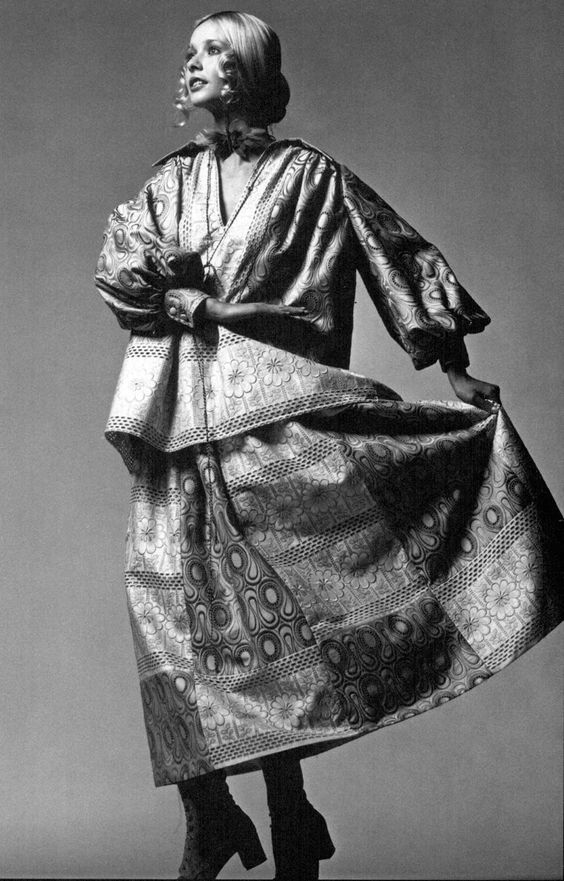
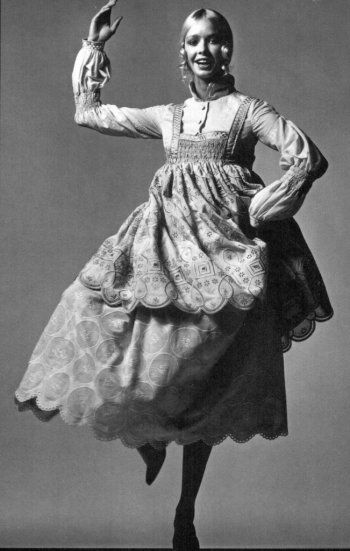
Photo by Gianni Penati for UK Vogue, 1972.

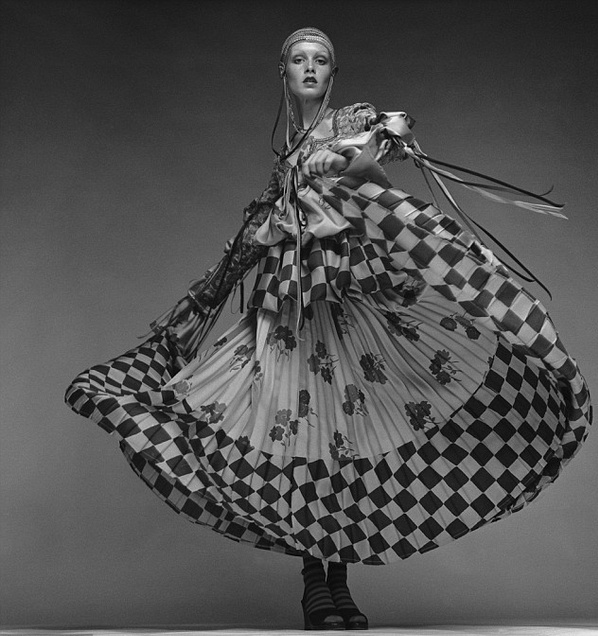
Photo by Gianni Penati for UK Vogue, 1972.

Celtic eclecticism and Pre-Raphaelite fantasy the Scottish designer Bill Gibb

Bill Gibb

Beatrix Miller of Vogue selected one of Gibb’s designs for Baccarat, a pleated tartan skirt and printed blouse worn with a Kaffe Fassett knitted waistcoat, as the 1970 Dress of the Year. Gibb’s design was described as the epitome of the new emerging trend for romantic eclecticism in British fashion design, as well as demonstrating how traditional handicrafts, such as hand-knits, were becoming acceptable for mainstream fashion. That same year, Harrods opened a dedicated area for Gibb’s designs, calling it the “Bill Gibb Room”, and the model Twiggy approached Gibb to create several historically-inspired dresses for her. She wore a “Renaissance” evening dress featuring printed textiles based on 1520s Hans Holbein drawings to the Daily Mirror’s Fashion Celebrity Dinner in 1970. Another gown made from various patterned textiles that Twiggy wore to the 1971 film première of The Boy Friend drew a great deal of media attention.

                   Twiggy called Bill Gibb “my knight in shining armor”.
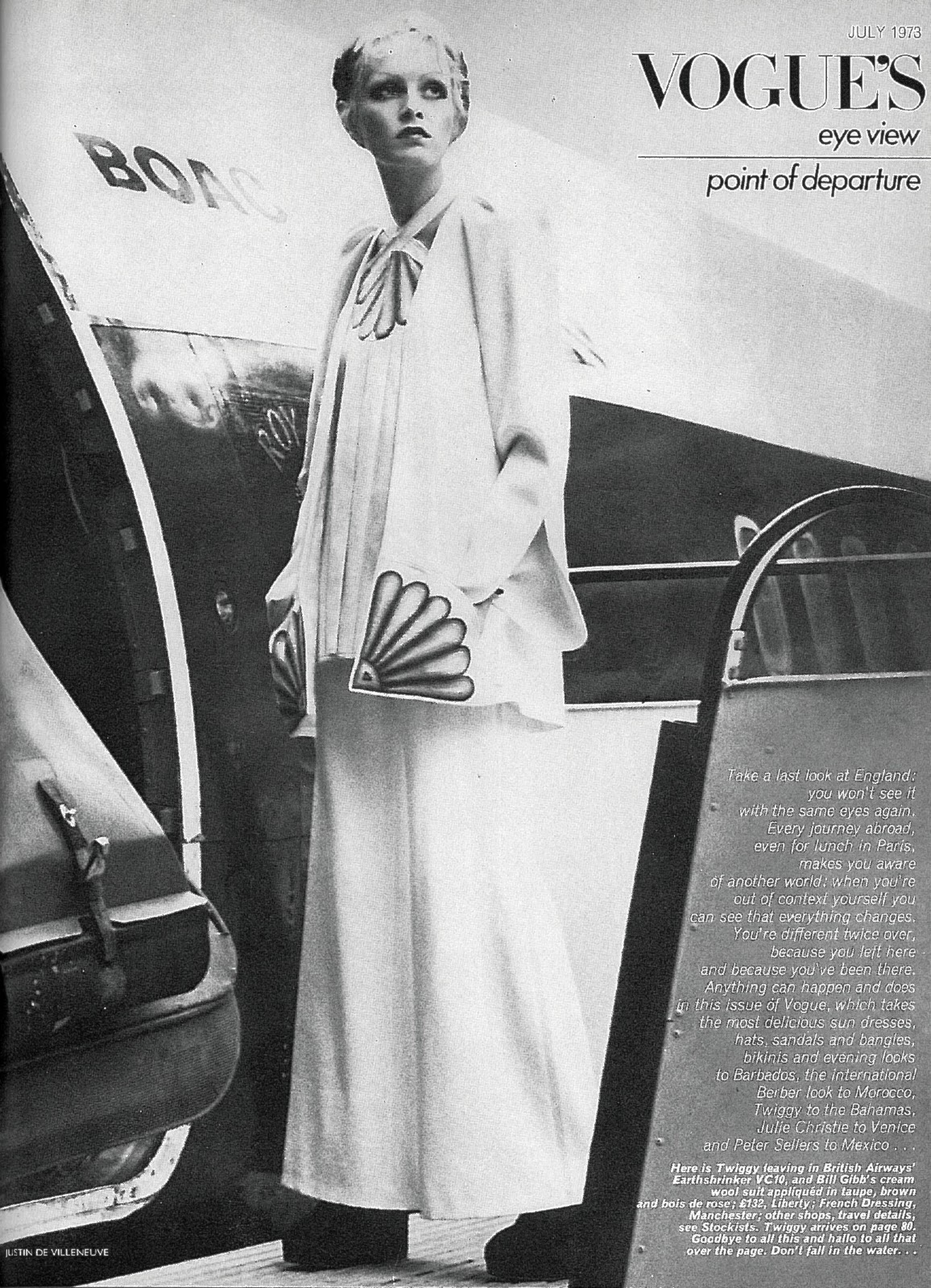
Twiggy by Justin de Villeneuve

Twiggy in Bill Gibb ensemble

twiggy by justin de villeneuve 2

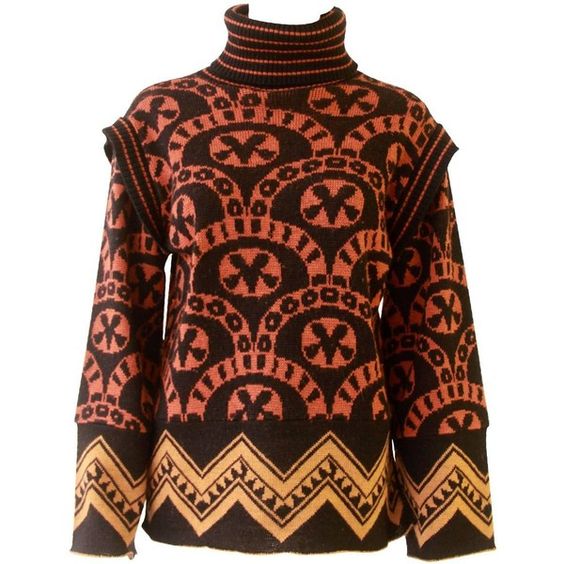
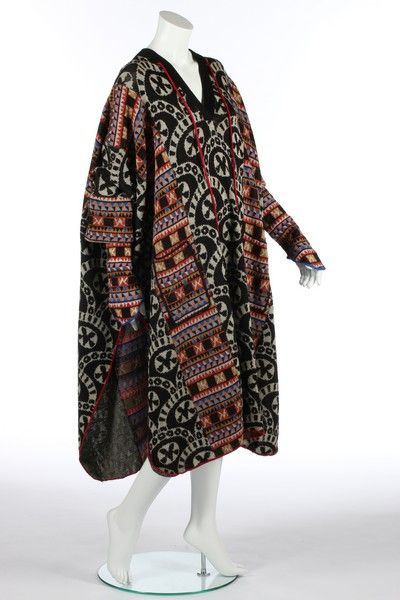
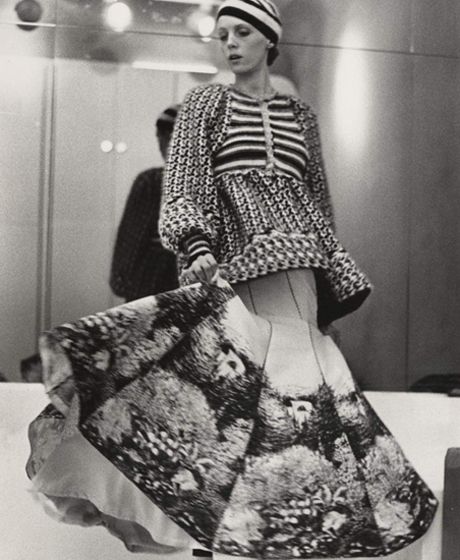
Gibb presented his first collection under his own name in 1972. His fantastical creations were based on nature, with unexpected combinations of fur, feathers, printed leather, and brightly coloured clinging fabrics. His output during those days was of such a consistently high standard, it verged on couture. He was probably best known for his evening gowns, fabulous concoctions in floaty and exotic fabrics embellished with appliqués or heavily embroidered nets and lace, silks, brocades, and chiffon panels. However, his most important work was in knitwear, co-designed with Kaffe Fasset and hand-knitted by Mildred Bolton. Due to massive demand, Gibb found a manufacturer in Leicestershire who was willing to take on the challenge of machine-knitting Fassett’s extraordinarily complicated, multi-coloured woollen designs, although Bolton continued to hand-knit one-off designs. During the 1970s, Gibb did take on other design commissions, including creating a range of shoe designs for the high-end shoe manufacturer Rayne. Later, in the 1980s, Gibb collaborated with another Leicestershire manufacturer, Annette Carol, to produce acrylic knitwear using a jacquard technique.

Bill Gibb & Kaffe Fassett knitwear
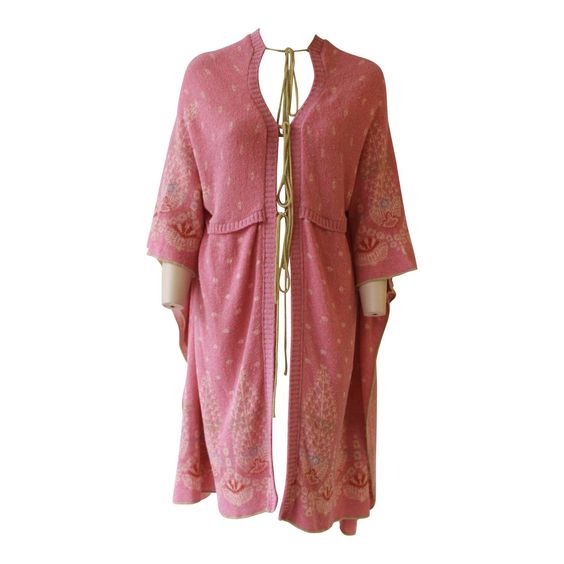
Bill Gibb , Kaffe Fassett 1

Bill Gibb , Kaffe Fassett 2


Bill Gibb , Kaffe Fassett 4

Throughout most of the 1970s Gibb ran a small wholesale business, but was forced into liquidation. A brief period of financial support followed, but it is doubtful whether he enjoyed the restrictions and deadlines implicit in such an arrangement. The mid-1980s saw a brief recovery and, with a renewed collaboration with the knitwear designer Kaffe Fassett, Gibb showed a collection at the London Fashion Week in 1985 , called “Bronze Age”, featuring hats by Stephen Jones. His clothing was roundly applauded, with critics dubbing him the “master of the decorative,” praising his “simply cut, richly colored knitted suits and throws,” and what was characterized as his “fairytale exercises in the baroque, the beaded, and the burnished.”  Alas it did not attract buyers.

Bill Gibb

Bill Gibb

Bill Gibb

early '70

Bill Gibb

Gibb was described as “one of the most gentle, kindly and considerate human beings I have ever met” and a “man without malice” by the journalist Jack Webster. Twiggy described him as her “knight in shining armour”, and as a “sweet, sunny farm boy in baggy corduroys whom I absolutely adored”.

Gibb will best be remembered for his flights of fancy, and his unique contribution to 20th-century fashion. As Vogue said in 1962, in a feature called “Fresh Air in the Rag Trade,” for “the first time the young people who work in the rag trade are making clothes which are relevant to the way they live…ours is the first generation that can express itself on its own terms.” Bill Gibb was very much a product of his time, a free spirit. He died at the very young age of 44, in January 1988, from bowel cancer.
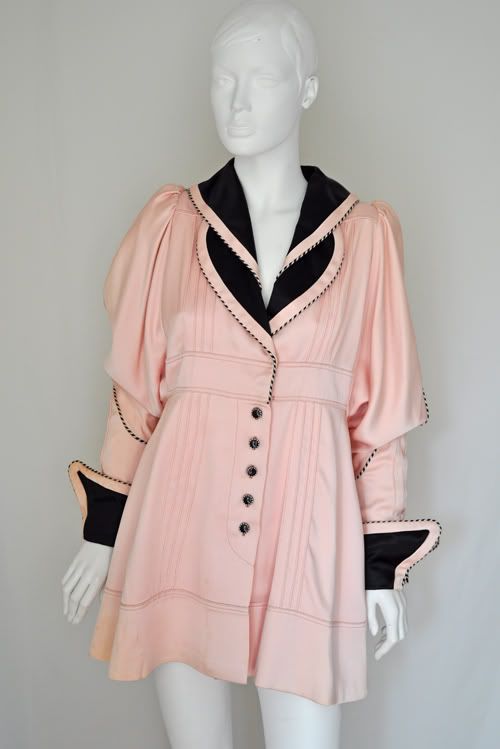
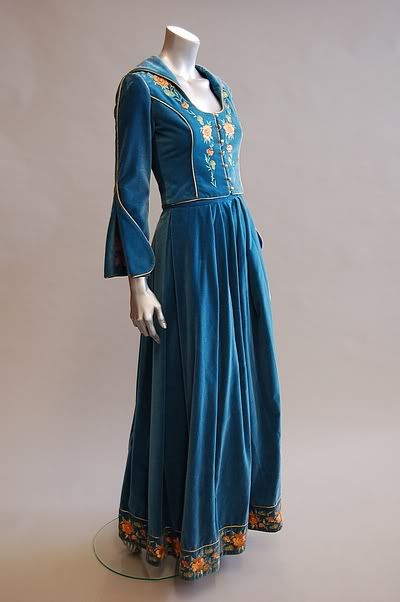
Bill Gibb

Bill Gibb azure velvet Highland ensemble, Autumn-Winter, 1977

Waterfall dress, 1973

.

.

Book

Book cover

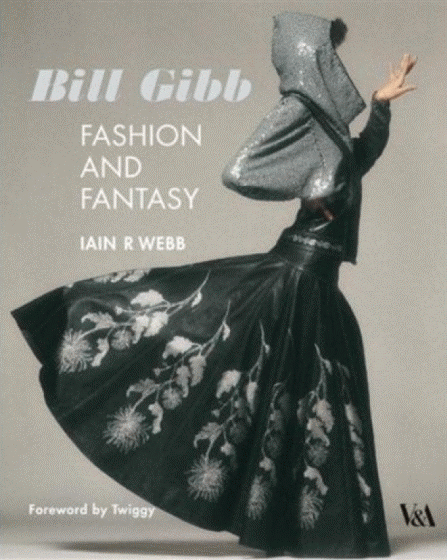
Bill Gibb, Fashion and Fantasy

Crowned ‘Designer of the Year’ by Vogue in 1970, Bill Gibb (1943-1988), barely out of college two years and yet to launch his eponymous line, was to become a major name in fashion history. Gibb’s career was prolific, and truly visionary at its finest, but sadly short-lived. His legacy, continued relevance and importance as a designer is apparent today in the work of designers from Giles Deacon to John Galliano. Famous for his love of romance, soaring flights of fancy and devil-may-care dynamic, Gibb’s wildly eccentric combinations of checks, tartans, stripes, floral prints and Fair Isle Knits had never been seen before. This stunning book explores Gibb’s background, long-time fascination with historical imagery and the themes that inspired his designs.

.

.
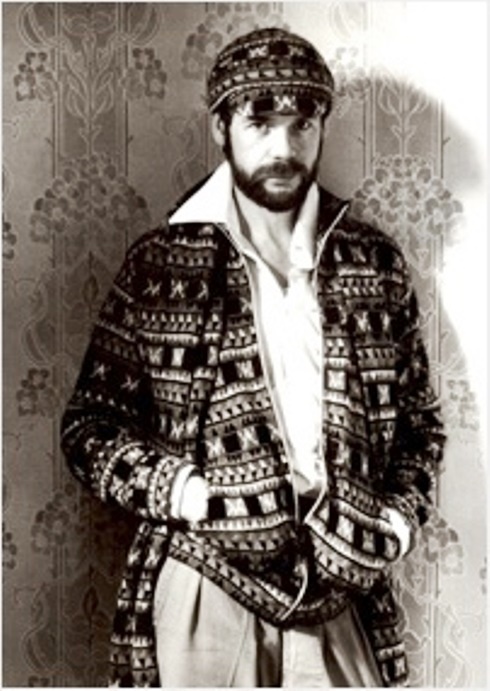
Bill Gibb 1976

.

.

Info:

WikiPedia

Victoria & Albert Museum
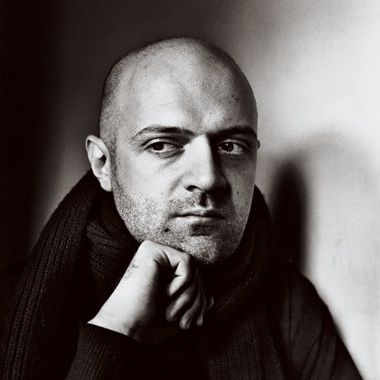


Hussein Chalayan, combining Technology & Fashion

14 Feb

Hussein Chalayan

Hussein Chalayan given name Hüseyin Çağlayan, (born 8 August 1970) is a British/Turkish Cypriot fashion designer. He has won the British Designer of the Year twice (in 1999 and 2000) and was awarded the MBE (Member of the Most Excellent Order of the British Empire) in 2006.

Short Biography

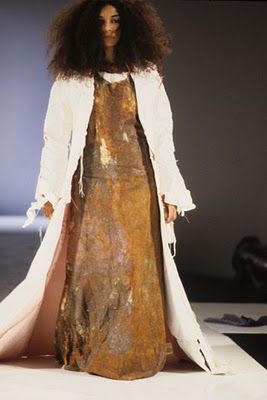
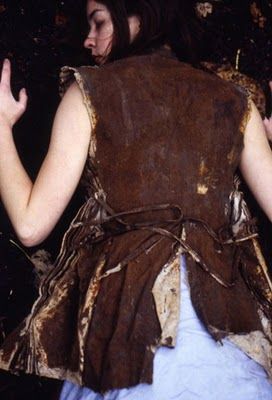
Hussein Chalayan was born in Nicosia, Turkey. By the time he graduated from school the population of the island was divided because of the constant struggles between the Greek and Turkish authorities. Ethnic conflicts between the Turkish and Greek Cypriot communities eventually led to the Turkish invasion of Cyprus, which led to human right abuses towards the civilian from both sides. For this reason Chalayan and his family were forced to move to England in 1978. After Highgate School he studied for a National Diploma in fashion and clothing at Warwickshire School of Arts, and proceeded to study Fashion Design at Central Saint Martins in London. His graduate collection in 1993, titled “The Tangent Flows”, contained clothes which he had buried in a back yard and exhumed just before the show where they were presented with an accompanying text that explained the process. The ritual of burial and resurrection was said to give the garments a dimension that referenced to life, death, and urban decay. The work attracted the attention of the Browns fashion boutique in London, who borrowed the collection to feature in their window display

The Tangent Flows graduation collection

The Tangent Flows graduation collection 
The Tangent Flows graduation collection
.
juli 93 Hussein Chalayan's graduate collection The Tangent Flows

In 1994, having completed an internship with Saville Row tailor Timothy Everest, the Chalayan established his own company, Cartesia Ltd., and his namesake ready-to-wear line, Chalayan, exhibiting his first collection in London’s West Soho Galleries that spring and debuting at London Fashion Week to resounding critical acclaim. 

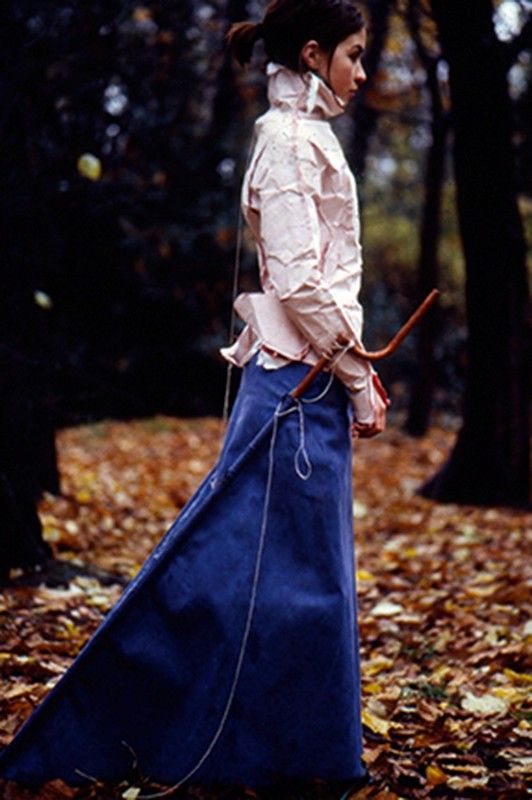
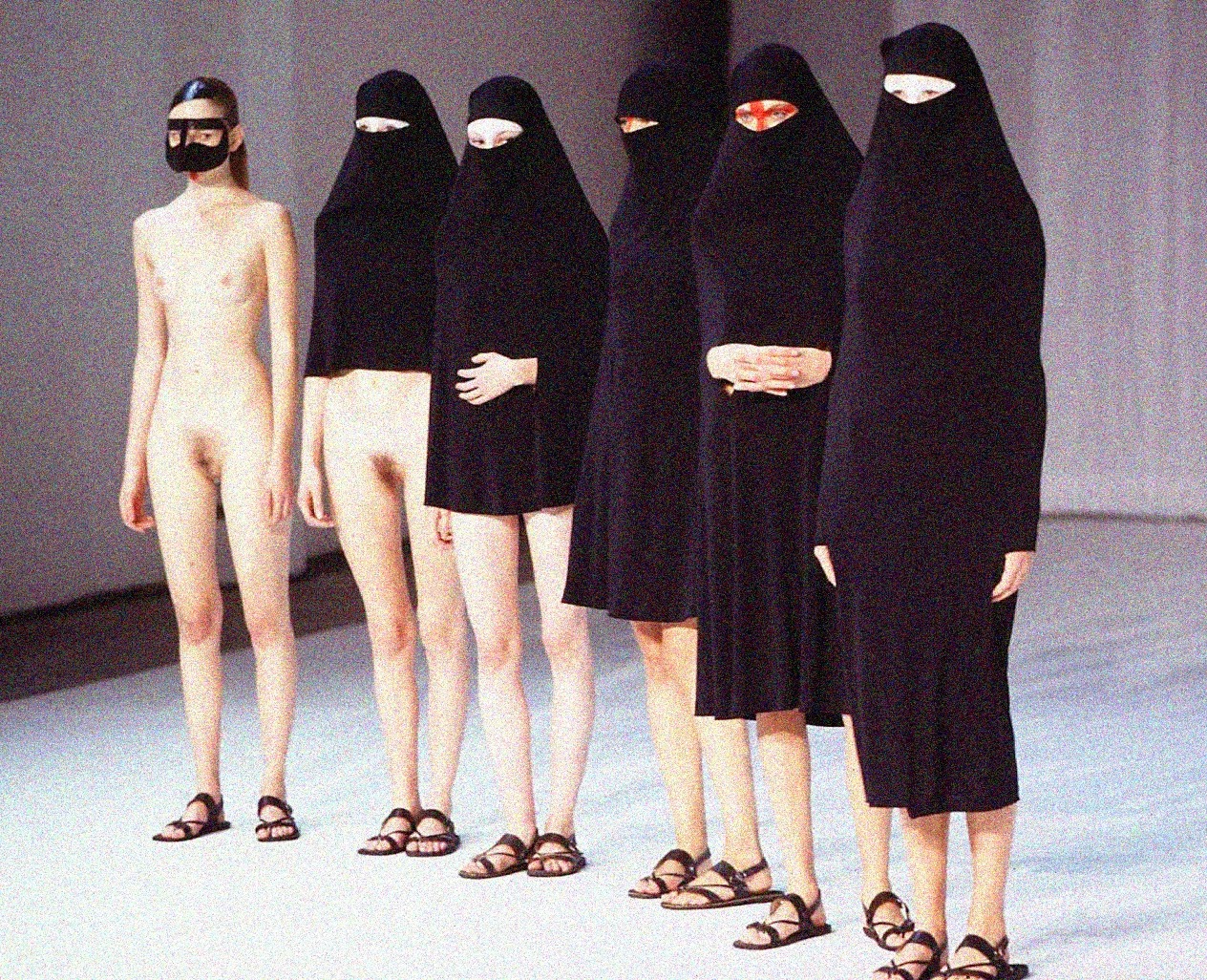
In his collection Between for Spring/Summer 1998 he sent models onto the catwalk wearing black chadors of varying lengths and nothing else, alluding to fashion’s continual shift of erogenous zones around the female body arising in response to changing ideals. The first wore a chador, which covered most of her body and allowed a gap just for her eyes. Each veil became shorter and shorter until, finally, the last one was nude apart from a mask covering her face. According to Chalayan this piece was about defining cultural territory,’
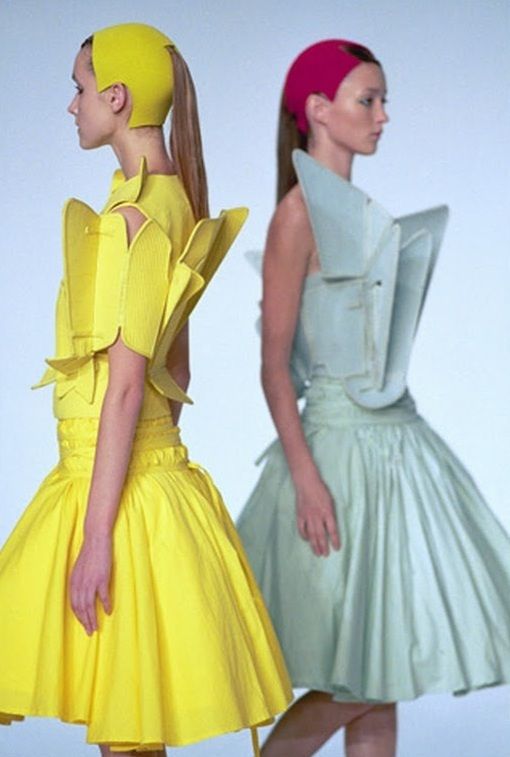
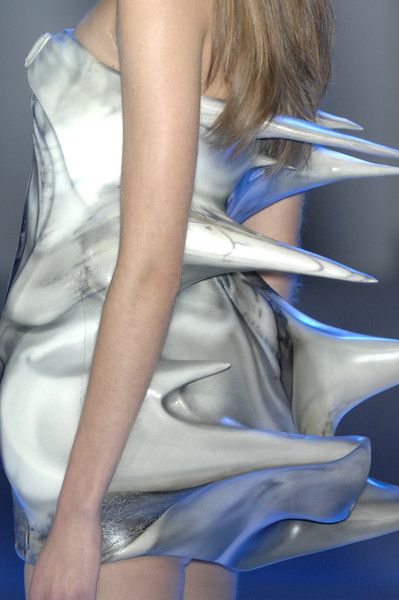
BetweenBetweenThe Panoramic collection for Fall/Winter 1998 expressed the idea of infinity in a surreal cityscape of geometric forms and distorted images. The models were distorted into generic shapes and unified by architectural proportions; cones were fixed to the top of the head and faces and bodies swathed in black to obscure their identity. As Chalayan explored the idea of representing nature in this collection, he broke it down into its most basic graphic representation, pixels. Body and clothing were then merged into a digital landscape, which was recreated in enlarged cube-shaped pixels.
Panoramic

hussein_chalayan_Panoramic

His Geotrophics collection for Spring/Summer 1999 had already featured Chair Dresses that represented the idea of a nomadic existence and a completely transportable environment. This concept was later expanded in Chalayan’s After Words collection for Fall/Winter 2000.which included some of his most well known designs such as ‘the coffee table dress’.  The Table Skirt and the entire set from the show were later featured in the 2001 Tate Modern’s Century City exhibition in London.

The Coffee table Dress

Chair Dresses

.

In 1998 Chalayan was appointed as creative director of TSE New York with his inaugural sportswear collection for the brand debuting in March. In 2001, despite this attention and recognition for his work Chalayan struggled with sponsorship and funding, often receiving it from various other companies, independent exhibitions at Colette in Paris and producing capsule collections for Topshop, Chalayan was forced to file for voluntary liquidation, having amassed debts of an estimated $1.5 million.

Subsequently, he restructured his company and staged comeback collection in 2001 without a catwalk presentation, and designed for high-street label Marks & Spencer’s to make ends meet. Italian clothing manufacturer Gibo also helped the designer as did British jeweller Asprey, who appointed him as their fashion director the same year.

ss 06

Hussein Chalayan

ss 99

Hussein+Chalayan+Spring+2007+Details+chx2kAk300al

ss09

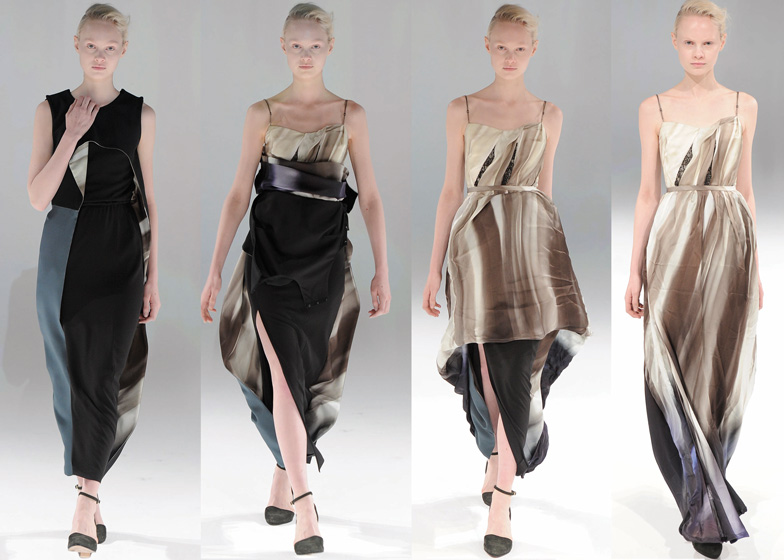
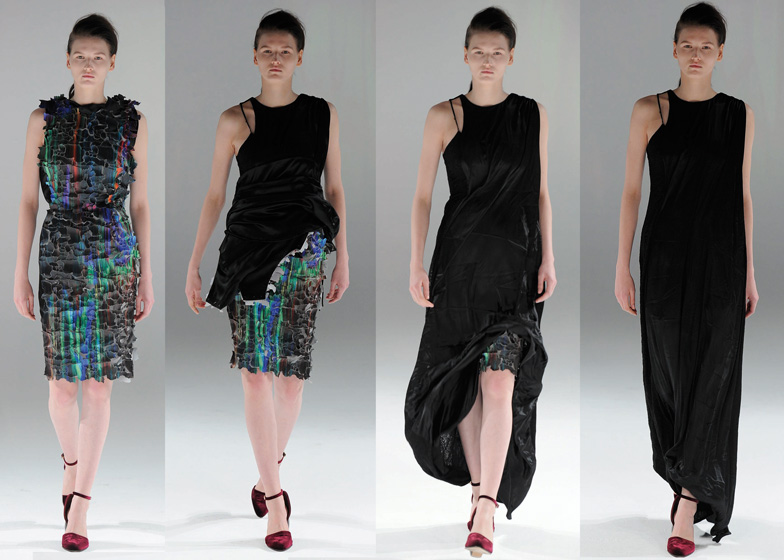
Chalayan has been awarded the prestigious ‘Designer of the Year’ award at the British Fashion Awards in 1999 and 2000, as well as being recognised as a ‘Design Star’ at the 2007 Fashion Group International awards. Along with being listed as one of the ‘25 most powerful figures in the industry’ by the British Fashion Council, Chalayan was also credited by Time magazine as one of its ‘100 Most Influential Innovators of the 21st Century’.


dezeen_Rise-Autumn-Winter-2013-collection-by-Hussein-Chalayan_ss_1

dezeen_Rise-Autumn-Winter-2013-collection-by-Hussein-Chalayan_ss_3

dezeen_Rise-Autumn-Winter-2013-collection-by-Hussein-Chalayan_ss_2

Hussein Chalayan

Hussein Chalayan

Hussein Chalayan

Hussein Chalayan

.

Book

book cover

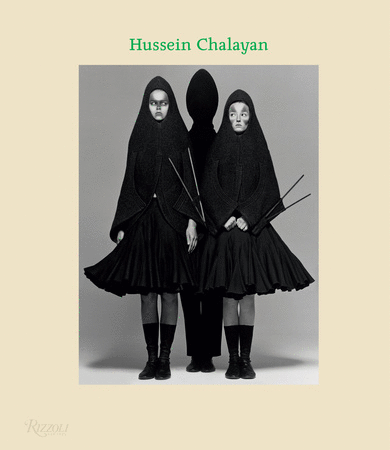
Hussein Chalayan

The comprehensive book on the visionary Hussein Chalayan, one of the most innovative, experimental, and conceptual fashion designers working today. Internationally acclaimed, Hussein Chalayan is known for his inventive use of materials and integration of new technology into his designs. He is also celebrated for putting the creative process itself on view. Some of his best-known designs include a paper dress that can be folded into an envelope and airmailed, armchair covers that transform into dresses, and a coffee table that reveals itself to be a wooden skirt. Original and groundbreaking, his designs are also pretty and modern, and this book explores that continuum. Featuring Chalayan’s complete body of fashion and creative work—including his installations, videos, and photographs—this unique and beautiful volume is as thought-provoking as it is stunning and is sure to be coveted by fashion, art, and design connoisseurs.

.

.

info:

Wikipedia

http://www.businessoffashion.com/community/people/hussein-chalayan

Kansai Yamamoto, from Ziggy Stardust to the Kansai Super Show

7 Feb

Kansai Yamamoto

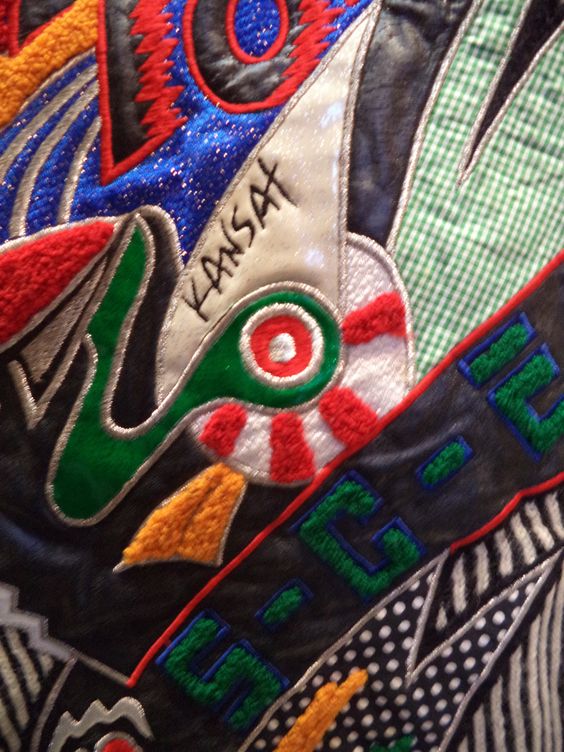
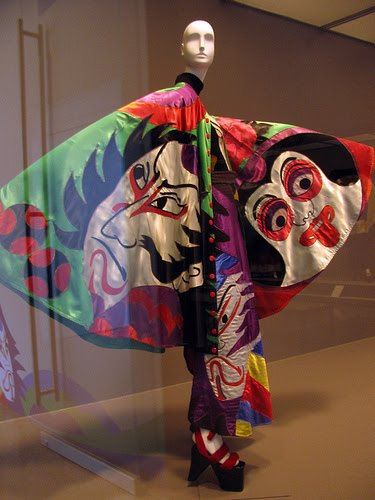
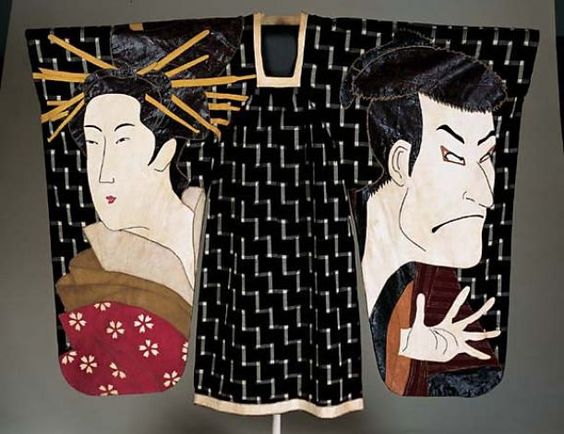
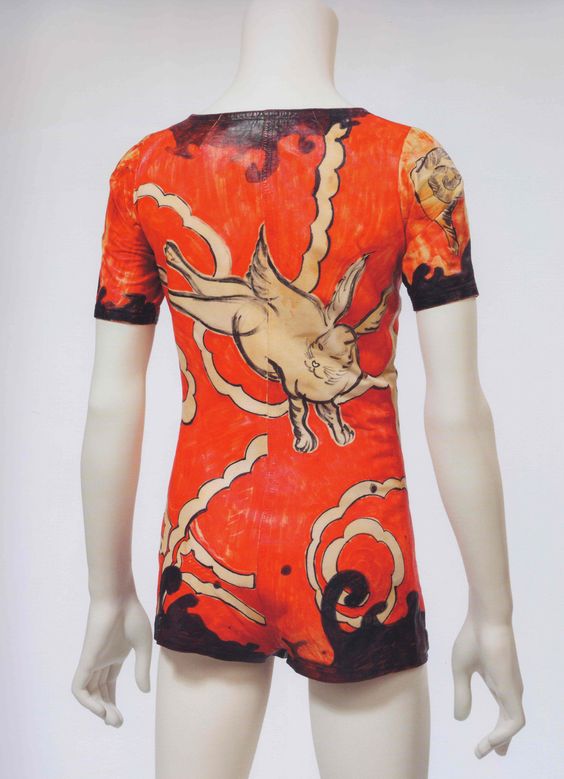
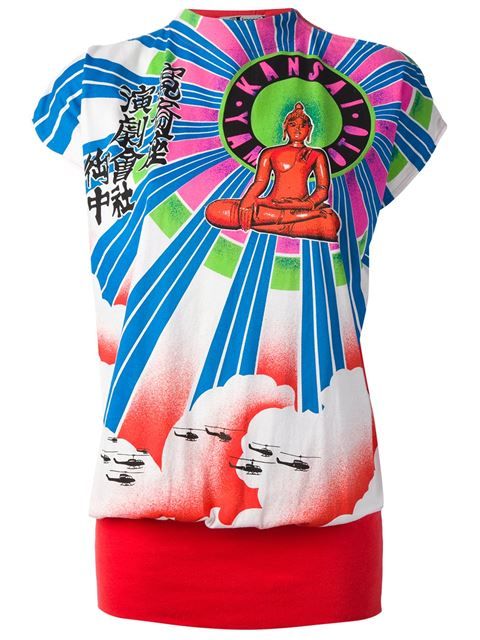
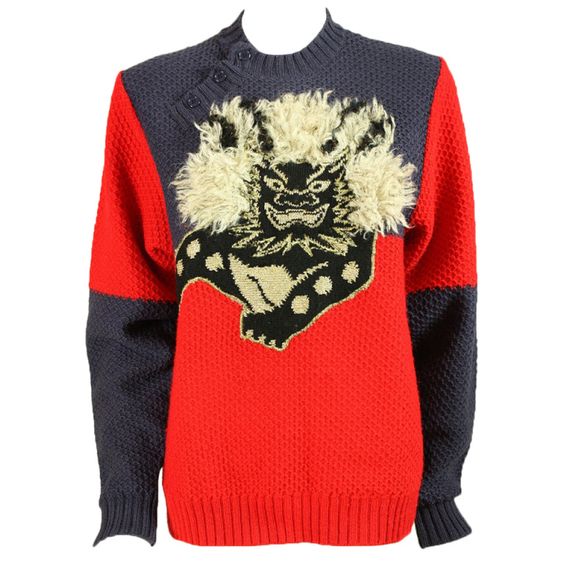
Kansai Yamamoto ( born February 8, 1944) is one of the leaders in Japanese Contemporary fashion, in particular during the 1970s and 1980s.  Inspired by the colorful art of Japan’s Momoyama period (1568–1615) and traditional Kabuki theater, his exuberant designs contrast with the Zen-like simplicity and deconstructed silhouettes favored today by designers such as Yohji Yamamoto, Rei Kawakubo, and Issey Miyake.

Kansai was born in Yokohama, Japan. After studying civil engineering and English at Nippon University ,got a so-en prise at Bunka Fashion College in 1967 . The following year he opened his first boutique in Tokyo.

1971

kansai yamamoto

Kansai Yamamoto detail

Kansai yamamoto

Kansai yamamoto

Kansai yamamoto

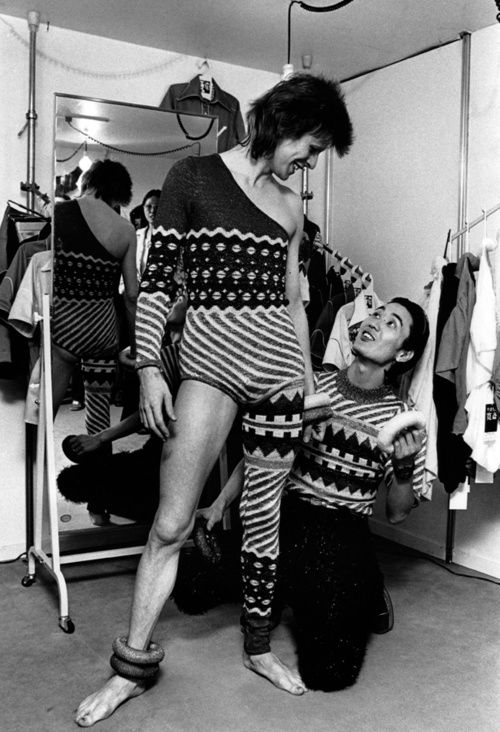
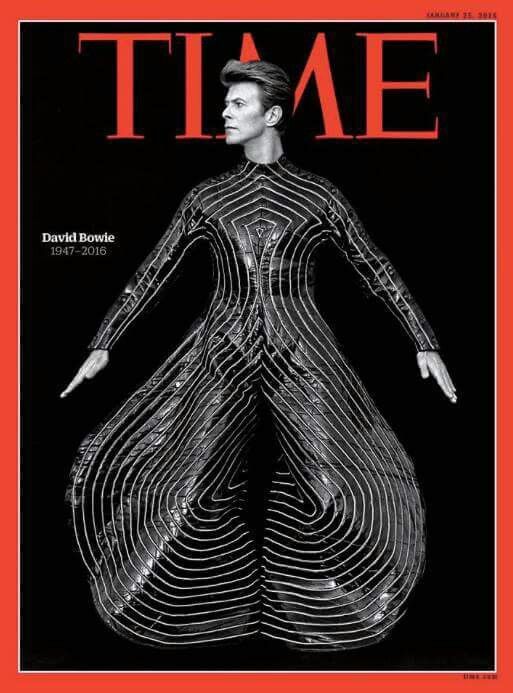
In 1971, he launched his own company, Yamamoto Kansai Company, Ltd., Tokyo. His first collection debuted in London that same year, where his clothing was seen by David Bowie. Bowie later commissioned Kansai to create the wardrobe for his Ziggy Stardust stage persona. His floaty womenswear creations helped cement Bowie’s androgynous look during his Ziggy Stardust tour, and a long-term relationship was born. STOP……

I went to see the documentary film ‘David Bowie Is’ last night, in which Kansai Yamamoto took the stage and he told the actual story : one night he was called by a friend, who kept on telling Kansai he HAD TO GO TO NEW YORK to see something spectacular!! He finally gave in and went to New York to see the concert of David Bowie/Ziggy Stardust, not knowing what to expect. When Ziggy entered the stage, he was wearing an outfit by Kansai. Actually the entire show Ziggy was dressed in Kansai Yamamoto. Bowie had purchased many items of the Kansai Yamamoto collection, which was in fact a womenswear collection…….

They did become friends….

Ziggy Stardust wardrobe

David Bowie and Kansai Yamamoto in Japan, 1973

David Bowie and Kansai Yamamoto in Japan, 1973

David Bowie and Kansai Yamamoto in Japan, 1973

Kansai Yamamoto for Ziggy Stardust/Bowie

Bowie/Ziggy Stardust/Kansai Yamamoto

Ziggy Stardust/ Kansai Yamamoto

Davis Bowie wearing Kansai Yamamoto years after Ziggy Stardust finished

.

Kansai’s first collection was sold in the USA at Hess’s Department Store in Allentown, Pennsylvania, a department store known for its controversial fashion shows of American and European styles selected for their potential to influence ready-to-wear clothing designs. (Rudy Gernreich’s topless bathing suit was first modeled at Hess’s in 1964). His 1975 debut in Paris was followed by the opening of his Kansai Boutique in 1977.

.

.

Since his last collection for fall/winter 1992, Kansai has lent his name to licensed products ranging from eyeglasses to tableware. His fashion show spectaculars have become the framework for the grand Kansai Super Shows, the first of which was held in Moscow’s Red Square in 1993. Others held since in Japan, Vietnam, India, and Berlin have drawn audiences in the hundreds of thousands.

KANSAI SUPER SHOW

.

Kansai Yamamoto designed the Skyliner train, unveiled in 2010, that connects Japan’s Narita Airport with central Tokyo.

.

Vintage Kansai Yamamoto.

Kansai Yamomoto vintage clothing is very sought after. You can find it on : http://www.farfetch.com/nl/shopping/women/kansai-yamamoto-vintage/items.aspx

https://www.etsy.com/nl/search?q=kansai%20yamamoto&ref=auto1


Kansai Yamamoto

Kansai Yamamoto

Kansai Yamamoto

Kansai Yamamoto

Kansai Yamamoto

Kansai Yamamoto

Kansai Yamamoto

.

.

Kansai YamamotoKansai Yamamoto

.

.

info:

http://www.philamuseum.org/exhibitions/318.html

Joan of Arc, inspires because she’s a Symbol of Heroism and Strength

31 Jan
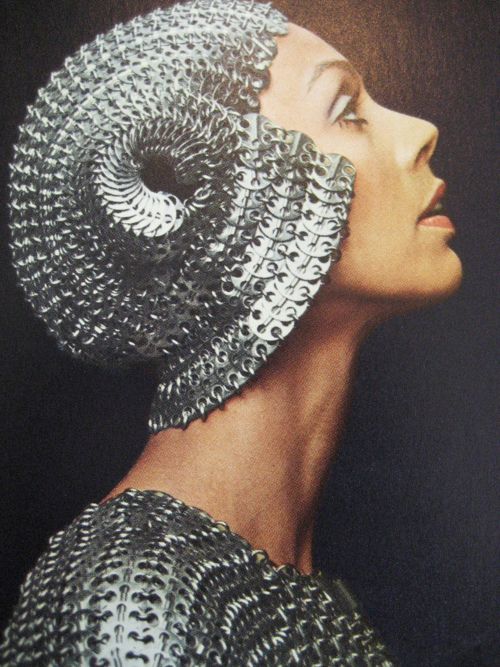
Paco Rabanne design, 1974Paco Rabanne design, 1974
.

Who was Joan of Arc?

Joan of Arc, a peasant girl living in medieval France, believed that God had chosen her to lead France to victory in its long-running war with England. With no military training, Joan convinced the embattled crown prince Charles of Valois to allow her to lead a French army to the besieged city of Orléans, where it achieved a momentous victory over the English and their French allies, the Burgundians. After seeing the prince crowned King Charles VII, Joan was captured by Anglo-Burgundian forces, tried for witchcraft and heresy and burned at the stake in 1431, at the age of 19. By the time she was officially given the status holy in 1920, the Maid of Orléans (as she was known) had long been considered one of history’s greatest saints, and an enduring symbol of French unity and nationalism.

.

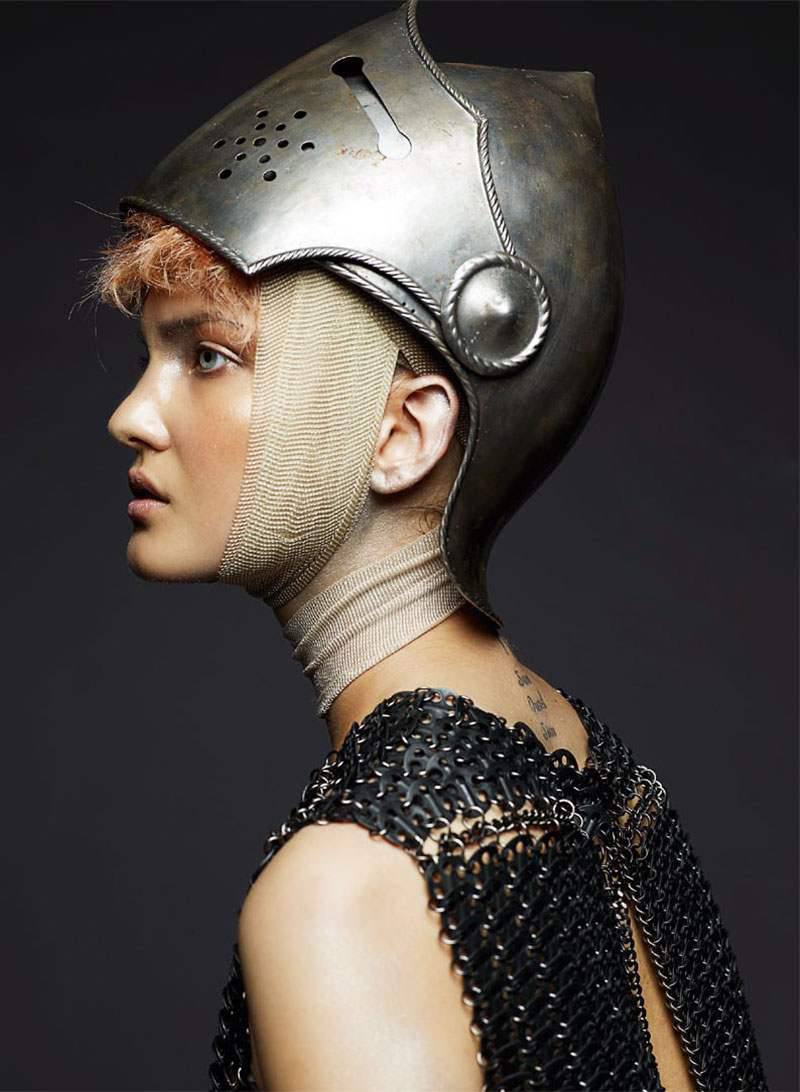
Joan of Arc inspires fashion designers, photographers & magazines to the day, because she’s a symbol of heroism and strength

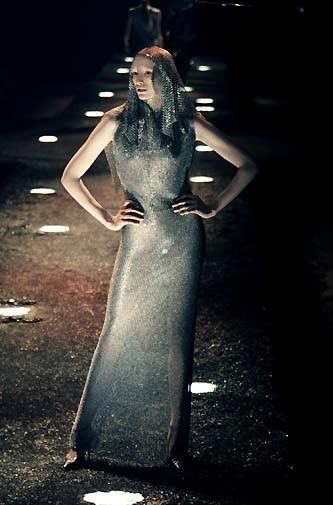
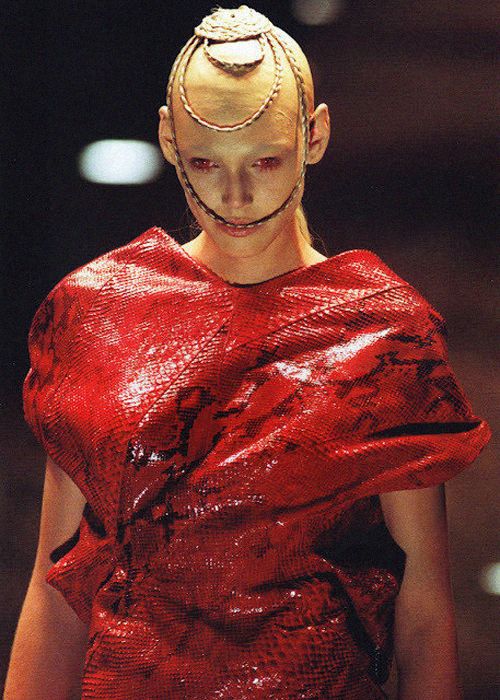
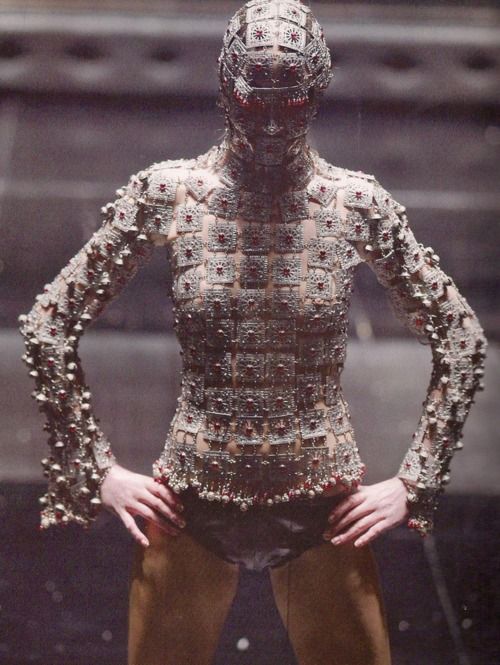
Alexander McQueen was very inspired by Joan of Arc. He based his fall/winter ’98 collection on her, but in many other collections he produced, you’ll find influences of Joan. And Sarah Burton, who is now head designer of Alexander McQueen, 

McQueen
Alexander McQueen, Joan of Arc collection f/w '98
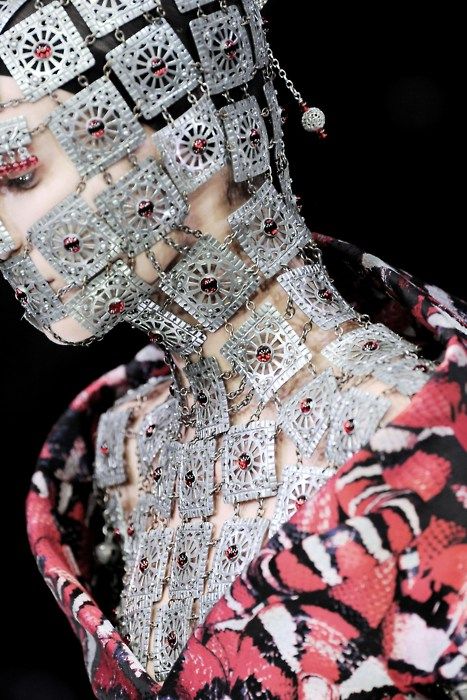
Alexander McQueen FallWinter 200910
Alexander McQueen fw 98 'Joan'
2009-2010 Alexander McQueen

.

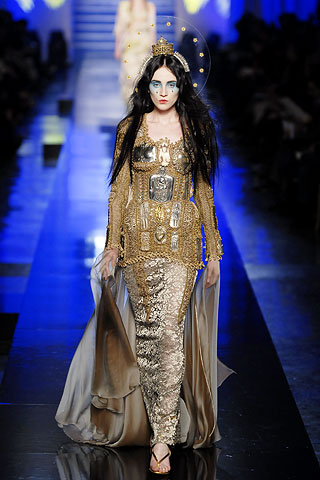
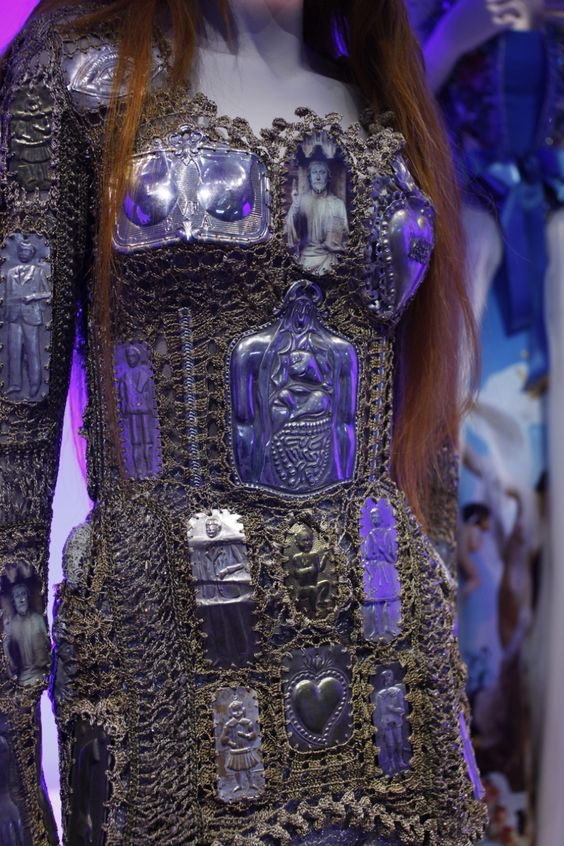
Jean-Paul Gaultier

Jean- Paul Gaulthier Joan of Arc dress

Jean- Paul Gaulthier Joan of Arc dress

Jean- Paul Gaulthier Joan of Arc dress 1

gaultier

.

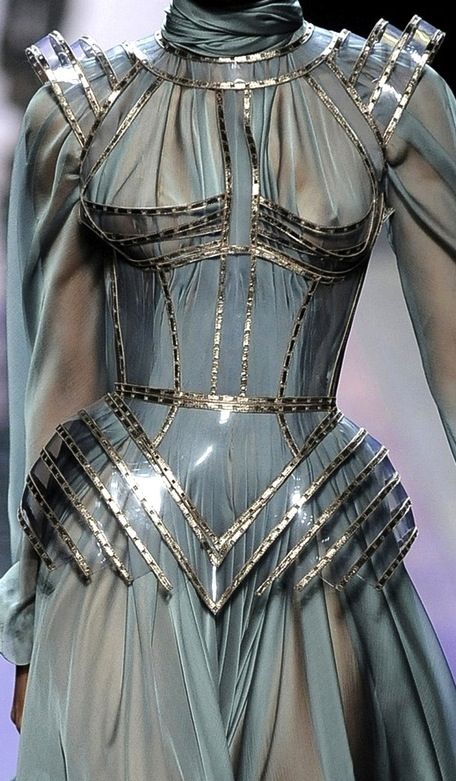
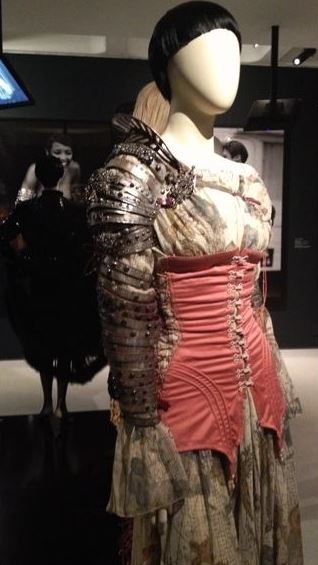
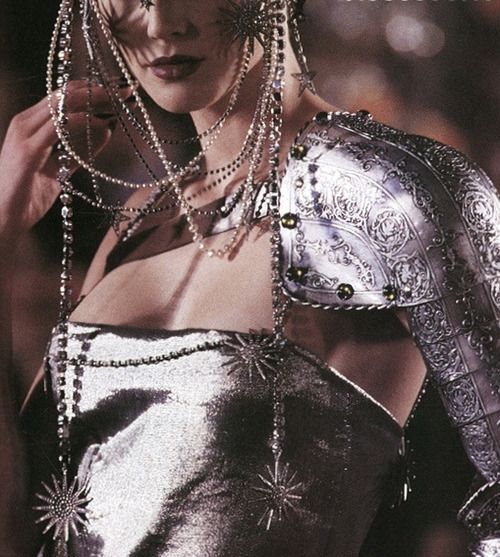
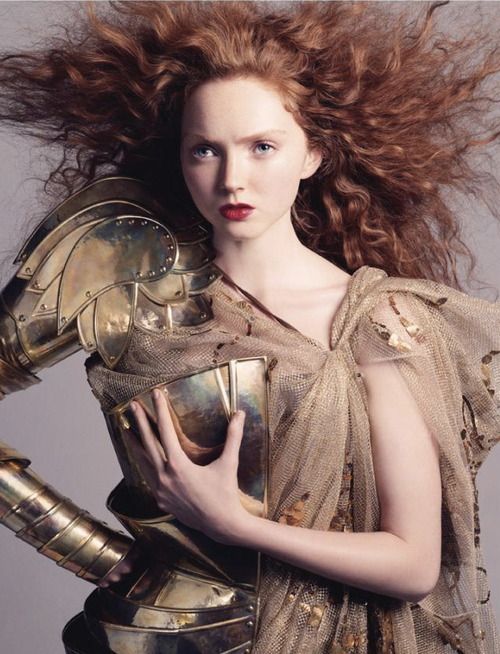
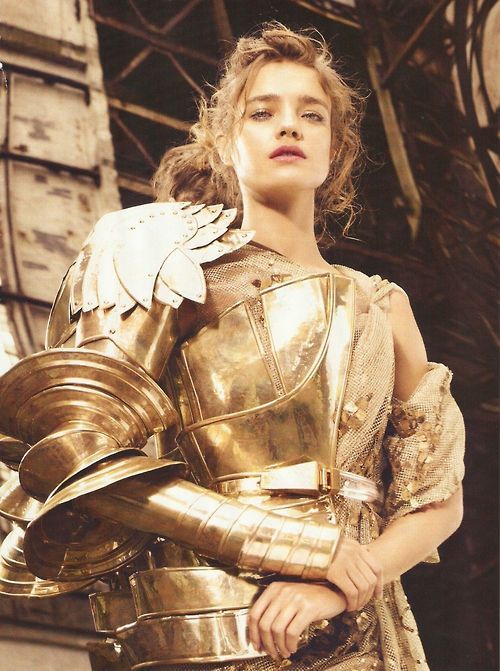
John Galliano/ Dior

Haute Couture John Galliano

Lily Cole for Christian Dior

Natalia Vodianova in Christian Dior Haute Couture Fall 2006 by John Gallino

.

Portayed as Joan of Arc

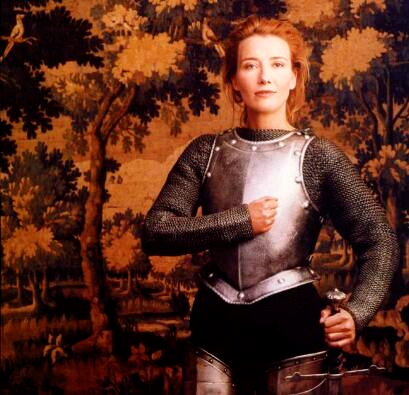
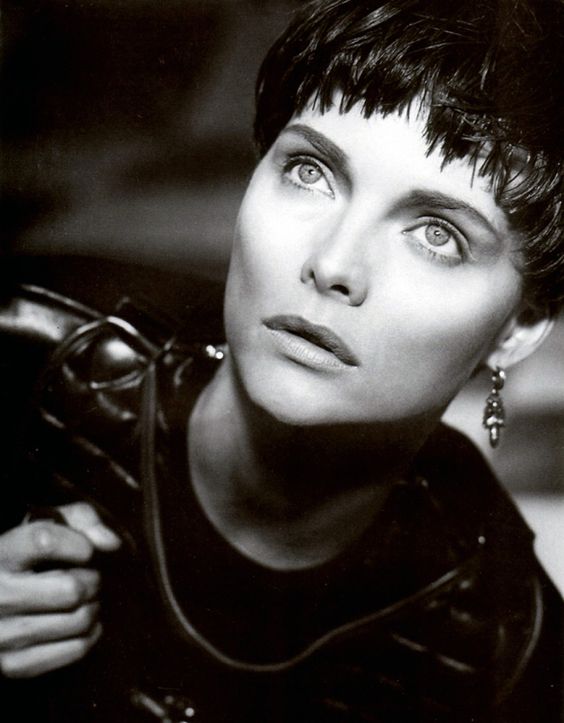
Emma Thompson as Joan of Arc - by Annie LeibovitzEmma Thompson, ph.by Annie LeibovitzMichelle as Joan of Arc. Herb RittsMichelle Pfeiffer ph. Herb Ritts
Alexander McQueenAlexander McQueen
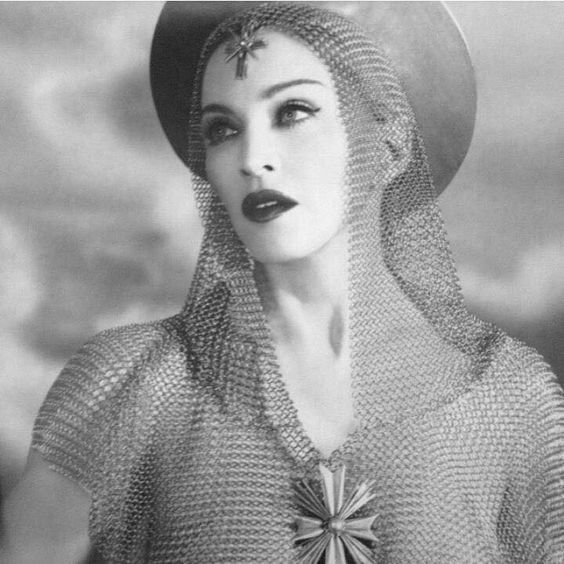
044aa8e277426dce4f7fe7440076a5fcMadonna
.
.

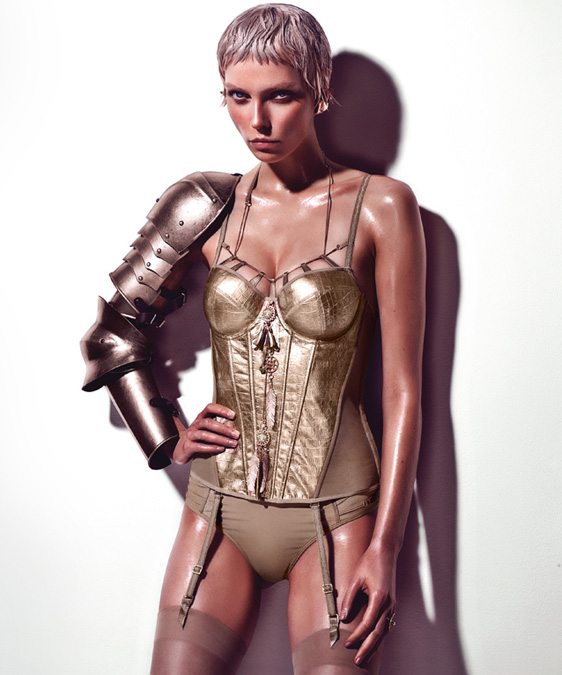
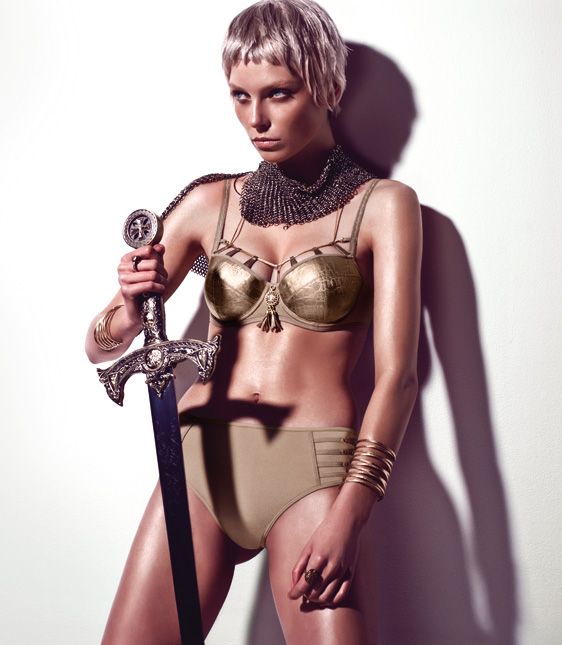
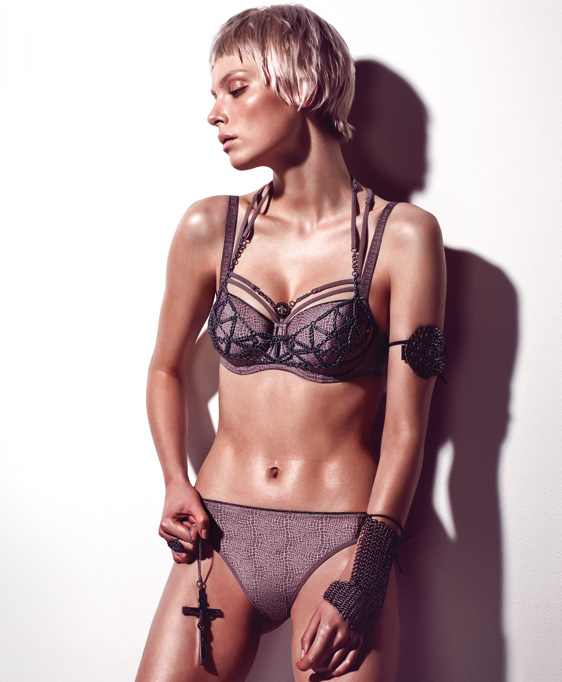
Marlies Dekkers

Fall/Winter 2014

Marlies-Dekkers_FW14_1

Marlies-Dekkers_FW14_2

Marlies-Dekkers_FW14_4

Marlies-Dekkers_FW14_3

.

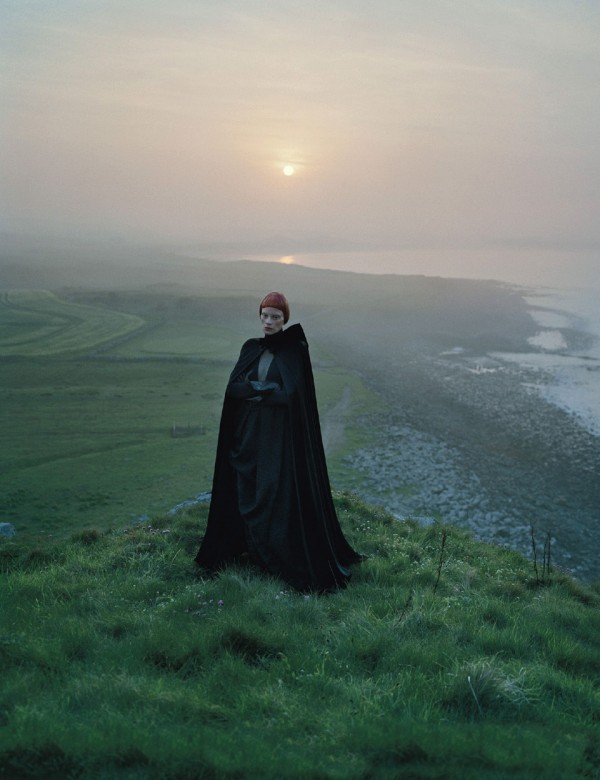
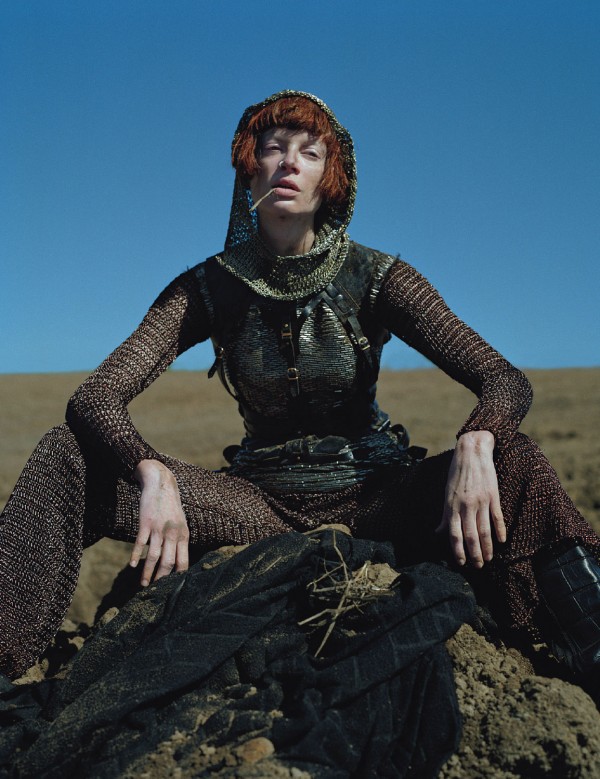
W Magazine

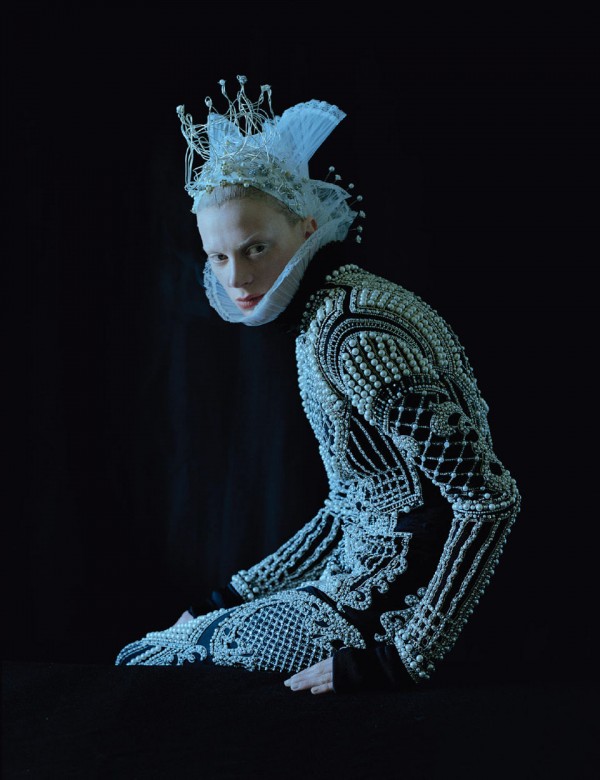
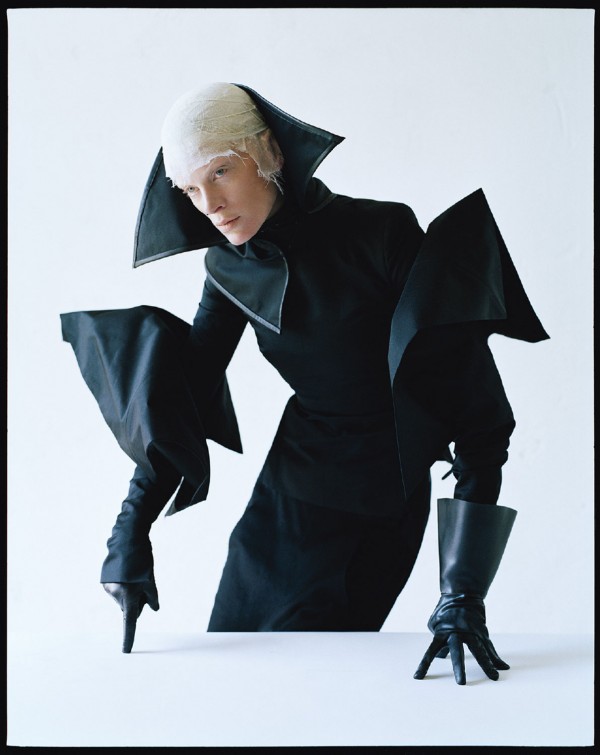
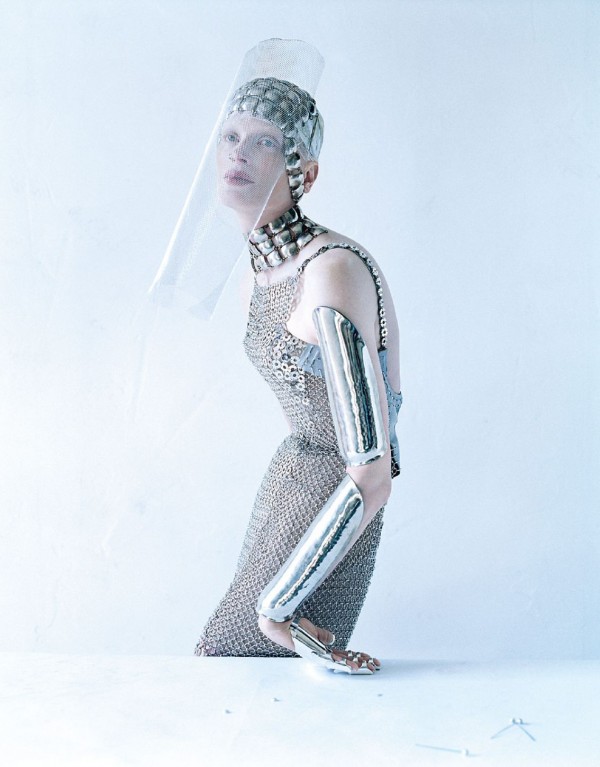
Dame of Thrones, ph. Tim Walker, September 2012

Tim-Walker-Dame-of-Thrones-W-MAgazine-Sept-2012-7--600x780

Tim-Walker-Dame-of-Thrones-W-MAgazine-Sept-2012-12--600x779

Tim-Walker-Dame-of-Thrones-W-MAgazine-Sept-2012-6--600x780

Tim-Walker-Dame-of-Thrones-W-MAgazine-Sept-2012-4--600x755

Tim-Walker-Dame-of-Thrones-W-MAgazine-Sept-2012-3--600x767
.

My favorite Joan of Arc is Milla Jovovich in The Messenger: The Story of Joan of Arc, 1999.

Directed by Luc Besson.
Milla Jovovich as Joan of Arc from the Luc Besson movie.

https://youtu.be/UXaQKj5hr-0

.

.

.


Joan of Arc inspired

Joan of Arc inspired

Katharine Hepburn, changed American Fashion

24 Jan

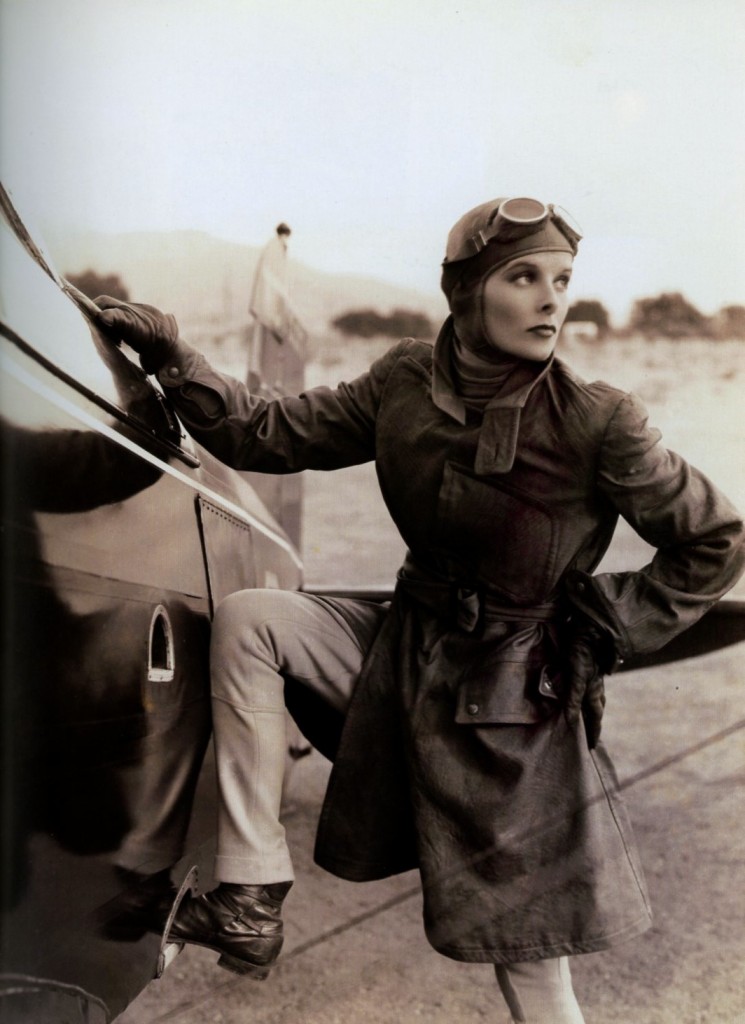
Cecil BeatonKatharine Hepburn, ph. Cecil Beaton
.
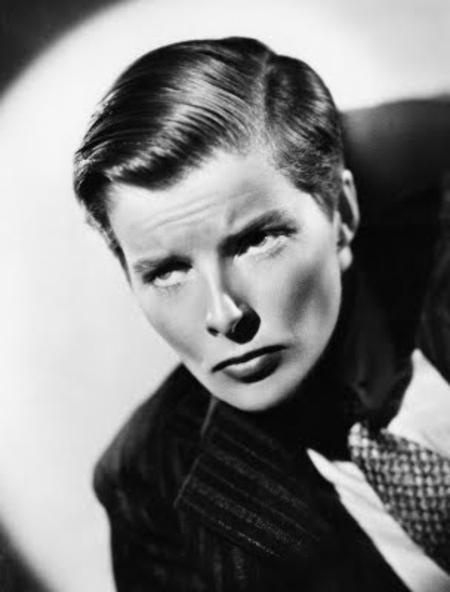
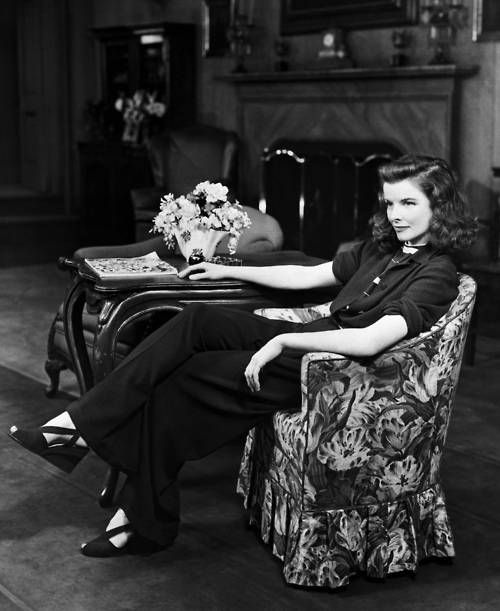
Katharine Houghton Hepburn (May 12, 1907 – June 29, 2003) was an American actress. Known for her fierce independence and spirited personality, Hepburn was a leading lady in Hollywood for more than 60 years. She appeared in a range of genres, from comedy to literary drama, and she received four Academy Awards for Best Actress—a record for any performer. In 1999, Hepburn was named by the American Film Institute The Number One Female Star of All Time.

Katharine Hepburn

Katharine Hepburn

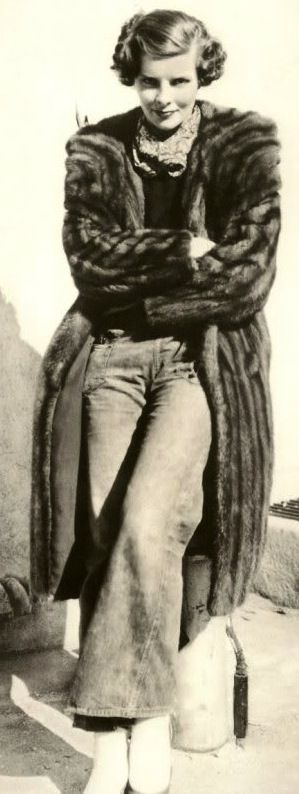
Hepburn was unparalleled in her ability to invent and maintain her own star image. She signed with RKO and went to Hollywood in the early 1930s when the Dream Factory was fixated on platinum blondes draped in sequins and feathers. But Hepburn was cut from a different template, and from the moment she stepped onscreen in the 1932 film A Bill of Divorcement, her unique image made her a “movie star.” Her highly-stylized personality and lanky physique signaled a radical departure from such screen sirens as Jean Harlow and Carole Lombard. Instead, Hepburn conveyed the essence of modernism—a woman who looked life straight in the eye.
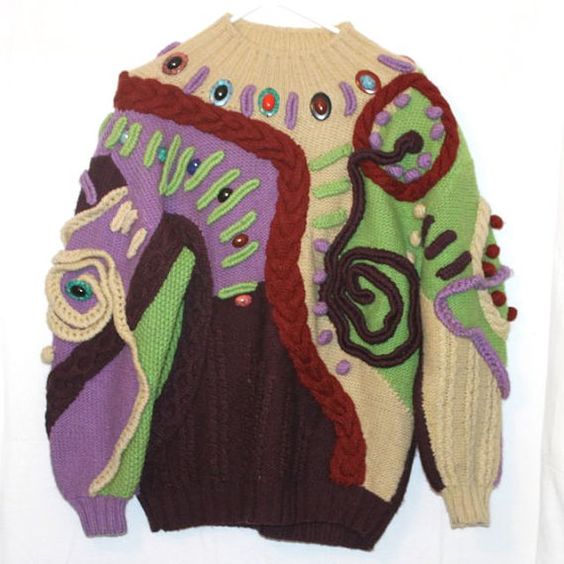
Katharine Hepburn

Katharine Hepburn

.

“I was a success because of the times I lived in. My style of personality became the style.”

.

katharine hepburn


Book

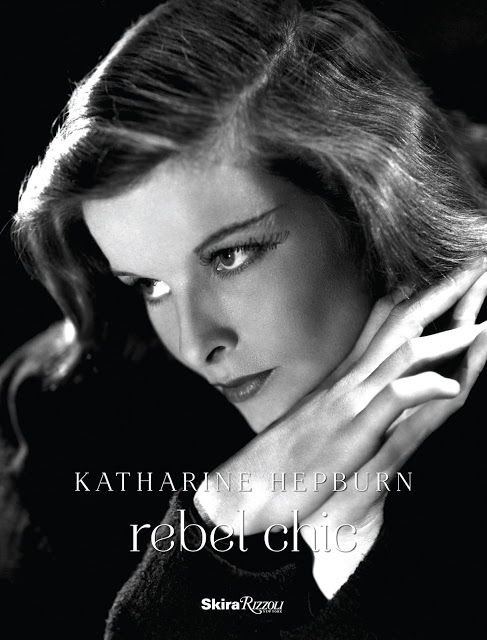
RebelChic_KatharineHepburn_cover

Katharine Hepburn: Rebel Chic

The first book to celebrate the irreverent and original style of Katharine Hepburn — icon of stage and screen. Glamorous when she wanted to be and tomboyish when she didn’t, Katharine Hepburn developed her personal style and public image as a style rebel. Whether on stage, on screen, or in private life, Hepburn had a firm grasp on the power of her appearance. Rather than submit to studio image makers, she controlled her image and drew on her own proclivities to create a distinct antifashion persona. This book presents the famously headstrong star in a new light: as a style icon. Through images of Hepburn’s on-screen and off-screen wardrobes and essays by top fashion historians, this book reveals how modern Hepburn’s insouciance and idiosyncratic manner of dressing really was and shows her as an inspirational, self-styled counterpoint to the over-managed looks of celebrities today. Full of never-before-published images of Hepburn’s costumes and personal wardrobe, Katharine Hepburn is a refreshing look at a true fashion original..

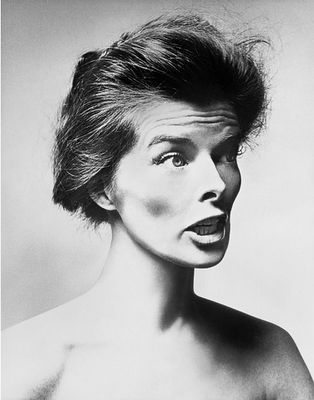
Katharine Hepburn, ph. Richard AvedonKatharine Hepburn, ph. Richard Avedon

.

.

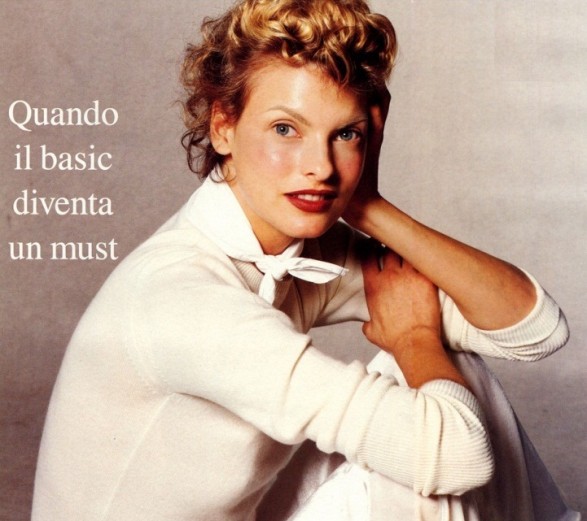
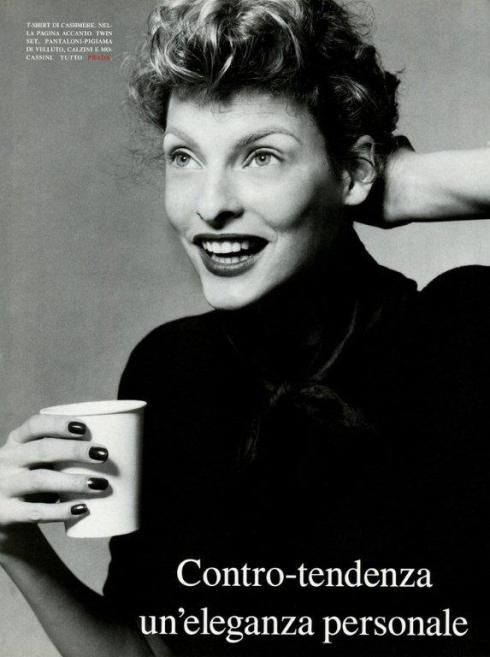
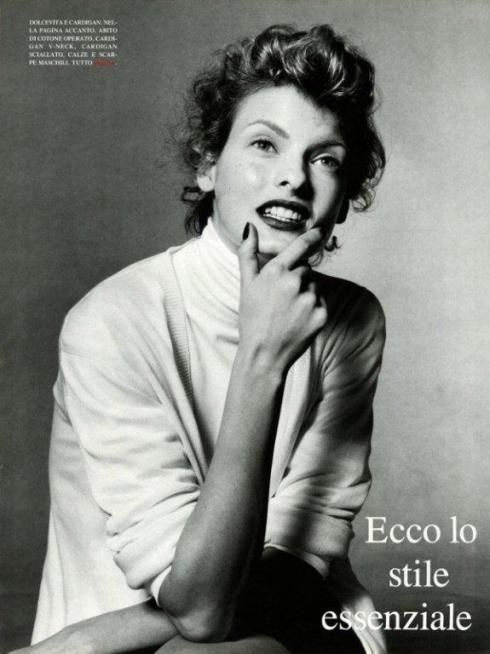
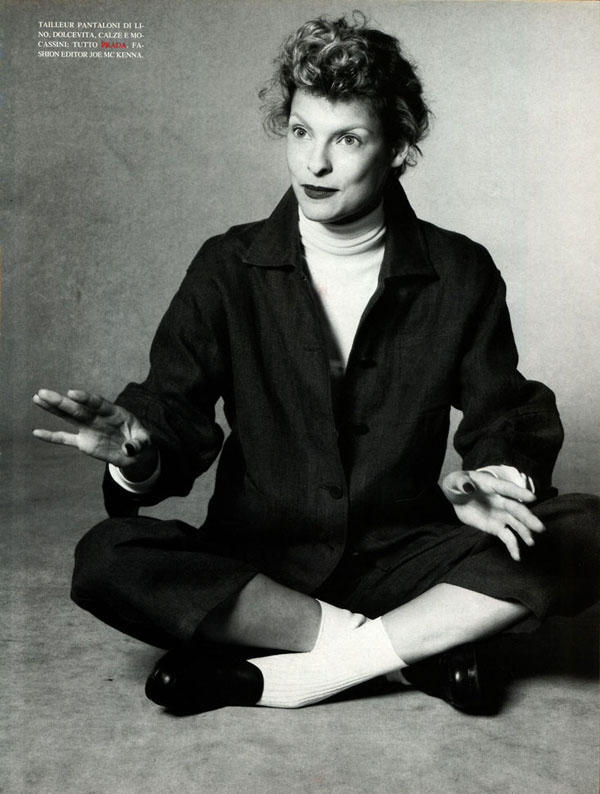
Linda Evangelista as Katharine Hepburn
Ph. Steven Meisel for Vogue Italia

Linda Evangelista as Katharine Hepburn Ph. Steven Meisel for Vogue Italia

linda-evangelista-by-steven-meisel-vogue-italia

linda-evangelista-by-steven-meisel-vogue-italia

linda-evangelista-by-steven-meisel-vogue-italia

Linda Evangelista as Katharine Hepburn Ph. Steven Meisel for Vogue Italia

.

.