Archive | opinions RSS feed for this section

Dame Zandra Rhodes, a Lifelong Love Affair with Textiles

6 Dec

Zandra Rhodes

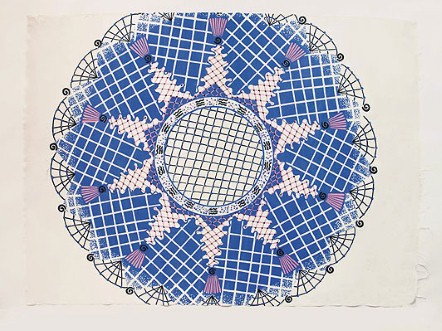
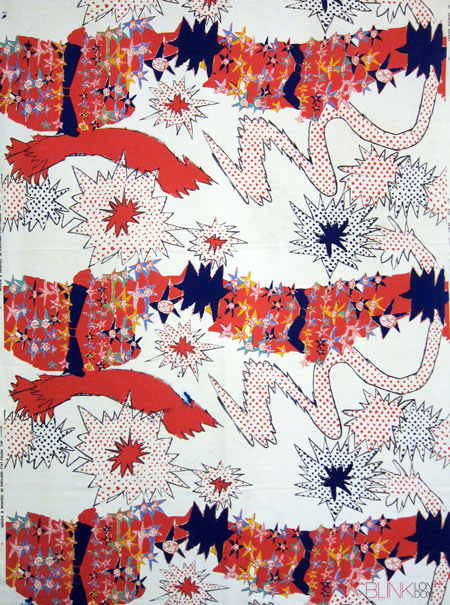
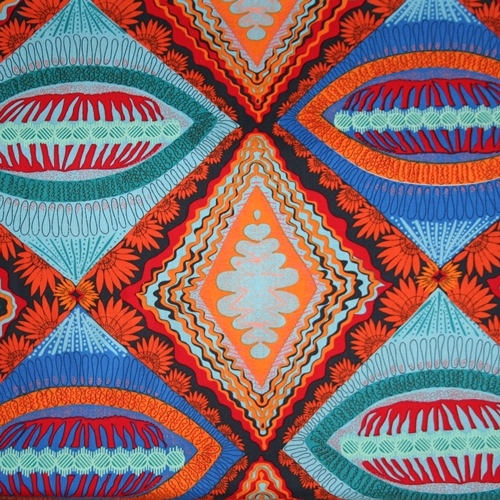
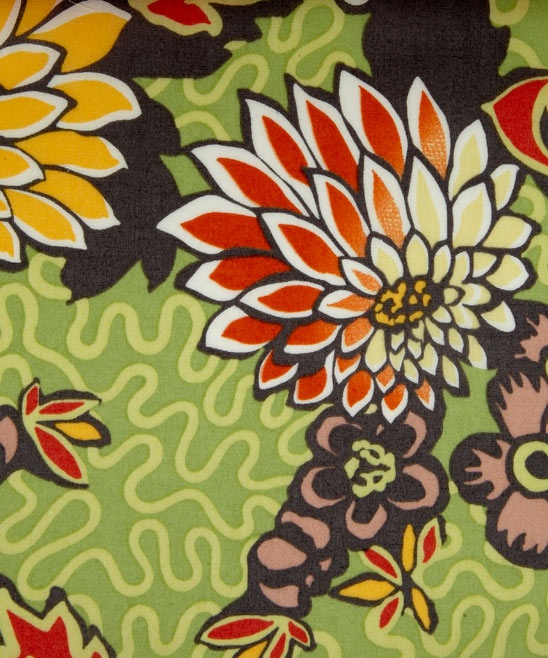
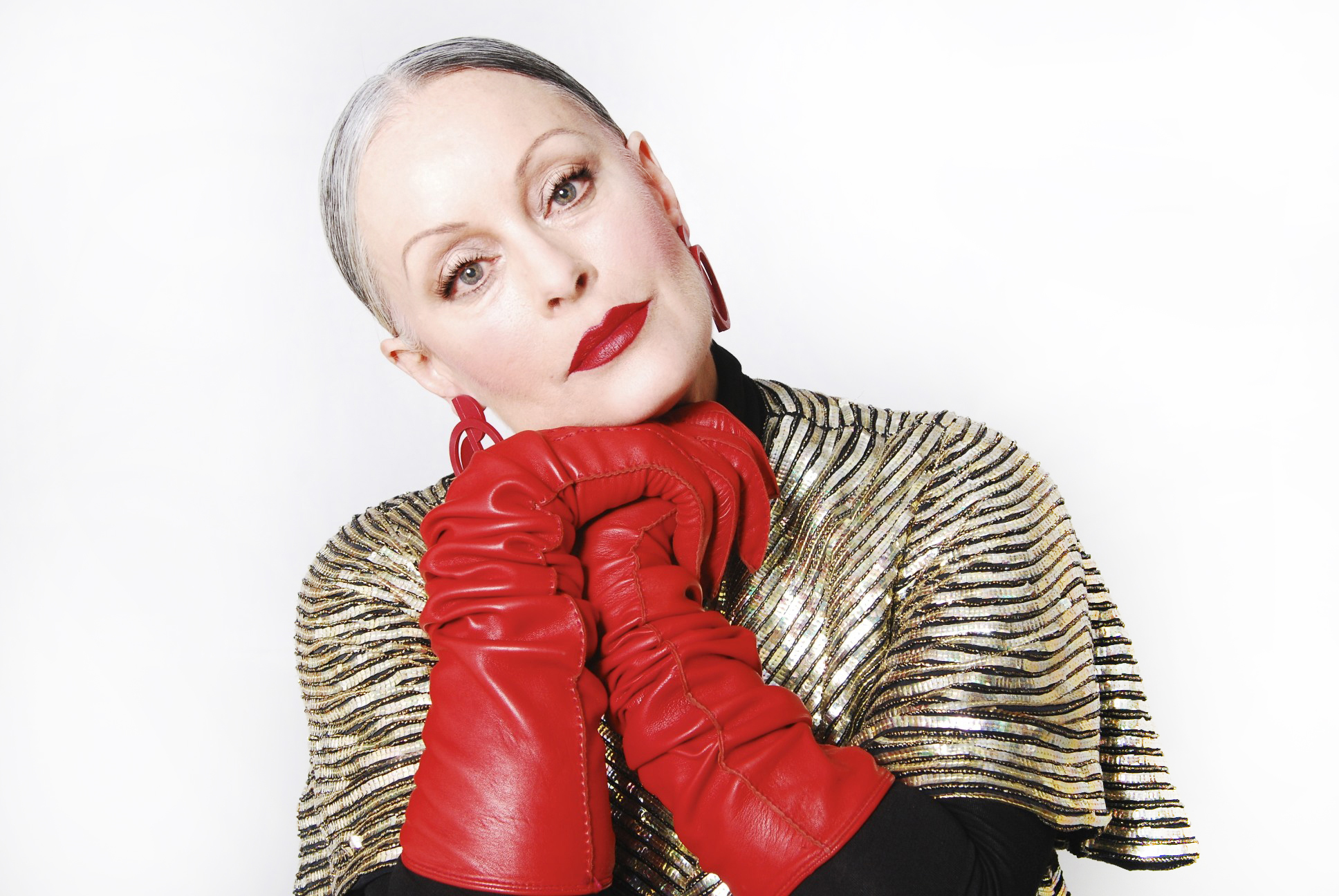
Zandra Rhodes (born 19 September, 1940. Chatham, England) was introduced to the world of fashion by her mother, a fitter for the Paris fashion House of  (Charles) Worth and later a lecturer at Medway College of Art. Zandra studied at Medway College of Art, and then at The Royal College of Art in London. Her major area of study was printed textile design.

Zandra Rhodes Textile Designs

Textile design Zandra Rhodes

Textile design Zandra Rhodes

textile design, 1964, Zandra Rhodes

Textile design Zandra Rhodes

Textile design Zandra Rhodes

Textile design Zandra Rhodes

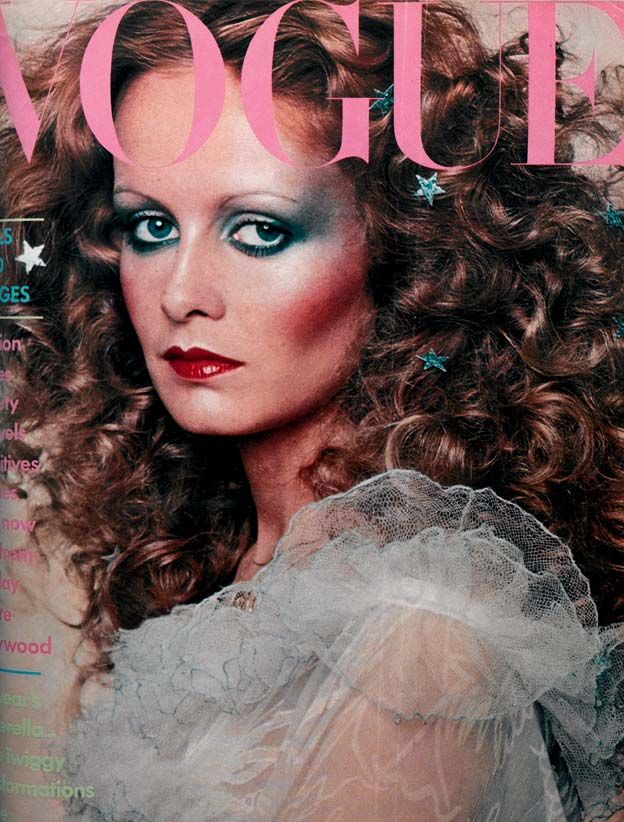
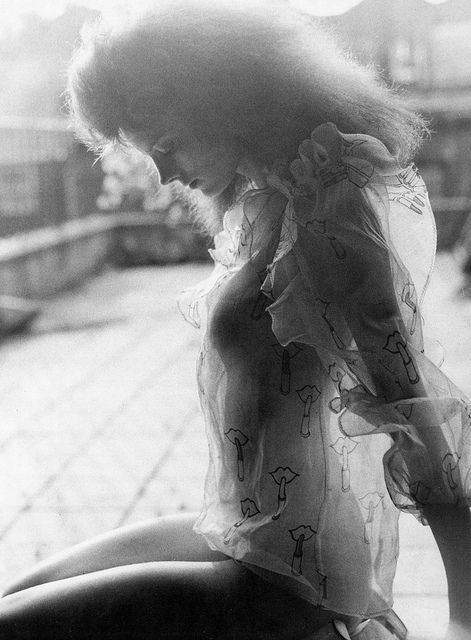
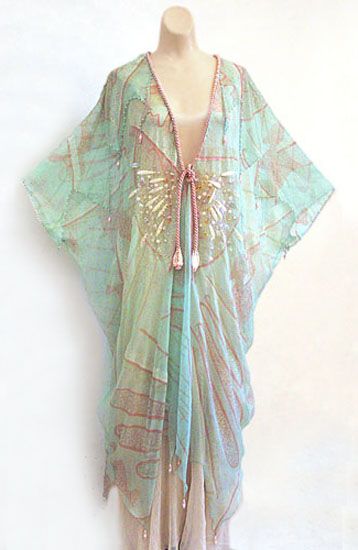
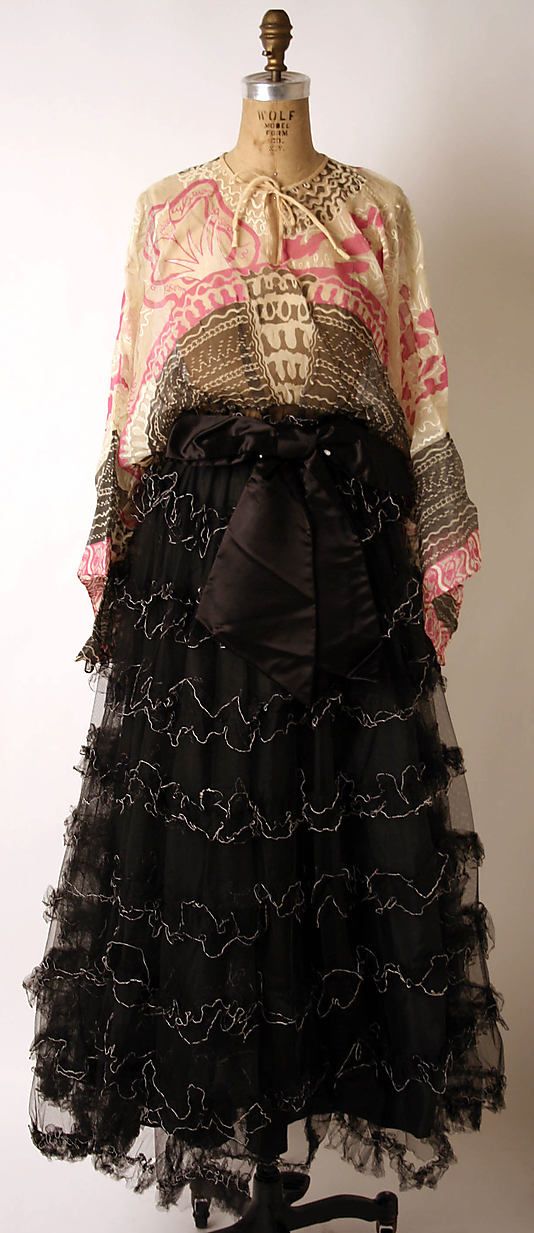
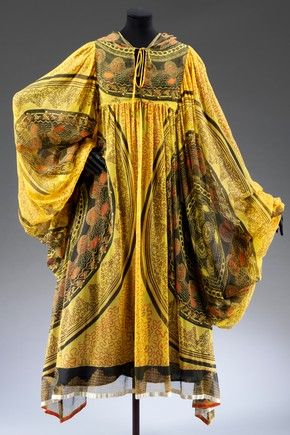
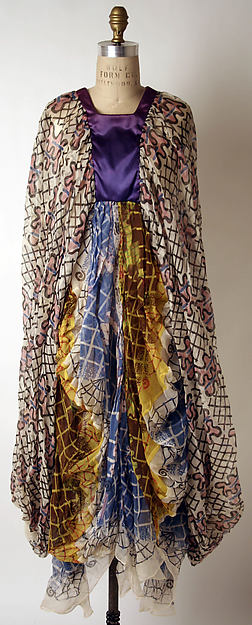
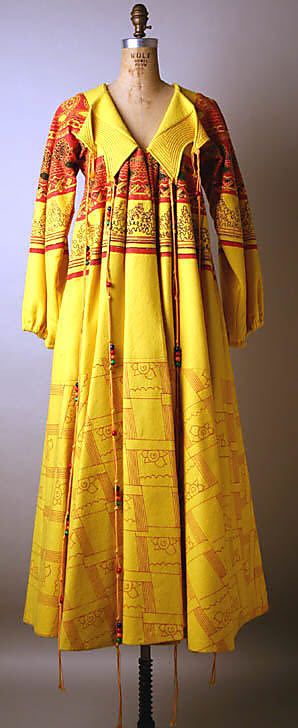
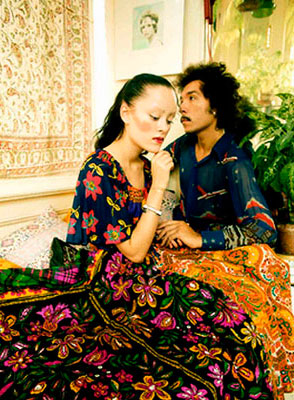
Her early textile designs were considered too outrageous by the traditional British manufacturers so she decided to make dresses from her own fabrics and pioneered the very special use of printed textiles as an intrinsic part of the garments she created. While teaching at art college, in 1967, she opened her first shop: The Fulham Road Clothes Shop in London with Sylvia Ayton. In 1969 she set up on her own and took her collection to New York where Diana Vreeland featured her garments in American Vogue, after which she started selling to Henri Bendel in NY, followed by Sakowitz, Neiman Marcus and Saks. In the UK, Zandra was given her own area in Fortnum and Mason, London. She was Designer of the Year in 1972 and in 1974 Royal Designer for Industry. In 1975 she founded her own shop off Bond Street London and boutique area in Marshall Fields, Chicago.

Zandra Rhodes garments in American Vogue 1970
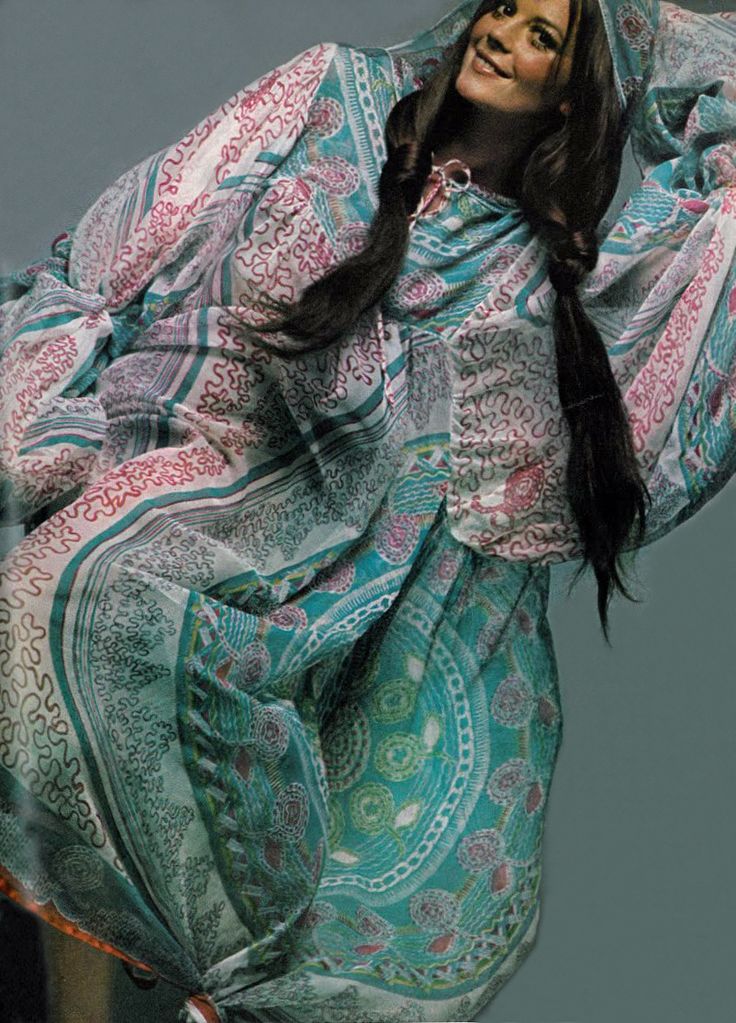
Natalie Wood by Penati in Zandra Rhodes Vogue 1970Natalie Wood by Penati in Zandra Rhodes Vogue 1970
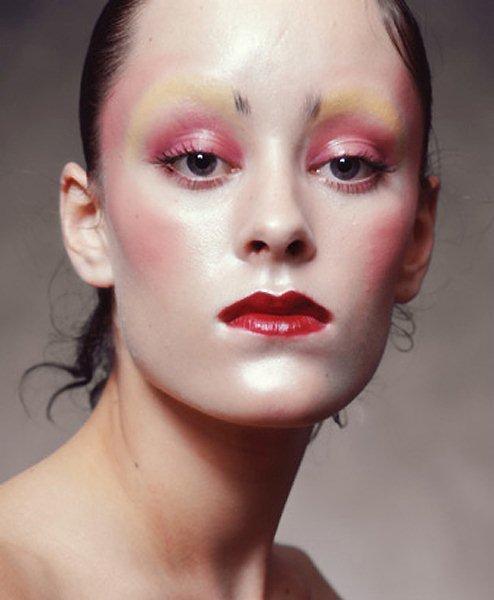
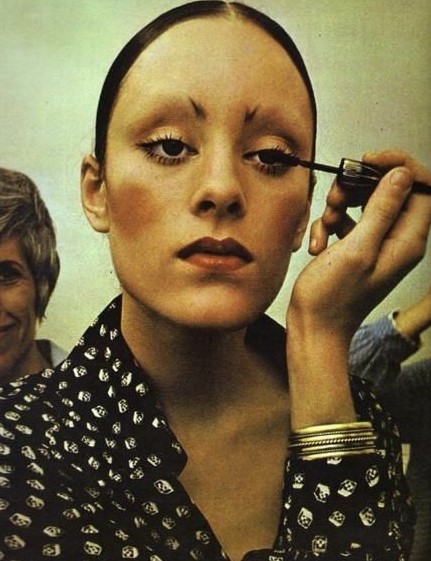
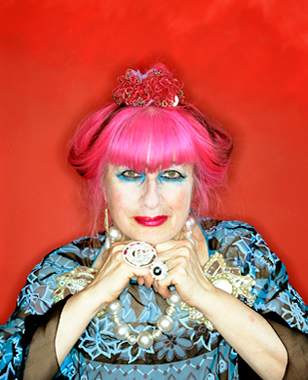
Natalie Wood by Penati in Zandra Rhodes Vogue 1970Zandra’s own lifestyle is as dramatic, glamorous and extrovert as her designs. With her bright pink hair, theatrical make-up and art jewellery, she has stamped her identity on the international world of fashion. She was one of the new wave of British designers who put London at the forefront of the international fashion scene in the 1970s. Her unique use of bold prints, fiercely feminine patterns and theatrical use of colour has given her garments a timeless quality that makes them unmistakably a Rhodes creation. In 1977 she pioneered the pink and black jersey collection with holes and beaded safety pins that earned her the name of “Princess of Punk”. Her posters from this period have been a continuous inspiration for make-up artists and are collectors’ items.
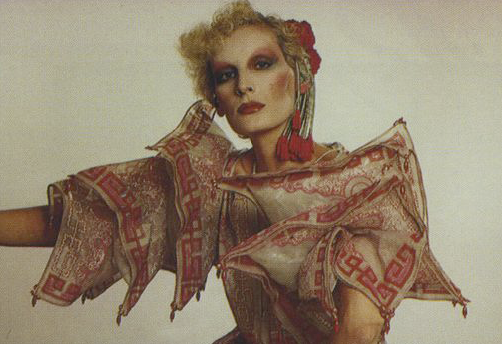
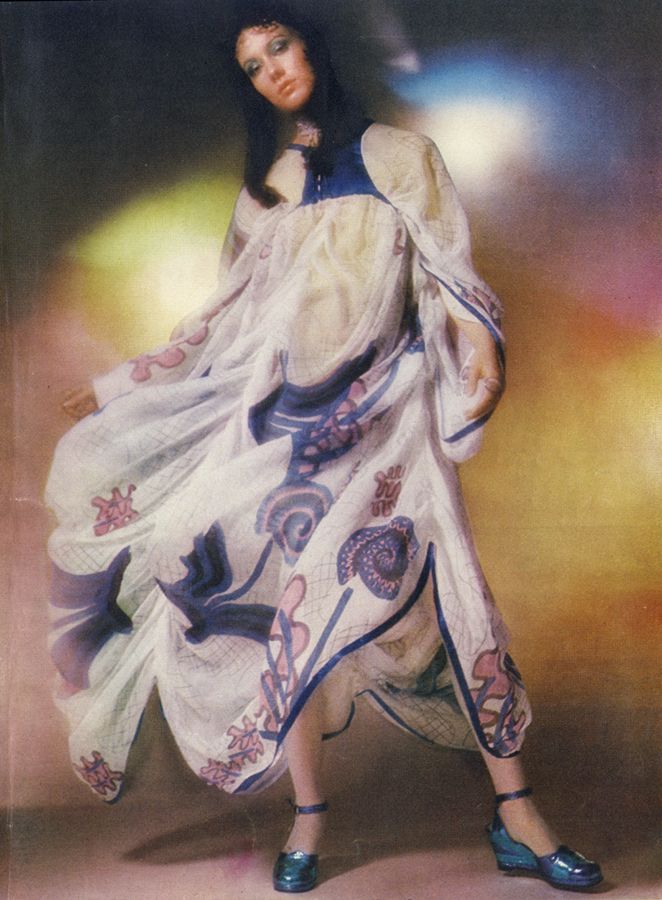
Zandra Rhodes Chinese Lantern

David Bailey, Vogue UK

Vogue UK March 1974

Zandra Rhodes

1968 zandra rhodes
She has designed for clients as diverse as Diana, Princess of Wales, Jackie Onassis, Elizabeth Taylor and Freddie Mercury of the rock group ‘Queen’. She has a strong following in the US, UK, and Australia.

Zandra’s dresses are the ultimate dress-up dress. Helen Mirren, star of “The Queen” wore a Zandra Rhodes when she received her award from BAFTA and Sarah Jessica Parker dressed up in a Zandra for “Sex and the City”. Her vintage pieces have long been collected by Tom Ford and Anna Sui and have been worn by Kelly Osborne, Ashley Olsen, Kate Moss and Naomi Campbell.

ss 1971, Zandra Rhodes

Zandra Rhodes, 1973

1972,72 Zandra Rhodes

Zandra Rhodes

Additionally, Zandra has set up the Fashion and Textile Museum in London which was officially opened May 2003 by HRH Princess Michael of Kent. Mexican architect Ricardo Legorreta designed the museum, which is in stunning pink and orange, and already has a preservation plaque. The museum is dedicated to showing the work of fashion and textile designers from the 1950s onwards. This museum has created several notable exhibitions: “My Favorite Dress”, “The Little Black Dress”, and Zandra’s very own “Zandra Rhodes: A Lifelong Love Affair with Textiles”, which is a major monographic exhibition exploring the forty year career of the iconic British Designer herself. 

'68 '69, Zandra Rhodes

1975, Zandra Rhodes

1969, Zandra Rhodes

1973, Zandra Rhodes

1968-1969, Zandra Rhodes

Rhodes was appointed Commander of the British Empire (CBE) in 1997 and Dame Commander of the Order of the British Empire (DBE) in the 2014 Birthday Honours for services to British fashion and textiles, having been invested at Buckingham Palace by Princess Anne.

.

.

Book Zandra_Rhodes_1024x1024
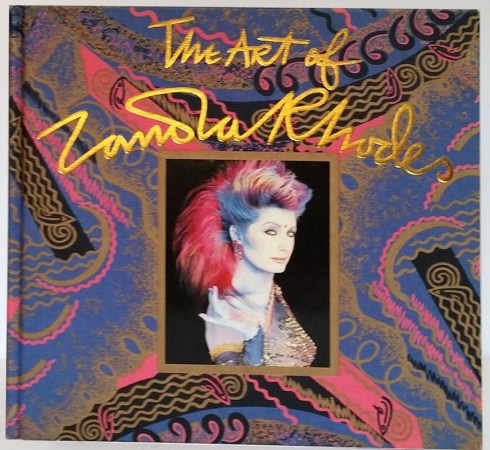
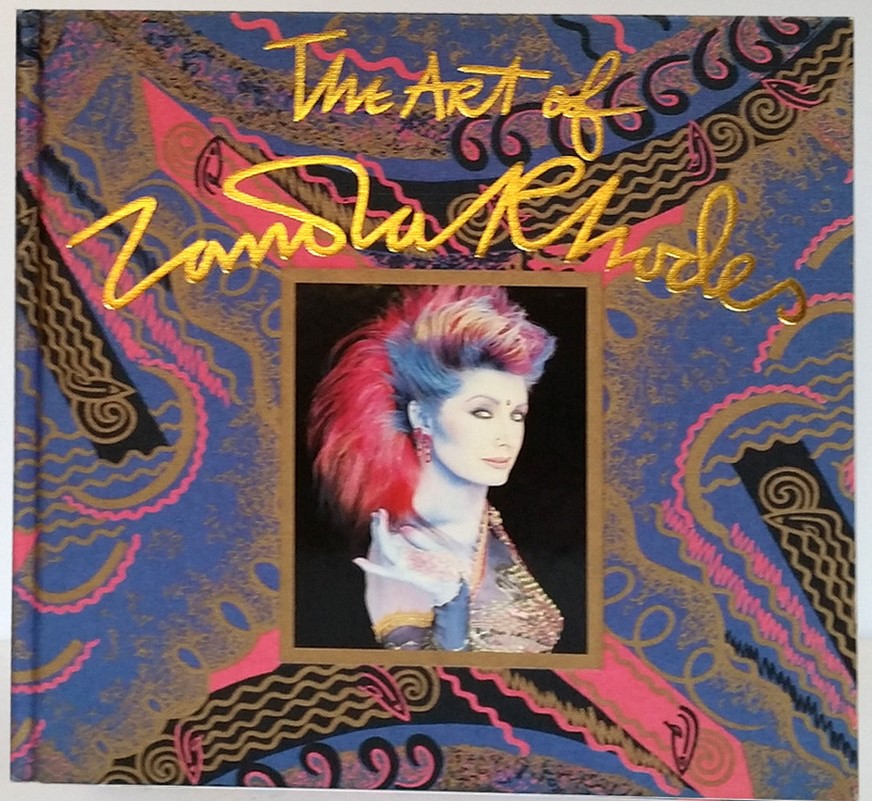
The Art of Zandra Rhodes
A glamorous hardcover reprint of the 1984 edition

This book began as a record of Zandra Rhodes’ work and has become the ultimate reference book for students studying the process behind creating designs. It explains how Zandra’s ideas are translated from her original sketchbook drawing, into a textile design, and then into the final garment. It spans from the beginning of her career to 1981.

.

.

zandra-rhodes-2015Zandra Rhodes 2015

.

info:

WikiPedia

http://www.zandrarhodes.com/about


Shaun Ross, the first Afro-American Male Model born with Albinism

15 Nov
Shaun RossShaun Ross
.

This week I watched a documentary about the hunt for Albinos in parts of Africa and it completely took my by the throat. Wanting to share this film, I surged for a connection with my blog and found it in Shaun Ross.
‘.

Albinism in humans (from the Latin albus, “white”) is a congenital disorder characterized by the complete or partial absence of pigment in the skin, hair and eyes due to absence or defect of tyrosinase, a copper-containing enzyme involved in the production of melanin. It is the opposite of melanism. 


Shaun Ross

“I was always the outcast, but a confident outcast”  

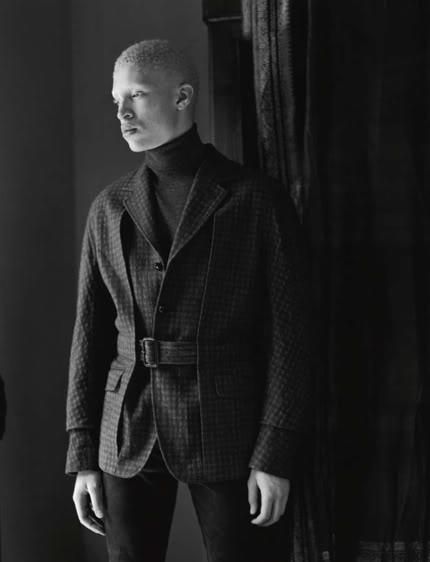
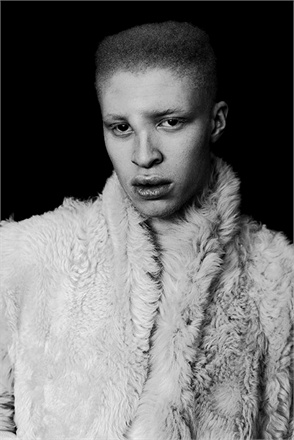
Shaun Ross (born May 10, 1991) is an American professional fashion model, actor and dancer best known for being the first male albino pro model. He has been featured in photo-editorial campaigns in fashion publications including British GQ, Italian Vogue, i-D Magazine, Paper Magazine and Another Man. He has modeled for Alexander McQueen and Givenchy.

Ross’s mom gave birth to him on the highway on the way to the hospital. “The nickname my parents always called me was Nissan,” Ross said with a laugh.

Ross is of African-American descent. Born in the Bronx, when he was growing up, Ross dealt with much discrimination for being albino. He was bullied frequently by his peers, called names such as “Powder”, “Wite-Out”, and “Casper”. After training at the Alvin Ailey School for five years, Ross was discovered on YouTube and crossed over to the fashion industry in 2008 at 16 years old.

african american albino models shaun ross & diandra forrestmodels Shaun Ross & Diandra Forrest
.

In 2009, Ross appeared on the Tyra Banks Show. He shared the show with fellow albinistic African American model Diandra Forrest; together, they shared their life stories about how different life was for them. Later that year, Ross played a role in a short film by Yoann Lemoine which won a first-place prize in a contest sponsored by Italian VogueRoss also has worked with other directors, such as Julien Seri, Jason Last, Jessica Yatrofsky and Ella Manor in both film and television. Ross, who is bisexual, participates in the underground ballroom scene in New York, where he often vogues as a free agent.
.


Shaun Ross in People Magazine:

Growing up in New York, I had to face scrutiny of my looks for as long as I can remember. Looking different, feeling different, all because of the way the world wants to classify you. I got called “weird,” “powder,” or “Casper.” When the world doesn’t want to see you – or better yet, accept you the way you are – the last thing you think you could become is a supermodel. 

Society makes it seem that the most beautiful people in the world are models; they are the perfect design of what a human being should look like: female models with long straight hair and a tiny thin waist and male models with bleach blond hair or Herculean bodies. When you’re raised with the public telling you that you are ugly or you have a disease, you don’t think you have a chance. 

As a child, I was always very outgoing and charismatic, traits I got from my parents. They helped me gain the confidence to eventually become a dancer, like my idols Michael and Janet Jackson, Madonna and Beyoncé. Later, Shameer Khan scouted me for a modeling contract. When this break led to me becoming the first male model with albinism, I knew I was helping to change the way people thought. I was breaking the mold by changing the standards of beauty with the help of others before me like Alek Wek, Stacey McKenzie and Connie Chiu.

Shaun Ross

Ross says that his condition doesn’t define him or confine him in any way. It has just always been there. The problem lies with others and with people’s perception.

Shaun Ross

Shaun Ross

David Armstrong for Another Man MagazinePh. David Armstrong for Another Man Magazine
Danny Roche, Vogue ItPh. Danny Roche, Vogue Italia
Shaun RossFord Motor Company campaign "Be Unique"
Shaun Ross
Shaun Ross


,

http://www.inmyskiniwin.com/

Ross summed up his attitude with a hashtag he uses to his growing social media following, #InMySkinIWin, which he says promotes a level of comfort with yourself. He started it to raise albinism awareness, but has since expanded the meaning to just loving who you are.

16ca56b4ae27a1a2896cb9a676476653

http://shaundross.tumblr.com/

.

.

Documentary

The hunt for Albinos

In parts of Africa people believe that giving birth to an Albino “creature” is a curse. Some also believe that owning a part of their body will make them rich. Albinos are hunted down and hacked to death. Or, if lucky, they will only lose an arm (sold for $225).

In this amazing documentary Joseph Terner reaches out to the same people who made his life hell. He explains Albinos are not the product of a curse, but that of a genetic mutation.
https://youtu.be/1w0AhGAC2R0

.

.

nixi-magazine-shaun-ross-terry-richardson-portrait-male-model-13-e1434580494325Ph.Terry Richardson for Nixi Magazine
;
;

Info:

http://www.huffingtonpost.com/shaun-ross/

http://www.people.com/article/shaun-ross-model-albinism-tanzanian-refugees

http://edition.cnn.com/2013/09/10/living/fashion-week-imperfect-model-shaun-ross/

Zelda Fitzgerald, the “First American Flapper”

8 Nov

Zelda Fitzgerald

Flappers were a “new breed” of young Western women in the 1920s who wore short skirts, bobbed their hair, listened to jazz and flaunted their disdain for what was then considered acceptable behavior. Flappers were seen as brash for wearing excessive makeup, drinking, treating sex in a casual manner, smoking, driving automobiles, and otherwise flouting social and sexual norms. Flappers had their origins in the liberal period of the Roaring Twenties, the social, political turbulence and increased transatlantic cultural exchange that followed the end of World War I, as well as the export of American jazz culture to Europe.  (Wikipedia)

Zelda Sayre Fitzgerald

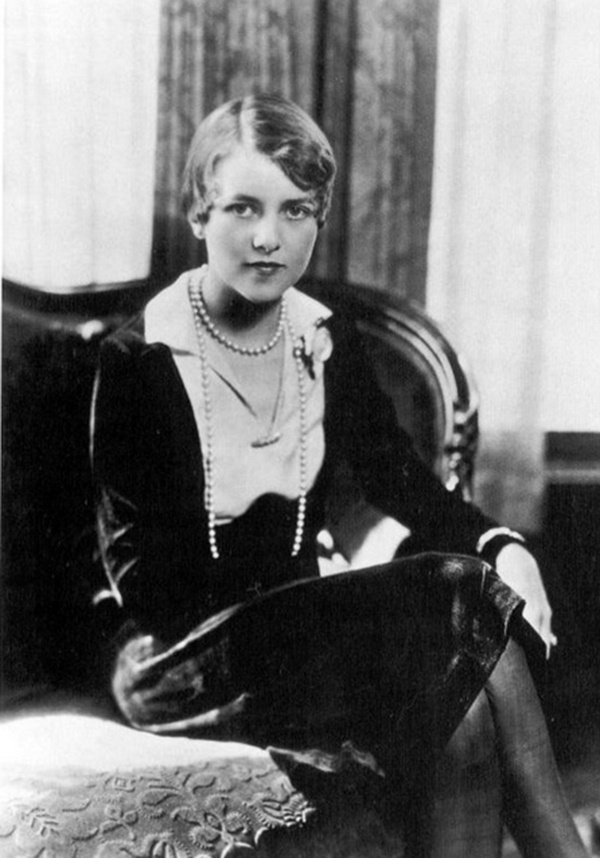
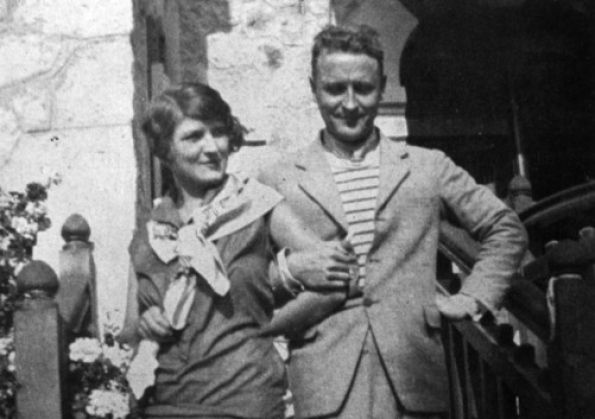
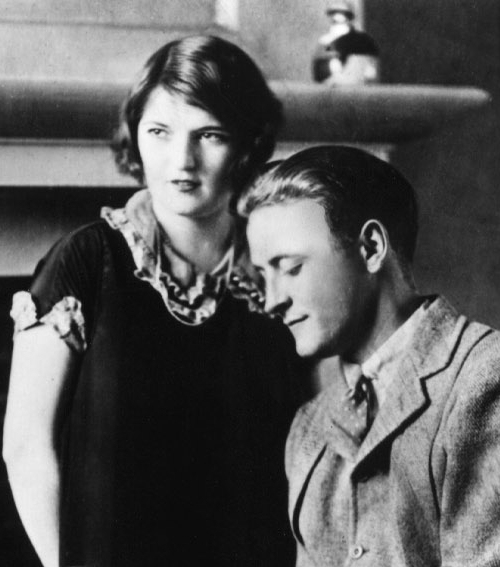
The empress of the Jazz Age, Zelda Fitzgerald  inspired fashion in much the same way she inspired her husband F. Scott Fitzgerald’s writing: firmly and fiercely. The two married in 1920, and soon after Scott achieved literary success with This Side of Paradise. Feisty, talented and a prodigious social butterfly, Zelda quickly made a name for herself as his charismatic muse. Dubbed the “first American flapper” by her husband, Zelda epitomized the Roaring Twenties with her bobbed hair, short skirts and unapologetic drinking as she made her way through the most exclusive social circles in New York and, later, Paris. She wore a flesh-colored bathing suit to fuel rumors that she swam nude–she liked the attention. However, in reality, life wasn’t quite so enchanting — the Fitzgeralds’ marriage was often turbulent. Zelda spent much time in and out of institutions being treated for mental illness. She was staying in an institution in North Carolina in 1948 when she died after a fire broke out. However, despite the personal hardships, Zelda had embodied everything that fabled era promised: defiance, recklessness and, above all, glamour.

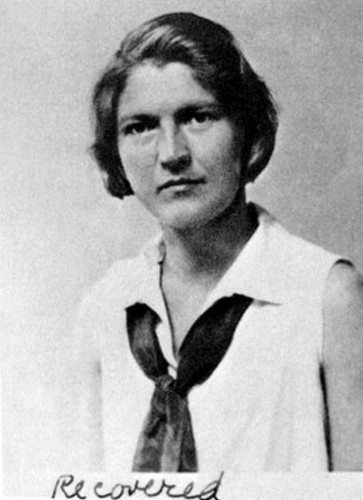
Zelda Fitzgerald

Zelda & Scott FitzgeraldZelda & Scott Fitzgerald

Zelda Fitzgerald

Zelda & Scott FitzgeraldZelda & Scott Fitzgerald
.

When Dorothy Parker first caught a glimpse of Zelda and F. Scott Fitzgerald, in the early twenties, they were sitting atop a taxi. “They did both look as though they had just stepped out of the sun; their youth was striking,” she said. “Everyone wanted to meet him.”

And her as well. Zelda Fitzgerald, the iconic flapper, whose glory and despair have come to define the Jazz Age, was born in Montgomery, Alabama, on July 24 1900, as Zelda Sayre. “Youth doesn’t need friends—it only needs crowds,” she once wrote, but she was wrong. She loved the limelight, at least initially, but she certainly needed her friends—married to Scott, and the star and heroine of his bestsellers, she was, like all celebrities, like all It girls, trapped in the image she had come to represent, even when she was a willing co-conspirator in authoring the myth. The pressure of living up to—or down to—that myth, it has been argued, is what literally drove her mad, and was responsible for her tragic spiral.

Zelda Fitzgerald

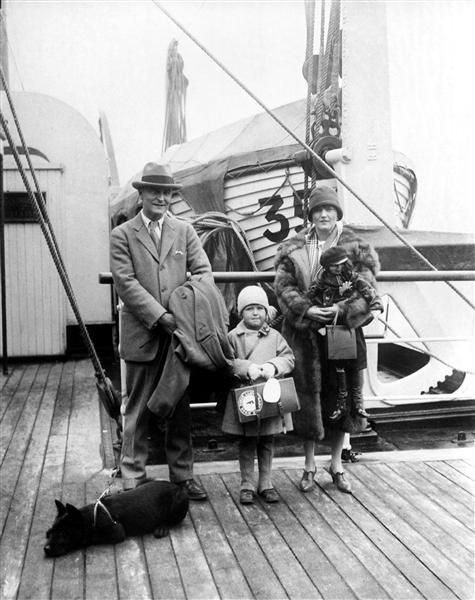
Zelda & Scott FitzgeraldZelda, Scott & Frances "Scottie" Fitzgerald

.

The clever, charismatic Mrs. Fitzgerald bristled at her wife-of-the-artist role—in her own right she was a serious ballet dancer and a talented author. In 1932 she published a novel, which infuriated Scott, though he had borrowed liberally from her diaries and letters for his own work. She was in the end far more complicated, deeply more interesting, than the champagne-guzzling-fountain-jumping-goddess-bad-girl the public thought they knew.

Zelda Fitzgerald

Zelda and Francis Scott Fitzgerald in 1926Zelda & Scott Fitzgerald
Zelda & Scott FitzgeraldZelda, Scott & Frances "Scottie" Fitzgerald
zelda-and-scott-fitzgerald-mylusciouslife-com-zelda-fitzgerald1Zelda & Scott Fitzgerald
.

But, by 1925, Zelda wrote, ”The flapper! She is growing old. She has come to none of the predicted ‘bad ends,’ but has gone at last, where all good flappers go — into the young married set, into boredom and gathering conventions and the pleasure of having children, having lent a while a splendor and courageousness and brightness to life, as all good flappers should.”

Zelda Fitzgerald

.

Zelda Wasn’t ‘Crazy’

According to Zelda biographer, Theresa Ann Fowler: “Zelda did suffer some mental health crises — depression, primarily — and was an uninhibited, uncensored woman who didn’t always think before she acted, but she wasn’t crazy. Unwise? Sometimes. Insane? No.”

Zelda Fitzgerald

.

.

Book

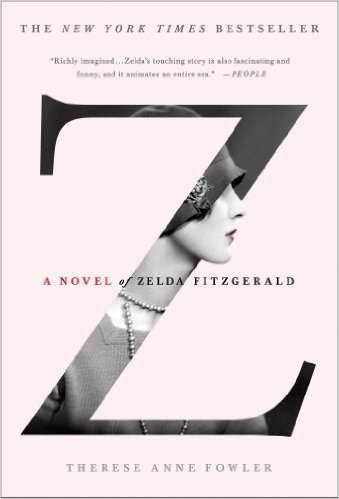
Book Cover

When beautiful, reckless Southern belle Zelda Sayre meets F. Scott Fitzgerald at a country club dance in 1918, she is seventeen years old and he is a young army lieutenant stationed in Alabama. Before long, the “ungettable” Zelda has fallen for him despite his unsuitability: Scott isn’t wealthy or prominent or even a Southerner, and keeps insisting, absurdly, that his writing will bring him both fortune and fame. Her father is deeply unimpressed. But after Scott sells his first novel, This Side of Paradise, to Scribner’s, Zelda optimistically boards a train north, to marry him in the vestry of St. Patrick’s Cathedral and take the rest as it comes.

What comes, here at the dawn of the Jazz Age, is unimagined attention and success and celebrity that will make Scott and Zelda legends in their own time. Everyone wants to meet the dashing young author of the scandalous novel―and his witty, perhaps even more scandalous wife. Zelda bobs her hair, adopts daring new fashions, and revels in this wild new world. Each place they go becomes a playground: New York City, Long Island, Hollywood, Paris, and the French Riviera―where they join the endless party of the glamorous, sometimes doomed Lost Generation that includes Ernest Hemingway, Sara and Gerald Murphy, and Gertrude Stein.

Everything seems new and possible. Troubles, at first, seem to fade like morning mist. But not even Jay Gatsby’s parties go on forever. Who is Zelda, other than the wife of a famous―sometimes infamous―husband? How can she forge her own identity while fighting her demons and Scott’s, too? With brilliant insight and imagination, Therese Anne Fowler brings us Zelda’s irresistible story as she herself might have told it.

.

.


John Rawlings, elevated Commercial Photography to an Art Form

1 Nov

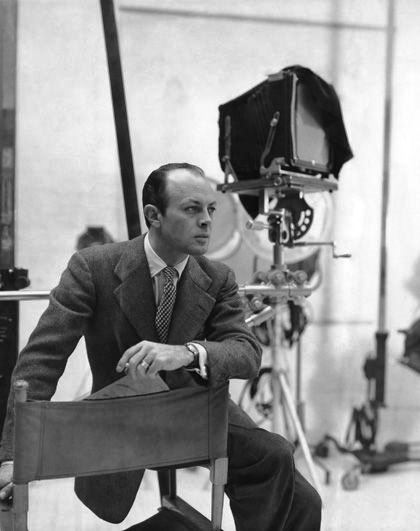
Self-Portrait of John Rawlings, fashion photographer

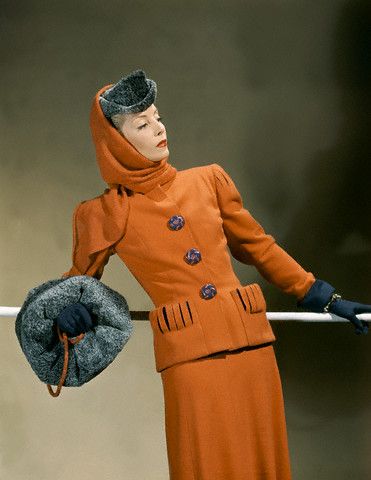
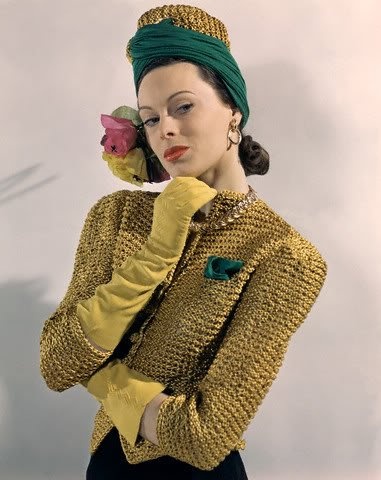
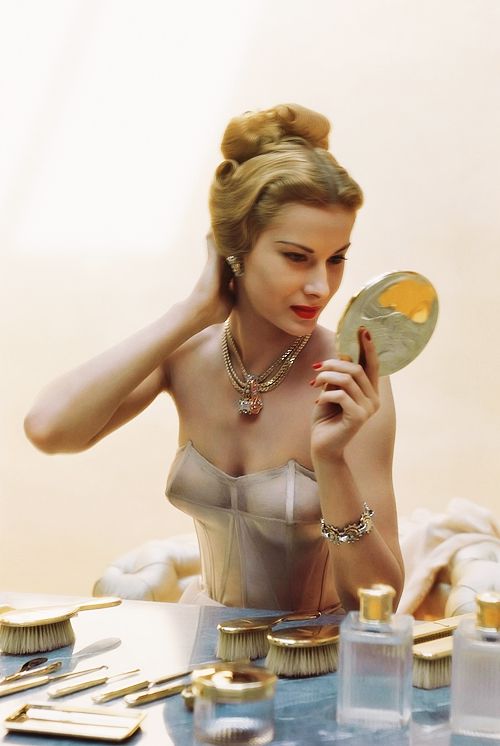
John Rawlings (1912-1970) was a Condé Nast Publications fashion photographer from the 1930s through the 1960s. Though Rawlings left a significant body of work, including 200 Vogue magazine and Glamour magazine covers to his credit, he never achieved the name and fame of his lengendary colleagues and masters Cecil Beaten and Horst P. Horst.

Ph. John RawlingsThe introduction of American photographer John Rawlings to Vogue’s visual team in 1936 was certainly one of Conde Nast’s best strategic moves. At a time when opulence, pretentiousness, and theatrical lighting were prevalent in fashion photography – fueled by the European school led by the British Beaton, the German Horst, and the Russian Hoyningen-Huene – Nast and Vogue’s editor in chief Edna Woolman Chase decided they needed a change of direction and placed their bets on a talented but unknown twenty-four-year Midwesterner.

In two memos sent by Chase, one to her staff in 1937 and another to the photographers in 1938, she demanded more information and less art in Vogue pictures: “Several of the photographs for September fifteenth are nothing but black smudges,” she wrote in the second. “Concentrate completely on showing the dress, light it for this purpose and if that can’t be done with art then art be damned. Show the dress. This is an order straight from the boss’s mouth and will you please have it typed and hung in the studio”. 

ph. John Rawlings

ph. John Rawlings

ph. John Rawlings

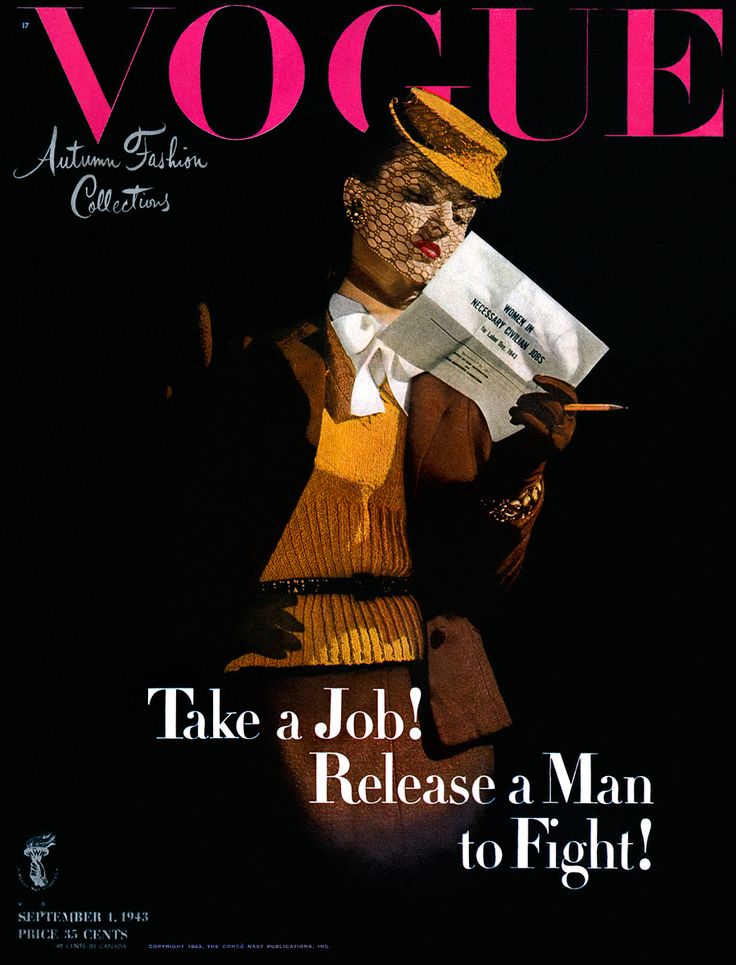
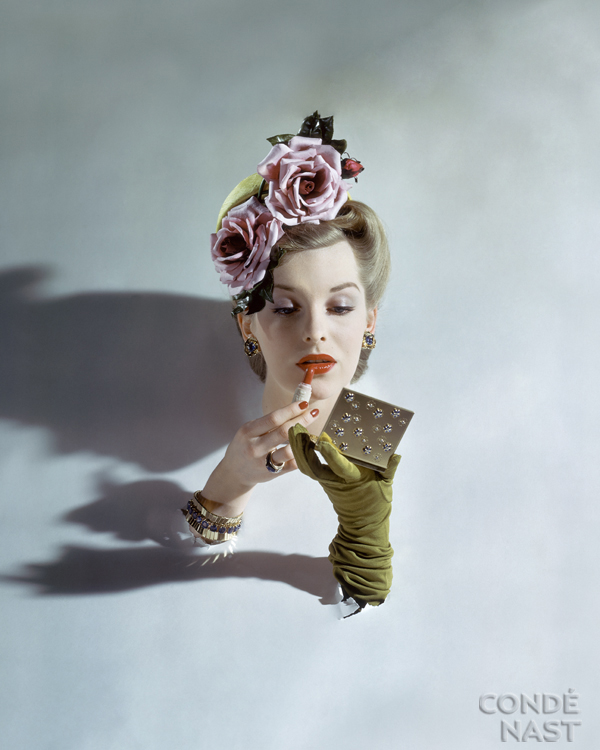
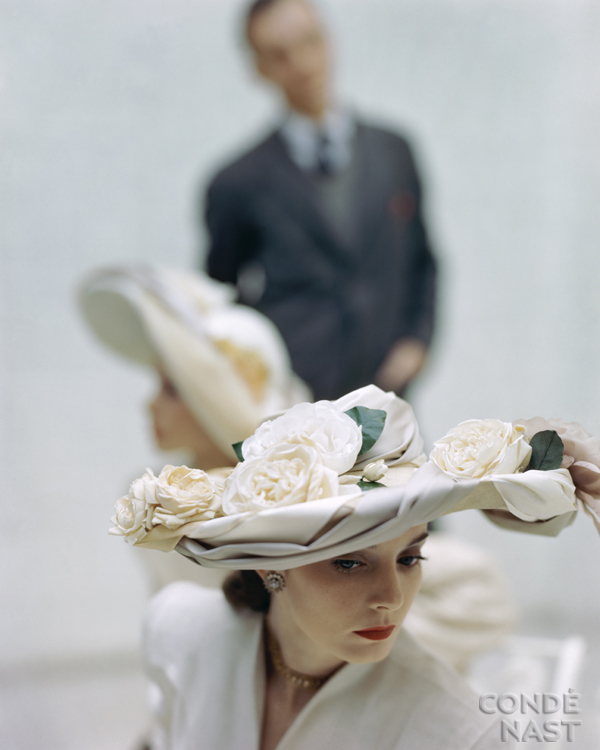
The change of direction would take a few years, but the man to lead it, John Rawlings, would become one of the most prolific and important photographers of the twentieth century, with more than two hundred Vogue and Glamour covers to his credit. John Rawlings for Vogue April, 1947

Flowered Hat

Ph. John Rawlings

His beginnings were unremarkable. Born in Ohio in 1912, John Rawlings attended the local Wesleyan University, and upon graduation in the early 1930s he relocated to New York, where he became a freelance store window dresser. After buying a Leica to photograph his work and show it to potential clients, Rawlings discovered that he enjoyed taking pictures and eventually started to photograph some of the aristocratic clients themselves, alone or with their dogs. A few of those shots found their way to the desk of Nast, who decided to offer Rawlings a job at the Vogue studios as prop builder, studio hand, and apprentice to the legendary masters Beaton and Horst. The young man was so dedicated and worked with such unbridled enthusiasm that four months later he not only was promoted to first assistant to the masters but also got his first photo published in the September 15 issue of Vogue. Impressed by his precocious talent and visual style, Nast and Chase rewarded him in 1937 with a job at the British Vogue studio in London, where he would train and work until the early 1940s. During his time there, Rawlings experimented with his style and began to develop his signature uses of light, setting and posing. His British Vogue work was so impressive it began cirulating in French and American Vogue as well.

vogue 1938

Ph. John Rawlings

Ph. John Rawlings

Charles Dare Scheips Jr., former director of the Conde Nast Archives, called Rawlings “The first major Conde Nast photographer to demonstrate a truly American eye.”

Rawlings is credited as the first fashion photographer to associate fashion with Hollywood celebrities and also said to have single-handedly elevated commercial photography to an art form. 

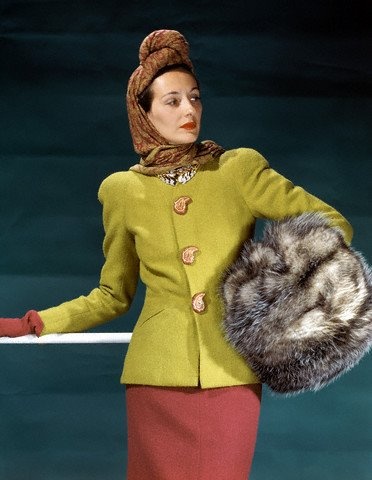
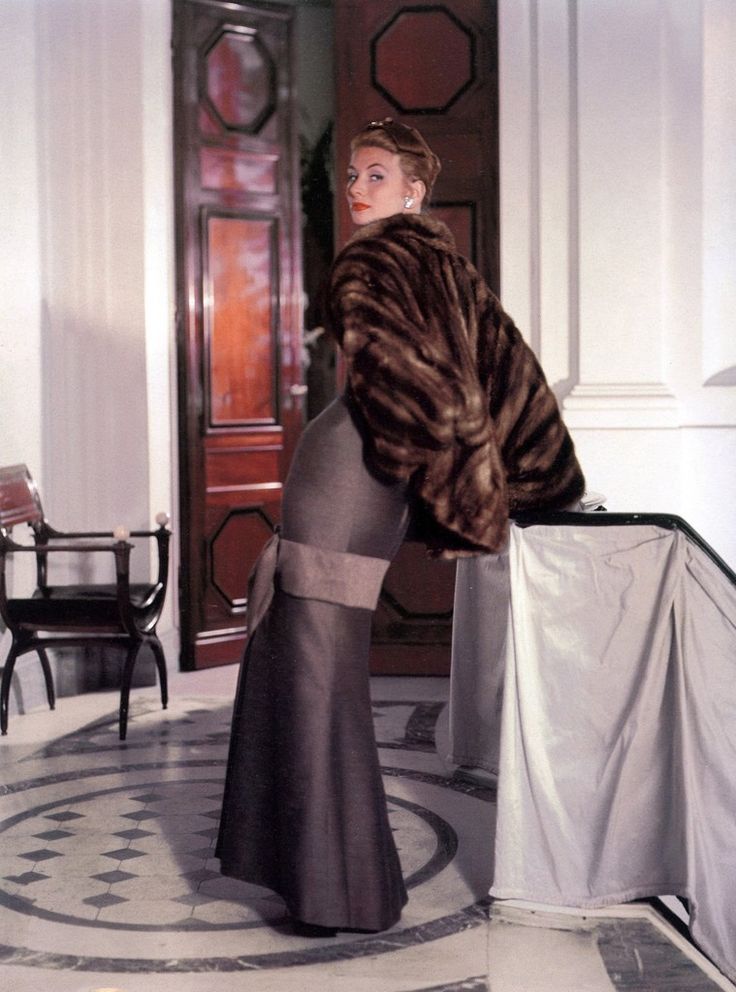
Suzy Parker in Christian Dior, Vogue, October 15, 1953.

Wilhelmina Cooper

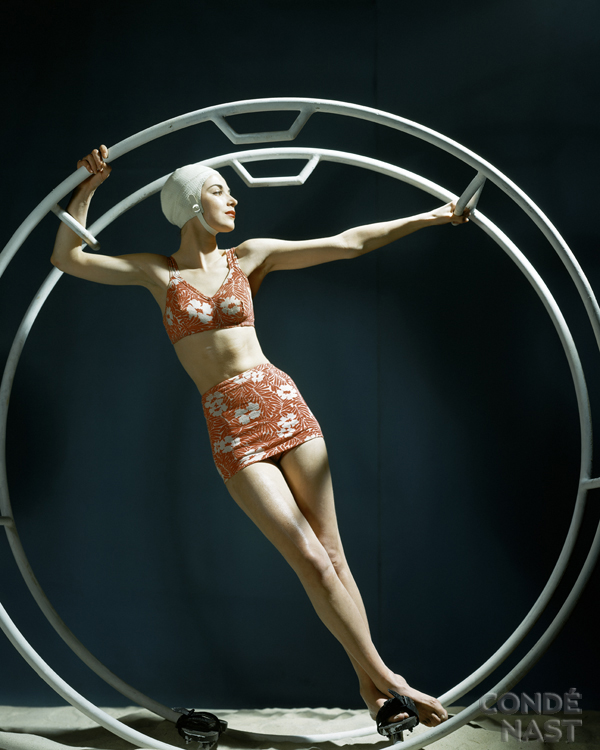
Exercise Ring and Jantzen Swimsuit

Ph. John Rawlings


.


Book    

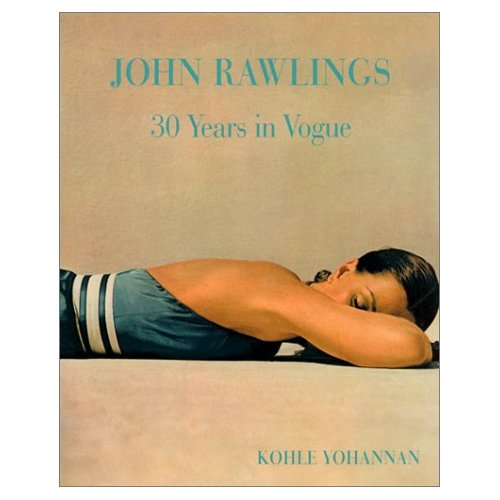
Book cover John Rawlings: 30 Years in Vogue

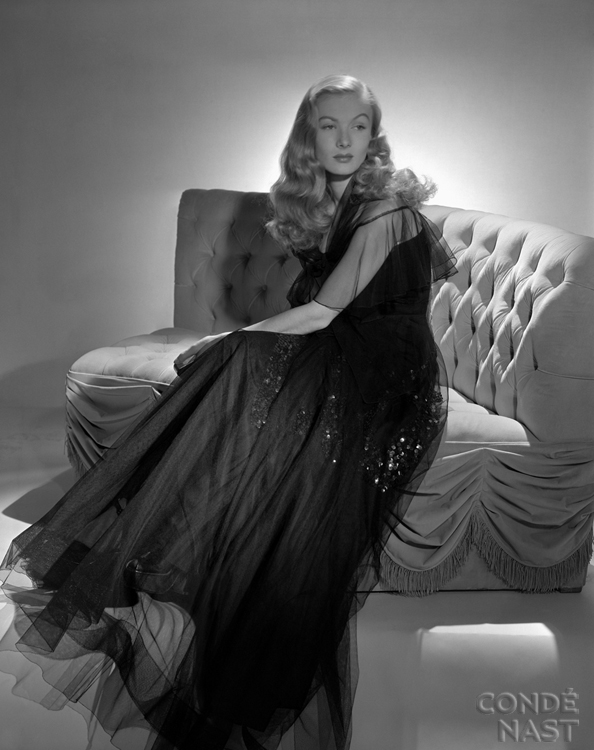
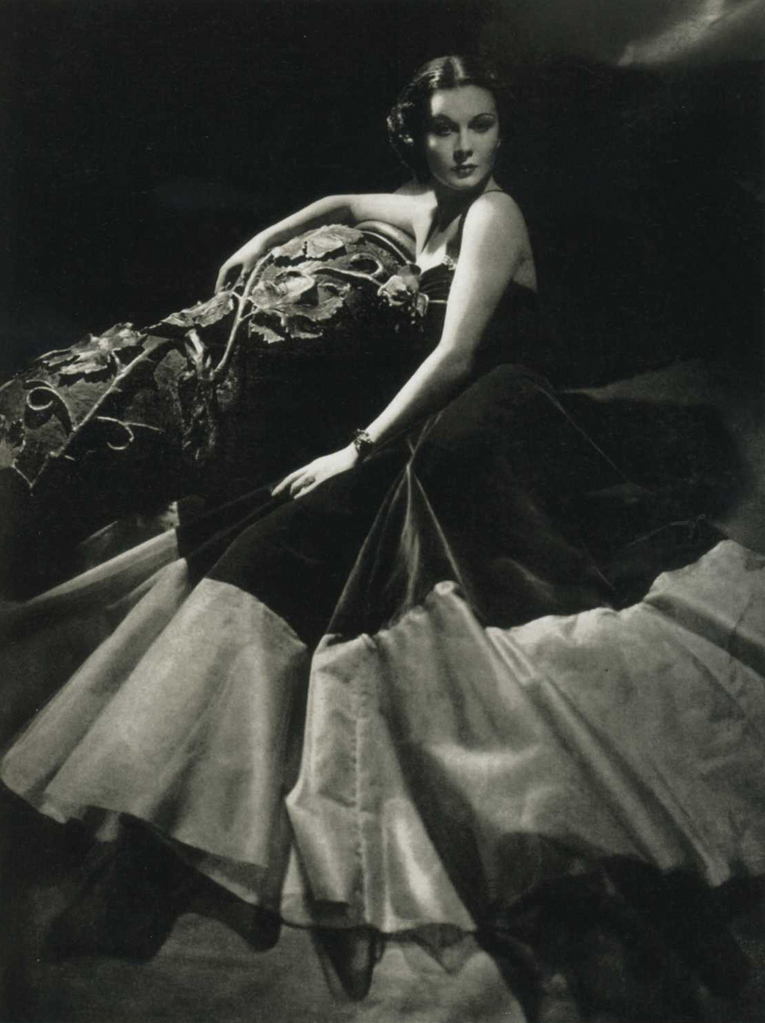
With over 200 Vogue and Glamour covers to his credit and 30,000 photos in archive, John Rawlings (1912-1970) immortalized the era in which American fashion and style truly came into their own. During his three-decade affiliation with Conde Nast, Rawlings’s work paralleled his publishers’ and editors’ efforts to reformat and expand the power and scope of the fashion press. Rawlings was in the elite circle of Irving Penn, Horst P. Horst, George Hoyningen-Huene, and George Platt Lynes, all top Vogue photographers, yet never received the kind of attention lauded on his colleagues — until now. Drawing on the photographer’s rediscovered archive, curator Kohle Yohannan presents glamour portraits as well as never-before-published nudes that testify to the artist’s ground-breaking and compelling body of work. Photographs of stage, screen, and society stars of the 1940s and 1950s, including Marlene Dietrich, Salvador Dali, Veronica Lake, Lena Horne, and Montgomery Clift are featured.

Veronica LakeVeronica LakeVivien LeighVivien Leigh
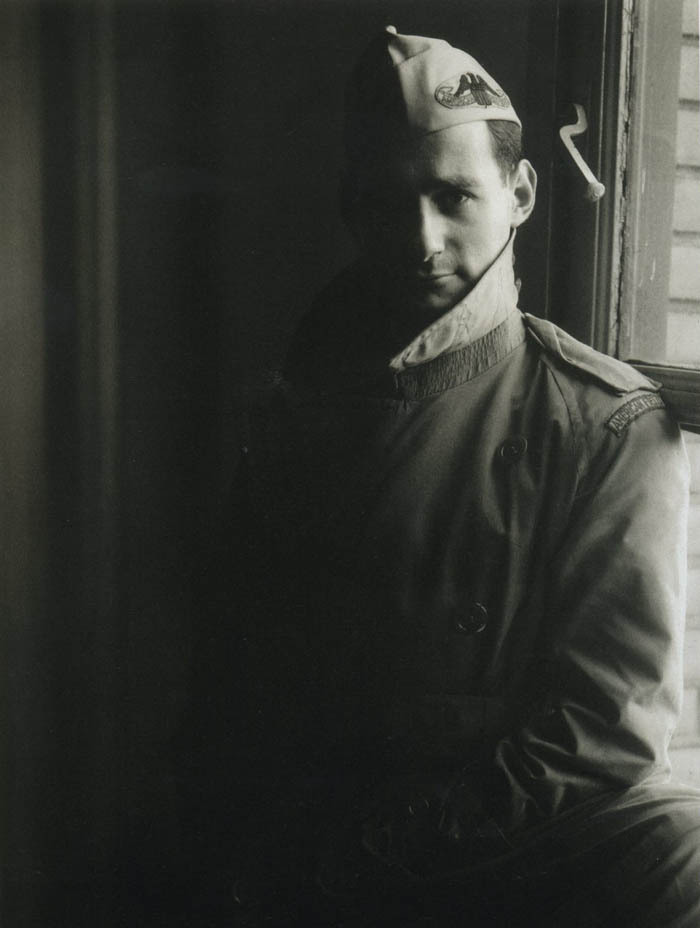
Photographer Irving Penn in his American Field Service uniform.Photographer Irving Penn in his American Field Service uniform.
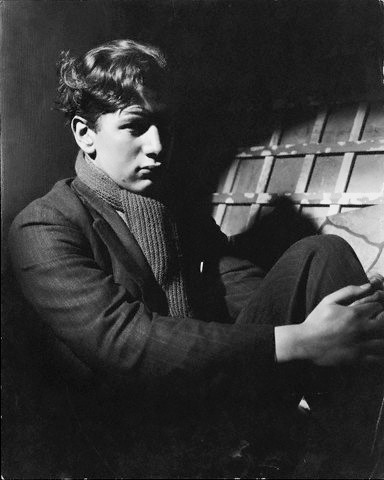
Actor Peter UstinovActor Peter Ustinov
.
.
.
June 1, 1941 cover
.
.
info:

http://bygonefashion.livejournal.com/195868.html

http://www.fashionmefabulous.com/2011/03/famous-fashion-photographers-john.htmlshion Me Fabulous

Jane Forth, Teenage Model & Warhol Superstar

20 Sep

Jane Forth by Jack MitchellJane Forth by Jack Mitchell

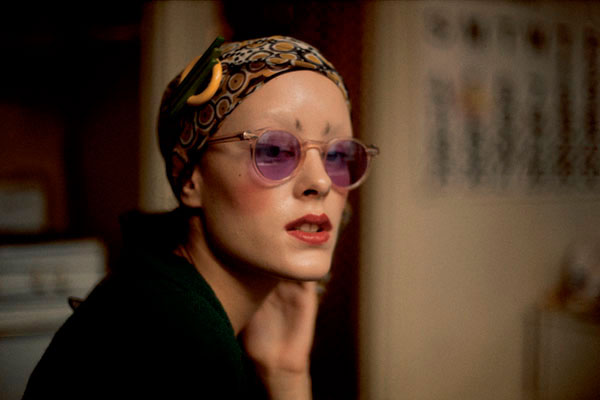
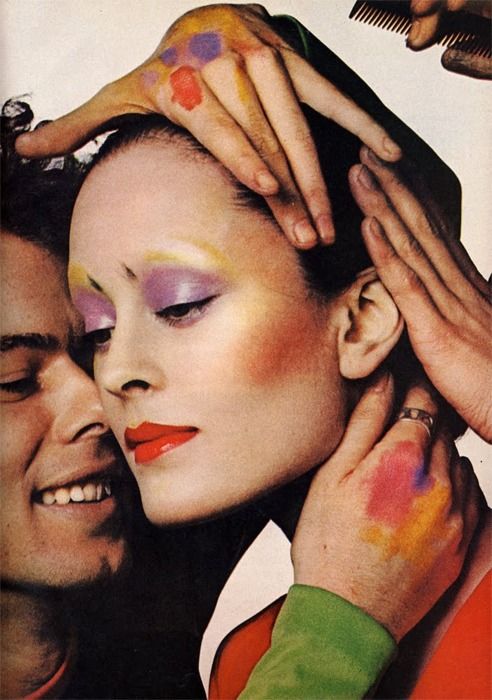
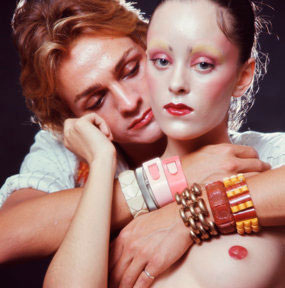
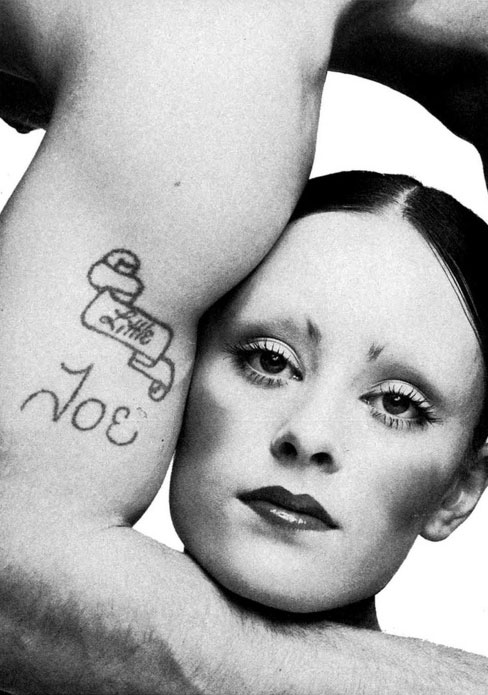
In July 1970 Jane Forth, teenage supermodel appears on the cover of Life magazine. The four page colour spread with photos by Jack Mitchell was titled “Just Plain Jane” and described Forth as “a new now face in the awesome tradition of Twiggy and Penelope Tree.” It also noted that she had just turned seventeen and “claims no special talents.”

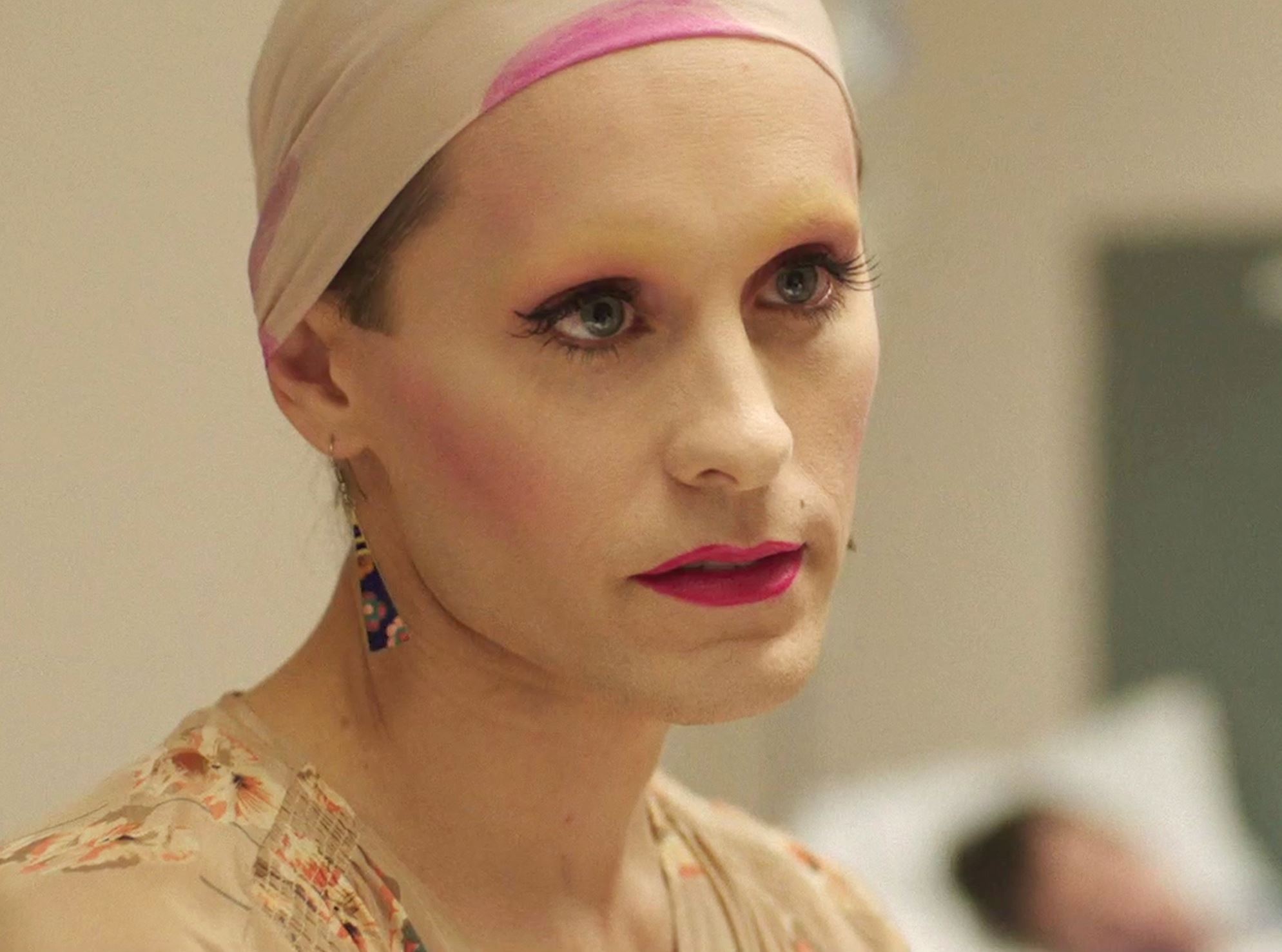
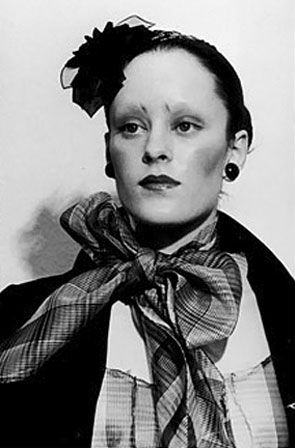
She was featured not only in several of Andy Warhol’s movies, but in the pages of American Vogue,Harper’s Bazaar, and many more magazines of the time. She modeled early wrap dresses for Diana Von Furstenberg and apprenticed with Halston. Known for her original style, and creative hair and makeup – she inspired many with her look then and now – including the creators of Dallas Buyers Club, who referenced her photos as inspiration for Jared Leto’s character in his Oscar winning role.

Jane Forth

Jane Forth & Antonio LopezJane Forth & Antonio Lopez

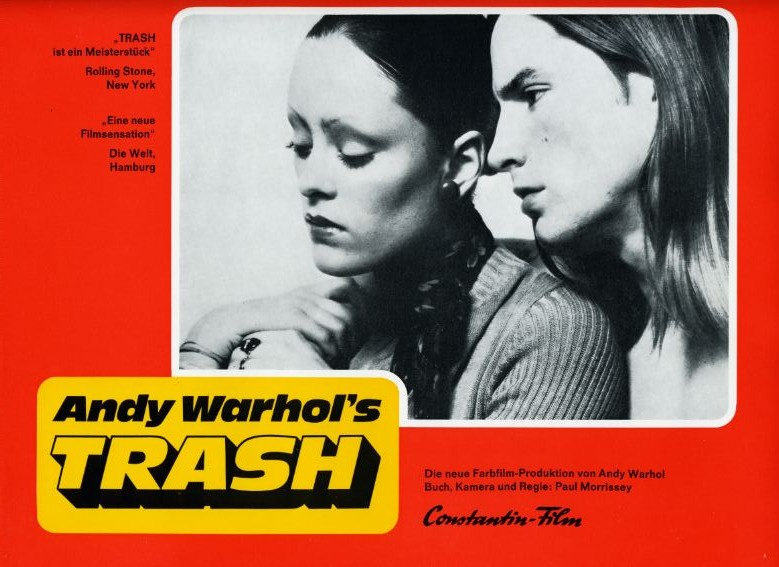
Jane-ForthForth became a sensation, Warhol Superstar and the downtown New york It Girl. Discovered working as a receptionist at the infamous Factory, she appeared in Warhol’s films ‘Women in Revolt’, ‘Trash’ and ‘L’Armour’. She also became the creative inspiration to fashion’s editorial elite.

In een interview in 2014, Forth (born 1953) recalls the inspiration behind her own famous use of make-up. She was being pulled toward older movies, particularly black-and-white films “due to their contrast,” she says. Forth’s favorites included Clara Bow, Claudette Colbert, Bette Davis, Hedy Lamarr, Dorothy Lamour, Vivian Leigh, and Myrna Loy. To develop her own style, she says, “I experimented with many different looks as a young adolescent. I was not consciously looking to create something new as an image. I took my inspirations one step further and mixed it with my own creativity and artistic eye and my look appeared. It felt right and it felt very comfortable to me when I finally found it.

Jane Forth

Jane Forth

“There were no hair products in those days. There was like Aquanet hairspray and shampoo. There were very little choices for products. I started to like the idea of very shiny hair– shiny hair pulled back, very flat and put in a bun. So that’s how I started to use Wesson oil. I would use cooking oil and I’d slick my hair and make it almost like patent leather!

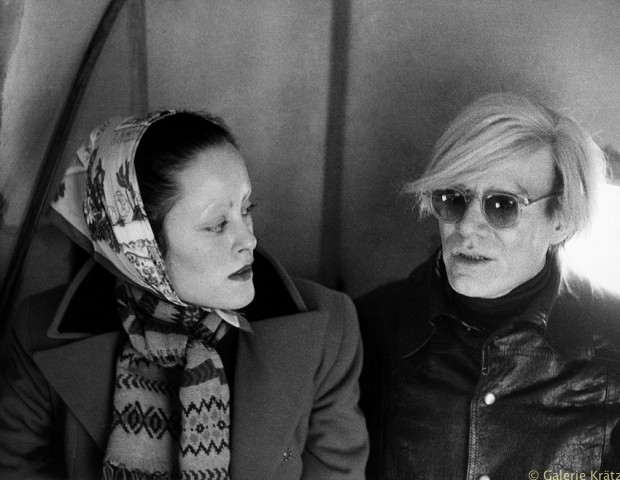
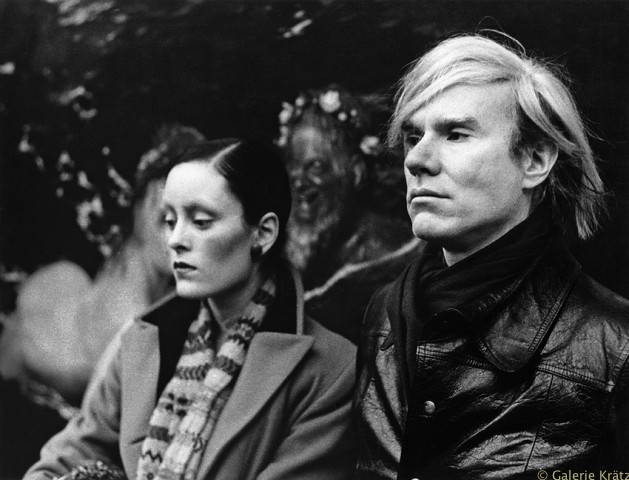
To the question how she met Andy Warhol, Forth answers: “I had a boyfriend by the name of Jay Johnson. He was my first boyfriend and he had a twin brother. His twin brother was Jed Johnson, who was Andy’s boyfriend for many, many years. Jed lived with Andy for many years. I was seeing Jay, who is still alive and kicking. We had to go meet his twin brother Jed and that was in Andy’s home on Madison Avenue in his brownstone, where he lived with his mother. It’s odd because very rarely did anyone ever get to enter that brownstone, and that was my first meeting, which was actually in his home in his bedroom. It was a very unusual situation, because so many people (except for maybe Paul Morrissey and Jane Jett) were ever in that brownstone—and Fred Hughes. So, Jay had picked something up, and I was sitting in Andy’s bedroom. I remember there was a beautiful powder blue satin quilt on the bed. I was sitting there not even knowing whose home I was in, and just sort of rubbing my hand on this quilt, and I heard a voice go, ‘And who are you?’ I turned around and I said, ‘Oh, hi. I’m Jane. And I’m Jay’s girlfriend’ and that was it.”

Jane Forth & Andy Warhol

Jane Forth & Andy Warhol

Jane Forth & Andy Warhol in der Kutsche, Bayern 1971

Jane Forth & Andy Warhol

Jane Forth & Andy Warhol

Forth traveled with Warhol and attended events with him. Yet her recollections are marked by more private moments Forth recalls, “My most vivid memory of Andy was receiving phone calls in the middle of the night from him to see if I was watching the same classic movie that he was watching.” And she usually was, she remembers. Forth also recalls spending summer weekends in Southampton with Warhol, Jed Johnson, Peter Brant, and Fred Hughes. On Sunday mornings, Warhol would sit under a giant tree and read the newspaper. Hughes would play Gershwin’s Rhapsody in Blue and the group would at times venture into town to buy rhubarb pies, lobster salad, and fresh berries. She adds, “I would always buy my Yoo-hoos [chocolate milk]. I loved Yoo-hoo. […] It would be so quiet, relaxed, beautiful, so normal and peaceful and tranquil.”

About Andy Warhol:

There were many faces of Warhol and it depended on your relationship with him and where you came into play with him. I can only speak to my relationship with Andy, in which he was very warm; he was very talkative with me. He was also flirtatious! He could be very flirtatious, absolutely.”

Jane-Forth-Jane Forth & Corey Tippen
Jared Leto in Dallas Buyers ClubJared Leto in Dallas Buyers Club

Forth decided to give up her unique spot among the Factory Superstars. Warhol and her had a fight about it. “I found myself pregnant and did give up my career. I went into a whole different mode. In those days there weren’t a lot of single moms having babies on their own. I raised my child, my son, until I met my husband at that time, Oliver Wood, who I stayed married to for 22 years. He was a director of photography from England and he actually ended up doing  a lot of big movies in Hollywood. That’s who I ended up having two other children—my daughters—with. Later I went into makeup. After I had my son Emerson–when he was about six years old–I decided to start doing makeup for film work and special effects. I went to school at night, I self-taught myself and I got into the union. For many, many years I worked in the film business with makeup and special effects.”

Jane-Forth

Jane-Forth-


.

Trash

Film poster Trash

Jane Forth, then 17 years old, is best known for appearing in Paul Morrissey’s ‘Trash” (1970), alongside Joe Dallesandro. About her part in the movie, she says: “I played an upscale, richer woman who was a very bored, stay-at-home housewife. Well, I created this myself. This was the most exciting thing in the world– to have this junkie break into my apartment. It’s like, I was so bored day in and day out that this was like ‘Wow, this is fun!’”

.

.


Jane-Forth-Veronica-Ibarra-2012Jane Forth in 2012, ph. by Veronica Ibarra

.

Info:

ANDY WARHOL SUPERSTAR JANE FORTH ON THE FACTORY DAYS – EXCLUSIVE INTERVIEW

http://www.refinery29.com/trend-watch

http://www.examiner.com/article/july-4th-1970-jane-forth-i-use-the-cheapest-make-up-on-the-market