Archive | biography RSS feed for this section

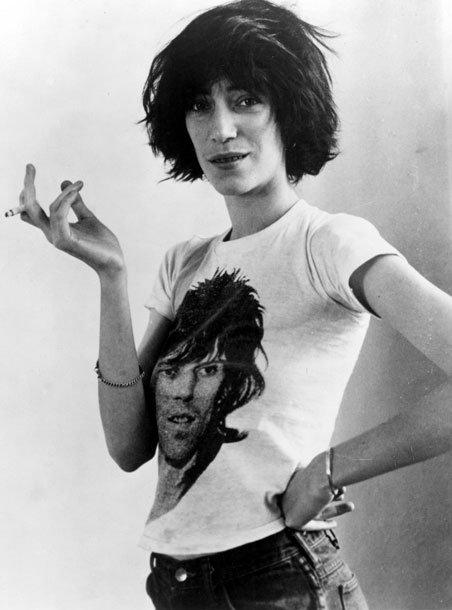
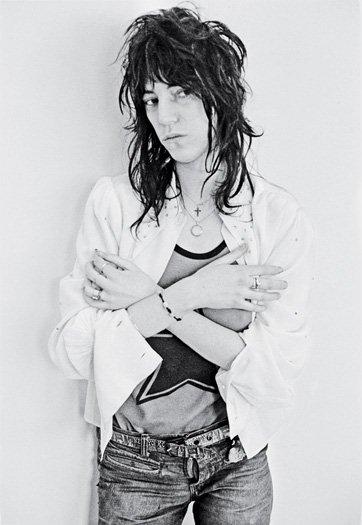
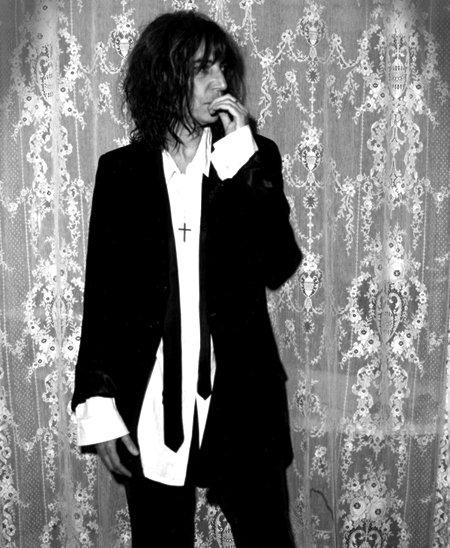
Patti Smith, Style Icon and writer of ‘Just Kids’

24 Jun

I wanted to write this post for quiet some time already, worried I wouldn’t do right to Patti Smith I kept postponing it. But it’s time I’ll give it a try. Not being a book reviewer, I dug up some reviews on ‘Just Kids’, a book by Patti Smith about the years she spent with Robert Mapplethorpe and it occurred to me, there a different ways to clarify the contents. I was mostly moved by the innocence and deep love they felt for each other, even after they went their own separate ways.

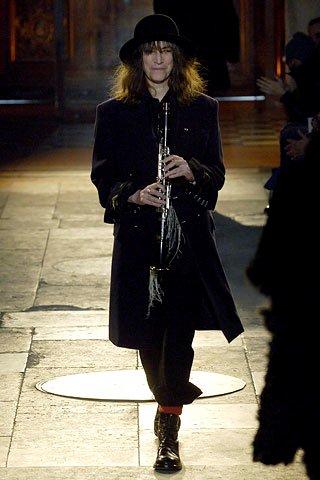
For years Patti Smith embodied poetry, bohemian lifestyle and music to me, but after seeing the film ‘Patti Smith, Dream of Life’ by Steven Sebring I noticed other things about her…, her great sence of humor and the fact she is very aware of her style. It may look like her outfits are just accidentally damn stylish, but they are not. She is very aware of the clothes she puts on for which occasion but doesn’t look like it : that’s her style. She is so good at this, you hardly notice. I got a huge smile on my face, when in ‘Dream of Life’, she starts to explain what she is wearing, pointing at her shoes, pants and shirt saying: “Prada, Prada, Comme Des Garçons….’ In another chapter a friend walks into her hotel room carrying a Prada bag and starts reading what is written on the duty free-paper that’s tacked onto the bag. He went shopping for her, but she’s not allowed to open the bag till she’s left the country and seems very disappointed not being able to look at the new Prada purchase.

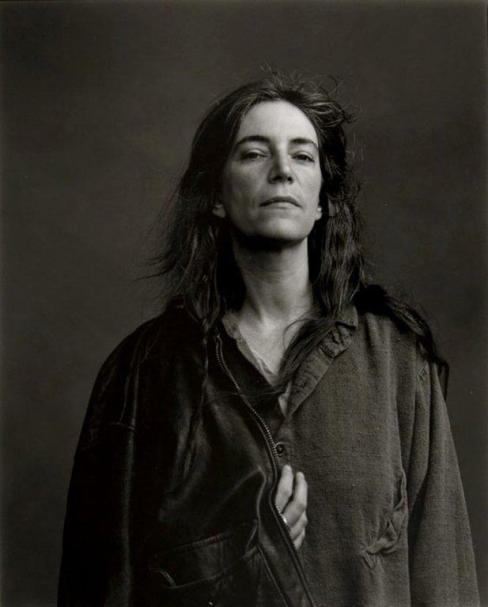
In an interview Patti Smith told she was very aware of the way she put the jacket over her shoulder, for the famous photograph Robert Mapplethorpe took of her for the album ‘Horses’…, it had to be in a Frank Sinatra-ish way.

New York Times , Ruth La Ferla, march 19, 2010

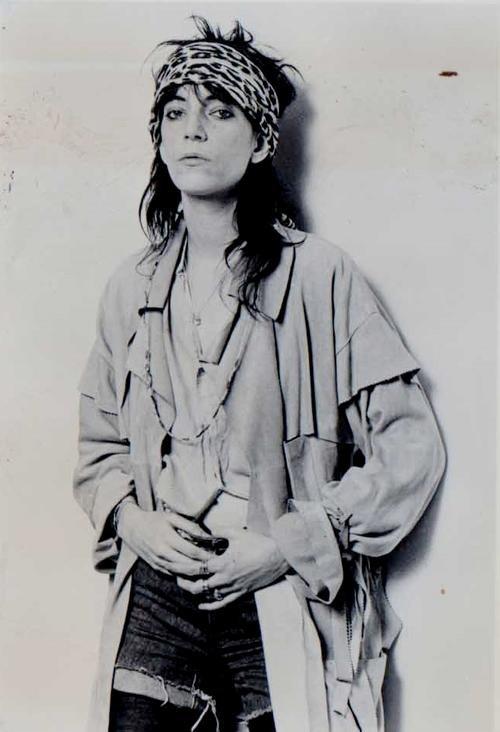
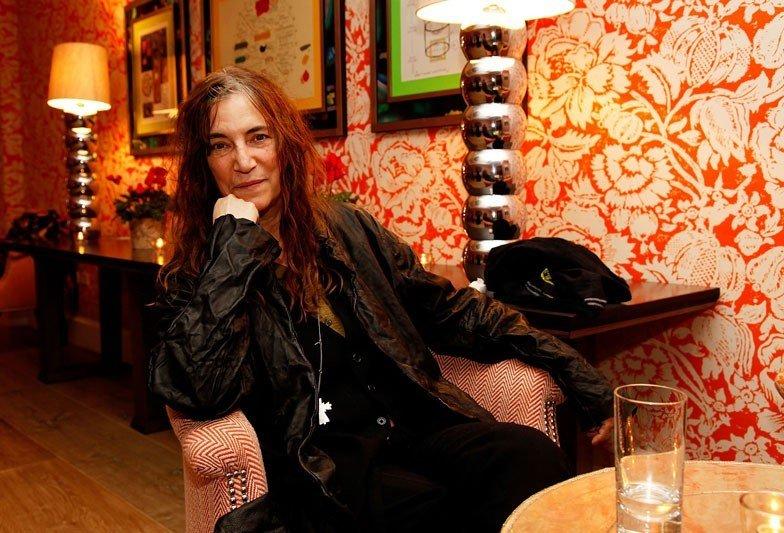
So it was surprising to learn that her roomy gray jacket, with cuffs that unfasten at the wrist, was designed by Ann Demeulenmeester, a high priestess of Parisian vanguard chic. Her jeans were Ralph Lauren, prized by Ms. Smith for their racy lines. Her boots, a gift from Johnny Depp, who wore them as the Mad Hatter in “Alice in Wonderland”, were the perfect fit, Ms. Smith exulted, “like when the magic cobbler made your shoes.”

She has a rarefied feel for that kind of evocative detail — no stray seam escaping her scrutiny. That might stun her fans, who think of Ms. Smith as a gnarly rocker, thrashing and howling soulfully on stage. But style-world insiders embrace her as a kindred spirit whose discerning eye and sensitive fashion antennas might be the envy of a veteran stylist. Ms. Smith’s look, after all, is nothing if not rehearsed.
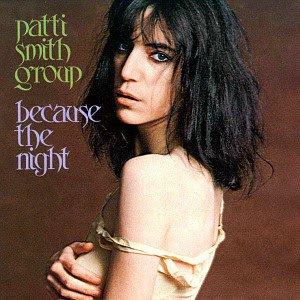
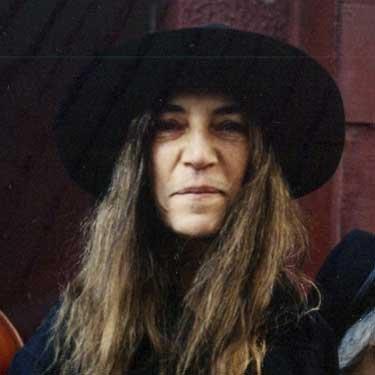
“She is very aware of her style and she controls it,” said Ms. Demeulenmeester, a longtime friend and fashion collaborator. (Ms. Smith favors the designer’s mannish white shirts, inspired by the one she wore on the cover of her debut album, “Horses.”) “It’s about being conscious of who you are and using all the strength you have to communicate that.”

Patti Smith, Style Icon

Great books to read:

.

‘Just Kids’  by Patti Smith

‘Just Kids’ is about a moment in the lifes of Patti Smith and Robert Mapplethorpe, when they were  young and inseparable. It was pure fate that introduced them to each other and they became roommates, friends, lovers and muses. Its tells a story of innocence, ambition and  their shared transit from obscurity to stardom.
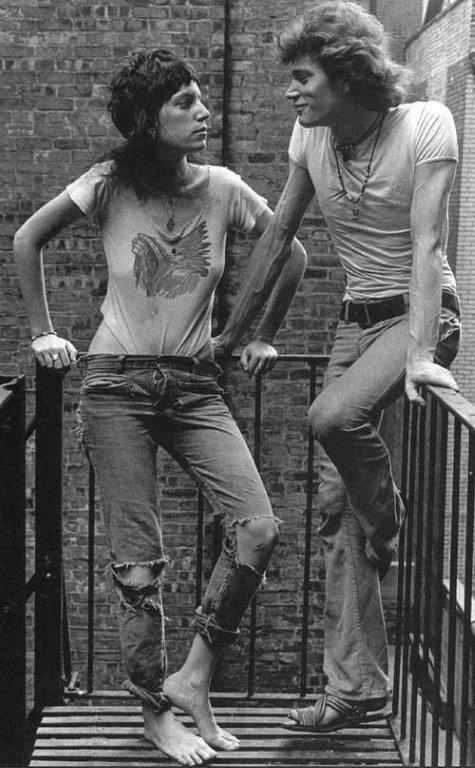
They went together to museums able to afford only one ticket (the one who saw the exhibition would describe it to the one who waited outside). They went to Coney Island, able to afford only one hot dog and she got the sauerkraut. They valued the same things, though in a different way. They were both praying for Robert’s soul: he to sell it and she to save it. Finally his prayers were the ones to be answered.

.

Patti Smith tells the story of the beginning of the end of Manhattan’s last great bohemian age, when a couple with dreams of artistic glory could live on day-old bread, cigarettes and paint fumes so precisely it feels like you’ve been there living it with them. When she writes about the time Robert started doubting his sexuality, you can feel his confusion and her pain

.
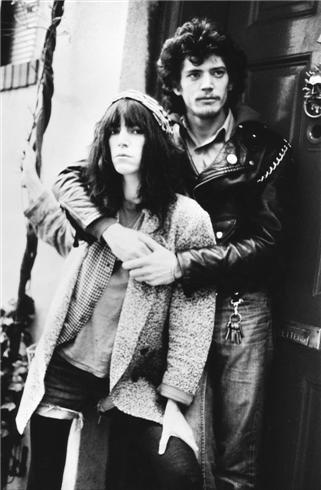
‘Just Kids’ is also a story about becoming an artist, not the race for online celebrity and corporate sponsorship that often passes for artistic success these days, but the powerful, often difficult journey towards the ecstatic experience of capturing radiance of imagination on a page or stage or photographic paper. Mapplethorpe iconic image of Patti for the cover of ‘Horses’, serves as a  symbol of both their collaborative relationship (Patti Smith:”When I look at it now, I never see me, I see us’) and  the separate paths they took thereafter; he as one of the last century’s most heralded and controversial photographers, she as a performer whose influence still extends through poetry, contemporary music, fashion and visual arts.

The book is written so vividly yet sensitive, I could hardly put it down. I bought another copy for a friend and gave mine to others to read.

.

 ‘He is the artist of my life’

Patti Smith on Robert Mapplethorpe
.

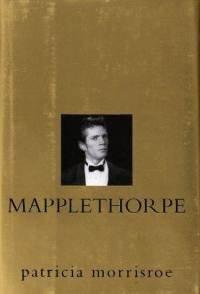
The biography ‘Mapplethorpe’ by Patricia Morrisroe
Documentary

.

‘Patti Smith,Dream of Life’ a film by Steven Sebring

.

www.dreamoflifethemovie.com

.

Leni Riefenstahl’s registration of the Nuba tribe

6 May

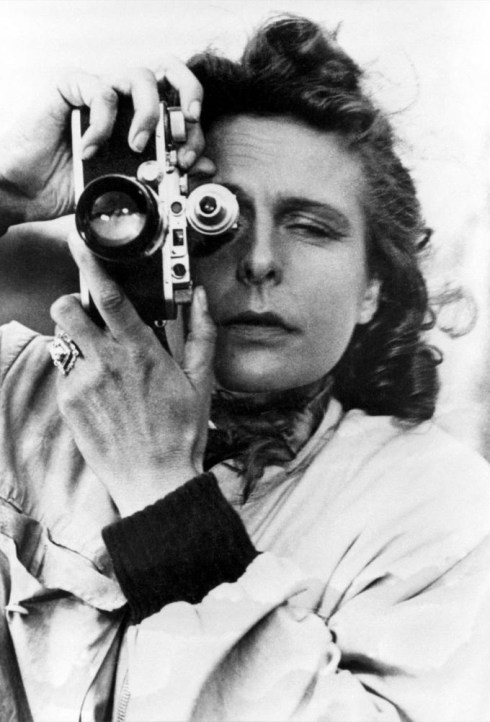
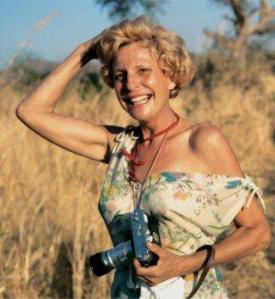
Leni RiefenstahlThere is already so much written and said about Leni Riefenstahl, but everybody is equally impressed by her photographs and films.

My friend wanted to go to Leni Riefenstahl’s funeral (she passed away at the age of 101, september 8,2003), because he was a great admirer of her work and wanted to pay his respect to her and I had no clue who he was talking about… I bought the dvd ‘The wonderful, horrible life of Leni Riefenstahl’ by Ray Muller and got fascinated by the person and her work. If you want to have a great overview of her life and work, watch this movie!

Leni Riefenstahl was an extreme aesthetics, a German woman aesthetics around the time of WWII, when Germany was reigned by the very disturb madman Adolf Hitler, who got interested in her work and her aesthetic view on people. She was so eager to work, make movies and photographs, she took up his offer to work for him and that was the biggest mistake she would ever make and had to pay for this mistake the rest of her life. Her infamous, brilliant documentaries Triumph des Willens and Olympia got her associated with the Third Reich and she spent the rest of her life trying to get away from this association.

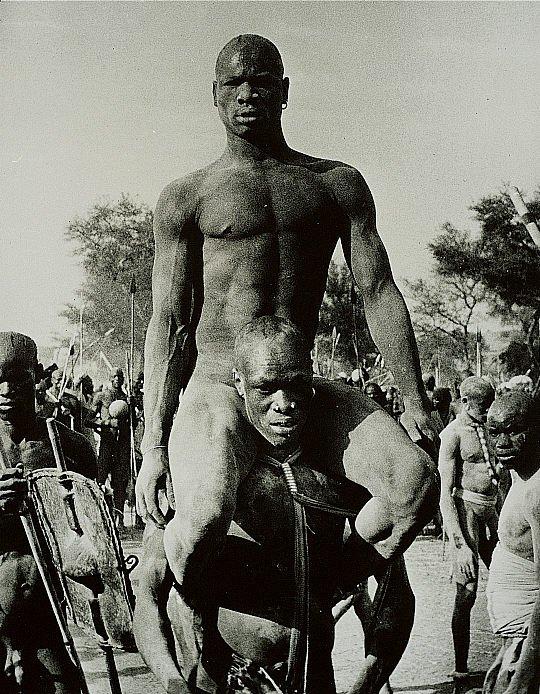
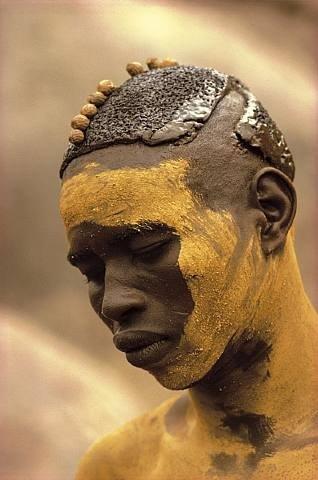
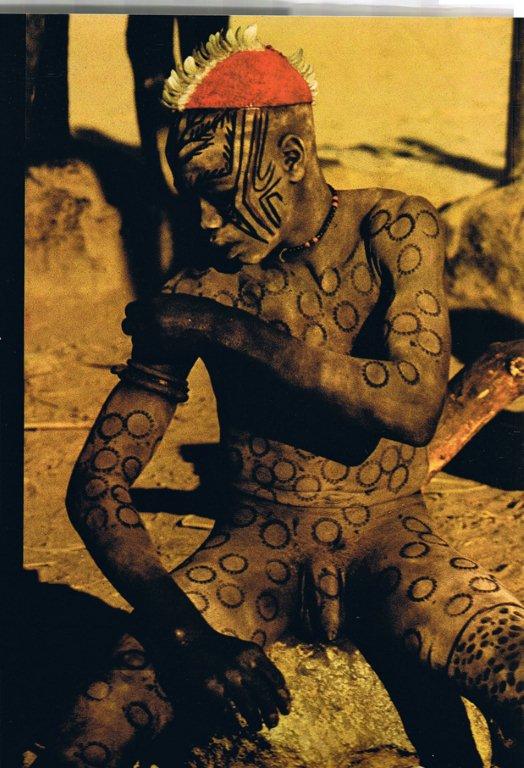
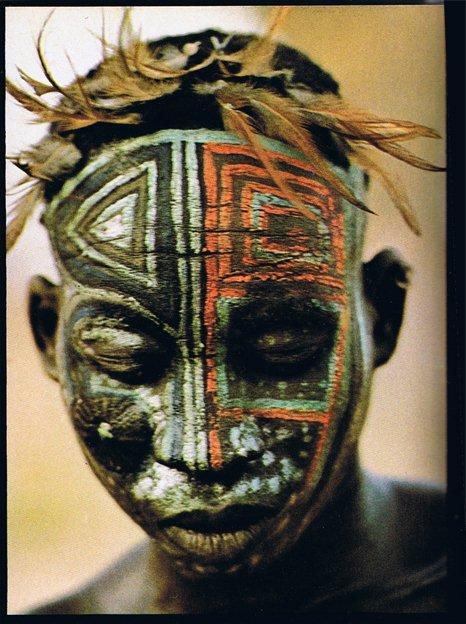
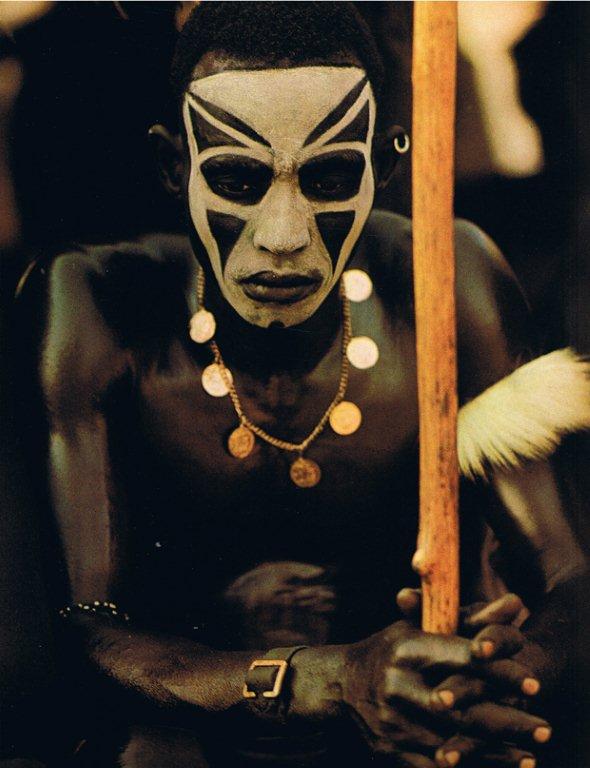
After WWII she lived with her mother in a little appartement in Germany for years. In the 1960s Riefenstahl became interested in Africa from Hemingway’s book and from the photographs of George Rodger. She travelled to Sudan and lived with the Nuba tribe for years. Her registration of the Nuba tribe is mesmerizing.

This photograph by George Rodger shows two muscular wrestler of a Nuba tribe in Kordofan, Southern Sudan. It was taken in 1949, during Rodger’s journey across Africa which he made to escape the traumas of the Second World War. The impact of this photograph has a melancholy ending. This famous Despite Roger’s unwillingness to reveal the whereabouts of the tribe to German filmmaker and photographer Leni Riefenstahl, the latter discovered their location some fifteen years later. In the 1970s, her photographs of the Nuba people were published throughout the world and attracted more people to the area. The Sudanese government subsequently encouraged the oppression and displacement of Nuba tribes because they wrongly suspected them of unified alliance to the Sudan People’s Liberation Army.

The Nuba tribe by Leni Riefenstahl

.

.
Leni Riefenstahl

In her 70s she wanted to film and photograph the underwater world and had to lie about her age to get a scuba diving certification . Years ago I found the book Jardins de Corail….

.
Leni Riefenstahl’s life would have been totally different if she had never been associated with the Third Reich (after WWII she was arrested but released without any charges).. She would  be remembered by her beautiful work, innovations as a filmmaker and as the greatest female filmmaker of the twentieth century.

The Mary Quant story

8 Apr

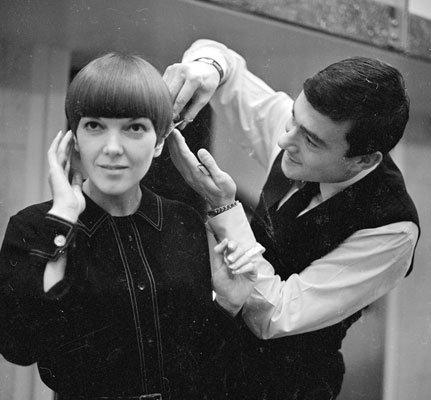
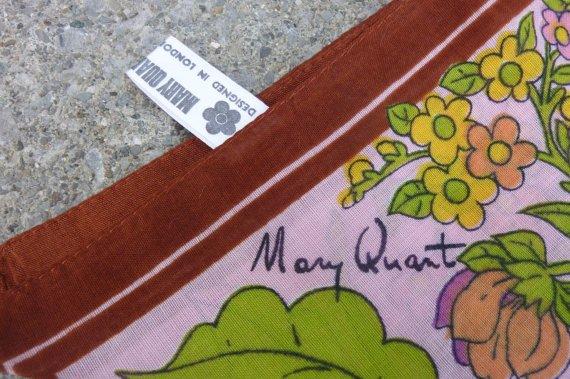
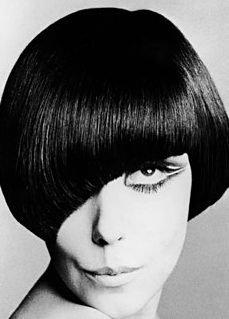
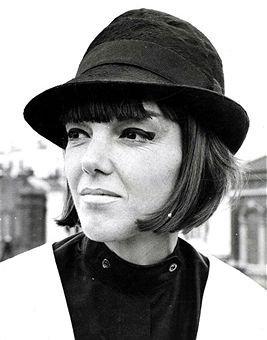
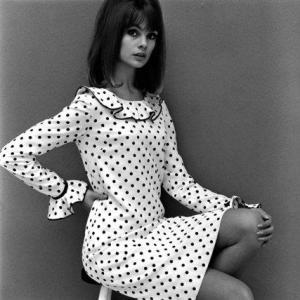
Sometimes it happens; being the right person at the right time in the right place. This is basically what happened to Mary Quant (born february 11, 1934)! Ofcourse she was a very innovative designer with new ideas, but starting her own business in London in the early sixties made her happening and she opened doors for lots of others young talented people. It made her an icon….

Mary Quant wasn’t trained to be a fashion-designer but as an illustrator at Goldsmith’s College. After school she took a job assisting a couture milliner (hatmaker). She would spent three days stitching a hat for one costumer, but expensive clothes and accessories weren’t her idea of fashion, she wanted affordable clothes for young people. Nowadays fashion couldn’t live without this branch anymore, Mary was the precursor of brands as Topshop, H&M, Vera Moda and lots of other high-fashion-for-low-prices fashion-chains.

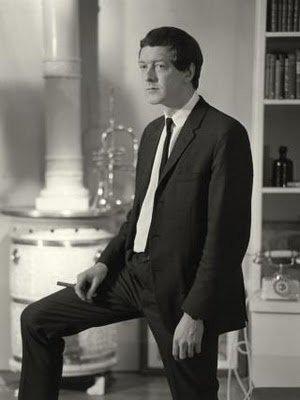
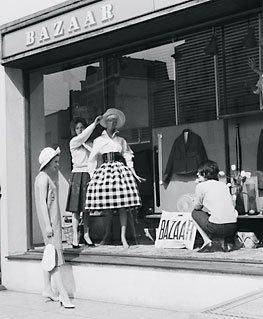
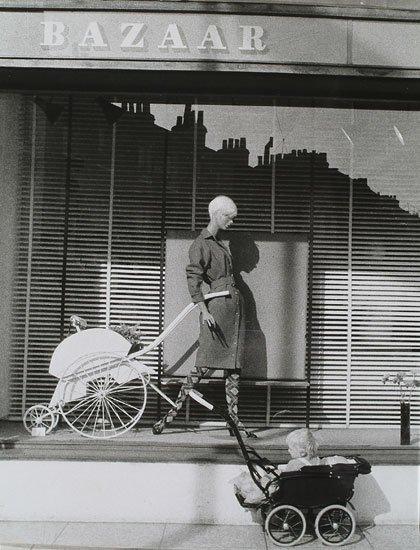
At Goldsmith’s College she met Alexander Plunket  Greene (1932-1990). He was one of the first old-line Britons who blossomed in the spirit of the sixties. He was quiet eccentric, wandering around in Chelsea in his mothers disused pyjamas and hanging around in Soho jazz bars. Mary fell in love with Alexander, the definitive bohemian. They married and  after he inherited some money in 1955 Mary opened Bazaar on Kings Road, one of the first Boutiques and Alexander opened a jazz bar and a restaurant in the basement.

Getting around to find great items for Bazaar, Mary was disappointed with the range of clothes she found and decided to stock-up the shop with her own designs. She started out with one sewing machine for herself, but pretty soon she had to buy more machines and hire machinists to be able to manufacture enough items for the huge demands at her shop.

Mary’s clothes were all about fun. Her advantage to other designers before her; she was a contemporary of her clients and the first to make fashion for young people at affordable prices. The restaurant downstairs was the first to do the same with food and became a hang-out for the Chelsea boys and girls. This was the start of the ‘Chelsea Look’.

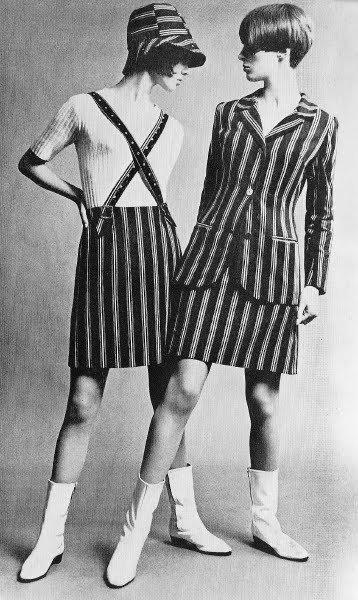
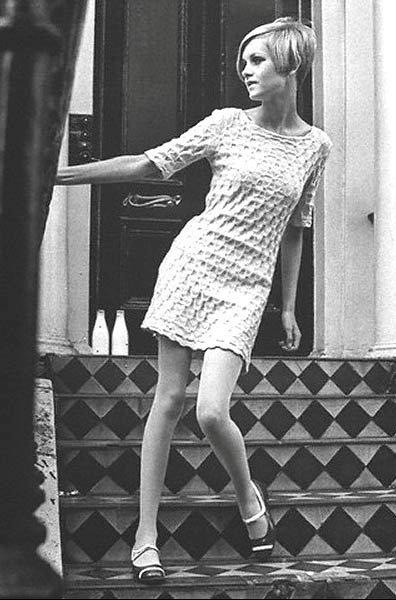
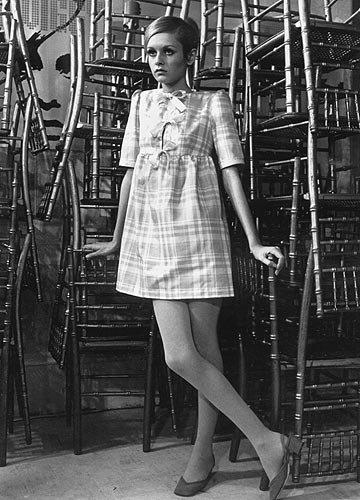
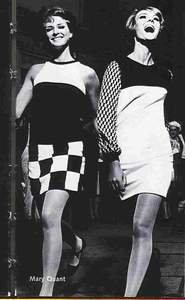
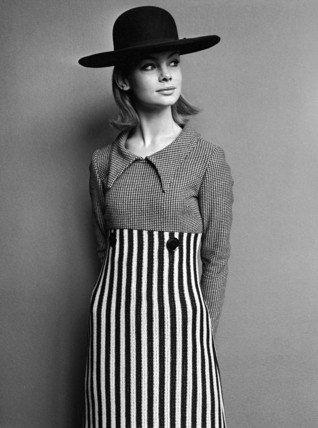
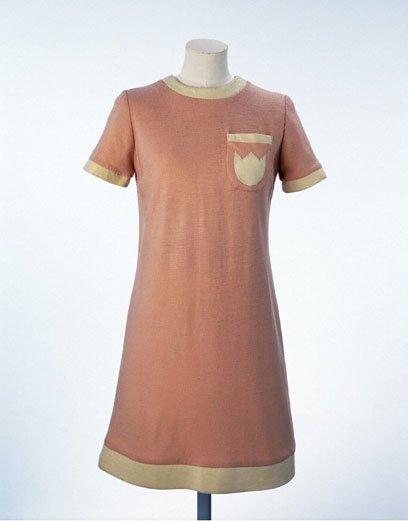
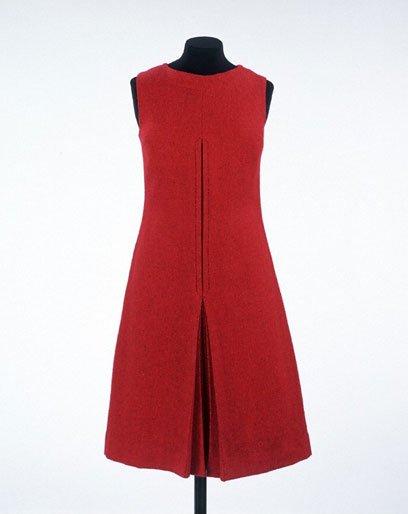
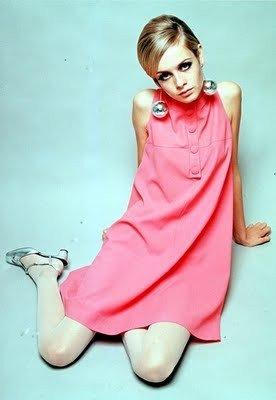
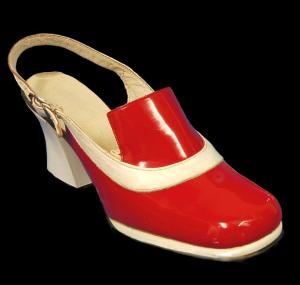
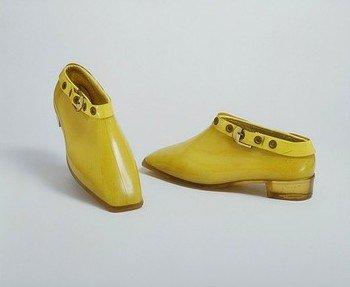
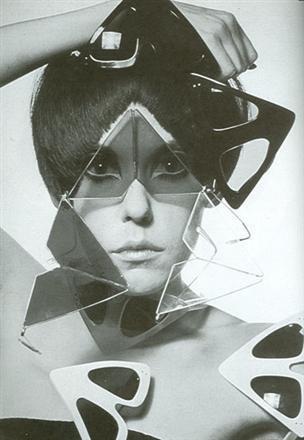
Mary’s designs were a reaction to the demands of her clients and that’s how the mini skirt came to an existence and became one of her greatest ‘inventions’. At the same time the mini skirt was produced by André Courrèges in Paris and it’s not sure who was first. With the mini skirt came the coloured and patterned tights and the knee-high white plastic boots . She also designed small white plastic collars to brighten a back sweater of dress and sleeveless dresses and neat little pinafore dresses that featured unusual colour combinations.
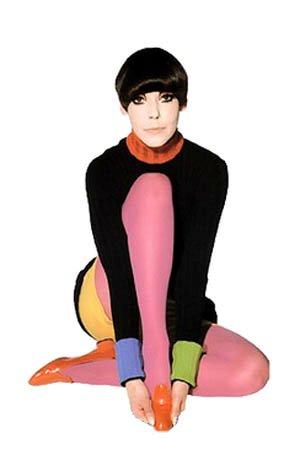
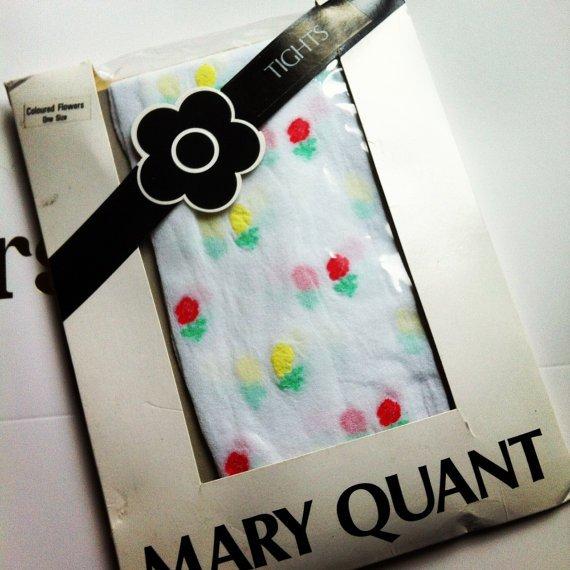
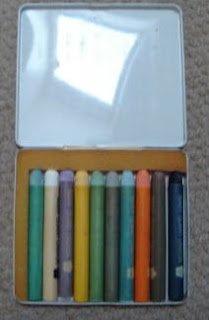
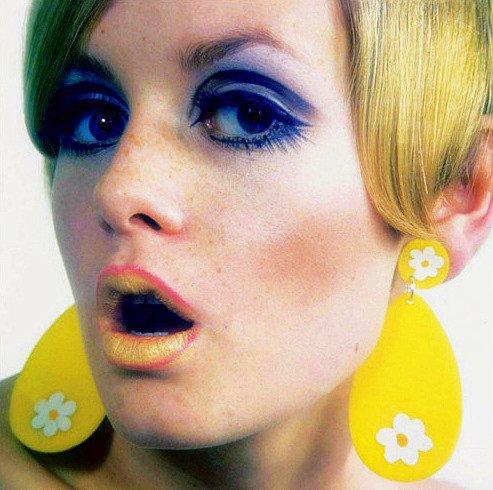
Later Mary designed the micro-mini and the hot pants and expanded with make-up, like the ‘paint box’, a box with bright coloured crayons that came with a manual how to draw flowers on your face.

Mary Quant opened her second boutique at Knightsbridge in 1961 and decided to go wholesale, the only way to keep prices down. By 1963 she exported to the USA  and in the seventies to Japan.

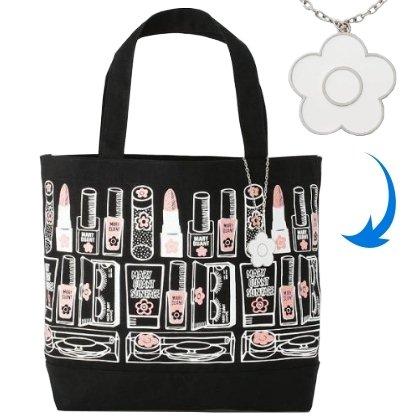
The make-up branch became huge in Japan and in 2000. she resigned as director of Mary Quant Ltd., her cosmetics company after a Japanese buy-out. There are over 200 Mary Quant colour shops in Japan….

The Mary Quant story is one in which everything fell into place;  her sence of what the young people were longing for, a time that right for big changes in fashion, a brilliant free-spirited, bohemian husband and very smart business decisions…

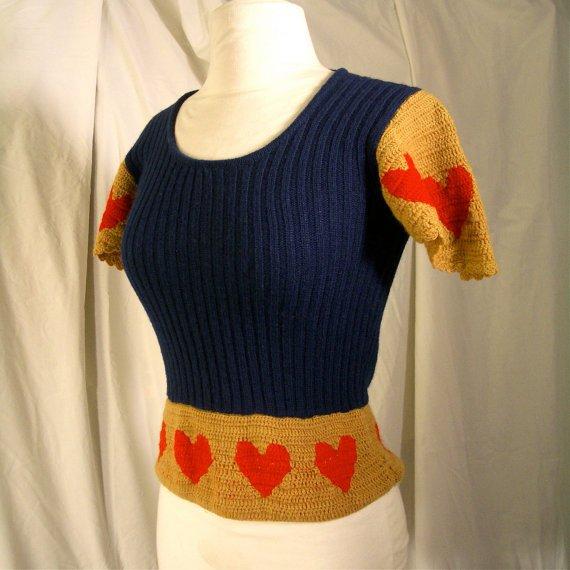
More Mary Quant dresses

Mary Quant shoes & accessories 

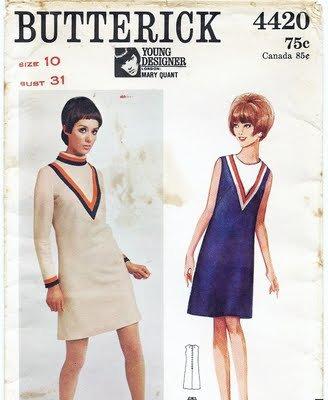
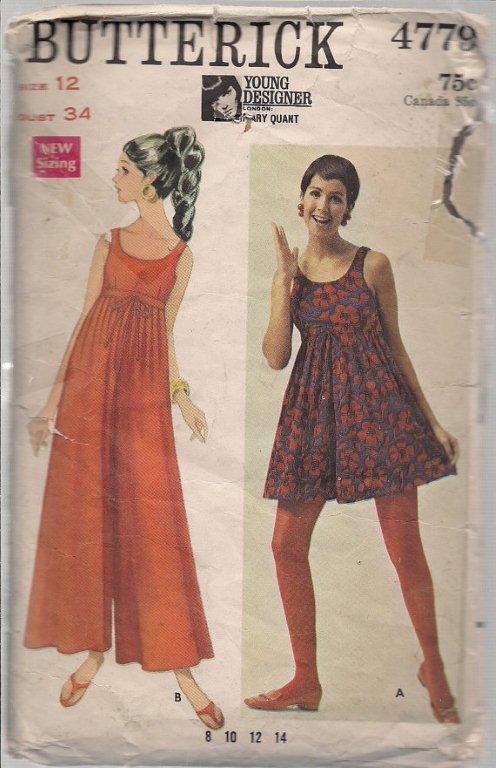
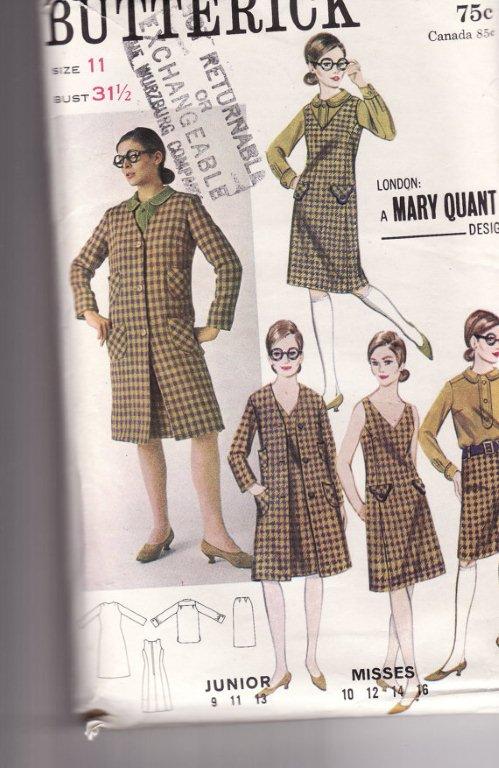
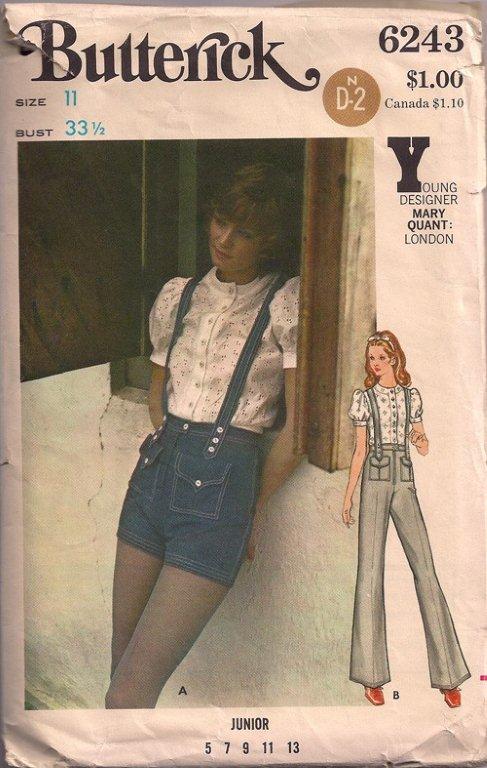
Mary Quant sewing patterns for Butterick

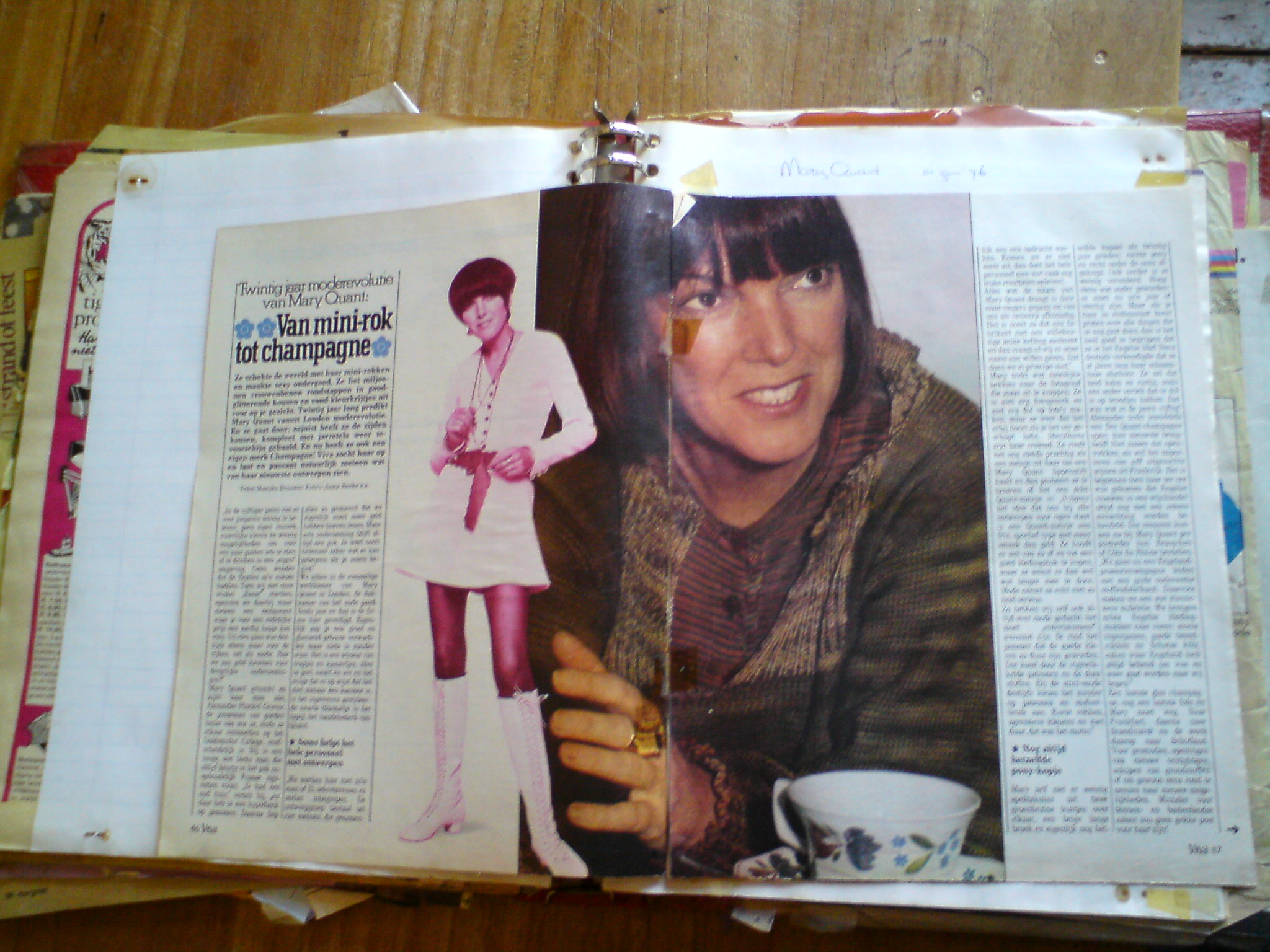
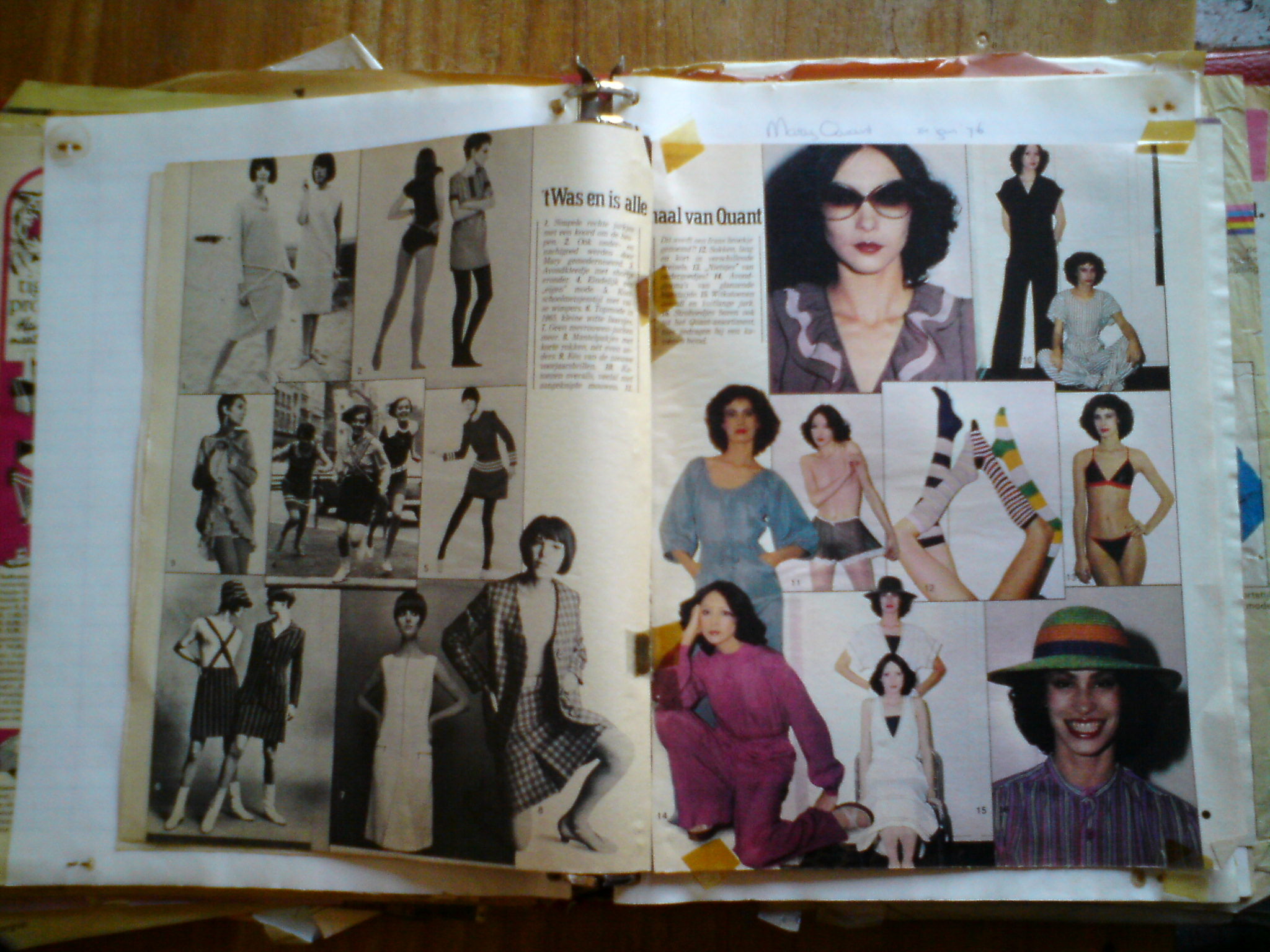
My scrapbook pages about Mary Quant from 1976 

Watch the Mary Quant video’s, taste the feeling of the sixties in ‘Swinging London’ and the ‘Chelsea Look’…. 

http://youtu.be/JYirgpHnS6I                                                                                                                Mary Quant fashion catwalk

http://www.youtube.com/watch?feature=player_detailpage&v=PTWiQYL3RFE                                                                                  Mary Quant in her atelier

http://youtu.be/KAWuzDov4jQ                                                                                                                                                                          Album:Mary Quant featuring Peggi Moffit

The Mary Quant website:      http://www.maryquant.co.uk/

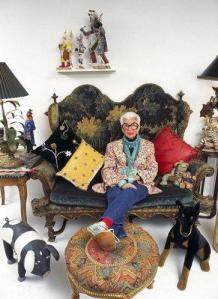
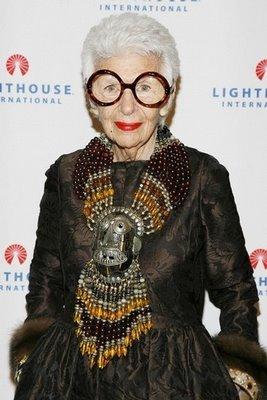
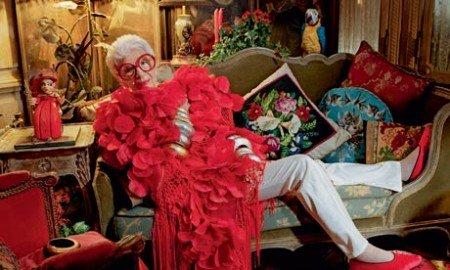
Iris Apfel, a free spirit

4 Mar

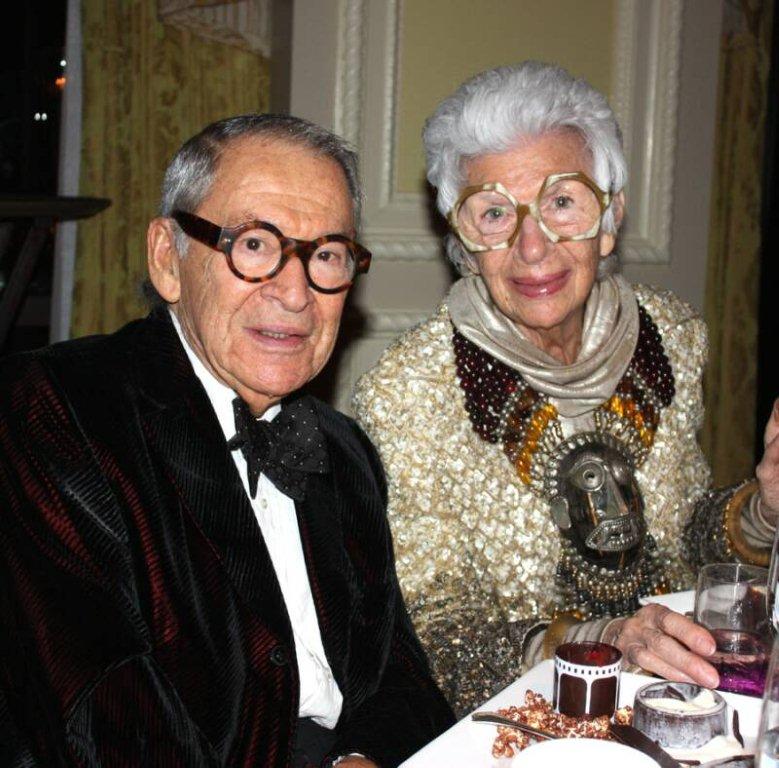
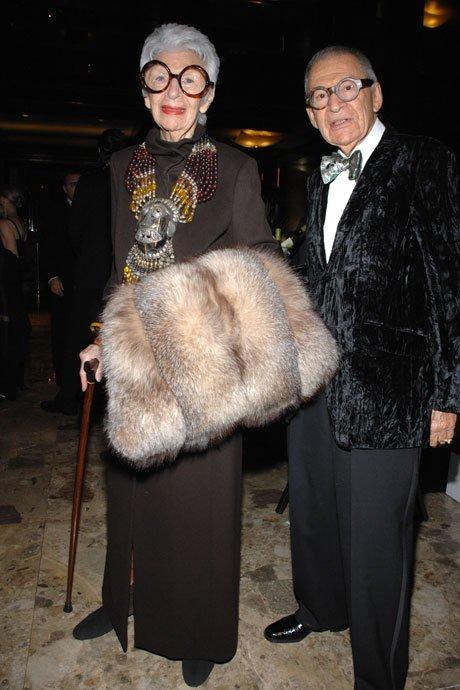
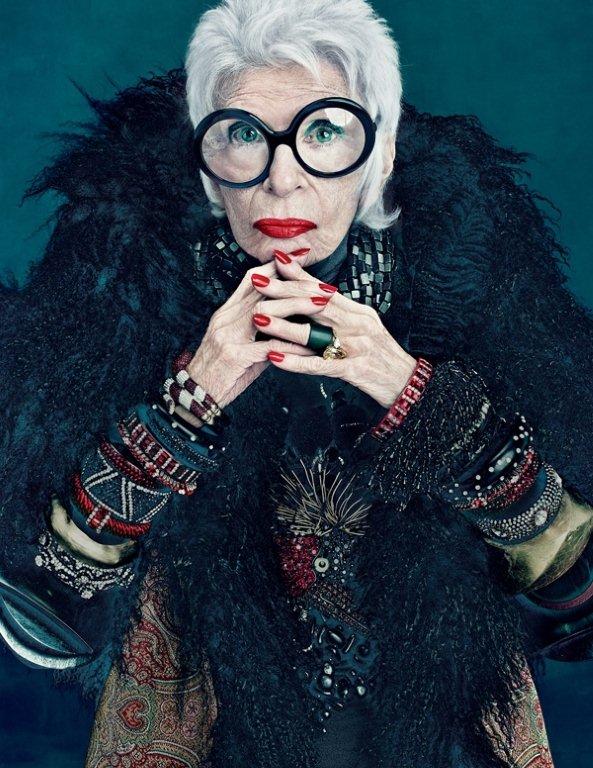
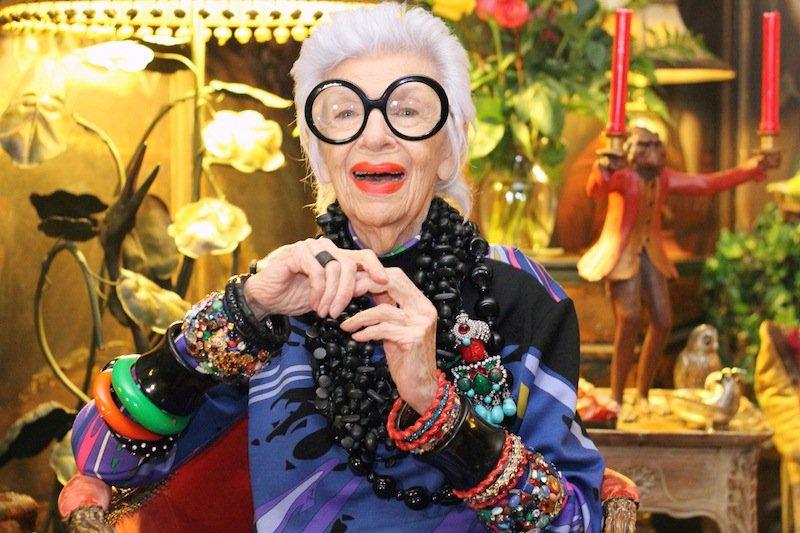
The first time I noticed Iris Apfel was in Vogue Italia a couple of years ago. I saw this beautiful elderly lady wearing lots of exotic jewelery and interesting clothes, too bad I couldn’t read her story…

At the time I was in a ‘exotic necklaces’ period myself. I gained a lot of weight because of my illnesses and medication and didn’t know how to dress any longer. I only had one dress-pattern left I thought looked good on me and I decided I would only wear the one dress with lots of beautiful necklaces, high-heeled shoes and a variety of  handbags. This way I could still play around with my look. I already owned some nice exotic folklore jewelery, but I started collecting more on my journeys to the Far East.

Last december I was invited to a launching party for a new magazine and wore a simple red velvet dress, I wanted to spike up a little. That evening I wore a bunch of my exotic necklaces and told everyone it was my tribute to Iris Apfel…. I hope they understood I was joking!

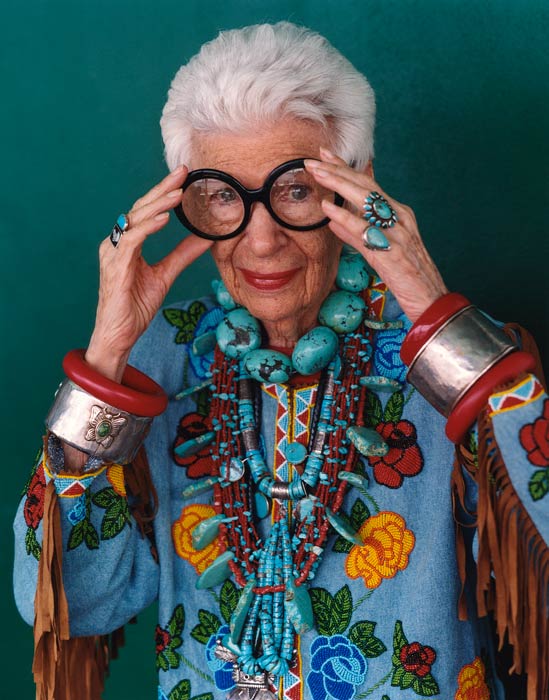
iris-apfel-portrait_bruce-weber_


Mrs. Apfel is 90 years old now and thinks her sudden cult status is very funny. She was just minding her own business, when the Costume Institute wanted to borrow some of her accessories and then thought they could perhaps borrow some of her clothes to put them in context. Iris liked the idea and asked: “What would you like?” Then Pandora’s box opened, her closets, drawers, boxes and armoires contained so many treasures, the museum decided to do an exhibition exclusively about her and her wardrobe. The exhibition was called  ‘Iris Apfel: Rare Bird of Fashion’.

Iris Apfel and her husband Carl founded their own textile firm ‘Old World Weavers’ in 1952. It all began when Iris was looking for a certain fabric she couldn’t find, then designed it herself after an old sample and had it woven. She got an offer by the textile company to design more and Carl became the company’s first salesman.

They traveled all over the world to find designs and then the fabricators, asking them to use their original looms. Their business developed without a master plan. The fabrics were expensive, but crafted by hand and not meant for mass production anyway. They started doing custom-made, because there was no money for stocking up. Iris recreated patterns she hunted down from old books, museums, second-hand shops and flea markets. Her limited audience contained some very loyal clientele, like Estee Lauder, Marjorie Merriweather Post, Jacqueline Onassis and Greta Garbo. Iris and Carl were called by the White House through nine presidential administrations, to produce exact reproductions of fabrics for furniture, walls and draperies.

They sold their Old World Weavers company 17 years ago to the prestigious Stark Carpet Company, after they refused many other offers to sell. The Apfel’s were kept on as working hands, consulting to Stark.

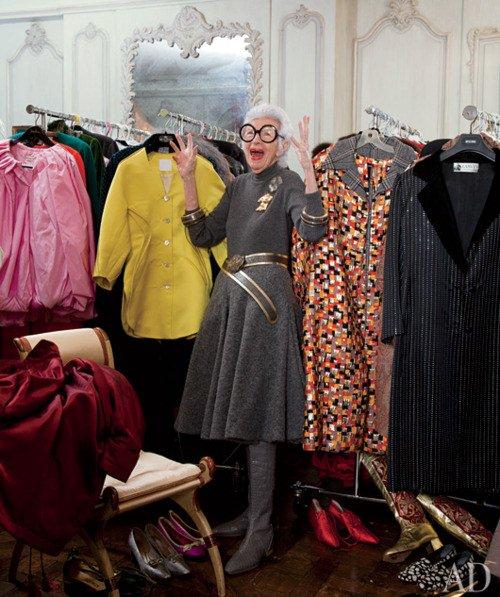
During all her travels with Carl, Iris found the most beautiful objects. Not only fabrics, jewelery and clothes, but also art and antiques. In clothes she doesn’t make a difference if it comes from junk or couture. She also shops at Topshop and loves a bargain. She habitually finds clothes so cheap, she doesn’t bother to try them on. ‘What the hell, if they don’t fit, I’ll turn them into pillows.’

‘In the old days, designers didn’t care about archives and you could buy their one-off samples. And in Tunisia you could buy jeans directly from the people who were making them for Pierre Cardin. Also the souks and flea markets were great places for good finds. Nowadays they’re all picked over.’

Being unconventional has had lasting benefits. ‘If you can’t be pretty, you have to learn to make yourself attractive. I found that all pretty girls I went to highschool with came to middle age as frumps, because they just got by with their pretty faces, so  they never developed anything. They never learned how to be interesting. But if you are bereft of certain things, you have to make up for them in certain ways.’

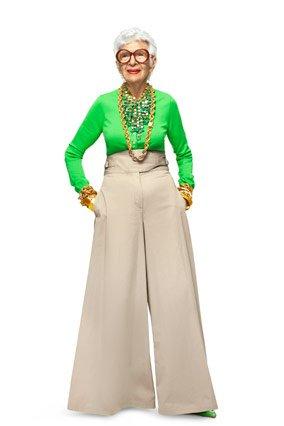
Iris’ look has been described as “controlled flamboyance”‘by Lisa Koeningsberg, President of Initiatives in Art and Culture. “To dress this way, there has to be an educated visual sence. It requires courage.”

What appeals to me the most about Iris Apfel  is her originality and free spirit. She is not dictated by fashion, but solely by her own exquisite taste. Mrs. Apfel is ‘street deluxe’.

In the short time since her sudden fame Iris has designed a jewelry collection for www.yoox.com and a make up collection for Mac. And she did a smashing  job at both of them! Rumour says she is going to design a jewel collection under her own name….

Here is a quotation from our fashion Icon regarding accessories : “For me the key to personal style lies in accessories. My friends tell me that my oversized glasses and my pairs of bracelets have become my unwritten signature. I have amassed an enormous ‘collection’ of bags, belts, bangles and beads without which I would be lost. One can change the entire look of an outfit by substituting one accessory for another. I love objects from different worlds, different eras, combined my way. Never uptight, achieving – hopefully – a kind of throwaway chic.” Iris Apfel.

Watch this video of Iris Apfel for the Rare Bird of Fashion exhibition: http://www.youtube.com/embed/yzf_WPqsmTM


Comme des Garçons is genius (the beginning)

1 Jan

It must have been 1986/87, I walked into ‘Reflections’,a designer store in Amsterdam and saw a man’s suit jacket by Comme des Garçons, so genius I couldn’t believe my eyes! It embodied how I felt about clothes and CDG still does!

Comme des Garçons started in 1969, when Rei Kawakubo was working as a freelance stylist for Japanese magazines and wasn’t satisfied with clothes available for use, so she started designing her own clothes. In the 1960s and 1970s foreign influences were flooding into Tokyo and Rei Kawakubo was inspired by western clothes, but didn’t experience a hindrance by western heritage and restrictions .

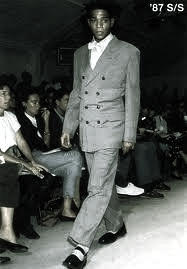
She decided not to use her own name, because she wanted the focus of attention on the work itself, not on her. She choose to collaborate with an architect, a photographer, a graphic designer and a floral artist. Instead of models, her clothes were shown by artists and actors (Andy Warhol and Jean-Michel Basquiat were among them).

CDG started interrogating fashion, deconstructing the western clothes,dismantling spaces, playing with fabrics like distressing or washing, texture was replaced by a blown up photocopy of woven Prince of Wales check,then printed on stretchy nylons. Colors were reduced to black & white variations, like in old photographs, from smoky to grey to deep black and white warm up with sepia to daylight white. Shapes were investigated, bumps were added and gave curves where you normally don’t expect them. A totally different approach to fashion untill then.

Photography has always been very important for CDG, but also there the brand made big changes. The garment or the perfume bottle weren’t the focus, but the picture itself was: first you noticed the picture, than the product in the picture.

Rei Kawakubo created a style, but she is also about continual renewel. To provoke a healthy rivalry within her own company and keep it sharp on the edge,she helped a young designer, Junya Watanabe, whom she trained herself, to set up an independent fashion brand. A daring, but intelligent move!

CDG forever changed the way people look, think and feel about fashion. Rei Kawakubo is a visionair, an inspiration to never stop  reinventing myself and my work……… www.comme-des-garcons.com