Archive by Author

Six Magazine is Moving…

30 Jun

CDG

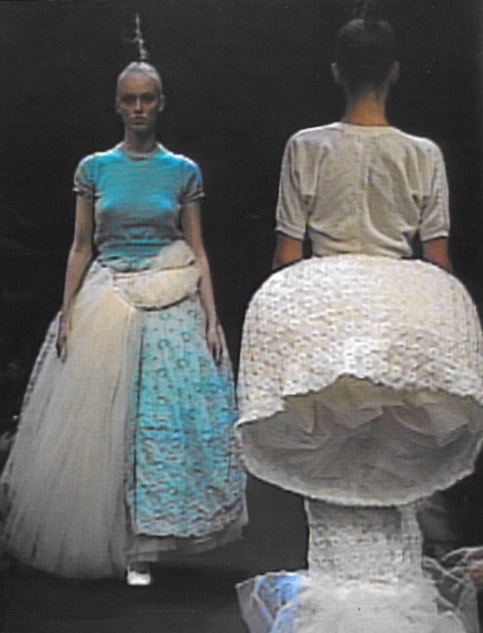
Twice a year I took the train to Paris, just so I could get my hands on the next issue of Six Magazine by Comme Des Garçons, the most inspiring magazine at the time.

.

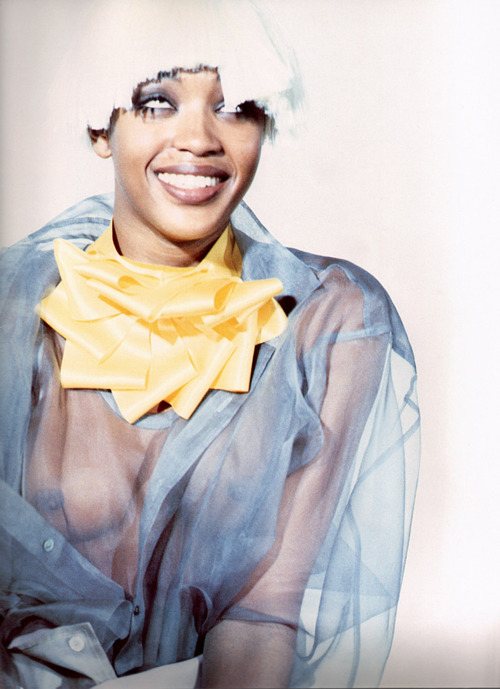
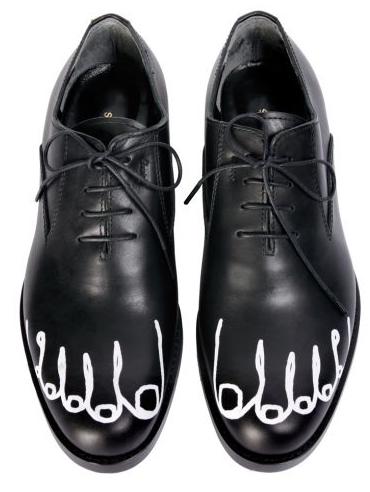
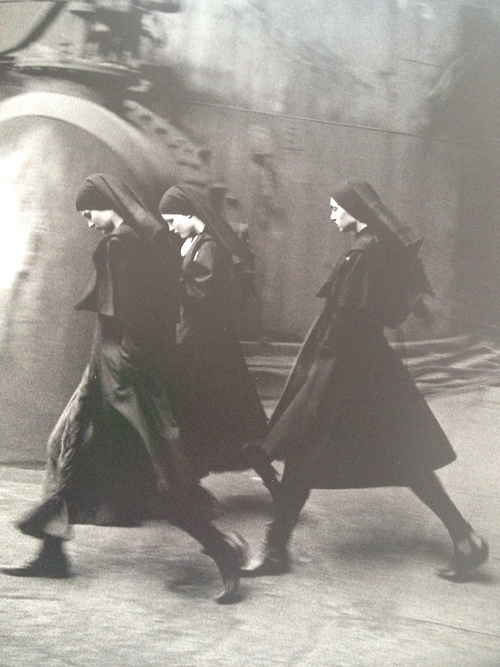
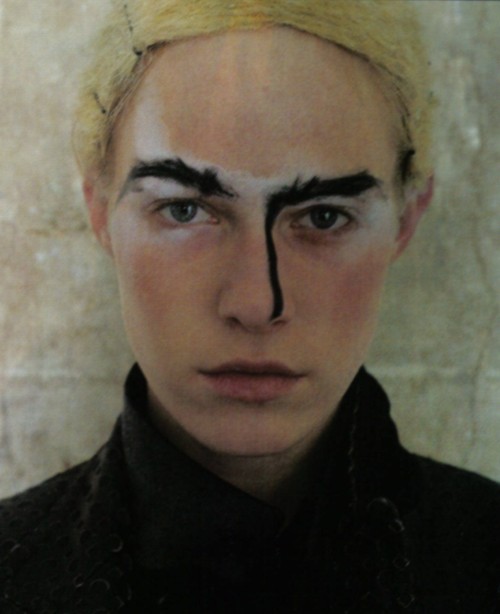
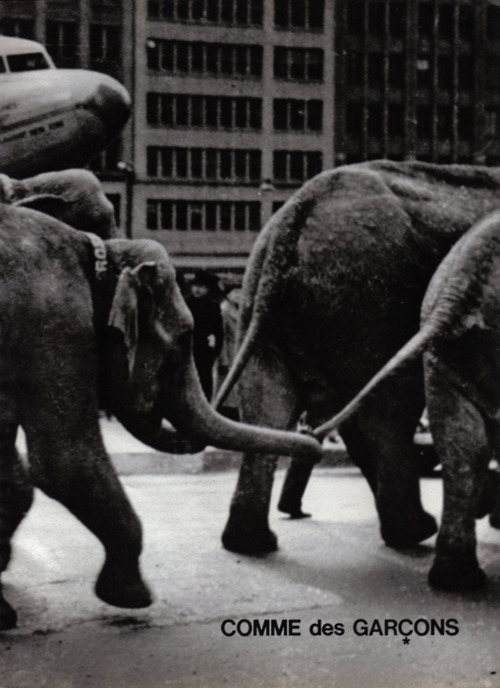
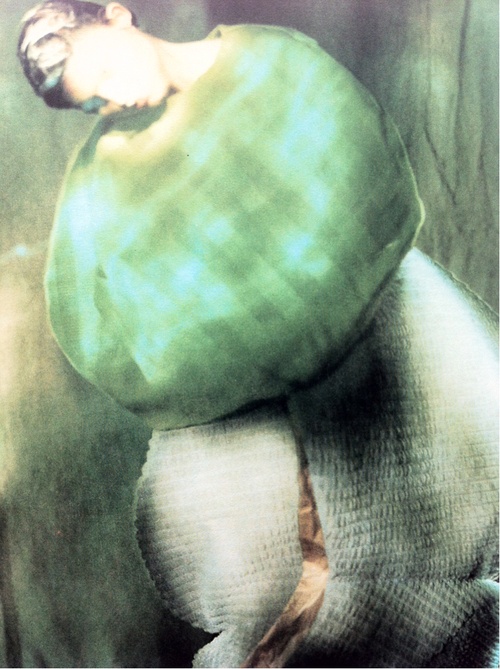
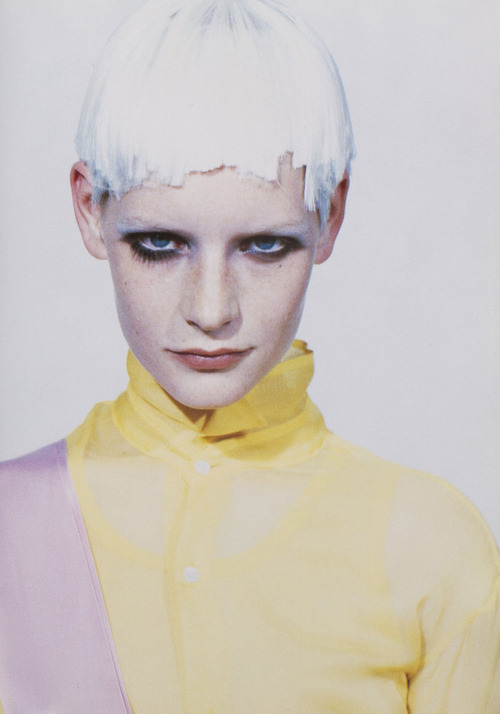
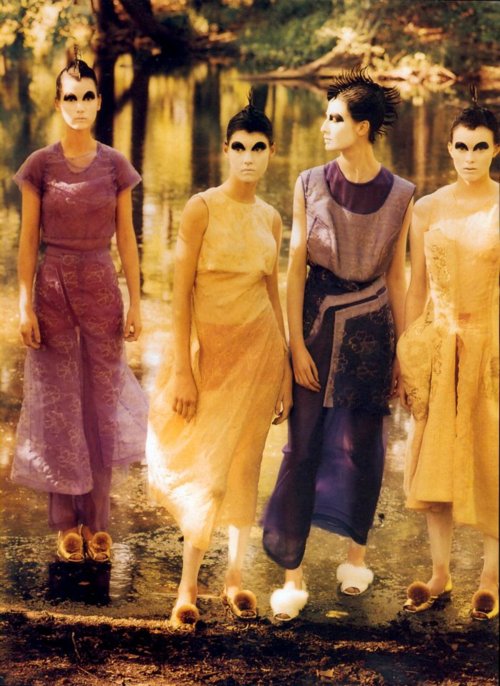
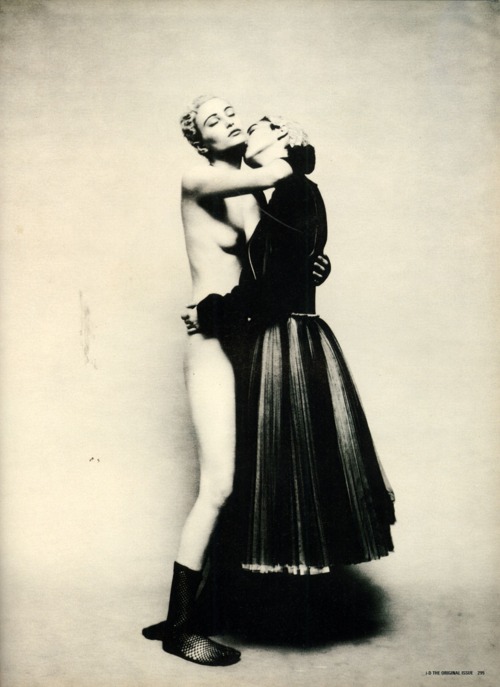
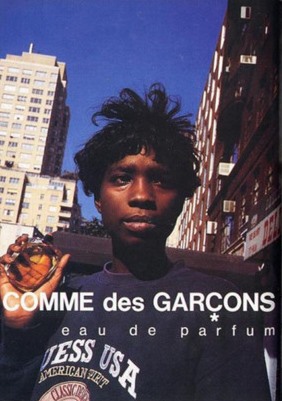
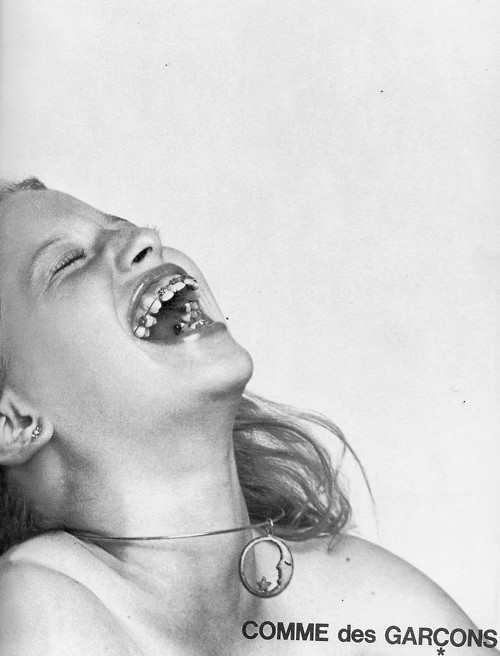
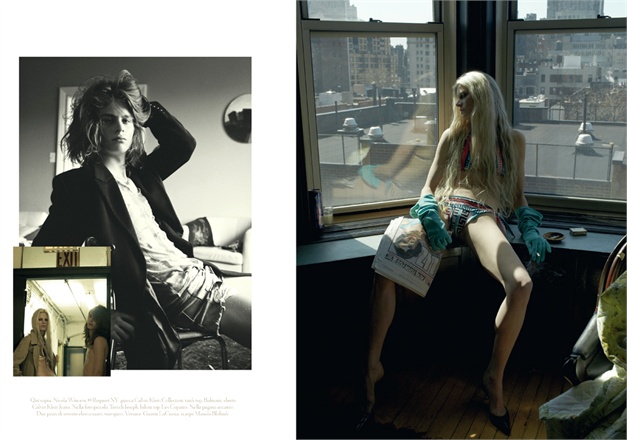
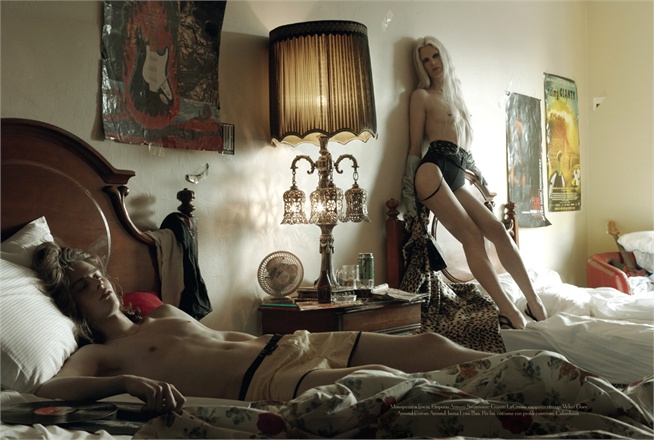
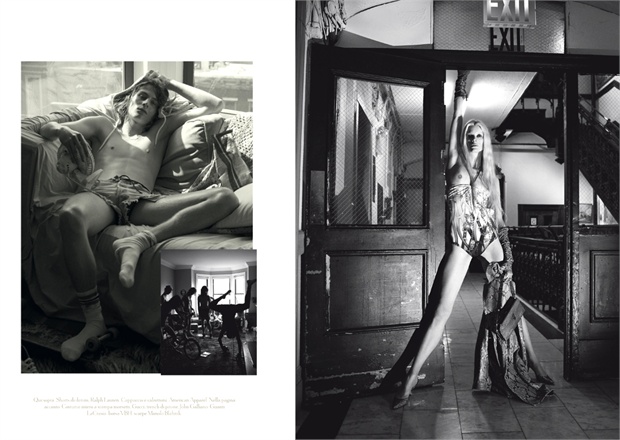
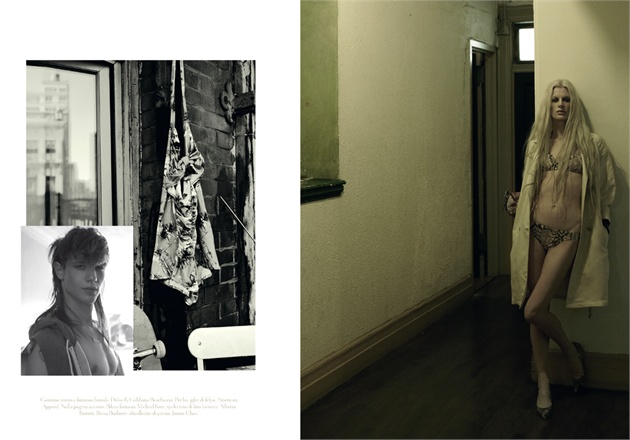
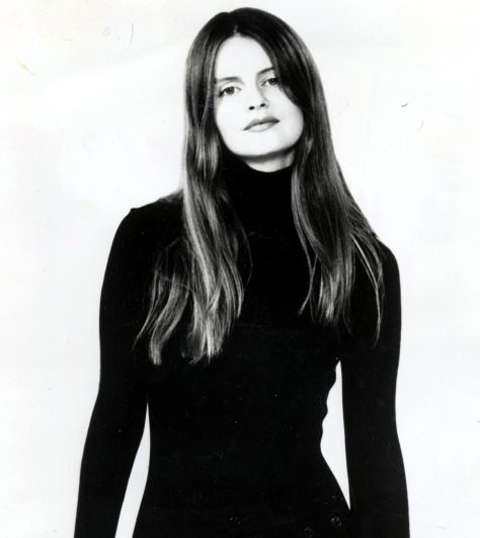
In 1988, Comme des Garçons founder and creative director Rei Kawakubo created bi-annual creative journal Six (and abbreviation of Sixth Sense), presenting her own work alongside that of other artists, photographers, designers and writers. The magazine closed its doors in 1991, by which time it had become an institution for the Japanese brand, and it’s now the subject of a stylish new iPad app. Moving Six takes an interactive look back into the archives, still a source of inspiration for Rei Kawakubo, packed with photos by Steven Meisel, Minsei Tominaga and Karl Blossfeldt, all tinted and enhanced especially. Be inspired.

.

CDG

Yukio Nakagawa Flower arrangement

CDG shirt

CDG

CDG

CDG

CDG

CDG

CDG

CDG

CDG

CDG

CDG

CDG

CDG

CDG

CDG

CDG

CDG

CDG

CDG

CDG

CDG

CDG

CDG

.

Comme des Garçons’ Moving Six app

Comme des Garçons presented a brand new iPad application in 2012, exploring the world of Six magazine, edited by designer Rei Kawakubo from 1988 to 1991.

.

.

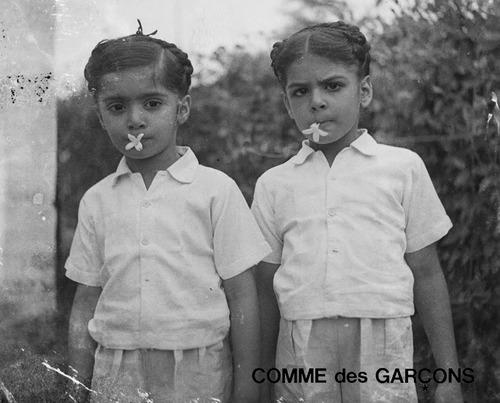
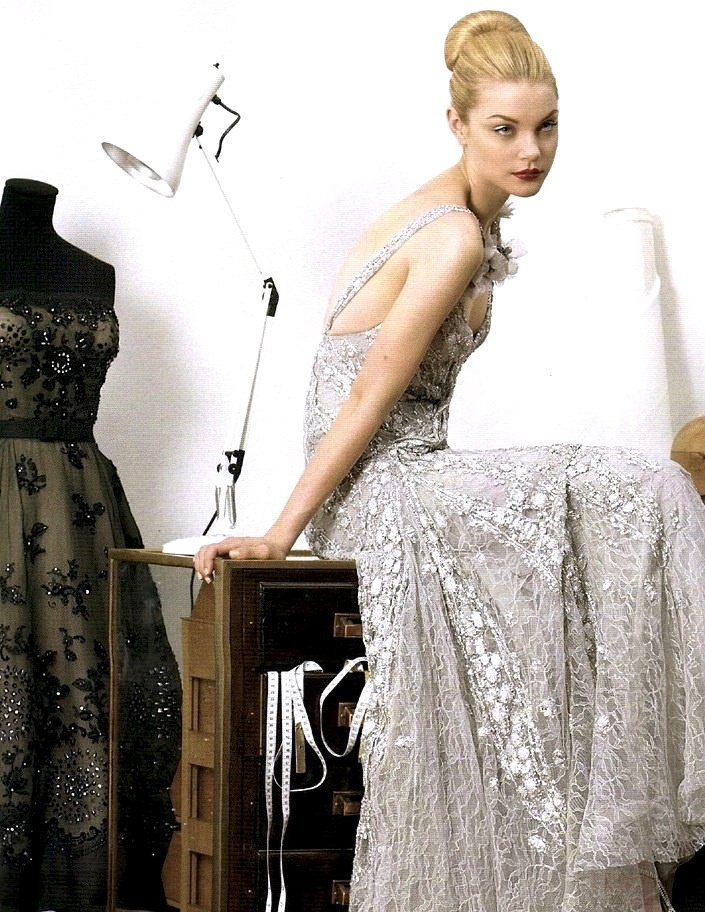
(most pictures in this post were published in Six Magazine, the other pictures are also related to Comme des Garçons)

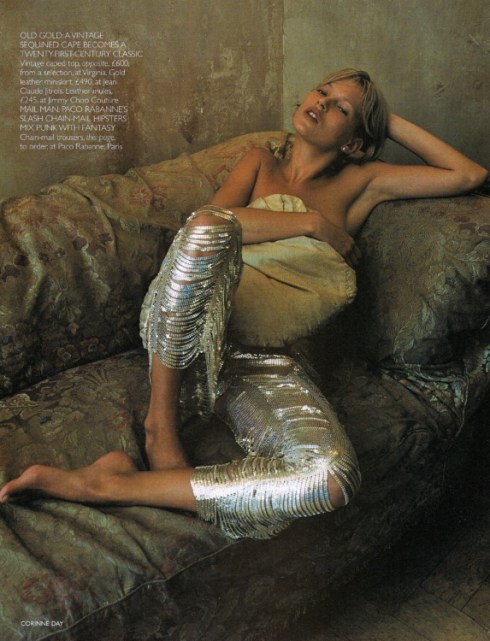
Corinne Day, remembered for transforming fashion photography

23 Jun

Corinne Day

From sudden Fame to harsh Criticism

In many ways Corinne Day  memory is shadowed by the moment of her greatest good fortune: her spotting of a Polaroid of a gangly Croydon teenager among the files of a London model agency in the spring of 1990. She brought a photograph of the 14-year-old Kate Moss to Phil Bicker, the visionary art director of the Face magazine, then the single most influential style magazine in Europe. Back then, Bicker was busy reinventing British fashion photography as a gritty, altogether less glamorous form. He had gathered a bunch of young and ambitious photographers, including Glen Luchford, David Sims and Nigel Shafran, all of whom became successful in the fashion and art world. Corinne Day was perhaps the most temperamental, a feisty, self-taught, model-turned-photographer with attitude to burn.

“It was an exciting time because we were making up the rules as we went along,” says Bicker, “I saw the same thing in Kate as Corinne saw, that she represented something very real: the opposite, in fact, of all the unreal high glamour of fashion. I sent Corinne and stylist, Melanie Ward, down to Camber Sands to do a shoot with her.”

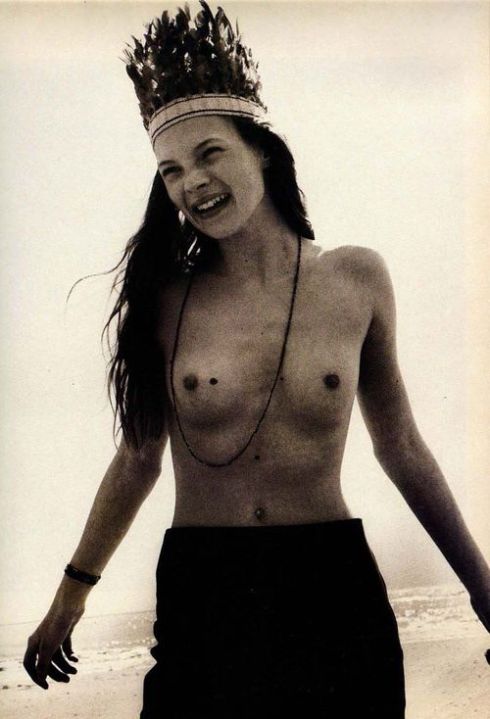
The cover of the July 1990 issue of the Face gained iconic status in the fashion world and beyond. On it, the young Moss, who appears to be wearing no make-up, grins like an excited and slightly gauche teenager from beneath a headdress made of fabric and feathers. The cover line announces “The 3rd Summer of Love” and promises features on the Stone Roses, Daisy Age fashion and psychedelia. The summer – and the decade, and the style-obsessed world in which we now live – had found its face.

.The-Face-Cover-Kate-Moss-by-Corinne-Day-e1326810400856.
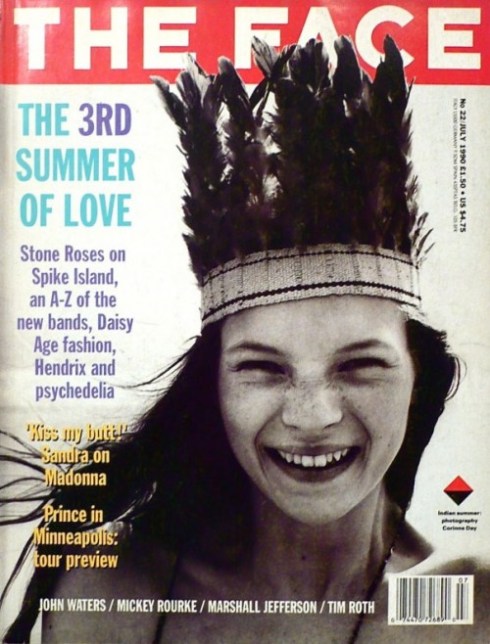
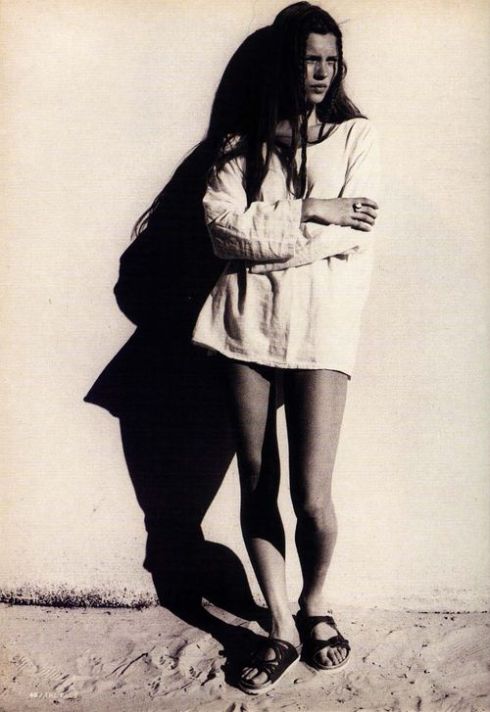
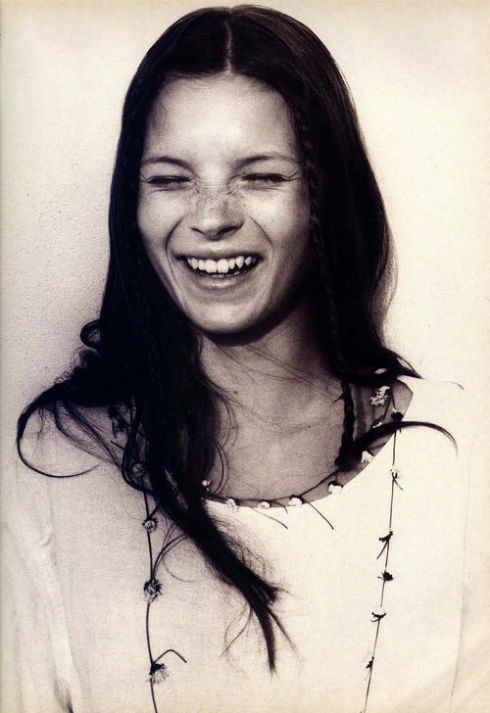
Inside, Kate Moss cavorted on Camber Sands in hippy-style clothes, sometimes topless, like a girl who could not quite believe her luck. Bicker is quick to point out that, although the fashion shoot seemed casual and unstyled, it was, in reality, the opposite. “It looked natural and simple but it was carefully constructed to look like that. In fact, as I recall, I sent them down there two or three times until they got it right. Kate hadn’t been modelling for very long but, even in her awkwardness, she had that thing about her that Twiggy had in the 60s, a freshness that matched the times.”

Juergen Teller, one of Corinne Day’s peers, and now the most globally successful photographer of all the young iconoclasts of that time, concurs. “I loved Corinne’s first photographs of Kate. They had that end-of-summer feel and seemed very fresh and almost naive, but in a good way. To me, they were her best photographs.”

The 3rd Summer of Love
Corinne Day

Corinne Day

Corinne Day

Corinne Day

Corinne Day

Corinne Day

Corinne Day

.
Revealingly, neither Kate Moss or her model agency were pleased with the photographs, finding them too raw and unadorned. Corinne Day had brought her own experience of being a model into the shoot. She later said, “It was something so deep inside, being a model and hating the way I was made up. The photographer always made me into someone I wasn’t. I wanted to go in the opposite direction.”

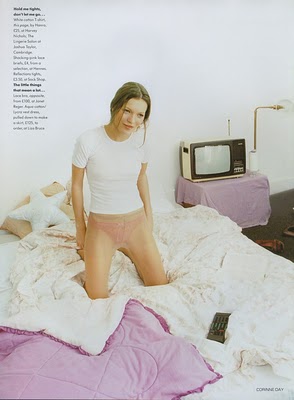
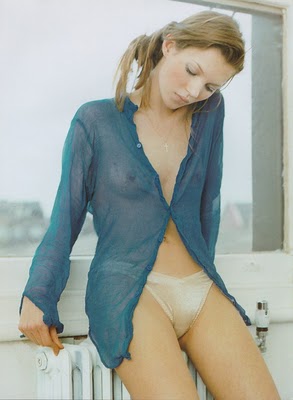
But the next time Corinne Day impinged on the public consciousness, that freshness had been replaced by a darker, harsher vision. In 1993, she photographed Kate Moss for a fashion shoot for British Vogue, Under-exposure. In it, the model looked strung out and sad, dressed down in baggy tights and stringy underwear that exacerbated her skinniness. Again, the photographs were a reaction to the glitzy unrealness of the fashion photography that Vogue usually featured, but here the extremity of Corinne Day’s vision provoked outrage and hysterical headlines about the glamorization of anorexia and hard drug use.

The terms “heroin chic” and “grunge fashion” were born and bandied about in the tabloids. By then, the troubled and troublesome photographer had burned too many bridges in the fashion world and, more problematically, was actually living in, and intimately photographing, a bohemian milieu defined by hard drug use.

Under-exposure

Corinne Day

Corinne Day

Corinne Day

Corinne Day later said that she took the shot above on a day when Kate had been crying after a fight with her then-boyfriend, resulting in the vulnerability that turned this into one of the most iconic and controversial images produced in the 90s (on, of course, the charge that Kate was too thin, heroin chic,etc). It’s the most reproduced image of the entire editorial, but the clothes (pink Liza Bruce vest and Hennes- now known as H&M- chiffon knickers) are rarely remembered, or credited. I have the picture on my Wall of Fame. The vulnerability, innocence & simplicity of the image made it iconic picture to me too.
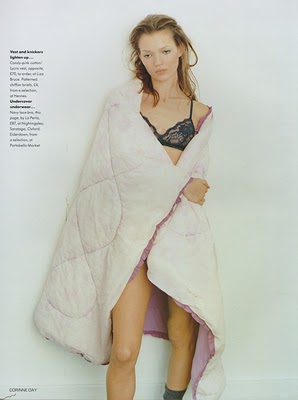
55793_fash8195_122_613lo

55798_fash8196_122_215lo

55799_fash8197_122_613lo

55804_fash8198_122_251lo

55815_fash8199_122_684lo

Start photography

Corinne grew up in Ickenham with her younger brother and her grandparents. She left school aged sixteen and worked as an assistant in a local bank. After a year at the bank she became an international mail courier. It was during this period that someone suggested she try modelling – she worked consistently as a catalogue model for several years. In 1985 she met Mark Szaszy on a train in Tokyo – Mark was a male model and had a keen interest in film and photography.

During an extended trip to Hong Kong and Thailand, Mark taught Corinne how to use a camera and in 1987 they moved to Milan. It was in Milan that Day’s career as a fashion photographer started. Having produced photographs of Mark and her friends for their modelling portfolios, Corinne began approaching magazines for work.

From Fashion to Documentary

Corinne retreated from fashion work in the wake of the heroin chic debate, instead choosing to tour America with the band Pusherman and concentrate on her documentary photography. She also undertook work photographing musicians, including the image of Moby, used on his 1999 album Play.

Her autobiographical book, Diary was published by Krus Verlag in 2000, and contained frank and at times shocking images of Corinne and her friends. The images in Diary featured young people hanging out, taking drugs and having sex, and have been compared to the documentary realism of Nan Goldin. Coinciding with the publication of Diary,  Corinne had two large-scale exhibitions in London in 2000.

Diary

diary

Diary

Diary

Diary3

Diary

Diary

Diary

Diary

corrine-day-diary-2

Diary

Diary also records the dramatic events of the fateful night in 1996 when Corinne collapsed in her New York apartment and was rushed to Bellevue hospital. There, she underwent an emergency operation for a brain tumour. She insisted that Mark photographed her, even in the moments leading up to her surgery. She looks dazed, helpless, disoriented. “To me, photography is about showing us things we don’t normally see,” she said later, “Getting as close as you can to real life.” The book’s final picture is of a beach strewn with beer cans: a glimmer of hope, and yet a tarnished one.

After her initial illness, Corinne made an uneasy truce with fashion photography. She abandoned her raw, edgy style for something more traditional in the fashion shoots she did for, among others, British, French and Italian Vogue, Arena and Vivienne Westwood.

Corinne Day

Corinne Day

Corinne Day

Corinne Day

Corinne Day

Corinne Day

Corinne Day

Corinne Day

Corinne’s tumour returned in 2008 and a campaign called Save the Day was started by her friends to pay for treatment in a clinic in Arizona. It raised £100,000, much of it from the sale of signed, limited-edition prints, including several of Kate Moss that were signed by the model and the photographer.

Corinne Day/Kate Moss

Corinne Day, who died 27 August 2010 , will be remembered for transforming fashion with her pictures of the young Kate Moss for the Face.

Kate Moss & Corinne Day

Most information for this post from:  The Observer, article by  Sean O’Hagan & Wikipedia

Official website Corinne Day:  http://www.corinneday.co.uk/home.php

Body Modification inspires… (Part 2)

16 Jun

streched-ears

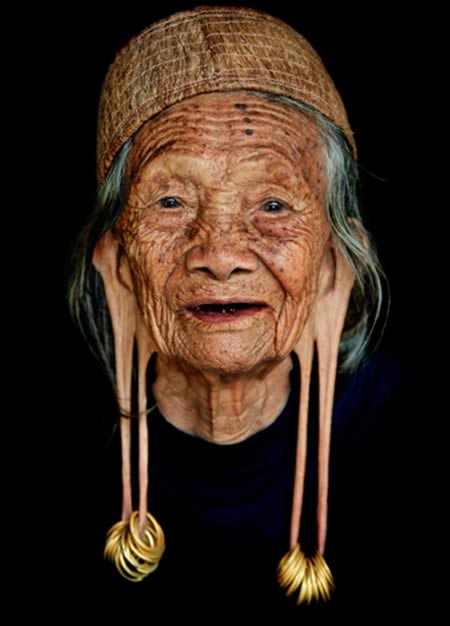
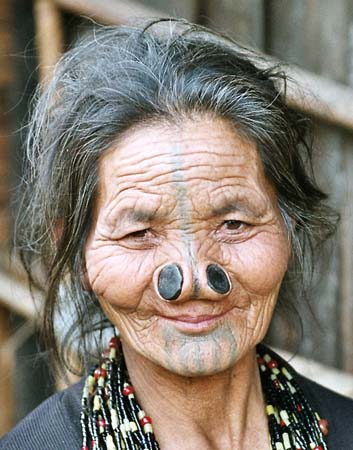
Body modification (or body alteration) is the deliberate altering of the human anatomy. It is often done for aesthetics, sexual enhancement, rites of passage, religious beliefs, to display group membership or affiliation, to create body art, for shock value, and as self-expression, among other reasons. In its most broad definition it includes plastic surgery, socially acceptable decoration (e.g., common ear piercing in many societies), and religious rites of passage (e.g., circumcision in a number of cultures), as well as the modern primitive movement.

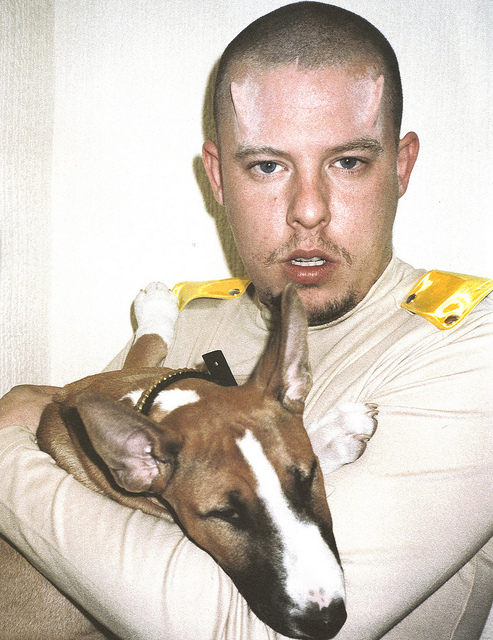
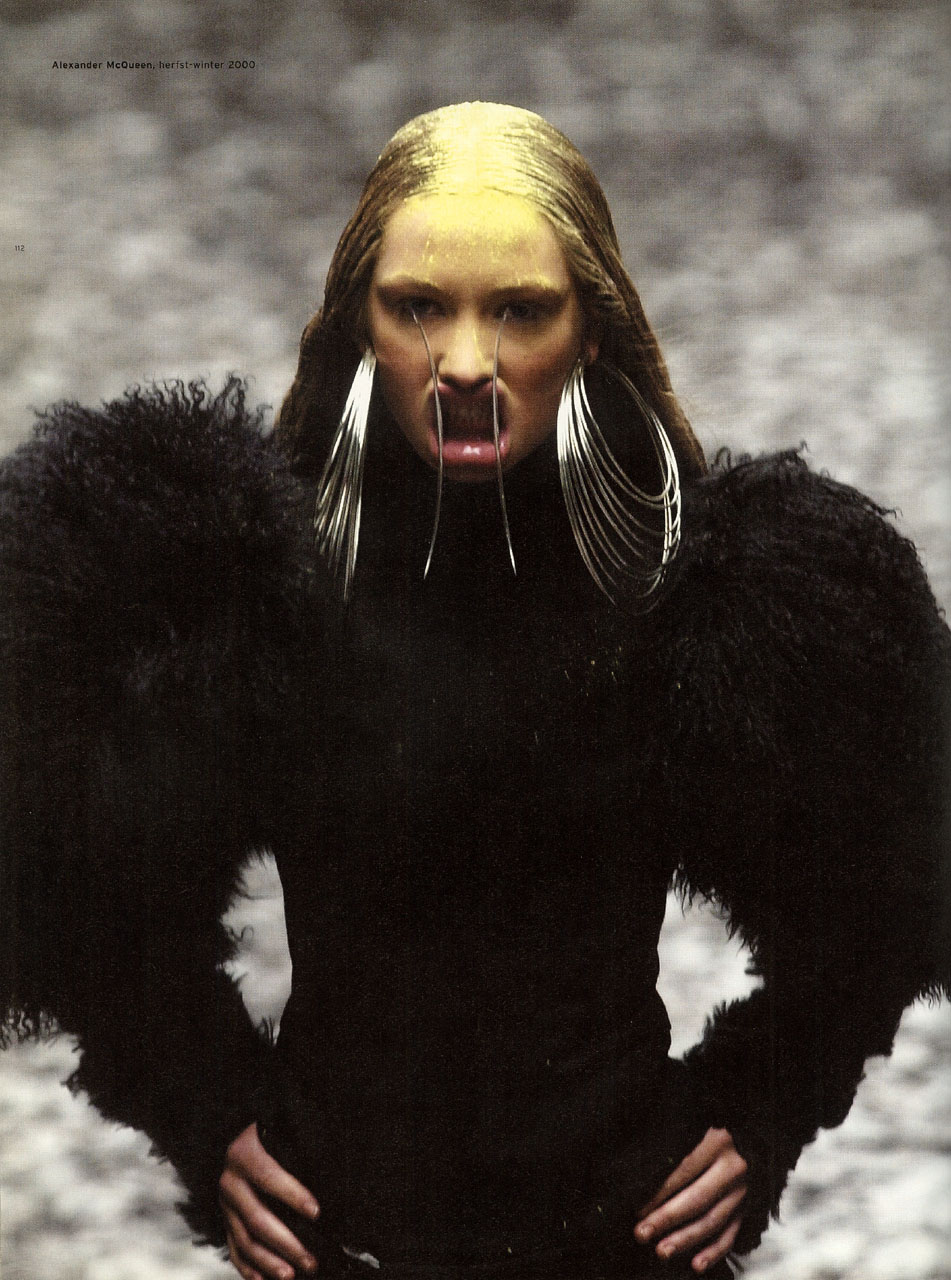
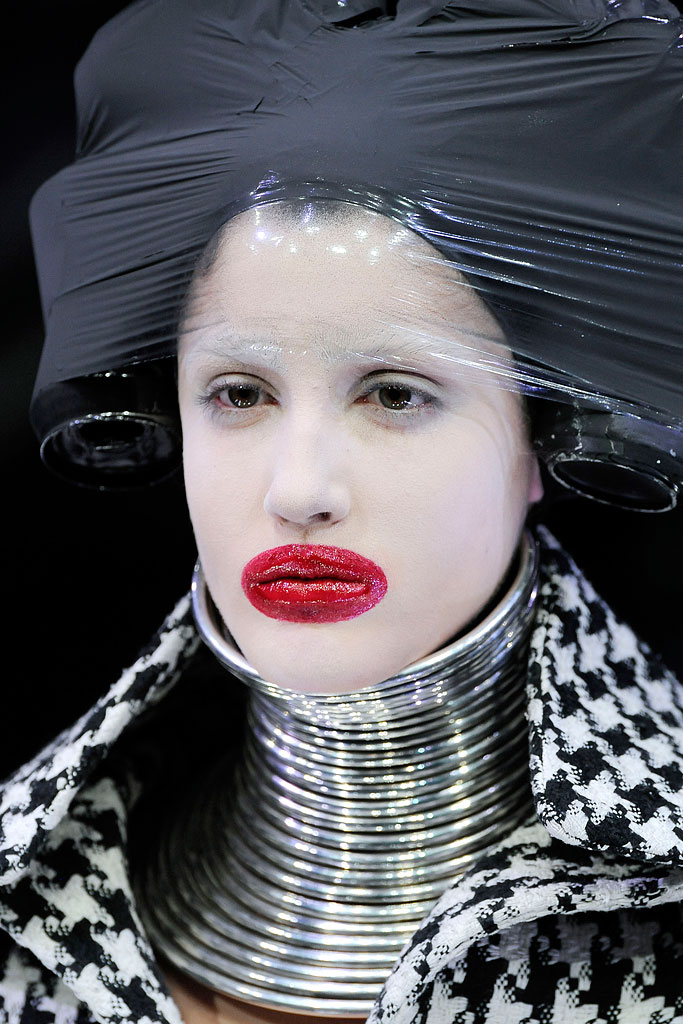
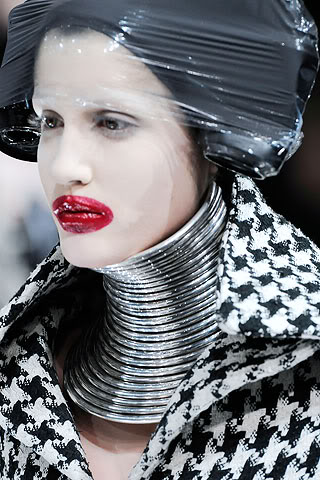
Walter van Beirendonck, Alexander McQueen & Riccardo Tisci found inspiration in body modification and its jewelry.

firestarter

.

Piercing

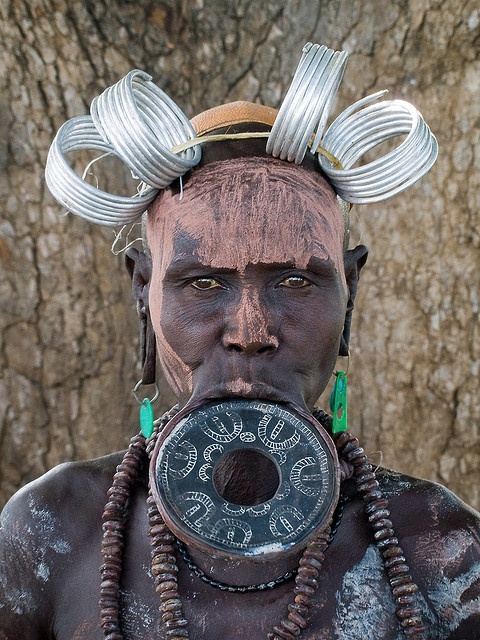
It’s a misconception that body piercing is a relatively recent trend or fashion. Ear piercing is incredibly common in almost every culture throughout history, with a huge range of legends, myths, and meanings behind the jewelry worn and its placement. Nostril piercing has been documented in the Middle East as far back as 4,000 years. The fashion continued in India in the sixteenth century, and is still widely practiced there to this day. Both ear and nostril piercing and jewelry are mentioned in the Bible. And piercings in other parts of the body, such as labret or lip piercings, are widely practiced often in the form of enlarged piercings and lip discs. Tribes across Africa, in Southeast Asia, and in North and South America all participate in lip piercing.

enlarged nostril piercing

streched nose piercings

enlarged ear piercings

piercing

enlarged piersings

lip discs

Lip disc

Lip disc

tumblr_lykp5gVI6m1qh1nq7o1_500

.

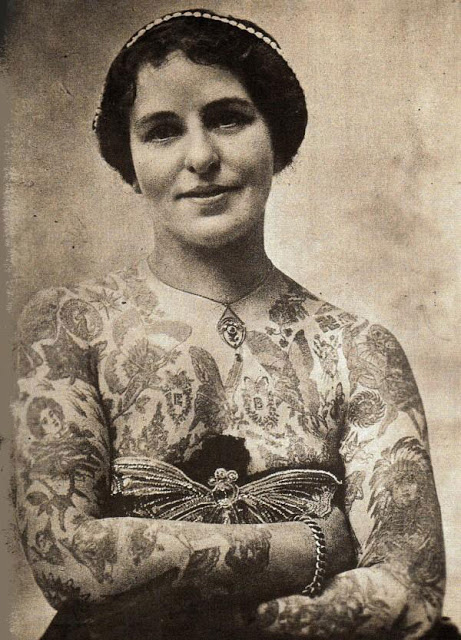
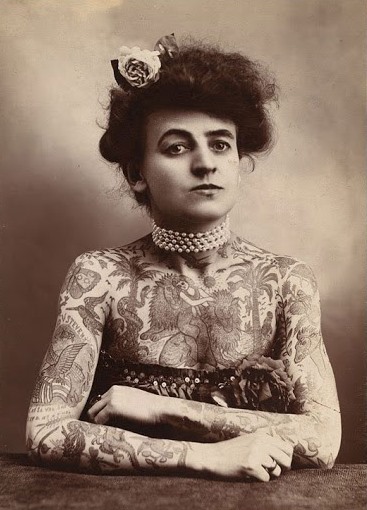
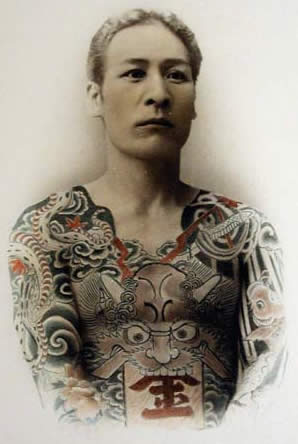
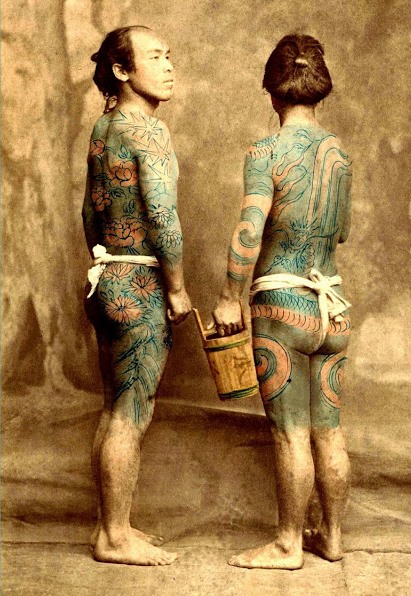
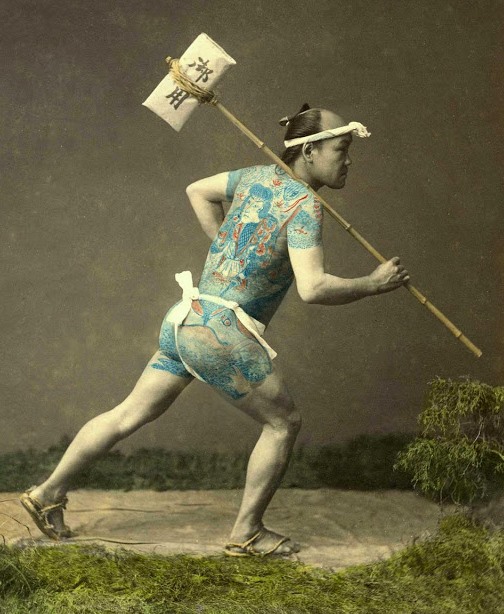
Tattooing

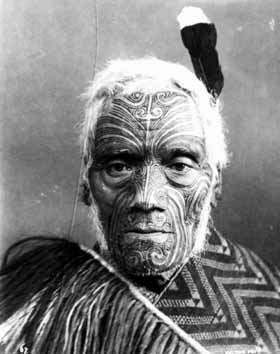
Tattooing, as we know it, is documented as far back as 3300 BCE as seen in the discovery of Otzi the iceman in 1991 and ancient Egyptian mummies bearing tattoos of animals and various creatures.  The practice, however, is believed to have originated over 10,000 years ago. The mechanics of tattooing have changed over the years, and the pigments and inks used have wildly improved in recent times, but whether hand-tapped, poked with a single needle or administered with the telltale buzz of a modern tattoo machine, the basic reasons behind the choice to become tattooed haven’t changed much in all that time: fashion, function or just to make a statement of some kind.

People have also been forcibly tattooed to identify them permanently as criminals or undesirables in society and that associated stigma of tattooing as ‘lowbrow’ or undesirable still exists in the minds of many. Despite that, tattoos are enjoying a resurgence of popularity and are very common in modern culture and for the most part, accepted as the norm.

MaoriChief-lg

tattooed woman

Tattooed woman

japanese-tattoos-1900

THE TATTOOED MEN of OLD JAPAN

TATTOOED POST RUNNER  --  Delivering the Mail in Old Japan (1)

.

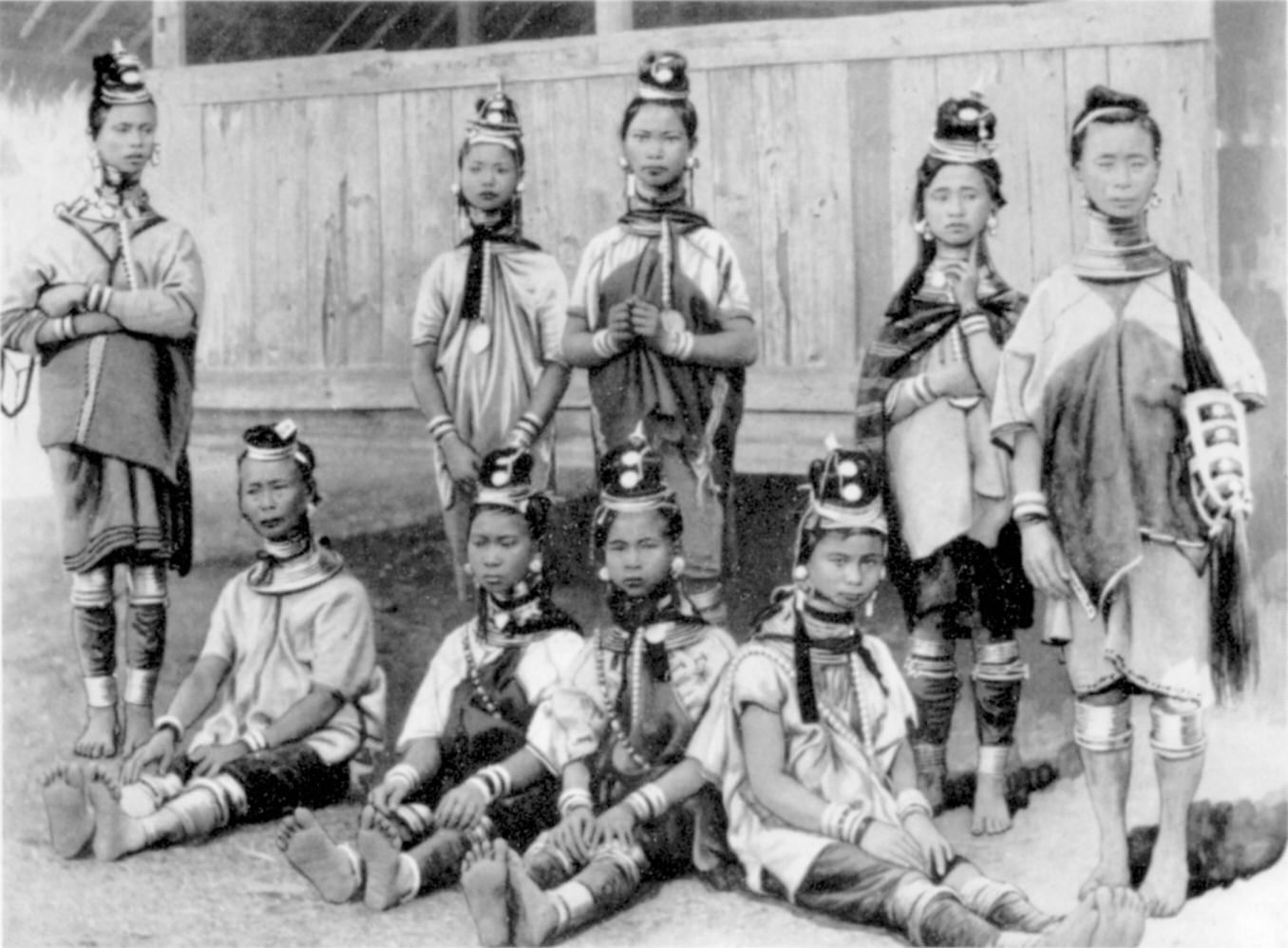
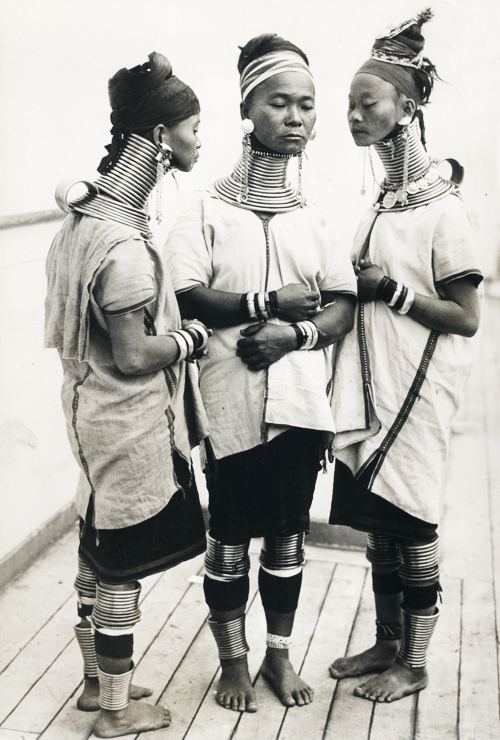
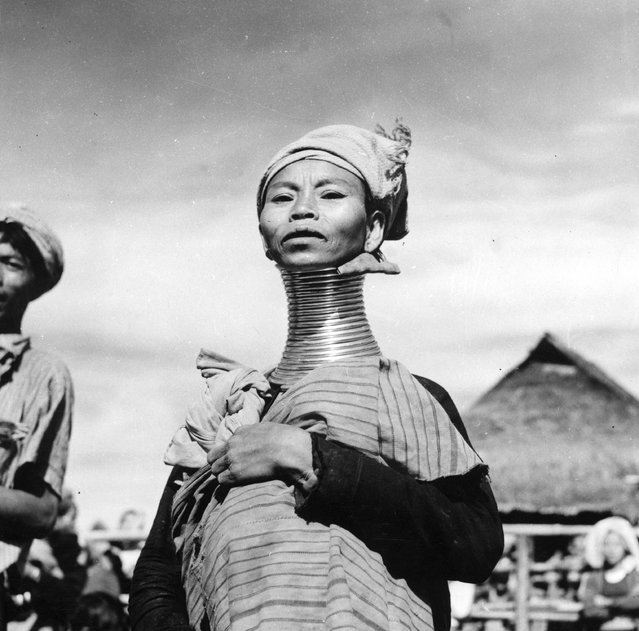
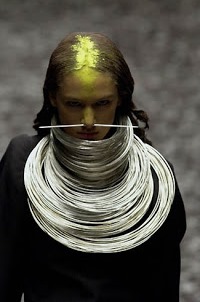
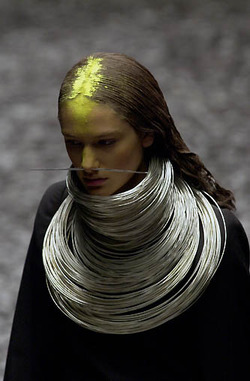
Neck rings

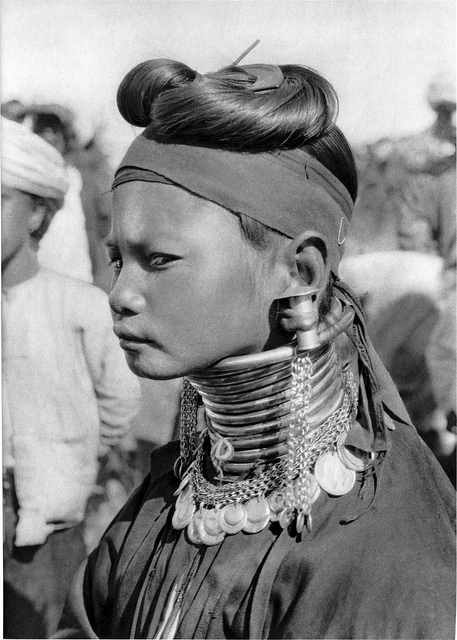
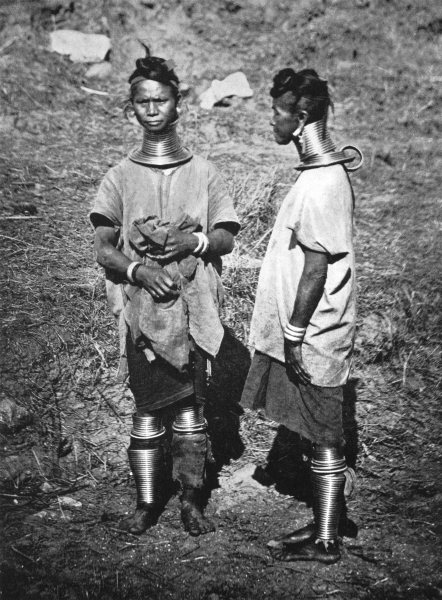
Neck rings are one or more spiral metal coils of many turns worn as an ornament around the neck of an individual. In a few African and Asian cultures neck rings are worn usually to create the appearance that the neck has been stretched. Padaung (Kayan Lahwi) women of the Kayan people begin to wear neck coils from as young as age two. The length of the coil is gradually increased to as much as twenty turns. The weight of the coils will eventually place sufficient pressure on the shoulder blade to cause it to deform and create an impression of a longer neck.

The custom of wearing neck rings is related to an ideal of beauty: an elongated neck. Neck rings push the collarbone and ribs down. The neck stretching is mostly illusory: the weight of the rings twists the collar bone and eventually the upper ribs at an angle 45 degrees lower than what is natural, causing the illusion of an elongated neck. The vertebrae do not elongate, though the space between them may increase as the intervertebral discs absorb liquid.

The South Ndebele peoples of Africa also wear neck rings as part of their traditional dress and as a sign of wealth and status. Only married women are allowed to wear the rings, called “dzilla”. Metal rings are also worn on different parts of the body, not just the neck. The rings are usually made of copper or brass. If these rings are removed from around the neck, the neck could collapse under its own weight.
Scott's_portrait_of_Padaung_'giraffe_women'_in_the_1890s
tumblr_mdnh7qnkq01qa70eyo1_500
Amazing Photos of Burmese Women in The Past (3)
tumblr_m2eag4QhOx1qgazxho1_500
burma-burma-padaung-women-neck-rings-antique-print-1900-117969-p
LongNeckWoman&ChildC
.

Scarification & Branding

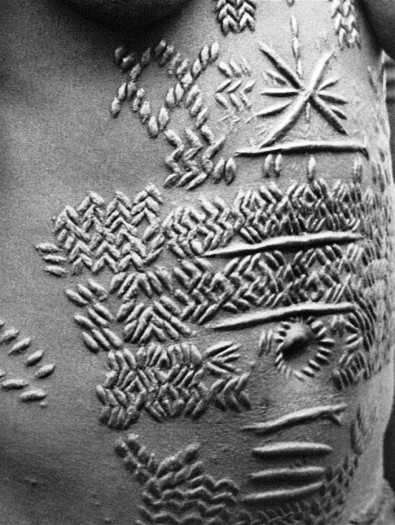
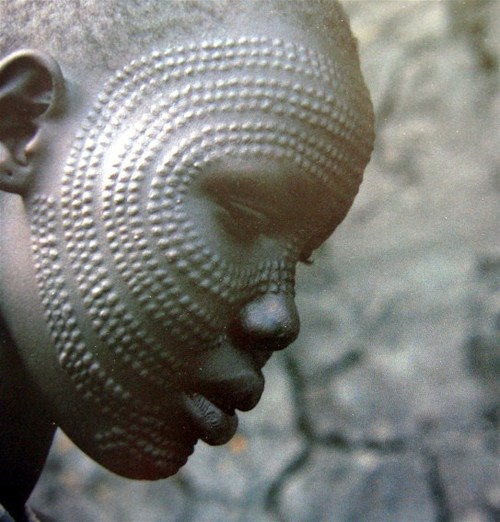
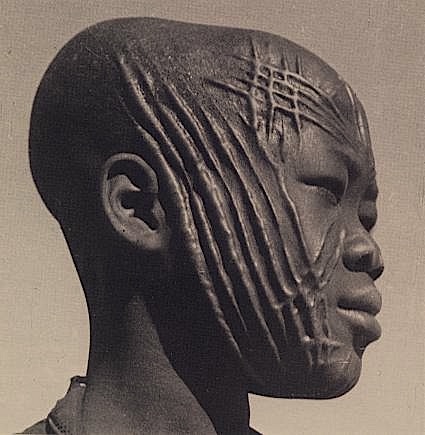
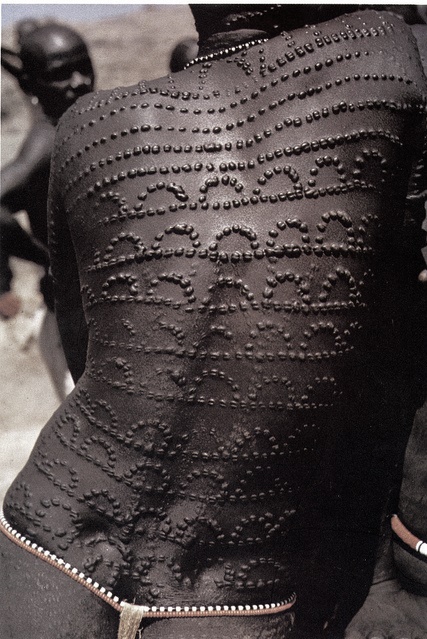
Traditionally, scarification is seen most widely amongst dark-skinned people in equatorial regions-people who tend to have so much melanin in their skin that tattooing isn’t very effective, visually. The “crocodile” people of Papua New Guinea’s Sepik region, several Aboriginal tribes in northern Australia and the Karo people of Ethiopia are just a few of the many cultures who, to this day, participate in traditional rites involving scarification.

In the modern-day Western context, scarification and branding, while markedly less popular than tattooing, are still common forms of body modification, with beautiful end results for many devotees. The aesthetic outcome of a healed scarification, however, has less to do with the artist and more to do with the healing and genetics of the wearer and that (along with the pain and discomfort of the procedure and healing) will probably ensure that scarification never becomes as common as, say, getting a tattoo.

scarification

scarification

scarification

scarification

scarification

.

Hardcore

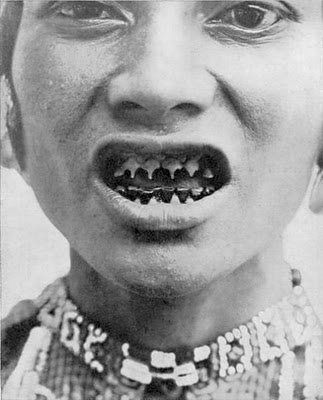
Other surgical modifications seen in recent times are ear pointing, tongue splitting, and many different genital modifications, all offered by “cutters” and in many cases, by sympathetic board-certified surgeons. But even within the bodymod community at large, these types of modifications are often considered “hardcore,” are generally more unusual (though not uncommon) and are mostly of interest to those body modification enthusiasts motivated to push the boundaries of social acceptance.

carved teeth

carved teeth

(Teeth Chiseling is a tradition often performed without any anesthesia by the  Mentawai people in Indonesia).

Body modification has been around as long as humans have lived and with its rich and fascinating history, the practice is unlikely to die out anytime soon. But despite some lingering societal disdain, modifications, even of the more esoteric variety, are becoming more mainstream and acceptable every day, and the craft behind performing these procedures is being constantly perfected and refined by the artists involved. And as new ideas and techniques become reality and traditional standbys are adapted and perfected, it’s safe to say that

humans will continue to reshape and redefine themselves by modifying their bodies.

.

.

Influence on Walter Van Beirendonck

Book cover

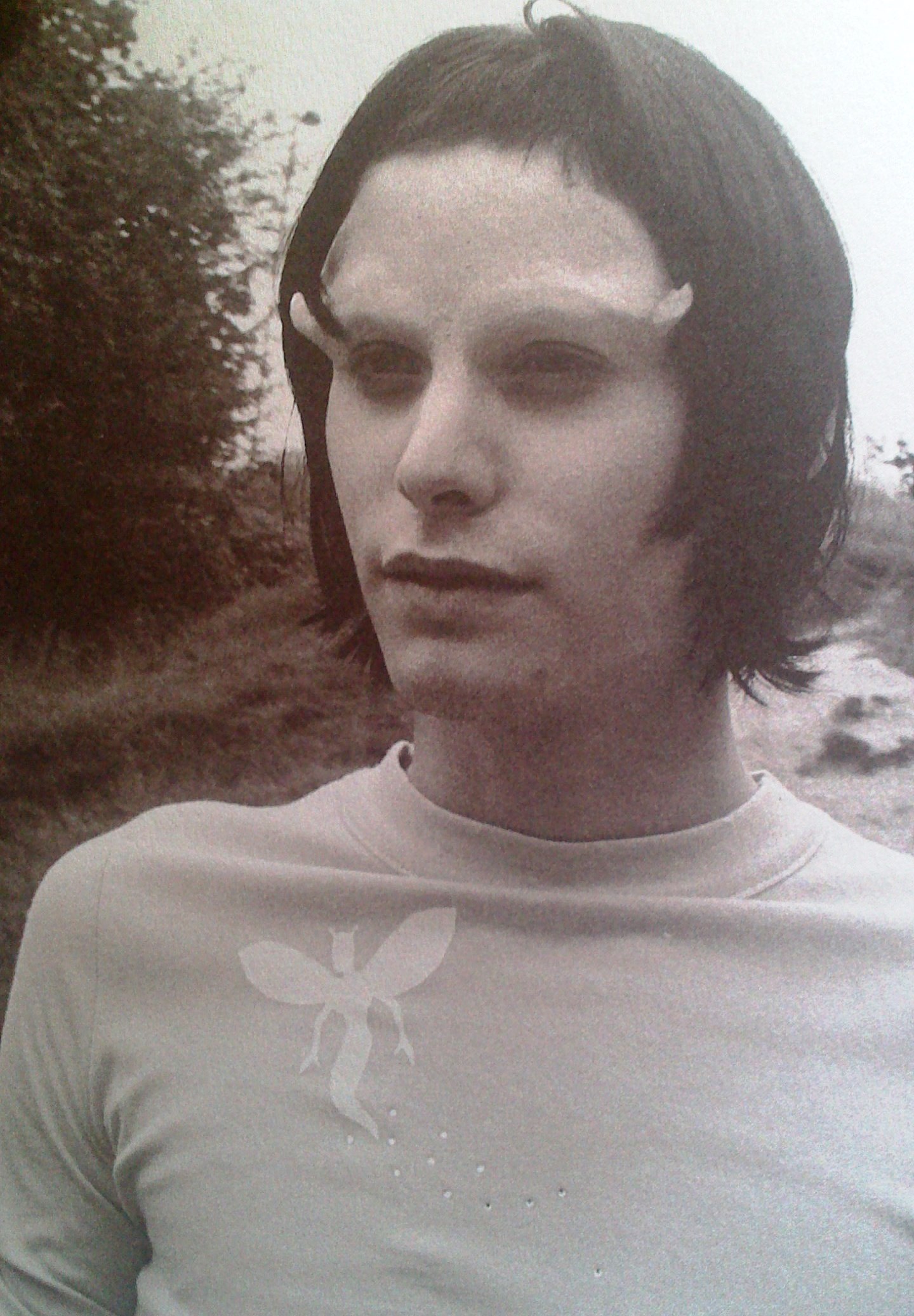
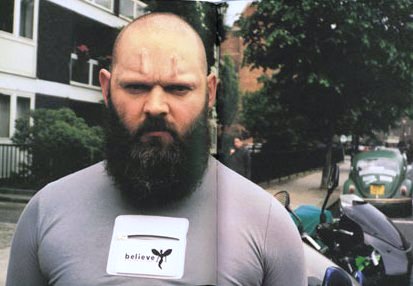
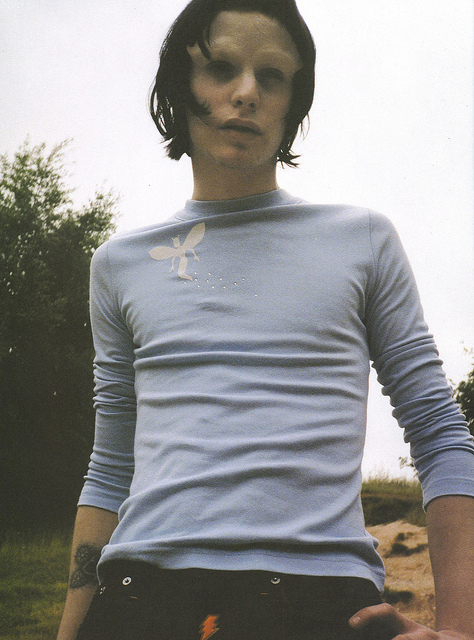
Walter Van Beirendonck and his Wild and Lethal Trash label caused a furor during Paris fashion week in 1998. One look at his work and the reason should be clear, for in this book he uses French artist Orlan — whose medium, her own body, she alters with plastic surgery — for a blend of fashion, make up (fake implants) , art, and design. Photographed by Juergen Teller.
.
Believe
Believe
Believe
Believe
Believe
Believe
Believe
Believe
.

Influence on Alexander McQueen

McQueen

tumblr_m0x1zzlLzR1qbbjpeo1_1280

6222414268_058038d3b9_b

tumblr_maglmyxTWk1qguputo1_250

00080fullscreen

AMcQnF09AmandaLaine

00050fullscreen

.

Influence on Givenchy

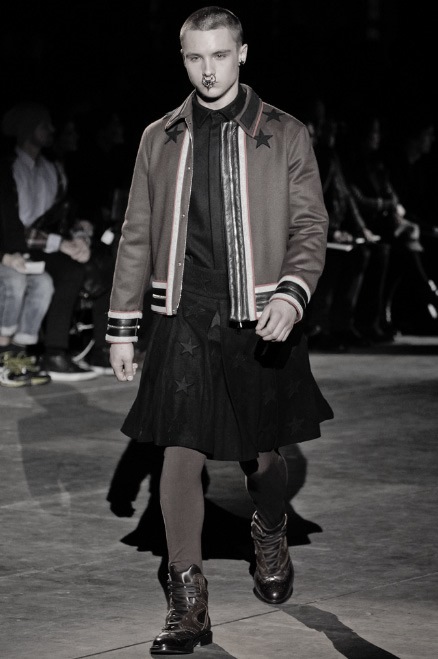
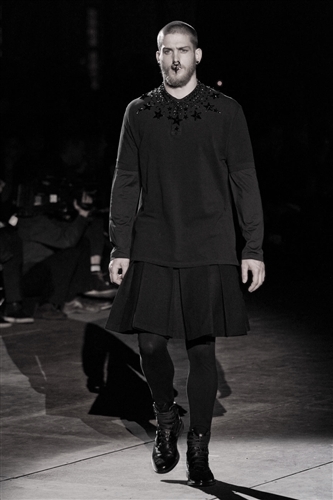
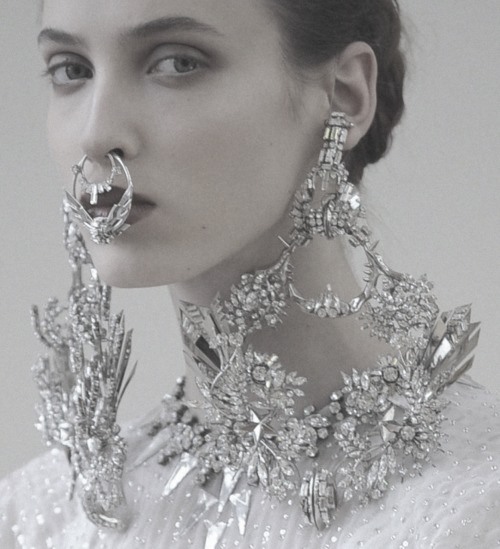
Riccardo Tisci (head designer of Givenchy)) was inspired by the look of singer Keith Flint of the Prodigy in the 1996 hit video Firestarter for his mens collection a/w 2012. Also Keith’s nose ring became an item of the collection. For Women Tisci also found inspiration in piercing objects for jewelry.

.

.

Givenchy-men-black-red-stripe-jersey-star-sweater-fall-winter-2012

givenchy-fall-winter-2012-collection-15

Givenchy-m-RF12-5783

Women jewelry f/w 2012 by Givenchy

Haute Couture

Givenchy

.

Most information in this post  from:

The Art and History of Body Modification by Lori St. Leone

Body Modification in Fashion; Crinolines, Yohji Yamamoto & Comme Des Garçons

9 Jun

crinoline shop

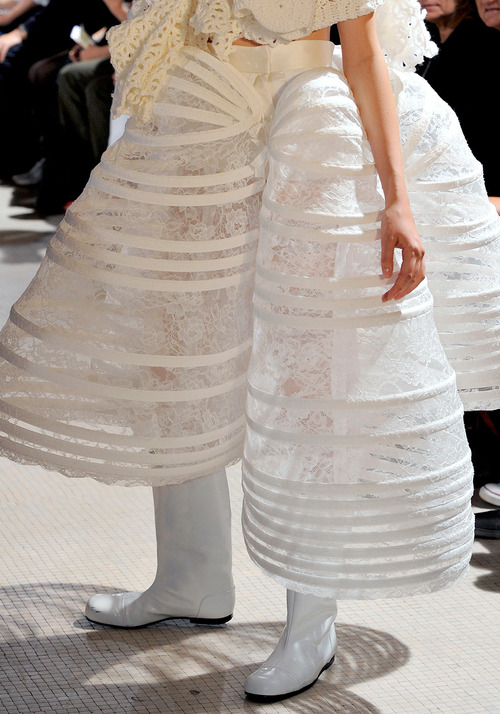
It sounds a bit scary, body manipulation in fashion, but this post is about changing the natural shapes of the body though a garment or undergarment, not changing the body itself. It’s about Crinolines, Yohji Yamamoto and Comme Des Garçons inspired by crinolines and the “Dress Meets Body, Body Meets Dress” collection by Comme Des Garçons. These, together with for instance corsets and shoulder pads, are samples of body modification in fashion.

.

Crinolines

Victorian_Silhouettes_1837_52_by_lady_of_crow

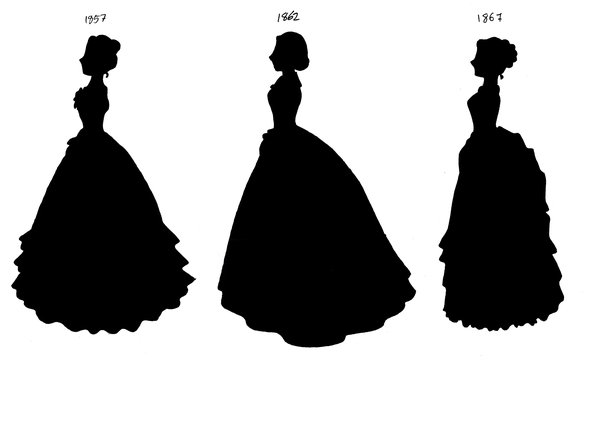
Victorian_Silhouettes_1857_67_by_lady_of_crow

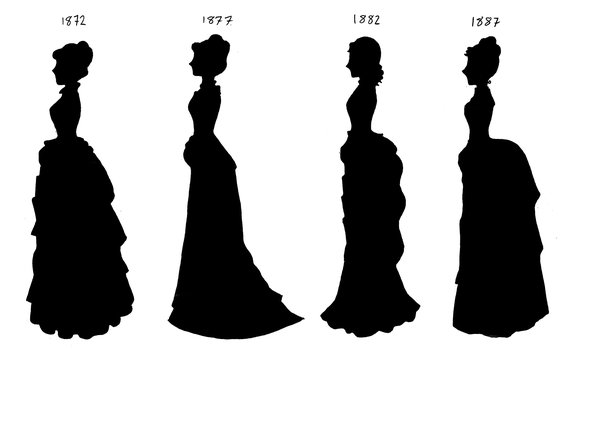
Victorian_Silhouettes_1872_87_by_lady_of_crow

Women did suffer for the sake of fashion for many centuries and many do so today with high heels and plastic surgery. Ridiculously large crinolines, protruding bustles and heavily boned corsets often did restrict movement and the range of activities women could engage in.

In 1837 Victoria ascended to the throne. The fashion press looked to this new young queen to endorse new fashions. Contrary to popular belief Victoria was, until Prince Albert’s death at least, interested in fashion. She was not a frivolous royal leader and her belief in simplicity and demure elegance is echoed by the fashion plates of the day. Gone were the flamboyant fashions of the mid-1830s with the huge balloon-like sleeves, large bonnets and trailing ribbons. Dresses of the late 1830s and 1840s were characterised by drooping shoulders, long pointed angles and a low pinched-in waist.

Panniers

Panniers

tumblr_ltxhbr3Isk1r3u80ao1_500

tumblr_ltxhbr3Isk1r3u80ao3_500

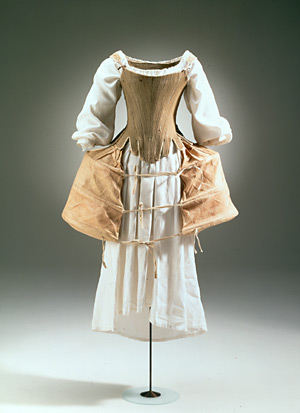
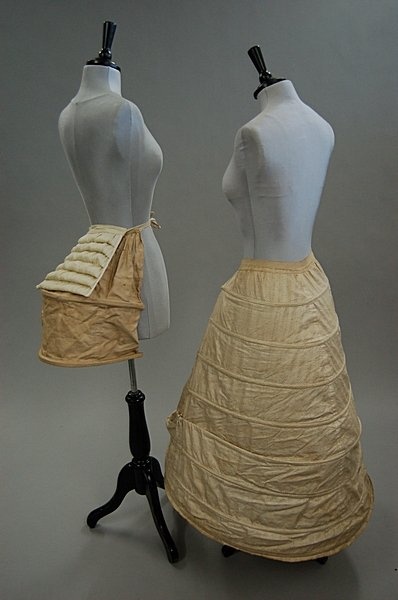
Then fashion changed and the skirts of the new dresses  presented new problems. They increased in size and had to be supported by layers of heavy petticoats which were very hot and unhygienic – particularly in the summer. Bustle-like structures made of down-filled pads or whalebone and stiffened petticoats helped give added support. The most popular type of stiffened petticoat was made out of horsehair and linen which earned it the name crinoline (‘crin’ is the French for horsehair and ‘lin’ the linen thread it was woven with).

The development of the sewing machine in the early 1850s was one of the most important innovations of the 19th century as it led to the mass production of clothes including underwear. Although many corsets and crinolines of the 1850s were still stitched by hand, the speed of sewing on a machine meant that manufacturers could produce in far greater numbers and increase the variety of designs. Corsetry and underwear manufacture therefore became a major industry with a turnover of millions of pounds per year. During the 1850s the skirts became the focus of attention. They grew ever wider and wider, and the flounces and light materials they were made of meant that they needed more and more support. Layers of petticoats including the horsehair crinolines were no longer sufficient, and they were very heavy and uncomfortable. Something more structured was required.

Partial Panniers

il_fullxfull-102705511

corset-chemise-pocket-hoops1

tumblr_lw98v0llYO1qegasto1_500

A patent was taken out in May 1856 for a garment inflated by means of bellows and deflated to enable the wearer to sit down.

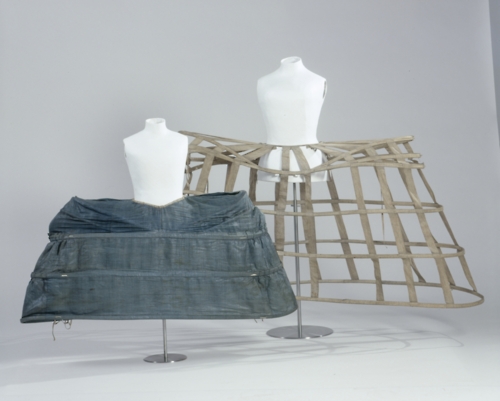
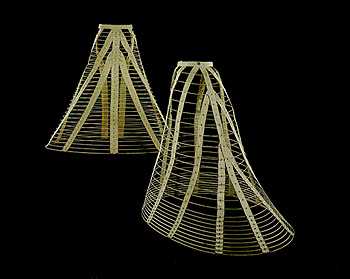
In 1858, the American W.S. Thomson greatly facilitated the development of the cage crinoline by developing an eyelet fastener to connect the steel crinoline hoops with the vertical tapes descending from a band around the wearer’s waist. The cage crinoline was adopted with enthusiasm: the numerous petticoats, even the stiffened or hooped ones, were heavy, bulky and generally uncomfortable. The cage crinoline was light — it only required one or two petticoats worn over the top to prevent the steel bands appearing as ridges in the skirt — and freed the wearer’s legs from tangling petticoats.

Unlike the farthingale and panniers, the crinoline was worn by women of every social class. The wider circulation of magazines and newspapers spread news of the new fashion, also fueling desire for it, and mass production made it affordable. It took several years for high society to accept the wearing of the cage crinoline as it started as — and remained in perception — a middle class affectation. It not only freed women from the weight of massive numbers of petticoats, but also the expense of owning, washing, and starching such copious petticoats. The wider skirts were now achievable by a greater number of less wealthy women.

Crinolines

1865-8_hoop_skirts-horsehair

Crinolines

Crinoline-inspired skirt by Comme Des Garçons

tumblr_m9nu6aqcOx1rpvcxgo1_500

There were many tales of accidents that could befall wearers of crinolines, such as being caught in her hoops as she descended from a carriage or of causing damage if she were a factory girl or servant as china, glass and other delicate materials could easily be swept off shelves and tables. In 1860 the textile firm Courtaulds instructed its workers ‘to leave Hoop and Crinoline at Home’. The most frequent, and terrible, accidents were caused by sparks from open fires, a situation not helped by the wearing of highly flammable fabrics such as muslin and silks. Some husbands were even advised to insure their wives at Fire Insurance offices.

It’s easy to imagine how women could stray too near an open fire in their large crinolines.  The stories about ladies not being able to fit into carriages or through narrow doorways are exaggerated. The cage crinolines might look very rigid but spring steel is in fact incredibly flexible and could be compressed. Accidents did happen but women would learn how to walk in crinolines and how to sit down so that they did not reveal all their underclothes.

Crinolettes

Crinolette

crinolette

Crinolette

The spring steel structures were  very light so rather than imprisoning women in cages (as some of the reports and images suggest) they had a liberating effect. They freed women from the layers and layers of heavy petticoats and were much more hygienic and comfortable.

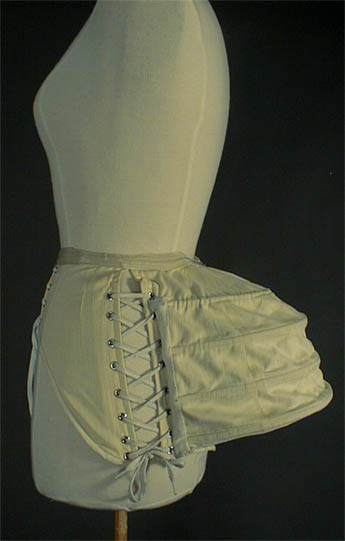
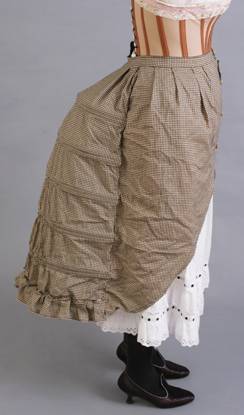
The crinoline had grown to its maximum dimensions by 1860. However, as the fashionable silhouette never remains the same for long, the huge skirts began to fall from favour. Around 1864, the shape of the crinoline began to change. Rather than being dome-shaped, the front and sides began to contract, leaving volume only at the back. The kind of crinoline that supported this style was sometimes known as a crinolette. The cage structure was still attached around the waist and extended down to the ground, but only extended down the back of the wearer’s legs. The crinolette itself was quickly superseded by the bustle, which was sufficient for supporting the drapery and train at the back of the skirt.

Crinolines are still worn today. They are usually part of a formal outfit, such as an evening gown or a wedding dress. The volume of the skirt is not as great as during the Victorian era (except for ‘Big Fat Gipsy Weddings’), so modern crinolines are most often constructed of several layers of stiff net, with flounces to extend the skirt. If there is a hoop in the crinoline, it will probably be made of plastic or nylon, which are low in cost, lightweight and flexible, or steel.

Bustle

Bustle & Crinoline

bustle

Bustle

bustleImage by Ian The Staymaker

.

.

Bustle-inspired skirts by Comme Des Garçons

CDG

CDG

.

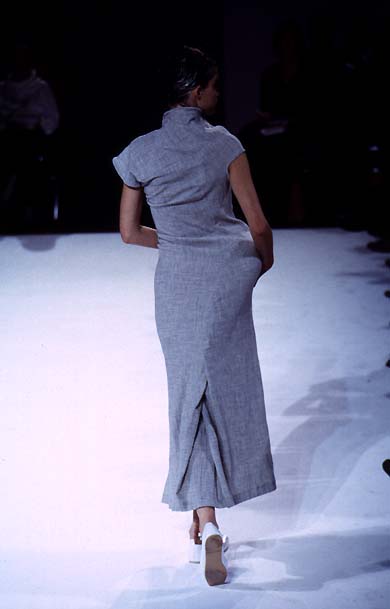
Yohji Yamamoto

was inspired by an old picture of a woman being dressed and wearing a ridiculously large crinoline.

crinoline

Yohji Yamamoto wedding dress

yohji yamamoto_

Yohji Yamamoto

.

Dress Meets Body, Body Meets Dress

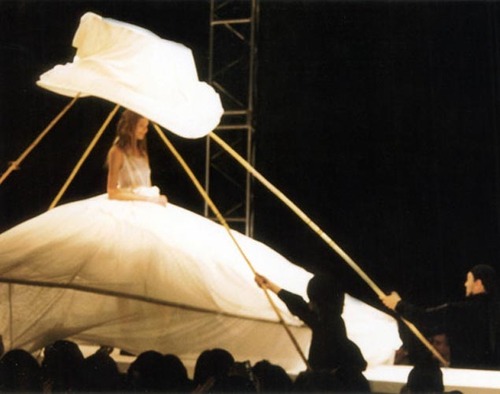
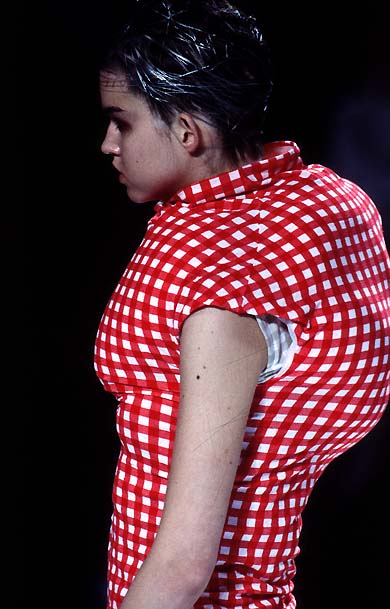
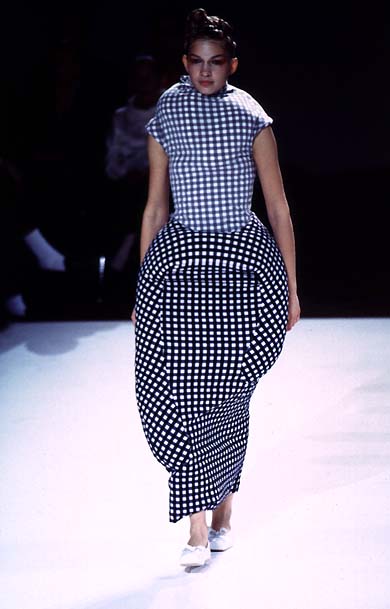
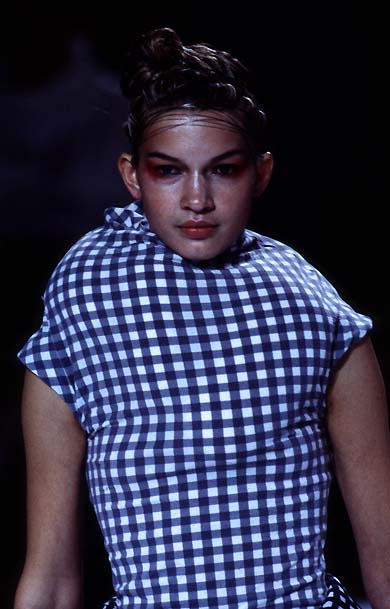
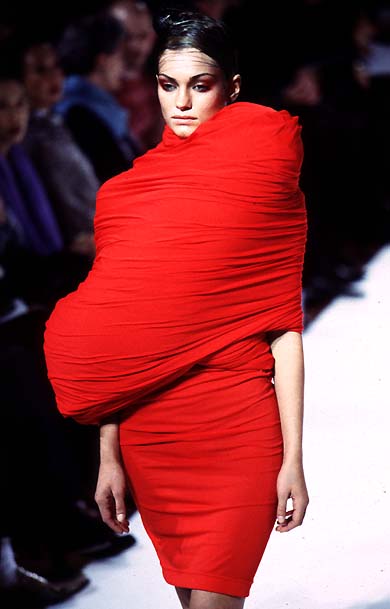
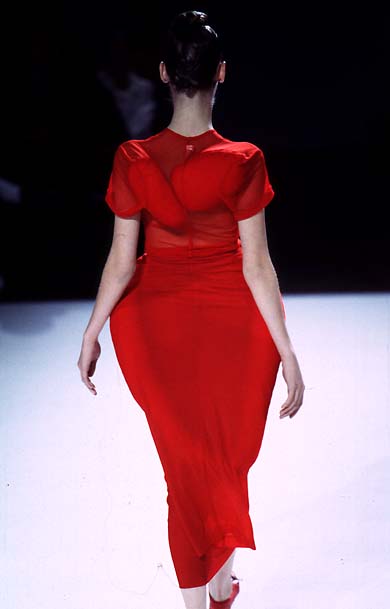
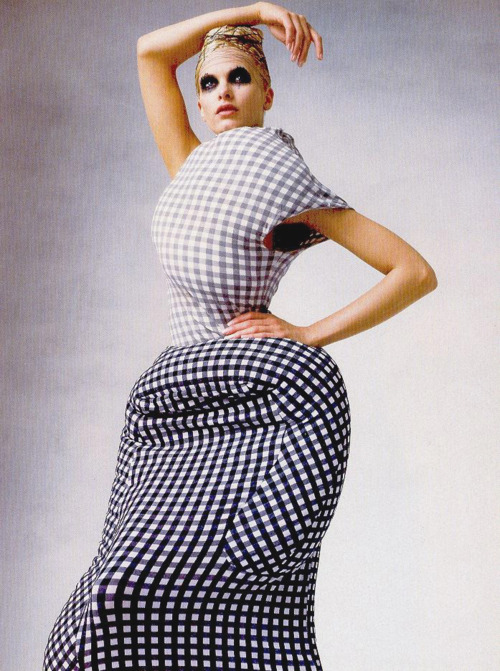
The s/s 1997 collection by Comme Des Garçons, often referred to the ‘lumps and bumps’ collection, was a much talked about show in Paris that season. It featured predominately tight tops and skirts that were swollen by goosedown-filled lumps which distorted the body shape.

cdg

cdg

cdg

cdg

CDG

cdg

cdg

cdg

cdg

cdg

cdg

CDG

CDG

.

 thanks to www.TheStaymaker.co.uk

“A bikini is not a bikini unless it can be pulled through a wedding ring.”

2 Jun

ursula andress

This bikini made me a success.”

 Ursula Andress

.

.

The History of the Bikini

bikini-happy-birthday

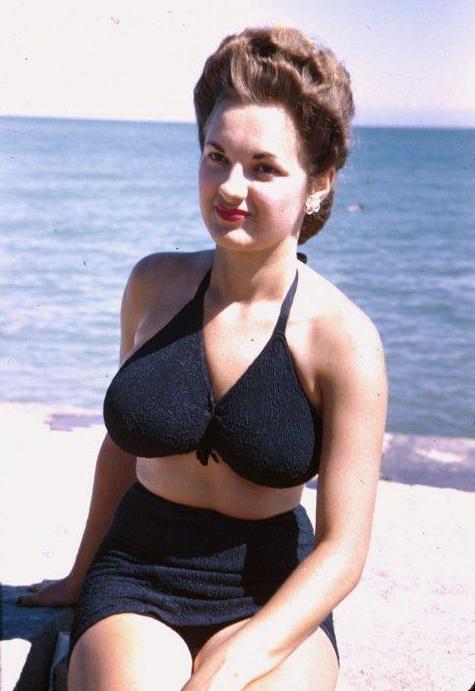
The history of the bikini begins far before the official introduction of the bikini swimsuit in the summer of 1946. Some historians believe that the bikini may have been one of the first public swimming costumes in existence. Drawing evidence from 300 A.D. Roman mosaics, historians point to the bikini as the swimsuit of choice for ancient Roman women. The history of the bikini, however, may begin nearly 2000 years sooner than even ancient Rome! Minoan wall paintings from approximately 1600 B.C. also depict women wearing the seemingly quite popular two-piece bathing costume.

The official history of the bikini, under that name, begins in the summer of 1946, just one year after the tumultuous end of World War II. During that summer, as France was seeking to recover from the dreadful effects of the war, two French designers almost simultaneously created and marketed the bikini swimsuit. Barely leading the charge, Jacques Heim, a fashion designer and beach shop owner in the French resort town of Cannes, introduced his swimsuit creation, the “Atome,” early in the summer of 1946. The swimsuit was named the Atome because of its miniscule size (as compared to the then smallest known particle of matter, the atom). Heim intended to sell his swimsuit in his beach shop. To drum up business and increase awareness of the new swimsuit, Heim sent skywriters high above the Cannes sky, proclaiming the new Atome to be “the world’s smallest bathing suit.”

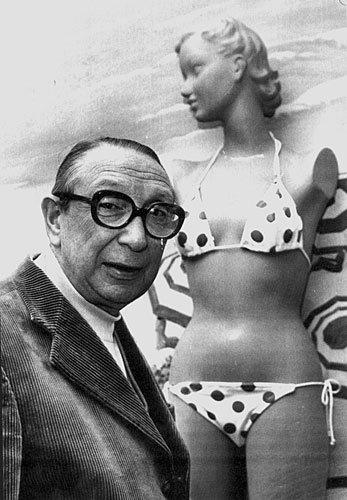
Jaques Heim
Jacques Heim
.
“Women shop for a bikini with more care than they do a husband. The rules are the same. Look for something you’ll feel comfortable wearing. Allow for room to grow.”
Erma Bombeck
 

Sadly for Jacques Heim, another French fashion designer was also hard at work creating a remarkably similar swimsuit in the summer of 1946. Just three weeks after Heim began marketing his swimsuit, Louis Reard, a mechanical engineer who had decided to dabble in swimsuit design, sent out skywriters over the French Riviera. The message these skywriters carried was simple but powerful marketing: “Bikini—smaller than the smallest bathing suit in the world.” Perhaps due to Reard’s obvious marketing skills or a simple turn of fate, the name bikini became the official tag for the two-piece swimsuit.

The bikini made its first proper introduction to the world of fashion design on July 5, 1946, as it is was worn and displayed at a Paris fashion show by French model Micheline Bernardini. Reaction to the bikini was immediate and explosive. As one American correspondent put it (in typical Texan style), “All of a sudden, a blond named Micheline Bernardini ambles out in what any dern (sic) fool could see was the smallest bathing in the world, including West Texas. Why folks, that suit was so small that…” Any number of phrases could complete this statement and would adequately describe the male reaction to the bikini. Needless to say, most of those who viewed the new swimsuit were equally shocked and titillated by its minimalist style.

“A bikini is not a bikini unless it can be pulled through a wedding ring.”
 
Louis Reard
Louis Reard

The bikini began to be marketed and sold in the United States just one year after its introduction in France. Reaction to the swimsuit was great, but sales were initially quite slow. Men and women alike assumed that the suit was simply too bare and scandalous for conservative American women to don in public. American women did indeed approach the swimsuit quite  cautiously until the revolutionary decade of the 1960s, in which bikini sales soared tremendously.

The bikini has now become such an entrenched part of swimsuit design that it is a wonder the modern swimsuit is only 60 years old. True to its explosive nature, the bikini has inspired even more shocking innovations in swimsuit design, including the short-lived monokini and the immensely popular thong bikini. It would be interesting to learn if Louis Reard has the foresight to
know of the far-reaching implications of the scanty two pieces of cloth that comprised the original bikini.

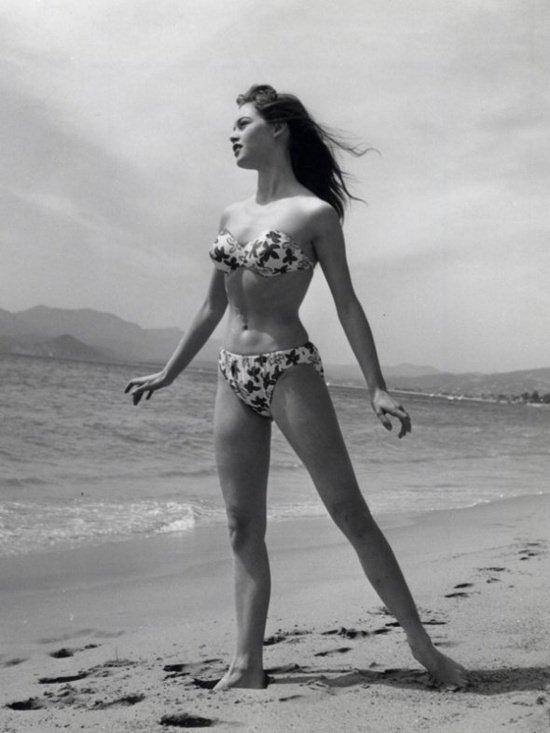
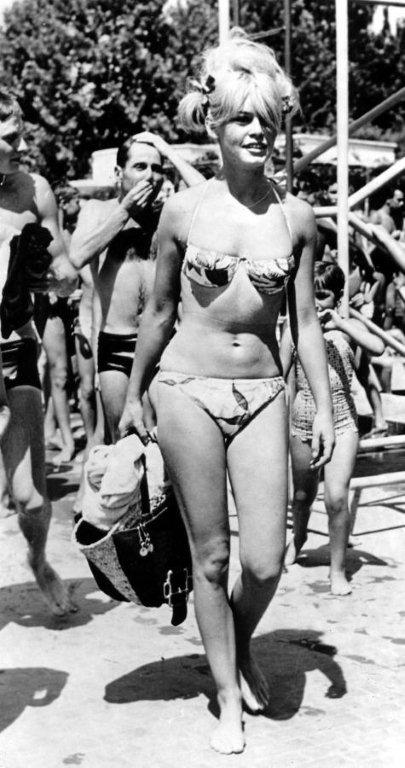
Brigitte Bardot
Brigitte Bardot
 
brigitte-bardot
 
vintage-inspired-swimsuits-bardot-bikini
Ava Gardner
Ava+Gardner
Betty Page
Betty Page
Joan Collins
Joan Collins
Rita Hayworth
rita-hayworth
Jayne Mansfield
Jane Mansfield
.
“Statistics are like a bikini. What they reveal is suggestive, but what they conceal is vital.”
Aaron Levenstein
 

The word bikini has rather an interesting etymology. Unlike the word swimsuit, which is entirely functional and descriptive in its purpose, the word bikini implies much more about the bikini’s history than it does the bikini’s purpose.

Most scholars assume that the bikini swimsuit was named after the famous Bikini Atoll in the Pacific Marshall Islands. While it may seem strange for the birthplace of the actual bikini swimsuit to be in France and the birthplace of the name bikini to be in the South Pacific, these two areas of the world actually had quite a bit in common during the historical time period of the introduction of the bikini.

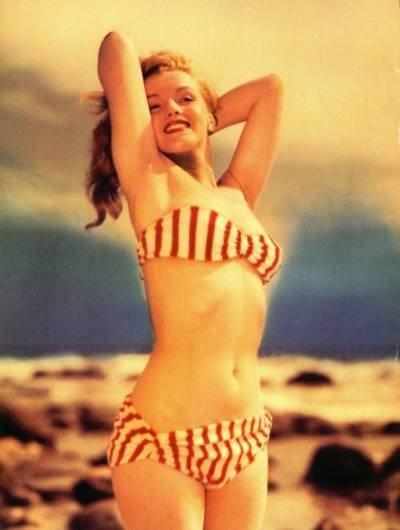
Marilyn Monroe
Marilyn Monroe
Sally Field

Sally Field

Grace Kelly
Grace Kelly
.
“At Sports Illustrated we would try on hundreds of bikinis. It’s important to find one that complements your body and not try to fit into something that doesn’t work.”
Kathy Ireland
 

When the bikini was introduced to the world in 1946, World War II had just ended the spring before, and the world was still rollicking from the horrendous nature of that war. After detonating the controversial atomic bomb on two Japanese cities to end the Pacific war, the United States was setting off further test bombs on the Marshall Islands during that same summer. Needless to say, the destructive power of the atomic bomb was still quite a shock to people around the world. While Jacques Heim and Louis Reard were simultaneously inventing and marketing their own versions of the bikini swimsuit, people all over the world were marveling at the awesome power of the atomic bomb.

No one knows for sure whether Louis Reard was inspired enough by the atomic bomb detonations in the Bikini Atoll to christen his swimsuit the bikini or if he chose the name at random. Whatever the reason, the name bikini stuck as the official title of the midriff-baring, two-piece swimsuit. Many etymologists have assumed that Reard believed his swimsuit creation would create a shock equal in its reverberation to that of the atomic bomb (as it proved to do in the following years). The term bikini has now become so lodged in the vocabulary of swimsuits that several new types of swimsuits have spawned from it, including the bandini, tankini, camikini, monokini and burkini.

War bikini
 
Wrong bikini
 
Not so sexy bikini

Betty Page

Vintage bikini's

.

“A bikini is a thoughtless act.”

Esther Williams

.

Modern Swimwear

Vogue Italia Swimwear 2013 by Steven Meisel, model Kristen McMenamy

coverVogue Italia

vi01105d0132-013301meisel-1501399_0x440

vi01105d0134-013502meisel-413408_0x440

vi01105d0136-013703meisel-300491_0x440

vi01105d0140-014105meisel-5858_0x440

vi01105d0142-014306meisel-152030_0x440

vi01105d0144-014507meisel-116736_0x440

vi01105d0146-014708meisel-1073348_0x440

vi01105d0148-014909meisel-1382053_0x440

vi01105d0152-015311meisel-224007_0x440

.

.

most information for this post can be found on: http://www.everythingbikini.com/