The “One (or Two) of a Kind” Collectionfor men is a series of handmade clothes. Only oneor two items of the same fabric and/or colour are available within the collection, which contains trousers, shirts, jackets and coats.
The collection is inspired by the clothes worn in the ’20ties to ’40ties of the last century, but with a nowadays touch. Almost every item is made in wool, cotton, linen or viscose, pure or blends. Some of the fabrics are woven with very fine metal to secure a creased look.
All fabrics are pre-washed and after finishing an item, it’s washed again. Some clothes get an extra treatment. All shirts, jackets, coats and most of the trousers are finished by visible hand stitching.
The collection will be available in about two weeks.
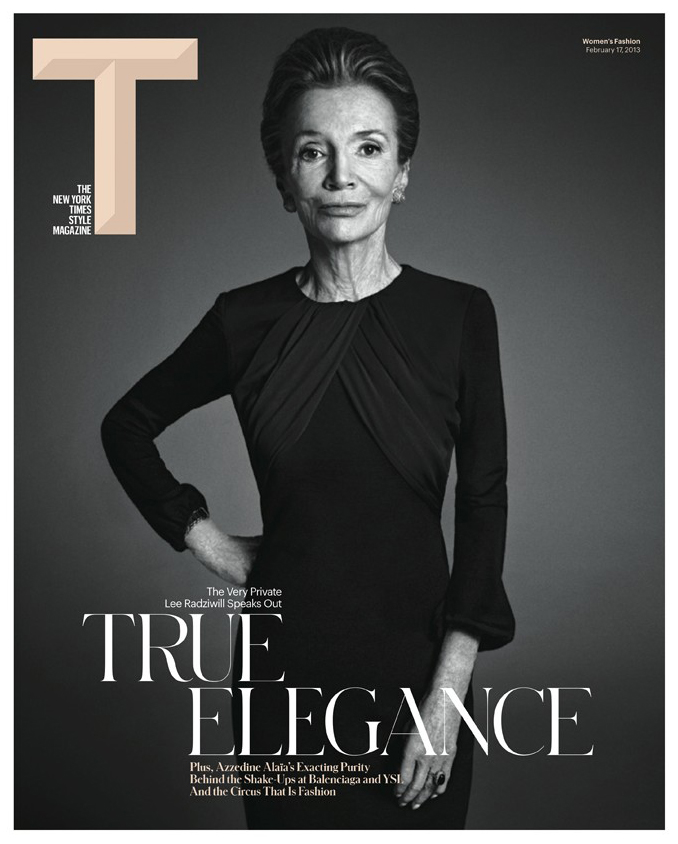
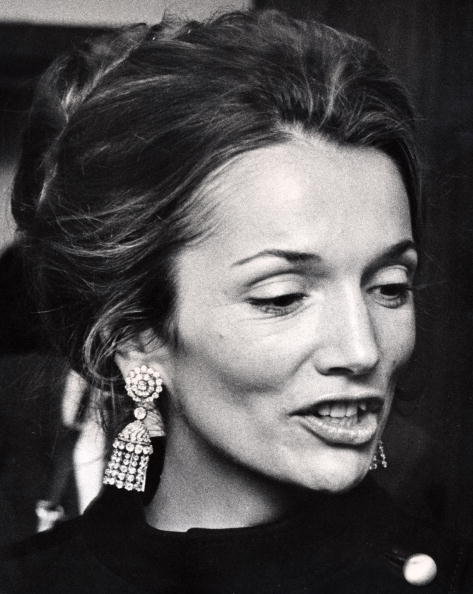
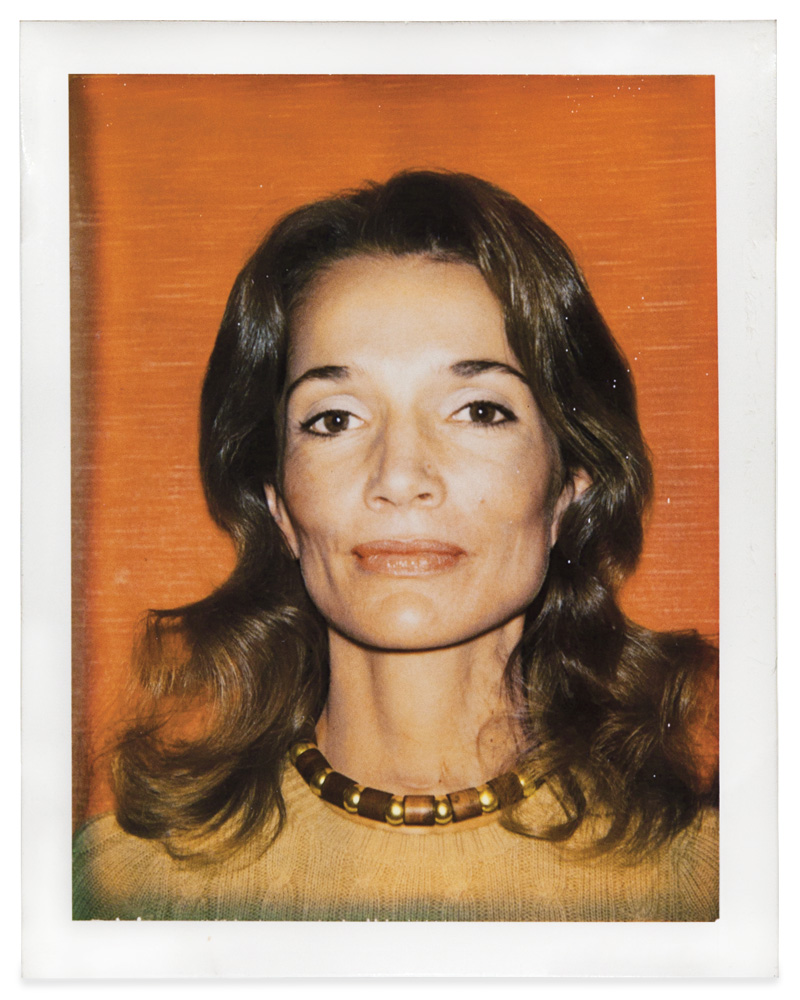
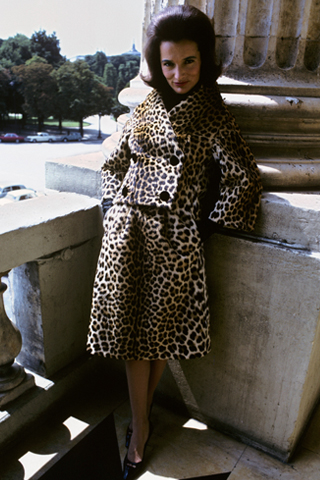
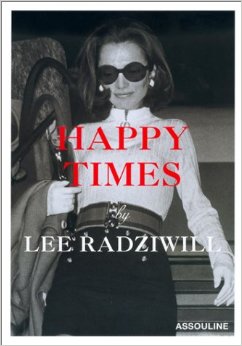
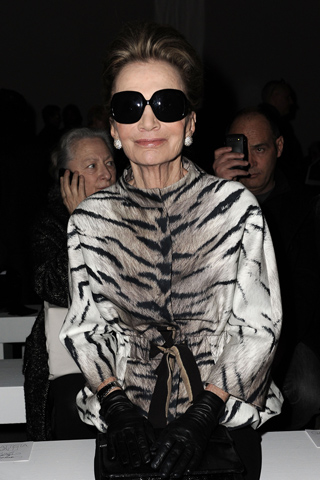
Jacqueline Kennedy Onassis will forever be remembered for bringing a sense of style to the White House, but her younger sister, Lee Radziwill, who is direct, free-spirited and true to her own ideals, may have done her one better. The impeccably dressed former princess has almost reached the well-preserved age of 80. Known for her Aristocratic looks and upper-crust taste, Lee Radziwill has swirled through life in the High Society for the better part of the last half-century. Lately she’s become a regular at the shows in New York and Paris, where she’s been photographed often in fabulous outfits and glamorously over-sized sunglasses.
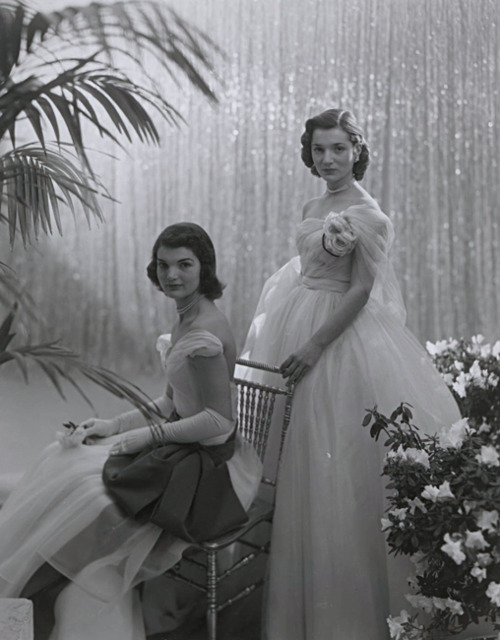
Jacqueline & Caroline Lee Bouvier at their debutante ball
.
Lee Radziwill’s sometimes rivalrous relationship with her sister and her tabloid-ready romances have long fascinated. But it’s her enviable wardrobe and not-a-hair-out-of-place coiffeur that have served as inspiration to designers from Yves Saint Laurent to Marc Jacobs. Michael Kors once dedicated an entire collection to “the Lee Radziwill look.” With Balmacaan coats and stovepipe velvet slacks, Kors conjured “what Lee would wear to walk her dogs in the sixties.” Add furs, cashmere, and kitten heels, mix with simple jewelry and minimal makeup, and you’ve got the Lee Radziwill recipe for era-spanning chic.
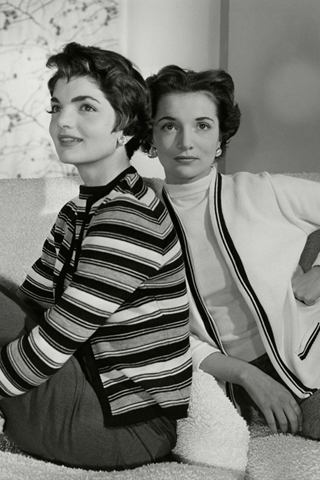
Jacqueline & Caroline Lee Bouvier
.
Caroline Lee Bouvier was born on 3-3-33 in Southampton, New York. Growing up, she made the usual socialite rounds: Miss Porter’s boarding school, Sarah Lawrence College, summers in Newport, R.I—all while favoring sweater sets, three strands of pearls, and frocks in sweet 16 pastels. She married young, admitting that girls often married in the fifties just to get their own apartments.
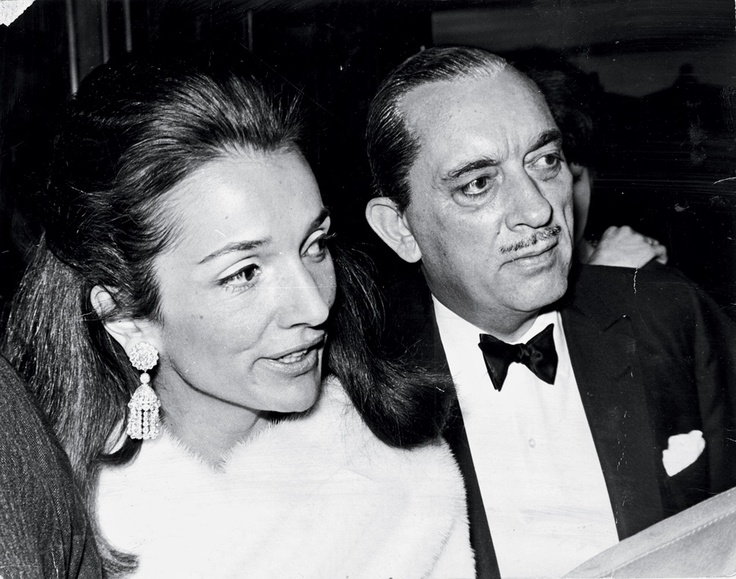
Lee’s starter marriage to “homebody alcoholic” Michael Canfield was annulled after a short time, and she threw herself into supervising Vogue‘s exhibition at the American Pavilion for the 1958 World’s Fair in Brussels. While in Europe, Lee met real estate mogul/ Polish emigré Prince Stanislas Radziwill in England and married him on March 19, 1959, giving birth to son Anthony six months later.
Lee Radziwill
.
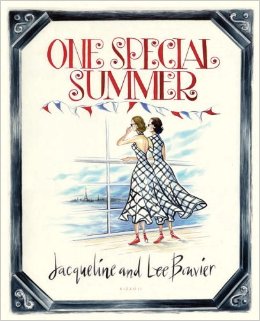
“Jackie married twice for money with splendid results,” Gore Vidal—the Bouviers’ step-brother—wrote. “Lee married twice too, far less splendidly.” (Lee finally married three times) But both sisters lived the life, taking trips around the world resulting in a funky scrapbook-type book, One Special Summer, which was created by the pair in the fifties (and published many years later).
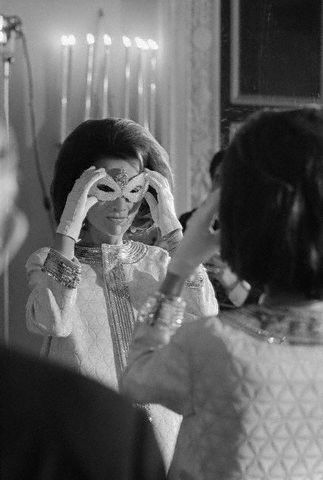
The high point of the 1966 social calendar was Truman Capote’s Black and White Ball, with a guest list that read like a who’s who of Hollywood and high society: Frank Sinatra, Greta Garbo, and the Duke and Duchess of Windsor, included. Radziwill went with white for the occasion.
Lee Radziwill all masked up for Capote's Black and White Ball
. Truman Capote, for some years Lee and Truman were inseparable friends, encouraged a newly blond Lee to pursue acting. After critics panned her performance in a Chicago stage production of The Philadelphia Story. The show sold out its run as fans flocked to see Lee the personality–not Lee the actress–take the stage in a custom-made wardrobe by Yves Saint Laurent. Jackie was conveniently out of the country for the show’s entire run, so those fans hoping to catch a glimpse of the other famous sister in the audience never got their wish.
Truman wrote the TV adaptation of Laura for Lee—cribbed from Otto Preminger’s film noir of the same name. It was also badly received and she discontinued her acting work.
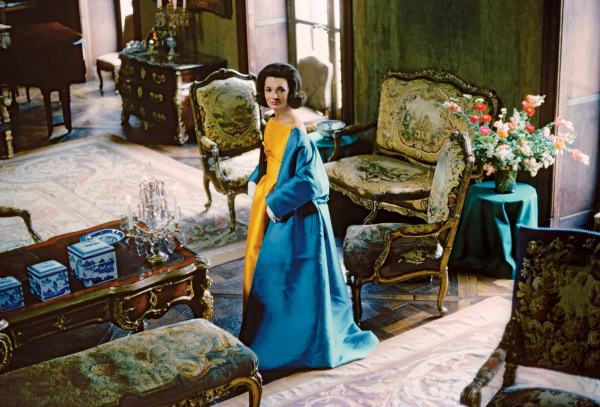
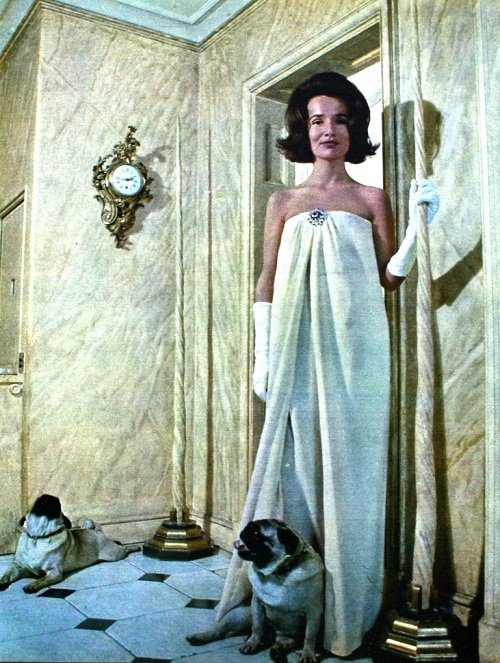
Lee Radziwill in her various houses
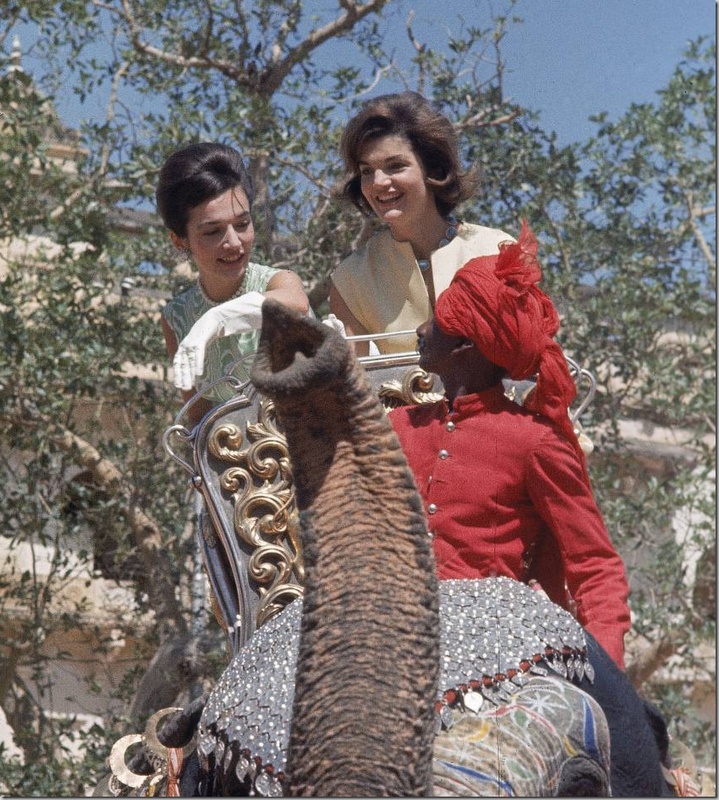
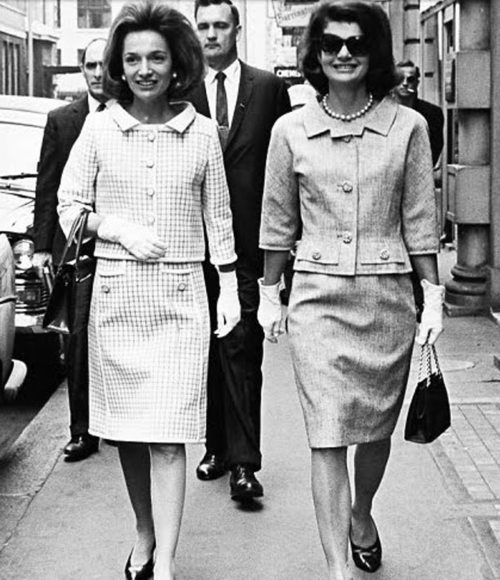
.Lee & Jackie visiting India and Pakistan along in March 1962
.
Peter Evans’ 2004 book Nemesis stated that Radziwill also had a long-standing affair with Greek shipping tycoon Aristotle Onassis, and was privately bitterly disappointed when he married her elder sister Jackie, who allegedly stole Ari away, heating up the rivalry that existed between the sisters.
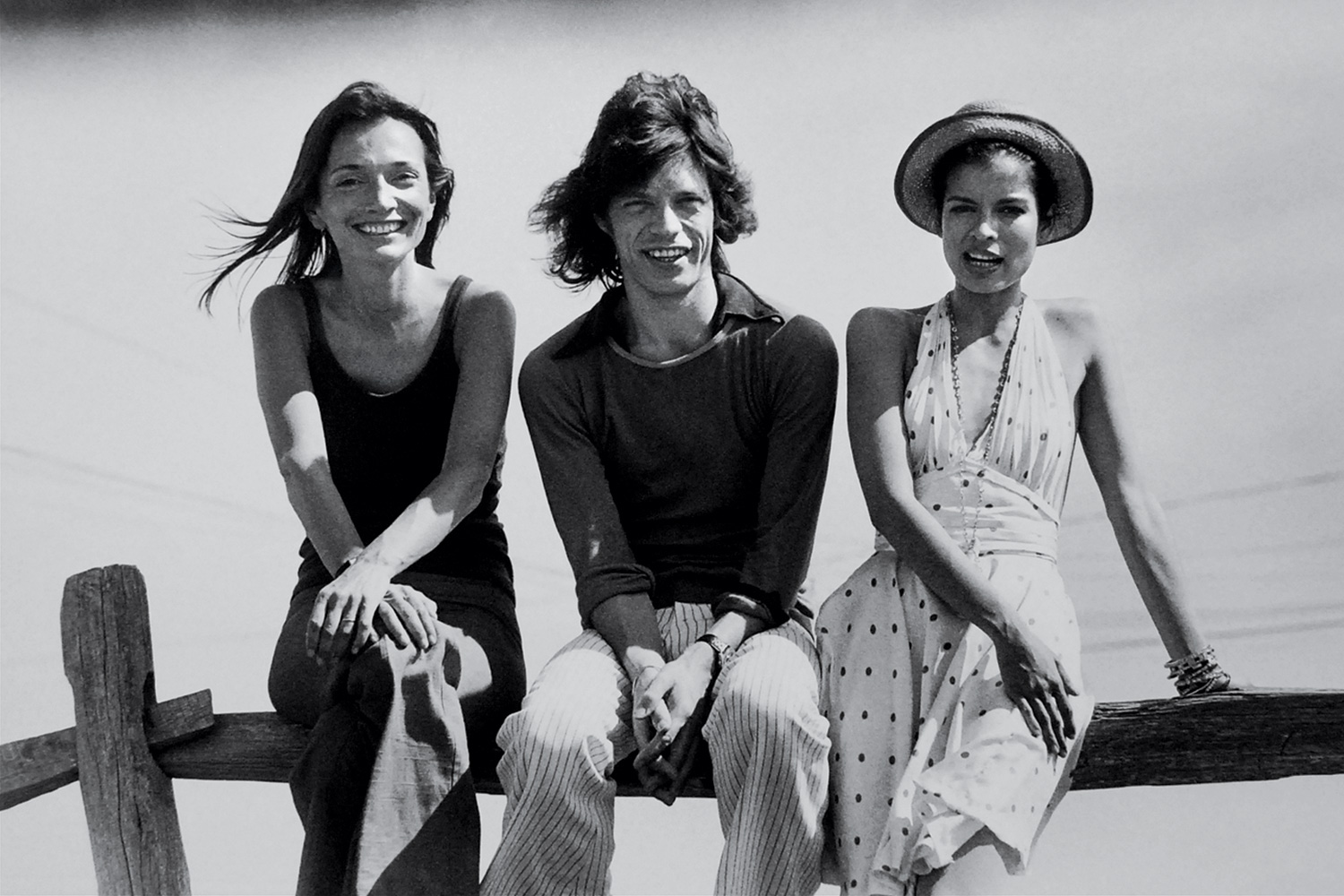
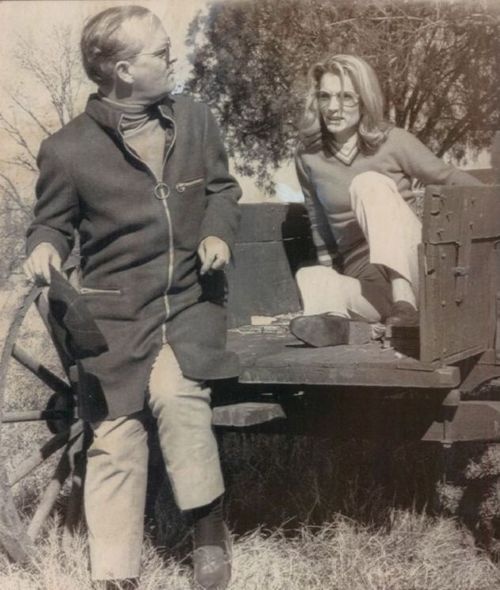
In 1972 Lee tagged along with Truman on tour with the Rolling Stones; she also rented Eothen, the Montauk retreat owned by Paul Morrissey and Andy Warhol. Photographer Peter Beard lived nearby and was coincidentally the official photographer for Rolling Stone magazine, which was paying Truman Capote to cover the Stones’ tour. Lee and Peter became really, really good neighbors.
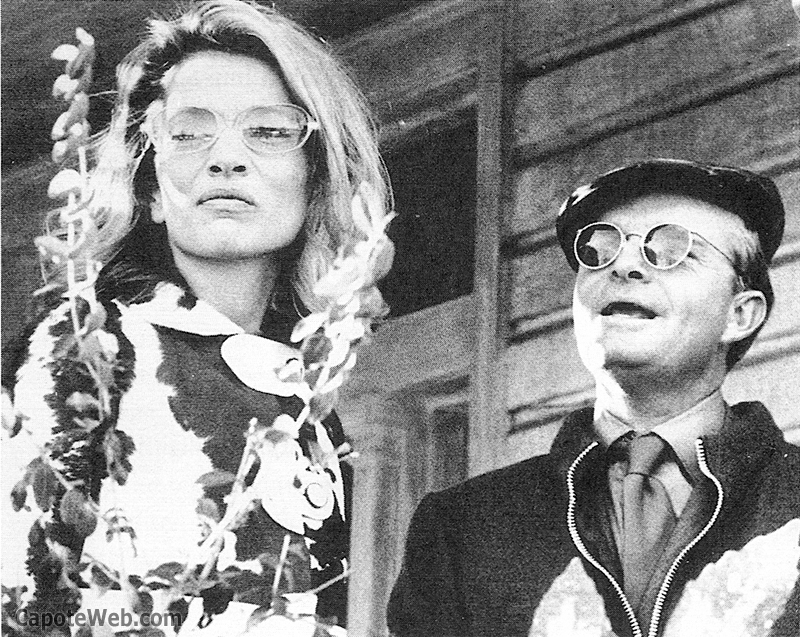
Lee Radziwill & Truman Capote
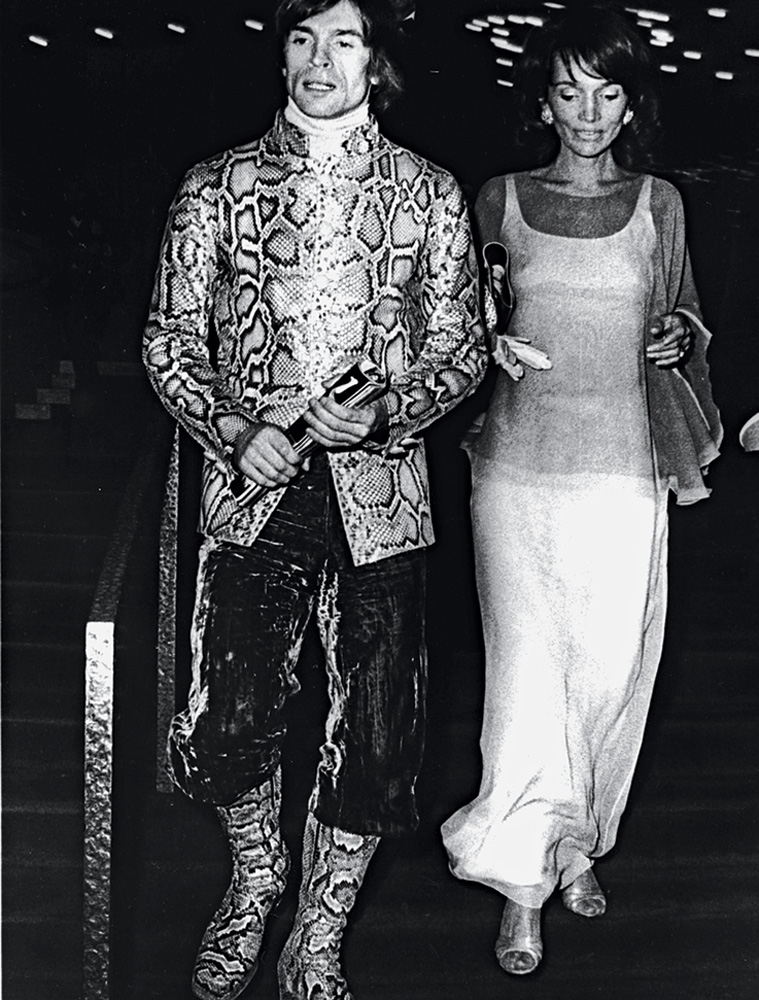
Lee Radziwill with Mick & Bianca JaggerRudolf Nureyev & lee Radziwill
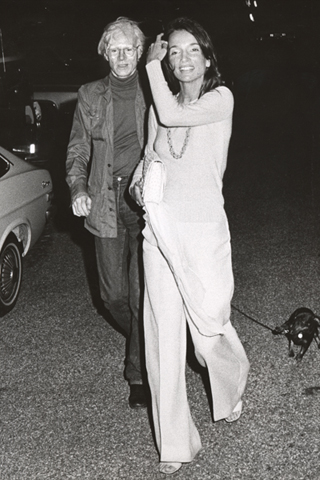
Andy Warhol & Lee Radziwill
.
For some years, Lee was a public relations executive for Giorgio Armani and on September 23, 1988, she became the second wife of American film director and choreographer Herbert Ross. They divorced in 2001, shortly before his death.
She was listed as one of the fifty best-dressed over 50sby the Guardian in March 2013. A longtime lover of fashion, Lee is still a front-row fixture, turning up from Marc Jacobs in New York to Giambattista Valli in Paris. She’s still beautifully kitted out in simple shapes with theatrical flourishes, armed with cigarettes and sunglasses.
Lee Radziwill by Mario Sorrenti
.
Unauthorized Biography
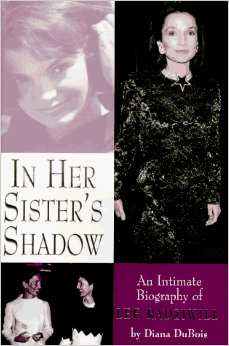
After reading all about the glamorous side of Lee Radziwill’s life, it was quiet a shock to read the unauthorized biography In Her Sister’s Shadow: An Intimate Biography of Lee Radziwill! Lee’s life seemed perfect, exiting and a success, but in fact she was very frustrated, living in enormous debts and in her relationships she always had an agenda……..
Known as the “Whispering Sisters” to everyone in their social circle who knew them because of their tendency for sneaking off in corners and whispering to one another in private, Caroline Lee did indeed grow up in the shadow of her older sister Jacqueline Lee Bouvier.
Lee Radziwill
.
The prologue of In Her Sister’s Shadow begins with the story of Jackie dropping Lee off at an AA meeting at an Episcopal church in East Hampton in the summer of 1981. Jackie escorted her sister into the meeting and waited in her limo out in the church parking lot to make sure Lee stayed for the whole meeting. Such was the essence of their bond.
About Lee’s first marriage to Michael Canfield:
“There was a lack of intimacy in the marriage and Lee’s personality was paramount in that lack of intimacy. Her agenda precluded real intimacy with Michael because she was always saying things for a reason. This was something you always felt about Lee, that she had an objective, an agenda, and it was more important than anything else.” (page 76)
Lee & Stass Radziwill
.
About Lee’s second husband Stanislas Radziwill:
Prince Radziwill, as he referred to himself, had settled in London after WWII, which had ended with his family losing not only all their wealth–namely landholdings–but their royal titles as well. For whatever reason, Stas Radziwill chose to hold on to his Polish title, and though everyone knew it to be an empty title, they humoured him and his jovial attitude by addressing him as Prince Radziwill and introducing him as such at social occasions. Immediately smitten with the man 19 years her senior–and the empty title of “Princess” which would surely come with marrying him–Lee set her plans in motion for leaving alcoholic Michael for the man many say resembled her father, Black Jack Bouvier.
Lest one think Lee wasn’t happy with Stas, she was…for awhile. They had two beautiful children together, Anthony and Tina, and had two beautiful homes: a townhouse in London and a manor house about an hour outside of London, both of which Lee decorated lavishly with money Stas gladly gave her in the name of entertaining their house guests. After all, they were “royalty” (big quotes), and had to appear as such at all times. Another side note: Stas died in 1976 at age 62–two years after their divorce became final–owing the equivalent of $30 million USD to creditors. With their father’s estate bankrupt and Lee barely supporting her own lifestyle, Jackie stepped in and set up trust funds for Anthony and Tina. Lee was supposedly shocked that Stas had “mismanaged” his finances so much over the years; the reality was, he had been living well above his means for many years, especially the years in which he was married to her. His princely title and his connections gave him access to plenty of loans which–in the end–were never called in.
Truman Capote & Lee Radziwill
.
About the friendship with Truman Capote:
Lee and Truman had a special relationship from the word go. They were inseparable for years before a gradual falling-out caused by Truman’s one-way descent into drinking and drugs, and his jealousy of any new boyfriend of Lee’s which took time and attention away from him. Truman’s biographer Gerald Clarke is quoted in DuBois’s book as saying.
“Lee was very depressed and lost at the time Truman first knew her. At least he saw it that way, and all the evidence points to it. He said she was a lost woman, and she did not have any purpose. She felt very much eclipsed by Jackie. She seemed to have everything, but it wasn’t enough.” (page 134)
Lee Radziwill by Andy Warhol
.
The 70s were a time of transition for Lee, from a more stilted society maven to a pseudo-bohemian goddess who hung with Andy Warhol and the Rolling Stones in an attempt to “find herself.” And she put forth a valiant effort…in-between very serious boyfriends. Peter Beard, Jay Mellon, Peter Tufo, Newton Cope–a string of gentlemen that all held her attention for a while until she found a reason to cast each one of them aside. In the case of Beard, Tufo, and Cope, she would eventually about-face and beg them repeatedly to marry her when she realized she was running short on funds. All three men saw through the charade and as much as they enjoyed spending time with attractive, enchanting Lee, they
weren’t going to be taken for a ride. It was exactly this failure of the cunning which she had relied on her entire life that had Lee turning to the bottle more and more. She actually got Cope to agree to marry her in 1977, but negotiations on a prenup an hour before the wedding broke down and he called the whole thing off.
When Lee joined AA in 1981, she was at her wit’s end. Her children were essentially being raised by her sister, she was in debt up to her eyeballs, and she’d just broken up with her boyfriend Peter Tufo for the umpteenth time. Like any alcoholic, she had turned to liquor to self-medicate from life’s unmanageable problems.
Lee Radziwill photographed by David Bailey
.
About the time with her third husband Herbert Ross:
Lee was soon up to her old tricks again, though. Herb complained to friends that all the money he made directing went to Lee’s grandiose plans for their new home, of which he had little to no say-so in the building of. She would show up on his movie sets and bring home freebies such as caviar which were intended to be shared with the entire cast and crew. It all came to a head, however, at the London premiere of the Ross-directed Steel Magnolias. Pouty that she couldn’t be in the production-only receiving line to greet Prince Charles and Princess Diana, Lee made a point of bee-lining for the theatre and sitting right next to Prince Charles on the front row…in Julia Roberts’s assigned seat. Several people involved with the movie production, including Julia, asked Lee to move, and she pretended to hear none of them.
The above folly of Lee’s cost her husband some business in the film business, and Lee herself was shunned from openings for a while afterwards.
Lee Radziwill & Jackie Kennedy
.
Jackie was always looking out for Lee, even when it seemed Lee wasn’t looking out for herself. The product of divorce, a domineering mother, and an alcoholic father, the two girls did indeed have to look out for one another growing up. But Jackie bailed Lee out time and time again, whether it was the annulment plea to the Pope, a loan for a penthouse mortgage, or by literally taking in her children when Lee’s drinking got out of control. Jackie died of Lymphoma in 1994 and left Lee nothing in the will:
“…not even so much as a trinket left to her, at least as a gesture, Lee was deeply–and publicly–mortified. Her will stated clearly that she was making no provision for Lee because she had already done so in her lifetime.”
.
Quotes from the book and notes from the author Diane Dubois
.
Interview by Sofia Coppola
The filmmaker captured an intimate conversation with Lee Radziwill, in her New York City apartment. On camera, Lee recalls going on tour with the Rolling Stones and Truman Capote, a splendid summer spent with Peter Beard at Andy Warhol’s house in Montauk, N.Y., and a childhood so lonely she tried to adopt an orphan.
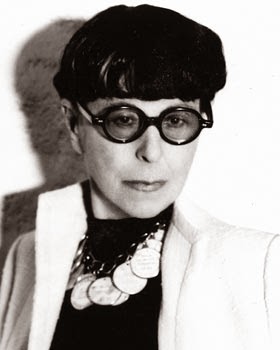
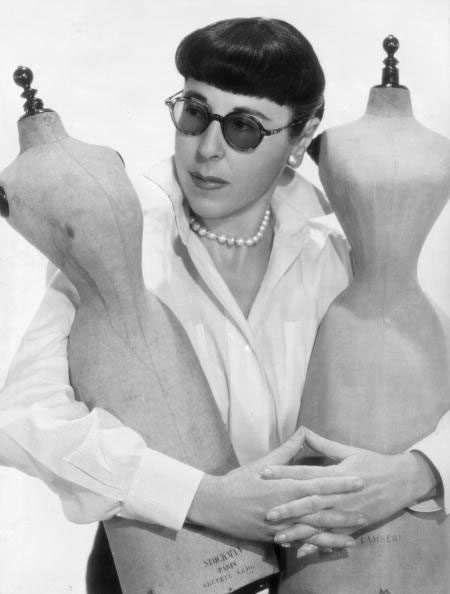
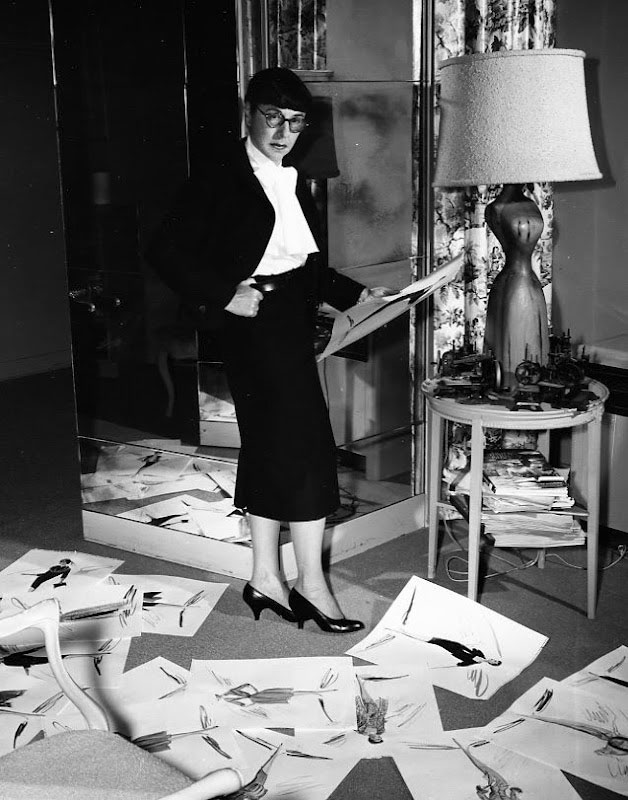
A small diminutive woman, famous for her Anna May Wong inspired crop and signature sunglasses – Edith Head may not have been a fashion visionary, but she knew how to concoct screen glamor like nobody before her or since. She managed to make clothes that not only conveyed the moods and ideas behind a screen narrative, but were also beautiful, flattering to the stars, and inspiring to everyday women.
To succeed in the industry, Edith said, one had to be a “combination of psychiatrist, artist, fashion designer, dressmaker, pincushion, historian, nursemaid, and purchasing agent.”
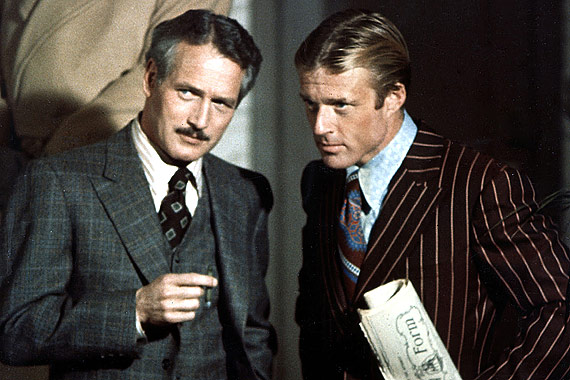
But she was sometimes economical with the truth, taking credit for designs she had not created, such as Audrey Hepburn’s bateau-necked black dress in Sabrina and Paul Newman and Robert Redford’s wardrobe for The Sting, for which she won an Oscar. After winning the Oscar, she was sued by the illustrator who really designed Redford and Newman’s clothes.
Always discreet about the size and shape of the stars’ backsides, she knew about all the skeletons in their closets but she was never one to gossip, although she did reveal that full-figured Clara Bow was known as “a sausage”, that Claudette Colbert was “mean-spirited”, and that Barbara Stanwyck was “frumpy” until she took over her designs.
“Go on a diet!” Edith would instruct an overweight woman, while instantly making her look ten pounds slimmer by pulling her shirt out of her trousers, whipping a belt around her middle and swapping her cheap gold jewellery for her own signature pearls.
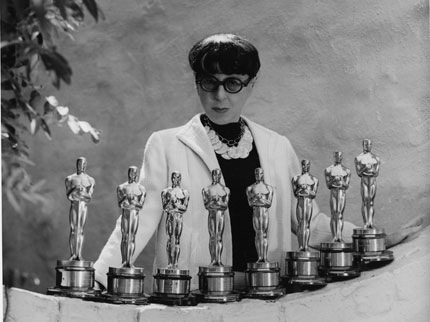
In the first year for which costume design becomes an Academy Awards category, she receives a nomination for best costumes in a black-and-white film, for Billy Wilder’s The Emperor Waltz, a period comedy set in turn-of-the-century Vienna. But no worry,in the following years Edith was nominated 35 times and won 8 Oscars!!!
In 1966 Edith makes cameo appearance as herself in The Oscar, for which she also designs gowns. As more and more cinematic wardrobes begin to be bought off the racks, Edith remains one of the last studio costumers. A year later How to Dress for Success, Edith’s advice manual for the career-oriented, is published. She moves to Universal after her contract is not renewed at Paramount.
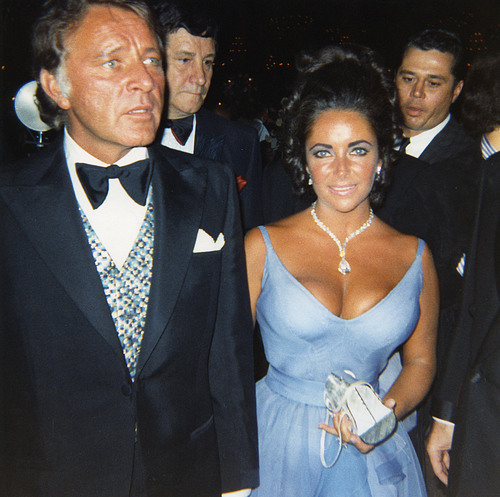
With her film work declining in frequency, Edith and June Van Dyke present more and more costume fashion shows—up to eighteen a year. In 1970 Elizabeth Taylor presents the Oscar for Best Picture to the makers of Midnight Cowboy wearing a curve-hugging, low-cut lavender dress by Edith.
Elisabeth Taylor & Richard Burton
.
Young Elisabeth Taylor wearing a Edith Head dress.
.
.
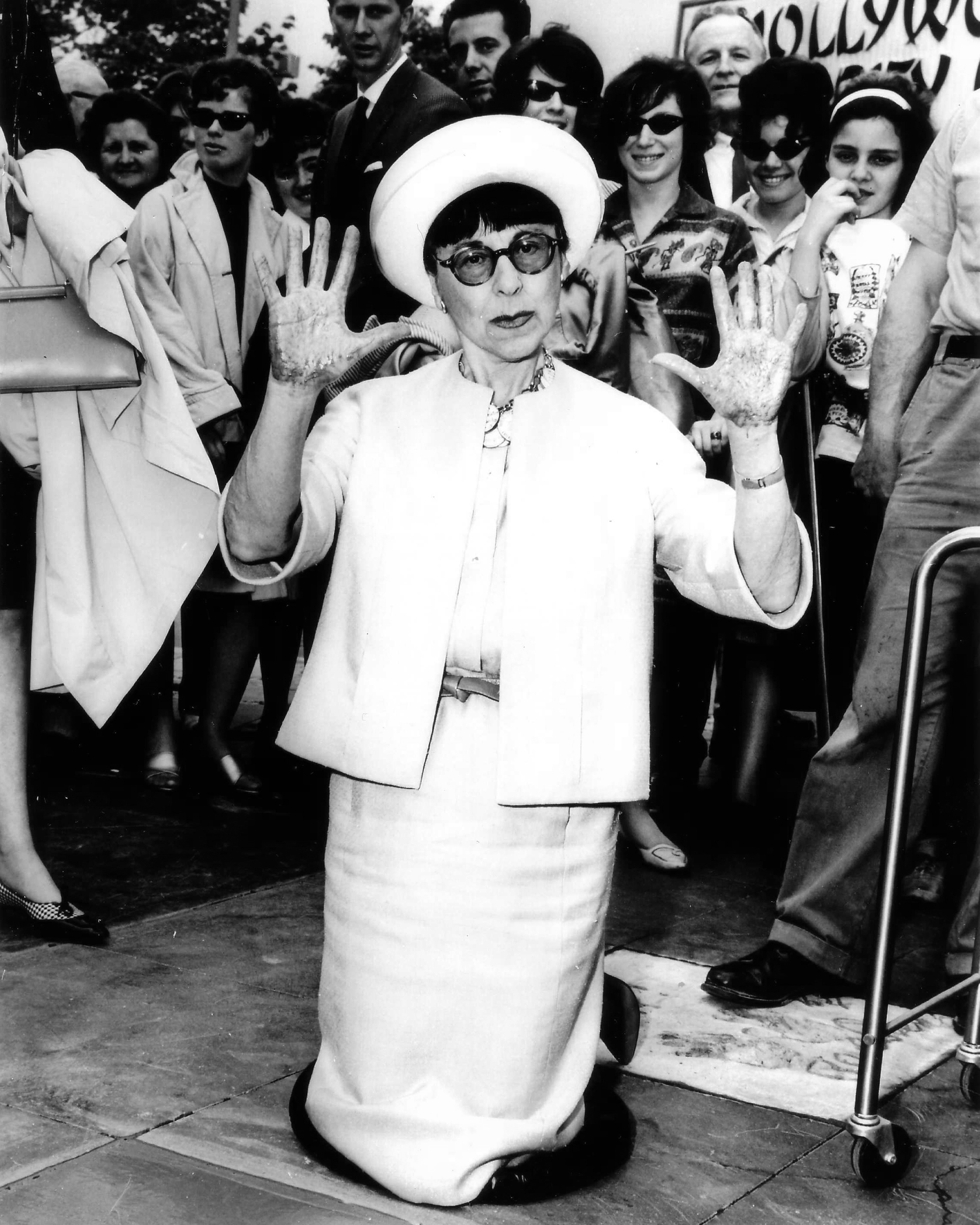
In 1974 Edith gets a star on the Hollywood Walk of Fame. She also begins creating sewing patterns for the Vogue Pattern Company. December Vogue toasts an exhibit at the Met, curated by former editor Diana Vreeland, of costumes from Hollywood’s heyday, including many looks designed by Edith Head.
Edith died on October 24, 1981, four days before her 84th birthday, from myelofibrosis, an incurable bone marrow disease.
Edith Head gets a star on the Hollywood Walk of Fame in 1974
.
Edith Head & Grace Kelly
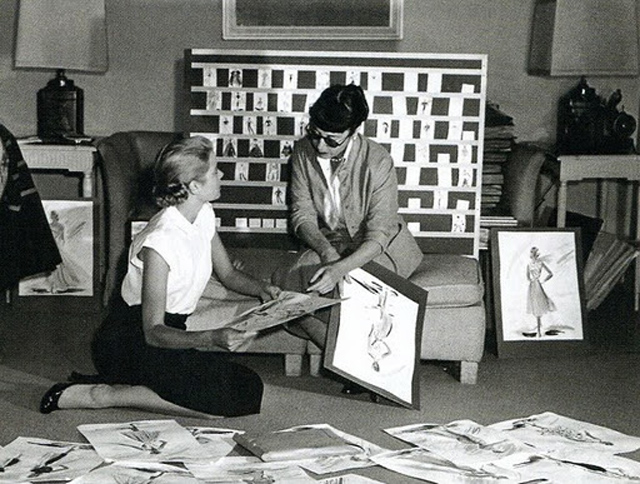
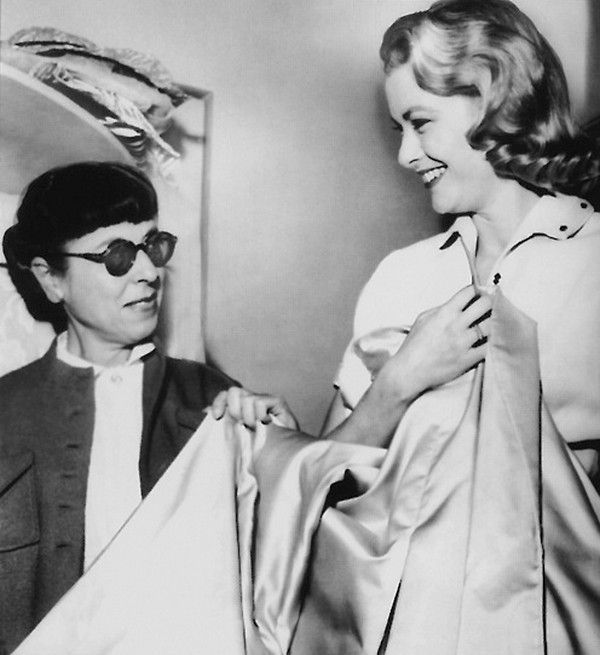
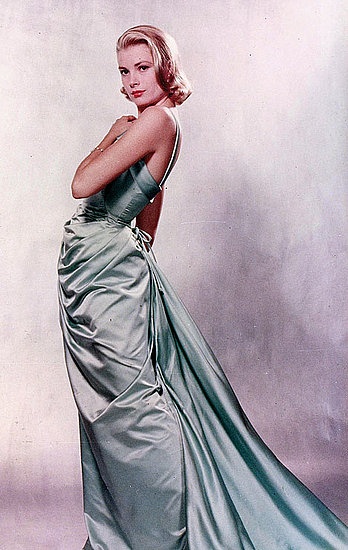
Edith adored Grace Kelly, for whom she designed many movie wardrobes. When Grace won an Oscar for The country girl, she asked Edith to design her Academy Award ceremonial dress.
Edith was upset when the luminous actress slighted her by not inviting her to design the wedding dress when she got married to Prince Rainier of Monaco. She did create Princess Grace’s grey going-away suit, though.
Edith & Grace Kelly preparing the wardrobe for To catch a thief
.
Working on the Oscar dress with Grace Kelly
.

1955, Grace Kelly in her ceremonial Oscar dress by Edith Head
.
Edith Head & Audrey Hepburn
Audrey Hepburn & Edith Head
.
.
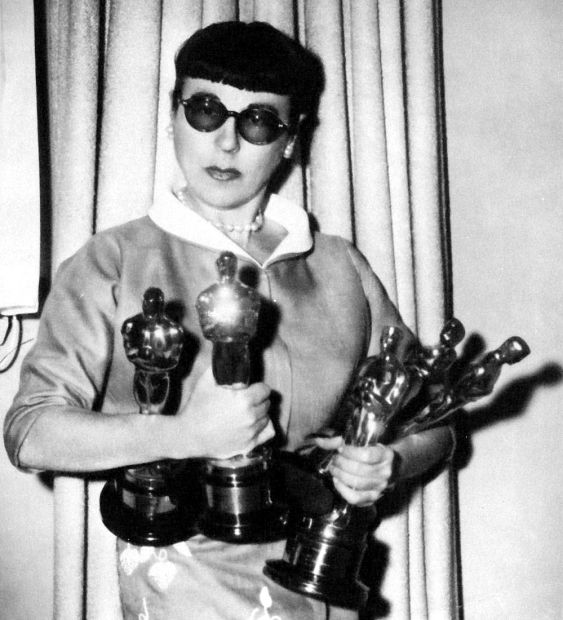
The 8 Oscars won by Edith Head
When asked about the most important men in her life, Head would always reply: “There were eight of them – they were all named Oscar.”
.
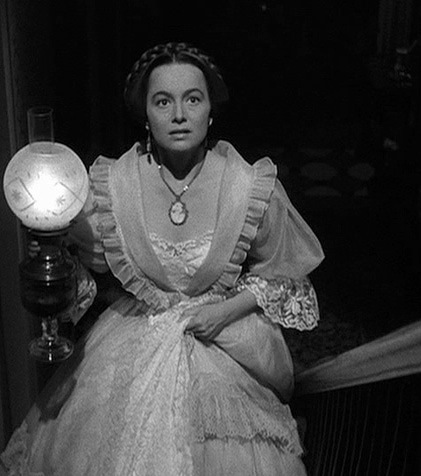
1950, Oscar for The Heiress
.
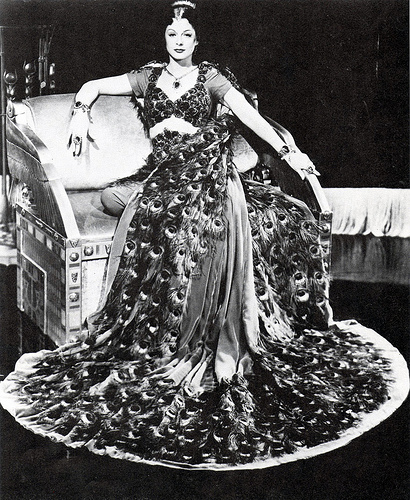
1951, Oscar for Samson and Delilah
.
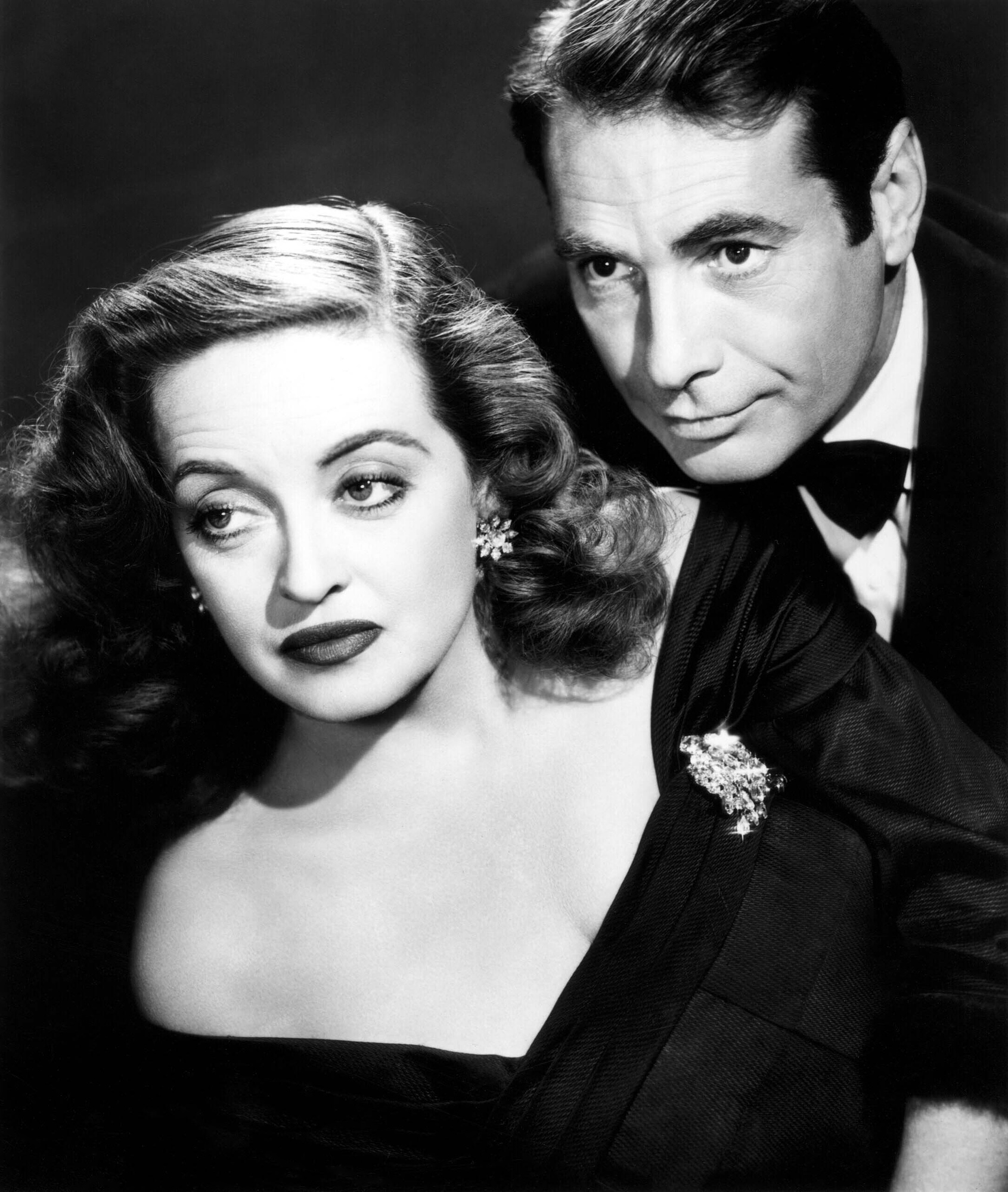
1951, Oscar for All about Eve
“Her life was all about glamour in the most glamorous place in the world, Hollywood,” Bette Davis once said of her. Indeed, it was Edith who designed the brown silk, sable-trimmed cocktail dress Davis wore as Margo Channing in the 1950 classic All About Eve, warning everyone as she swept down the staircase for the big party scene to fasten their seat belts because it was going to be a bumpy night.
Bette Davis later bought the dress for herself, because she loved it so much – it had been square-necked, with a tight bodice, but when Davis tried on the finished gown the bodice and neckline were much too big. Edith was horrified, but the actress pulled it off her shoulders and shook one shoulder sexily, saying: “Doesn’t it look better like this anyway?” In the wake of this “accident”, Head won another Oscars for the film.
.
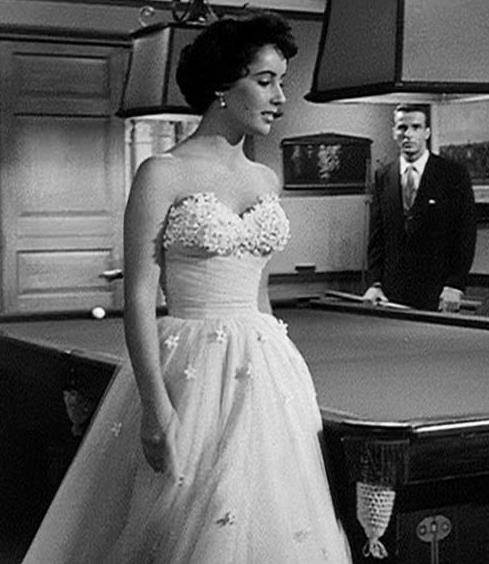
1952, Oscar for A Place in the Sun
“The prototype of the perfect debutante dress, and every girl coming out or having her sweet-16 birthday party wanted this dress because they all wanted to look like Elizabeth Taylor in this movie, which was one of Taylor’s first films as an adult. It was a tribute to a typical ’50s gown: strapless top covered with silk petals, waisted in silk with a full, bold but lightweight tulle skirt with petals sprinkled all over. It became the prom dress for American teenagers when it was copied by all the leading department stores.
.
1954 Oscar for Roman Holliday
Although Edith Head won an Oscar for Best Costumes, the Capri Collection (Capri Skirt, Capri Blouse, Capri Belt, Capri Pants) was, in fact, designed by the European fashion designer Sonja de Lennart. However, since the outfits were actually made in Edith Head’s Roman temporary Atelier of the sorelle Fontana—that acted as the costume department—Edith, Paramount’s costume designer, used only her name without giving credit to the original designer, Sonja de Lennart, as it was pretty common at that time in history. Costume designers around the world used only their names, regardless who created the costumes. However, Edith was given credit for the costumes, even though the Academy’s votes were obviously for Hepburn’s attire. Sonja de Lennart’s Capri Pants were sewn and used in the next movie, Sabrina, by Hubert de Givenchy. Edith Head did not refuse that Oscar either…….
.
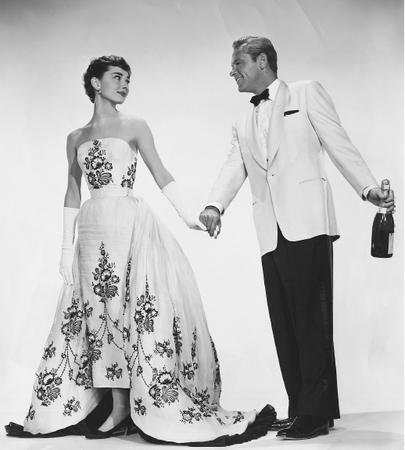
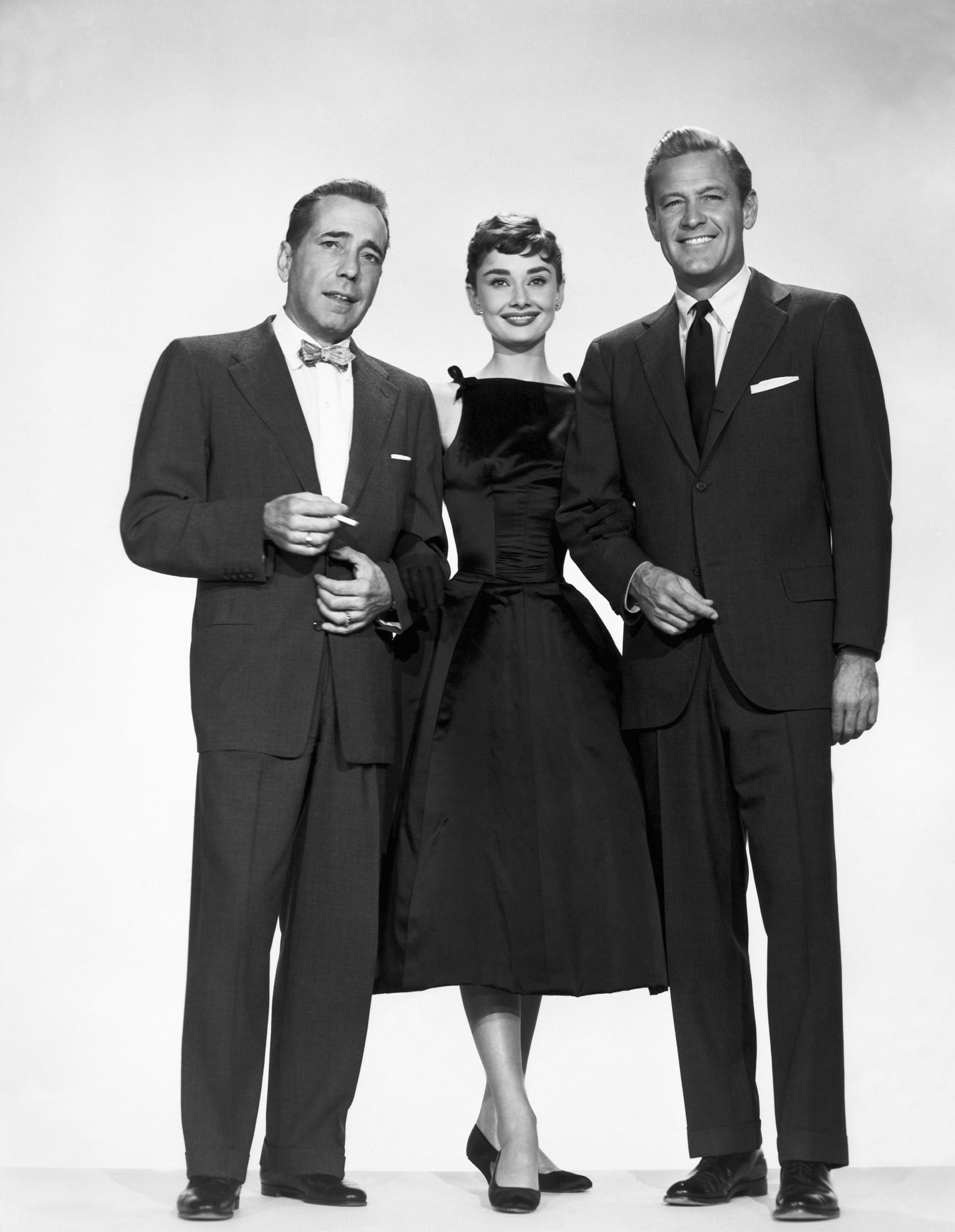
1955. Oscar for Sabrina
1954. “Audrey Hepburn plays the daughter of a Manhattan chauffeur. She goes to Paris and returns a total fashion plate. The white gown with black embroidery was the source of some controversy. Hepburn had a relationship with Givenchy. He probably was the one who actually designed the gown, but Edith (again) ended up getting the credit. Rumors circulate that Audrey Hepburn’s famous black cocktail dress with high, straight bateau neck (subsequently dubbed the “Sabrina neckline”) was also designed by Hubert de Givenchy and merely made by Edith’s studio—a claim that she roundly denies. After this, Givenchy started designing on the record for many of Hepburn’s films.”
.
1961, Oscar for The Facts of Life (together withEdward Stevenson)
Fashion is a language. Some know it, some learn it, some never will—like an instinct.”
–Edith Head
.
Biography
The legendary costume designer Edith Head loved to refer to herself as Hollywood’s “dress doctor.” Throughout her six-decade career, and in more than 1,000 films, Edith dressed up extravagant cinematic personas (Biblical seductresses, jungle princesses, showgirls, and cowboys) and yet she saw her task first and foremost as that of a roll-up-your-sleeves problem-solver: a curer of wardrobe ills, a soother of vexed brows, and a tamer of egos. Edith was grounded and pragmatic, a shrewd politician and savvy businesswoman who not only operated an efficient “fashion clinic” at Paramount Studios (and later at Universal), but became a celebrity in her own right.
Edith Claire Posener was born in 1897, in California. At the age of eighteen she graduates at the University of California, with honors in French after which she also receives her masters in romantic languages at Standford.
Edith becomes a French teacher at the Hollywood School for Girls, where she meets the daughters of Cecil B. DeMille. Through them she occasionally visits the Famous Players–Lasky Studio to watch the grandiose director’s productions underway. She is an enterprising young woman and although her lack of experience, Edith soon gets duties in art instruction. (She secretly takes evening art courses at Otis Art Institute, and then at Chouinard Art College in Los Angeles).
In the summer of 1923, she answers an ad in the Los Angeles Times for a costume sketch artist and is hired. (She feigns expertise in costume design by cobbling together a portfolio of drawings borrowed from her classmates at Chouinard.) Soon Travis Banton (wardrobe designer) also joins Famous Players-Larsky and becomes Edith’s mentor. The seem time she marries Charles Head, a salesman for Super-Refined Metals Company in Southern.
Like so many in the image business, Edith succeeded through self-invention. For years, she liked to obscure the details of her less-than-glamorous origins.
Luck strikes in 1927, when Travis Banton is named chief designer, making Edith his assistant. After designing countless wardrobes for the “B” movies and the Westerns, as well as the background characters, Banton assigns her to costume her first big star: Clara Bow, for the film Wings, the two women become friends.
Clara Bow in Wings
.
After the 1929 crash and the rapid fall of hemlines, Hollywood makes wants to establish itself—rather than Paris—as a trendsetting force. Various studios begin instructing costumers to produce original designs, rather than buying from the couture houses. Publicity departments begin promoting films as fashion spectacles. Edith’s contract is renewed, but her salary is cut by $25 a week.
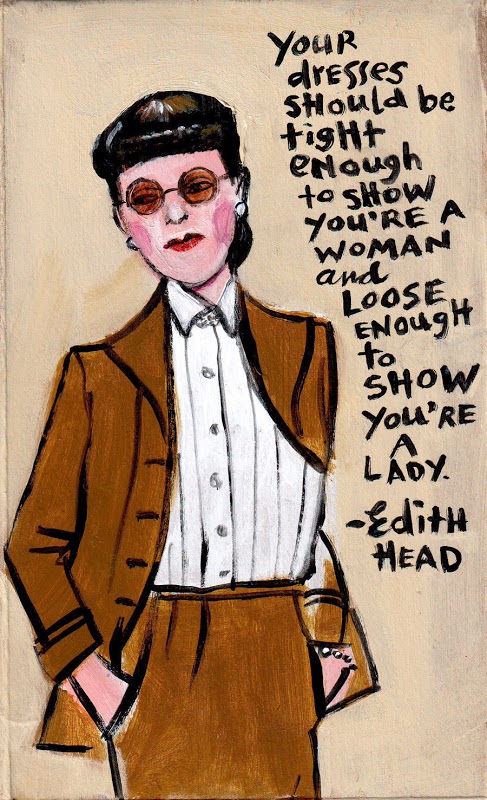
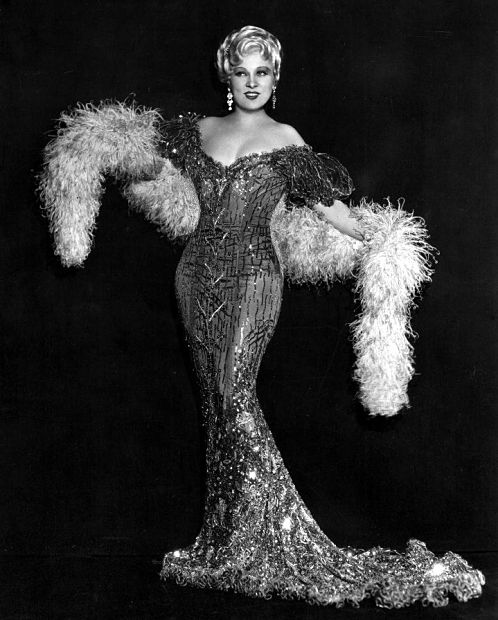
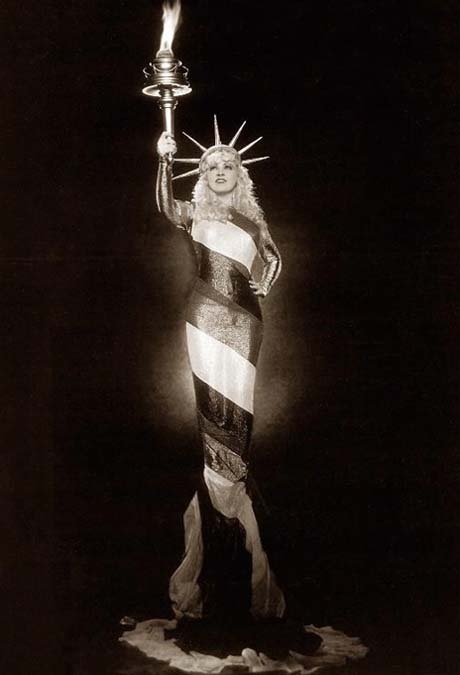
In 1933 she earns her first official on-screen credit, “Costumes by Edith Head,” when she outfits another celebrity, Mae West for her first headlining movie, She Done Him Wrong. Mae West remarked ‘tight enough so I look like a woman, loose enough so I look like a lady.’ This statement became a style template Edith would adopt.
Mae West in She has done him wrong, 1933
.
Mae West dressed by Edith Head
.
Edith is triumphing on for years, when, in 1938, she’s named chief designer at Paramount—the first woman to hold the job. She gets a divorce from Charles Head and appears for the first time in Vogue, in an ad for Fashion Plate shoes, wearing a Louise Brooks bob; “Look for Edith Head’s autograph on the insole,” exhorts the copy. Also Edith will continue to contribute style tips in Photoplay for many years, to help sustain Tinseltown’s place as style arbiter.
In 1940 Paramount, now producing 40 to 50 movies a year, brings in an impoverished European aristocrat named Oleg Cassinito apprentice with Edith. And in September she marries Wiard (“Bill”) Boppo Ihnen, a film art director. They will remain together for nearly 40 years.
During WWII, Edith frequently makes statements to the press rallying women on the home front: “All designers are turning to cotton. Silk is out of style for 1942. . . . Double-duty clothes will cut down on budgets. Coats with zip-in, changeable linings and suits with reversible jackets are the fashion news.
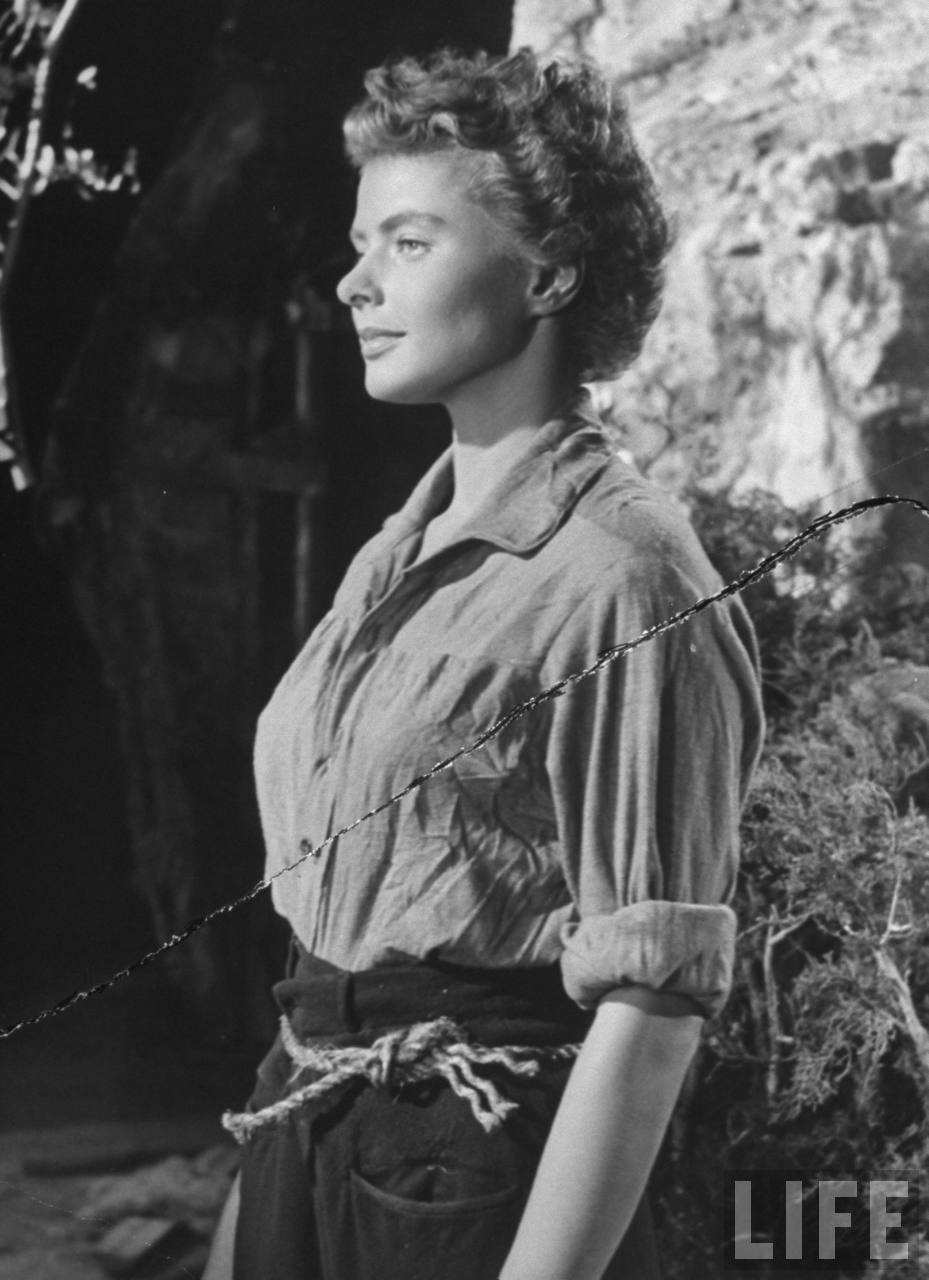
Edith designs the look for Ingrid Bergman in For Whom the Bell Tolls, 1944.
Ingrid Bergman as Maria in Whom the Bell Tolls
.
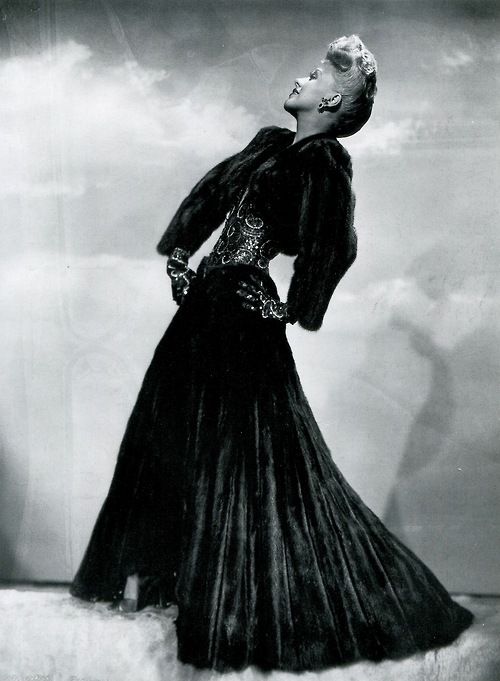
Lady in the Dark features Ginger Rogers wearing one of the most expensive costumes in Hollywood history: a mink skirt with inner skirt beaded using multicolored jewels in sequins (with matching bodysuit), plus a mink bolero and muff. . Because it was the 1940s, you had shoulder pads and gloves. The shoes kind of disappeared into the dress—which is important, because it was all about making Ginger Rogers’ legs look longer. There was surely netting behind that deep V-neck so the dress would stay on her. This was before body tape.”
Ginger Rogers in Lady in the Dark
.
In 1947 Hollywood is shaken up by the Paris debut of Christian Dior’s shockingly opulent, lush-skirted New Look; many movies, mid-production, feature simpler straight skirts and narrower silhouettes. “Every film that I had done in the past few months looked like something from the bread lines,” Edith later says. “I vowed that I would never get caught by a fashion trend again, and became a confirmed fence-sitter. When skirts became full, I widened mine gradually. If lengths were at the ankle, mine were mid-calf. The result has been that if you look at my films it is very difficult to date them.
After costume design was added as an Academy Awards category in 1948, she quickly racked up an astounding number of nominations, winning eight in total, for now-classics including The Heiress, All About Eve, and Roman Holiday. “The Academy Award is given to the costume designs that best advance a story,” she insisted, “not necessarily for the most beautiful clothes.”
The praise wasn’t unanimous, however. After Head claimed her sixth Oscar for the 1954 film Sabrina, rumors circulated that Audrey Hepburn’s striking black cocktail dress with bateau neck and bow-bedecked shoulder straps was actually designed by the Parisian couturier Hubert de Givenchy (Hepburn’s friend), while Head publicly took credit for it. Even after her death, former colleagues would claim that Head had no compunction about accepting plaudits for others’ work.
Head’s career eventually waned in the late sixties, as the role of the studio costumer began to die out; more and more, clothes were being bought off the rack. By the seventies her output dwindled to just a few pictures a year. Nonetheless, she worked almost till the day she died, in 1981. The comedienne Lucille Ball remembered her this way: “Edie knew the truth about all of us. She knew who had flat fannies and who didn’t—but she never told.”
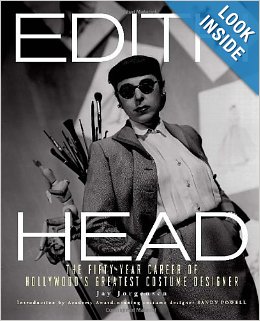
Edith Head: The Fifty-Year Career of Hollywood’s Greatest Costume Designer
All About Eve. Funny Face. Sunset Blvd. Rear Window. Sabrina. A Place in the Sun. The Ten Commandments. Scores of iconic films of the last century had one thing in common: costume designer Edith Head (1897–1981). She racked up an unprecedented 35 Oscar nods and 400 film credits over the course of a fifty-year career.
Never before has the account of Hollywood’s most influential designer been so thoroughly revealed—because never before have the Edith Head Archives of the Academy of Motion Picture Arts and Sciences been tapped. This unprecedented access allows this book to be a one-of-a-kind survey, bringing together a spectacular collection of rare and never-before-seen sketches, costume test shots, behind-the- scenes photos, and ephemera.
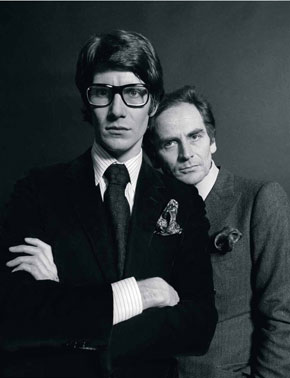
It looks like 2014 is going to be Yves Saint Laurent‘s turn to be immortalized on the big screen. There will be two films coming out about the life of this iconic French designer who died in 2008, despite one facing criticism from the late designer’s close companion and business partner, Pierre Bergé. The businessman – who was co-founder of the iconic house – has said that he wants to try to “ban” production of the second movie.
Yves Saint Laurent & Pierre Bergé
.
However, the second film has been backed by head of Kering (formerly known as PPR) – the conglomerate that owns Saint Laurent – Francois-Henri Pinault, who has given consent for the fashion house’s logo and designs to be used. Bergé took to Twitter to share his frustration, saying: “Two films on YSL? I hold the moral rights in the work of YSL’s image and mine have authorised that of Jalil Lespert” – in reference to his favoured film’s director. He then hinted that a trial may be in the near future. Bergé is the head of the Pierre Bergé-Saint Laurent Foundation – created to “prolong the history of the House of Saint Laurent”, while conserving a collection of 20,000 haute couture designs, accessories and sketches “that bear witness to 40 years of Yves Saint Laurent’s creativity”.
Both rival biopics currently have the working title of Yves Saint Laurent.
The first film
Movie poster
.
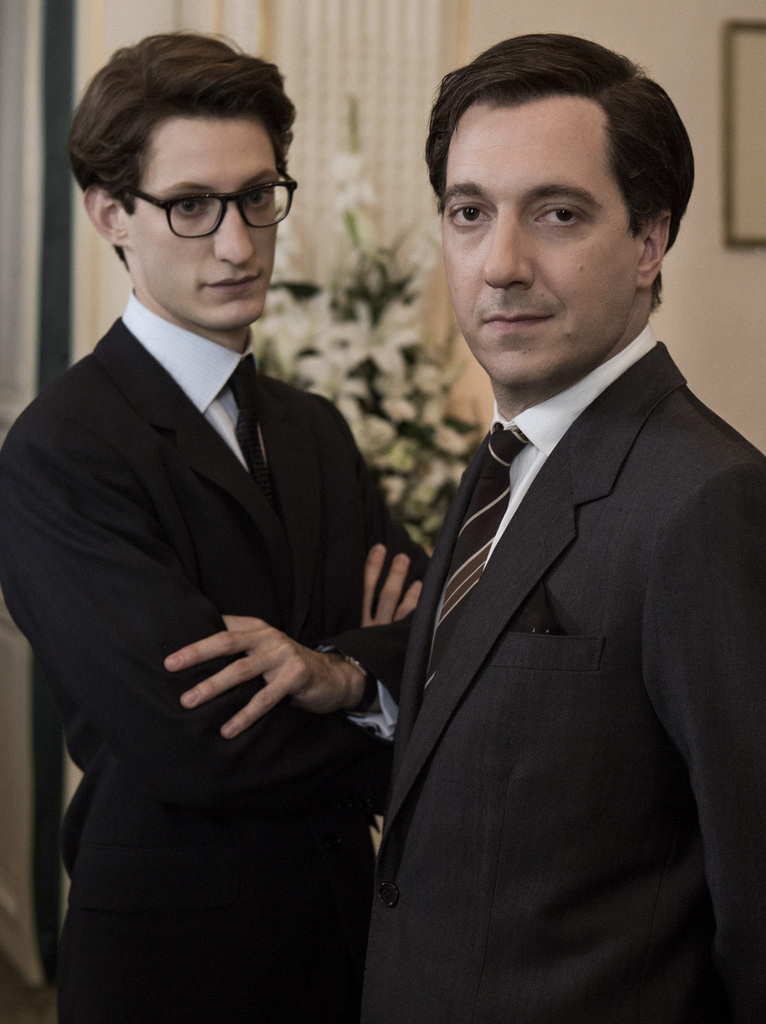
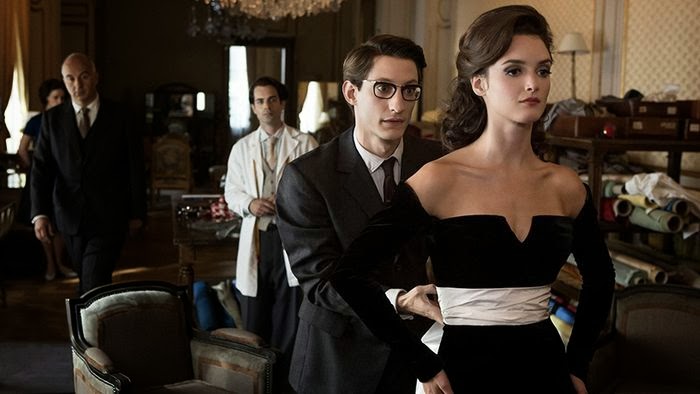
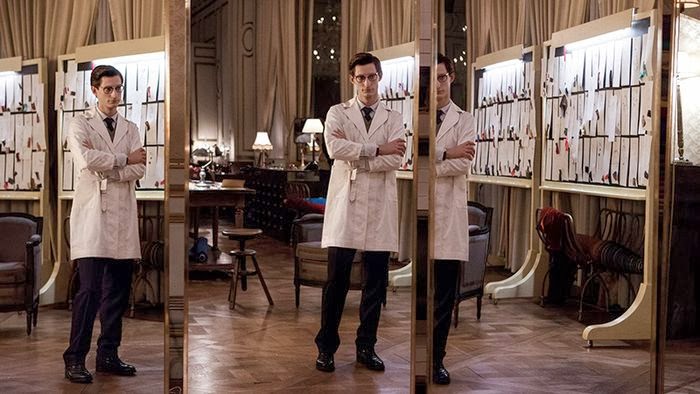
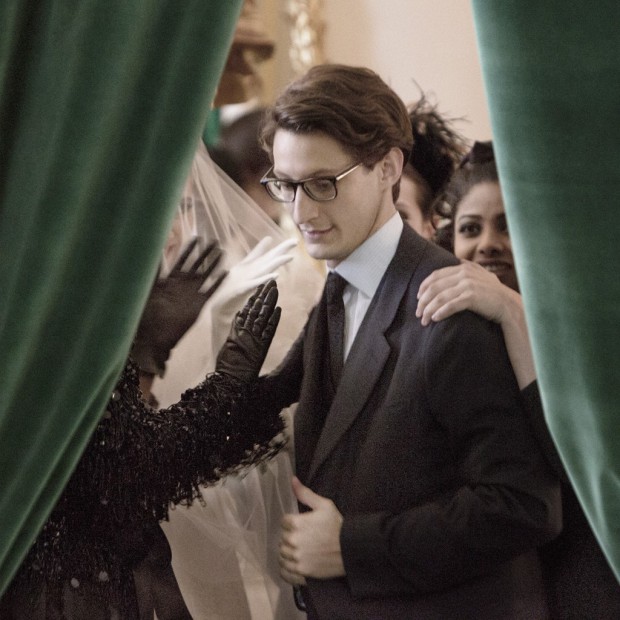
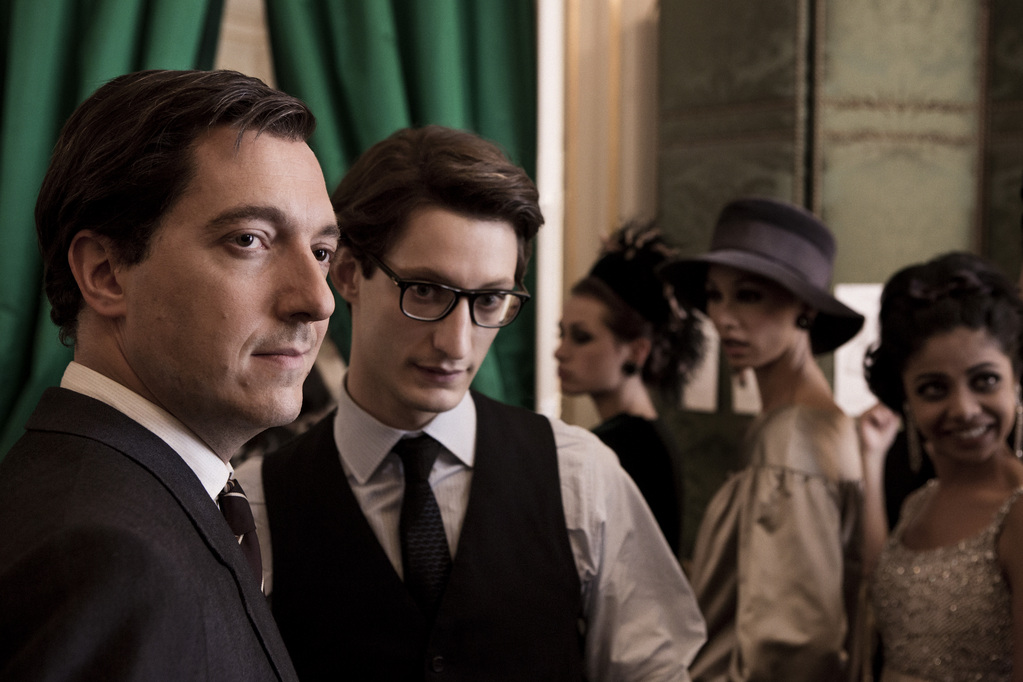
The first film- which has the backing of Bergé – is to be directed by Jalil Lespert and will star French actor Pierre Niney as the late designer. Bergé has previously commented on the strong resemblance Niney has to his former companion, revealing that he almost greeted him: “Welcome Yves”.
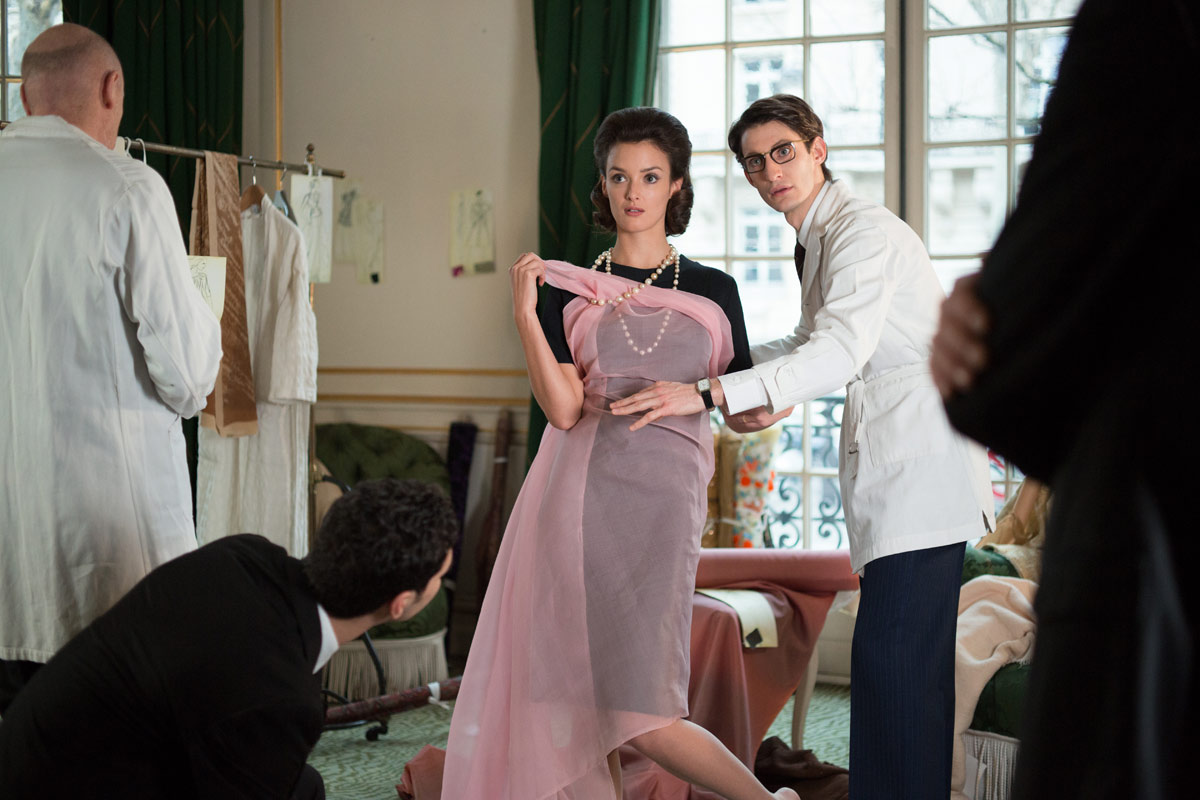
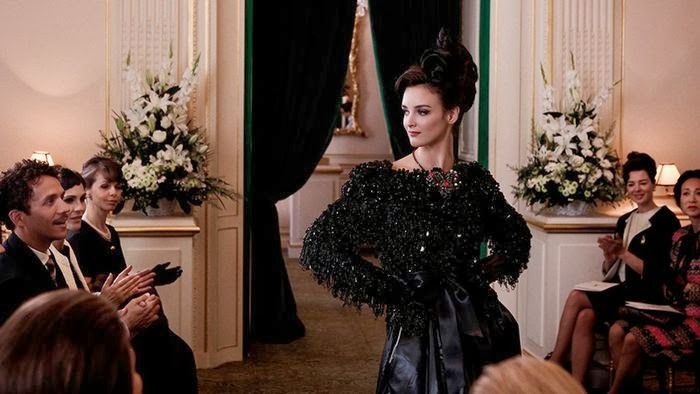
Pictures of this movie
.
Yves Saint Laurent opens January 8th.
It looks every dramatic, a bit over the top and every bit as glamorous as you’d expect.
Director Jalil Lespert, starts the film in 1957 as 21 year-old Saint Laurent (played by Pierre Niney, Nikolai Kinski as Karl Lagerfeld and Guillaume Gallienne as Pierre Berge. ) takes over the couture house of Dior. He is bombarded with questions from reporters but appears calm and collected. Alas, this does not last. Young Saint Laurent tears a white table-cloth dramatically, to make a sash with a bow for a glamorous client. He is temperamental: “I don’t fear critics” he proclaims. He is a diva who just wants to be alone: “Let me sketch in peace!” he yells.
.
My review:
You already have to know a lot about Yves Saint Laurent and his friends to understand the story, otherwise you have no clue who is who and what all happens. Like the reason YSL and Karl Lagerfeld broke up as friends: YSL started a love-affair with Lagerfeld’s lover Jacques de Bascher. The movie also says a lot about Pierre Berge, who lived in the shadow of YSL and obviously had a hard time living & working with him.
The movie reveals details about YSL’s life, only Pierre Berge knew about and probably felt the need to share with the world. I don’t know what these revelations add to the legacy of YSL. It feels like Berge is still frustrated about certain events and the fact YSL couldn’t function without him and is now seeking recognition for his part in the history of YSL.
Still a nice movie to go to and see……
.
.
The second film
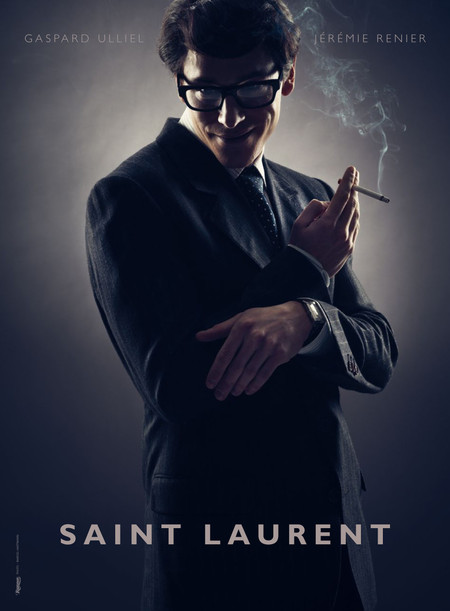
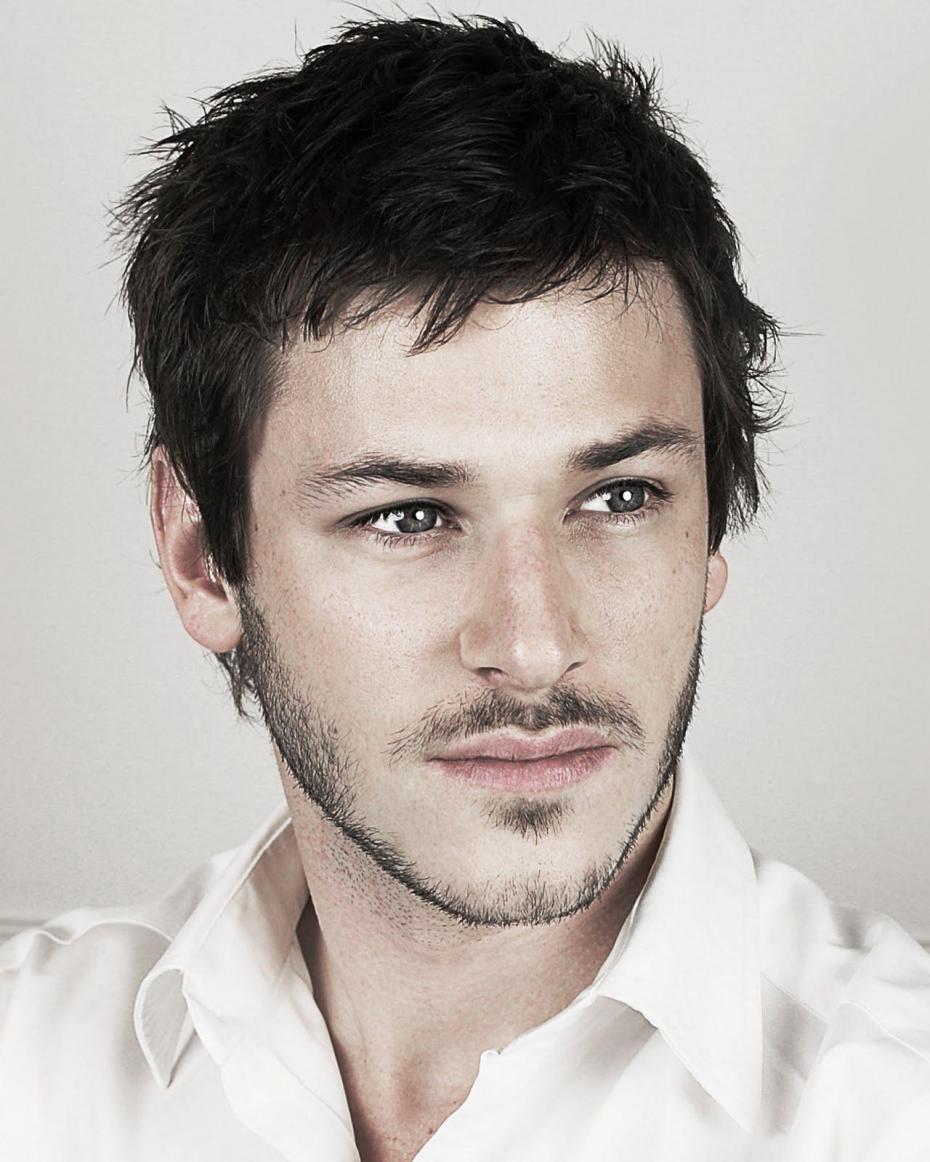
The second film- supported by Pinault – will be directed by Bertrand Bonello, with Chanel model Gaspard Ulliel cast as the leading role opposite actress Lea Seydoux. According to The Telegraph, Bonello’s team wrote to Bergé explaining that they had not sought his blessing because they wanted true “freedom of expression”. It’s believed that the businessman’s lawyers responded immediately denying any use of his image or Saint Laurent possessions.
Movie poster of Saint Laurent film which Pierre Bergé is trying to "ban"
.

Gaspar Ulliel who plays Yves Saint Laurent in the second film
.
“Bergé’s role, even when Saint Laurent was alive, has been: ‘I tell the story,'” said scriptwriter Thomas Bidegain, who is working on the Bonello film. “Saint Laurent had a very complicated life and Bergé always managed the legend. That’s why he couldn’t take being dispossessed of that story.”
The French release of this movie is set for September 2014.
.
.
Both productions are expected to focus on the early life of the designer and his relationship with Bergé.
Yves Saint Laurent & Pierre Bergé
.
.
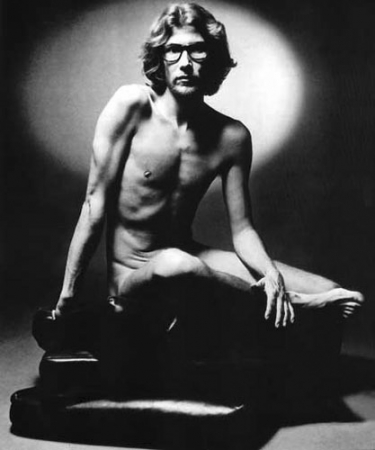
The Iconic nude photograph
In 1971, the same year that his radical ” 1940s” collection shocked animal activists and fashion critics, Yves Saint Laurent released his first perfume for men, Pour Homme. For its advertisements, Yves Saint Laurent posed in nude in front of the camera of a close friend, Jean Loup Sieff. Sieff who worked for Magnum and was at the apex of his fashion photography career when he took fourteen photos for Yves Saint Laurent. The photo brashly challenged conventional taboos of male nudity in mainstream advertising of the era.
YSL and Sieff rejected the conventional machismo virility that was usually used in the ads on that time, such as Old Spice (introduced in 1937) and Aramis (introduced in 1964). It was a ‘natural’ appearance after the excesses of 1960s youthquake ostentation and fantasy. Although YSL personally wished the photo become an icon of gay liberation, he looked almost a Christ-like figure, a wavy-haired and gaunt and stark naked but for his large-rimmed glasses. The photos desexualized nudity, and presented a more vulnerable, and androgynous side of humanity.
















 agnautacouture.com