Archive | 2013

Grunge; Marc Jacobs got fired over it & Hedi Slimane praised….

15 Sep

Tea-Dress-Kurt-Cobain

Kurt Cobain

.

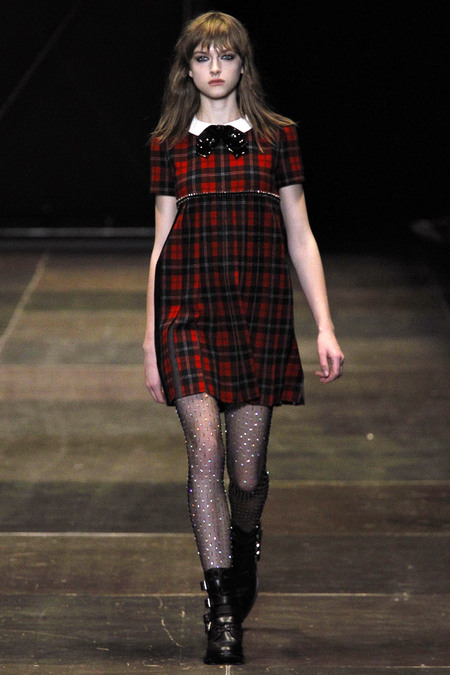
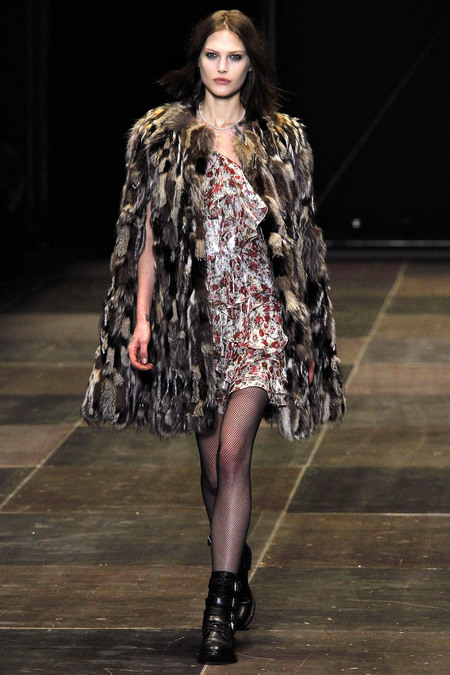
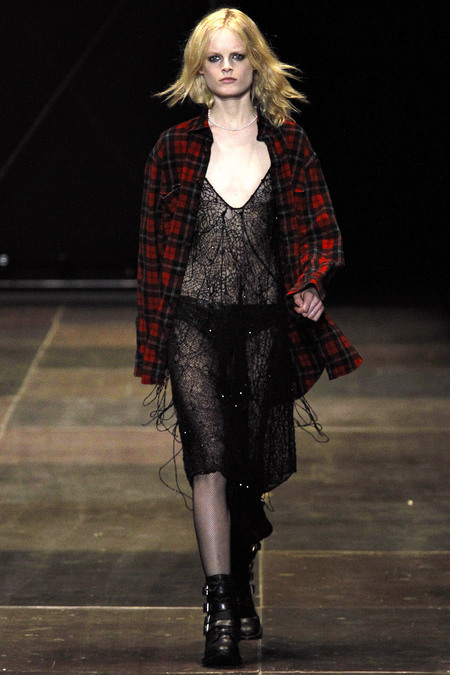
March 04, 2013     Paris, Saint Laurent a/w 2013 by Hedi Slimane

By Tim Blanks     (edited version)

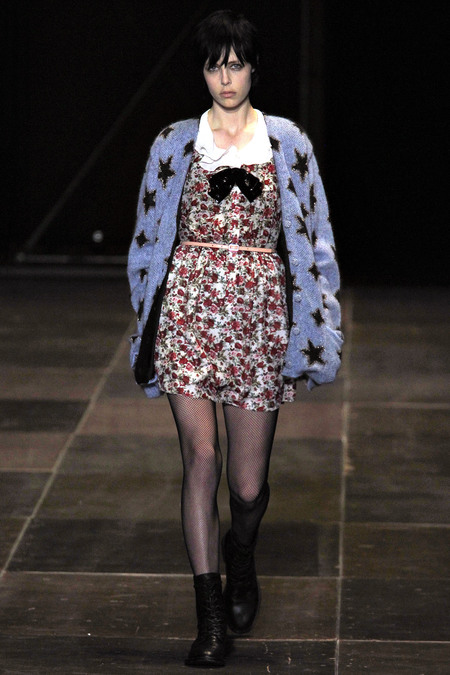
California grunge was the inspiration for Hedi Slimane’s second women’s collection for Saint Laurent.

With a little adjustment, that’s a pretty fair description of what Slimane has been trying to do with Saint Laurent. The legacy today was grunge, not YSL; the longing was his own ardent attachment to a scene that was a continent and an ocean away from a kid in Paris at the beginning of the nineties. Slimane is not the only designer motivated by a powerful impulse to reimagine youthful yearnings. Anna Sui and Marc Jacobs (for Perry Ellis, s/s ’93 collection) immediately spring to mind as masterful mediums of pop-cultural watersheds like The Factory or the Beats. And of course, it was Jacobs who famously lost a job over his original recasting of grunge in a high-fashion context.

But there was no job on the line, no sense of present danger, with Slimane’s collection today. And with regards to that adjustment, there was no expert skirting of nostalgia. Almost nothing looked new. Which didn’t trouble Alexandra Richards, Alison Mosshart, and Sky Ferreira in the least. Such dream clients were all thrilled by what they’d seen. “That’s the way I dress anyway,” was their party line on the baby dolls, the schoolgirl slips, the vintage florals, the random mash-ups of sloppy cardigans, plaid shirts, and sparkly dresses accessorized with ironic strings of pearls and black bows, fishnets and biker boots. All well and good, and money in the bank for retailers etc., etc., but anyone expecting the frisson of the future that Slimane once provided would have to feel let down yet again. At the odd moments when he allowed it to happen—as in a cutaway jacket over a plaid shirt over slashed black leather cuissardes—there was a glimpse of the kind of rigorous sensibility that hybridized passion and fashion into an irresistible force at Dior Homme.

But wouldn’t it be radical if Slimane was actually saying that there is nothing new under the fashion sun, that all that ultimately exists is the energy and inspiration you derive from those elements of the past that you value and love. The same kind of fanboy ardor makes, say, Shibuya 109 in Tokyo or Trash and Vaudeville in New York such wonderful retro romps. This collection will undoubtedly send orgasmic tremors through such places.

Hedi Slimane’s Saint Laurent a/w 2013
Saint Laurent a/w/ 2013

Saint Laurent

saint laurent

Saint Laurent

Grunge music is inspired by Alternative rock, hardcore punk, heavy metal, punk rock, hard rock and indie rock, Grunge fashion is a combination of the same, but it’s also boyfriends and girlfriends wearing each others clothes. And the ultimate icons of Grunge are Kurt Cobain and Courtney Love in the late 80ties and early 90ties.

Grunge

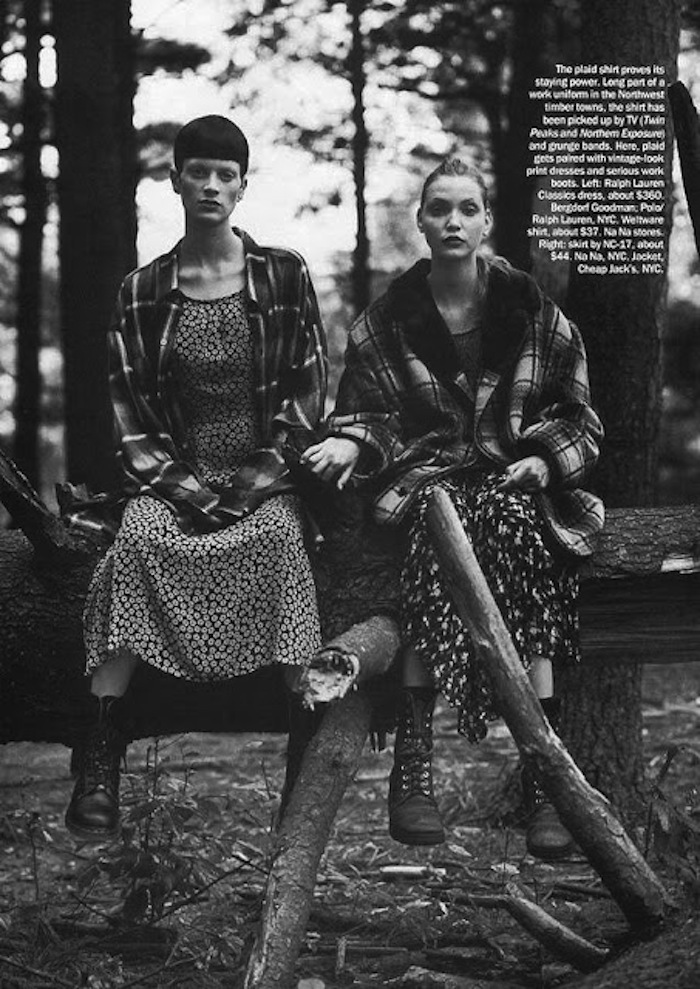
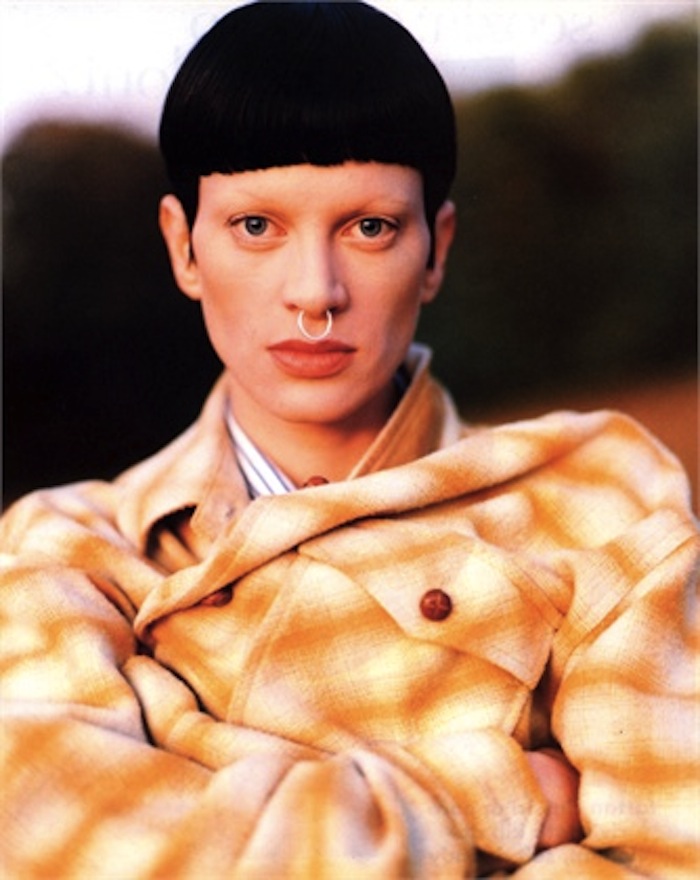
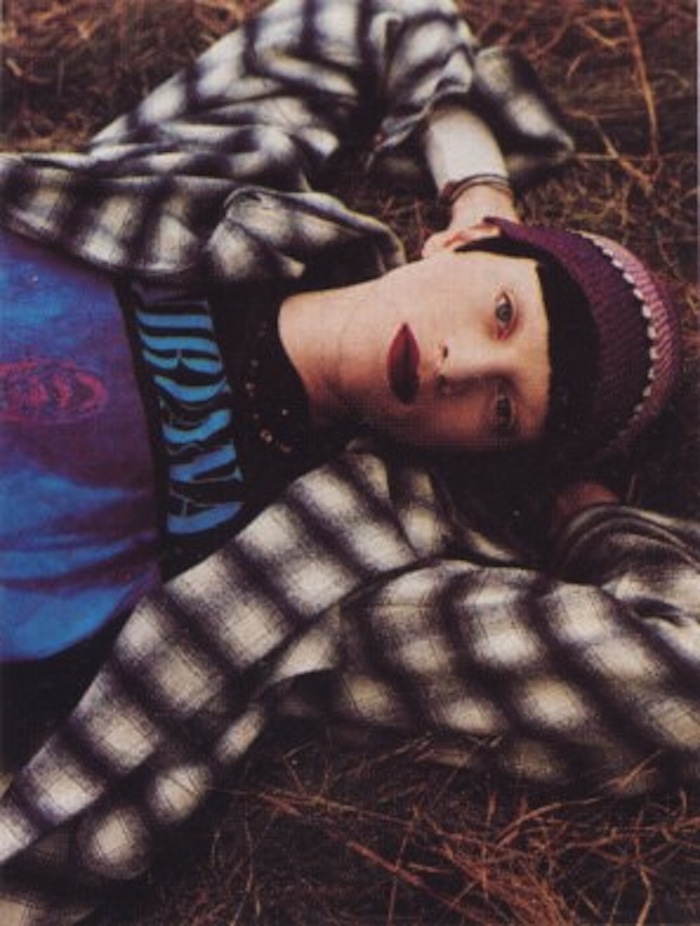
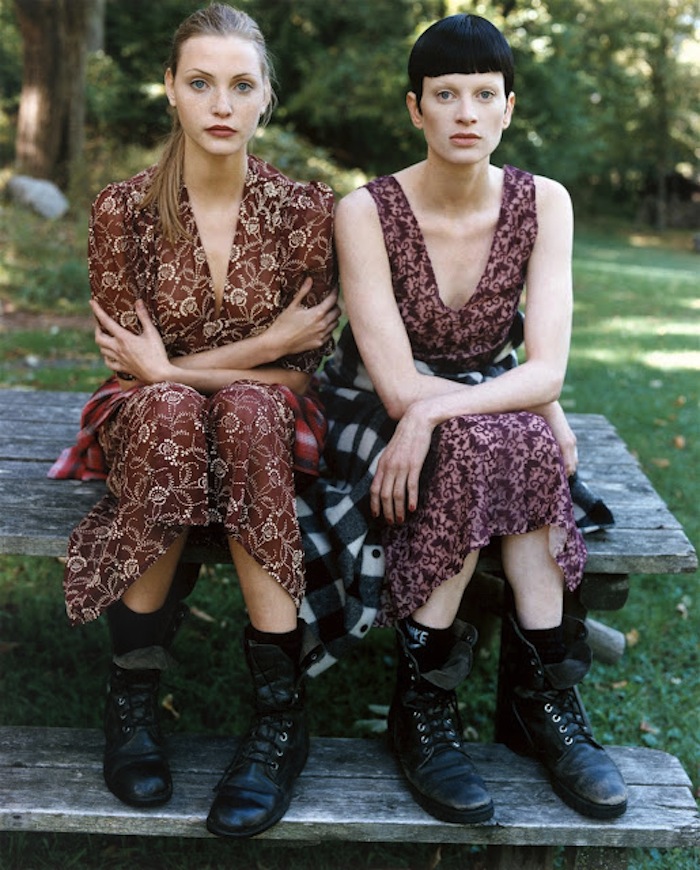
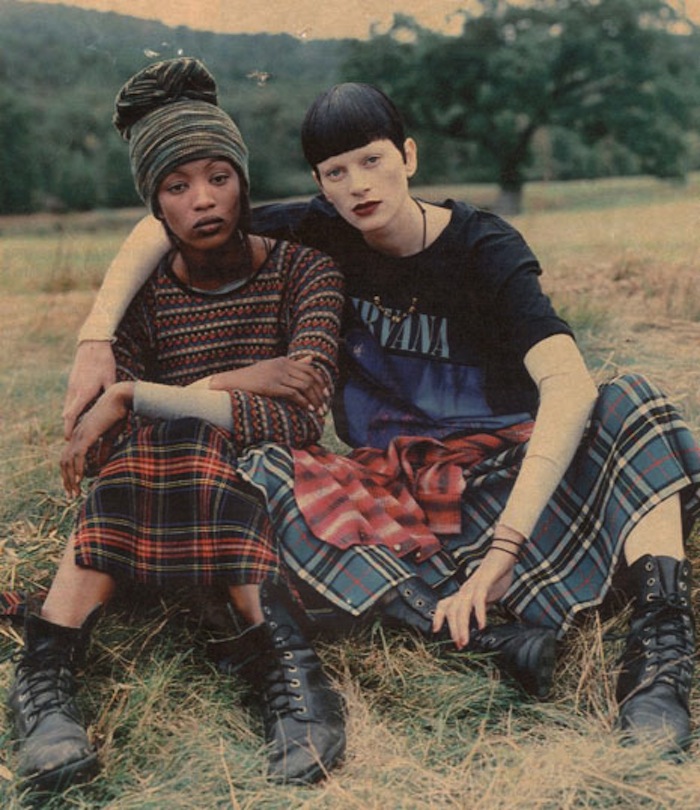
“Grunge is nothing more than the way we dress when we have no money,” designer Jean Paul Gaultier told Vogue in 1993, the year fashion co-opted the look. It had grown out of the raw, messy scene surrounding the raw, messy sound—produced by a bedraggled pack of flannel-clad Pacific Northwest dropouts—that was suddenly the talk of the fashion establishment.

Grunge’s Goodwill aesthetic was, as Gaultier observed, largely born of necessity; it was functional, too (flannels for warmth, boots to keep out the wet). In 1989, Everett True, reporting in Melody Maker about an upcoming band call Nirvana, had drawn readers’ attention to the authenticity of an emerging music genre: “Basically, this is the real thing. You’re talking about four guys in their early twenties from rural Washington who wanna rock, who, if they weren’t doing this, would be working in a supermarket or a lumberyard, or fixing cars.” The grunge-grunge style (as opposed to fashion-grunge) was slept in, picked up off the floor, swapped, scrounged from the ragbag. It was a sartorial representation of nihilism that had been evolving among members of the college-rock and hardcore underground for more a decade but was only just beginning to meet the commercial mainstream via MTV.

“Punk was antifashion,” James Truman, then editor in chief of Details, said. “It made a statement. Grunge is about not making a statement, which is why it’s crazy for it to become a fashion statement.” Truman’s quote appeared in The New York Times in November 1992, the month that Grunge was served up to Seventh Avenue by a trio of young downtown designers: Marc Jacobs at Perry Ellis, Anna Sui, and Christian Francis Roth. (At Roth, models were accessorized with laminated backstage Nirvana passes strung on ball chain.) The shows’ immediate impact was one of those tempests in a teapot that are rehashed with relish in the fashion annals.

Critics were then, and remain, divided over the new up-from-the-street look. The English actress Sophie Dahl, then an impressionable pro-Grunge teenager, would later reminisce in Vogue: “The word itself was antisocial, the premise antidotal to what had gone before. The style was perfect for that awkward stage of adolescence, layers that one could shrug off and hide behind, an armor of sorts.” In contrast, the fashion critic Suzy Menkes distributed “Grunge Is Ghastly” buttons among her colleagues.

Jacobs, the prime mover of the trend, described his infamous grunge collection, which eventually cost him his job at Perry Ellis, to the Times as a “hippied romantic version of punk.” Visually, the look dovetailed neatly with the neogypsy chic coming out of Europe and modeled by Madonna on the October 1992 cover of Vogue. Yet grunge was, on a deeper level, more about garages in Granite Falls than ganja on the beach in Goa. And unlike the bondage pants and shellacked mohawks of punk, it wasn’t just low-maintenance, it was no-maintenance. The faux-real grunge aesthetic was a difficult fit for fashion, which is—by the very nature of the beast—marketed with aspirational images and biased toward fantasy.

“Your rendition of grunge fashion was completely off,” one disgruntled reader complained in a letter to Vogue. “If the whole idea is to dress down, why picture models in $400 dresses? No one who can honestly relate to the music labeled grunge is going to pay $1,400 for a cashmere sweater (especially when they can buy a perfectly comfortable flannel shirt for 50 cents at the local thrift store).

It irked retailers in the extreme and, materially speaking, didn’t amount to much. Jacobs’s famous collection was never even produced. Still, the movement was a game changer. It challenged the status-oriented status quo, and introduced a layered, rumpled new silhouette. “All fashion is loosening up, in an apparent rejection of the hard-edged styles and attitudes of the ’80s,” observed a reporter for Knight Ridder Newspapers in the seminal year of 1992. “Grunge is the realization of that backlash at its most extreme. And ugliest.” (Vogue, too, would later lump the “clunky downtrodden look” among the “worsts” of the 1990s.) And while grunge disdained—or just didn’t think about—the hierarchies of fashion, it also played loosey-goosey with gender. Though a male-dominated scene, it embraced androgyny. “In the wake of an overload of macho,” the journalist Charles Gandee wrote in Vogue the following year, “and with the rise of the gamine, a new breed of young actors, models, and musicians is reshaping our idea of what’s attractive in a man.”

Fashion images, both in advertisements and in editorial pages, began to attempt to represent what was “real.” The photographer Juergen Teller talked about this sea change in the March 1994 issue of Vogue: “We’re not this generation of finding a girl with tons of jewelry attractive—nobody has to have some bloody nose job and breast implants,” he said. “We live in very hard times, and that’s why the people in my pictures maybe look a bit fucked-up or, you know, maybe tired. Because life is tiring.”

Grunge & Glory

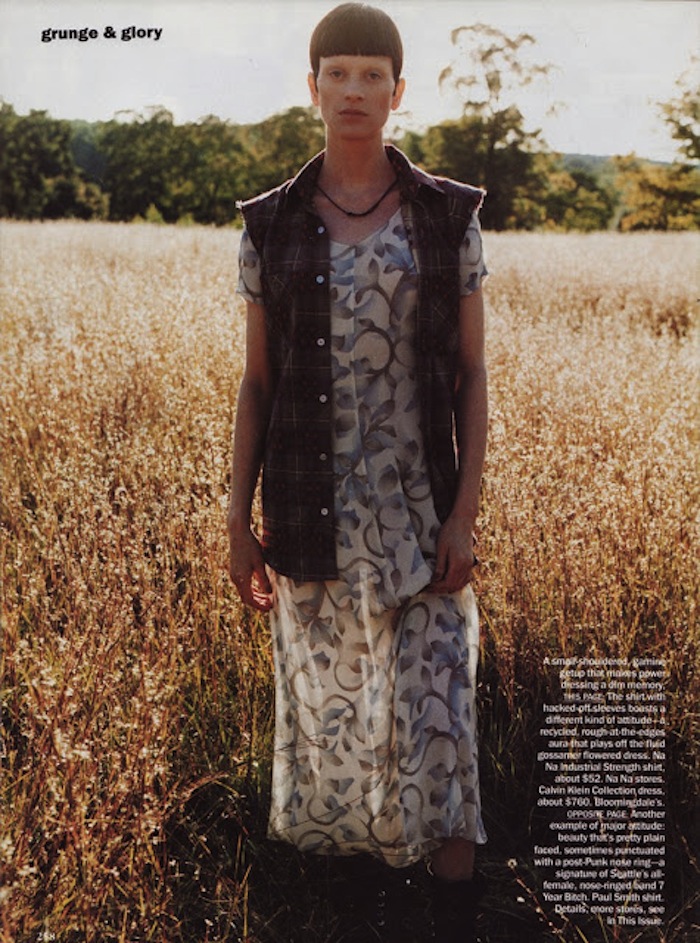
Vogue US December 1992 Steven Meisel (this story was based on the grunge collection Marc Jacobs presented for Perry Ellis)

Grunge Vogue US December 1992 Steven Meisel 1

Grunge Vogue US December 1992 Steven Meisel 2

Grunge Vogue US December 1992 Steven Meisel 3

Grunge Vogue US December 1992 Steven Meisel 4

Grunge Vogue US December 1992 Steven Meisel 5

Grunge Vogue US December 1992 Steven Meisel 6

Grunge Vogue US December 1992 Steven Meisel 7

Grunge Vogue US December 1992 Steven Meisel 8

.

La fièvre Grunge

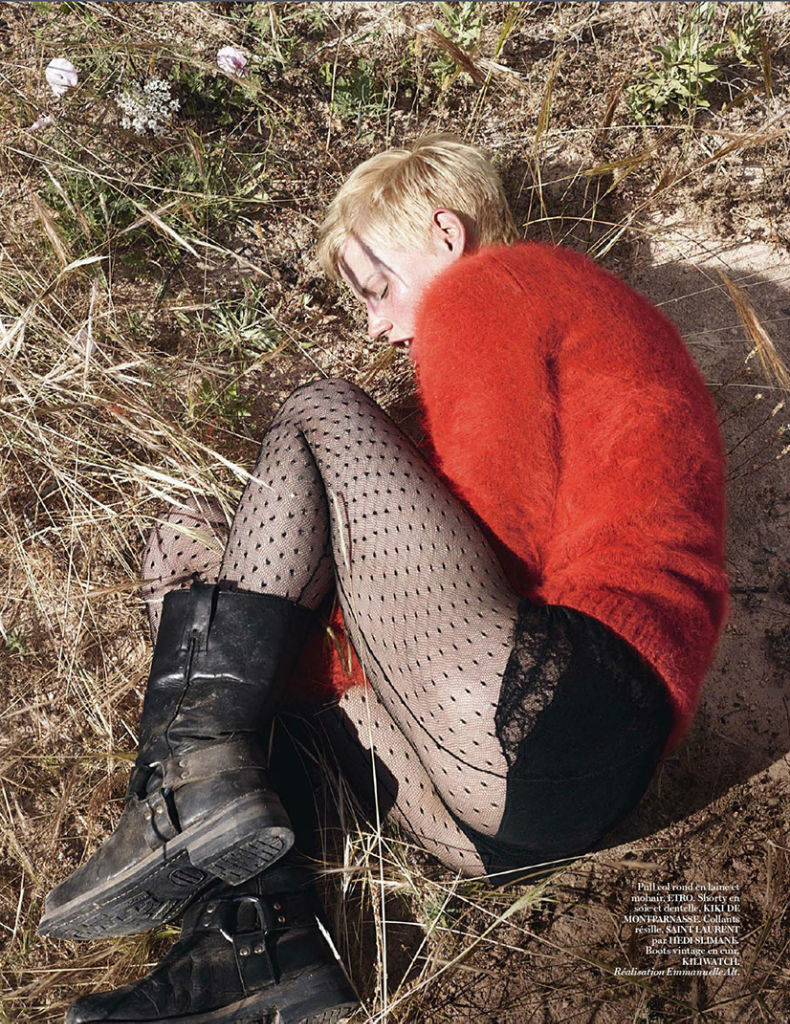
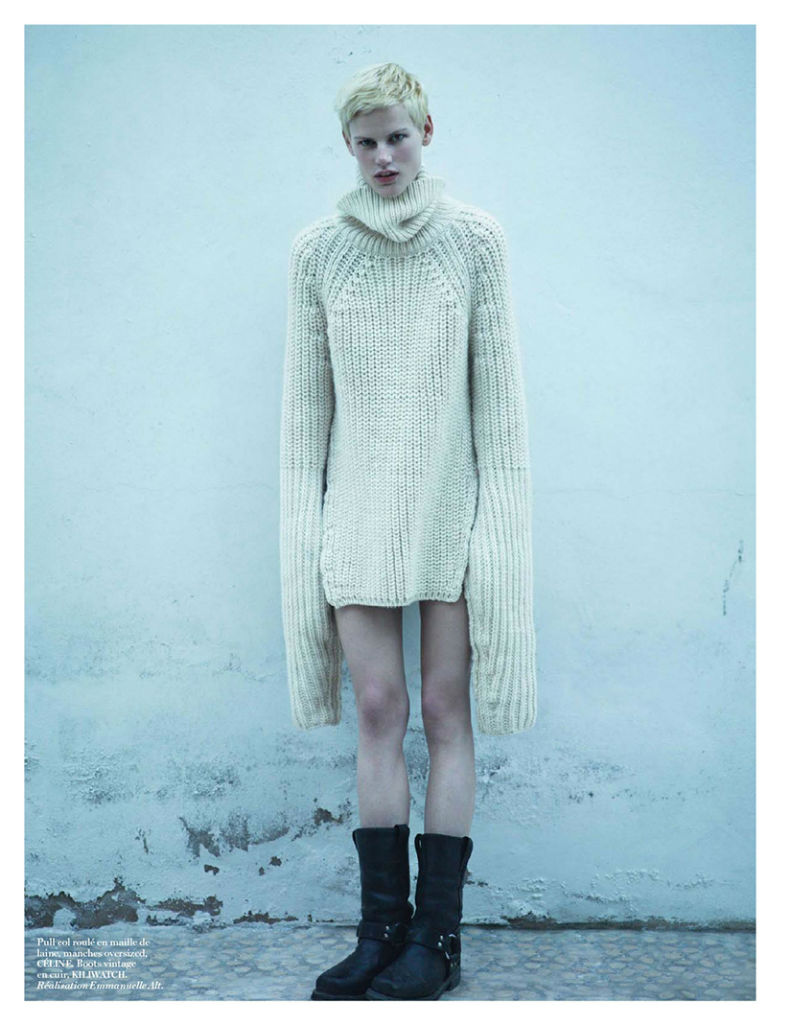
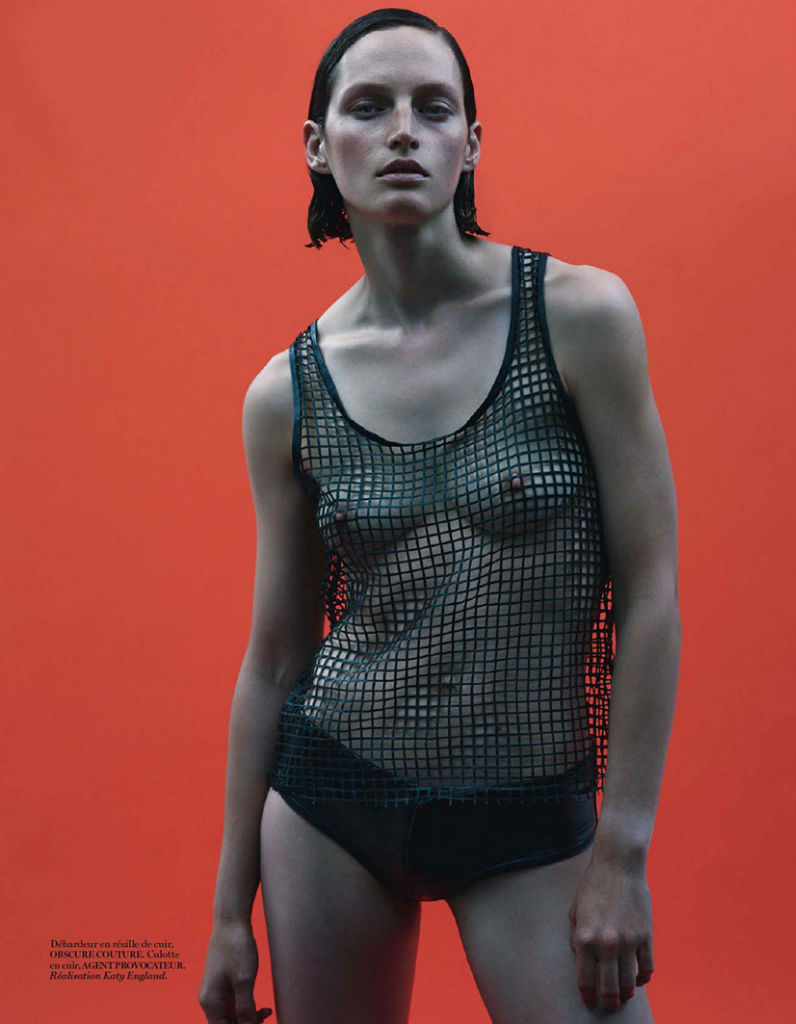
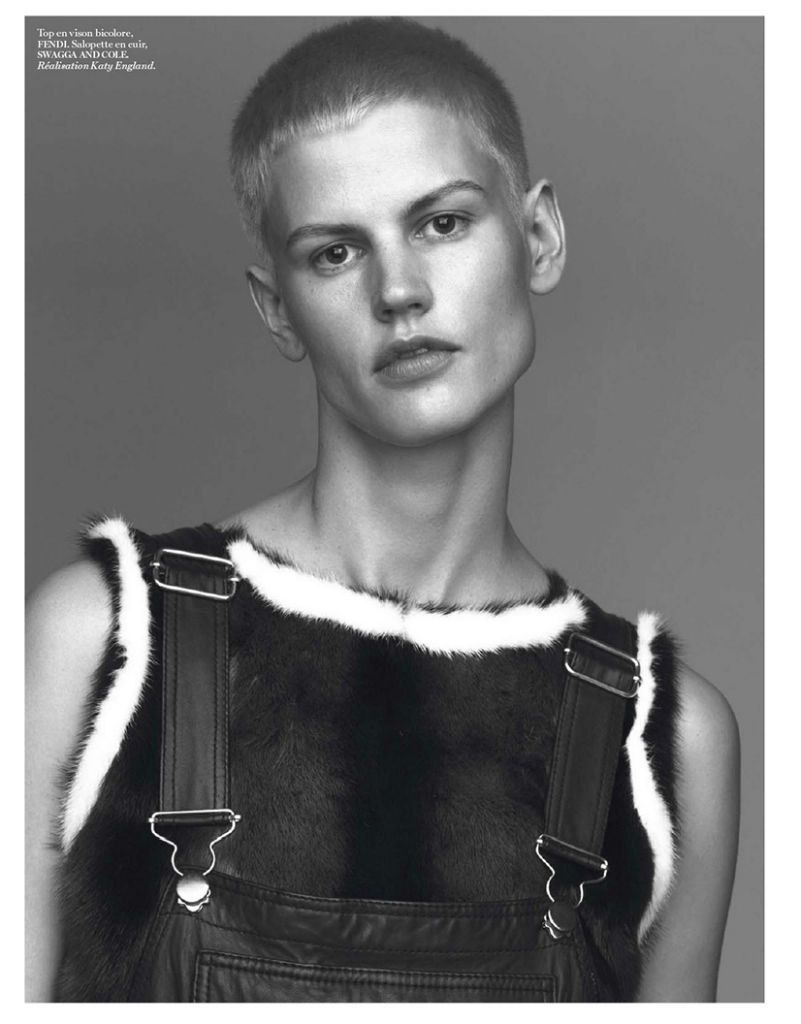
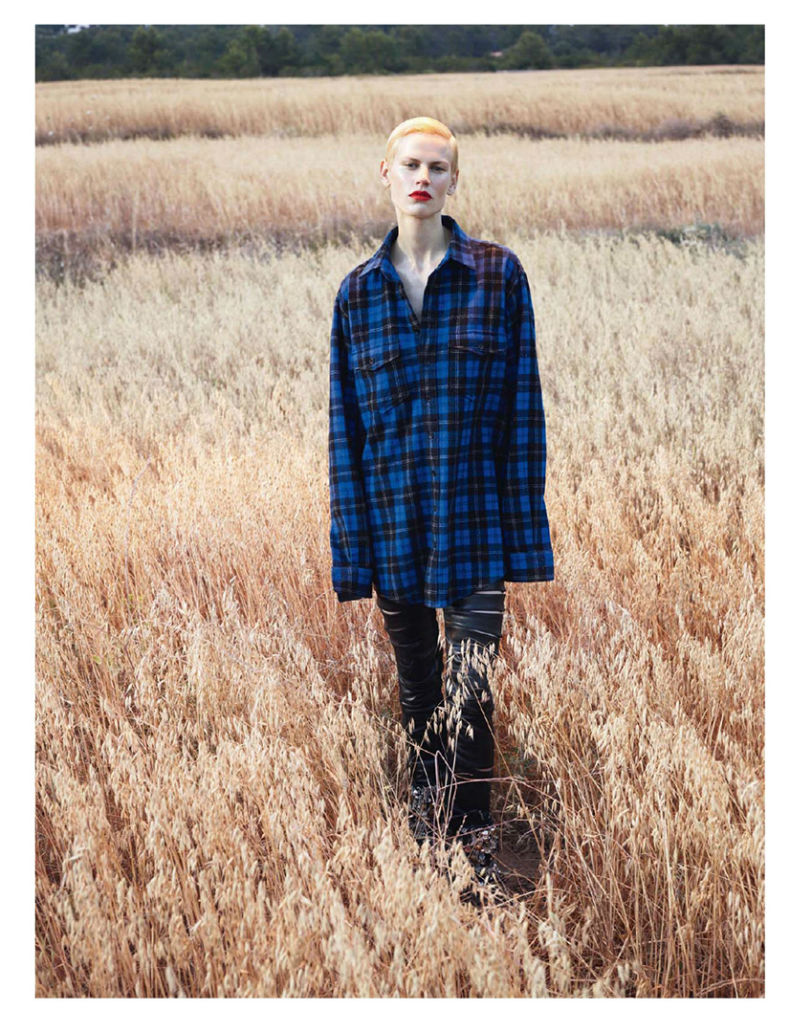
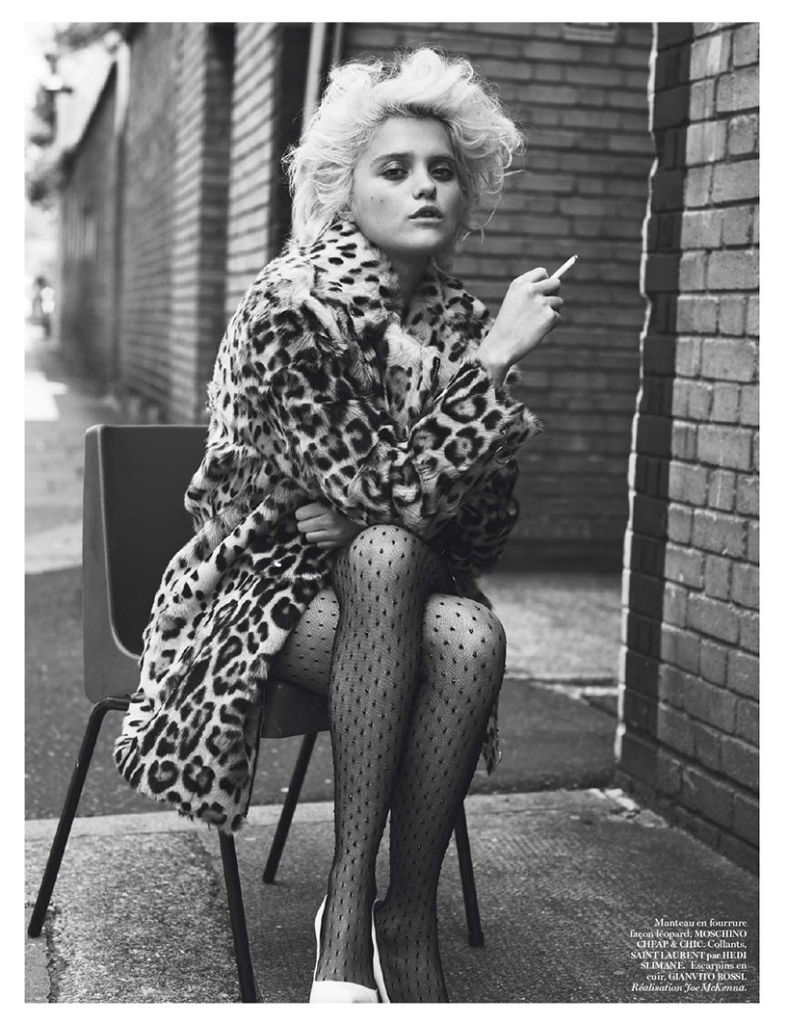
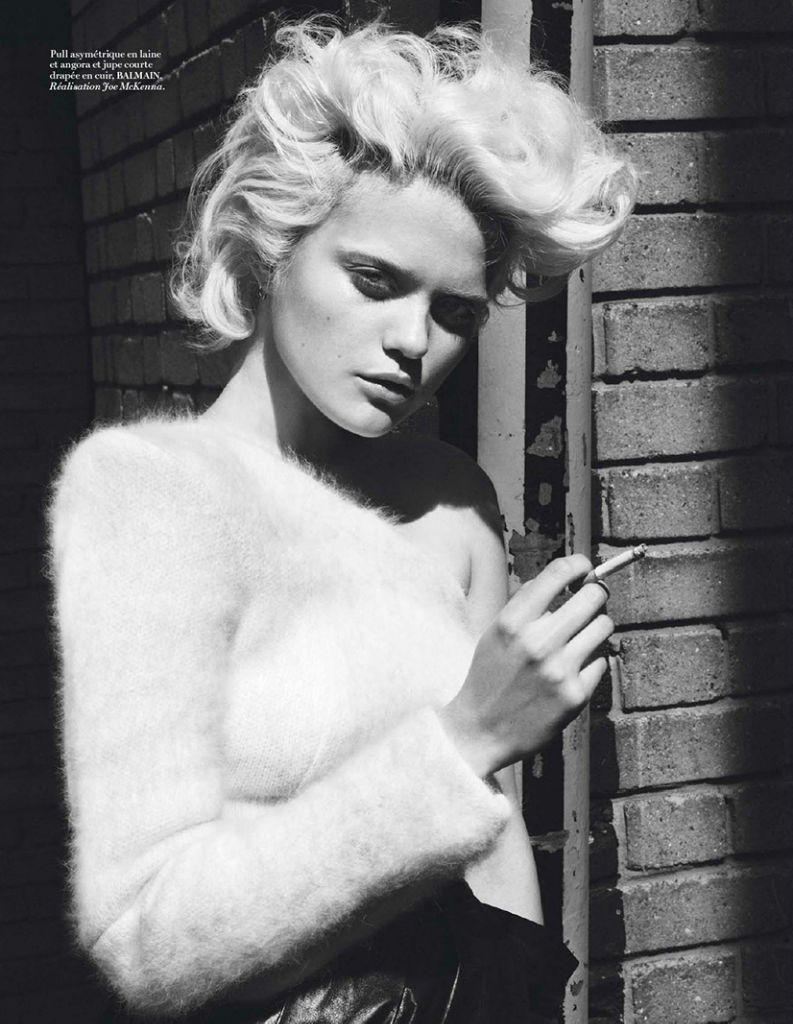
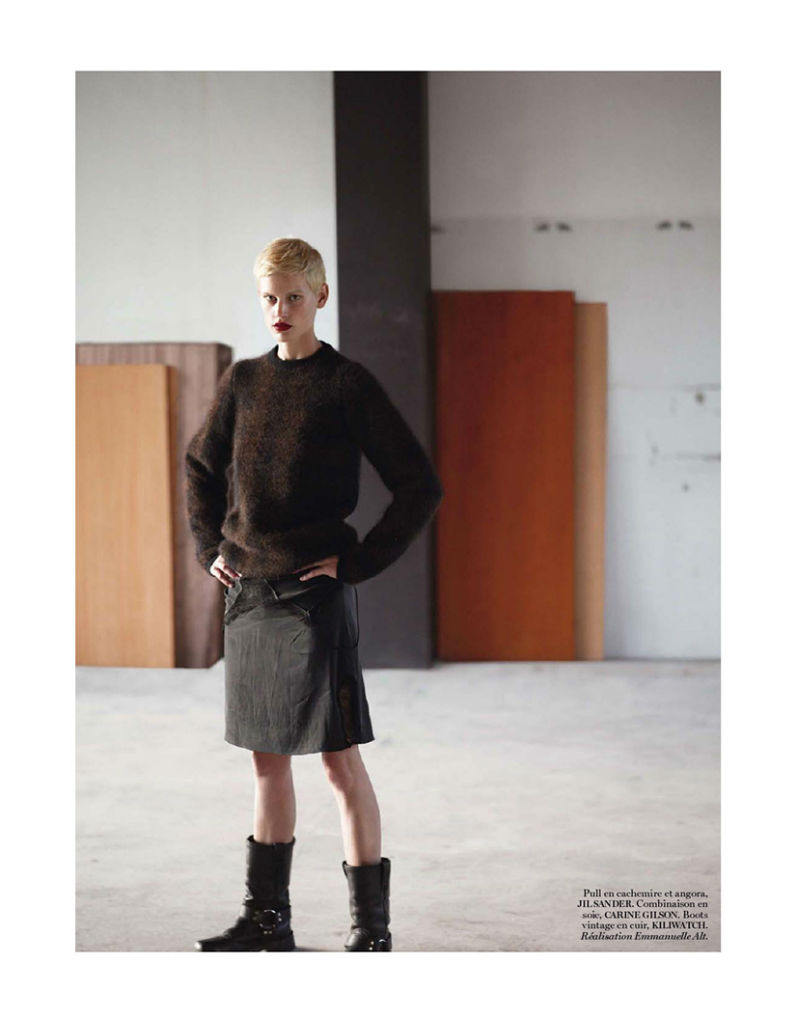
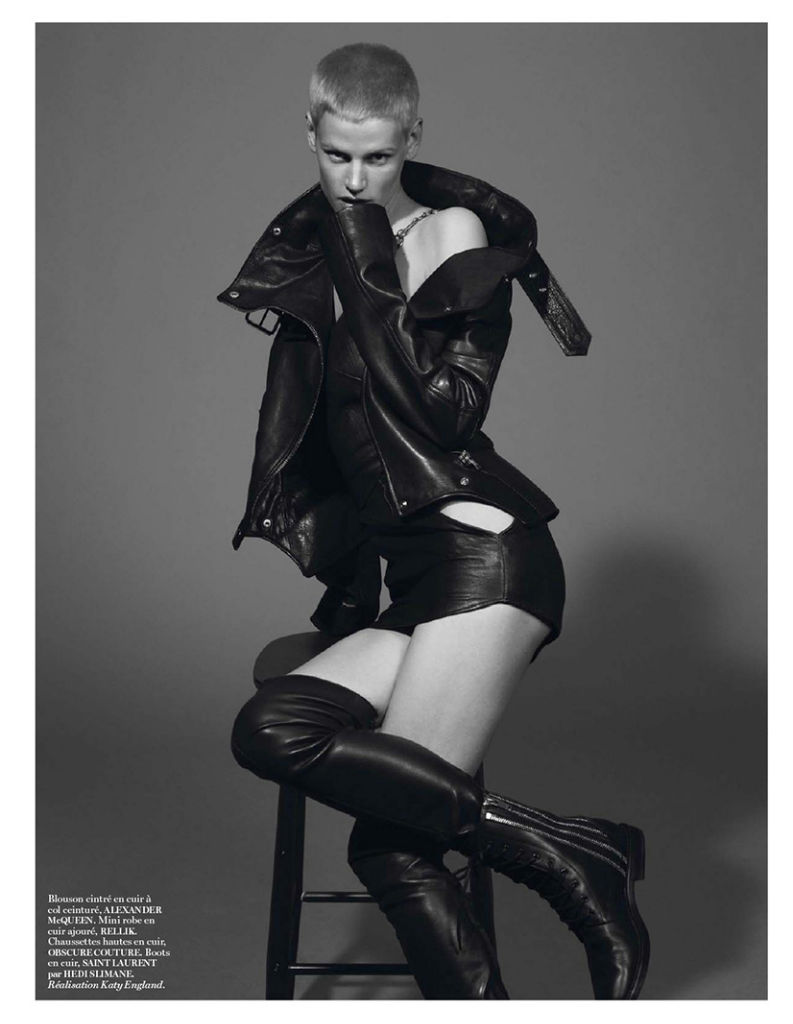
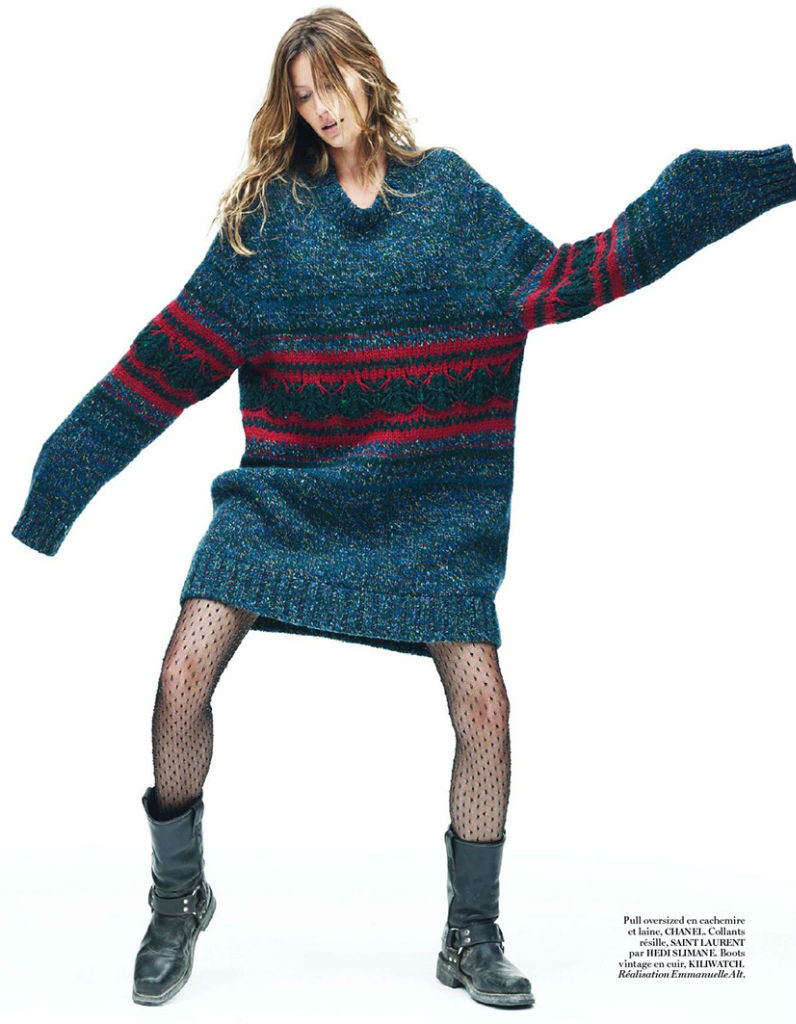
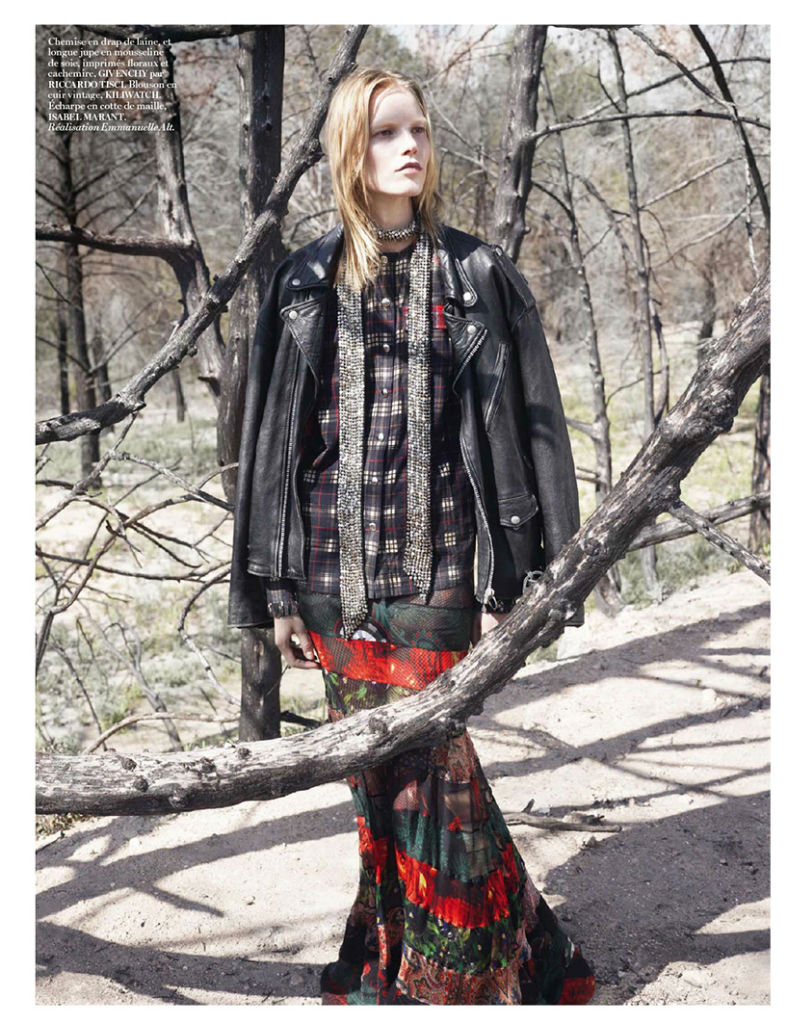
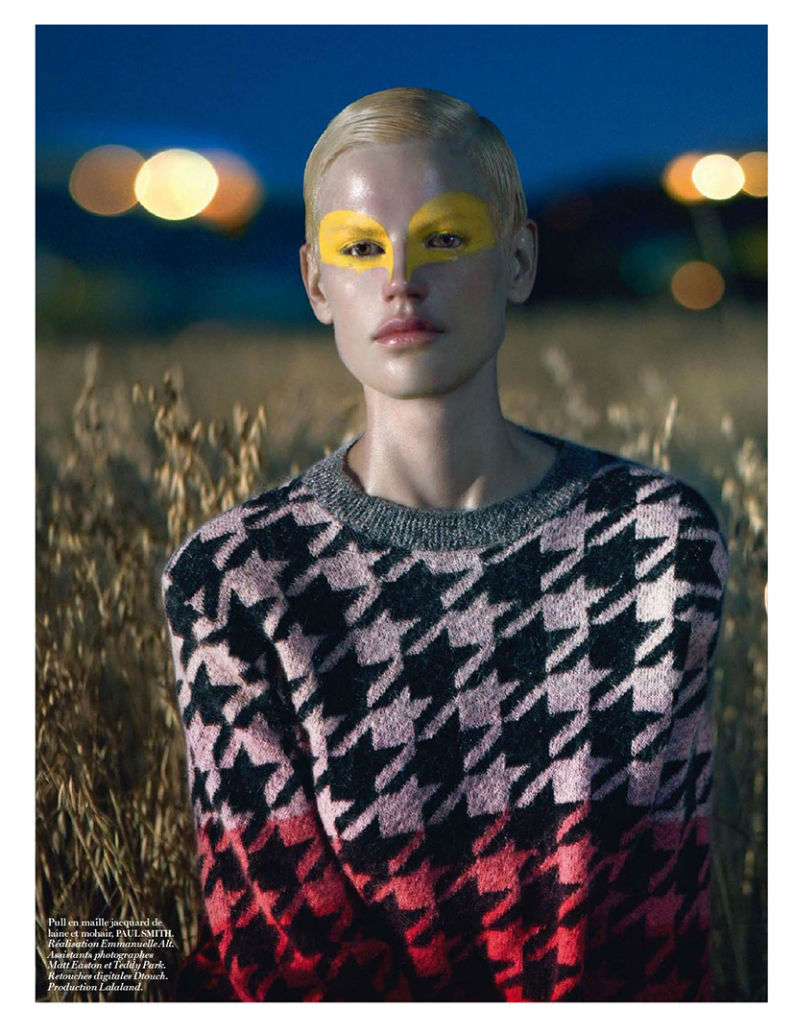
by Mert Alas & Marcus Piggott for Vogue Paris September 2013

(shortened version)

saskia-kaern-suvi-sky-vivien-andreea-gisele-vogue-paris-september-2013-1

saskia-kaern-suvi-sky-vivien-andreea-gisele-vogue-paris-september-2013-3

saskia-kaern-suvi-sky-vivien-andreea-gisele-vogue-paris-september-2013-11

saskia-kaern-suvi-sky-vivien-andreea-gisele-vogue-paris-september-2013-12

saskia-kaern-suvi-sky-vivien-andreea-gisele-vogue-paris-september-2013-19

saskia-kaern-suvi-sky-vivien-andreea-gisele-vogue-paris-september-2013-21

saskia-kaern-suvi-sky-vivien-andreea-gisele-vogue-paris-september-2013-25

saskia-kaern-suvi-sky-vivien-andreea-gisele-vogue-paris-september-2013-33

saskia-kaern-suvi-sky-vivien-andreea-gisele-vogue-paris-september-2013-37

saskia-kaern-suvi-sky-vivien-andreea-gisele-vogue-paris-september-2013-38

saskia-kaern-suvi-sky-vivien-andreea-gisele-vogue-paris-september-2013-42

saskia-kaern-suvi-sky-vivien-andreea-gisele-vogue-paris-september-2013-44

saskia-kaern-suvi-sky-vivien-andreea-gisele-vogue-paris-september-2013-47

saskia-kaern-suvi-sky-vivien-andreea-gisele-vogue-paris-september-2013-52

information : www.style.com  and  http://www.vogue.com/voguepedia/Grunge

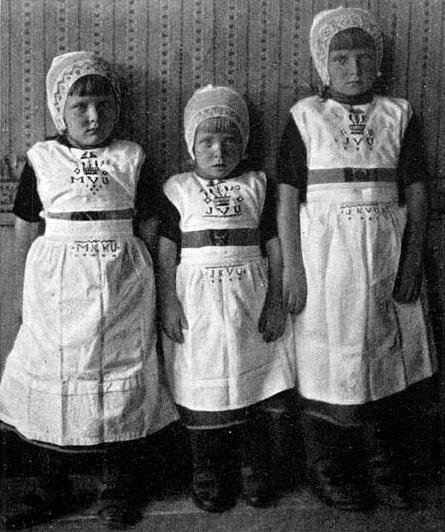
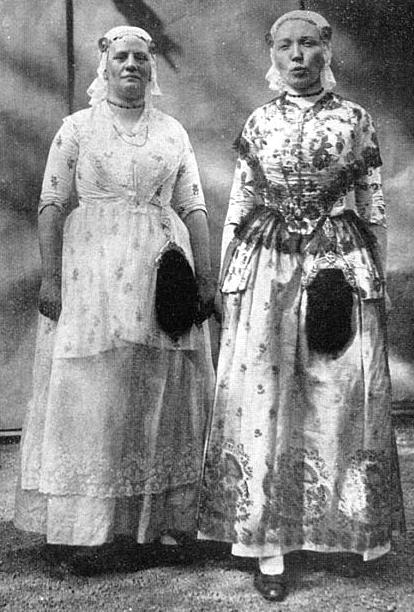
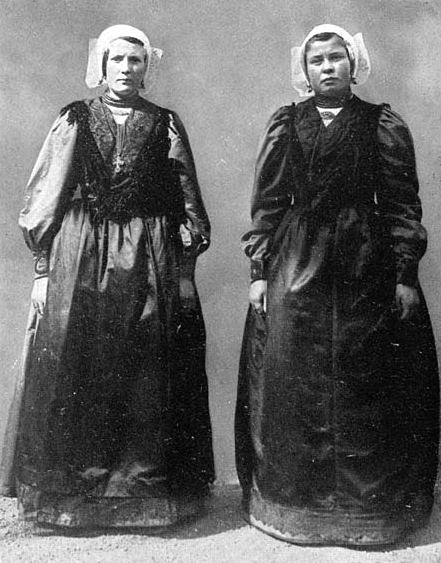
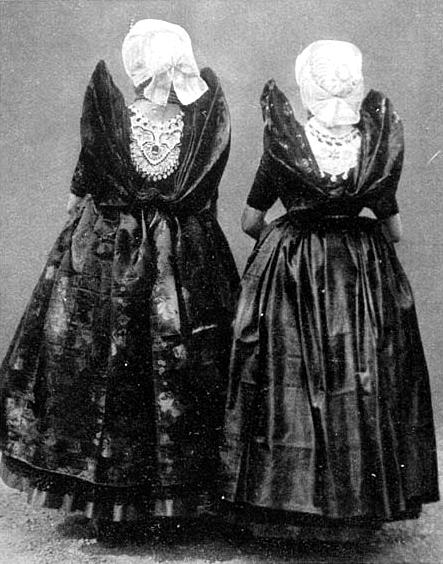
Dutch Traditional Costume

8 Sep

p076

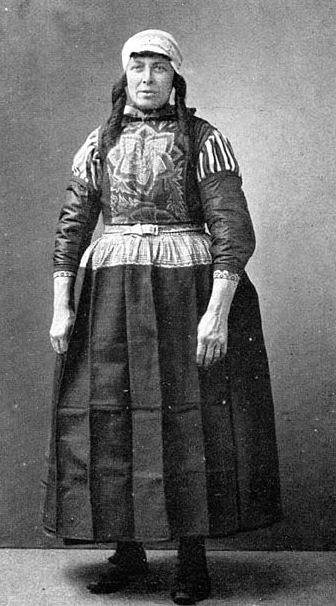
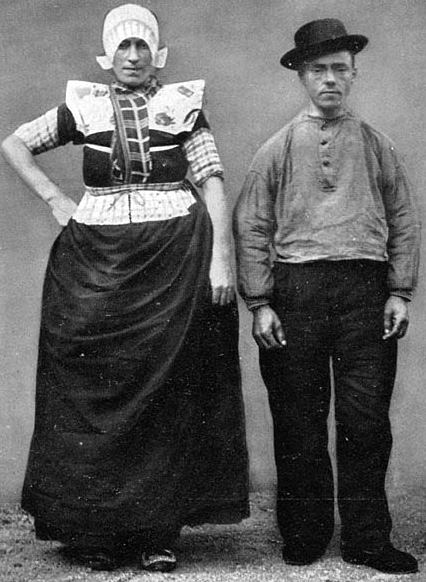
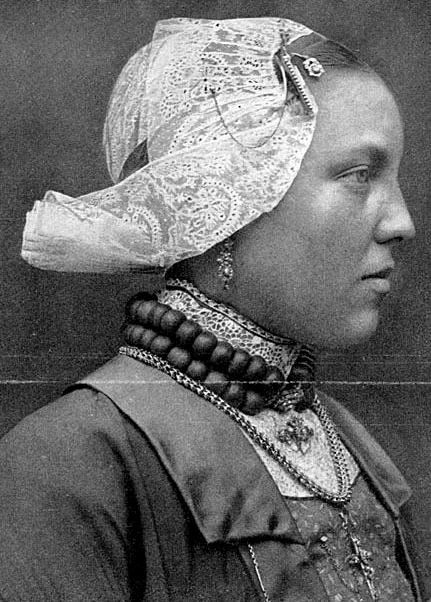
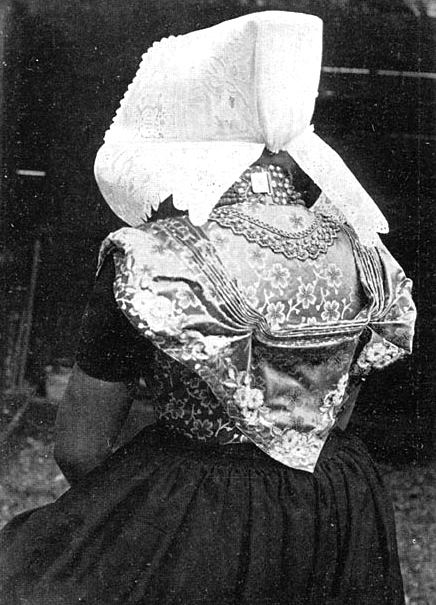
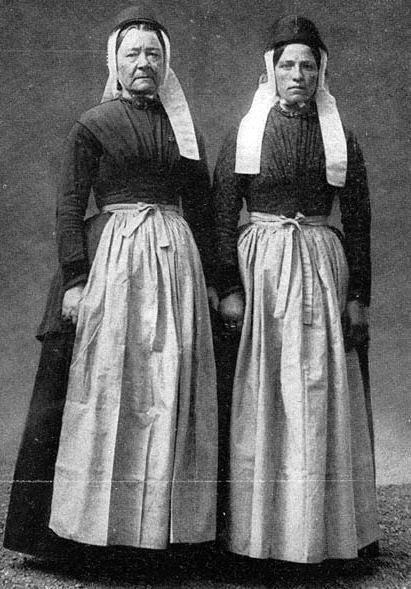
I have been fascinated by traditional costume for as long as I can remember. Not only the Dutch traditional costume, but from countries all over the globe. Whenever I travel, I always try to find something of the regional clothing. It can be shoes, a handbag, jewelry, a hat or an element of the clothing, for men or women.

Vaguely I remember cycling to my grandmother on Sundays, together with my mom. Grandma was dressed in traditional clothing every day and it made her look very impressive. Together with my grandfather, she lived in the village they were born and had grown up in and there a lot of the older people were still wearing the lace caps, embroidered vests and I don’t know how many skirt piled over each other. Strangely enough I don’t remember much of my grandfathers clothes, but I think it was traditional too.
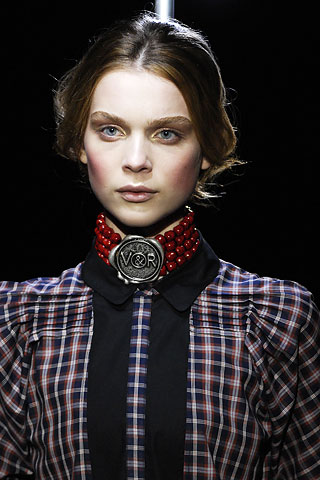
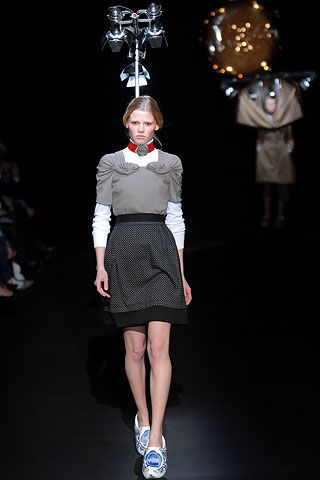
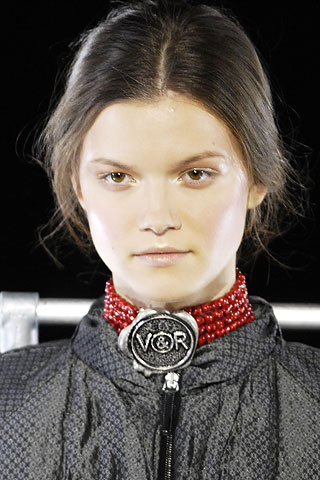
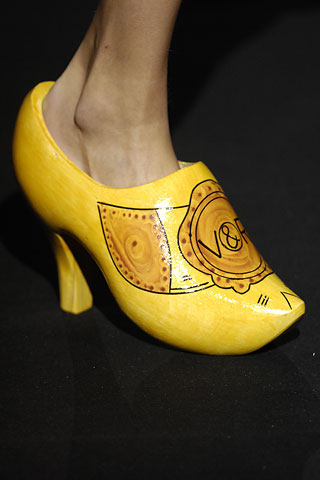
Through the years, many designers have been inspired by traditional clothing.Cristóbal Balenciaga was influenced by the Spanish folk tradition, being from Spain himself, but other designers were also influenced by clothes from all different countries. John Galliano and Alexander McQueen produced several collections inspired by China, Mongolia, Japan, Russia, etc. And in 2007, Viktor & Rolf created a collection on Dutch folk costume: tapestries, checks, and pure white buttoned-up blouses,  their fall 2007 collection.

Dutch Traditional Costume from different districts

p002

p003

p027

p012

p046

p047

p072

p005

p007

p068

p023

p052

p053

p058

p010

p026

p061

p054

p055

p029

p073

p014

p043

p056

.

Viktor & Rolf fall 2007 ready-to-wear collection

00020mg

00040m

00270m

00240mg

00290m

00250m

00190m

00030m

00410mh

00330m

00530m

.

most pictures in this post come from:  http://www.gutenberg.org/files/20665/20665-h/20665-h.htm  and  www.style.com

.

00010m

Brian Jones, the Embodiment of Unconventional

1 Sep
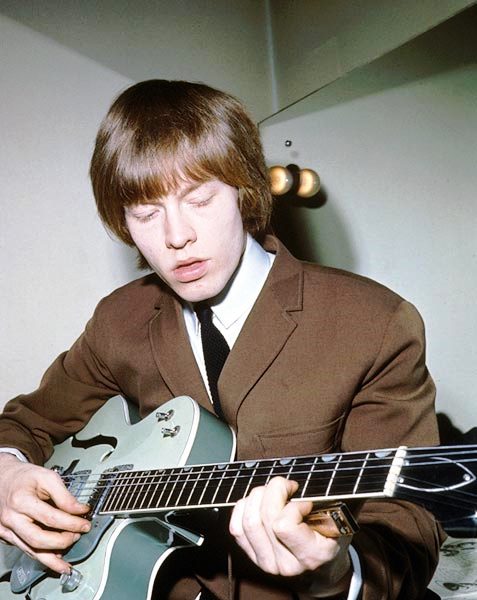
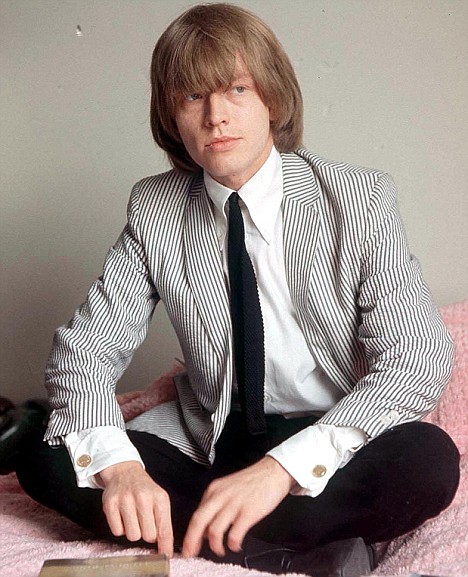
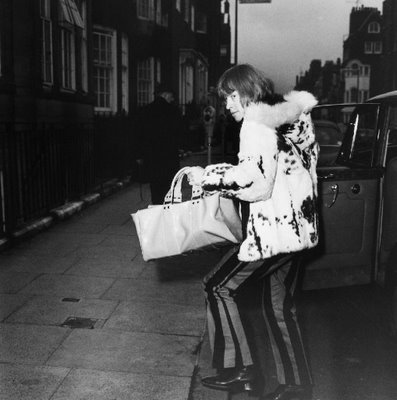
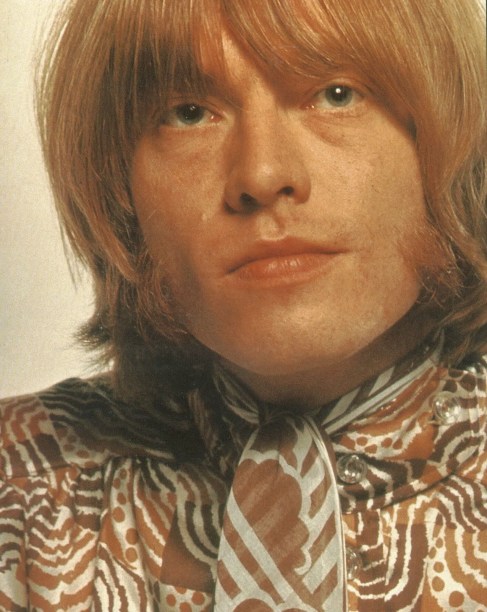
Brian Jones photographed by Gered Mankowitz
. 
My friend Eddy de Clercq is and has always been a very stylish man. During his teens he regularly went on a ferry-boat to London to buy the newest and hippest clothes. His shopping trips started at Biba, the most fashionable & exciting department store ever and to Seditionairies, the boutique  by Vivienne Westwood & Malcolm McLaren at World’s End, where he bought the infamous t-shirt with the drawing of two half-naked cowboys by Tom of Finland.  
.
In Paris he strolled the streets wearing a black suit with pagoda shoulders designed by Yves Saint Laurent, who had recently opened his store ‘Rive Gauche’. Prêt-à-porter as still a new concept then and Yves was the first haute couture designer to embrace the London street style, as one of the first Parisian fashion designers  promoting young fashion at affordable prices in specially designed stores. 
.
One of Eddy’s style icons, maybe even thé style icon, is Brian Jones, founding member of The Rolling Stones.
.
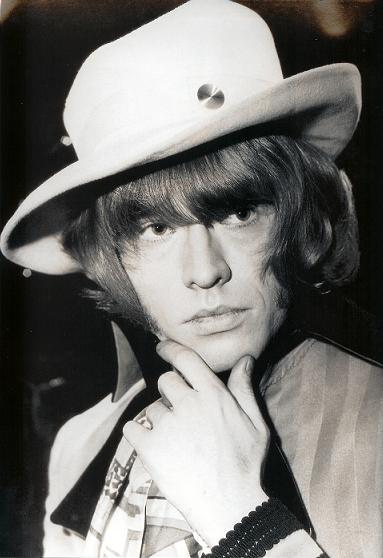
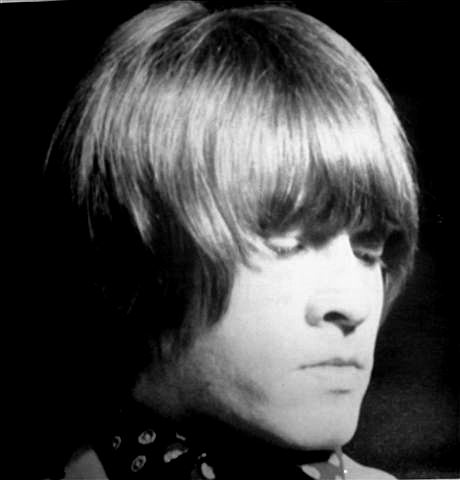
When he was 14, he asked the barber to cut his hair just like Brian Jones. Little did he know that Brian never had a serious haircut in his life, he just grew his blonde tresses into a helmet type of hairstyle that covered his forehead and floppy ears completely. When Eddy’s father came into the barbershop and saw his son’s new haircut, he freaked out and ordered the barber to cut it again, but this time into a very short crewcut, American style. 
Tears gushed and Eddy was so upset with the result that he ran away from home, only to return after a few months with a genuine Brian Jones hairdo.
.

Biography 

Lewis Brian Hopkin Jones was born February 28, 1942 in Cheltenham, UK. Young Brian was an excellent student at school and his father hoped his son would follow in his academic footsteps and go to university, but Brian decided against university and started a series of random jobs. He had only one passion: music.
.
After being introduced to the music of Charlie Parker, Brian persuaded his parents to buy him a saxophone. Having mastered that instrument, he received an acoustic guitar. At nineteen, he went to a concert of the Chris Barber Band at Cheltenham Town Hall. The set they played  included a blues segment and it stimulated Brian to practice the blues on a slide guitar.
.
At twenty Brian hitch-hiked to London where he would go to the Ealing Blues Club. It was there one night Mick Jagger and Keith Richards heard Brian play slide guitar and were impressed with his version of Elmore James’s “Dust My Broom”. Soon after Brian, Ian Stewart, Mick and Keith formed a band. On the 12th July 1962 they played their first gig at the Marquee Club, billed as The Rollin’ Stones.
Brian came up with the name the “Rollin’ Stones” (later with the ‘g’) while on the phone with the venue owner.
.
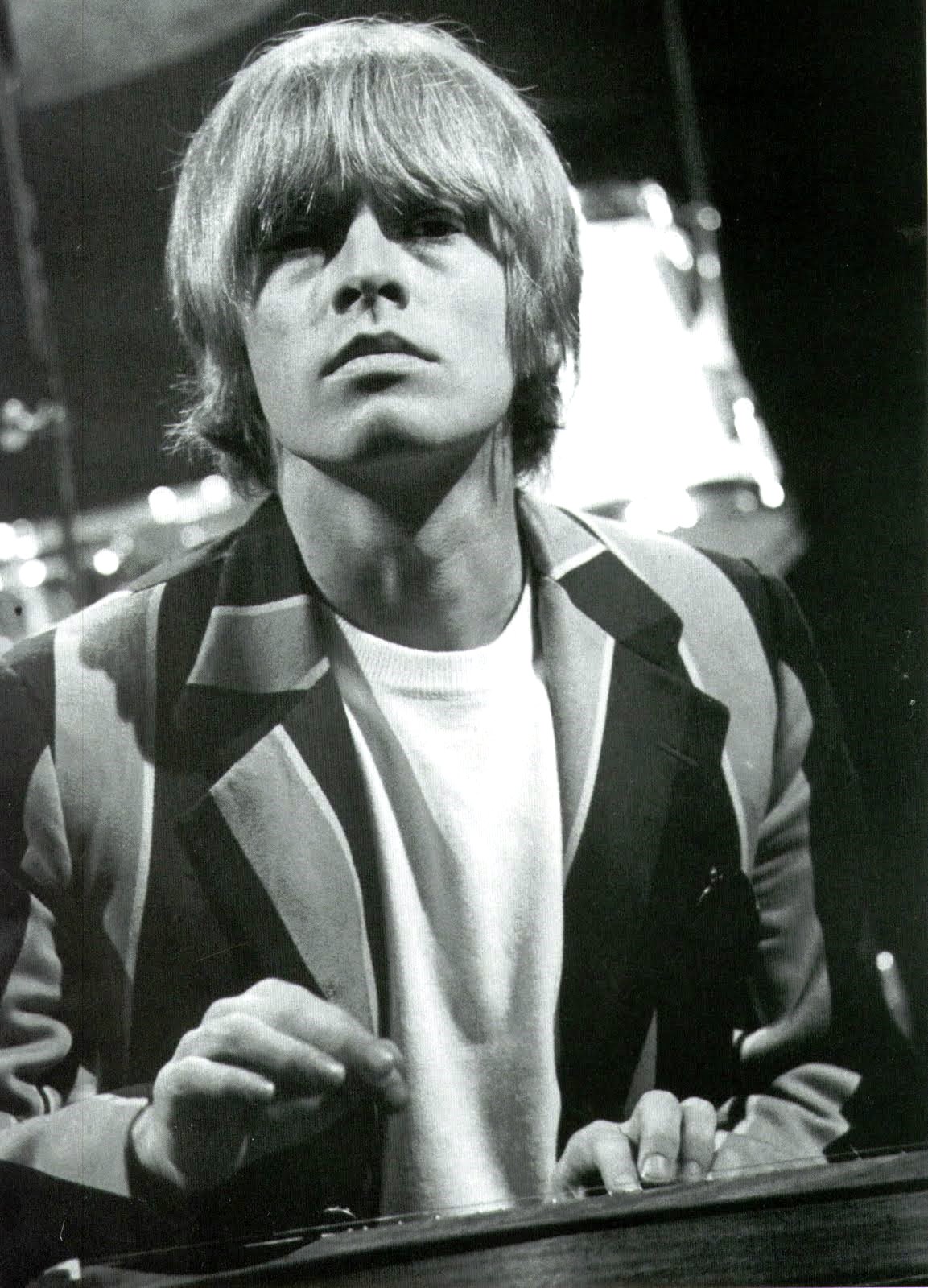
Brian’s musicianship had an inevitable influence on the singles that pushed The Rolling Stones into the pop charts. But he was also one of the ultimate 60′s pop stars, with a creative and cutting edge fashion sense and an iconic hairdo to match.
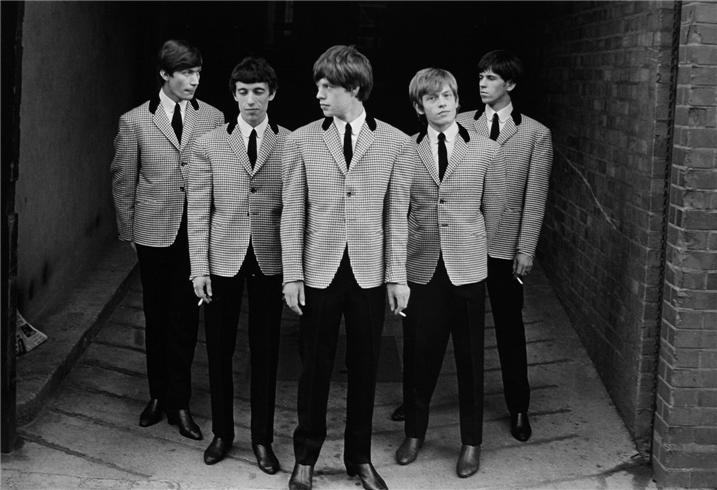
rolling-stones-in-the-park
Though they were sharply dressed, Brian always stood out
rolling_stones2_1968
The Rolling Stones looked like a clean-cut “boy band”.
.
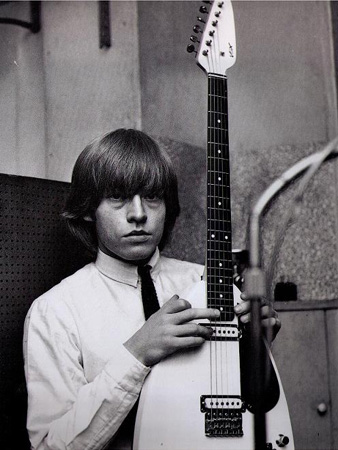
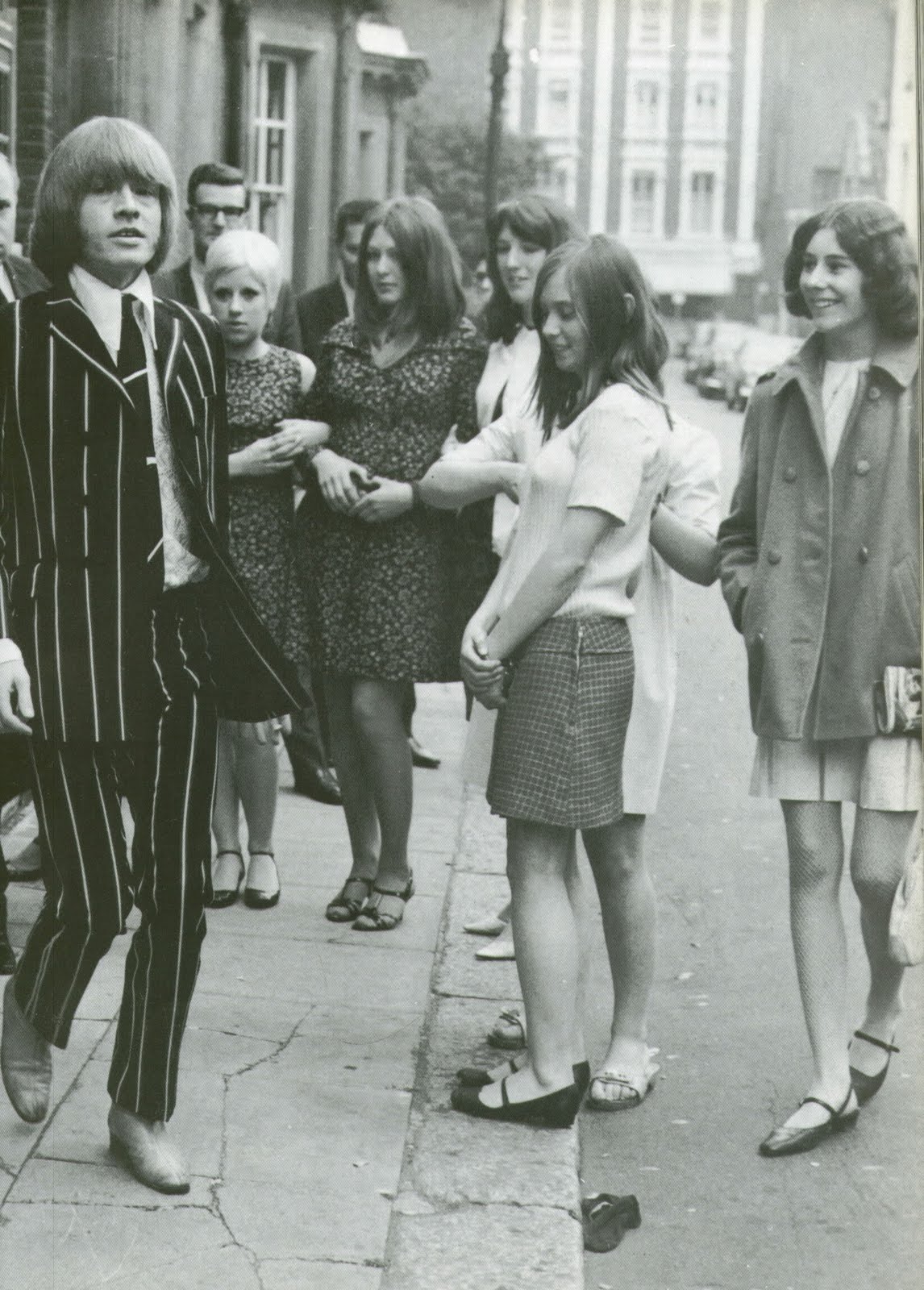
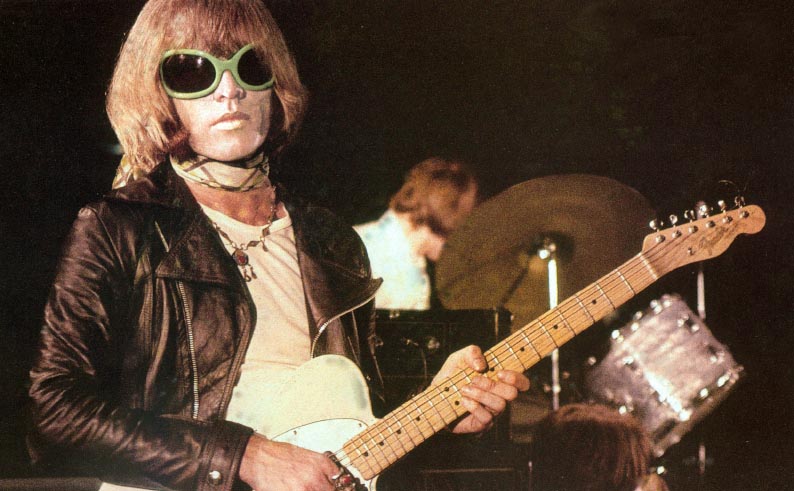
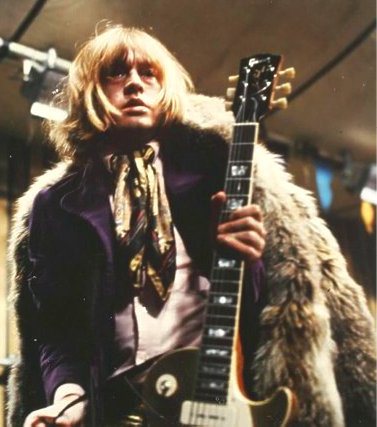
In the early days The Rolling Stones looked like a clean-cut “boy band”. Though they were sharply dressed, Brian always stood out (when they weren’t all dressed exactly the same) and he always played the coolest, quirky guitars. The short time he was in the band, Brian Jones transformed from a young lad keeping it sharp to a man living the full on rock and roll decadence.
.
Brian+Jones+brian_special06
Brian Jones
Brian Jones
Brian Jones
Brian Jones
Brian-Jones
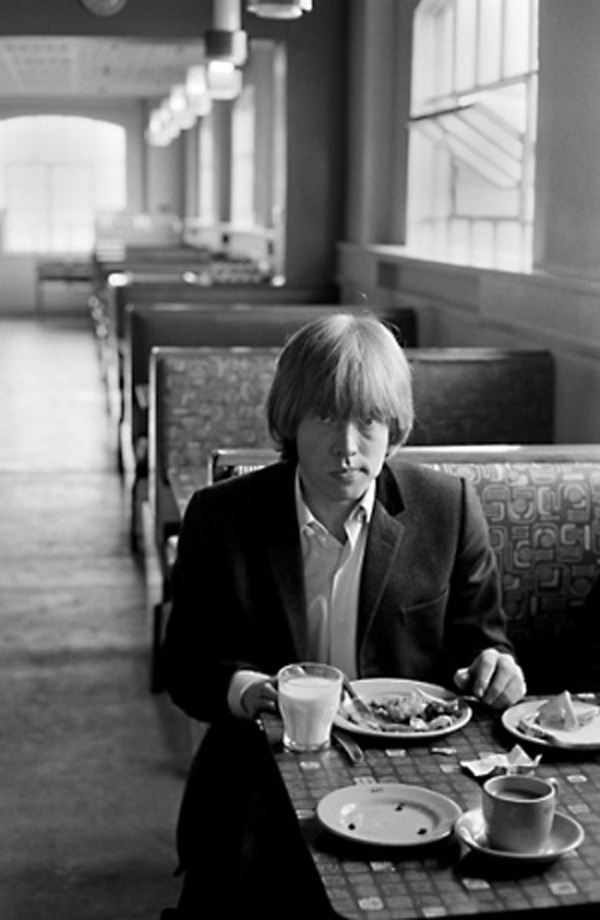
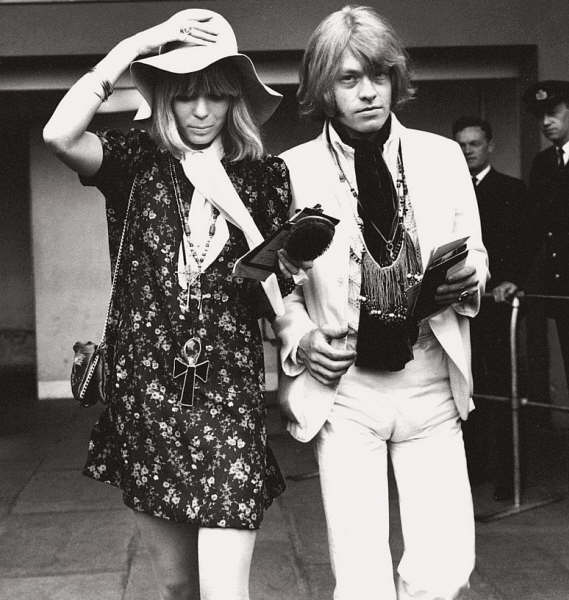
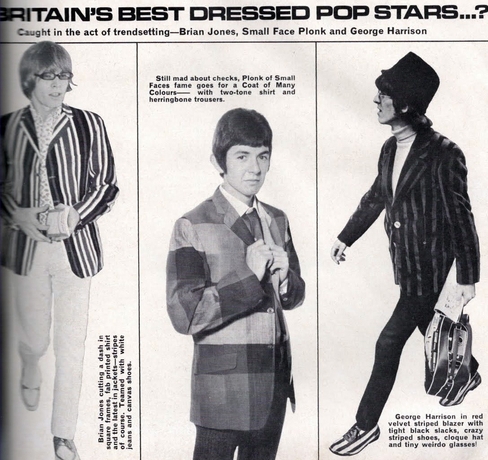
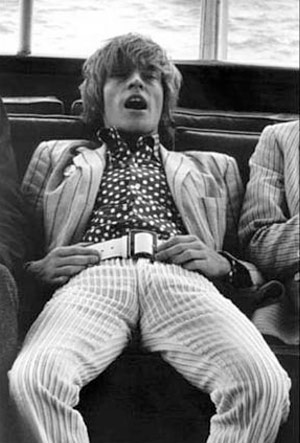
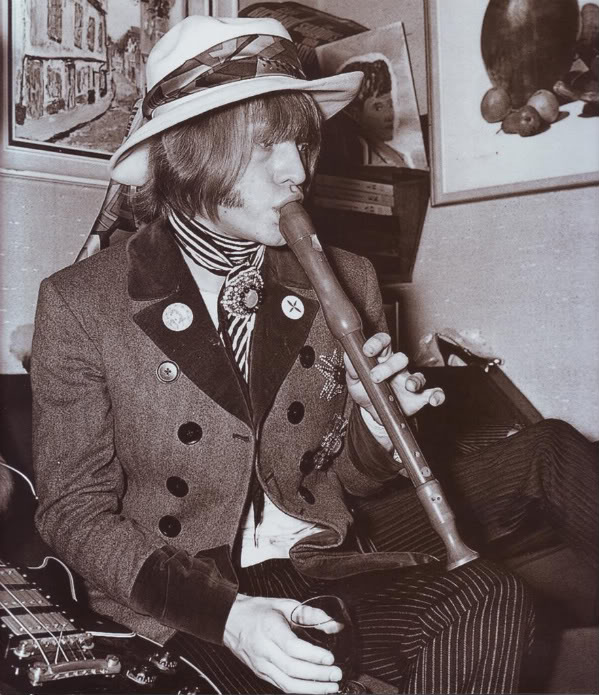
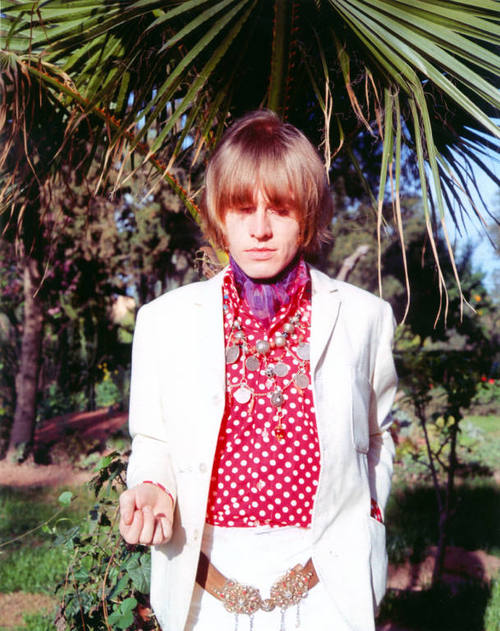
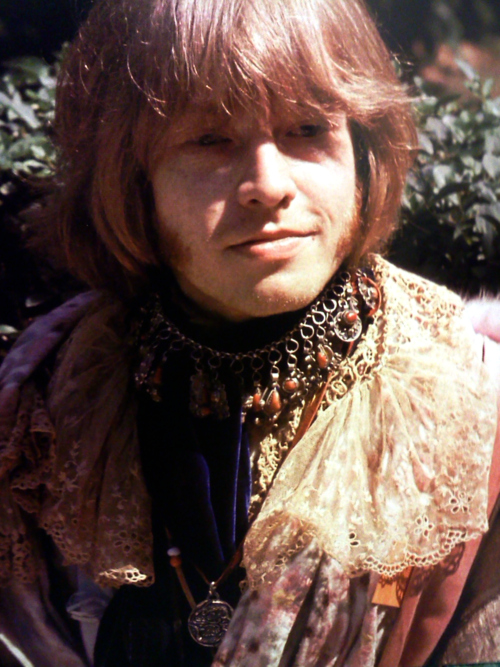
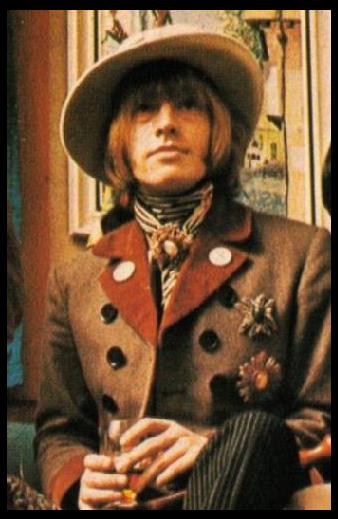
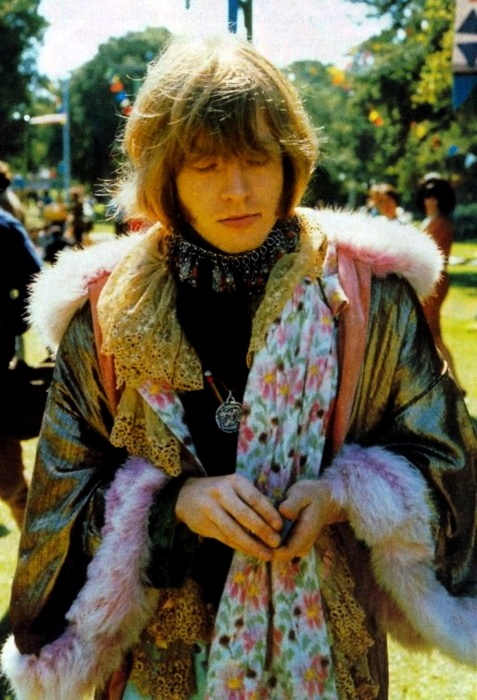
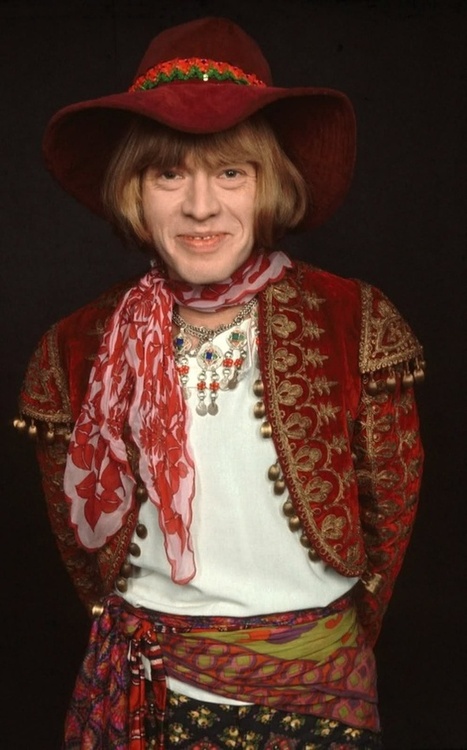
A fashion Icon, sharply dressed and always clean cut, Jones wore meticulously fitted velvet jackets. Always more than often, donned in shirts, some striped, others plain, or patterned and often worn with cravats. Style of an eccentric. Brian was the embodiment of unconventional, his famous blonde bowl haircut, hazel eyes and the aesthetic representation. Decorum and grace were all there. Brian had a tremendous lot of clothes and spent an awful amount of time preparing himself for late-night appearances into the clubs.

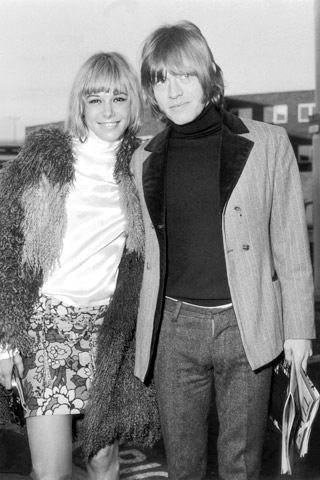
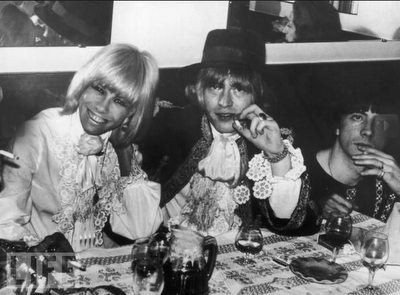
Brian Jones & Anita Pallenberg

Brian Jones & Anita Pallenberg in Vogue

Brian was featured alongside Anita Pallenberg, in an issue of ‘œMen in Vogue’, in 1966.

Brian & Anita

Brian and Anita

Brian & Anita

Brian & Anita

Brian & Anita

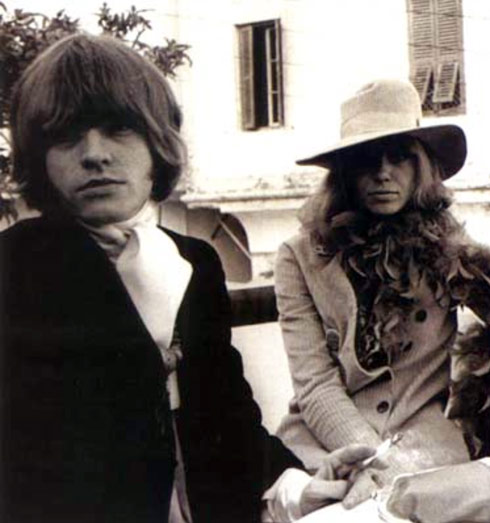
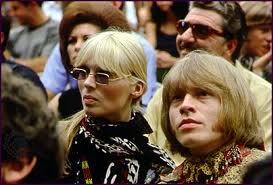
Brian Jones and Anita Pallenberg were a couple from 1965 untill she started dating Keith Richards in 1967. Anita suggested he always tried to look like Francois Hardy. He certainly took a good swing at it, almost hitting the look of darling Hardy, on the very fine nail. Jones’ biographer Geoffrey Giuliano writes about him and Pallenberg: “Together they forged a revolutionary androgynous look, keeping their clothes together, mixing and matching not only fabrics and patterns, but cultures and even centuries. Jones would parade the streets of London wearing a Victorian lace shirt, floppy turn-of-the-century hat, Edwardian velvet frock coat, multi-coloured suede boots, accessorised scarves hanging from his neck, waist and legs along with lots of antique Berber jewellery.”

Style article
Marianne Faithfull remembers: One of the best things about visiting Anita and Brian was watching them get ready to go out. What a scene! They were both dauntless shoppers and excessively vain. Hours and hours were spent putting on clothes and taking them off again. Heaps of scarves, hats, shirts and boots flew out of drawers and trunks. Unending trying on of outfits, primping and sashaying. They were beautiful, they were the spitting image of each other and not an ounce of modesty existed between two of them. I would sit mesmerised for hours, watching them preening in the mirror, trying on each other’s clothes. All roles and gender would evaporate in these narcissistic performances, where Anita would turn Brian into the Sun King, Francoise Hardy or the mirror image of herself   (Quote from Faithfull  by Marianne Faithfull & David Dalton. http://www.amazon.com/Faithfull-An-Autobiography-Marianne/dp/0815410468)
.
That blonde bowl haircut that’s so indicative of  Brian started to grow out as the suits and striped jumpers were replaced with velvet jackets and shirts with cravats. The jeans got tighter, the boots got bigger.
Beyond the music, trend setting hair style, loves, loathes and lusts, Jones was burdened, like many of his fellow artists, with the abuse of substances such as drugs and alcohol. Brian’s demise was a tragic one, like most of the 27 club ( Music artists who all died at 27 : Jimi Hendrix, Janis Joplin, Jim  Morrison, Kurt Cobain… and recently Amy Winehouse). 
Brian Jones
Brian Jones
brian jones
Brian Jones
Brian Jones
brian-jones
rolling-stones-brian-jones-keith-richards
Brian Jones
Brian Jones
Brian saw his influence over the Stones’ direction slide as their repertoire comprised fewer of the blues covers that he preferred; more Jagger/Richards originals developed, and Andrew Loog Oldham increased his own managerial control, displacing Jones from yet another role. Bill Wyman stated:  “There were two Brian’s… one was introverted, shy, sensitive, deep-thinking… the other was a preening peacock, gregarious, artistic, desperately needing assurance from his peers… he pushed every friendship to the limit and way beyond”.
.
Brian pulled out of (or actually was forced out) The Rolling Stones in 1969, prior to a planned North American tour. He was unable to join, due to a criminal record for possession of cannabis, but he was also physically no longer able to play instruments. Brian Jones died on the 3rd July 1969, at the age of 27, after he was discovered motionless at the bottom of his swimming pool at Cotchford Farm.
Brian Jones
Brian & Nico
Brian Jones
brian jones
Brian Jones
Brian Jones
brian-with-guitar-and-coat
Brian Jones
Brian Jones
.

Book

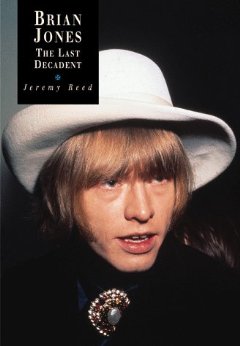
Brian Jones  The last Decadent

Bookcover

“This is the book that every Brian Jones fan has been waiting for, the most sensitive and honest portrait of Brian yet. Finally justice is done.”

The Official Brian Jones Fanclub

.

http://www.amazon.com/Brian-Jones-The-Last-Decadent/dp/1871592712 .

.

Movie

Stoned

.

.


‘The life of Rolling Stones founder Brian Jones was as wild as it was short, filled with gorgeous groupies, unimaginable decadence, and groundbreaking music.  By age 26, he had achieved enormous fame and fortune; a year later he would be dead.  The story of rocks forgotten father, Stoned unravels the mystery surrounding his death while re-living the sex, drugs, and rock and roll that made the sixties swing.’ .

.

???????????????????????????????

Eddy de Clercq music blog: http://soulsafari.wordpress.com/

information for this post:

http://nl.wikipedia.org/wiki/Brian_Jones

http://www.rollingstones.com   

http://dandyinaspic.blogspot.nl/2011/09/brian-jones-1960s-peacock-style-icon.html

Roger Vivier, called the ‘Fabergé of Footwear’ (part 2)

25 Aug

roger-vivier

Biography

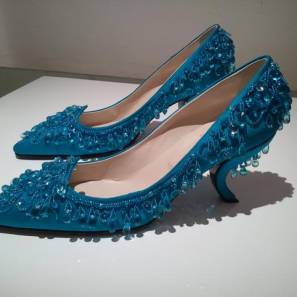
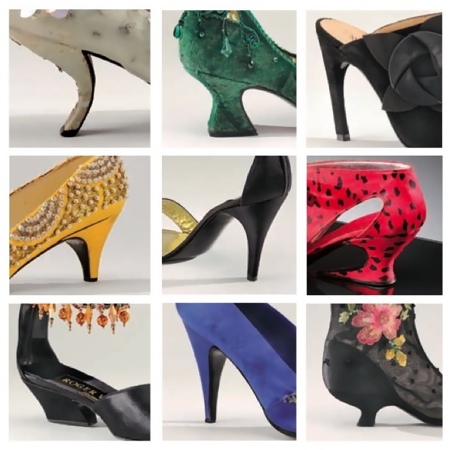
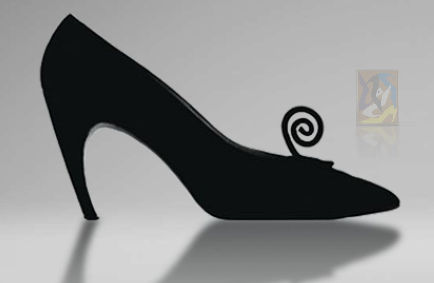
After ending the collaboration with the house of Dior, Roger Vivier opens a new boutique at 24 rue François Premier, across from maison Dior. He consults with aeronautical engineers on the design of his swooping “comma” heel, that became another one of the most copied styles in footwear history.

Comma heel

comma heel

comma heel

comma heel

comma heel

.

Roger Vivier’s collaboration with Yves Saint Laurent

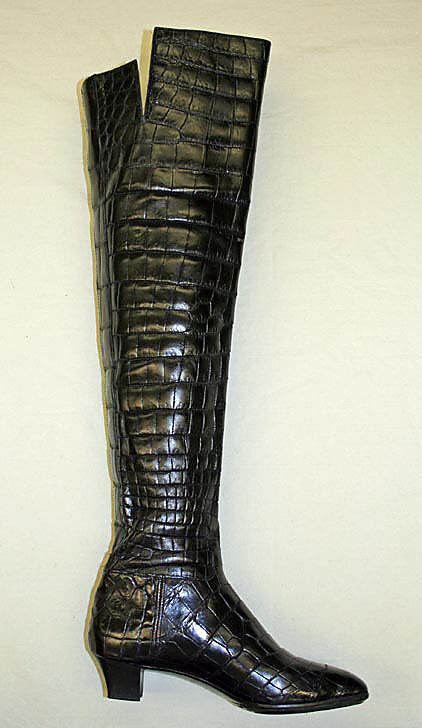
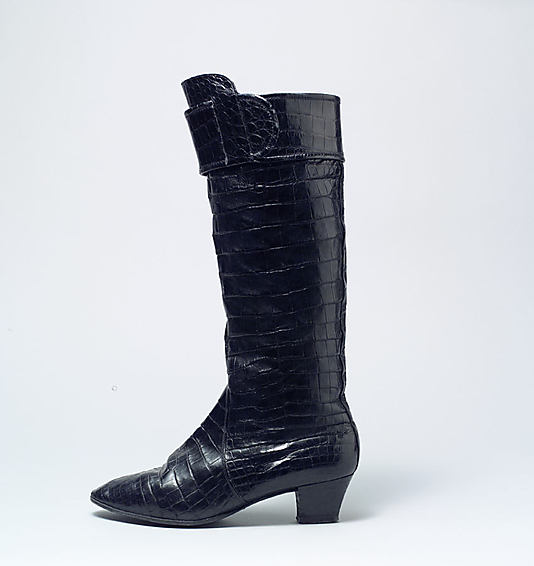
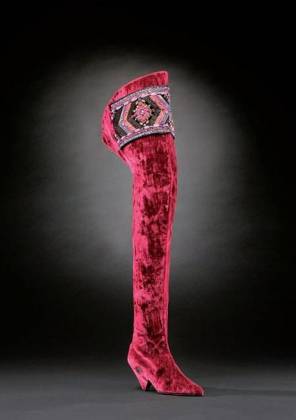
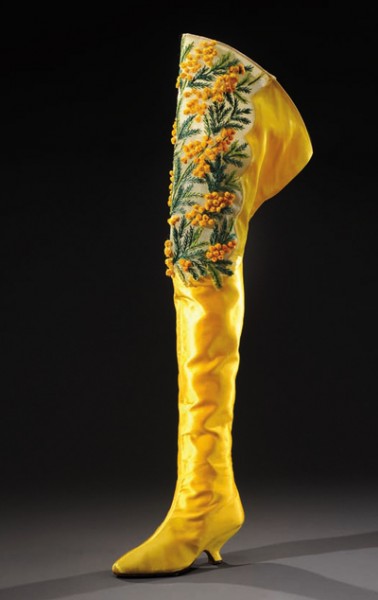
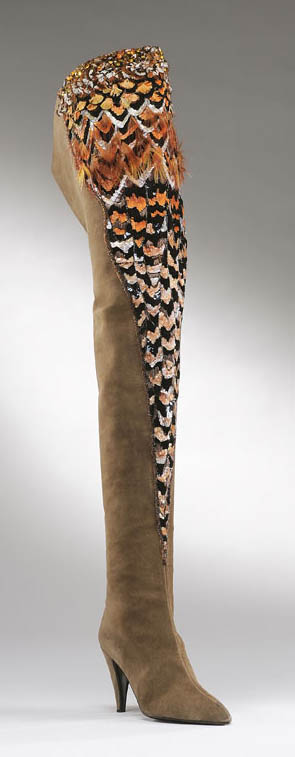
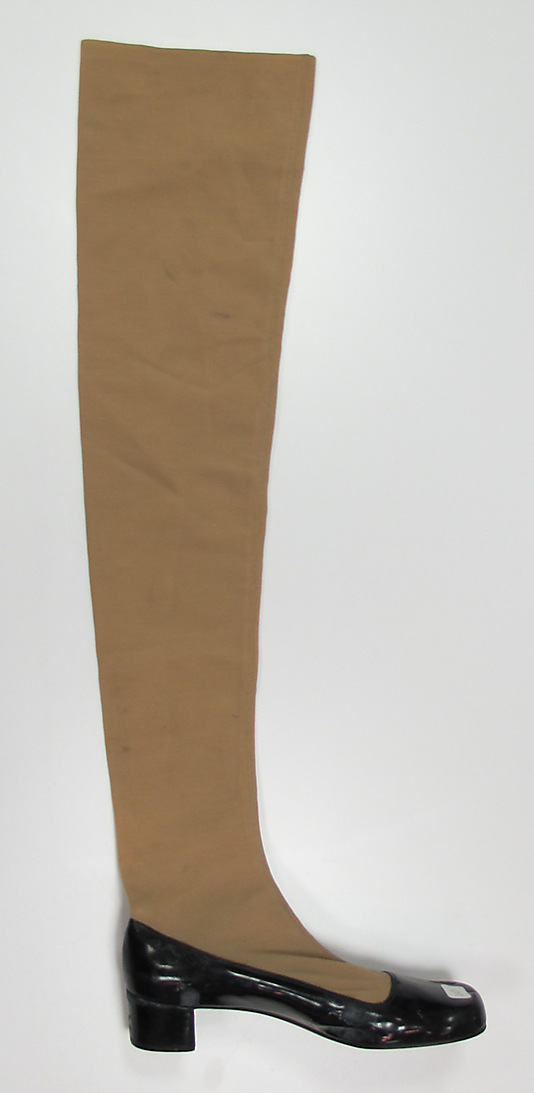
He also creates shoes for top designers and couturiers, like Emanuel Ungaro, André Coureges, Cristobal Balenciaga and features risqué crocodile thigh-high boots for Yves Saint Laurent, who is now designing under his own name.

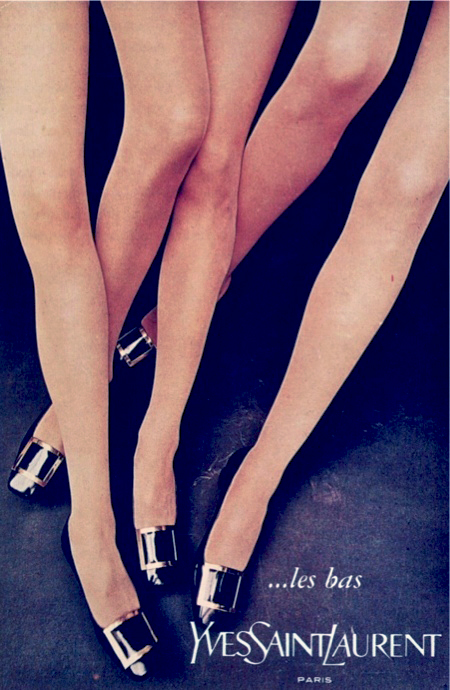
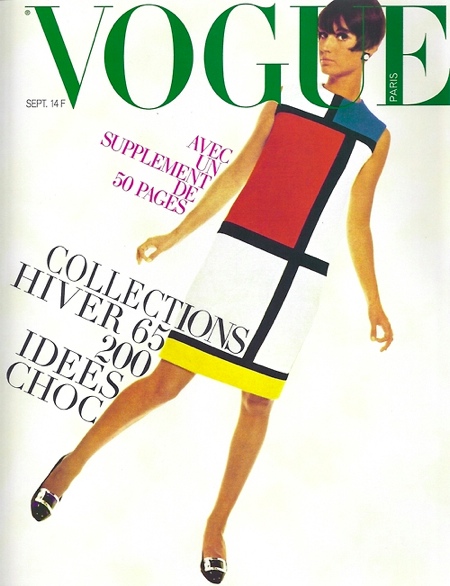
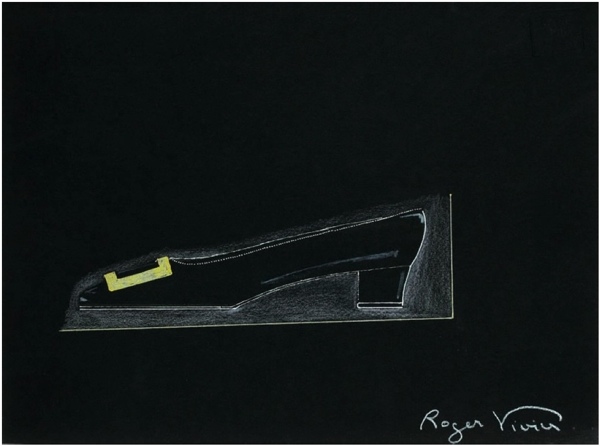
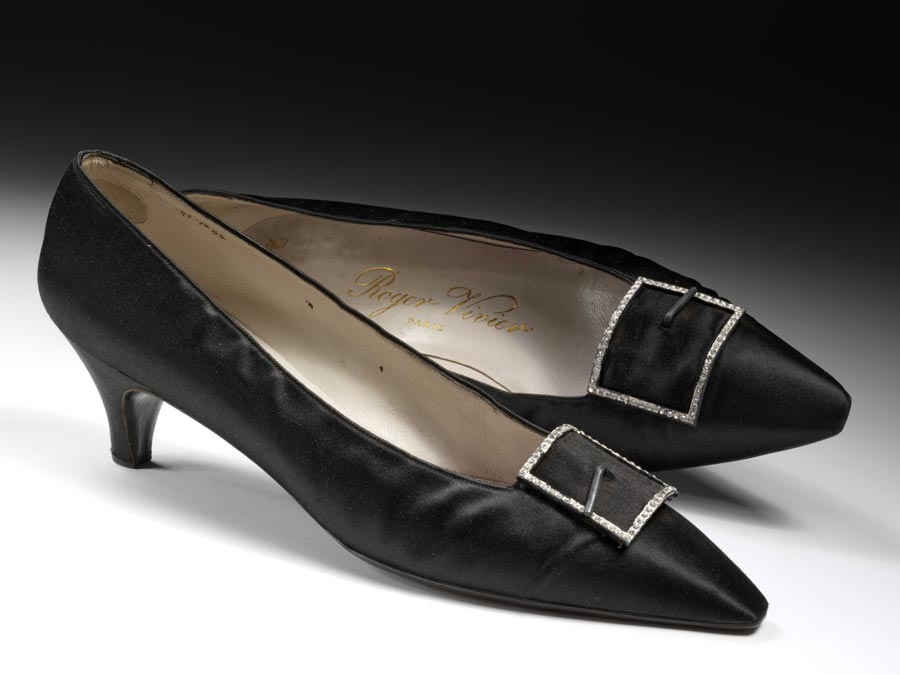
Another shoe debuts in Yves Saint Laurent’s “Mondrian” collection in 1965. The design has a square heel and a pilgrim-buckle placed on the extreme tip of the shoe, unlike the seveteenthe-century version where it was positioned on the top of the foot. 

In 1966 Roger Vivier designs transparent-plastic shoes and boots for Yves Saint Laurent.

Crocodile thigh-high boot

vivier

Pilgrim buckle shoe

Pilgrim Shoe

05_Vogue_Paris_Sept_ 1965_Photo_David_Bailey_s

 Transparent-plastic boot

Vivier

Belle de Jour

In 1967, French siren Catherine Deneuve pairs her Yves Saint Laurent wardrobe with Rogier Vivier pilgrim shoes in the movie Belle de Jour by  Luis Buñuel . The movie becomes a cult hit right away and the pilgrim shoe becomes a runaway bestseller, two hundred thousand pairs are sold in one year and is the best sold modelfor Roger Vivier ever…..

‘There’s nothing like a movie that celebrates the Madonna-whore conundrum to get hearts racing and tongues wagging. Throw in English subtitles and Catherine Deneuve in various states of undress, and you have a winning cinematic equation. But while the guys were salivating over Deneuve’s sexy siren scenes, the women were likely captivated by her classic Roger Vivier pumps. Although Vivier had already established himself as a footwear master by the time Belle de Jour came out. The elegant Pilgrim pumps paired with the sleek Yves Saint Laurent wardrobe, and juxtaposed against Deneuve’s character’s sordid double life, elevated the shoes to instant cult status. But trust us when we say you can’t go wrong in a black mid-heel variety. Look what it did for Deneuve’s sex appeal.’

roger-vivier-belle-black-patent-leather-pump-shoes

catherine-deneuve-belle-de-jour

01_VIVIER_Projet_de_soulier_a__boucle_s

.

.

In 1968 Roger ads scarves and gloves to his collection and a year later Monsieur Vivier men’s department opens in the Vivier boutique, which offers made-to-measure shoes.

Among Roger Vivier’s biggest fans were Wallis Simpson, the Duchess of Windsor , who enshrined his exquisite creations in a custom closet; and the cinema femme fatale Marlene Dietrich, who haunted his boutique almost daily and was rewarded with custom black satin pumps held up by glittering rhinestone balls. Vogue’s editor, Diana Vreeland, insisted her maid polish the soles of her Viviers with rhinoceros horn. Included in her vast collection were a dozen each of his pilgrims and rock-star vinyl boots. Vreeland was among the many who regarded Vivier’s work as true art; in her 1977 Metropolitan Museum of Art Costume Institute exhibit, “Vanity Fair,” she contrasted examples of his craftsmanship with that of 18th-century artisans.

diana_vreeland

Diane Vreeland wearing Roger Vivier boots

Roger Vivier/ Wallis Simpson

Wallis Simpson closet with Roger Vivier shoes

.

In 1994 the 86-year-old Roger Vivier signs a new licensing agreement with Rautureau Apple Shoes, which in turn allows him to open a  shop in Paris the following year. The Rautureau venture gives Vivier the backing to continue doing what he loves the most—designing shoes. Yet three years later, in October 1998, Vivier dies in Toulouse, France. He is remembered by many, including fellow shoe designer. “People try to copy him, but it’s impossible to find that mix of technical skill and design.” Kenneth Jay Lane, who has worked with the master , declares,

“He was the world’s greatest artist of shoe design.”

.

.

Random collection of Roger Vivier heels, shoes and boots

Vivier_Heelstory

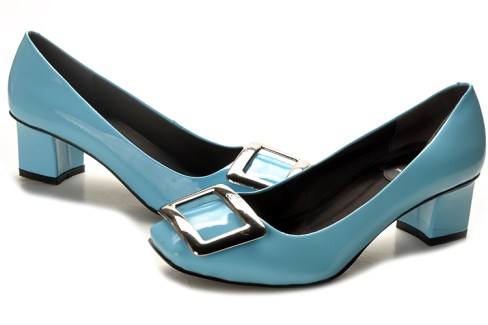
Roger%20Vivier%20Belle%20Vivier%20Light%20Blue%20heels_1

vivier

vivier

roger vivier pump

vivier

vivier

vivier

Vivier

roger vivier

roger vivier

vivier

.

Roger Vivier book by Rizzoli

.

.

A gorgeous tribute to the legendary shoe and accessories designs of Roger Vivier.  Master designer Roger Vivier elevated both the form and decoration of ladies’ shoes during his sixty-year career. His innate Parisian style embodied a sense of perfection and craftsmanship, and his work was coveted by style icons from Elsa Schiaparelli to Jackie Onassis. Described by Yves St. Laurent as bringing to his work a “level of charm, delicacy, refinement and poetry unsurpassed,” he created the first stiletto heel for a ready-to-wear shoe line with the house of Dior in 1955. His shoes are legendary, and the tradition of his innovative spirit continues with the revival of the house by current designer Bruno Frisoni, who has updated Vivier’s concepts, bringing his own touch to signature shapes and embellishments (including the buckle pump made famous by Catherine Deneuve in Belle du Jour). This lavish volume celebrates the history of the venerated house and charts the current evolution of the fantastic haute-couture designs that keep Roger Vivier at the top of every well-dressed woman’s list. With gorgeous new photography of the house’s collection of vintage shoes, beautifully rendered sketches, and details of the amazing accessories coming out of Roger Vivier today, this book is as chic as the shoes that fill its pages.

.

Exhibition

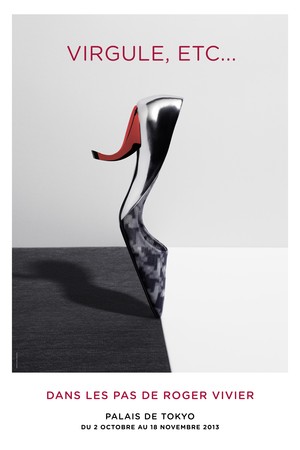
Virgule, etc… in the Footsteps of Roger Vivier

roger-vivier-

A RETROSPECTIVE paying tribute to the life and work of Roger Vivier is coming to Paris. The exhibition will be staged at the Palais de Tokyo in October, to coincide with Paris Fashion Week, and was curated by Olivier Saillard – director of the Musée Galliera. 

The showcase is titled Virgule, etc… Dans Les Pas De Roger Vivier (Comma, etc… In The Footsteps of Roger Vivier), so named after the designer’s famous comma-shaped heels. The exhibition will take the form of “a pastiche of a museum dedicated to shoes”, explains a press release, featuring about 140 footwear designs.

The retrospective will pay tribute to the brand’s eponymous founder, who died in 1998, as well as tracking the more recent history of the footwear label. Roger Vivier was revived in 2000 by Diego Della Valle, chairman of Tod’s SpA, and Bruno Frisoni joined as creative director in 2002.

The exhibition will run from October 2 to November 18.

.

.

Special thanks to http://www.thehistorialist.com/

Roger Vivier

Roger Vivier,called the ‘Fabergé of Footwear’ (part 1)

18 Aug

Roger Vivier by Brassaï
(Roger Vivier photographed by George Brassaï)

Biography

.
Roger Vivier is born in Paris, on 13 November 1907. At the age of 9 his parents die and Roger is adopted by Gérard Benoit-Vivier. In 1925 he enrolls in the Ecole des Beaus-Arts, hoping to become a sculptor. When a family friend gives him a job at a shoe factory outside of Paris, where he learns the ins and outs of shoe design, Roger realizes he can make sculptures to be worn. After he finished his job at the shoe factory Roger decides he prefers to learn all aspects of the trade by working in several other factories too and ends his study at art school. This ‘shoe-study’ takes him nine years.
.
In 1936 he takes on an offer of Laboremus, a leather distribution firm, the French arm of a large German tannery. He is responsable for predicting trends, advising on which color skins will sell best. At night he is sketching shoes he could make of these colorful skins.
.
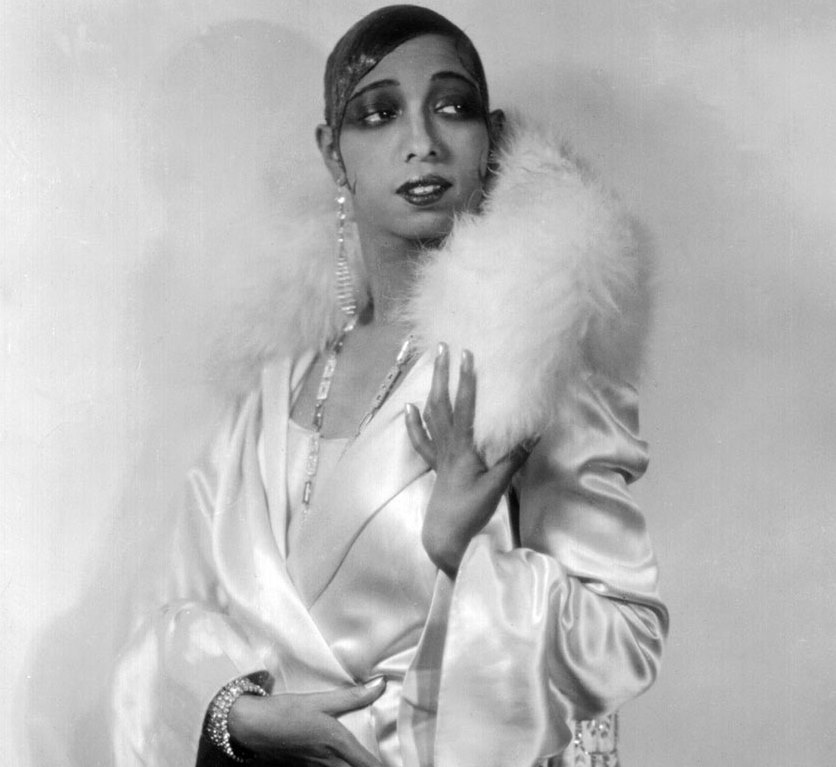
A year later he opens his first workshop in rue Royale, one of the most prestigious addresses in Paris, carrying exclusive models for private clientele, including Josephine Baker and Mistinguett. A photograph by George Brassaï  stirs interest within the profession and Roger begins to collaborate with wold’s greatest shoe manufactures, designing shoes for Pinet and Bally in France, Salamander and Mercedes in Germany, Rayne and Turner in England, Miller and Delman in the United States. His revolutionary cork-platform design is rejected by Delman, but Elsa Schiaparelli picks it up and includes it in her 1938 collection.
Josephine-Baker
Josephine Baker
Mistinguett
Dancer and actress Mistinguett
.
Just before WWII, Roger takes the last train out of Spain and embarks from Lisbon on the Exeter, one of the last liner to cross the ocean to the United States, where he is invited to continue his work. Following the Japanese attack on Pearl Harbor, the US enters the war and economic recession hits the country. A law is passed restricting the production of any new shoes and Roger is forced to switch professions. With help of Suzanne Rémy, the former head of Agnes, the famous Paris milliner, he learns how to make hats and in 1942 they open a shop called Suzanne and Roger on Madison Avenue. It becomes the Parisian meeting place in New York.

C_I_60_23_21_F
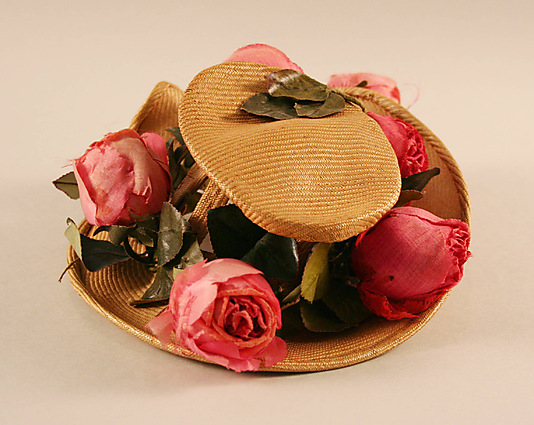
Suzanne-et-Roger-Vivier-hat
Suzanne and Roger hats
.
At the end of the war, Roger returns to designing shoes for Delman. He is one of the first to experiment with see-through plastic. In the early sixties, he creates entire collections in plastic.
.

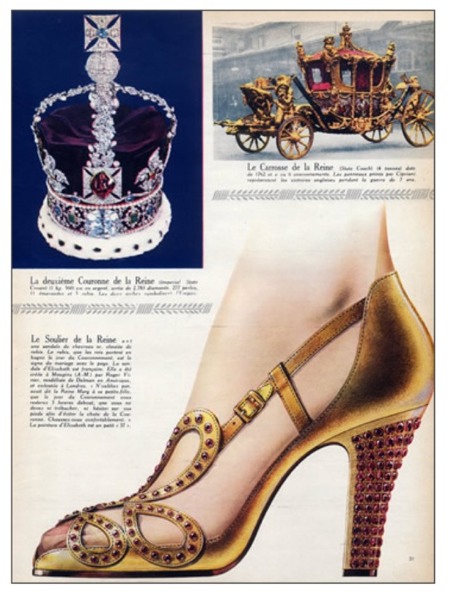
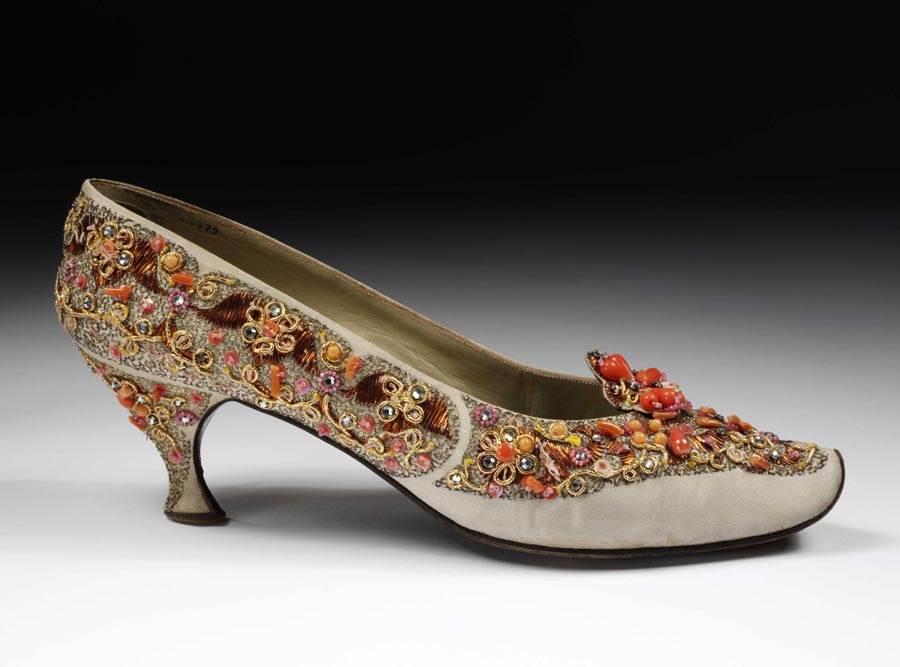
In  June 1953 Roger Vivier designs garnet-studded, gold kidskin pumps for Queen Elizabeth II’s coronation. It made him become extremely famous. It’s amazing to imagine a British Monarch receiving the crown in French shoes.

royalty-coronation-of-queen-elizabeth-ii-london

02_Roger_Vivier_for_Queen Elisabeth_II_S

04_Coronation_Shoe Replica_2012_S
Replica’s of the coronation shoes
.

Roger Vivier makes all of Christian Dior’s shoes for ten years.Together they created a golden era of design.

In 1947, on the boat back to Paris, Roger Vivier meets Christian Dior. When Dior establishes a custom-made shoe line with Delman in 1953, Roger is named designer. After two successful years of custom work, they decide to create a ready-to-wear division. Roger parts ways with Delman. His name begins appearing alongside Dior’s on the label. It’s the first time a Parisian couturier associates himself with a shoemaker for mass-market distribution. .

Vivier/ DiorChristian Dior/ Roger Vivier advertisement in l’Officiel, March 1960
Dior_1961_roger_vivierAdvertisement Christian Dior/ Roger Vivier, 1961
christian-dior-shoes-1961-roger-vivier-hprints-com
.
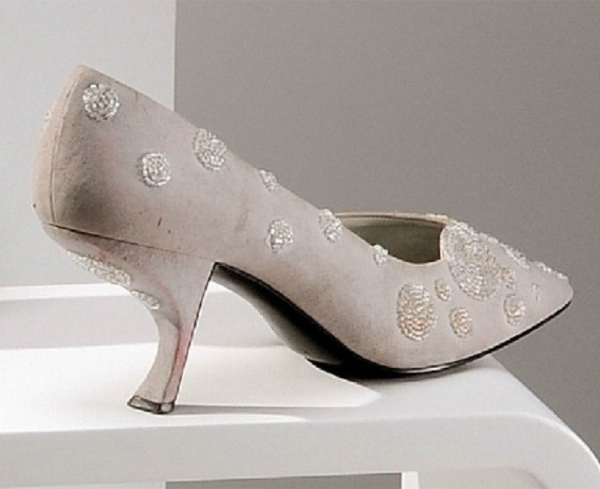
In 1954 Roger introduces stiletto heel, at eight centimeters (around three inches) high. Roger Vivier is often credited with inventing the stiletto. Though he didn’t invent it, he certainly refined it. Who invented it still needs to be figured out. It’s more of a group effort: one person coming up with the concept for the shoe, the other person refining that concept. It’s give and take.
The stiletto heel was not invented until after WW II. Prior to the war, no designer ever attempted to create the stiletto because wood couldn’t support the weight of a woman. It would have been the equivalent of walking on chopsticks. After WW II you have the extrusion of steel allowing designers to make steel rods that could support a woman’s weight. .
When Christian Dior dies in 1957, Roger begins collaboration with Dior’s successor, the young Yves Saint Laurent. A year later Vogue hails the new elongated, square-point toe box.
Roger’s square toe is “one of the Paris details that may make fashion history.”
.
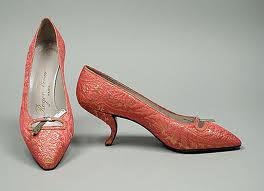
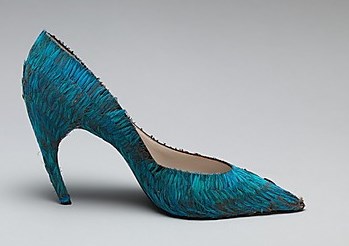
Roger introduces the “choc” or “Shock” heel, which is inward-curving, in 1959. A year later, a streamlined update of the 19th-century d’Orsay pump becomes a prototype for many copycats. Roger is honored with the Neiman-Marcus Fashion Award.
Three years later, in 1962,  the collaboration between Roger Vivier and the house of Dior comes to an end.
.

Stiletto heel

Stiletto
roger-vivier-stilleto-dior-1954

Square toe

Roger Vivier
Roger Vivier

Choc or Shock heel

Shock heel
Roger Vivier

(Streamlined and updated 19th-century) d’Orsay pump

Roger Vivier
Roger Vivier
.
After Roger Vivier ended the collaboration with the house of Dior, he designed shoes for his new shop in Paris and the American versions of Vivier style are manufactured and sold by Saks Fifth Avenue. He also created shoes for top designers as Emanuel Ungaro, André Courreges and Cristobal Balenciaga. He still has to produce his most successful shoe
.

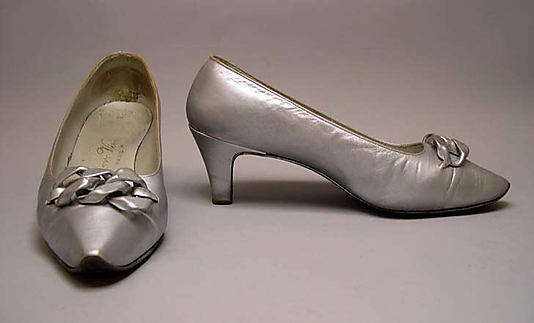
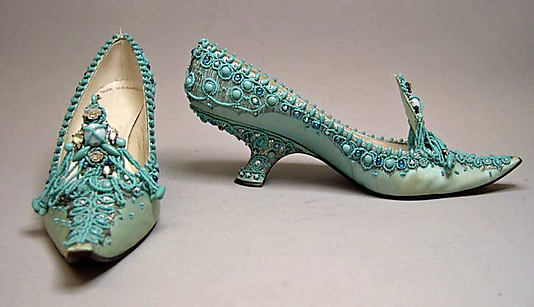
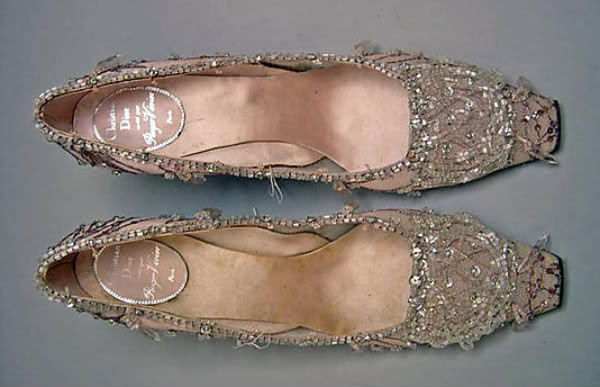
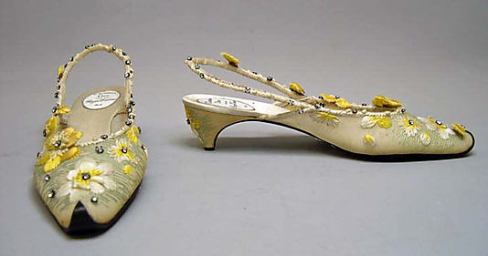
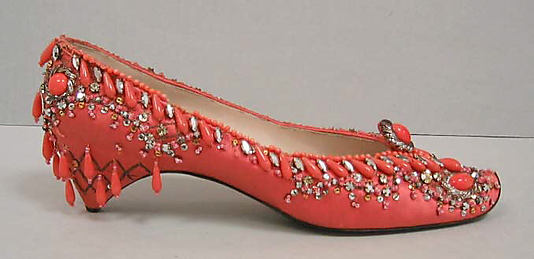
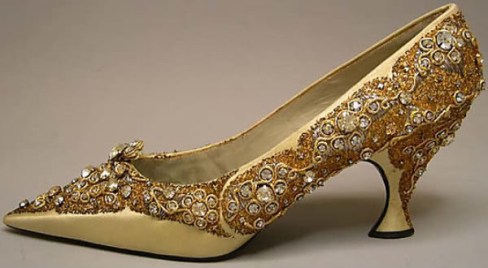
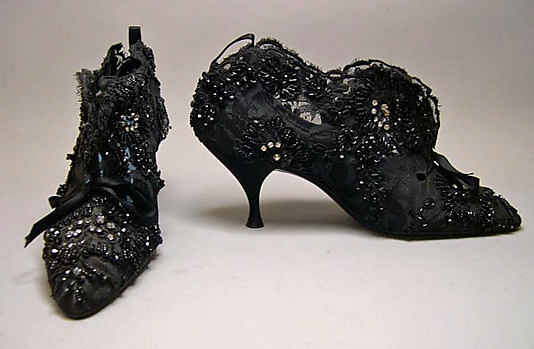
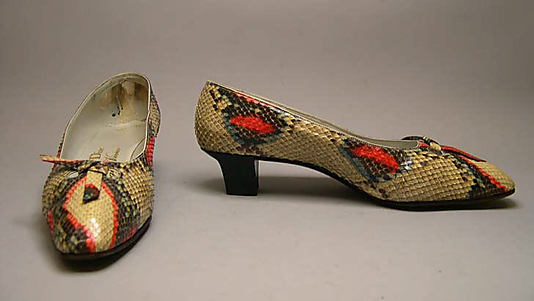
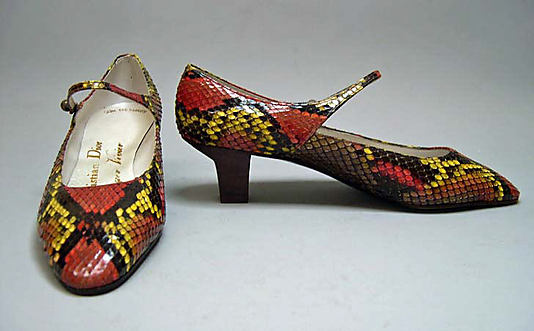
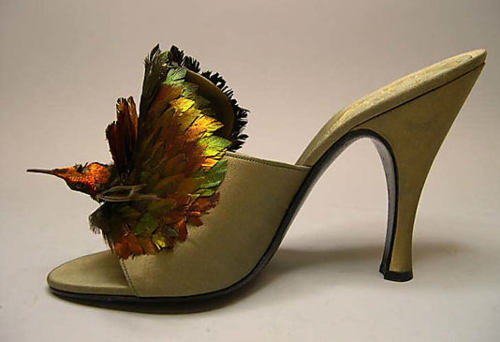
Random collection of shoes by Roger Vivier for the house of Dior

Dior

Dior

Dior

dior

Dior

1979_472_14ab_F

Vivier

1979_472_4ab_F

Dior
Dior
dior
Vivier
dior
Dior
Vivier
Vivier
Dior
Roger Vivier for Dior, 1954
Vivier
Dior
Stiletto
Dior
Special thanks to  http://www.thehistorialist.com/
.
.
Read more about Roger Vivier next week