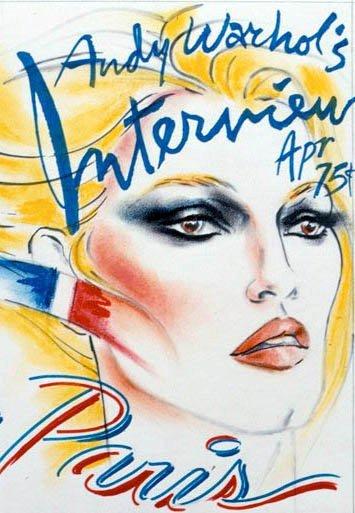
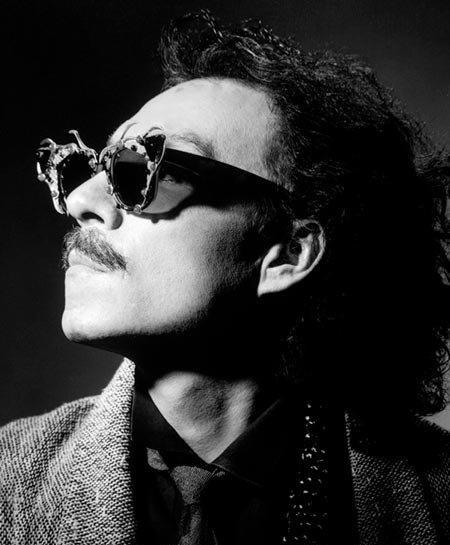
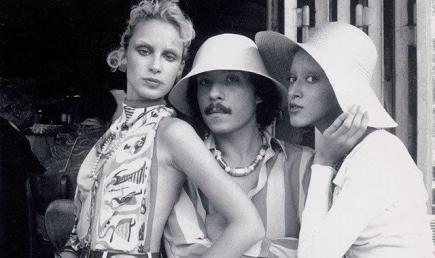
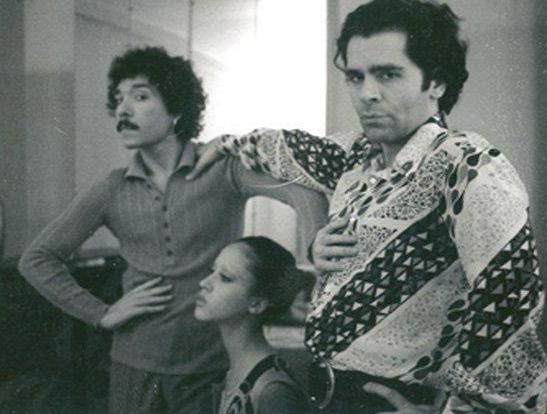
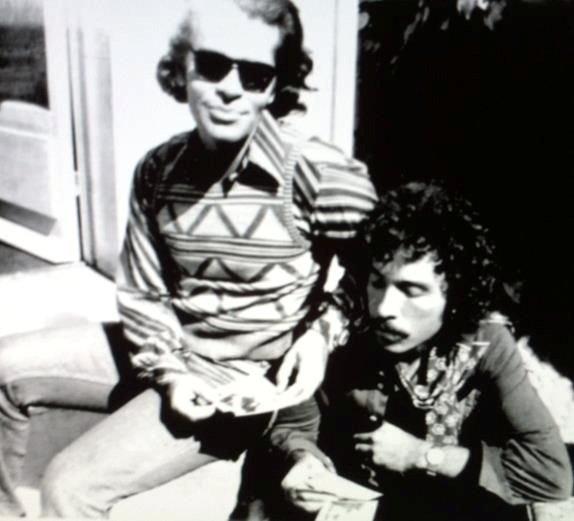
In the late ’60s, a nightlife-loving New York City artist was not just making era-defining images but creating superstars. He cultivated an entourage of young and beautiful people and catapulted them and himself to fame. You’d be forgiven for identifying the artist as Andy Warhol, but he wasn’t the only one hanging out at Max’s Kansas City with a glamorous entourage. In fact, when Andy was at Max’s, he surely saw the charismatic fashion illustrator Antonio Lopez surrounded by a gang of models and muses like Jane Forth, Pat Cleveland, Donna Jordan, and later, Jerry Hall. All would eventually appear in Warhol’s universe—he cast Jordan and Forth in his film L’Amour (1973), co-starring Karl Lagerfeld. But it was Lopez who discovered these beauties and immortalized them in his graphic, lifestyle-driven advertisements and editorials for publications like Elle, Women’s Wear Daily, The New York Times, and of course, Interview.
Corey Tippin makeup artist and model
“Everyone imitated his style because it was so distinct and so of the moment,” says Corey Tippin, who as a teenager joined the Lopez band as a makeup artist and model. “His work was such a fashion barometer.”
“Everybody fell in love with him,” says Tippin. “Creative people who give you that much attention have a lot of power.”
Jane Forth
Donna Jordan
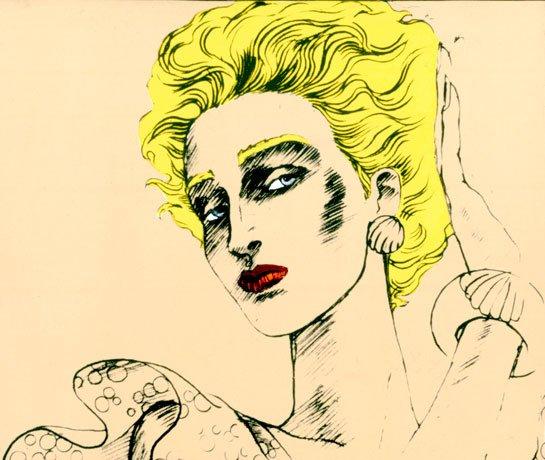
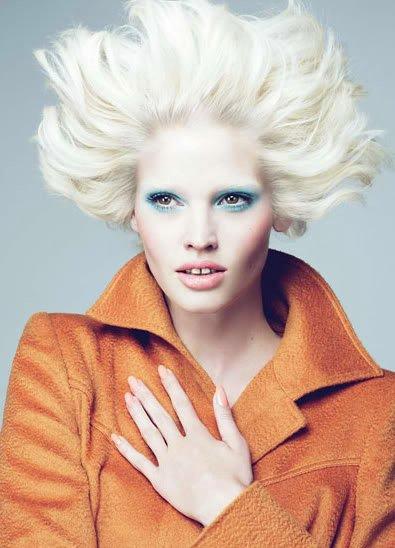
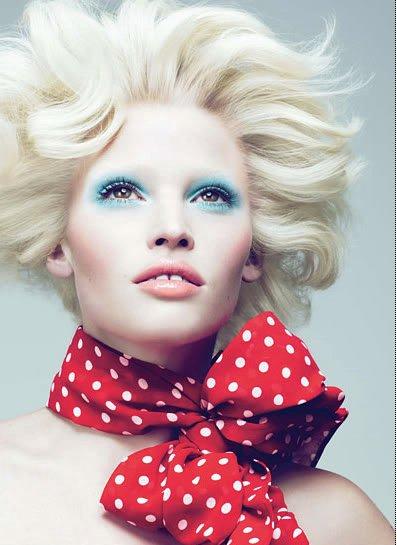
Donna Jordan wasn’t very interested in becoming a model, but Antonio saw something special in her. Together with Juan, Antonio bleached Donna’s hair and eyebrows and a new model was ‘born’. “Antonio was magical,” says model Donna Jordan. “When I first met him in 1967, he was coming down the steps to Bethesda Fountain, in Central Park, dressed in a red suit. He was quite a vision.”
For W magazine September 2010 Mert Alas & Marcus Piggott photographed Lara stone as Donna Jordan
Grace Jones
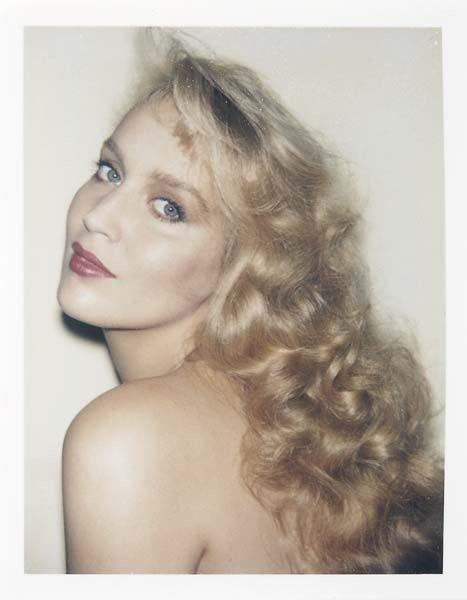
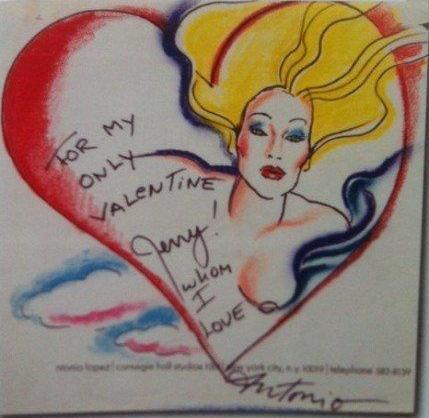
Jerry Hall
Jerry Hall became Antonio’s perfect muse. Jerry was sixteen years old when she arrived (from Texas) in Paris. She was an Antonio drawing come to life-or was soon to become one. Antonio felt her face was to pudgy and she had to lose weight. Antonio had a sort of Pygmalion effect on Jerry, seeing possibilities of what she could become and illustrated her in this way. He chiseled her face, arched her eyebrows and deepened her eyesocks, eerily predicting what she would look like a few years later when she became world’s most sought-after model.
Jerry moved in with Antonio and Juan and pleaded Antonio to be her boyfriend. Curiously he accepted and they became a couple and even engaged. For him it was more strategic than romantic. Corey Tippin: “I think a little bit of it had to do with Antonio transforming these girls and suddenly every designer in the world is using his image. I think he tried to hold on to Jerry as much as possible.” The engagement only lasted a few months. Jerry and Antonio continued working together, but their Svengali-muse relationship definitely ended by 1977.
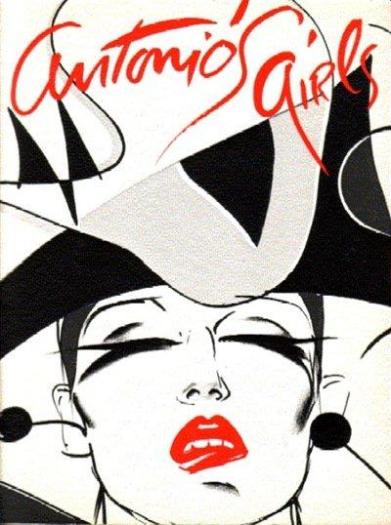
There were many, many other ‘Antonio’s Girls’, like Pat Cleveland, Paloma Picasso, Tina Chow, Jessica Lange, Loulou de la Falaise and Marisa Berenson
MAC cosmetics campaign
The next big MAC cosmetics campaign will be makeup thematically inspired by Mr. Lopez’s illustrations and by the rare birds he surrounded himself with, drew and photographed — and whose images he substantially helped create. A pencil and watercolor portrait by Mr. Lopez of model Maria Snyder from 1983 that will be used as part of MAC cosmetics’ campaign
.
Anna Sui S/S 2012 Inspired by Antonio
“Things are obviously a lot different now,” the designer Anna Sui said. “It’s not about fabulous anymore. It’s about having 500 friends on Facebook and the same American Apparel outfit to wear to a festival. It was kind of the opposite then. Freak was the preferred genre.” Thus anyone with the slightest interest in becoming a fabulous freak made a beeline for Mr. Lopez’s studio.
.
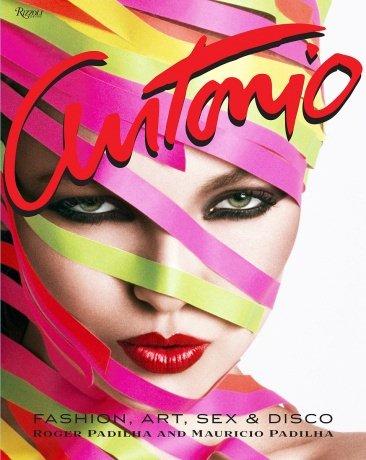
Antonio Lopez; Fashion, Art, Sex & Disco
The book is filled with a great collection of drawings and photographs by Antonio and through reading the story you can imagen how exciting those decades were…
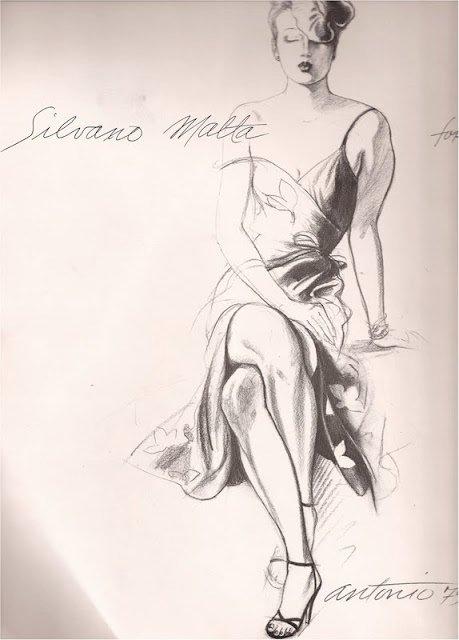
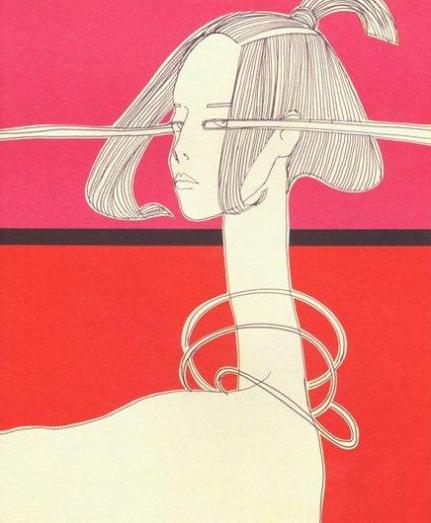
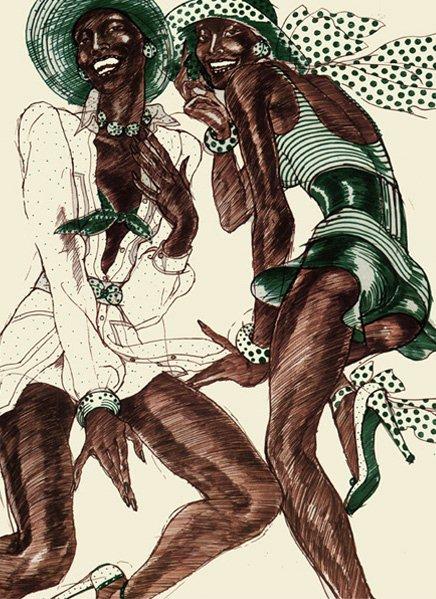
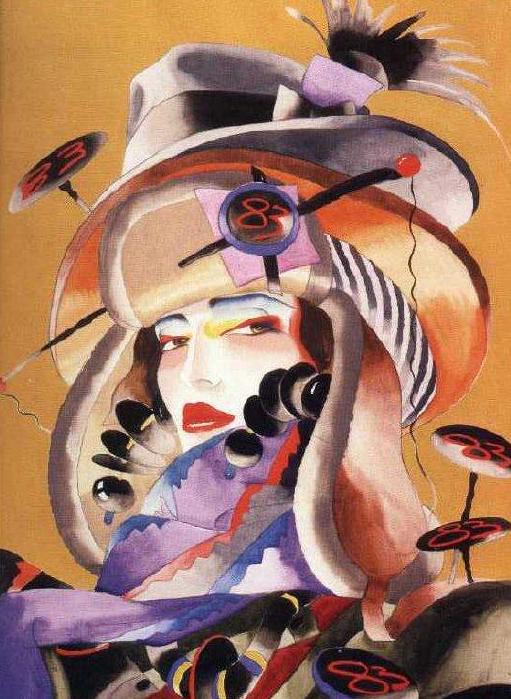
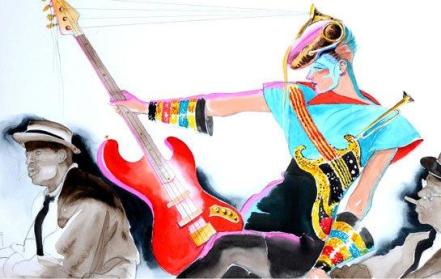
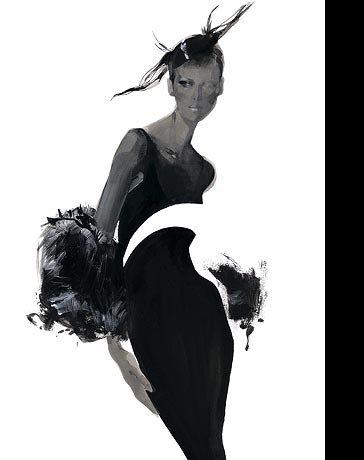
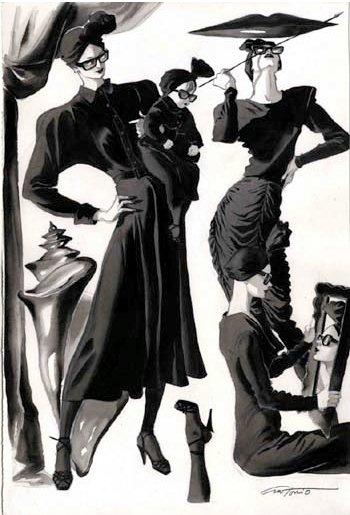
When I was reading the book ‘Antonio Lopez; Fashion, Art, Sex & Disco’, I immediately knew I wanted to write about Antonio, but where to start? The man wasn’t only a fashion visionary and a brilliant illustrator, he ‘invented’ the new model: not the perfect pretty girl, but the girl with attitude, sex and a portion of craziness, later called Antonio’s Girls. He changed the garments he drew and by doing so inspired designers for their next collection. He changed fashion illustration and photography by blending the models into the outside world, making them move, having fun and being sexy. Antonio, like Andy Warhol, had his own entourage including models, make-up artists, fashion designers and the rich&famous, who went out on the town (first New York, later Paris) and dictated nightlife.
Born in Puerto Rico in 1943, Antonio Lopez came to New York when he was seven. His mother was a dressmaker, his father sculpted mannequins. At the High School of Art and Design, he studied illustration. Here he met Juan Ramos, also born in Puerto Rico and immigrated to the States, who studied interior design. They stayed together from that moment on, first as lovers-collaborators,later being best friends-collaborators, Antonio as illustrator and Juan as art-director. Antonio’s genius was recognized early and by the time he was 22, he earned $ 1,000 an illustration( we are talking 1965….) !!!
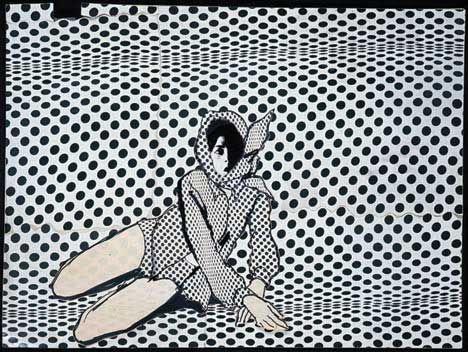
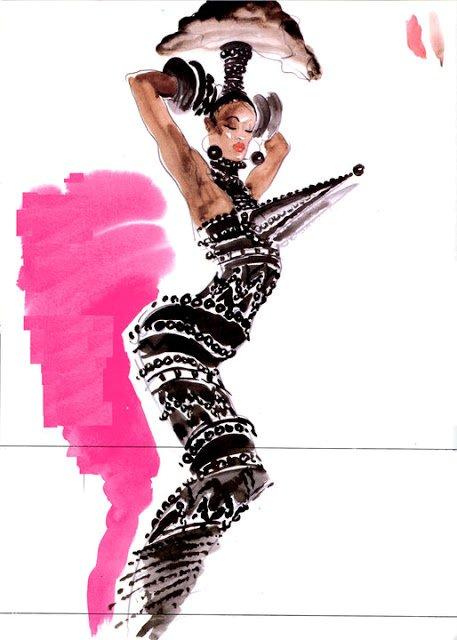
Maybe Lopez’s edge was honed by his engagement with the world outside fashion. It’s as if his illustrations were equivalent in line of what photographers like Davis Bailey were doing with film. There was energy and movement and feel for the street. Andy Warhol, who’d forged an equally successful but rather more whimsical career in fashion illustration a decade earlier, praised Antonio for his ‘journalist’s eye’.
Even when Lopez referred to Pop Art, or took on the swirling, psychedelic clichés of hippiedom, he did it his own way. “What one recognized in his illustrations, was in the end, more than just a dress”, said photographer Peter Knapp, with whom Antonio worked. It was a state of mind””.
Antonio Lopez was always obsessed with models. ‘Antonio’s girls’ were to Lopez as the Superstars were to Warhol. He remade and remodeled them to fit his particular idea. “He was never interested in the girl next door,” Juan Ramos remembered later. “Healthy wasn’t his thing. He wanted exotic, weird, a little fucked up.”And when Antonio got what he wanted, he made it a little more weird. Like Jane Forth, she was 15 when Antonio and Juan found her in Central Park in the mid-sixties. After her came Pat Cleveland, Donna Jordan, Jerry Hall, Grace Jones, Jessica Lang and Tina Chow, each one an archetype. “Antonio was like an employment agency,” said Juan Ramos. “They all had their stories. He loved that. He’d listen to their problems for hours. Most of them ended up living with us”.
At the end of the sixties, Antonio, Juan Ramos and entourage decamped to Paris for seven years. You could say it was all about a shift in the zeitgeist, but that’s a fancy way to gloss the spectacular efficiency with which Antonio and co. turned uptight Paris into the world’s biggest party town. Their all-night amphetamine energy and radical chic sent a shiver down the local scene’s collective spine. Karl Lagerfeld was an early adopter. Antonio illustrated his collections for Chloé. The entourage, fueled by crossovers with Warhol’s crowd, provided Karl Lagerfeld with a gang of his own to counterbalance rival Yves Saint Laurent’s decadent set. The Americans were quite the match of the French in that area. “We hung out 24 hours a day and had nothing to do except be out of our minds and immersed in fashion,” said a surprisingly together Pat Cleveland years later.
In one area at least, Paris was much freer than New York. There was less bias in the French fashion world, so Antonio was able to use models of color (during those days, Yves Saint Laurent presented the first black model on the catwalk). Antonio’s Paris saw the apotheosis of Pat Cleveland, the glory of Grace Jones, and the Josephine Baker-like brio of this girl, Carol LaBrie.
Antonio drew fast, but the speed of life in Paris demanded something faster. In 1973, he first picked up an Instamatic (never a Polaroid: “too complicated,” he said) to make a visual diary of his life, but, typically, it turned into a whole new body of portraiture. Last year’s Twin Palms tome Instamatics did a brilliant job of collecting a lot of previously unseen photos. Here’s Lopez’s favorite subject, Jerry Hall.
In her autobio Tall Tales, Jerry Hall called Lopez “my first boyfriend and the first man I ever lived with.” This was how it happened, under a disco moon in Paris. Hall was 16 at the time, barely off the plane from Texas, with her dollars running low. “I first met him at the Club Sept…I had on this gold satin suit of my mother’s—real tight of course—and this blue feather boa she’d found for me at the Sewing Centre in Mesquite. Then I had gold feathers pasted across my forehead, and my platform shoes. Already I’m five feet ten and a half inches, and with these shoes I was like six-foot-three or something. Plus I’d curled my hair. It was like a mane—all frizzy. And then I had on lots of makeup and glitter as well as the feathers…I guess that’s why Antonio noticed me.” You think? Under Antonio’s obsessive tutelage, Jerry Hall transformed into one of the most successful cover girls of the seventies.
Antonio had a shoe fetish. Figures. The sculpted form of the shoe molding the supple flesh of the foot—almost to the point of discomfort—is a tidy enough analogy for the erotic alchemy he explored with his ‘girls’. He even did a series of images where gorgeous women transmogrified into dominatrix heels. The atmosphere of perfervid eroticism steadily thickened as Antonio’s career advanced. All appetites were fully indulged and absolutely sated. As far as it being a more ‘innocent’ time, Antonio’s work at the end of the seventies and beginning of the eighties feels very much of a transgressive muchness with his pals Guy Bourdin and Helmut Newton. The mood was darkening, the party was almost over.
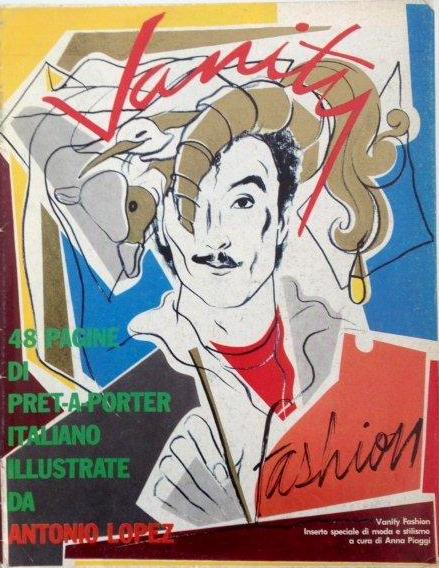
The recent death of Anna Piaggi cast a spotlight on the magazine she and Antonio created at the beginning of the 1980s, Vanity. In its fiercely idiosyncratic curation of fashion past, present, and future, it was so far ahead of its time that it now exists outside time in a beautiful ephemeral bubble…if you can even find it.
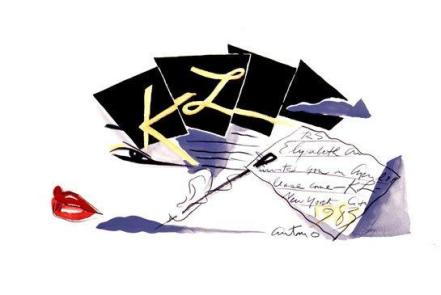
As Antonio Lopez and Juan Ramos started to lose close friends to AIDS in the early eighties, a somber, more sculptural tone began to insinuate itself into the work. ‘Antonio Lopez; Fashion, Art, Sex & Disco’ point to other ways in which AIDS made its presence felt in Antonio’s illustrations, but it’s logical enough to assume that the idea of legacy began to loom its head in the light of current events. It became increasingly obvious that Antonio Lopez wanted to be taken seriously as a fine artist, not just with a project like his illustrated edition of Sir Richard F. Burton’s The Thousand and One Nights (rebranded as Antonio’s Tales From the Thousand and One Nights) but also in the increasingly studied nature and growing complexity of his pictures.
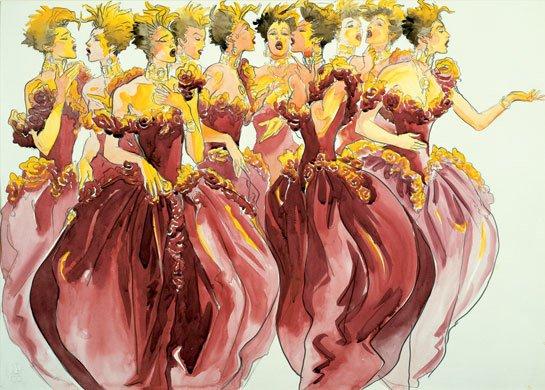
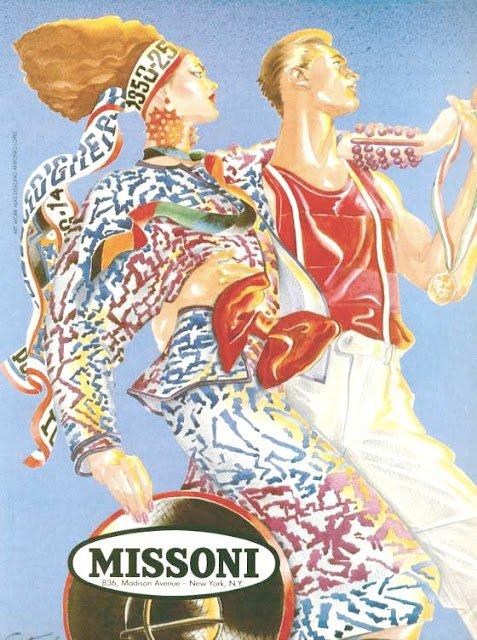
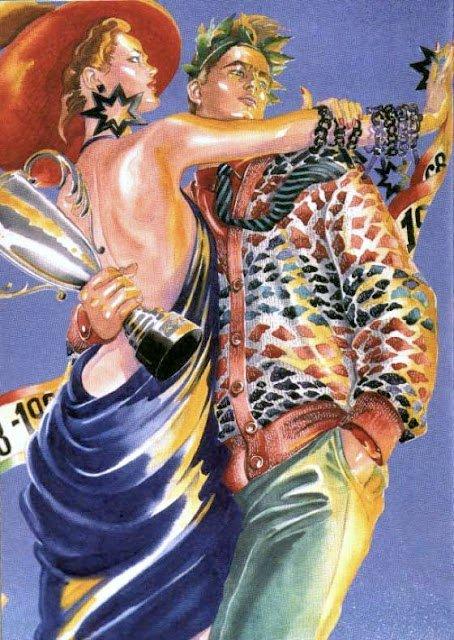
Antonio’s campaigns for Missoni endure as one of the great artist/designer collaborations. It was Anna Piaggi who suggested him to her friend Rosita Missoni. Daughter Angela remembers him arriving at the Via Salvini showroom in Milan (it’s now a family apartment), clearing out the space, and staying there for a week, working obsessively on images like this, from a campaign launched at the same time as the 1984 Olympics. But her memories are tinged with sadness because Lopez was already ill by this point. “He was always cold. Juan and he would be building the set and doing a big research on casting, Anna would be styling, Vern Lambert was overseeing the whole thing. Antonio would always sketch in black and white before making the finished picture, like doing a Polaroid. And he always drew big, never small.” The Missoni images are a reminder of how men were as important as women in Antonio’s visual vocabulary. That was a rare thing in the annals of fashion illustration.
So, about that legacy. Two recent major collections name-checked Lopez. For Fall 2012, Kim Jones used some of the more emblematic “Antonio” visual flourishes as detailing on his sophomore menswear collection for Louis Vuitton. And for Spring 2012, Anna Sui set out to evoke the headiness of the Club Sept days, with printed forties-style dresses like the ones Donna Jordan and Jane Forth used to wear when they were out and about in Paris. “It was revolutionary to wear vintage then,” says Anna Sui, especially when one of the designers checking out the antics—and the outfits—of the Lopez-Ramos entourage was Yves Saint Laurent, who channeled his fascination into his forties-influenced collection du Scandale in 1971. And what a scandal it caused. I’m sure if you sift through the past few decades, you’ll find more examples. In ‘Antonio Lopez; Fashion, Art, Sex & Disco’ it’s written that Norma Kamali, for instance, based her reputation-making sleeping bag coat on shoots where Lopez swathed his models in sleeping bags from Paragon sporting goods, just down the street from his studio in New York. Then there was John Galliano, who, inspired by “Antonio,” went to Central Saint Martins to study fashion illustration, before a visionary tutor steered him toward design. And in the bigger picture, every time a fashion scene starts to swirl, doesn’t it raise the specter of the world that Antonio Lopez and Juan Ramos made?
Antonio Lopez died in 1987 at 44 from AIDS and despite his fame and influence, has faded from the public consciousness. Partially to blame is the stigma associated with AIDS at the time of his death.
Watch this video about Antonio and his work
Next week more drawings, pictures, video’s and stories about Antonio Lopez and his entourage
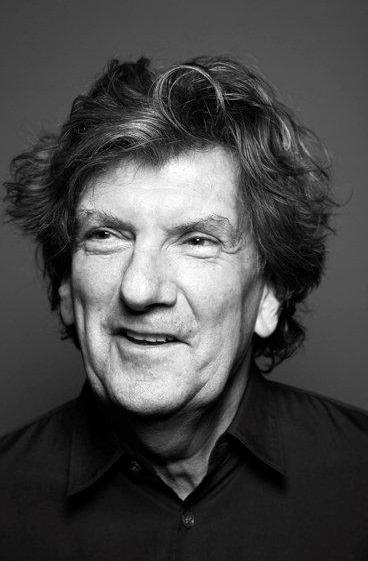
Didier Malige grew up in Paris and was not particularly interested in hair, still he chose to become a hairdresser. His mother ,who worked in a veterinary clinic where one of the Carita sisters was a costumer, got him an apprenticeship in the Carita salon. This was pretty much the way he became involved in fashion.
Didier started working at the Carita salon in the mid-sixties, while he was still living with his parents. At that time Carita was one of the top beauty salons, with about 125 employees. Women who could afford it, would come back every two or three days to get a ‘do’. It was a set, with teasing and hairspray (Elnett was huge those days). In France they were a little bit backwards when it came to trends: the leading country was definitely England, where everybody wanted to be a hairdresser, manager or musician.
At that time for photoshoots, it was a different system: ‘You used to go to the studio, you did the hair and you left. They were using a lot of hairspray, doing up-do’s, nothing was really moving, so there was nothing more to do once you set the hair.’ Models were also more handy and could correct their hair themselves, also because it wasn’t as precise as nowadays.’
After his apprenticeship at Carita’s, Didier went to another really big salon, Jean Louis David, who also came from Carita. He was still assisting other hairdressers and didn’t really have any customers. Around that time there began a demand for hairdressers for magazine work and that was the beginning of Didier Malige’s career as a hairstylist. Not many were working as a hairstylist and he very quickly began working with Helmut Newton, Bob Richardson (father of Terry) and sometimes Guy Bourdin. Because Didier didn’t speak much English, there wasn’t much verbal communication, it was more about naming a movie as a reference.
In the seventies Didier went to America and worked for Glamour and Mademoiselle. ‘Photographers are very opinionated about what a woman should look like. Some give you a little bit more freedom than the other, but they definitely see a woman one way. Helmut Newton’s woman may have shorter or longer hair, but it was always the woman who goes to the hairdresser every day, who doesn’t really have an occupation except maybe taking care of certain man. (laughs) Or be taken care of. You had to be technically very good for that hairstyle.’
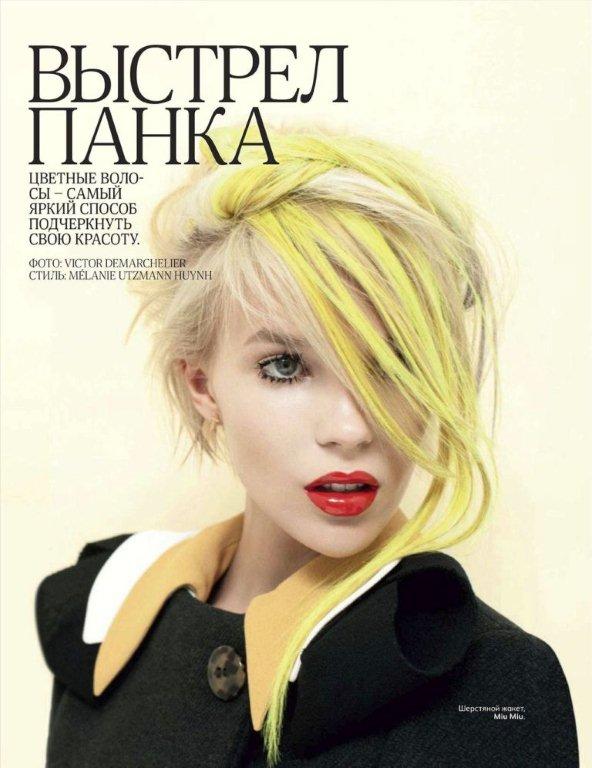
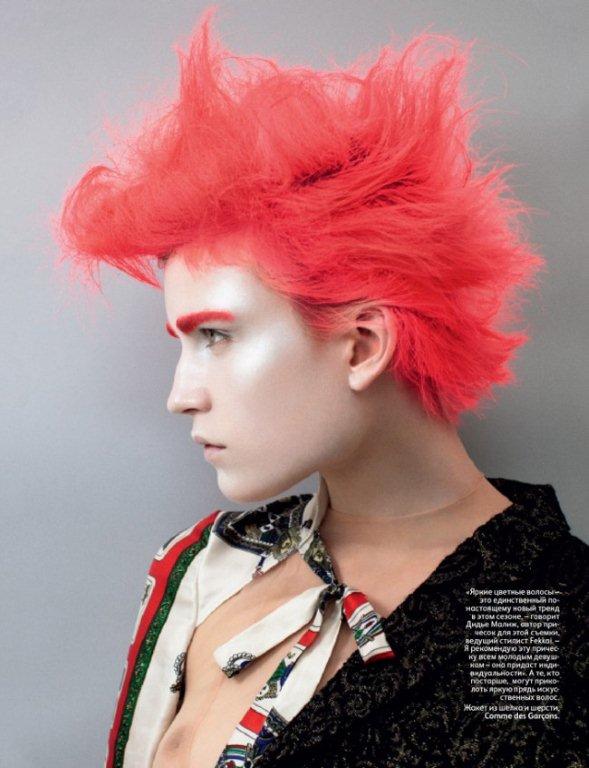
Over the decades Didier Malige collaborated with many famous photographers including Patrick Demarchelier, Athur Elgort, Annie Leibovitz, Mario Sorrenti, Inez van Lamsweerde & Vinoodh Matadin, David Sims and Mario Testino. His ability to not only style, but flawlessly sculpt both men’s and women’s hair led to develop long-standing relationships with the houses of Dior, Dior Homme, Helmut Lang, Jil Sander, Raf Simons and Hedi Simane. As chef-de-cabine, recently Didier worked with Hedi Slimane on Slimane’s first women’s fashion show for Yves Saint Laurent.
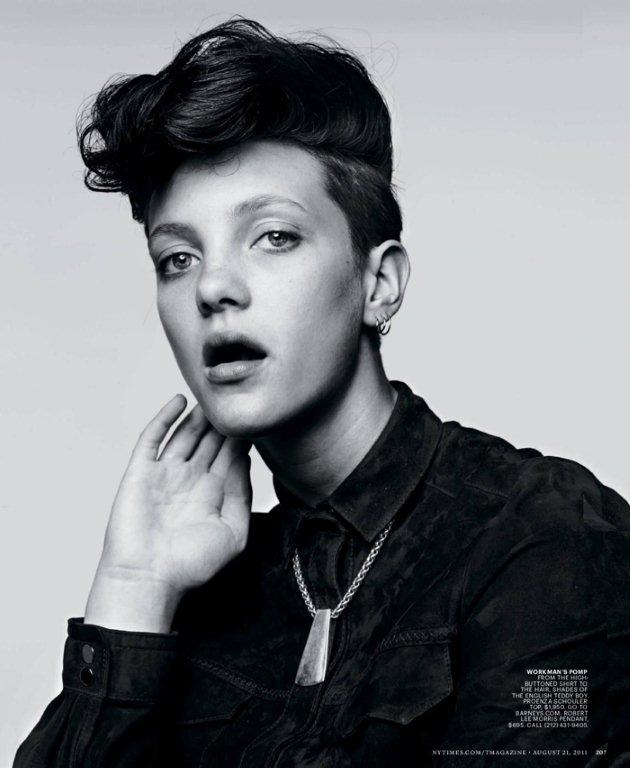
BOY CRAZY. Photography: Hedi Slimane for NY TIMES T magazine fall 2011
Prada Homme campaign photography: David Sims
Pradaperfume,Candy
Vogue Italia cover photography: Nathaniel Goldberg
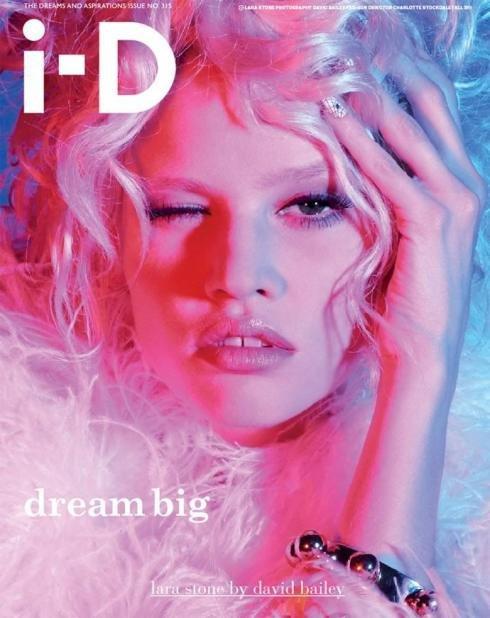
I-D cover with Lara Stone photography: David Bailey
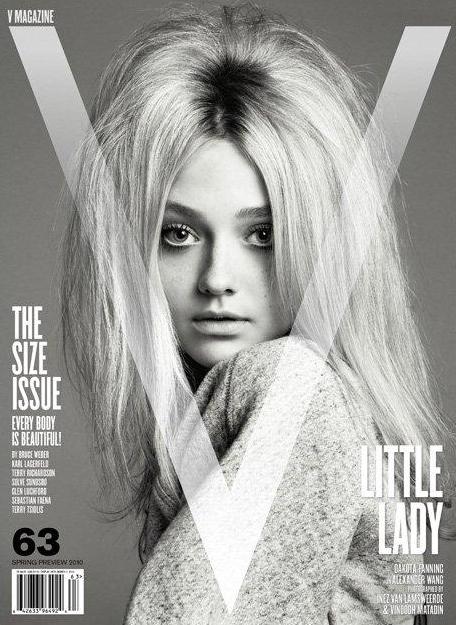
V magazinecover photography: Inez Van Lamsweerde & Vinoodh Matadin
Didier Malige loves to do fashionshows, deciding together with the designers on the look for the models in the catwalk. He worked with Proenza Schouler, Giorgio Armani, Philosophy, Prada, Miu Miu, Louis Vuitton, Botega Veneta and many others. He has a collaboration with (another hairstylist/hairdresser) Frederic Fekkai and his brand for over two decades.
Didier Malige is an undisputed master of his craft and especially enjoys collaborating with photographers and editors who allow him the freedom to realize his vision. He believes that the biggest compliment he has received is learning that someone has become a hairstylist because they were inspired by his work.
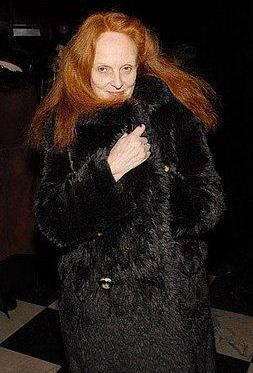
He is living together with his partner Grace Coddington (read: Grace Coddington, a legend in her own time, part 1&2) for over 25 years, whose style he describes as very feminine and fashionable without being too obvious.
I admire Didier Malige, specially for keeping a ‘young vision in his work’ all those years. If you look at his recent work, it’s hard to believe he’s already in the business for many decades, this is probably also the reason why younger people in fashion love to work with him!
Patsy Stone, television character in Absolutely Fabulous, referred to Grace, her idol, as ‘Fash Ed. Supreme’.
Julie Kavanagh, Grace Coddington’s assistant in the 1970s and a friend ever since:‘Working for Grace converted me to fashion overnight. It was simply the power of Grace’s personality and style. “Fashion isn’t just frocks,” Grace has always maintained. “It’s how we do our houses, our gardens, it’s what we eat and drink.”
Documentary The September Issue
In January 2009 the documentary The September Issue premieres at the Sundance Film Festival. The documentary, about the making of the important September issue of American Vogue (2007), highlights Grace Coddington instead of her boss Anna Wintour.
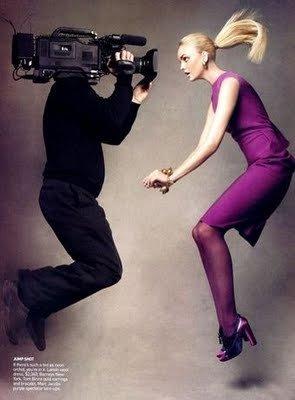
Amongst other things the documentary features a difference of opinion between Anna Wintour and Grace Coddington. During a photo shoot Grace asks the camera man of the film crew to star in the shoot together with the model, jumping and filming at the same time. When Anna Wintour views the photo, she doesn’t approve of the camara men’s ‘ big belly’ and orders it to be photoshopped. Grace gets furious when she is informed about this and persuades the staff member not to photoshop the picture…
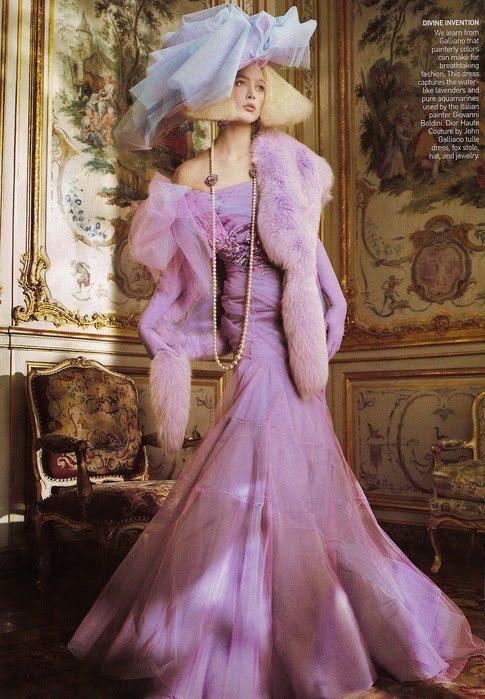
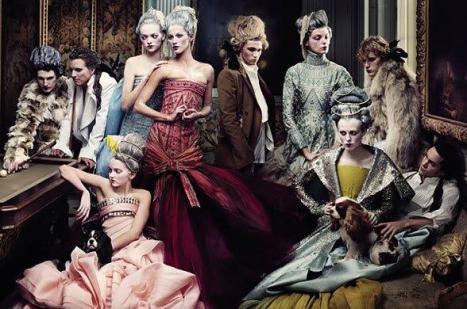
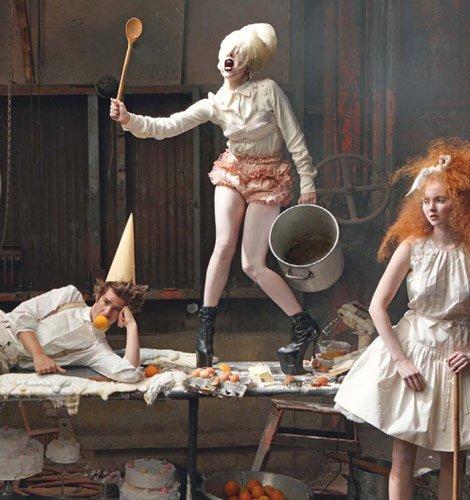
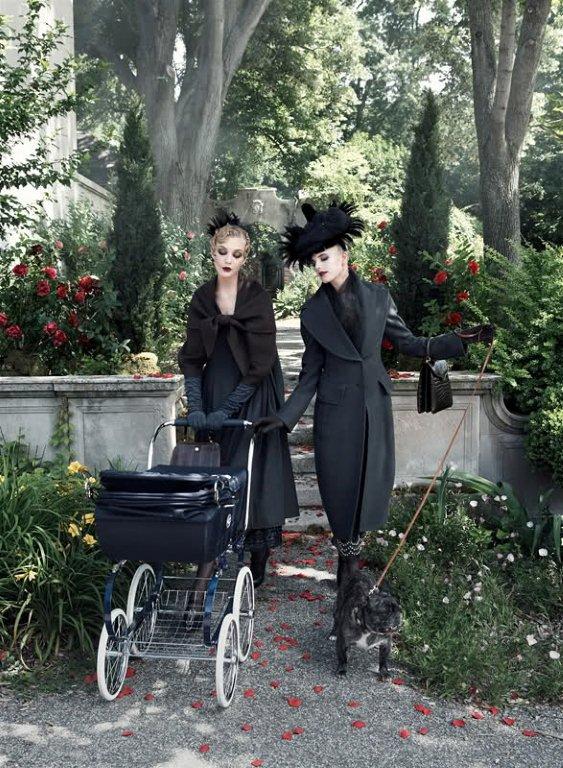
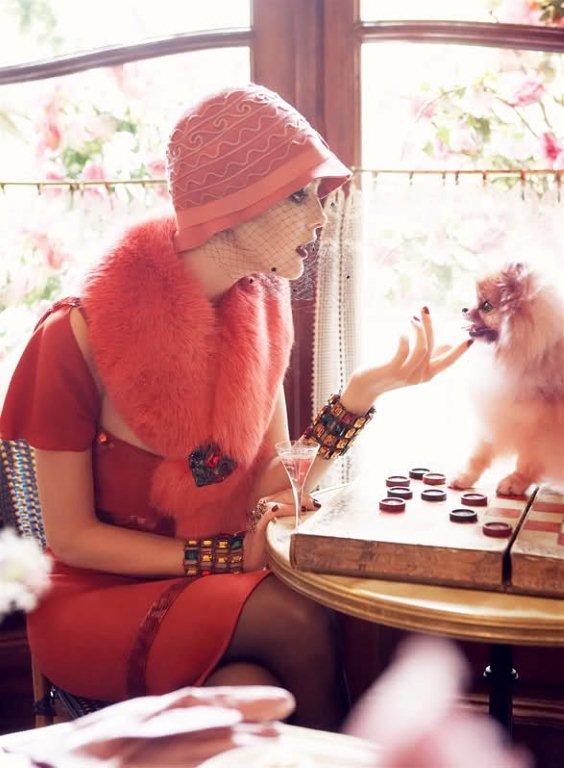
Some of Grace’s work for Vogue
Vogue colleagues and collaborators on Grace and her work
Some quotes from an interview with Grace Coddington on Huffington Post.com , posted October 22, 2009 by author, journalist, contributing style editor Lesley Blume.
On photographer Irving Penn:
“It was one the great joys of my life to work with him. He had a tiny, tiny studio, minimal lights, minimal people. Everyone was very focused and he produced these extraordinary pictures. I don’t know how he did it … He was the last of those great photographers like Avedon and Helmut and all those guys; I’m sad to see them go … It’s our challenge now to find more and more and something different [and] I know we’ll find another way, but there will never be another Penn.”
On photographer Bruce Weber:
“He taught me so much about America, [and gave me] a whole new way of looking at things. He was really responsible for scrubbing everyone’s faces, for fresh-looking women who you could touch, making them look vulnerable.”
On photographer David Sims:
“He’s much younger than me, and it’s a challenge. I have to keep on my toes and be modern and keep up with him. He’ll talk for three hours about a white background and I’m trying to go along with him and understand, and then we end up with a white background. But I could do the same shot with a different photographer and it wouldn’t look the same. He has that undefinable modern edge.”
On how celebrity culture is affecting the fashion world:
“I have the reputation of not working with [celebrities] … I just feel more comfortable working with models because I can push them around. But I do work with them; I took Keira Knightley to Africa and you have to like someone to do that. [However,] I hope it doesn’t go completely to the celebs because it will kill off the models, but it’s not my call. It’s all your call. It’s what you all are asking for.”
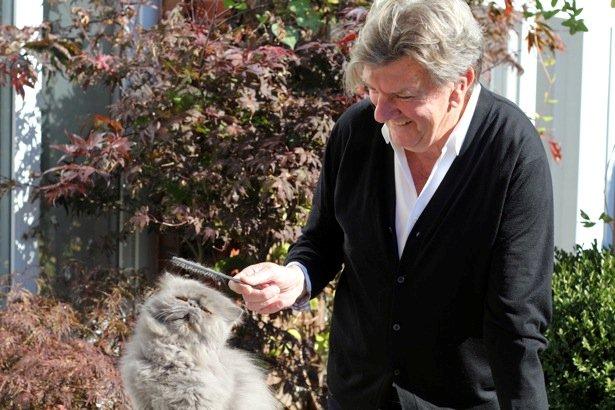
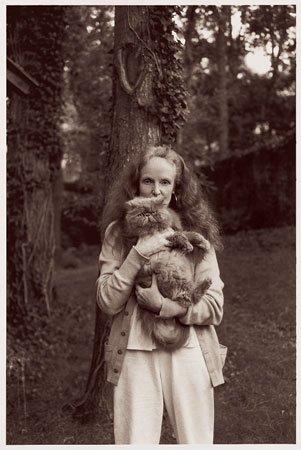
Grace and her beloved cats
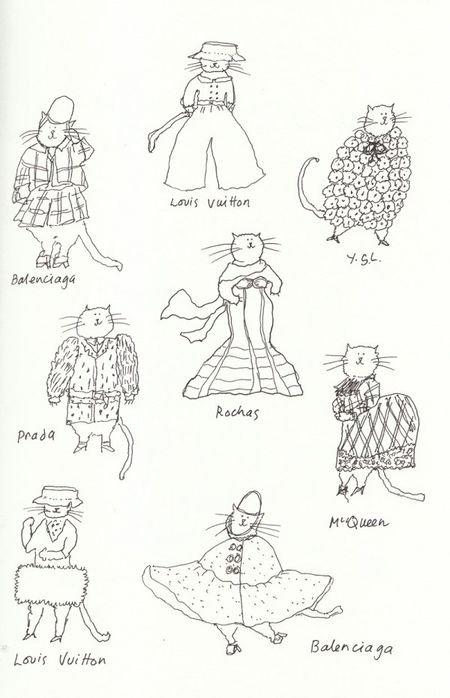
In 2006 the book The Catwalk Cats was published. It is based on 20 years’ worth of sketches and notes she has faxed to her husband while they were apart. “Instead of calling him when I was in Milan or when he was traveling in India, I would do a sketch of where I was and put the cats in my place”. Didier Malige (her husband) photographs accompany Grace’s drawings throughout the book. Grace is well-known for her love for cats and so is Didier.
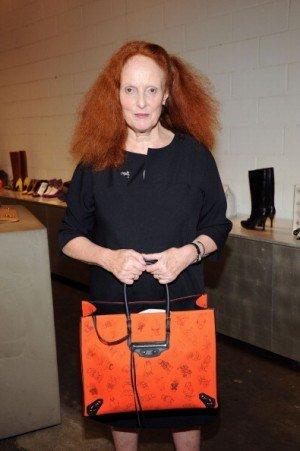
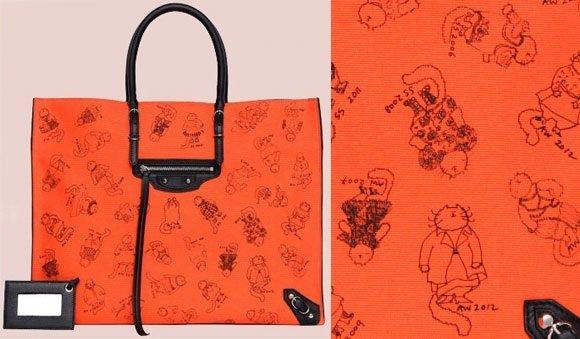
In 2012 Grace has designed a capsule collection with Nicolas Ghesquiere forBalenciaga named after her cat, Pumpkin. The line of scarves and bags will feature Coddington’s drawings of her petit chat modeling various Balenciaga looks from the past decade. Central to the new accessories line is the “Pumpkin Papier” tote bag and two printed “Pumpkin” scarves round out the collection, one in a classic silk twill and one in fringed wool and silk. (20 percent of the proceeds will be donated to the Animal Rescue Fund of the Hamptons)
Books on Grace Coddington’s work and life:
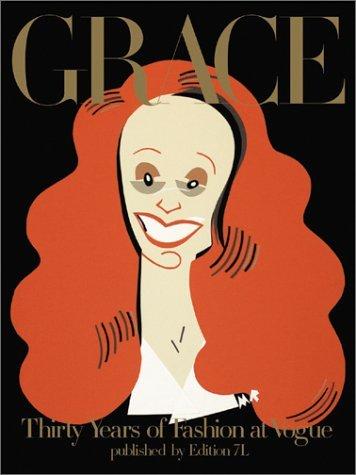
Grace, Thirty years of Fashion at Vogue was published in 2002.
It’s not only a collection of Coddington’s greatest work, it is a visual reminiscence of her life in fashion.
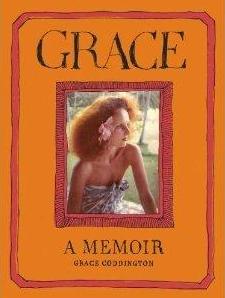
Grace, A Memoir will be published November 20, 2012 ( ISBN: 978-0-8129-9335-6)
Random House has offered Coddington a reported $1.2 million book deal for a tell-all memoir…. “If Wintour is the Pope . . . Coddington is Michelangelo,trying to paint a fresh version of the Sistine Chapel twelve times a year.”—Time
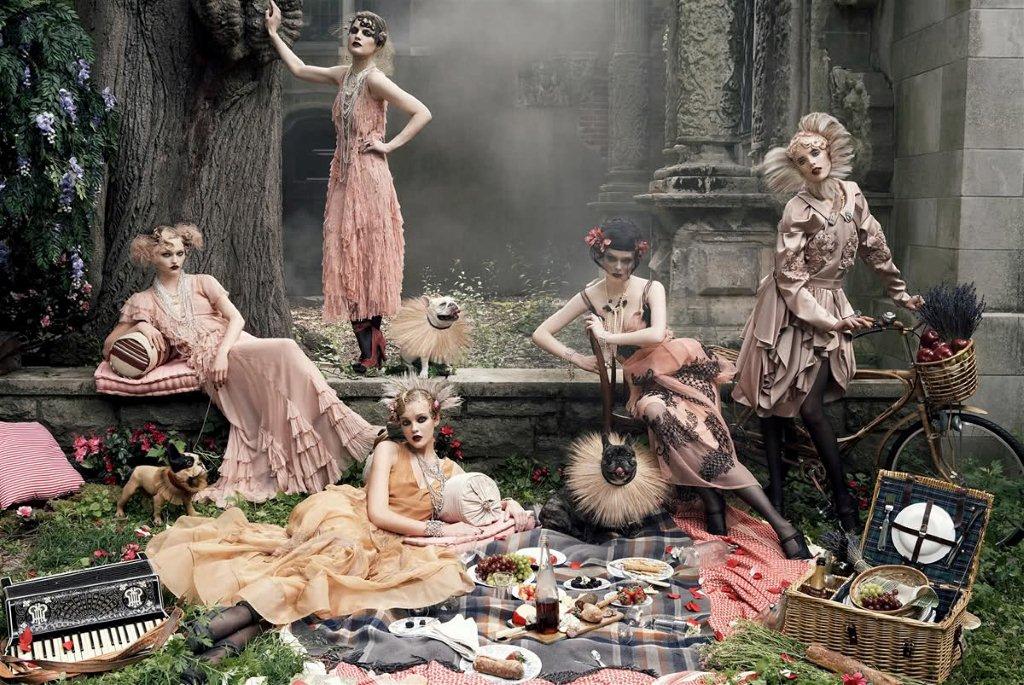
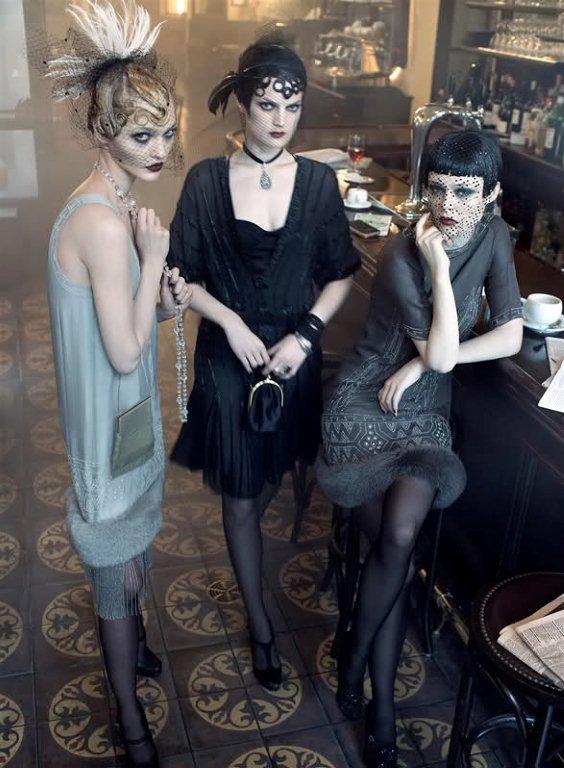
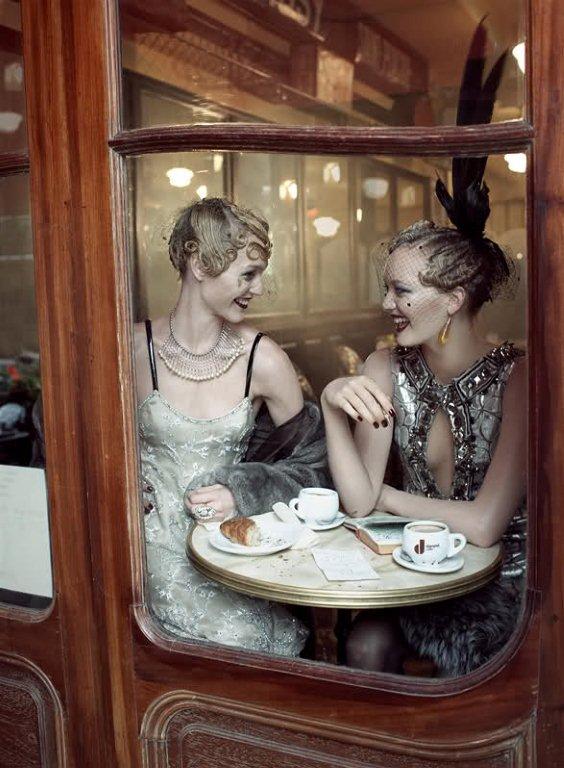
The divine Brassai-inspired 1920s-in-Paris spread. Title:Paris, je t’aimePhotographer:Steven Meisel
The September Issue started out as documentary about Anna Wintour and the famous September issue of American Vogue, but became a story in which Grace Coddington played the leading role. Finally the outside world got a peak inside the Vogue offices, where Grace is the creative director and leading stylist. Now at the age of 71, she still produces the majority of photo shoots for the magazine.
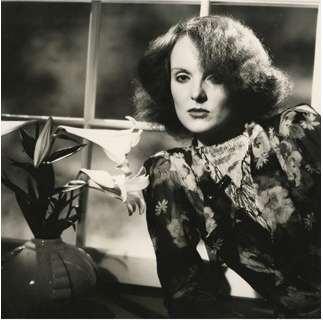
Born on the island of Anglesey, Wales, in 1941 Grace Coddington lives a shy and quiet youth, helping out her parents at the family hotel, every month eager awaiting the new British Vogue she orders at a local bookstore and dreaming away at the pages. She is taught by roller-skating nuns at a Catholic convent. ‘Grace has a sweet way of getting her will’, one school report notes. She sews her own stylish togs on a Singer sewing machine, hoping one day she will be one of the stylish women she imagens inhabit London.
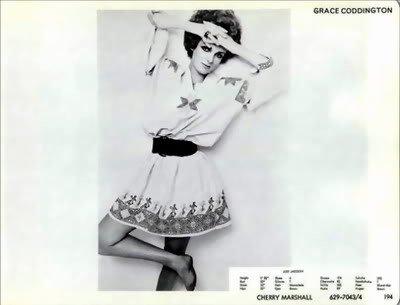
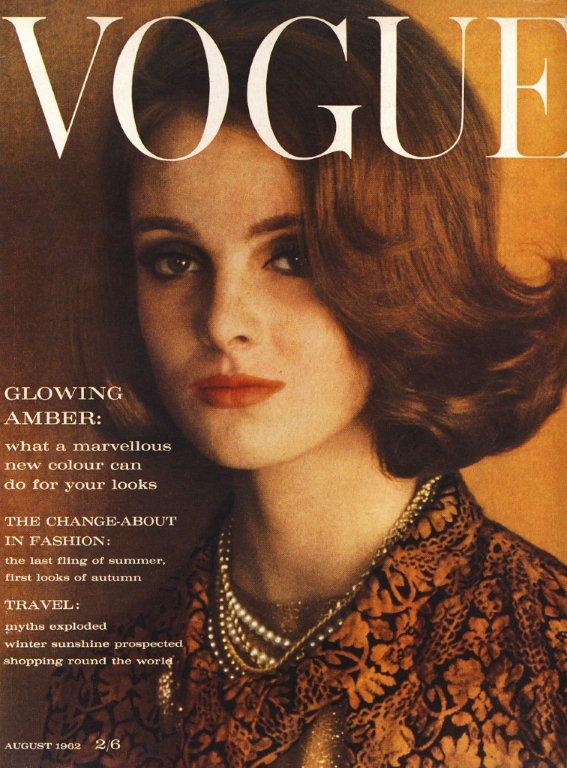
At the age of 18 Grace leaves Anglesey for London. Waitressing at a coffee bar in Knightsbridge and attending Cherry Marshall modeling school fill her days, but the agency says she doesn’t have what it takes to be a model. Than a customer working for Norman Parkinson sends her to meet the photographer and he decides she is perfect for the job. Grace enters British Vogue’s modeling contest and takes the Young Idea category. Anthony Armstrong-Jones (later Lord Snowdon) snaps her first test shots.
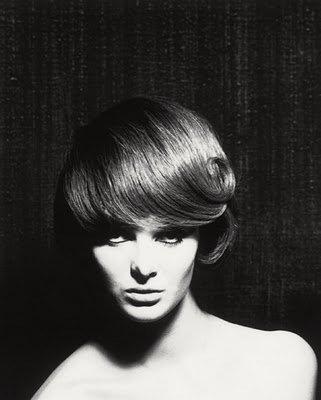
In 1961 Grace becomes a house model for Vidal Sassoon. He chopps her hair into a geometric bob, which later became known as his famous Five-Point Cut. This gives her the exposure she needs. Touring with Sassoon for a series of hair shows in England, she gets involved in a serious car accident. Her face smashed in the driving mirror and her left eyelid is sliced off. Five reconstructive surgeries later, Grace returns to modeling and develops a reputation for versatility.
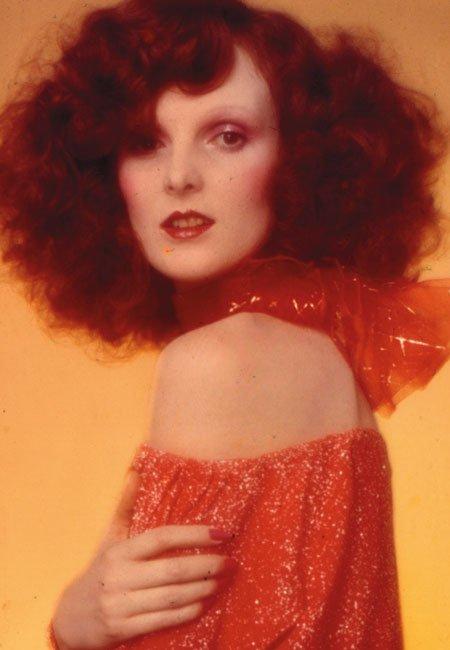
Than the fashion editor of Queen magazine tells Grace she is too old to model, but ‘should be a fashion editor’. Grace meets Beatrix Miller over lunch and is hired as a junior fashion editor for British Vogue, allowed a great deal of creative freedom. In 1971 she goes on assignment with Norman Parkinson to the Seychelles, where she gets inspired for the first fashion-fantasy travelogue that will become her signature style.
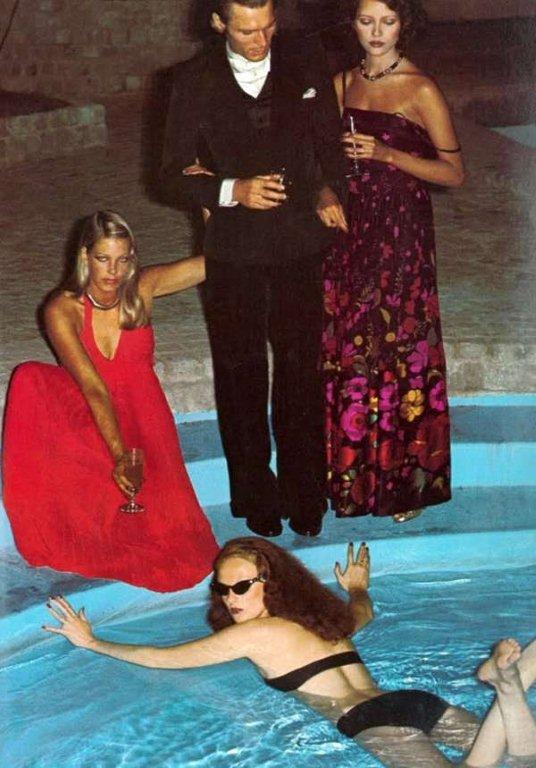
On the set in the South of France (1973), Helmut Newton declares the evening wear shoot ‘bloody boring!’ and calls for something sexy. Editor Coddington obliges and jumps in the water wearing a black bandeau-top bikini and cat-eye sunglasses.
In spring 1986 Anna Wintour takes over editorship of British Vogue, following Beatrix Miller. Grace Coddington, by now the magazine’s fashion editor, resigns by winter, saying “Anna was much more into ‘sexy’ than I was. She leaves Vogue to become design director for Calvin Klein. “If it hadn’t been for Calvin, I wouldn’t have understood America” Grace later tells Vogue. Klein, in turn, will credit her for being the first European fashion editor to appreciate American design. Grace works on the memorable Eternity fragrance ad with Richard Avedon, featuring Christy Turlington. In the meantime Grace moves into a brownstone in Greenwich Village with her companion Didier Malige, the French hairstylist. Anna Wintour moves to the States to take the helm at House & Garden.
In 1988, Anna Wintour becomes the new editor in chief of Vogue in New York and Grace Coddington comes on board as fashion editor. “I was over the moon when she came to the magazine”, Wintour will say later. Grace is named creative director of Vogue in 1995.
“Short stories: celebrating 25 years of Vogue Fashion by Grace Coddington” opens at the Danziger gallery in Soho. The retrospective surveys her work with top photographers at British and American Vogues. She’s honored with a Lifetime Achievement award from CFDA (Council of Fashion Designers of America). Karl Lagerfeld hosts a launch party for Grace: Thirty Years of Fashion at Vogue and Hamish Bowles peruses the coffee-table chronicle of Coddington’s work.
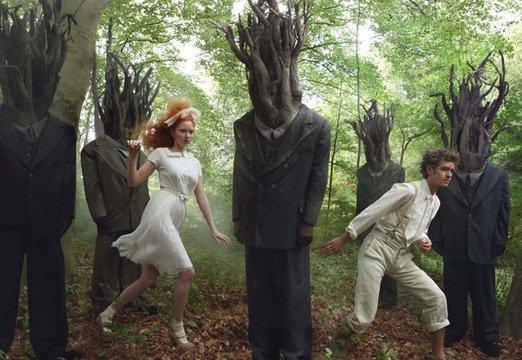
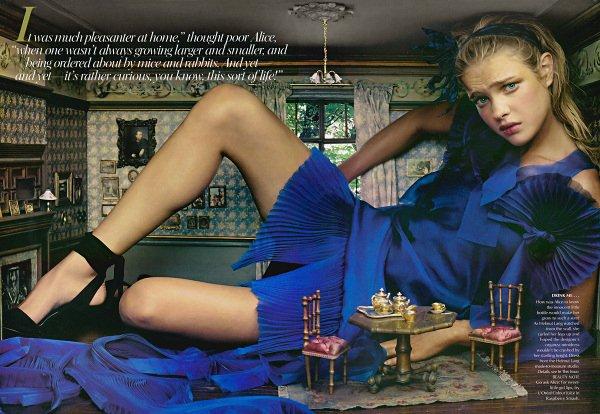
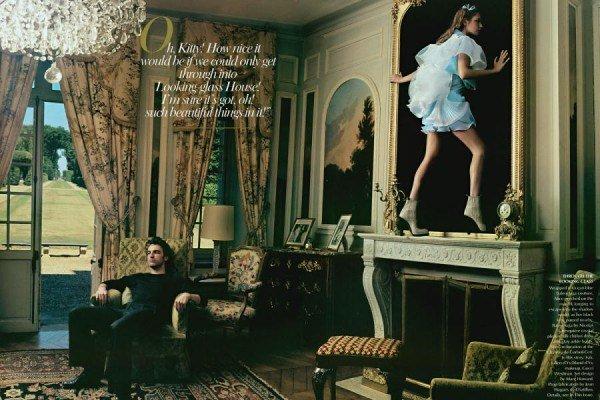
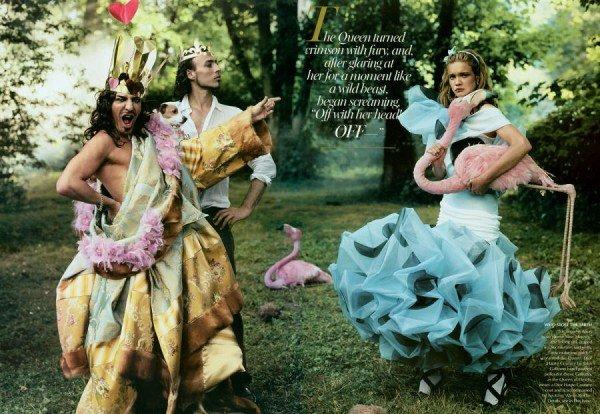
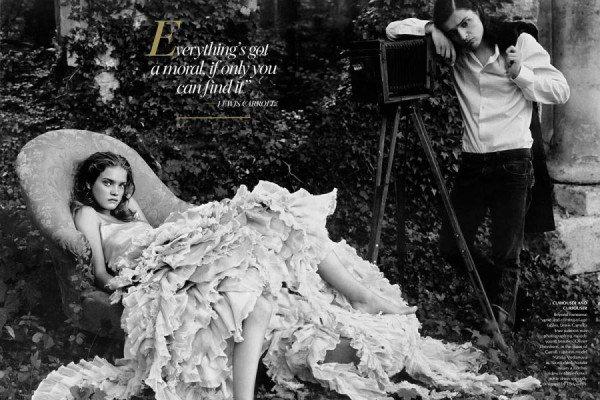
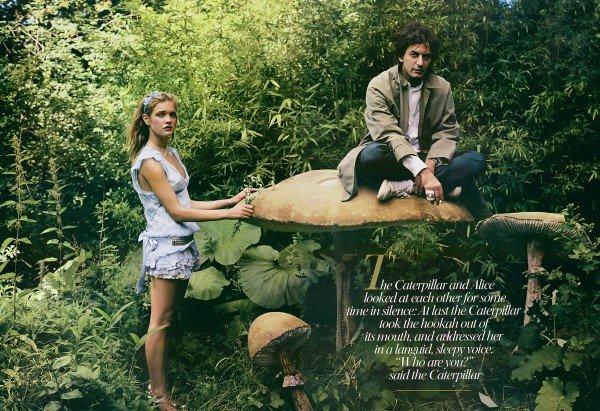
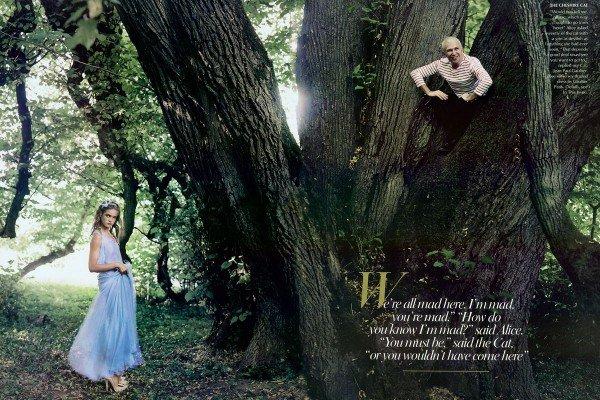
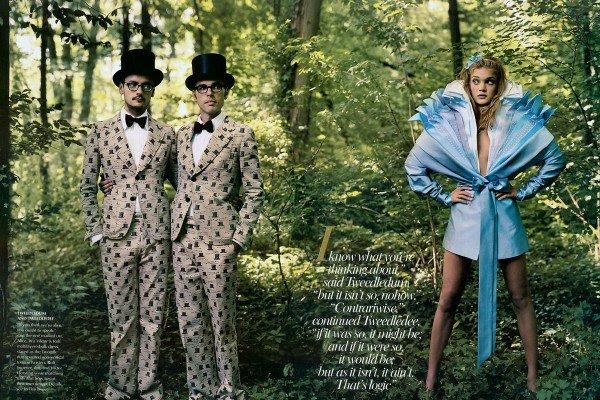
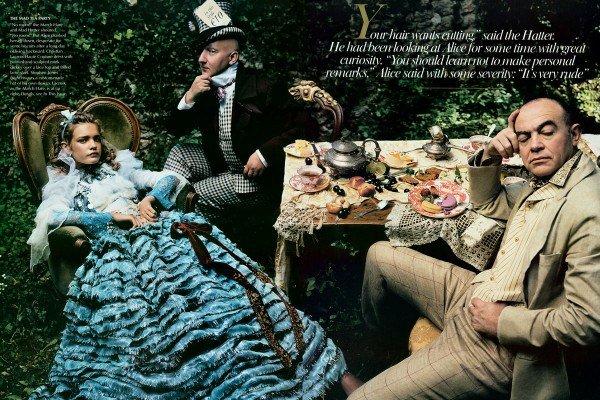
In 2005 Grace Coddington produces the fantastical Wizard of Oz portfolio for Vogue’s December issue, with a cast of fashion and art-world stars photographed by Annie Leibovitz
Next week Grace Coddington, a legend in her own time (part 2)


















































 agnautacouture.com