Audrey Hepburn & Hubert de Givenchy

13 Oct

Givenchy-book-9-26Sept13-Bert-Stern-Vogue-Conde-Nast-inc-1963_b_426x639

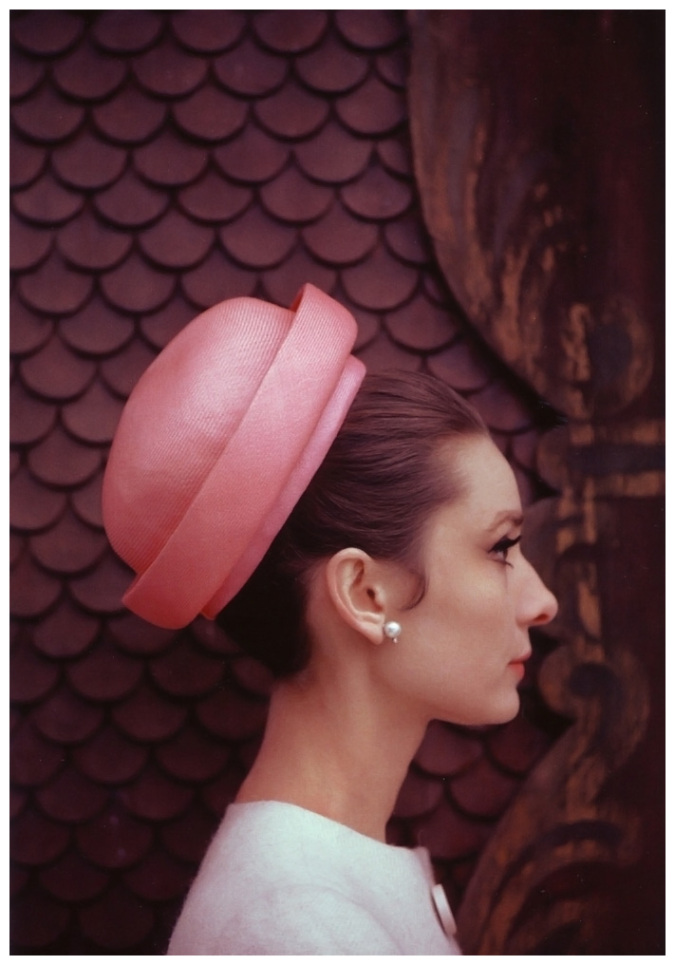
Audrey Hepburn wearing Givenchy, photographed by Bert Stern for Vogue, 1963

.

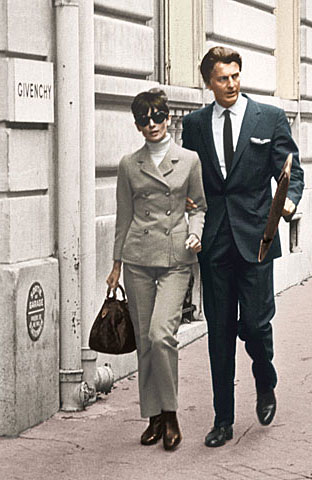
Hubert de Givenchy and Audrey Hepburn – a match made in heaven. Similar ages, the French couturier and Iconic screen star immediately empathized with each other – an intimate relationship that continued into old age. 

Givenchy intuitively understood Audrey’s petite frame – the perfect foil it would seem for the sophisticated and ladylike look of the late 1950s and early 1960s – tiny waist, full skirt – often with underlay and a simply cut bodice, often collarless to show Audrey’s swanlike neck. 

In turn, Audrey’s iconic movies served as the perfect environment for the ultimate catwalk – raising Givenchy’s profile. And perhaps due to the timeless design of both the couture and the movies both are still much admired decades later.

screen-shot-2012-03-07-at-1-25-45-pm

“His are the only clothes in which I am myself. He is far more than a couturier, he is a creator of personality.”

Audrey Hepburn
audrey-hepburn-wearing-hat-and-dress-designed-by-givenchy-photo-howell-conant-for-a-fashion-editorial-at-her-house-in-switzerland-in-february-1962

“Balenciaga once said the secret of elegance is elimination. I believe that. That’s why I love Hubert de Givenchy… They’re clothes without ornament, with everything stripped away.”

Audrey Hepburn

.
Audrey & Hubert

Audrey & Hubert

Start of Audrey Hepburn’s movie career

In the Italian-set Roman Holiday (1953), Audrey Hepburn had her first starring role as Princess Ann, an incognito European princess who, escaping the reins of royalty, falls in love with an American newsman (Gregory Peck). While producers initially wanted Elizabeth Taylor for the role, director William Wyler was so impressed by Hepburn’s screen test that he cast her in the lead. Wyler later commented, “She had everything I was looking for: charm, innocence, and talent. She also was very funny. She was absolutely enchanting and we said, ‘That’s the girl!'”

Originally, the film was to have had only Gregory Peck’s name above its title, with “Introducing Audrey Hepburn” beneath in smaller font. However, Peck suggested to Wyler that he elevate her to equal billing so that her name appeared before the title and in type as large as his: “You’ve got to change that because she’ll be a big star and I’ll look like a big jerk.”

Audrey was nominated for an Academy Award for Sabrina, Breakfast at Tiffany’s and Wait until Dark and did win an Oscar for Roman Holiday. She was the first actress to win an Oscar, a Golden Globe and a BAFTA Award for a single performance.
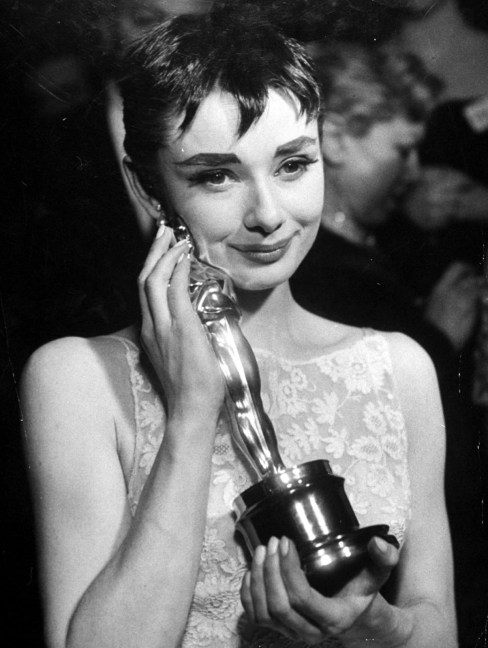
Audrey with her oscar

And than they met

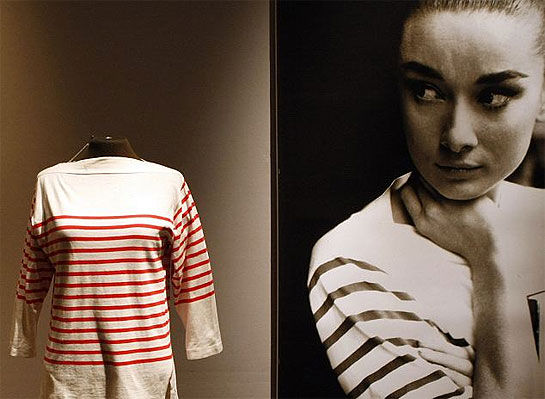
Audrey and Hubert de Givenchy first met in 1953, in a romantic twist of fate that rivals any of her films. He had in fact been expecting Katharine as the Mademoiselle Hepburn he was to dress for the forthcoming picture “Sabrina”. Audrey is said to have arrived in a tied-up T-shirt, tight trousers, sandals and a gondolier’s hat.

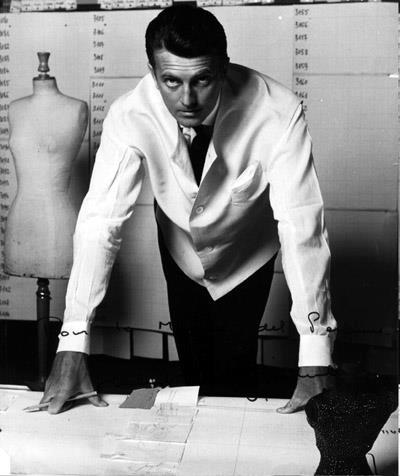
At that time the twenty-six-year-old Hubert de Givenchy was already the rising star of French couture, competing with the famous  forty-eight-years-old Christian Dior. The technique of Givenchy was influenced by his mentor and friend Cristobal Balenciaga. After he had worked for the well-known Lucien Lelong and Elsa Schiaparelli, the young designer  opened his own salon in Paris in 1952. His clothes were revolutionary for his time: feminine, yet very simple, and beautifully tailored.

Givenchy was in the middle of putting together his new collection. He suggested to Audrey to choose anything she liked from his current collection, a suggestion that satisfied her.  According to Givenchy, Audrey knew exactly what she wanted to have, as well as the fine points and faults of her body. She only wanted to adapt some designs… This would eventually become an incredibly popular  fashion style named after the film.

“Sabrina” would win only one Oscar, for the costume designs, and Edith Head would take all the credit. Audrey Hepburn felt very sorry for Givenchy, she called him immediately in Paris to apologize.

“I was very touched, but told her not to worry, because Sabrina had brought me more new clients than I could handle,” Givenchy recalled. “But Audrey was still upset, and she made a promise to me that  in the future she would make sure that it never happened again. And she kept her promise. This was one of the most marvelous things about her. She thought constantly of others.”

.

Perfume

Audrey Hepburn Perfume

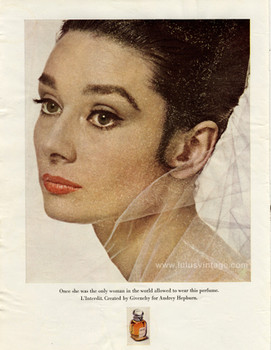
l'Interdit

It was meant for Audrey’s personal use, and was given to her as a surprise. She loved it. Because many of her friends wanted to have it also, she kept asking Givenchy to put L’Interdit on the market. As soon as the designer was ready to launch it, Audrey offered her help for the advertising campaign. The color ad with a beautiful photo of Audrey Hepburn made by Richard Avedon, stated: “Once she was the only woman in the world allowed to wear this perfume. It was the first time the world had seen an actress as the face of a perfume.

.

Pixie Haircut

Audrey-Hepburn

Audrey Hepburn by Richard Avedon

A pixie cut is a short hairstyle worn by women, generally short on the back and sides of the head and slightly longer on the top. Pixie cuts were popularized first in the late 1950s when Audrey Hepburn wore the style in her debut film Roman Holiday, and later in the 1960s by actress Mia Farrow and British supermodel Twiggy.

roman_holiday_1

Hair cutting scene in Roman Holliday 

.

Auction
audrey auction

audrey auction

audrey auction

audrey auction

audrey auction

audrey auction

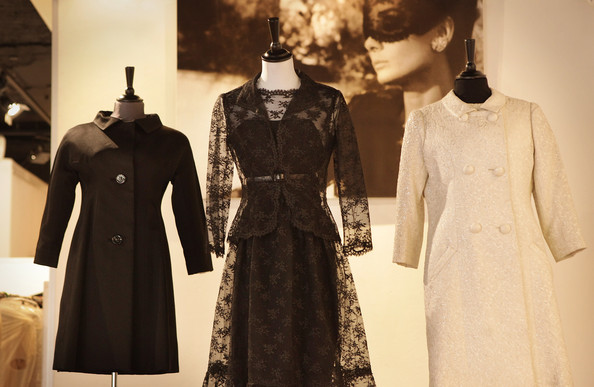
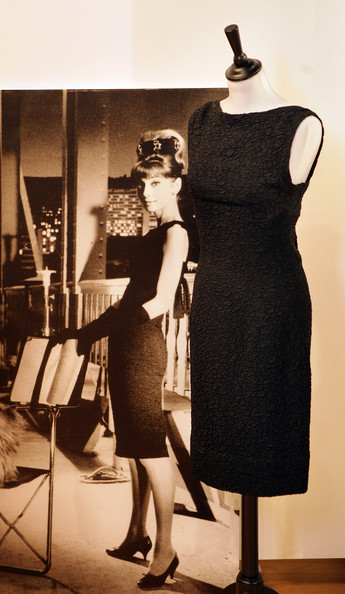
The clothes worn by Audrey Hepburn in the many movies she made are auctioned of through the years, like when Kerry Taylor previewed her Audrey Hepburn auction in Paris, 2,000 people showed up, including Hubert de Givenchy, who’d designed most of the dresses on display. Taylor introduced a little crowd control for Monday’s London preview—you had to buy a £10 catalog before you got in the door—but if the turnout was substantially smaller, it was just as avid. No surprises there: Given Hepburn’s unimpeachable style icon status.

.

Book

Book cocer

Vogue on  Hubert de Givenchy

The fashions of handsome, aristocratic Hubert de Givenchy combined the traditions of haute couture creative, luxurious and perfectionist with a modern entrepreneurial sensibility. In a career spanning forty years he created the most glamorous of evening dresses, developed the influential ‘sack’ dress, pioneered the princess silhouette and fielded debonair daytime suits that have never gone out of fashion. He famously defined the sartorial image of Audrey Hepburn both on-screen and off creating the Sabrina neckline and the little black dress for Breakfast at Tiffany’s. A history of chic caught by leading photographers and illustrators, Vogue on Givenchy reveals what the magazine called his ‘stardust touch’.

 http://www.amazon.co.uk/Vogue-Hubert-De-Givenchy-Designers/dp/1849493138

.

audrey-hepburn

Hubert de Givenchy

.

.

information for this post : Wikipeia, Famous Women and Beauty & Vogue

Audrey Hepburn, Hubert de Givenchy & The Dress with its own Wikipedia Page…

6 Oct
Audrey Hepburn & Hubert de Givenchy
Audrey Hepburn & Hubert de Givenchy on the banks of Paris
.

Audrey Hepburn dress from  Breakfast At Tiffany’s, 1961 , by Givenchy

Auction description:
An evening gown of black Italian satin designed by Hubert de Givenchy for Audrey Hepburn as Holly Golightly in the 1961 Paramount film Breakfast At Tiffany’s, the sleeveless, floor-length gown with fitted bodice embellished at the back with distinctive cut-out décolleté, the skirt slightly gathered at the waist and slit to the thigh on one side, labelled inside on the waistband Givenchy; accompanied by a pair of black elbow-length gloves [made later]; an envelope addressed in Givenchy’s hand to Monsieur Dominique Lapierre in Paris; and a the November 2006 U.S. edition of Harper’s Bazaar magazine, the cover featuring Natalie Portman modelling the dress in this lot (4)

Audrey Hepburn’s iconic black dress designed by Hubert de Givenchy from the much-loved 1961 classic film, Breakfast at Tiffany’s, sold for €692.390,- at Christie’s South Kensington in the Film and Entertainment Sale on 5 December 2006.
The price establishes a new world auction record for a dress made for a film.

natalie portman in Harper's Bazaar

original Givenchy dress

The sale price was estimated by the auction house to have ended somewhere between £50,000 and £70,000, but the final price was  €692.390,- ($923,187). The money raised in the auction of the black dress ended in helping the poor people of Calcutta to build a school. It so happened that Givenchy, the designer of the dress, had donated the dress to Dominique Lapierre, the author of the book City of Joy, and his wife for raising funds for the charity. When they witnessed such a frenzied auction, the funds raised so astonished Lapierre that he made a very appropriate observation: “I’m absolutely dumbfounded to believe that a piece of cloth which belonged to such a magical actress will now enable me to buy bricks and cement to put the most destitute children in the world into schools.” Sarah Hodgson, a film specialist of Christie’s said, “This is one of the most famous black dresses in the world—an iconic piece of cinematic history—and we are glad it fetched a historic price.”

The little black dress attained such iconic fame and status that it became an integral part of a woman’s wardrobe. Givenchy not only chose the dress for the character in the film, but also added the right accessories to match the long gown in the form of a pearl choker of many strands, a foot long cigarette holder, a large black hat and opera gloves which not only “visually defined the character but indelibly linked Audrey with her”.

Breakfast at Tiffany's

Given her physical assets, she, along with her designer friend Givenchy created a dress to fit her role in the film of a waif. A well-chosen black silk dress with appropriate accessories hit the bull’s eye to bring out her effervescent personality to the fore; the dark oversized sunglasses completed the ensemble of the little black dress (LBD) which was called “the definitive LBD”. The dress, which outlined her lean shoulder blades, thus became the Hepburn style.

In a survey conducted in 2010 by LOVEFiLM, Hepburn’s little black dress was chosen as the best dress ever worn by a woman in a film. In this respect, Helen Cowley, publisher of LOVEFiLM, declared: “Audrey Hepburn has truly made that little black dress a fashion staple which has stood the test of time despite competition from some of the most stylish females around.”  Hepburn’s white dress and hat worn in My Fair Lady was voted sixth.

myfair3

.

Not the Original dress….

Why not the poster-picture of Audrey Hepburn wearing perhaps the most famous ‘little black dress’ of all time at the auction?

In 1961, Givenchy designed a little black dress for the opening scene of Blake Edwards’ romantic comedy, Breakfast at Tiffany’s, where Hepburn plays a leading role alongside actor George Peppard. Audrey took two copies of the dress back to Paramount, but the dresses, which revealed a considerable amount of Audrey’s leg, were not suitable for the movie and the lower half of the dress was redesigned by Edith Head. The original hand-stitched dress is currently in Givenchy’s private archive, whilst one copy Audrey took back to Paramount is on display at The Museum of Film in Madrid and the other was auctioned at Christie’s in December 2006. None of the actual dresses created by Givenchy were used in either the movie or the promotional photography. The movie poster was designed by artist Robert McGinnis and in Sam Wasson’s book, Fifth Avenue, 5am, he explains that the photos he based the poster on did not show any leg and he added the leg to make the poster more appealing. The actual dresses used in the movie, created by Edith Head, were destroyed by Head and Hepburn at Western Costume in California after shooting.

And the dress has its own Wikipedia page!

movie poster

284860_277080672405283_1171168838_n

Breakfast at Tiffany's

Breakfast at Tiffany's

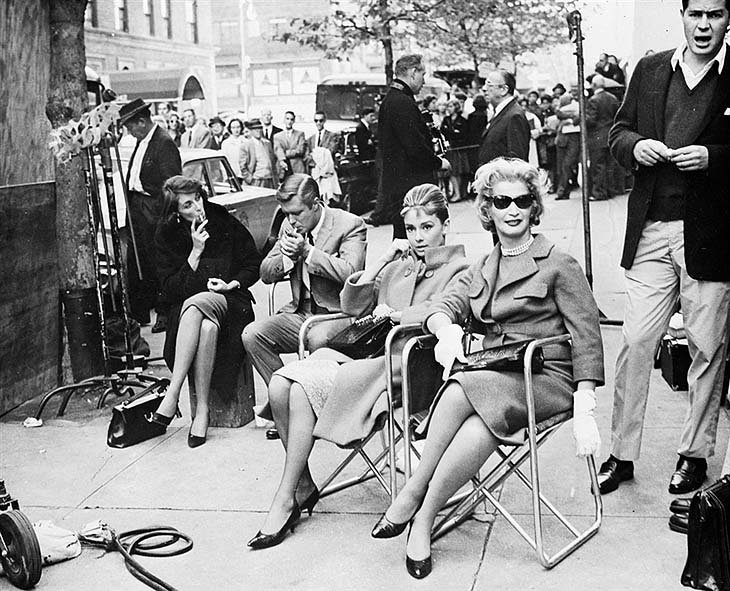
Backstage at Breakfast at Tiffany's

.

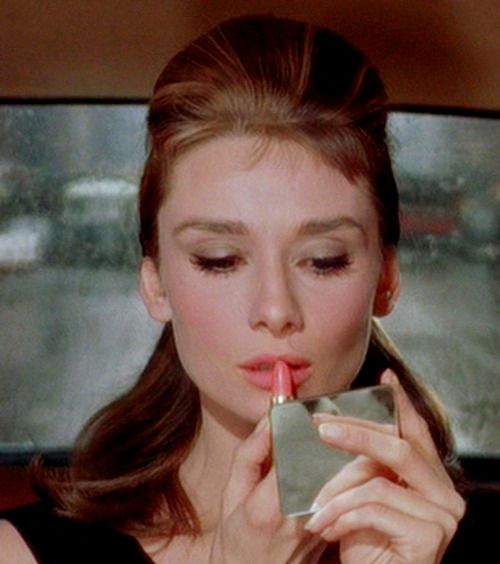
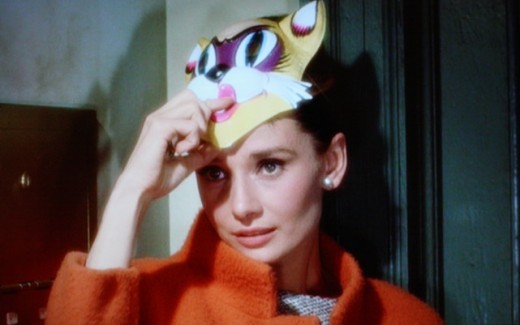
More Audrey Hepburn in Breakfast in Tiffany’s

Audrey Hepburn

Audrey Hepburn

Audrey Hepburn

breakfast-at-tiffanys-8-520x335

.
.

Next week more Audrey Hepburn & Hubert de Givenchy

Audrey Hepburn

.

Dimitri from Paris fantastic ‘A very stylish Girl’ with Audrey Hepburn & George Peppard phrases from ‘Breakfast at Tiffany’s’ 

.

My Beautiful Vintage Christian Dior Dress Suit

22 Sep

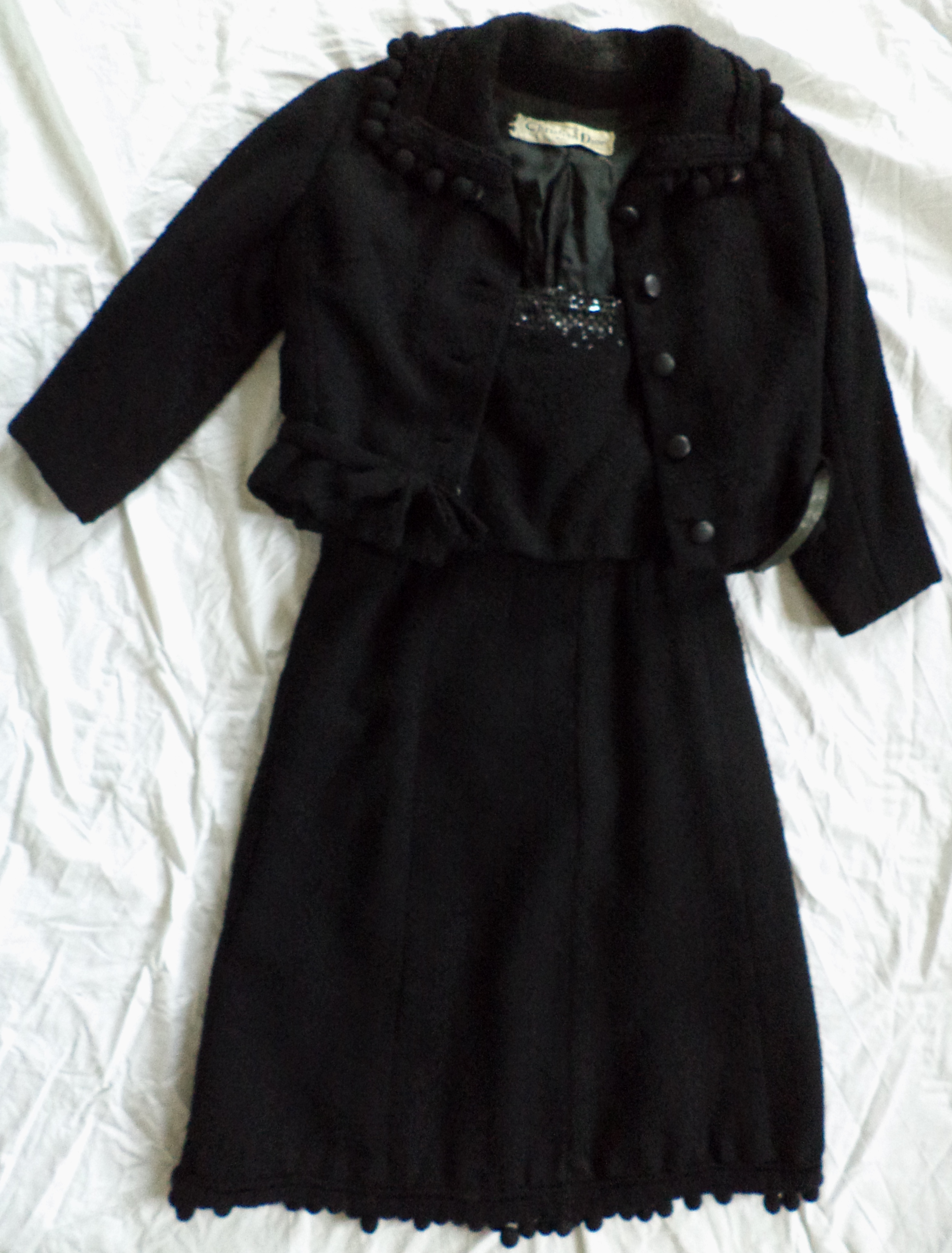
Dior dress suit

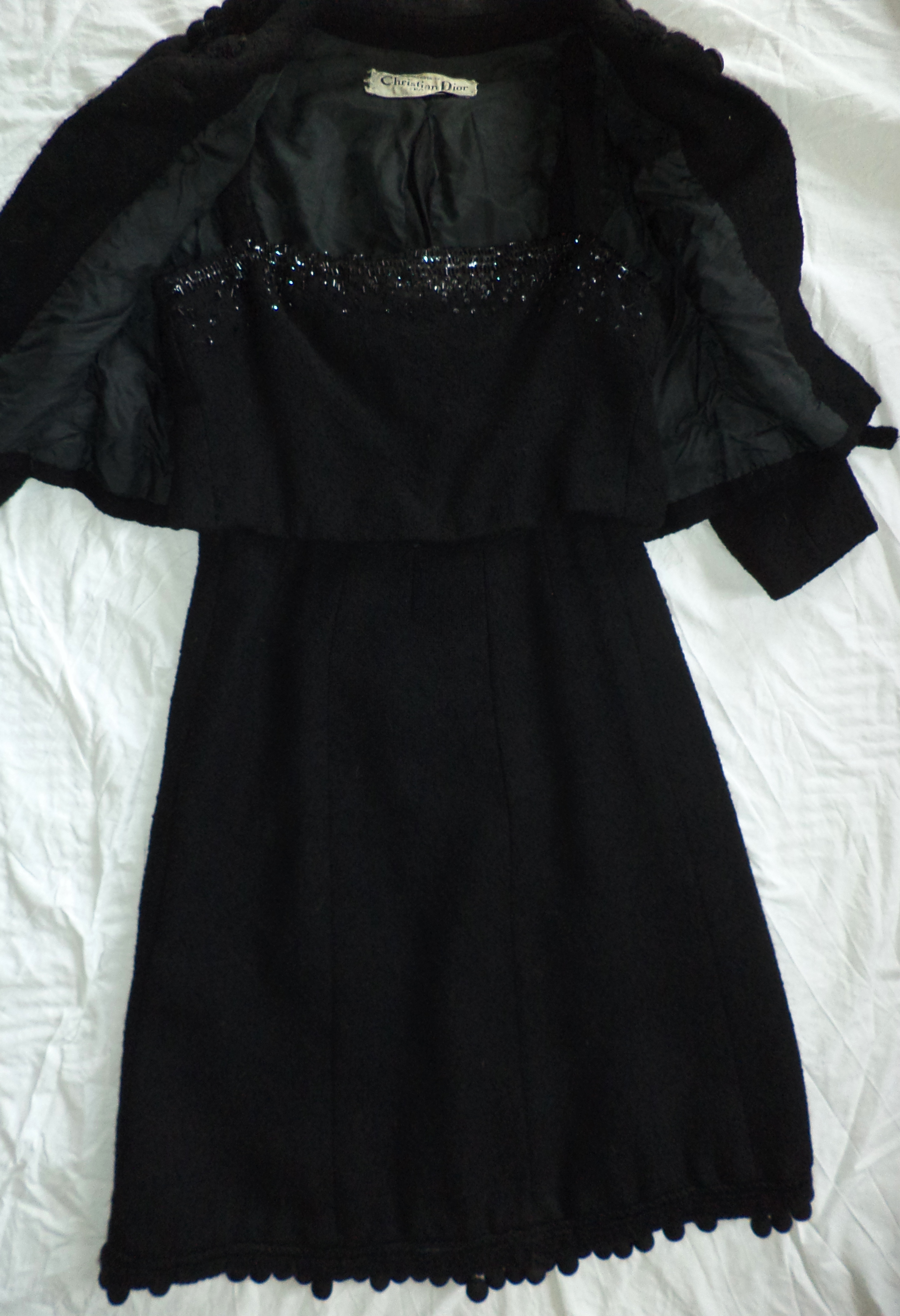
I found this beautiful Christian Dior dress suit about 15 years ago in a second-hand shop (that’s how vintage shops were called at the time). The place belonged to an ex-girlfriend of my neighbour and he advised me to walk in there once in a while, because between all the regular second-hand stock, sometimes real treasures could be found. That’s how I came to know of the shop, which was situated in a neighbourhood you would normally never look for extraordinary second-hand finds.

I got to now the owner, who one day tipped me, a wardrobe of an old lady would arrive and probably it contained some great finds. Being a collector of vintage clothes, shoes and handbags,  I got really excited with the prospect.

That day I walked in and immediately spotted the Christian Dior dress suit, which was hanging behind the counter. I didn’t want to seem to eager, so I walked around the shop, looking for other beautiful things, but nothing could beat the Dior suit. I went to the owner and informed about the price of the suit, but of course she already had noticed I my excitement ( I am the worst actor in the world) about the suit and had upgraded the price to a number she had never asked for a garment in her shop before. But I had fallen in love with the suit, which was made out from  black bouclé fabric and didn’t even try to negotiate about the price.

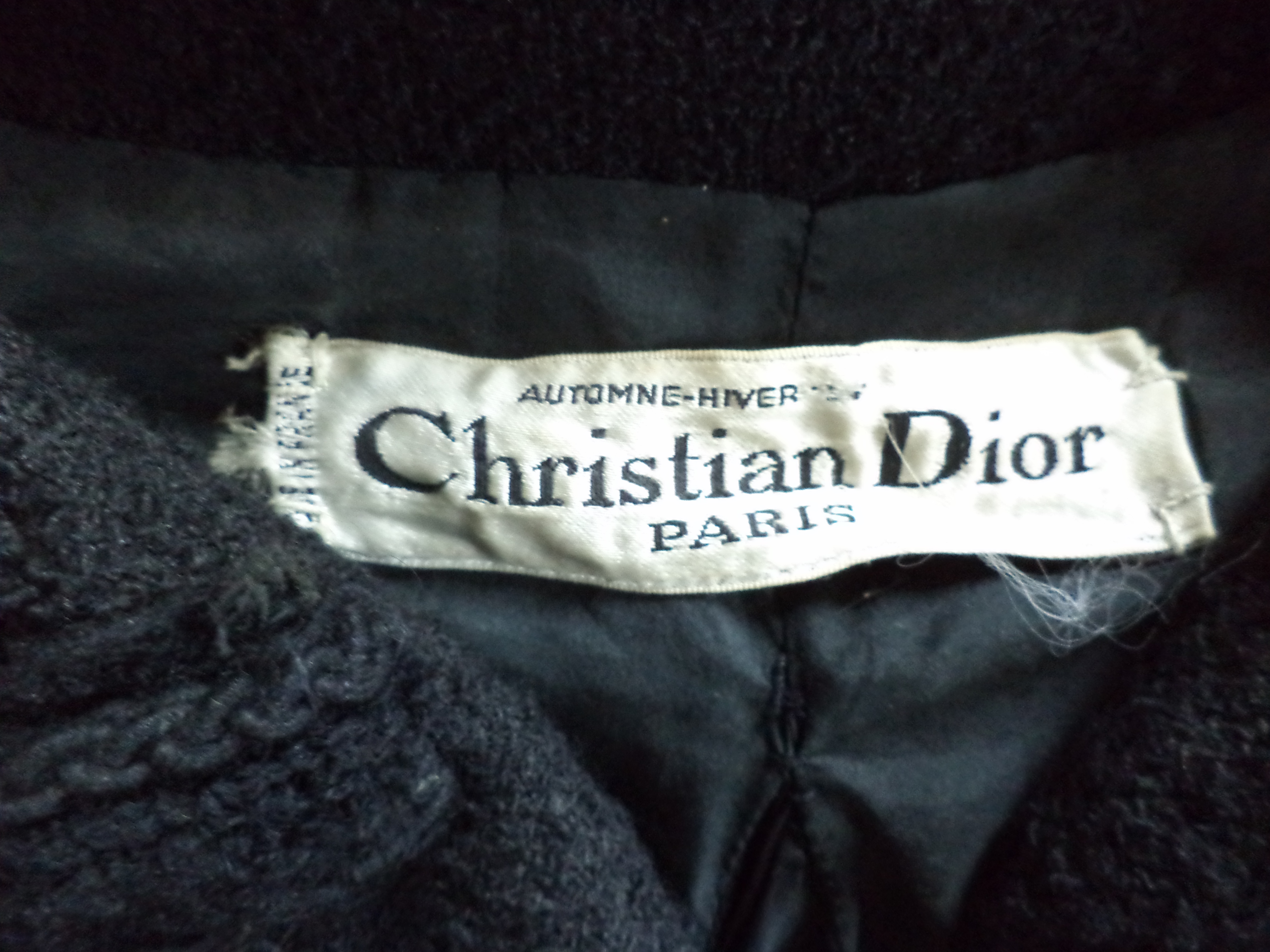
That is how I got to own the suit and for all these years I have taken good care of it. Because Christian Dior was the first one to number his garments, I knew I could find out more about the sui;, the year it was made (somewhere in the 1940ties?) and maybe even if it was made to order for a certain person. I didn’t do anything about this, till about a month ago. I emailed to Dior Paris about the suit and I was advised to photograph it from every side and send these pictures, together with a letter with all possible information about it, to Dior Heritage.

This week I got an email from Dior Heritage, to thank me for the photographs  and if I was willing to consider selling the suit to Dior. I haven’t thought about selling it before, but the idea of the suit returning to Dior after all these years seems very appealing to me, even romantic……

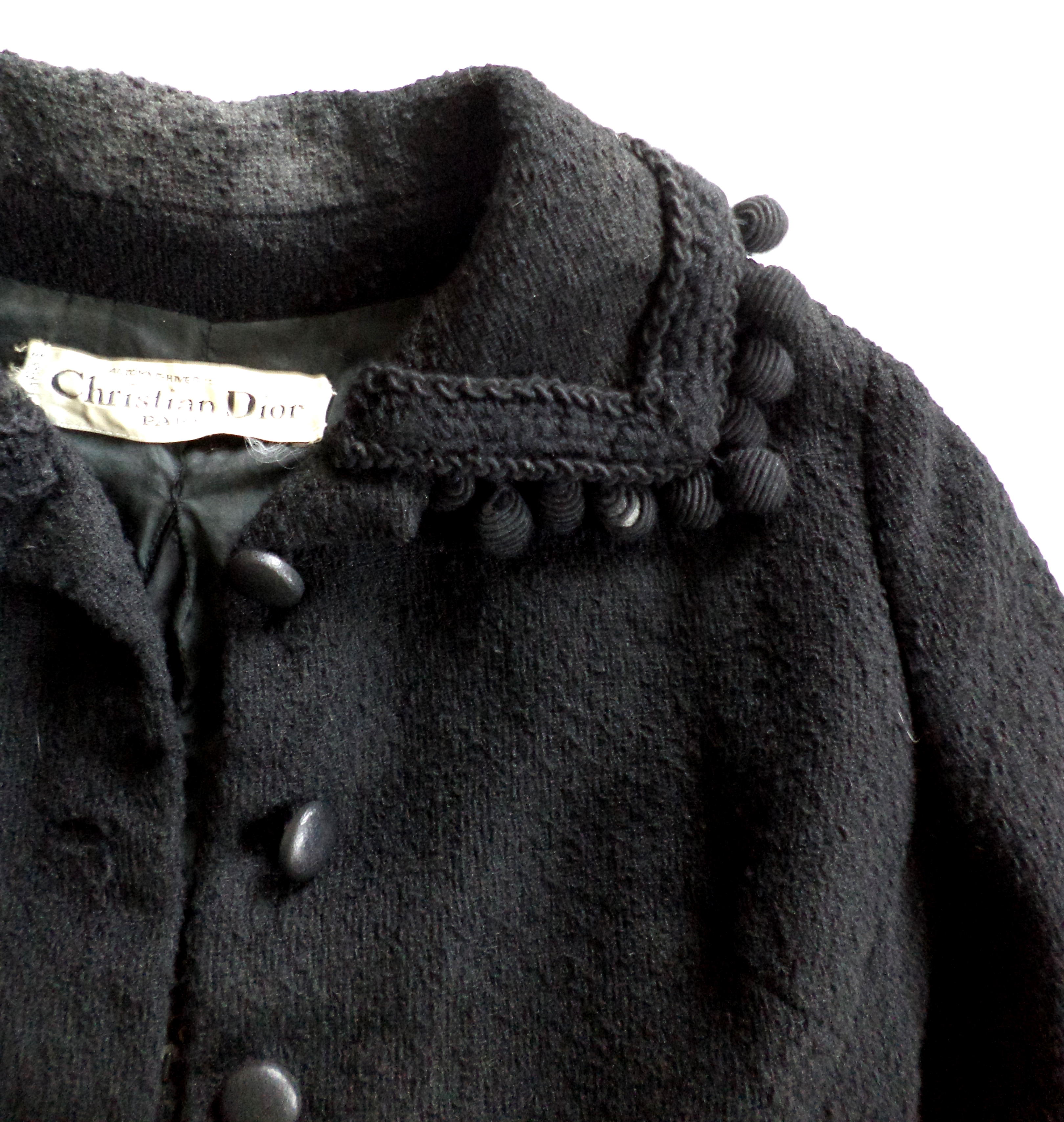
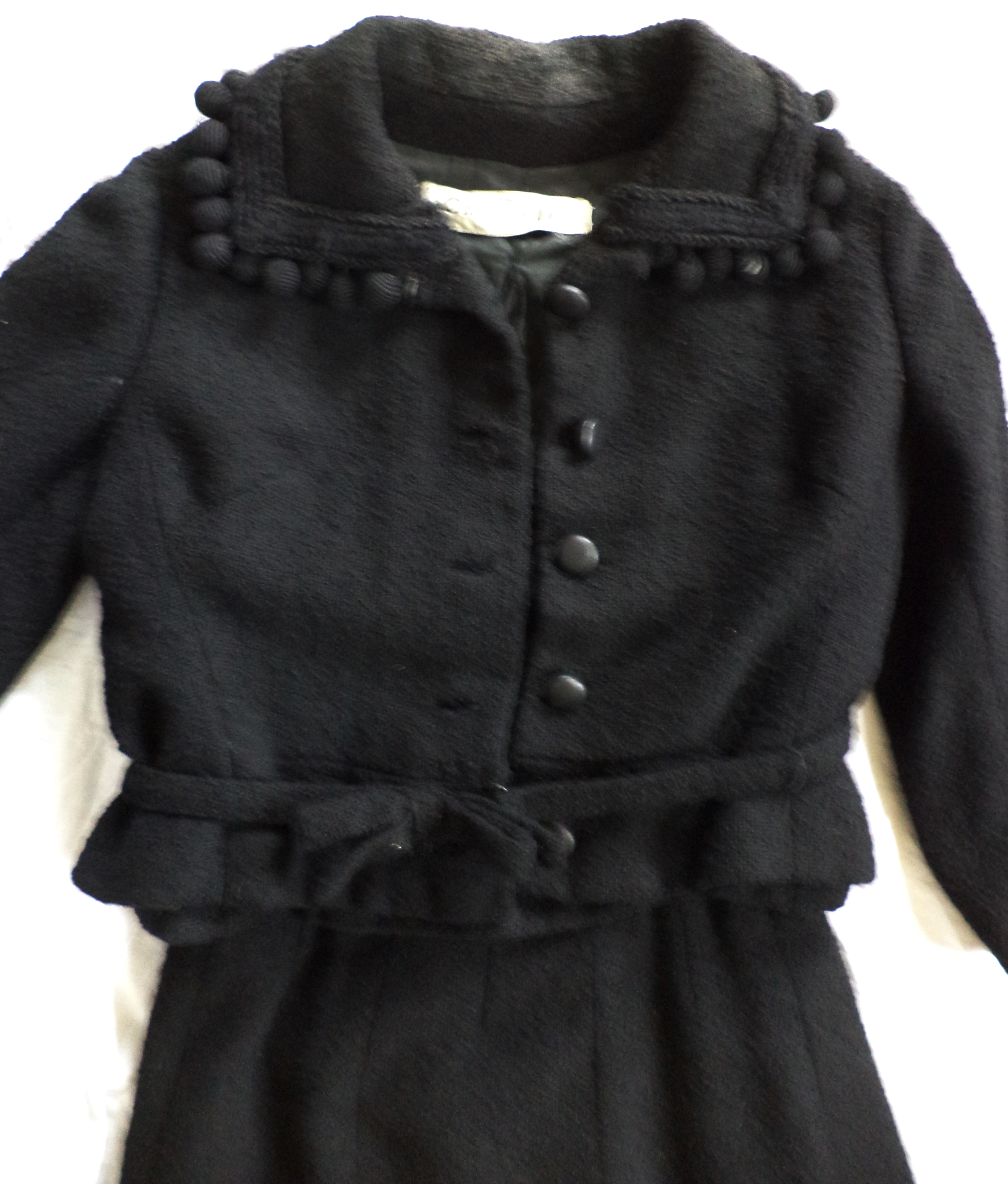
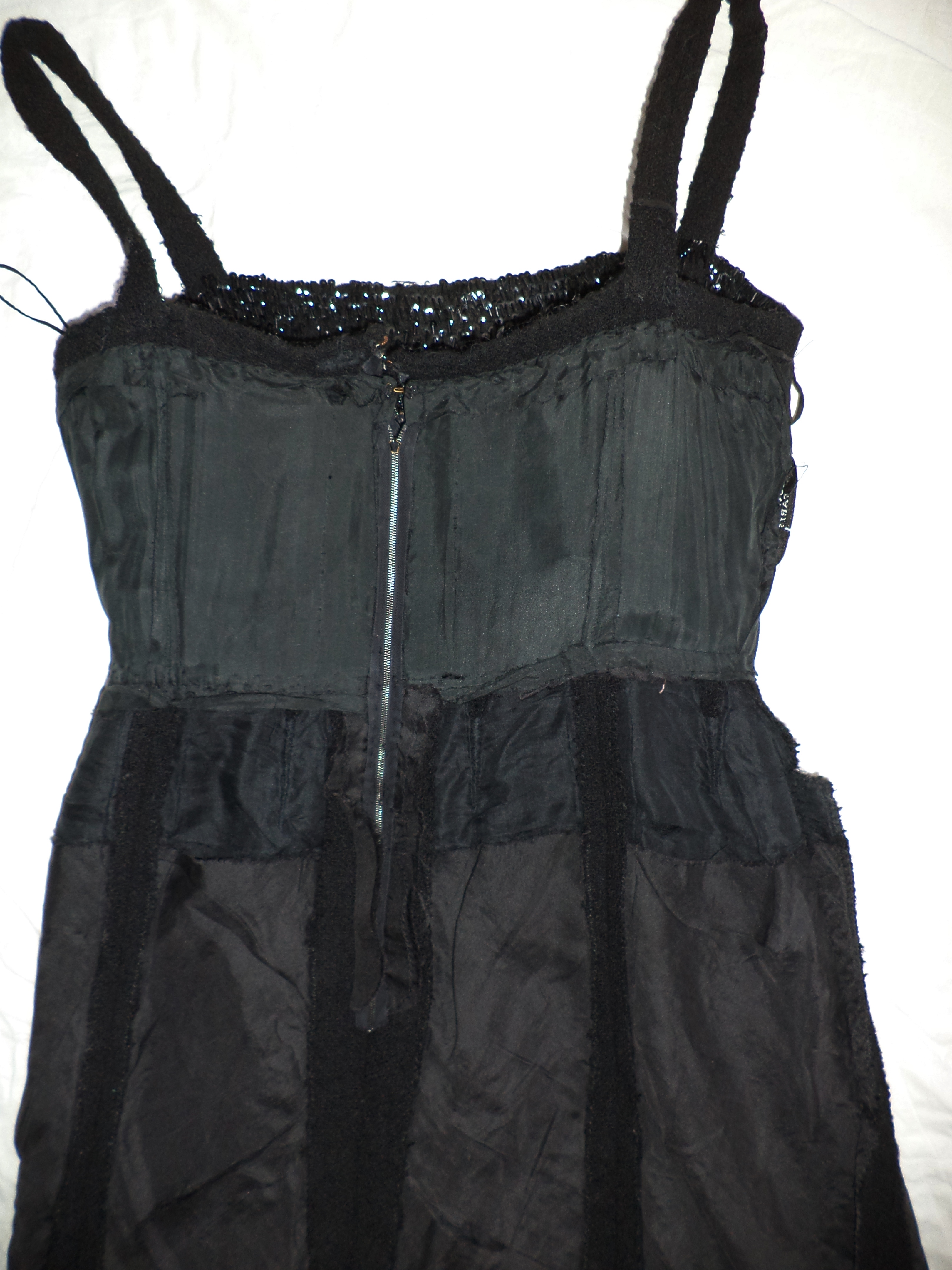
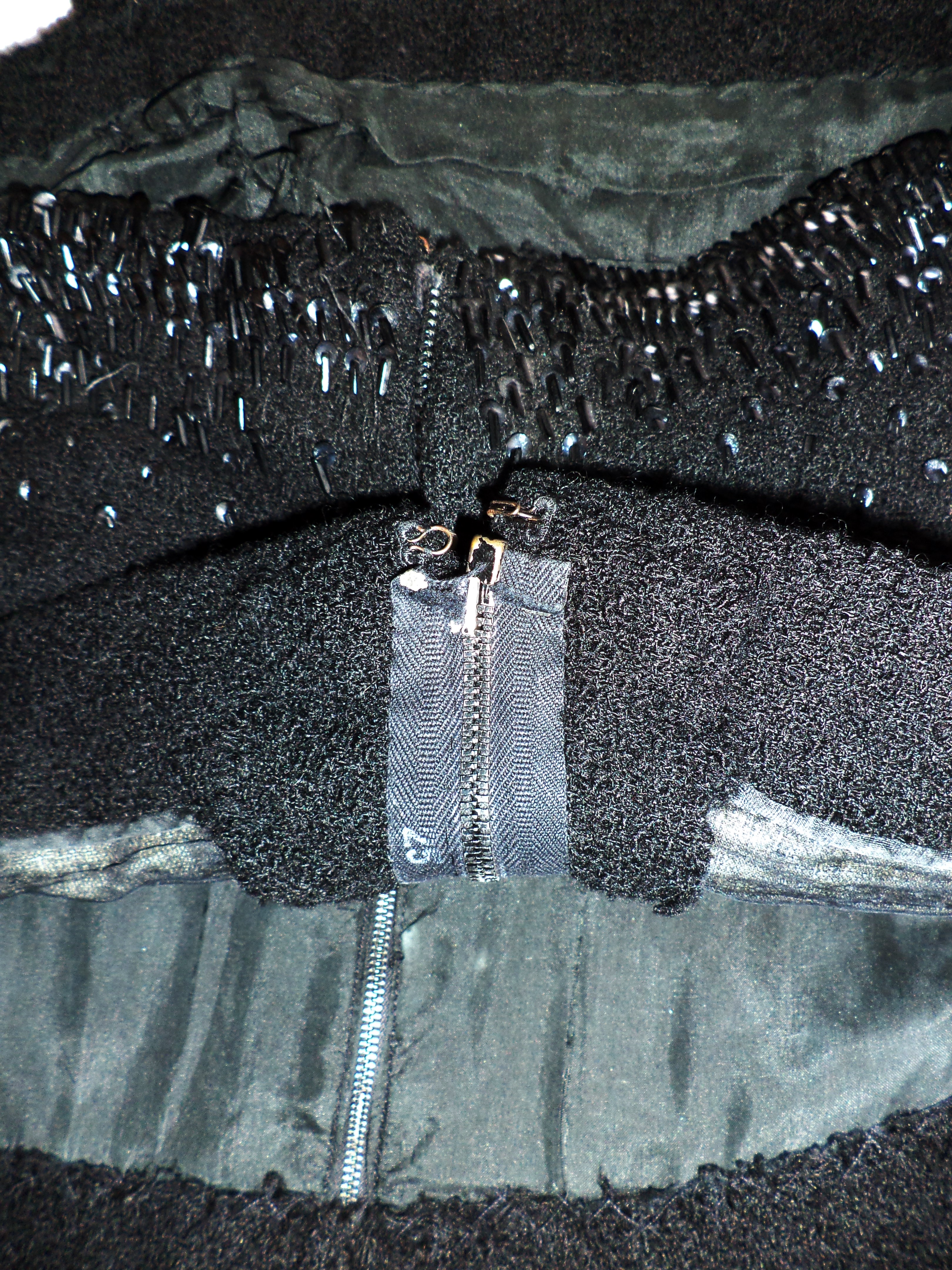
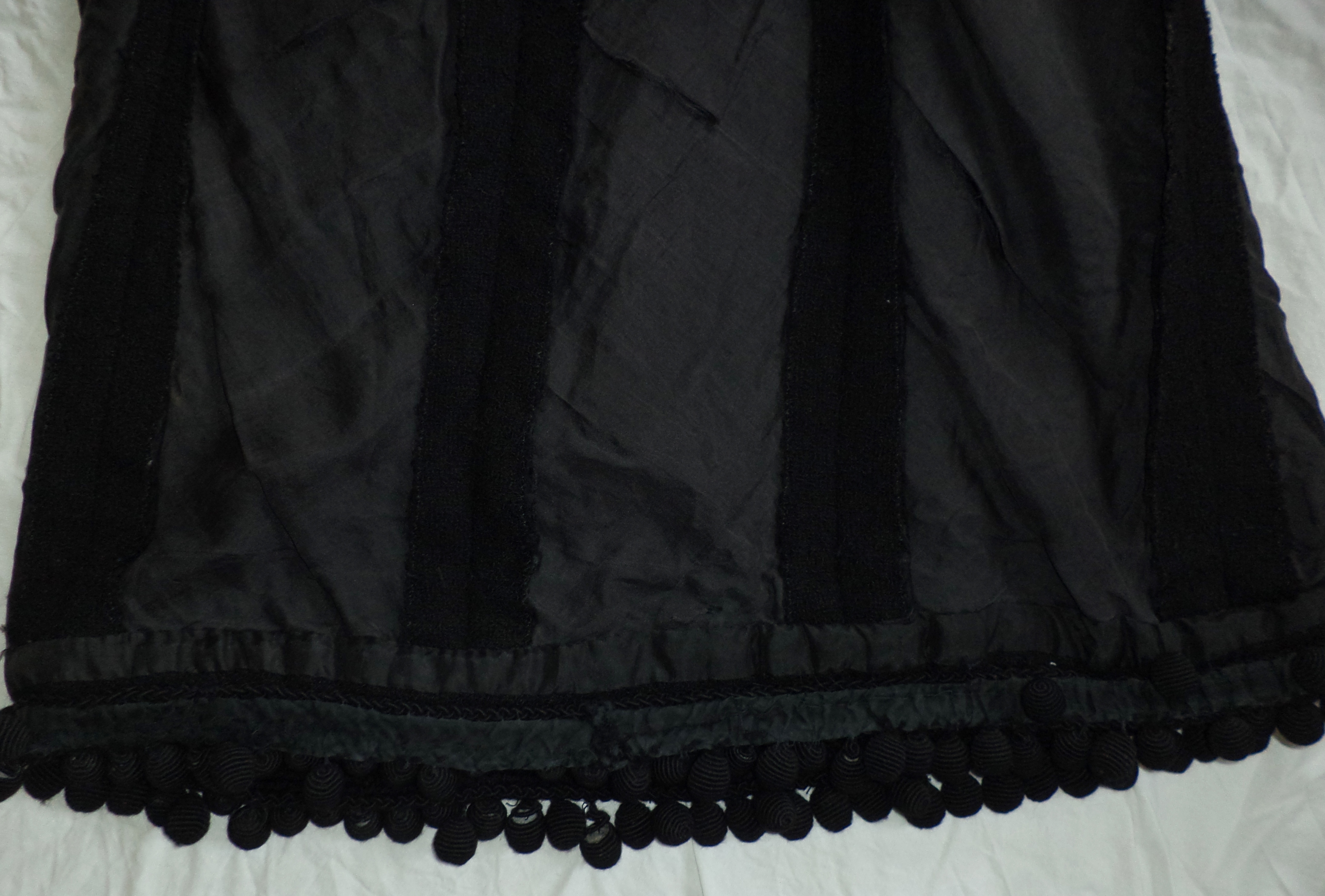
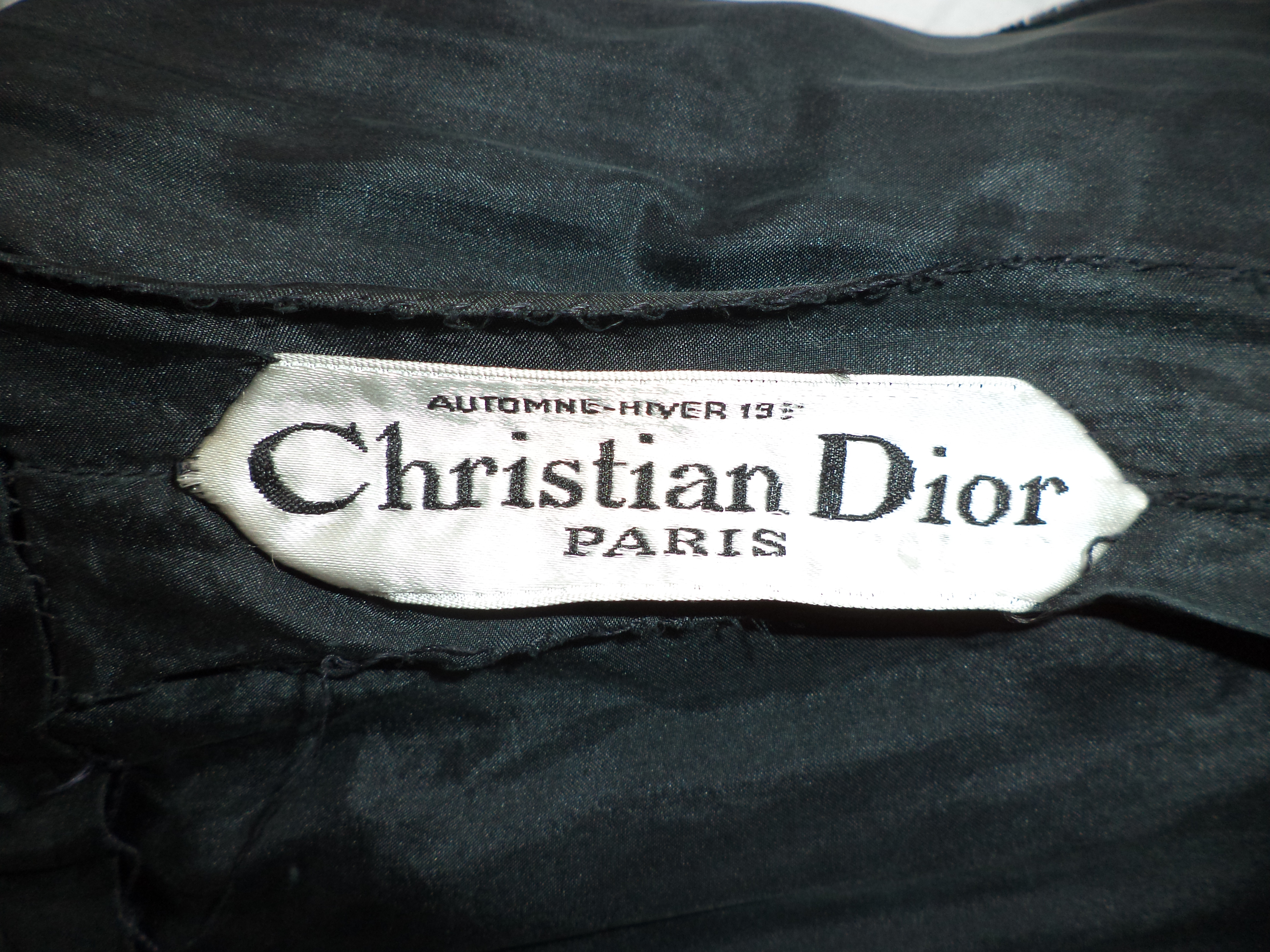
I have been able to study the suit and I want to share the pictures, so others can also see how it was made.

DSC00405

The label in the back of the jacket. The number in the label is quiet faded:  30442

???????????????????????????????

Top front of the jacket with close look on the finishing work of the collar.

???????????????????????????????

The jacket has a ‘fake’ bow belt, which closes with a hook-and-eye underneath the bow

???????????????????????????????

The jacket open showing the full front of the dress, with beads and sequences on the top

???????????????????????????????

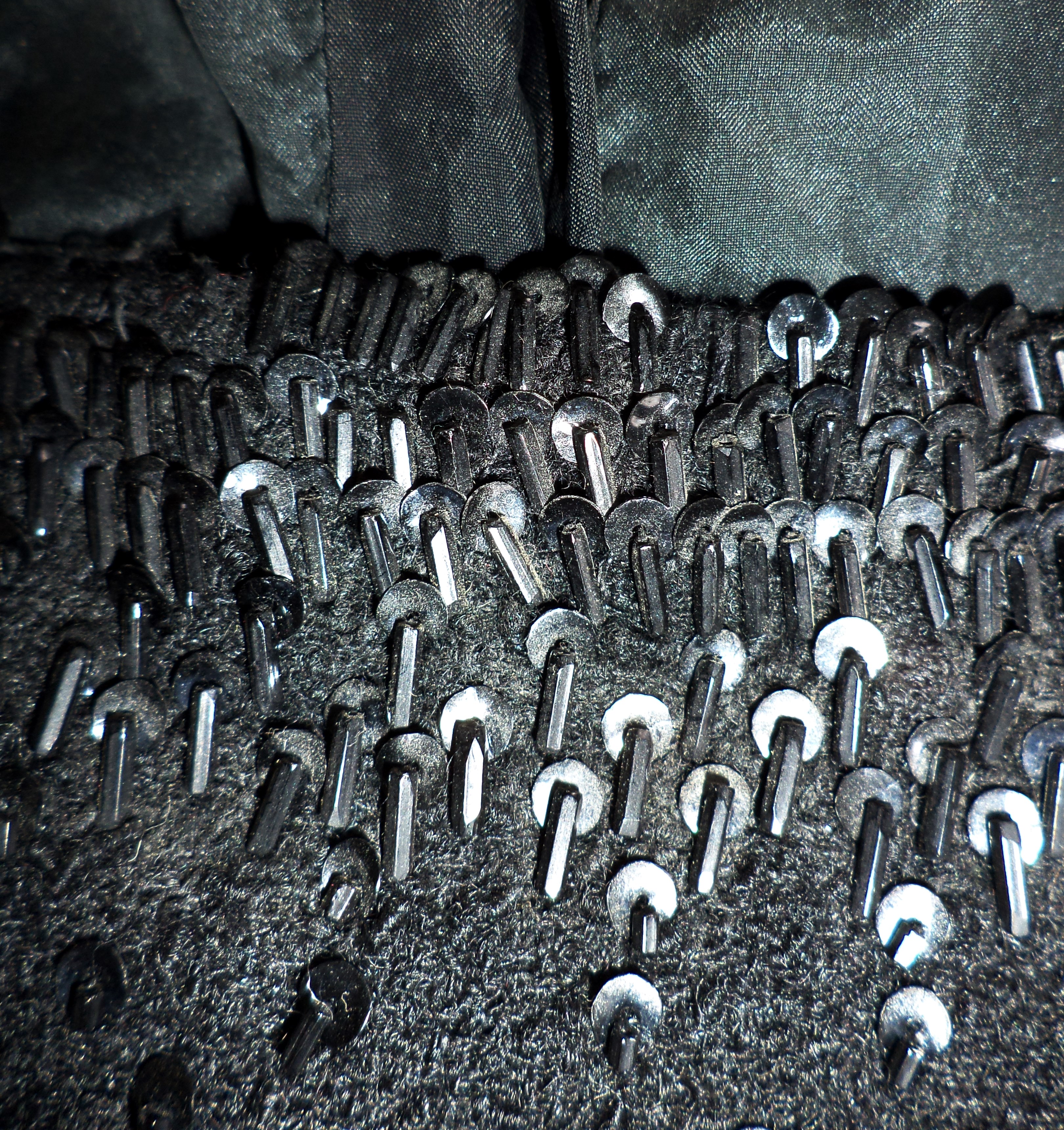
Close-up beads and sequences work

???????????????????????????????

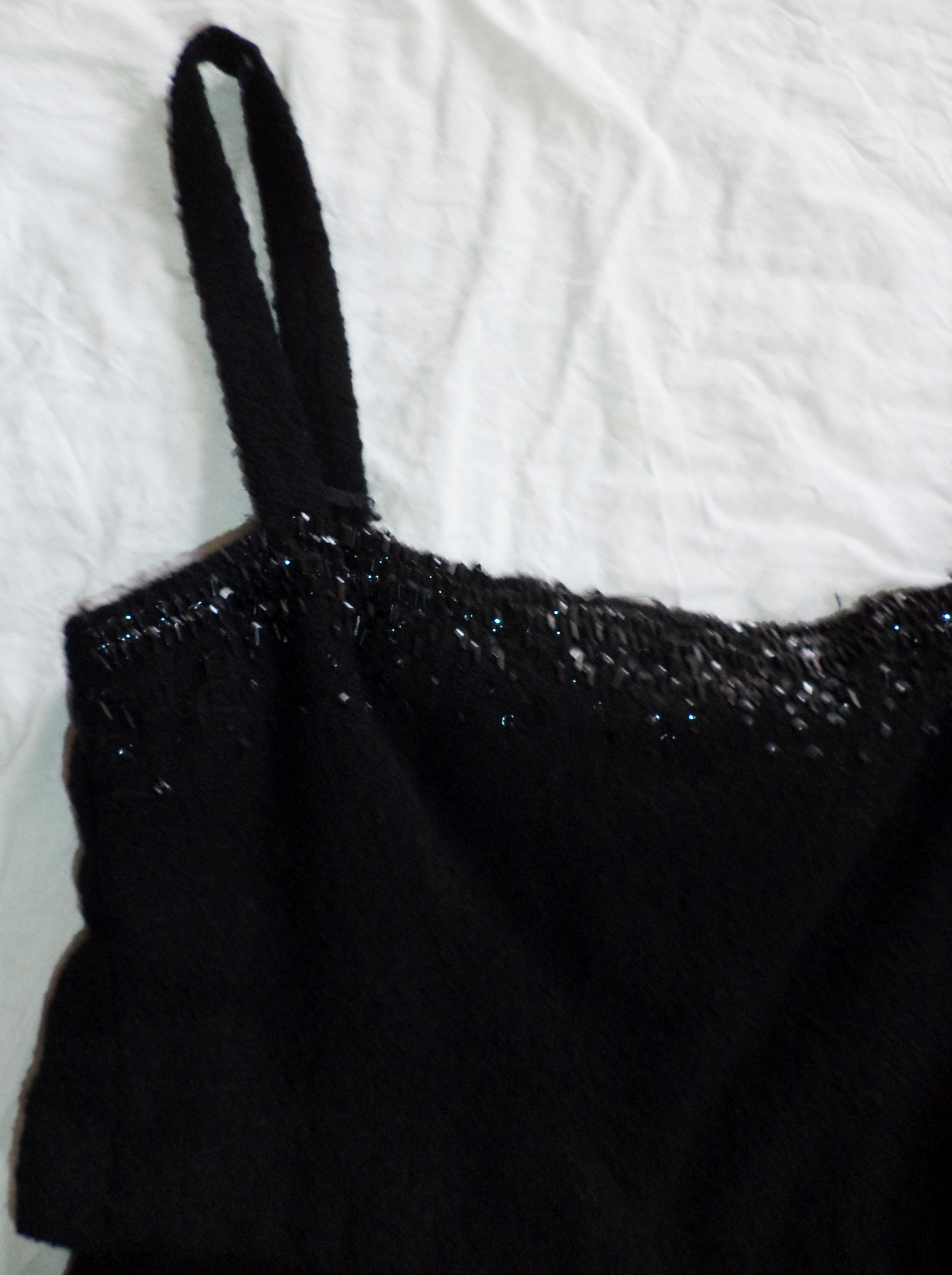
Top front of the dress

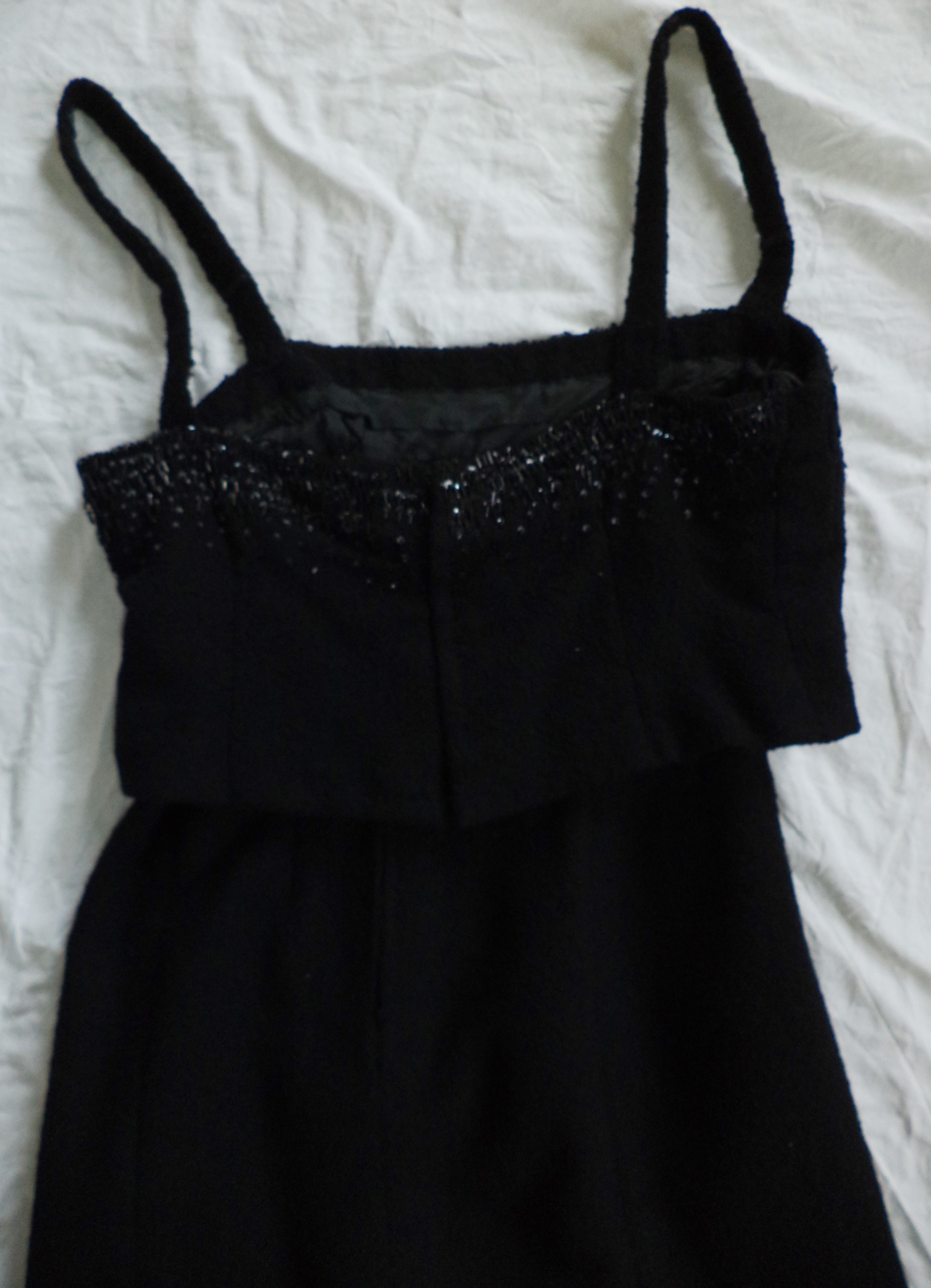
??????????????????????????????? Back of the dress, which shows the dress looks like a two-piece, but it is one piece!

???????????????????????????????

The dress inside-out. the lining of the top is made from silk fabric

???????????????????????????????

The dress has two zippers in the back; one trough the silk lining+skirt and one in the beaded top which can open completely from top to bottom and has an extra hook-and-eye to keep it perfectly closed.

???????????????????????????????

The bottom of the inside out dress, with extra wide seams (in case it has be be made bigger)

DSC00431

The label inside the dress

.

Grunge; Marc Jacobs got fired over it & Hedi Slimane praised….

15 Sep

Tea-Dress-Kurt-Cobain

Kurt Cobain

.

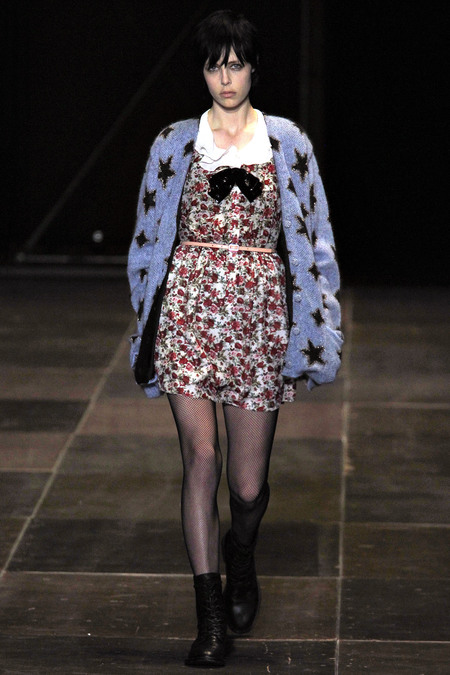
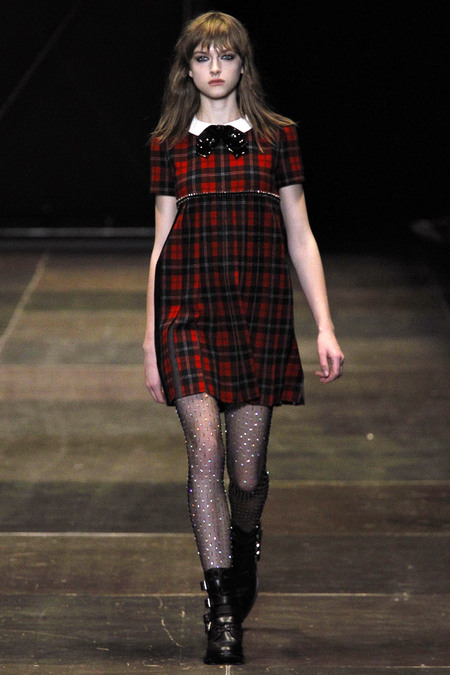
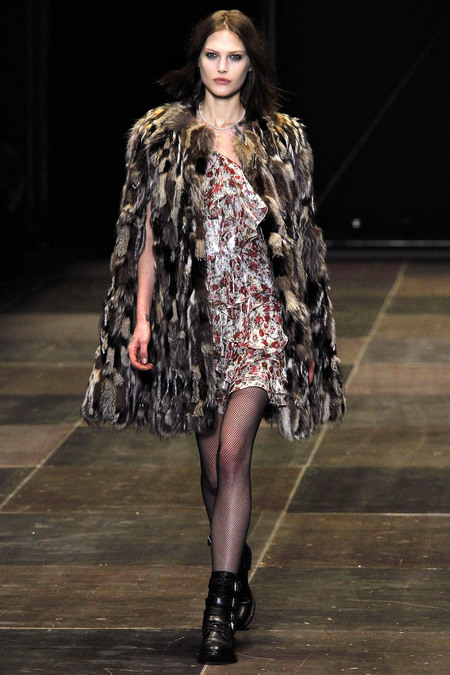
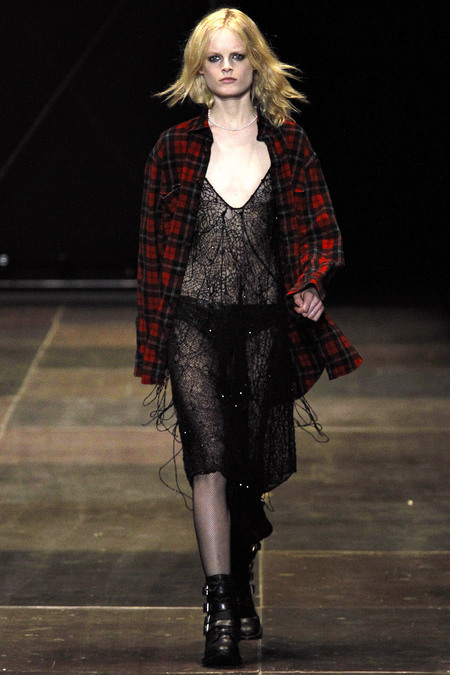
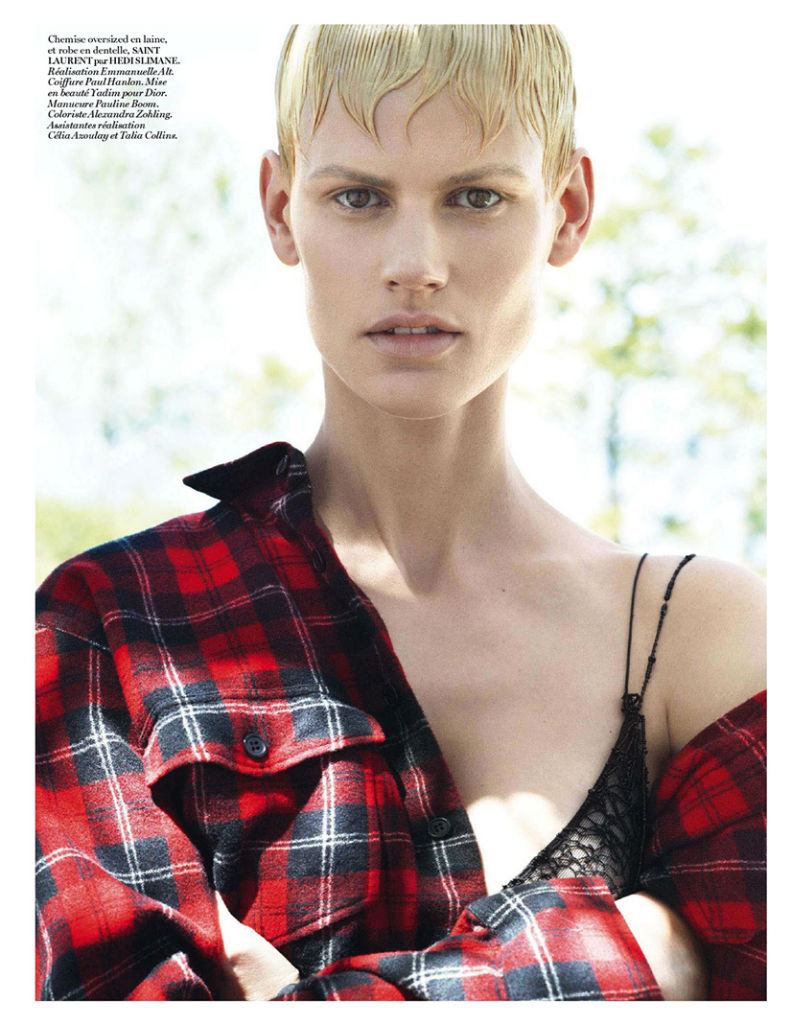
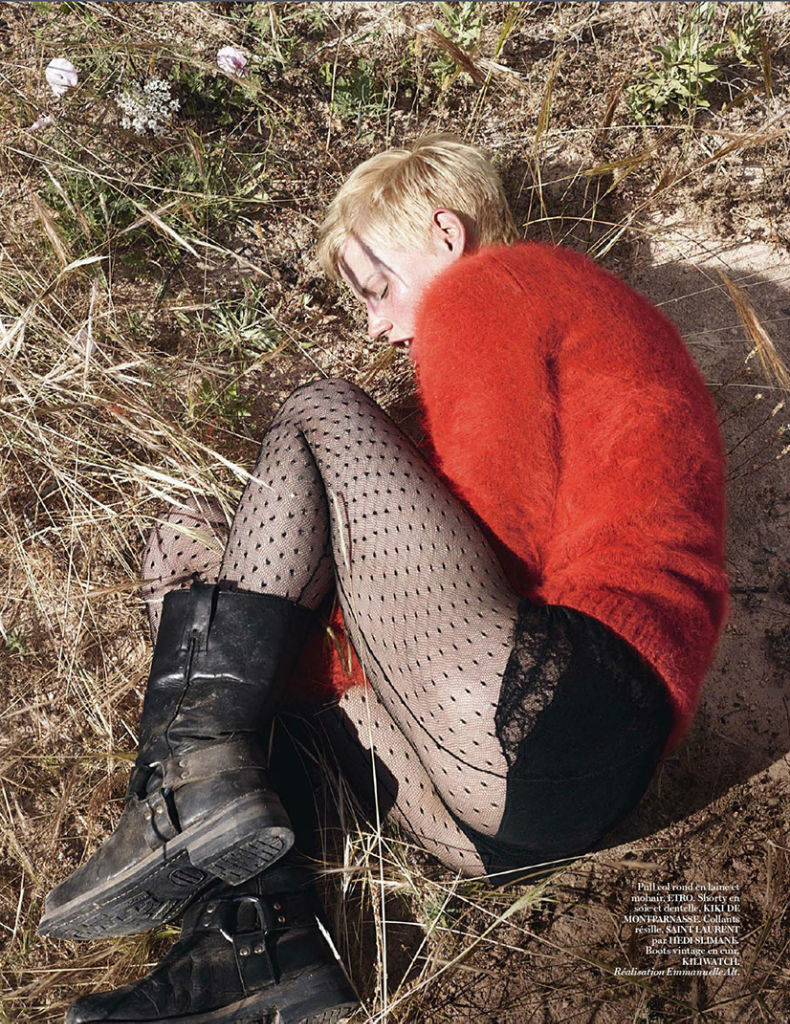
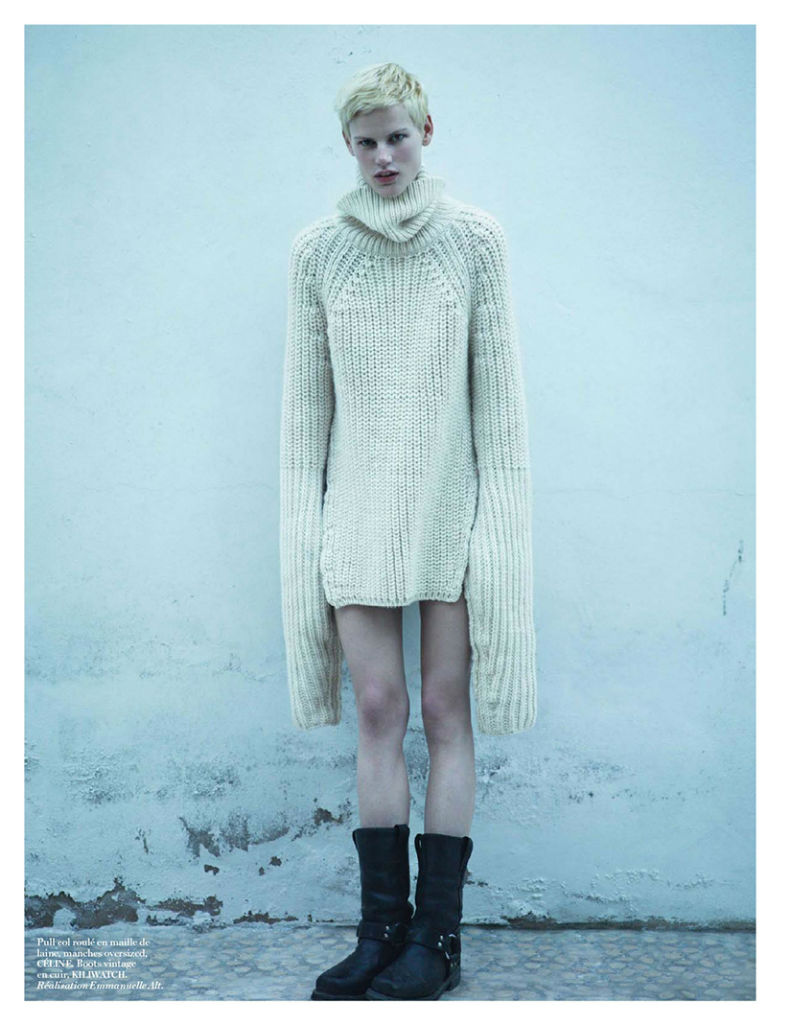
March 04, 2013     Paris, Saint Laurent a/w 2013 by Hedi Slimane

By Tim Blanks     (edited version)

California grunge was the inspiration for Hedi Slimane’s second women’s collection for Saint Laurent.

With a little adjustment, that’s a pretty fair description of what Slimane has been trying to do with Saint Laurent. The legacy today was grunge, not YSL; the longing was his own ardent attachment to a scene that was a continent and an ocean away from a kid in Paris at the beginning of the nineties. Slimane is not the only designer motivated by a powerful impulse to reimagine youthful yearnings. Anna Sui and Marc Jacobs (for Perry Ellis, s/s ’93 collection) immediately spring to mind as masterful mediums of pop-cultural watersheds like The Factory or the Beats. And of course, it was Jacobs who famously lost a job over his original recasting of grunge in a high-fashion context.

But there was no job on the line, no sense of present danger, with Slimane’s collection today. And with regards to that adjustment, there was no expert skirting of nostalgia. Almost nothing looked new. Which didn’t trouble Alexandra Richards, Alison Mosshart, and Sky Ferreira in the least. Such dream clients were all thrilled by what they’d seen. “That’s the way I dress anyway,” was their party line on the baby dolls, the schoolgirl slips, the vintage florals, the random mash-ups of sloppy cardigans, plaid shirts, and sparkly dresses accessorized with ironic strings of pearls and black bows, fishnets and biker boots. All well and good, and money in the bank for retailers etc., etc., but anyone expecting the frisson of the future that Slimane once provided would have to feel let down yet again. At the odd moments when he allowed it to happen—as in a cutaway jacket over a plaid shirt over slashed black leather cuissardes—there was a glimpse of the kind of rigorous sensibility that hybridized passion and fashion into an irresistible force at Dior Homme.

But wouldn’t it be radical if Slimane was actually saying that there is nothing new under the fashion sun, that all that ultimately exists is the energy and inspiration you derive from those elements of the past that you value and love. The same kind of fanboy ardor makes, say, Shibuya 109 in Tokyo or Trash and Vaudeville in New York such wonderful retro romps. This collection will undoubtedly send orgasmic tremors through such places.

Hedi Slimane’s Saint Laurent a/w 2013

Saint Laurent a/w/ 2013

Saint Laurent

saint laurent

Saint Laurent

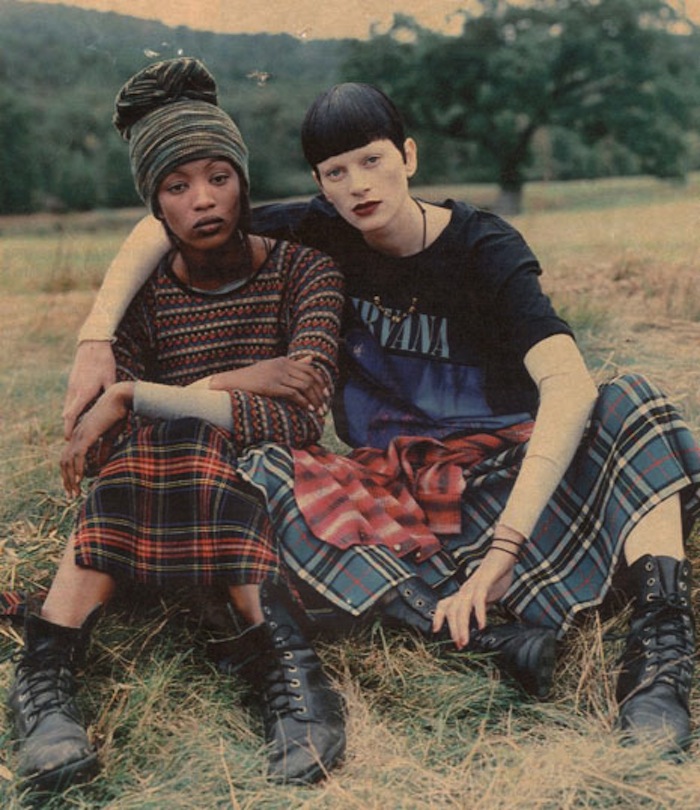
Grunge music is inspired by Alternative rock, hardcore punk, heavy metal, punk rock, hard rock and indie rock, Grunge fashion is a combination of the same, but it’s also boyfriends and girlfriends wearing each others clothes. And the ultimate icons of Grunge are Kurt Cobain and Courtney Love in the late 80ties and early 90ties.

Grunge

“Grunge is nothing more than the way we dress when we have no money,” designer Jean Paul Gaultier told Vogue in 1993, the year fashion co-opted the look. It had grown out of the raw, messy scene surrounding the raw, messy sound—produced by a bedraggled pack of flannel-clad Pacific Northwest dropouts—that was suddenly the talk of the fashion establishment.
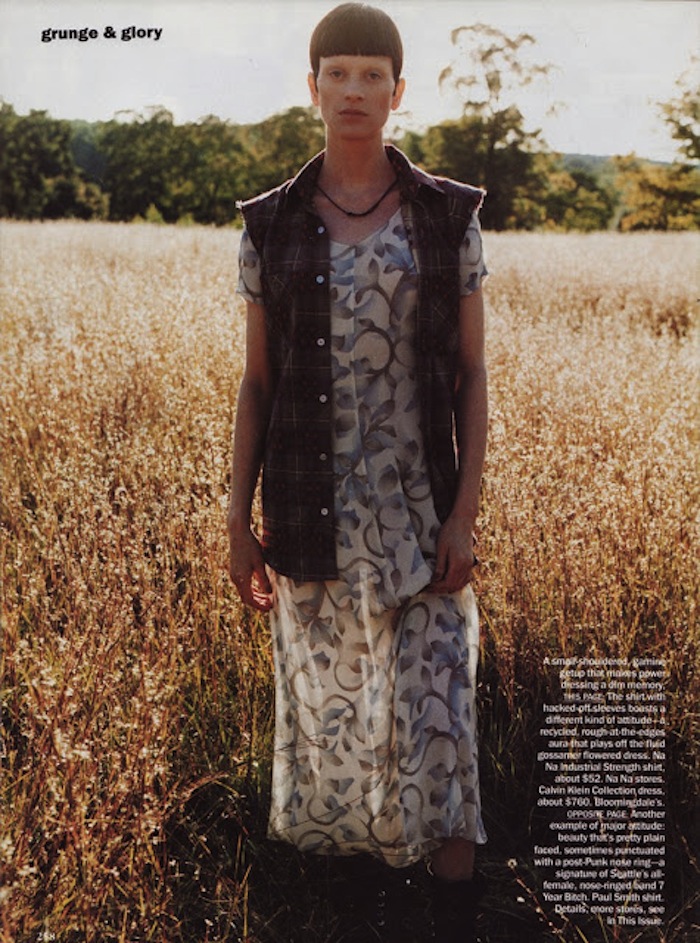
Grunge’s Goodwill aesthetic was, as Gaultier observed, largely born of necessity; it was functional, too (flannels for warmth, boots to keep out the wet). In 1989, Everett True, reporting in Melody Maker about an upcoming band call Nirvana, had drawn readers’ attention to the authenticity of an emerging music genre: “Basically, this is the real thing. You’re talking about four guys in their early twenties from rural Washington who wanna rock, who, if they weren’t doing this, would be working in a supermarket or a lumberyard, or fixing cars.” The grunge-grunge style (as opposed to fashion-grunge) was slept in, picked up off the floor, swapped, scrounged from the ragbag. It was a sartorial representation of nihilism that had been evolving among members of the college-rock and hardcore underground for more a decade but was only just beginning to meet the commercial mainstream via MTV.

“Punk was antifashion,” James Truman, then editor in chief of Details, said. “It made a statement. Grunge is about not making a statement, which is why it’s crazy for it to become a fashion statement.” Truman’s quote appeared in The New York Times in November 1992, the month that Grunge was served up to Seventh Avenue by a trio of young downtown designers: Marc Jacobs at Perry Ellis, Anna Sui, and Christian Francis Roth. (At Roth, models were accessorized with laminated backstage Nirvana passes strung on ball chain.) The shows’ immediate impact was one of those tempests in a teapot that are rehashed with relish in the fashion annals.

Critics were then, and remain, divided over the new up-from-the-street look. The English actress Sophie Dahl, then an impressionable pro-Grunge teenager, would later reminisce in Vogue: “The word itself was antisocial, the premise antidotal to what had gone before. The style was perfect for that awkward stage of adolescence, layers that one could shrug off and hide behind, an armor of sorts.” In contrast, the fashion critic Suzy Menkes distributed “Grunge Is Ghastly” buttons among her colleagues.

Jacobs, the prime mover of the trend, described his infamous grunge collection, which eventually cost him his job at Perry Ellis, to the Times as a “hippied romantic version of punk.” Visually, the look dovetailed neatly with the neogypsy chic coming out of Europe and modeled by Madonna on the October 1992 cover of Vogue. Yet grunge was, on a deeper level, more about garages in Granite Falls than ganja on the beach in Goa. And unlike the bondage pants and shellacked mohawks of punk, it wasn’t just low-maintenance, it was no-maintenance. The faux-real grunge aesthetic was a difficult fit for fashion, which is—by the very nature of the beast—marketed with aspirational images and biased toward fantasy.

“Your rendition of grunge fashion was completely off,” one disgruntled reader complained in a letter to Vogue. “If the whole idea is to dress down, why picture models in $400 dresses? No one who can honestly relate to the music labeled grunge is going to pay $1,400 for a cashmere sweater (especially when they can buy a perfectly comfortable flannel shirt for 50 cents at the local thrift store).

It irked retailers in the extreme and, materially speaking, didn’t amount to much. Jacobs’s famous collection was never even produced. Still, the movement was a game changer. It challenged the status-oriented status quo, and introduced a layered, rumpled new silhouette. “All fashion is loosening up, in an apparent rejection of the hard-edged styles and attitudes of the ’80s,” observed a reporter for Knight Ridder Newspapers in the seminal year of 1992. “Grunge is the realization of that backlash at its most extreme. And ugliest.” (Vogue, too, would later lump the “clunky downtrodden look” among the “worsts” of the 1990s.) And while grunge disdained—or just didn’t think about—the hierarchies of fashion, it also played loosey-goosey with gender. Though a male-dominated scene, it embraced androgyny. “In the wake of an overload of macho,” the journalist Charles Gandee wrote in Vogue the following year, “and with the rise of the gamine, a new breed of young actors, models, and musicians is reshaping our idea of what’s attractive in a man.”
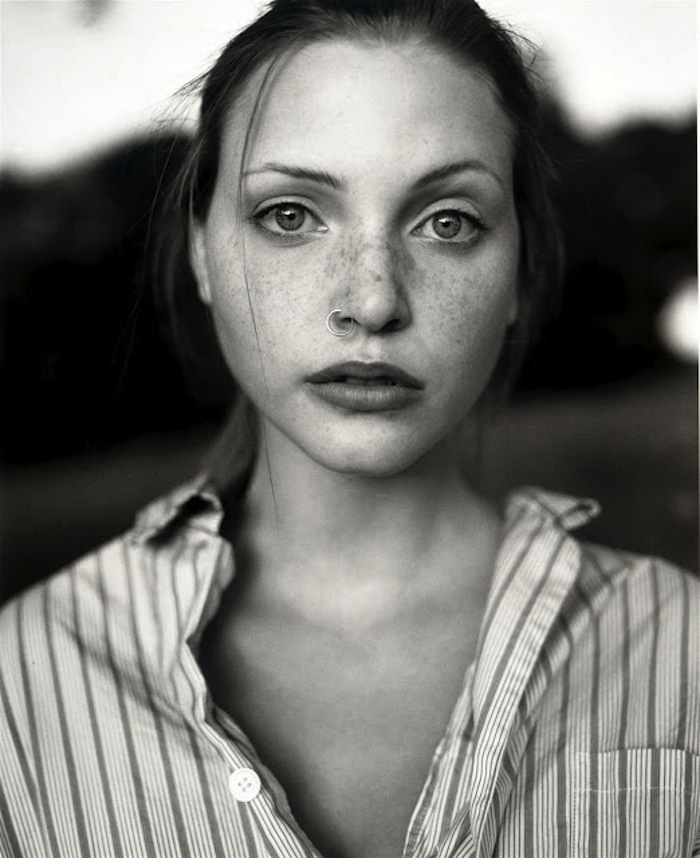
Fashion images, both in advertisements and in editorial pages, began to attempt to represent what was “real.” The photographer Juergen Teller talked about this sea change in the March 1994 issue of Vogue: “We’re not this generation of finding a girl with tons of jewelry attractive—nobody has to have some bloody nose job and breast implants,” he said. “We live in very hard times, and that’s why the people in my pictures maybe look a bit fucked-up or, you know, maybe tired. Because life is tiring.”

Grunge & Glory

Vogue US December 1992 Steven Meisel (this story was based on the grunge collection Marc Jacobs presented for Perry Ellis)
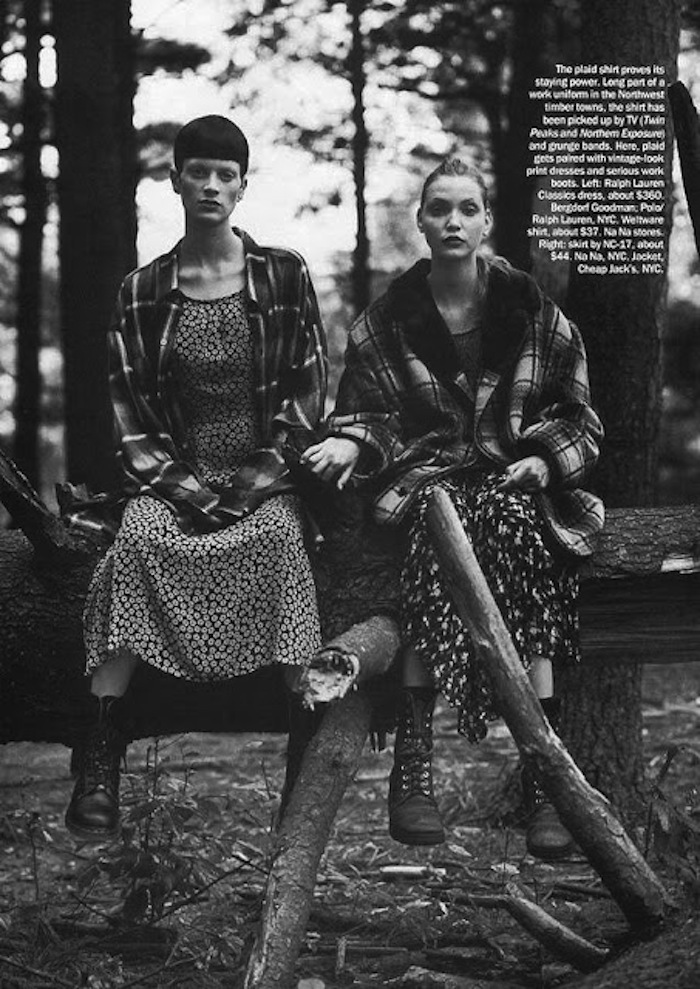
Grunge Vogue US December 1992 Steven Meisel 1
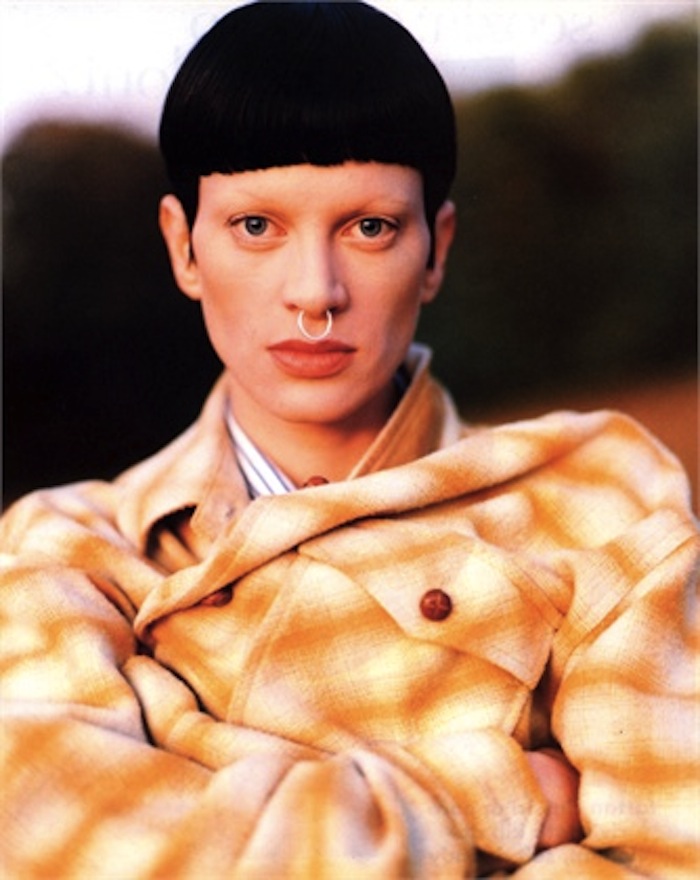
Grunge Vogue US December 1992 Steven Meisel 2
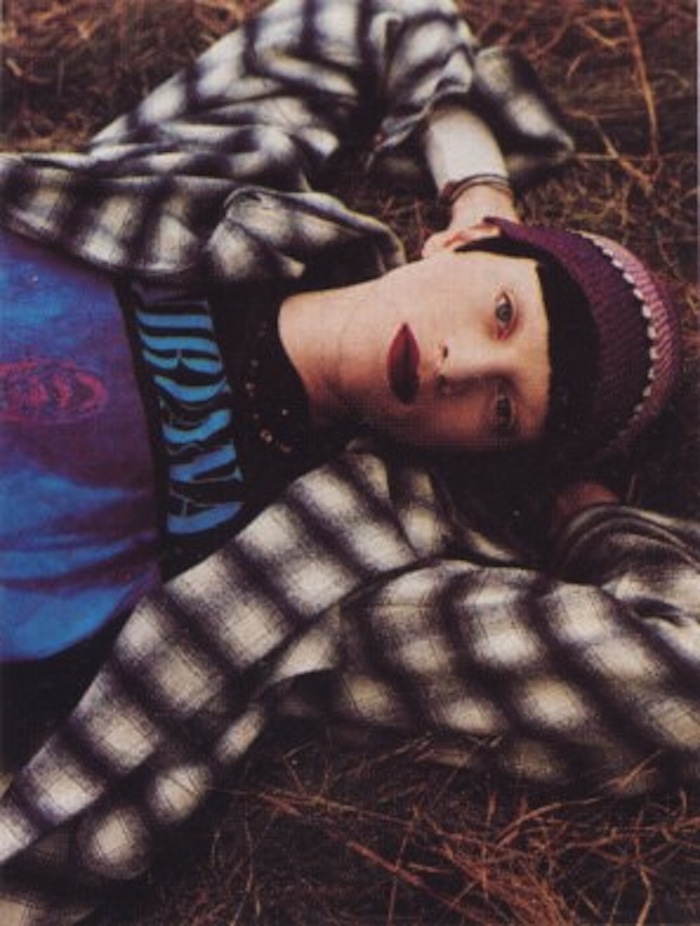
Grunge Vogue US December 1992 Steven Meisel 3
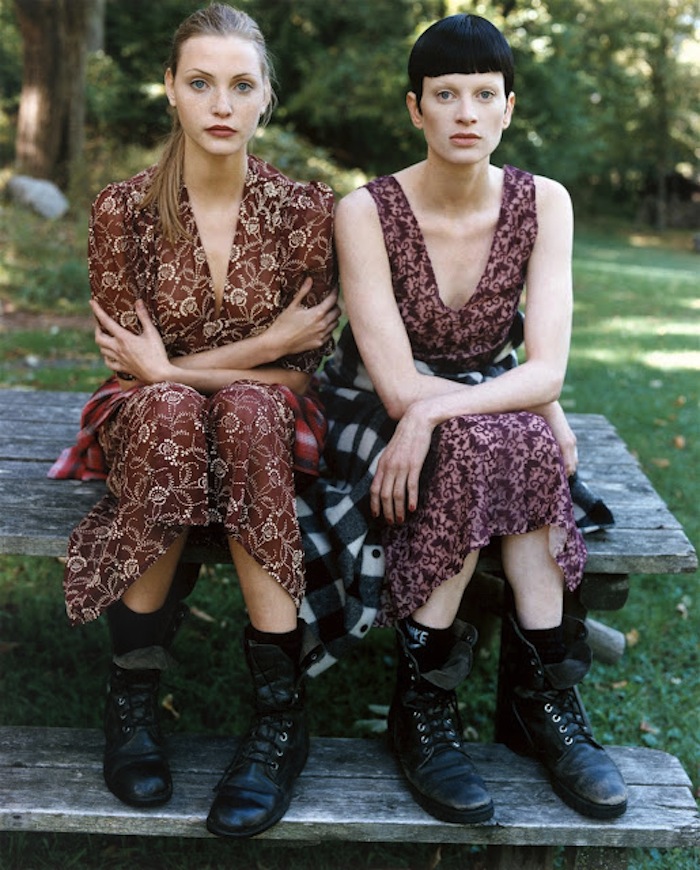
Grunge Vogue US December 1992 Steven Meisel 4

Grunge Vogue US December 1992 Steven Meisel 5

Grunge Vogue US December 1992 Steven Meisel 6

Grunge Vogue US December 1992 Steven Meisel 7

Grunge Vogue US December 1992 Steven Meisel 8

.

La fièvre Grunge

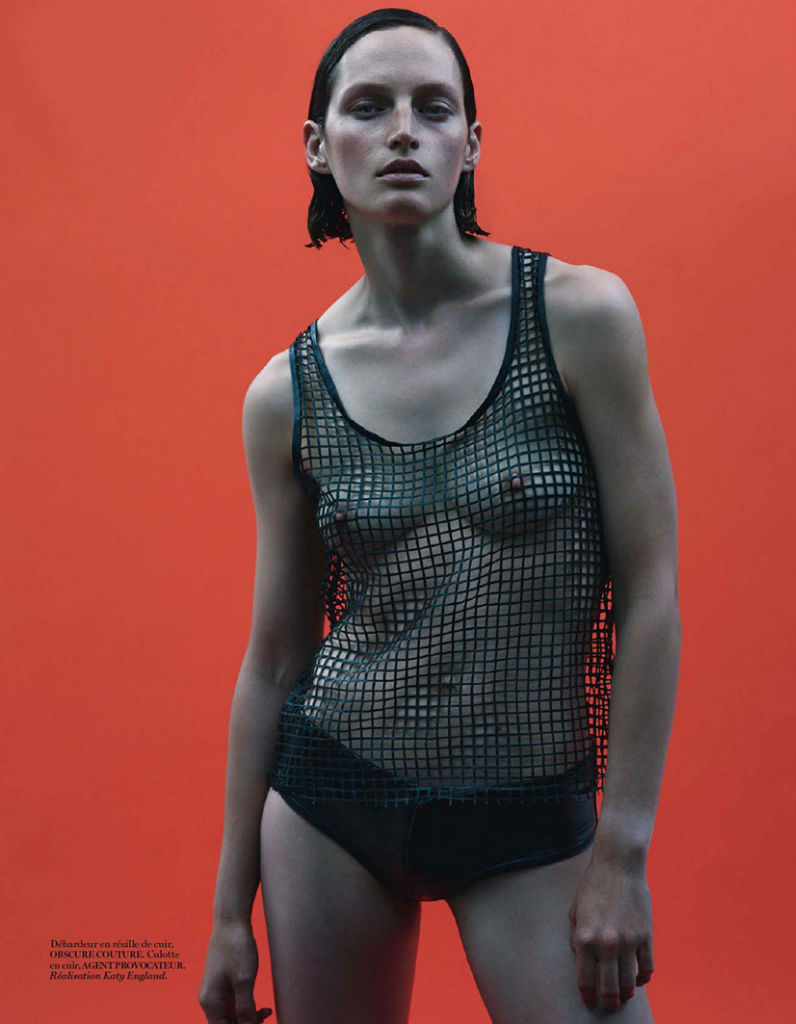
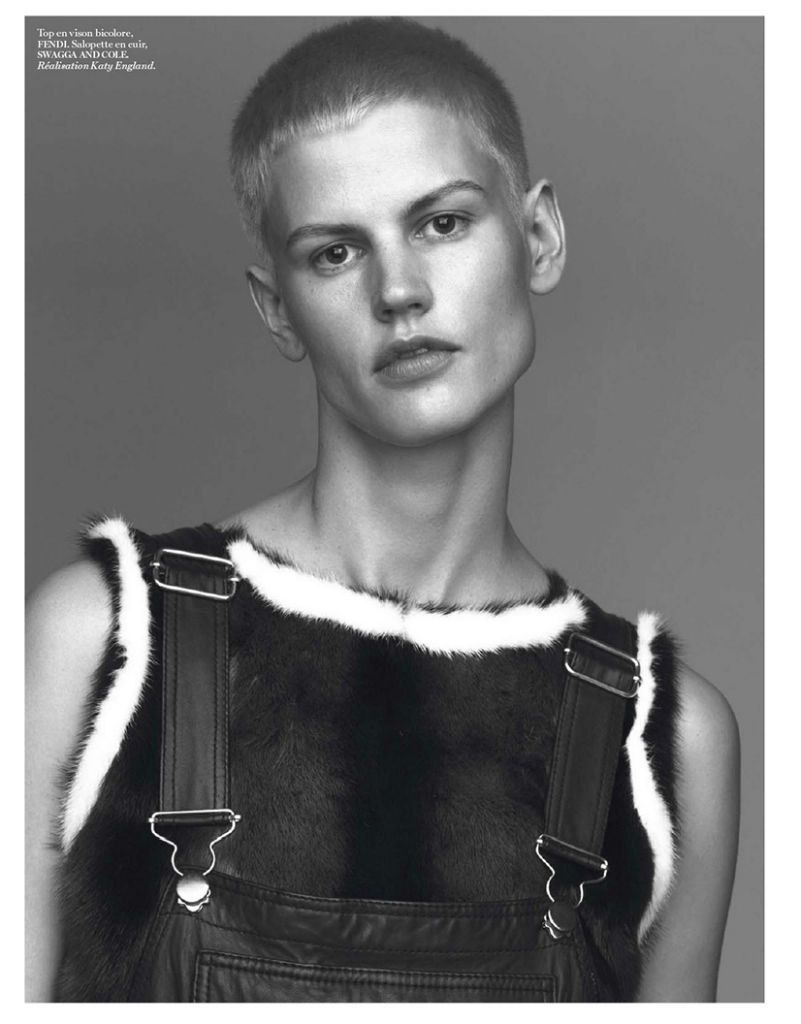
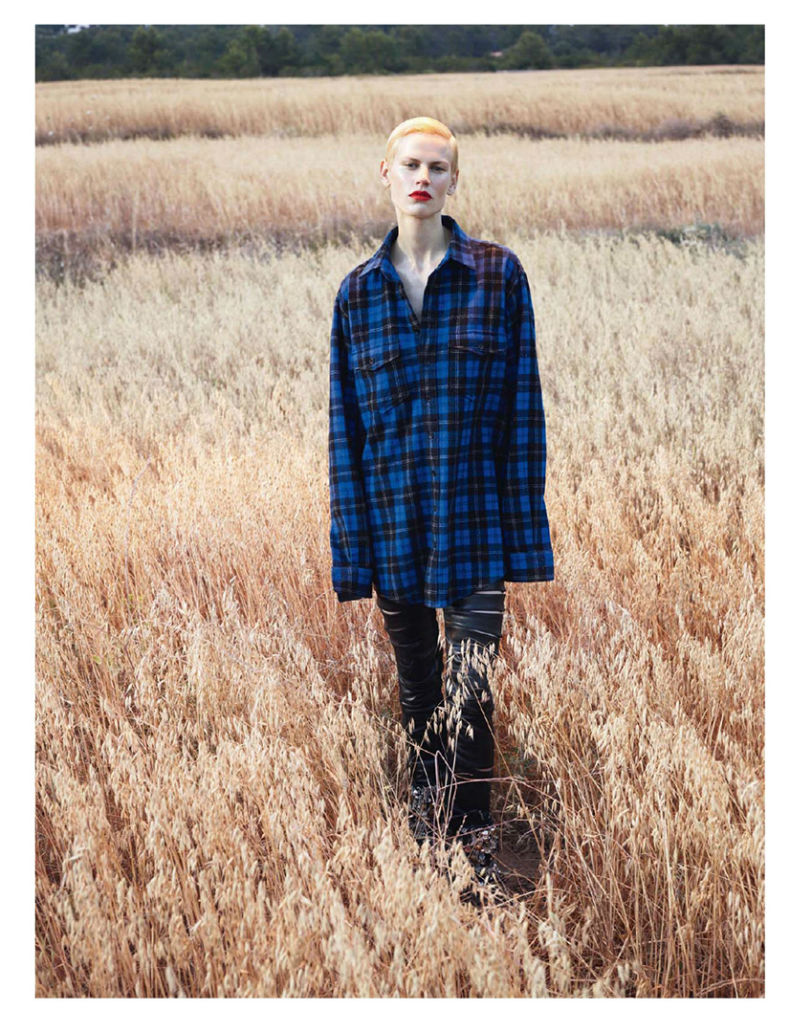
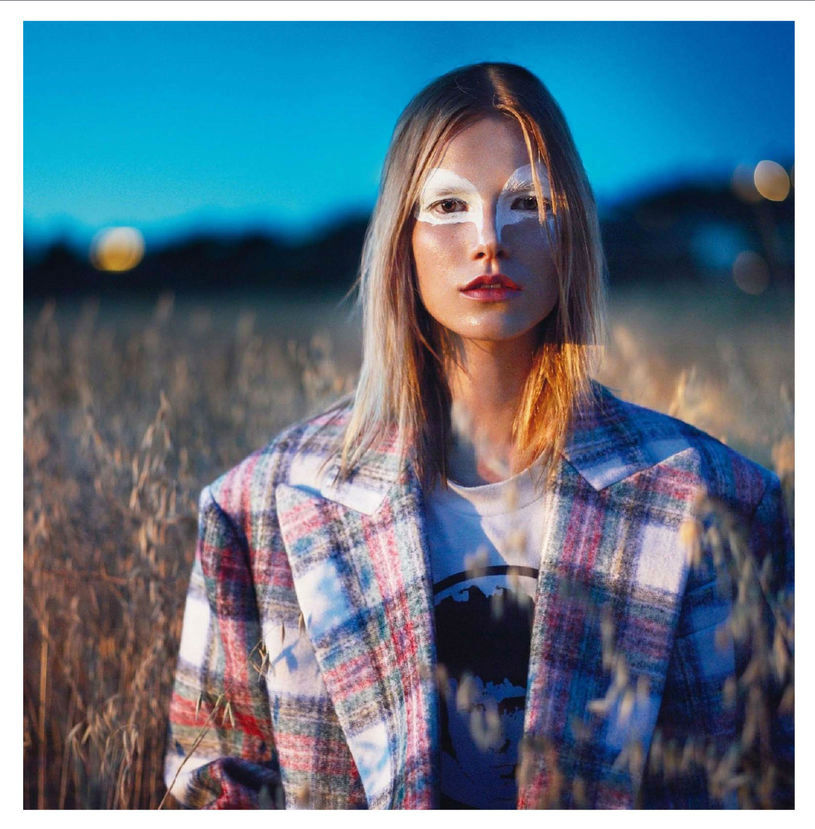
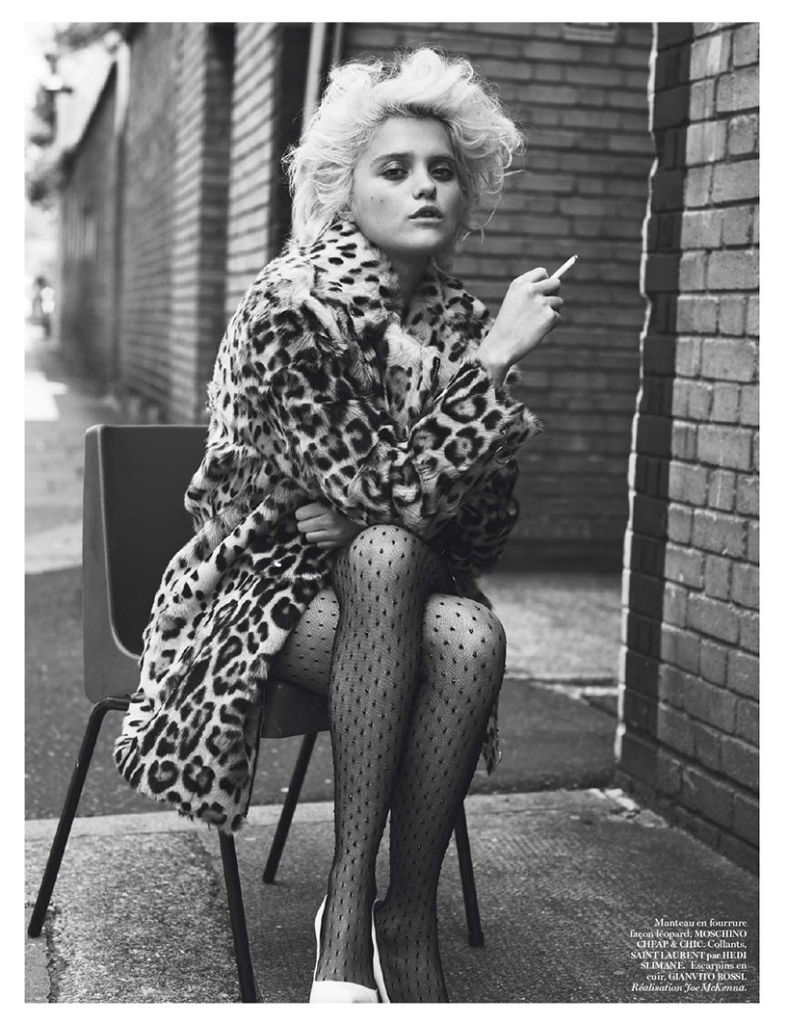
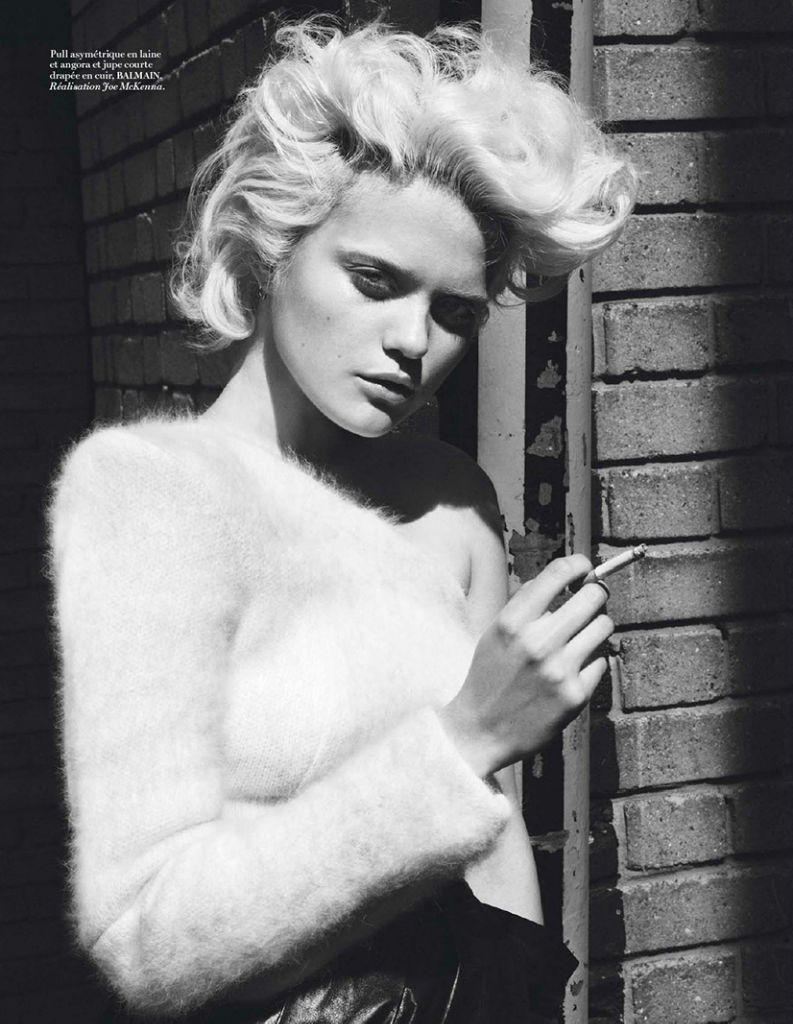
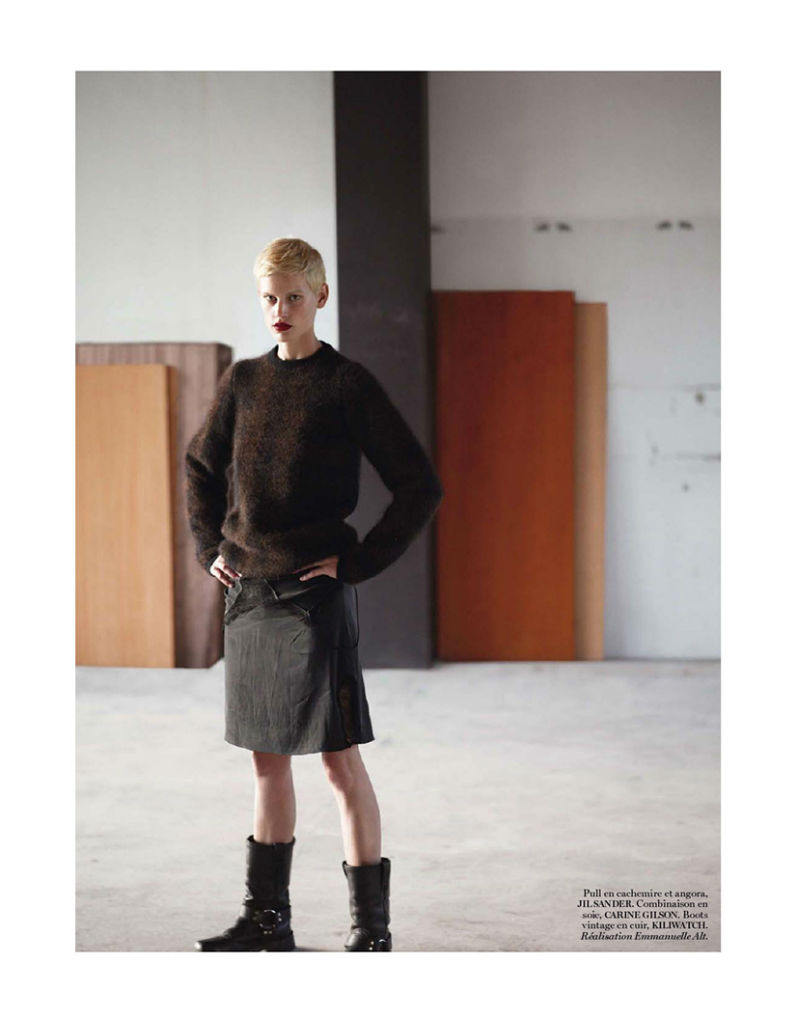
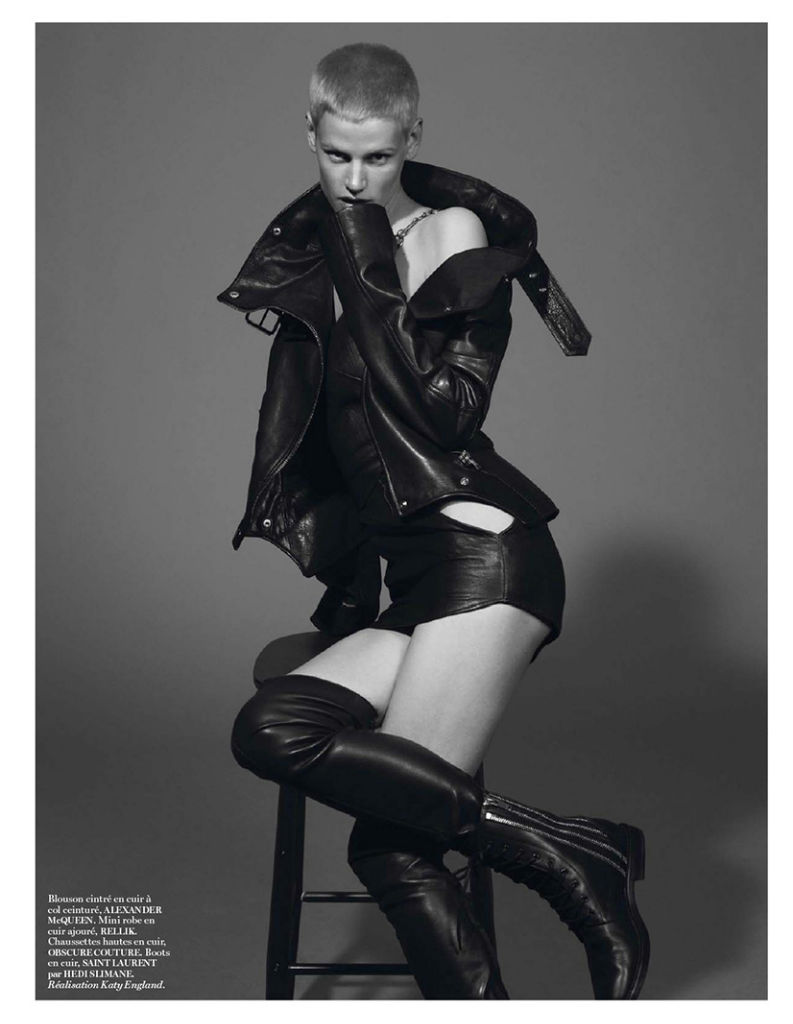
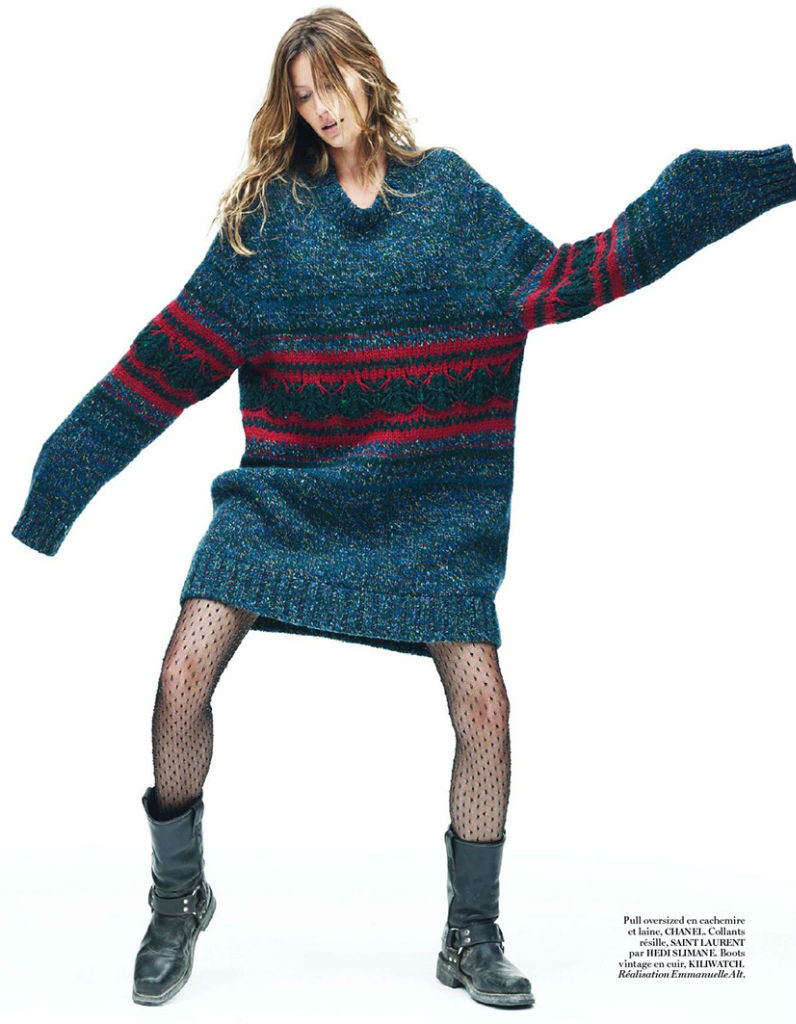
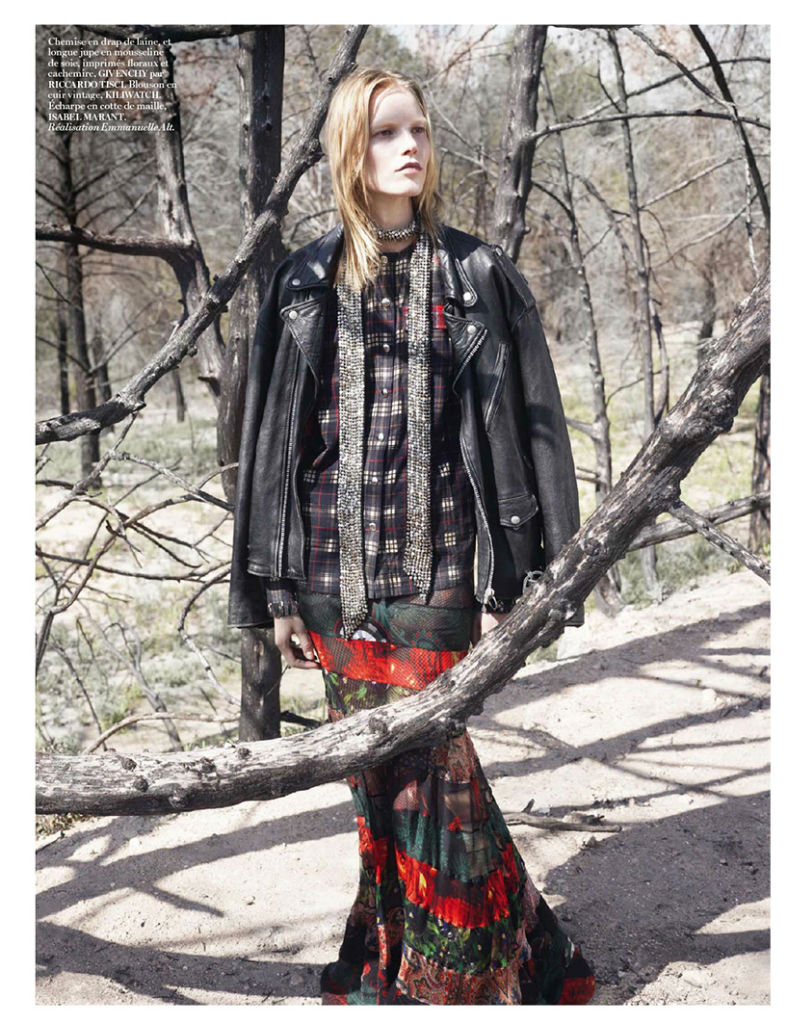
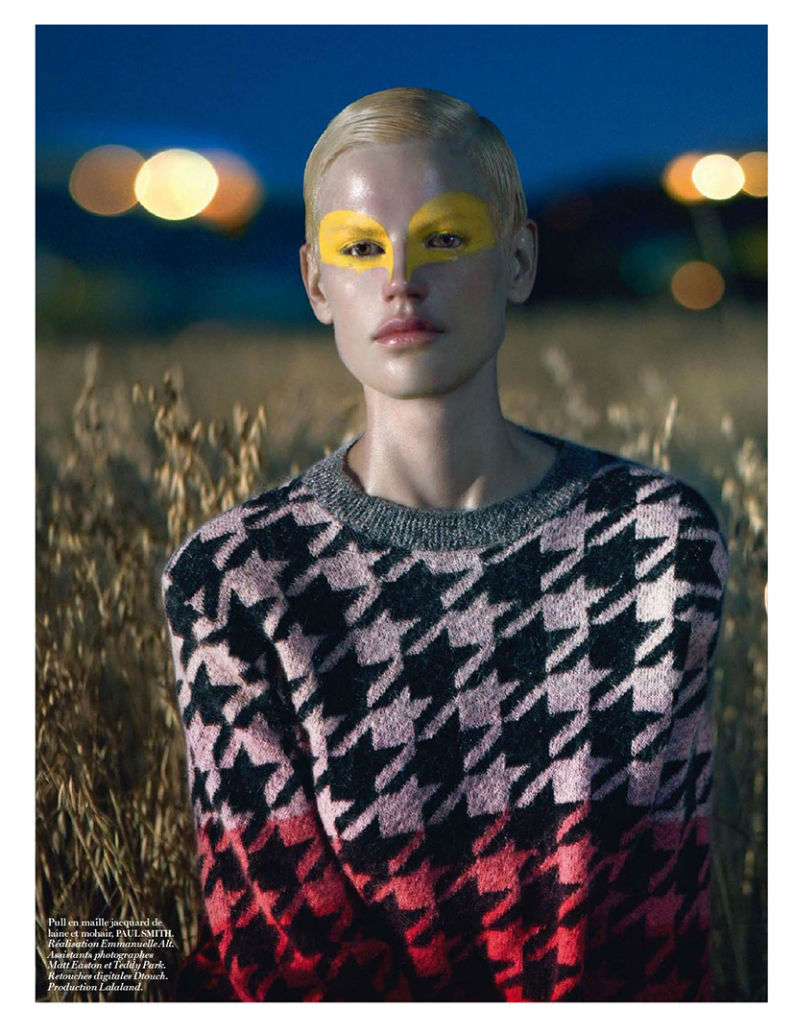
by Mert Alas & Marcus Piggott for Vogue Paris September 2013

(shortened version)

saskia-kaern-suvi-sky-vivien-andreea-gisele-vogue-paris-september-2013-1

saskia-kaern-suvi-sky-vivien-andreea-gisele-vogue-paris-september-2013-3

saskia-kaern-suvi-sky-vivien-andreea-gisele-vogue-paris-september-2013-11

saskia-kaern-suvi-sky-vivien-andreea-gisele-vogue-paris-september-2013-12

saskia-kaern-suvi-sky-vivien-andreea-gisele-vogue-paris-september-2013-19

saskia-kaern-suvi-sky-vivien-andreea-gisele-vogue-paris-september-2013-21

saskia-kaern-suvi-sky-vivien-andreea-gisele-vogue-paris-september-2013-25

saskia-kaern-suvi-sky-vivien-andreea-gisele-vogue-paris-september-2013-33

saskia-kaern-suvi-sky-vivien-andreea-gisele-vogue-paris-september-2013-37

saskia-kaern-suvi-sky-vivien-andreea-gisele-vogue-paris-september-2013-38

saskia-kaern-suvi-sky-vivien-andreea-gisele-vogue-paris-september-2013-42

saskia-kaern-suvi-sky-vivien-andreea-gisele-vogue-paris-september-2013-44

saskia-kaern-suvi-sky-vivien-andreea-gisele-vogue-paris-september-2013-47

saskia-kaern-suvi-sky-vivien-andreea-gisele-vogue-paris-september-2013-52

information : www.style.com  and  http://www.vogue.com/voguepedia/Grunge

Dutch Traditional Costume

8 Sep

p076

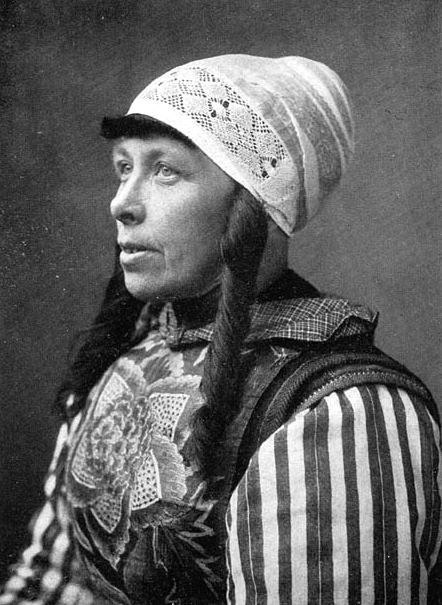
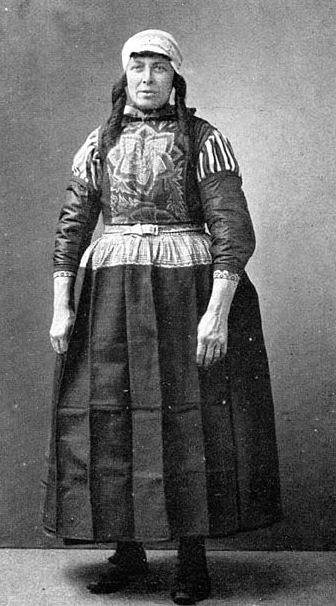
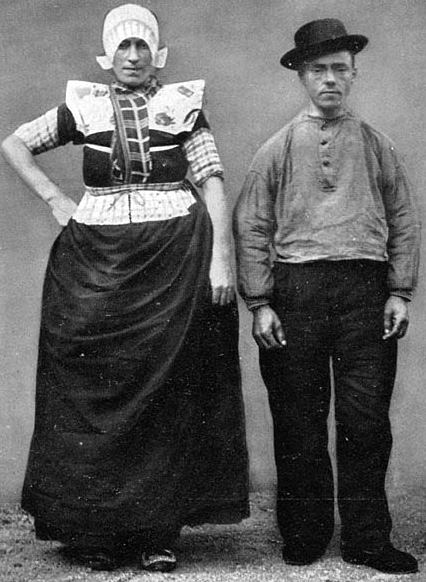
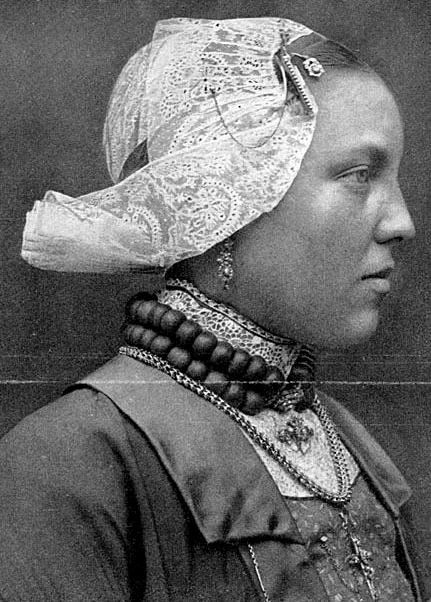
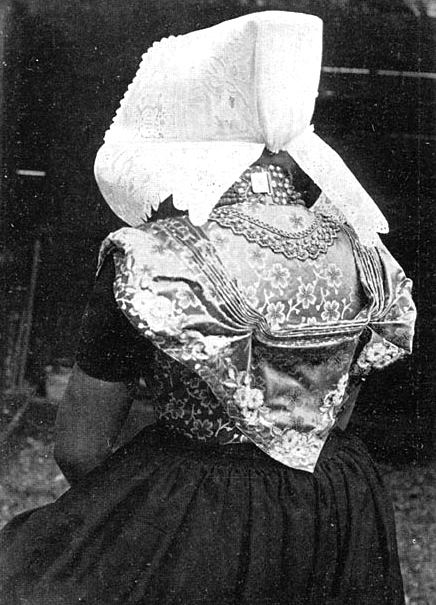
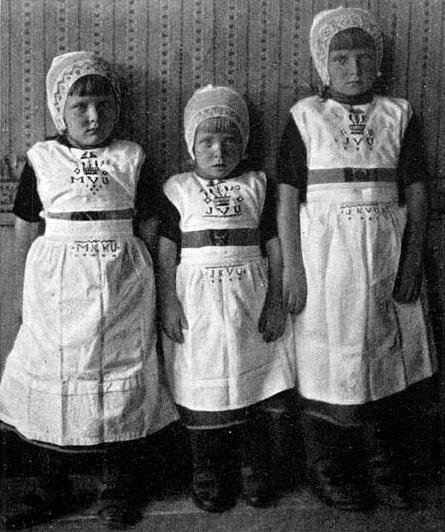
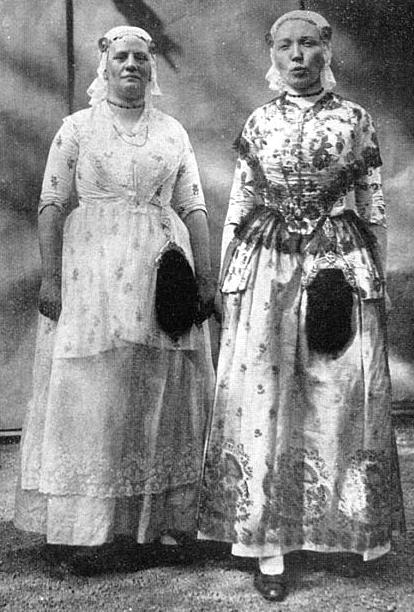
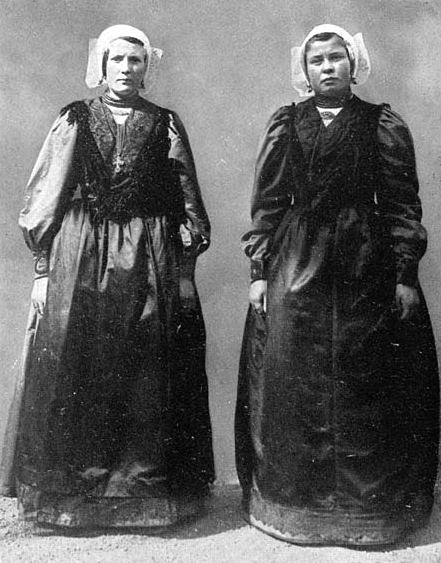
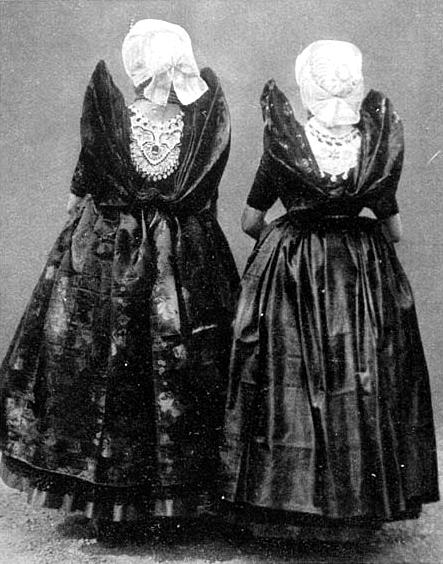
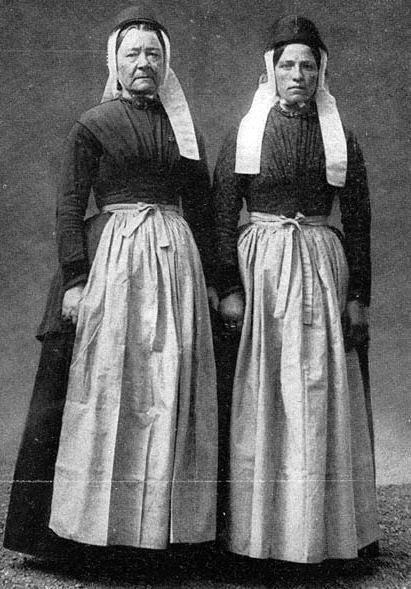
I have been fascinated by traditional costume for as long as I can remember. Not only the Dutch traditional costume, but from countries all over the globe. Whenever I travel, I always try to find something of the regional clothing. It can be shoes, a handbag, jewelry, a hat or an element of the clothing, for men or women.

Vaguely I remember cycling to my grandmother on Sundays, together with my mom. Grandma was dressed in traditional clothing every day and it made her look very impressive. Together with my grandfather, she lived in the village they were born and had grown up in and there a lot of the older people were still wearing the lace caps, embroidered vests and I don’t know how many skirt piled over each other. Strangely enough I don’t remember much of my grandfathers clothes, but I think it was traditional too.

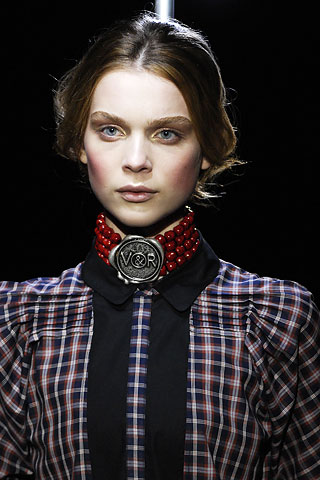
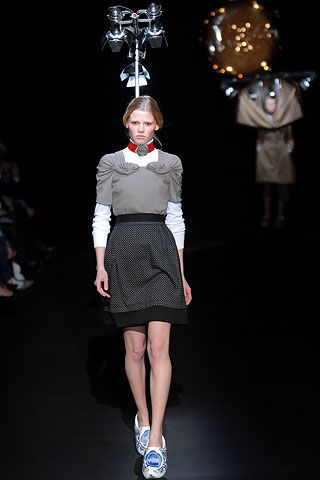
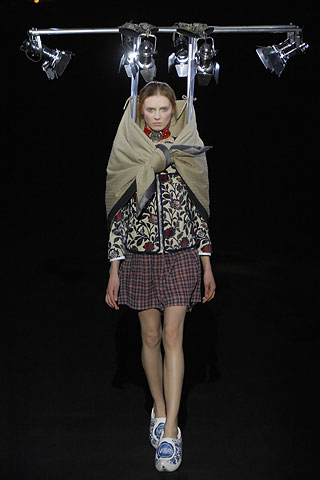
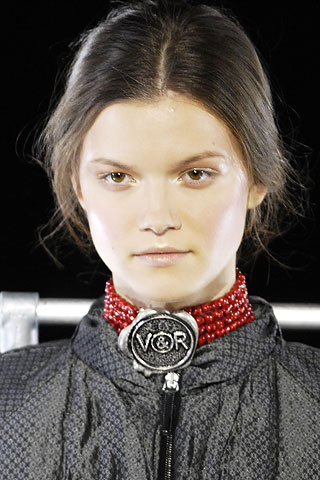
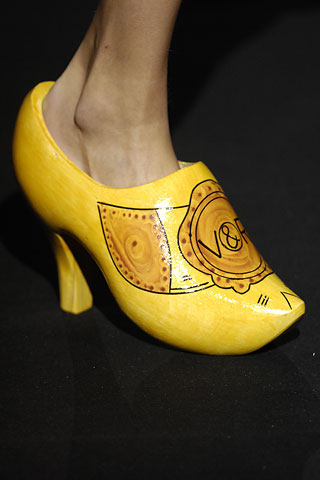
Through the years, many designers have been inspired by traditional clothing.Cristóbal Balenciaga was influenced by the Spanish folk tradition, being from Spain himself, but other designers were also influenced by clothes from all different countries. John Galliano and Alexander McQueen produced several collections inspired by China, Mongolia, Japan, Russia, etc. And in 2007, Viktor & Rolf created a collection on Dutch folk costume: tapestries, checks, and pure white buttoned-up blouses,  their fall 2007 collection.

Dutch Traditional Costume from different districts

p002

p003

p027

p012

p046

p047

p072

p005

p007

p068

p023

p052

p053

p058

p010

p026

p061

p054

p055

p029

p073

p014

p043

p056

.

Viktor & Rolf fall 2007 ready-to-wear collection

00020mg

00040m

00270m

00240mg

00290m

00250m

00190m

00030m

00410mh

00330m

00530m

.

most pictures in this post come from:  http://www.gutenberg.org/files/20665/20665-h/20665-h.htm  and  www.style.com

.

00010m