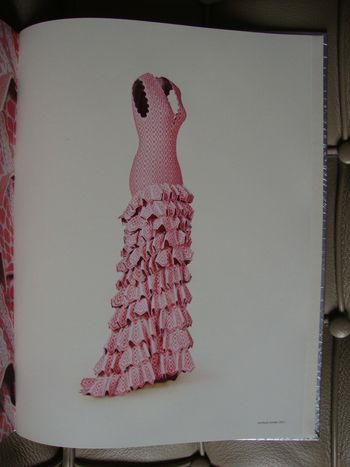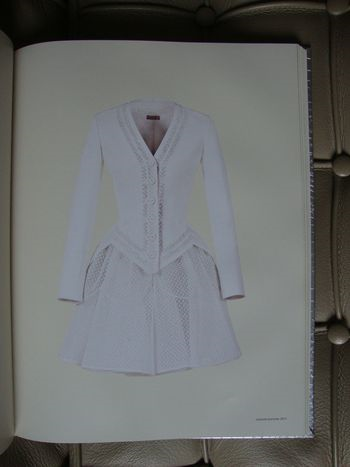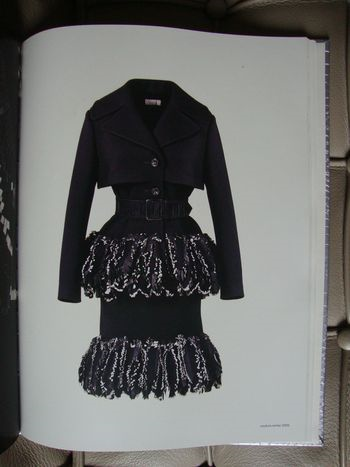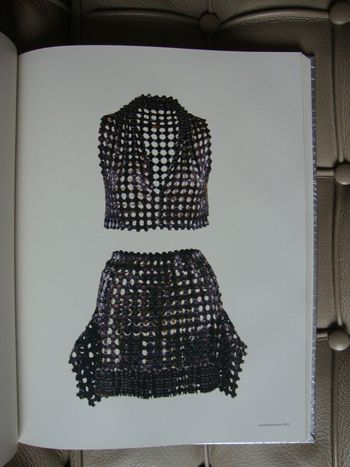
Azzedine Alaïa although Famously Shy, dares to Speak his Mind

10 Nov

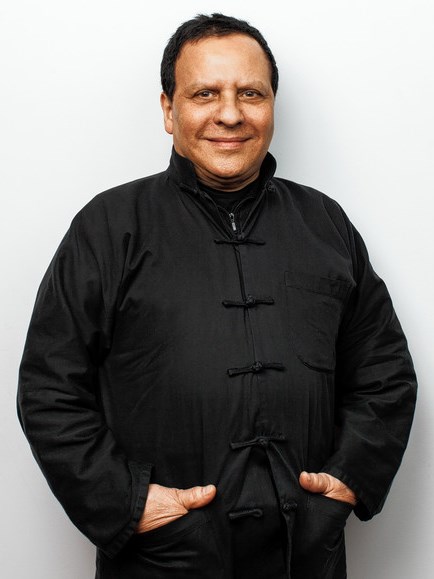
Azzedine Alaïa

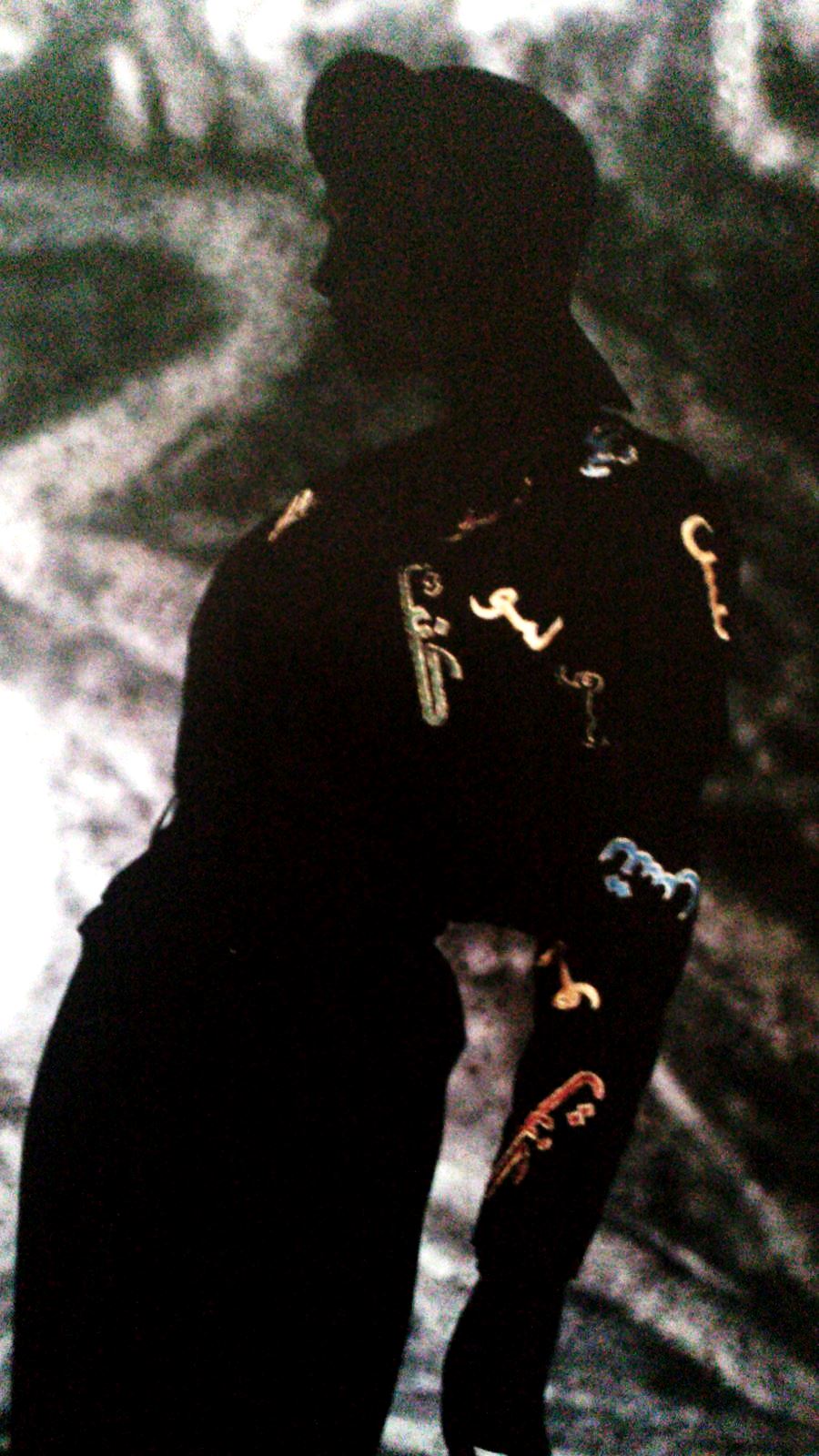
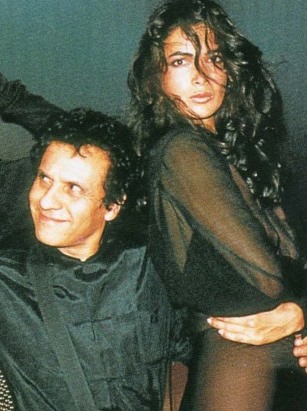
In 1988, I got invited to a party thrown by the model agency that represented Linda Spierings, a well-known model who is friends  with Azzedine Alaïa. I still had my own boutique for which I’d designed a collection enriched with embroidery of Arabic writing that season. To be sure nothing offending would appear in embroidery on the clothes, I’d copied words of a Marlboro advertisement (these were the days before internet…..).

The collection was a success and the night of the party I was wearing one of the embroidered jackets. Azzedine was dancing with Linda, when we bumped into each other at the dance floor. He looked at my jacket and got a huge smile on his face…. I didn’t dare to ask him what I had embroidered on the jacket, but because of his smile, I knew it was ok.
tumblr_lru5hk7EOz1qj1s63o1_500

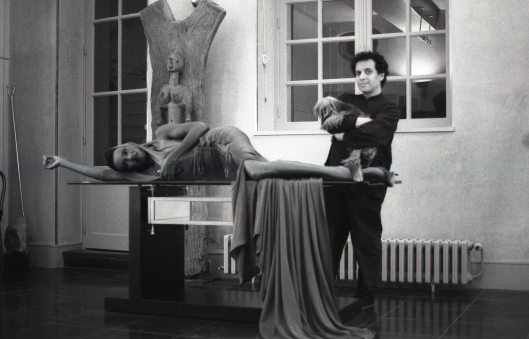
Azzedine & Linda Spierings

??????????

Embroidered jacket, 1988. Ph. Carel Fonteyne

.

He dares to speak his mind

Azzedine Alaïa has earned an unusual degree of autonomy within the fashion industry. He shows when he wants and when he is ready — not when there’s a fashion week on the schedule. He does the same with his seasonal deliveries. He doesn’t advertise, and doesn’t seem to care one way or the other about editorial mentions, either. For this congenial contrarianism, Alaïa has earned the admiration of many an influential fashion critic.

 So here’s his unvarnished take on Anna Wintour: “She runs the business (Vogue US) very well, but not the fashion part. When I see how she is dressed, I don’t believe in her tastes one second. I can say it loudly! She hasn’t photographed my work in years even if I am a best seller in the U.S. and I have 140 square meters at Barneys. American women love me; I don’t need her support at all. Anna Wintour doesn’t deal with pictures; she is just doing PR and business, and she scares everybody. But when she sees me, she is the scared one. [Laughs.] Other people think like me, but don’t say it because they are afraid that Vogue won’t photograph them. Anyway, who will remember Anna Wintour in the history of fashion? No one. Take Diana Vreeland, she is remembered because she was so chic. What she did with the magazine was great.”
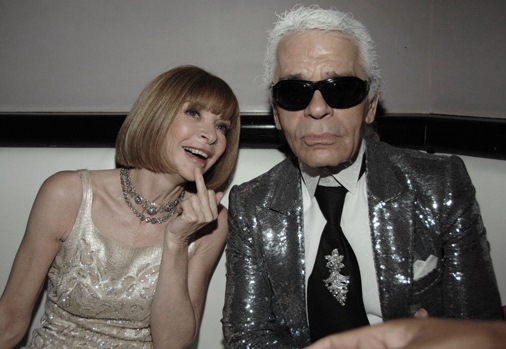
anna-wintour-and-karl-lagerfeld

Anna Wintour & Karl Lagerfeld

In 2009, Wintour presided over an exhibition at the Met that celebrated “The Model As Muse,” and Alaïa, who is well-known for his enduring friendships with (particularly) the 90s supermodels, was excluded. (Naomi Campbell refused to attend the Met Ball in protest.) At the time, Alaïa said of Wintour, she behaves like a dictator and everyone is terrified of her…but I’m not scared of her or anyone.”

 Alaïa also isn’t such a big fan of Karl Lagerfeld. In the same new interview, he says: “I don’t like his fashion, his spirit, his attitude. It’s too much caricature. Karl Lagerfeld never touched a pair of scissors in his life. That doesn’t mean that he’s not great, but he’s part of another system. He has capacity. One day he does photography, the next he does advertisements for Coca-Cola. I would rather die than see my face in a car advertisement. We don’t do the same work.”

.

Short biography
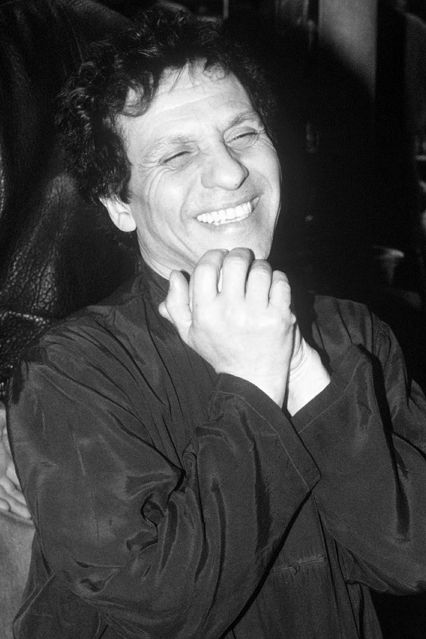
aalaia_v_19jul12_rex_b

Born June 7, 1939  in Tunisia, Azzedine Alaïa’s family were wheat farmers. His glamorous twin sister inspired in him an early love for couture and it was whilst assisting the famous midwife Madame Pinot, a close friend of the family, that Alaïa learnt about fashion. Madame Pinot enrolled him at the École des Beaux-Arts to study sculpture where he discovered what was to be his lifelong inspiration, the beauty and symmetry of the human form.

In 1957 the young Alaïa moved to France and began work at Dior as a tailleur but due to ill feeling centered on the Algerian war his tenure was limited to 5 days. He soon met Madame Simone Zehrfuss and Louise de Vilmorin who introduced him to the cream of Parisian society and were pivotal in him gaining his illustrious list of private clients. Alaïa worked under the patronage of the Comtesse de Blégiers, producing gowns exclusively for her for 5 years. He then moved to Guy Laroche to learn tailoring and after this he worked alongside his friend Thierry Mugler.
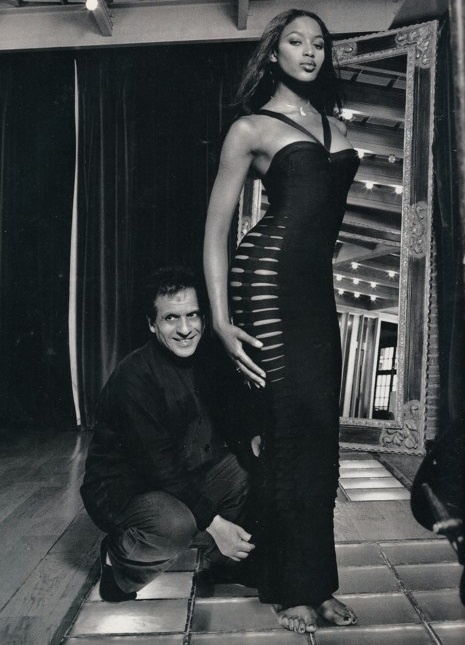
d9568da0f4c75ca56f9e3fa17b1d31ab

Azzedine & Naomi Campbell

In the late 1970s Alaïa settled in his famously small apartment on the Rue de Bellechasse. From here he ran his tiny atelier as a secret word of mouth concern, dressing the world’s jet set from Marie-Hélène de Rothschild to Greta Garbo, who used to come incognito for her fittings.

He produced his first ready-to-wear collection in 1980 and moved to larger premises on rue du Parc-Royal in the Marais district. When interior designer Andrée Putman was walking down Madison Avenue with one of the first Alaïa leather coats, she was stopped by a Bergdorf Goodman buyer who asked her what she was wearing, which began a turn of events that lead to his designs being sold in New York and in Beverly Hills.

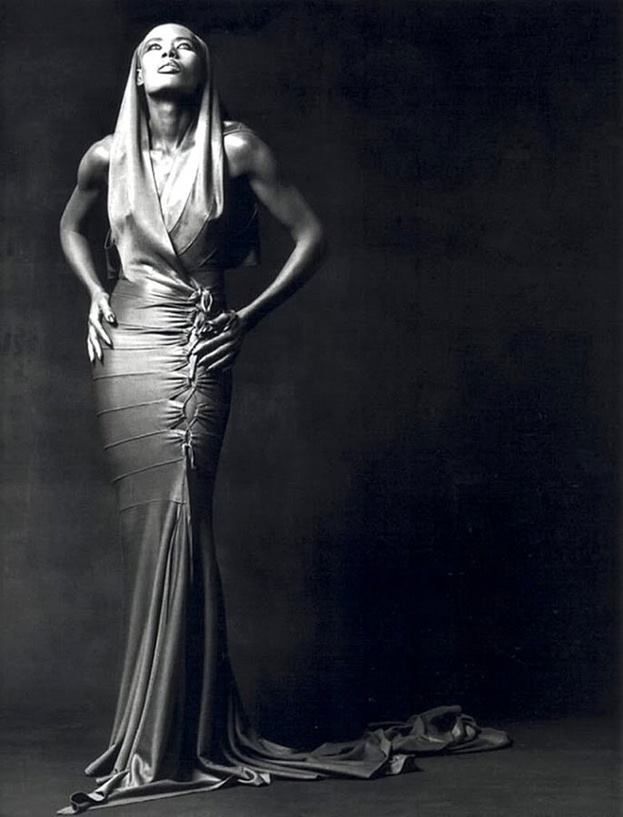
In the 1980s when most of the fashion world was embracing sharp shouldered power dressing and baggy androgyny Alaïa introduced the world to the ‘body’ and to his own skin-tight mini skirts and dresses. Truly a showcase for the perfect human form, his ‘bodycon’ look sat alongside the more masculine power suits of the decade. Alaïa was voted Best Designer of the Year and Best collection of the Year at the Oscars de la Mode by the French Ministry of Culture in 1984 in a memorable event where Jamaican singer Grace Jones carried him in her arms on stage.

e1033af95a3defbae342301ede4ac1a3Grace Jones

best_grace_azzedine_1985069

Azzedine & Grace Jones

As Suzy Menkes said in 1991 “If there were any justice in this (fashion) world, Azzedine Alaïa would be a worldwide household name, instead of a cult hero. It is 10 years since the small, shy, Tunisian-born designer launched the body-conscious stretch looks that have defined the way an entire generation dresses and become the fashion revolution of the last decade”.

During the mid 1990s, following the death of his sister, Alaïa virtually disappeared from the fashion scene but continued to cater for private clients and his RTW collections enjoyed continuing commercial success. He presented his collections in the heart of the Marais where he had brought together his workshop, showroom and Azzedine Alaïa shop. His return to the limelight in 2000 saw a departure from his super sexy 80s heyday and his new look was described as “much more sober, almost Amish in comparison”.

Catherine Lardeur, the former editor and chief of French Marie Claire in the 1980s, who also helped to launch Jean-Paul Gaultier’s career, stated in an interview to Crowd Magazine that ” Fashion is dead. Designers nowadays do not create anything, they only make clothes so people and the press would talk about them. The real money for designers lie within perfumes and handbags. It is all about image. Alaïa remains the king. He is smart enough to not only care about having people talk about him. He only holds fashion shows when he has something to show, on his own time frame. Even when Prada owned him (2000-2007), he remained free and did what he wanted to do.”

048_006_rl

Azzedine Alaïa & Tina Turner 

Alaïa’s lack of interest in self promotion is legendary. He never learnt English and even at the height of his fame he was known to show his collection up to three weeks late, long after the international fashion pack had moved on from Paris. Without a thought for producing show stopping outfits or the next ‘it’ bag he is revered for his independence and discreet luxury.

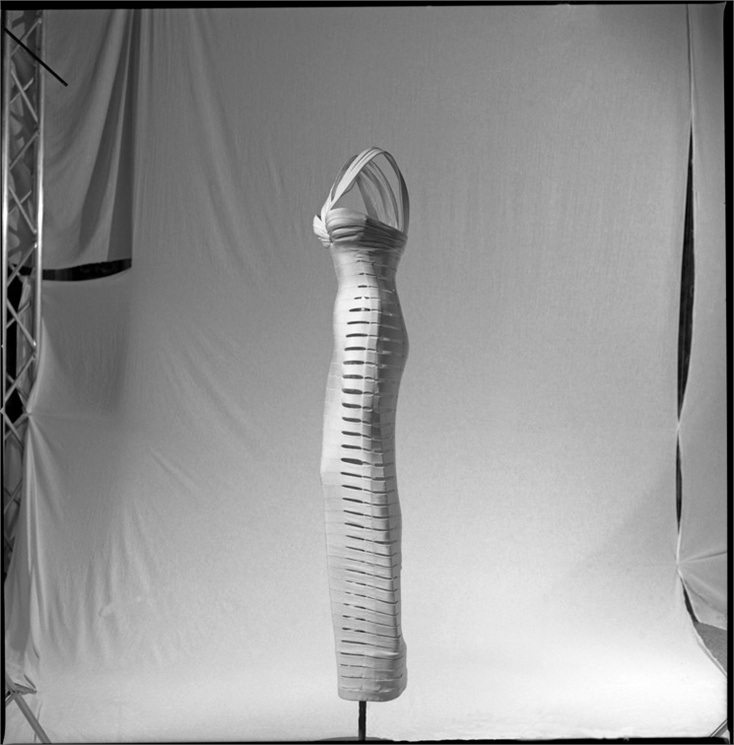
A tireless craftsman Alaïa is famous for his extensive research into new materials and new ways of cutting and shaping them. He cuts many patterns himself and often finishes garments by hand. Alaïa drapes directly onto the body, ensuring the perfect fit. It has been said that once a girl has worn an Alaïa anything else seemed simply ‘too big’. There is always a fit model present in his atelier, available 24 hours a day, a role once filled by a young Naomi Campbell.

Owing much to Madame Vionnet, the great tailleur of the 1920s famed for her introduction of bias cut dresses, Alaïa uses the same lingerie inspired sewing techniques along with seaming and stitching usually reserved for corsetry. Combined with malleable elastic fabrics this allows for maximum body control and sex appeal in his clothes. He avoids vulgarity by utilizing a range of muted colours and expert tailoring, lace is backed with skin coloured fabric to give the illusion of exposure. Alaïa’s garments are created using old tailoring techniques yet he has always taken full advantage of developments in fabric construction embracing modern fabrics such as lycra, jersey and viscose.

Azzedine Alaïa was named Chevalier de la Légion d’honneur by the French government in 2008.

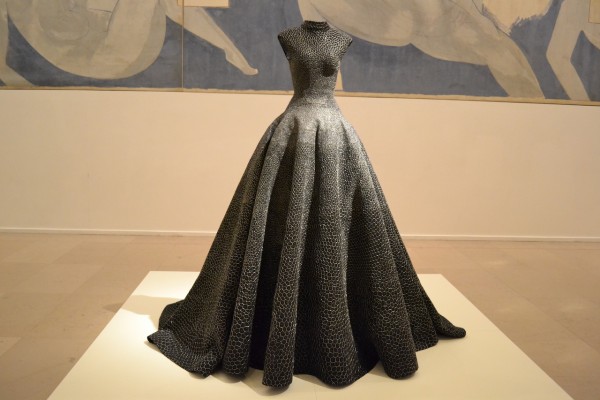
Alaia_image2Azzedine working on his famous crocodile dress
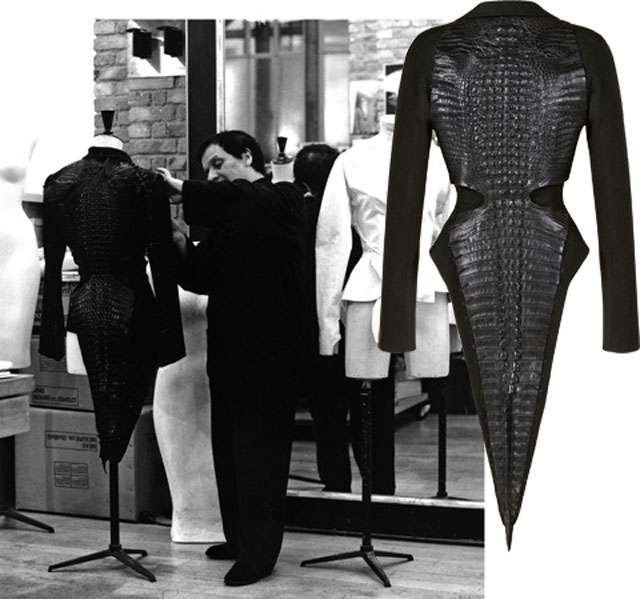
.

In 2011 Alaïa was asked to become the head of Dior after John Galliano’s departure. He expressed himself to be flattered but not interested in the role.

.
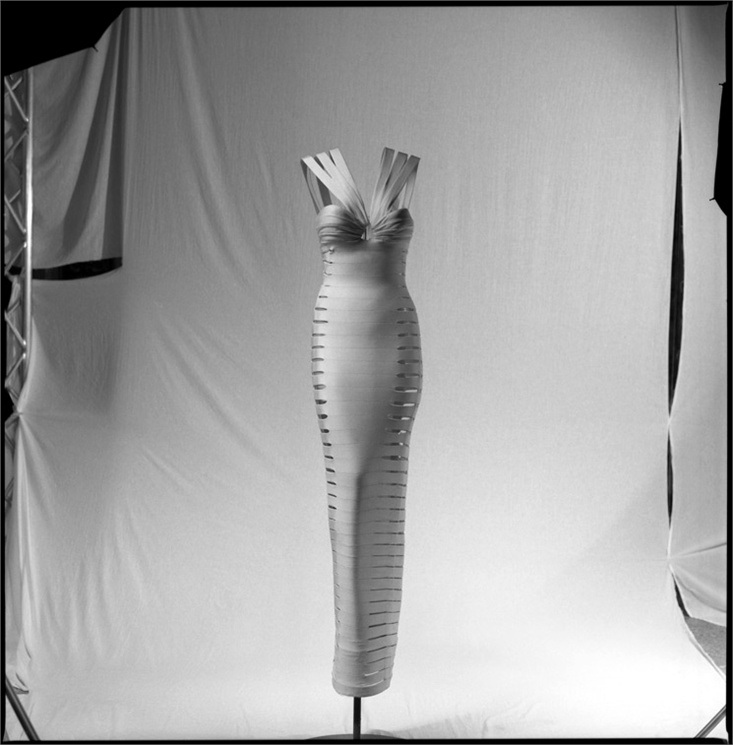

alac3afa-dress-springsummer-1990-azzedine-alac3afa-archives-c2a9-ilvio-gallo-1996-1
 
alac3afa-dress-springsummer-1990-azzedine-alac3afa-archives-c2a9-ilvio-gallo-1996
 
alac3afa-dress-1996-azzedine-alac3afa-archives-c2a9-ilvio-gallo-1996-1
.

Exhibition autumn 2013

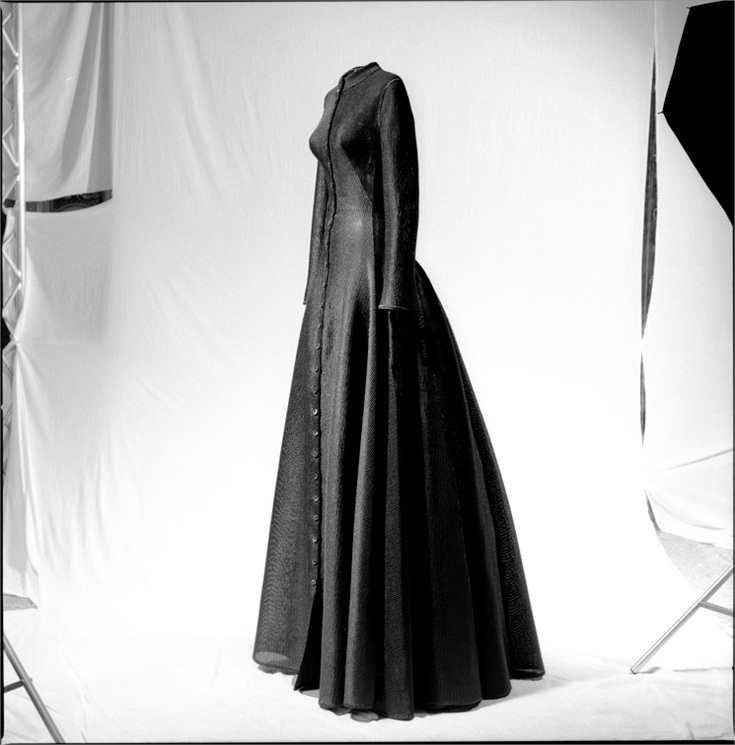
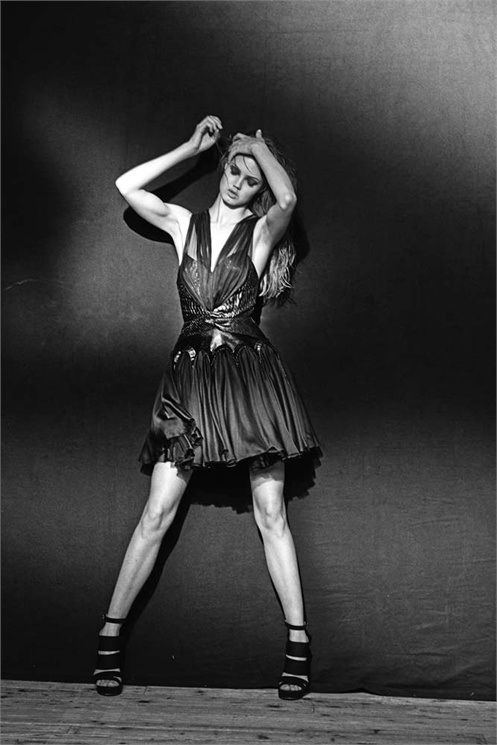
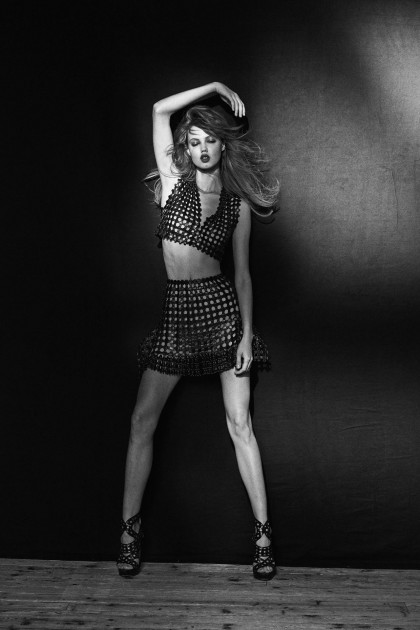
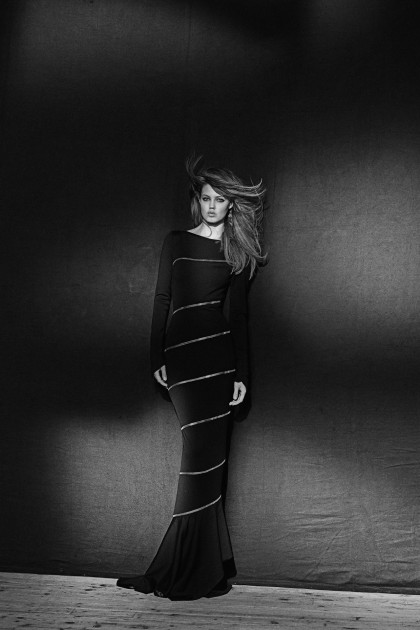
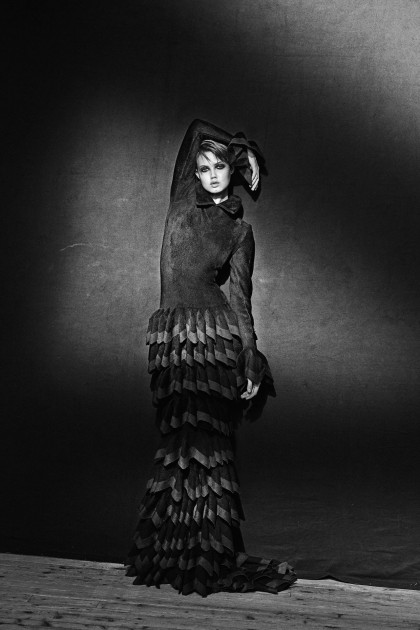
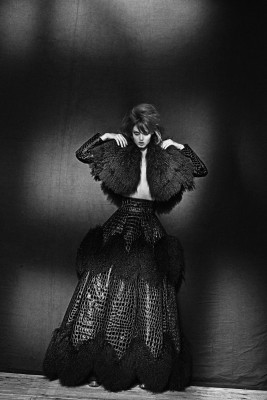
alac3afa-dress-springsummer-2010-azzedine-alac3afa-archives-c2a9-peter-lindbergh-for-alac3afa-2013-1tumblr_mtl7f6XQCC1rf4nooo1_1280-420x630tumblr_mtl7enWvx61rf4nooo1_1280-420x630tumblr_muu03uF2ku1rn12fjo1_500tumblr_mtl7e72l6c1rf4nooo1_1280-420x630

fashionblog
Photos by Peter Lindbergh featuring Lindsey Wixson, 2013

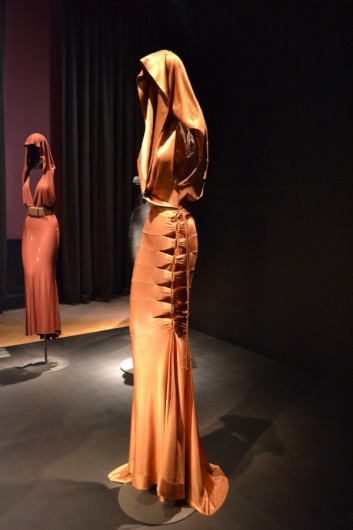
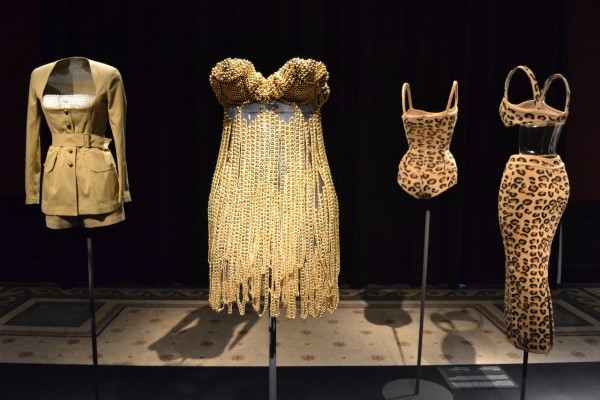
Palais Galliera, Museum of Fashion in Paris, Autumn 2013

Designed for the reopening of the Galliera Museum, the exhibition provides the first retrospective in Paris dedicated to couturier Azzedine Alaïa.  After studying at the School of Fine Arts in Tunis, Alaïa arrived in Paris during the 1950s and quickly became a noble artisan himself, perfecting Parisian elegance. He mastered his craft by remaining close to his clients, whom he seduced with custom-made garments in the great tradition of Chic. In the 60s and 70s, he developed wardrobes for famous personalities such as Louise de Vilmorin, Arletty and Greta Garbo.

He followed a creative method that allowed him to free himself from dictates and rules, confirming his talent as a visionary. He was recognised by the media in the 1980s as his work stood out as particularly noteworthy during that decade. A true plastic surgeon who only used his scissors on chiffon and leather, Alaïa sculpted a new body. By inventing novel morphologies for clothes through the simple play of seams, Alaïa became the couturier of a timeless body of work. His influence on contemporary fashion and all generations of creators and couturiers is fundamental.

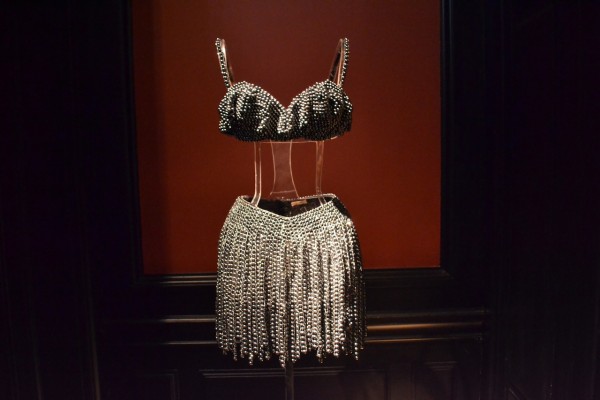
azzedine-alaia-in-palais-galliera-1-84435

azzedine-alaia-in-palais-galliera-2-84436

azzedine-alaia-in-palais-galliera-6-84440

azzedine-alaia-in-palais-galliera-84434

azzedine-alaia-in-palais-galliera-7-84441

.
.

Books

I

alaïa groninger museum

 A beautiful catalogue of the Groninger Museum, Azzedine Alaïa Exhibition 2012
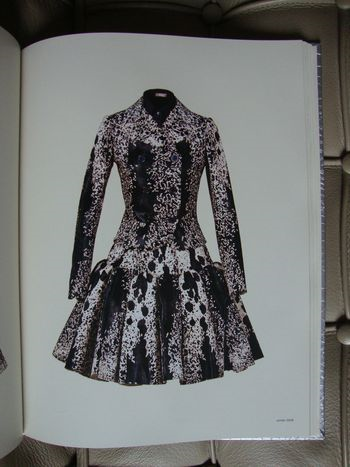
.
naamloosgron
naamloosgroni
naamloosgronin
naamloosgroning
naamloosgroninge
naamloosgroninger
naamloosgroningerm
naamloosgroningermu
.
.

II
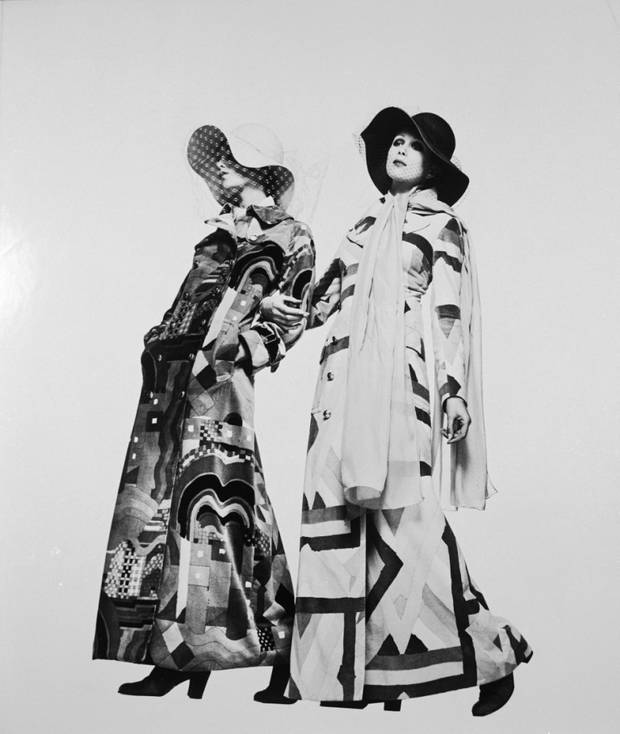
book cover
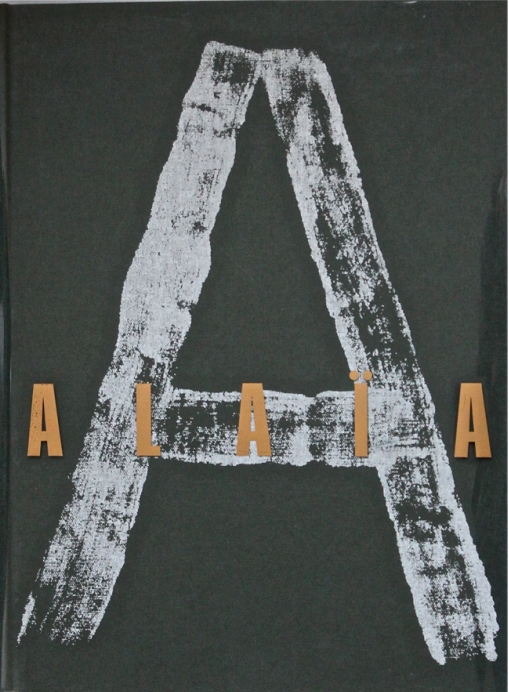
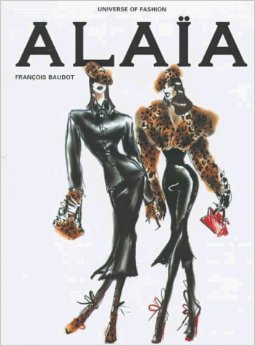
Very rare hardcover ‘Alaia’ book featuring breathtaking images taken by Azzedine Alaia published by Steidl dating to November of 1998. Limited edition. 240 pages.
.

III
.
Info for this post: WWD, A Magazine, Wikipedia
.

Justin de Villeneuve, a Colourful Villain, Mr. Twiggy & Iconic Photographs

3 Nov

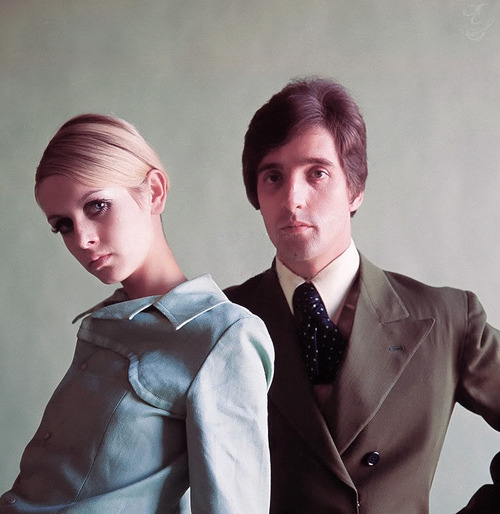
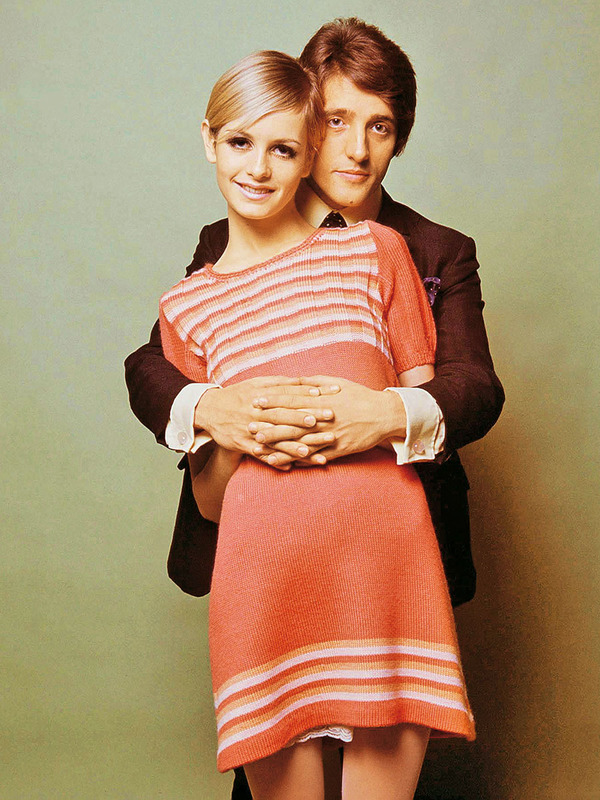
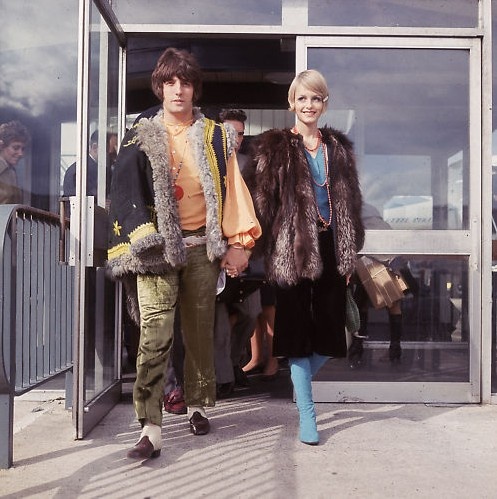
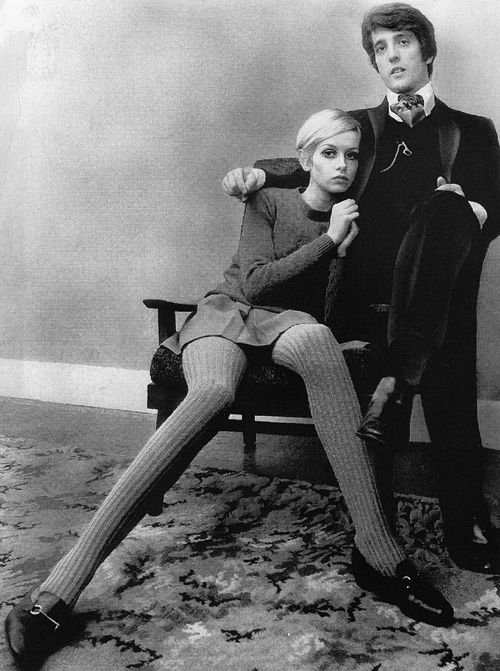
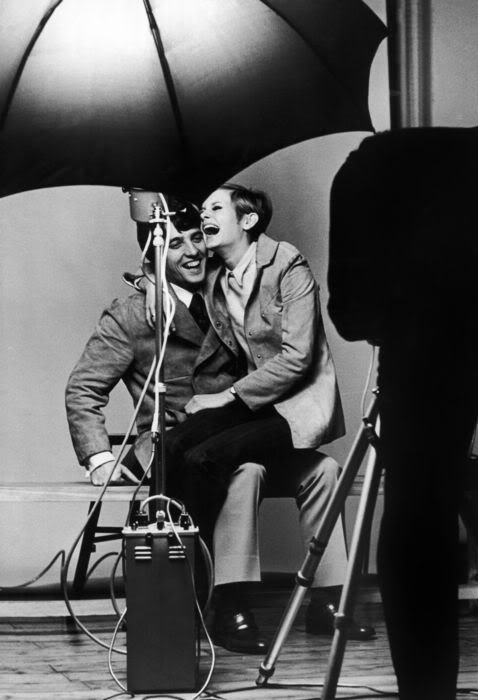
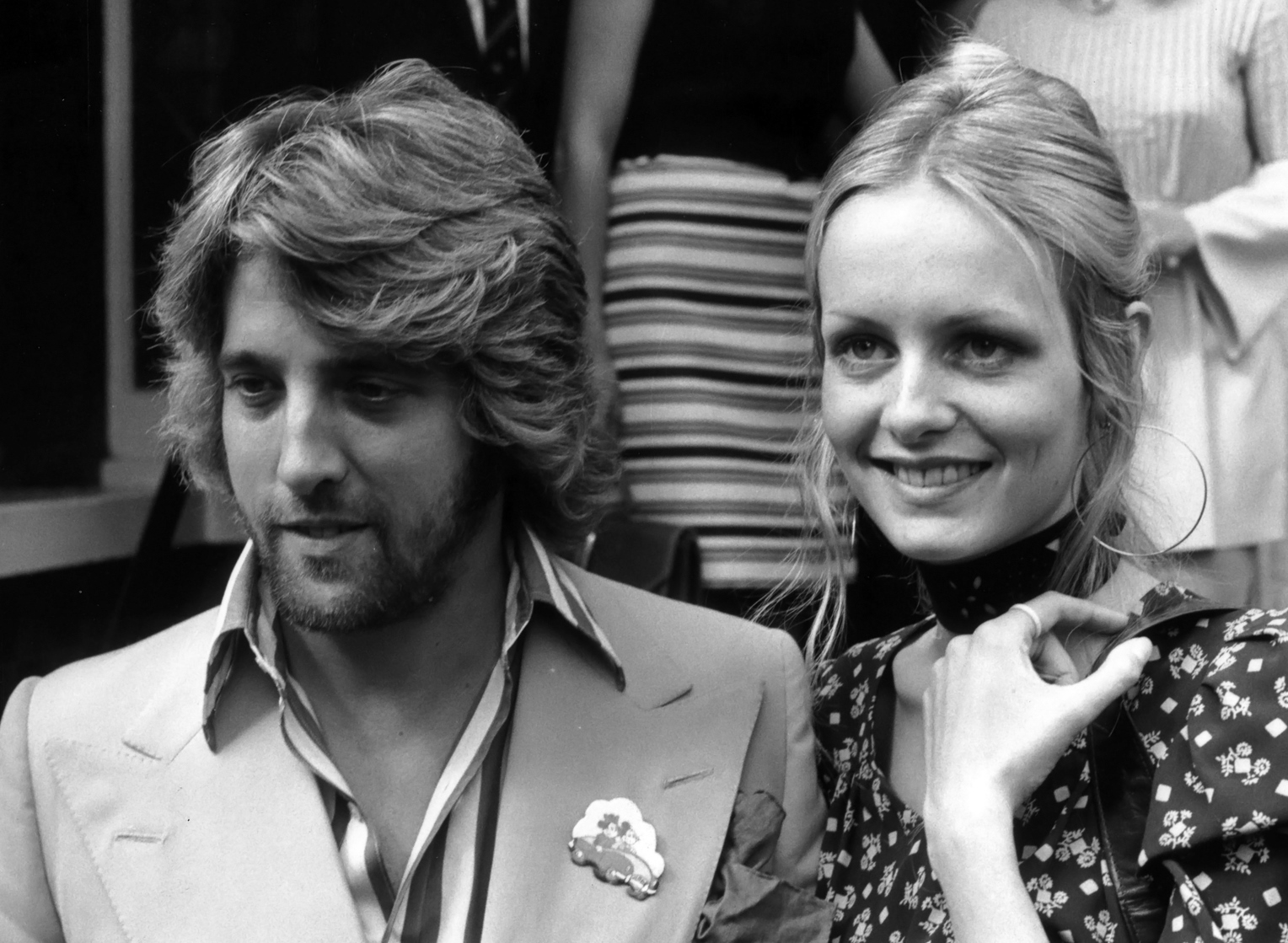
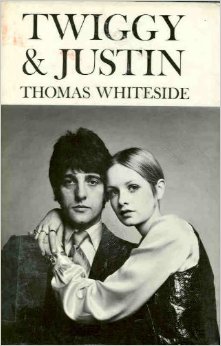
Twiggy & Justin

Twiggy & Justin de Villeneuve

.

For a while now I’ve been curious about ‘what happened to Justin de Villeneuve, after he and Twiggy split up as a couple and professionally’, so it was time to find out more about him. And I’m happy I did, because it’s the story of a chameleon and a one of a kind, who reinvented himself more often than Madonna did……, being a boxer, a colourful villain, a hairdresser, interior decorator, manager, photographer and poet, but best known for launching Twiggy’s modeling career and making her a superstar.
.

Short Biography

Twiggy & Justin

Born Nigel Jonathan Davies in East End London, 1939. But Nigel didn’t seem a great name for a boy with ambitions, so he starts calling himself Nagels. Everyone, he says, with their fingers in dodgy pies, knew Nagels. He was one of the most persuasive mouths around, learning his craft by encouraging punters into strip clubs in Soho. From there he turned a few folding ones as the plant in the audience who volunteers to fight the boxer in the fairground ring and soon he was buying and selling this and that. Once he got his hands on a job lot of wine.

“It was an insurance job, Jewish lightning struck the warehouse,” he remembers. “The wine tasted like paint-stripper, but I just stuck fancy labels on it, and sold the lot to Vidal Sassoon for his wedding. He invited me along, I was very nervous, positioned myself by the door to do a runner. But they were such gullibles, his guests, they got conned by the labels, everyone loved it. Vidal was so impressed, he made me his assistant.”

It was then, as number two to the fanciest snipper in town, that the young fast-lip decided that a false name was required to complete the con. This time he renamed himself Christian St Forget. But not for long. “I’d heard the name Justin and I liked it. Then someone said I should choose a French second name, but I didn’t know any. So they said, ‘Well just take the name of a town.’ So I said, ‘What, like Harlow New Town?’ And that was it: Villeneuve.” And so, suitably titled, the young hairdresser soon found himself blagging his way into the affections of all sorts of handsome women who came in to have their hair done. One was a skinny 15-year-old called Lesley Hornby.

Justin & Twiggy

She attracts the attentions of de Villeneuve, ten years her senior, while working as a Saturday girl in the local hairdressing salon. “I started going out with Lesley in 1965”. She wanted to become a model and Justin changes her name to Twiggy. Together they arranged meetings with fashion editors, but they all said she looked too young. He sets about promoting her look with great success. Eventually she got her break, within six months of meeting, Twiggy was on the front cover of every magazine. She is declared ‘the face of 1966’ by the Daily Express. Twiggy is photographed by Vogue, flown to New York, and becomes a recognisable fashion icon throughout the world.

“A lot of tap dancing went on,” he says. “I didn’t know what I was doing, I had a lot of front, but I had a lot of taste as well. I’d only let her do the good stuff. We exploded, we were like the biggest names. It was Mick and Keith, John and Paul, and Justin and Twigs. At one point I got through 23 cars in 12 months, Ferraris the lot. I had a domestic staff, five of them: cook, butler, chauffeur. Ridiculous, but I don’t regret a minute of it.”

NYC4904

dc5ccc659abb12a82cbc1784555099d5

tumblr_m8mhtp0LXg1r9lhfqo1_500

It occurred in the early Seventies, when the pair had been an item for eight years, during preparation for the follow-up to the film The Boy Friend (“You remember, lovely film, really made Twigs”). De Villeneuve blames it all on a contractual problem. A script had been arranged, a producer engaged, Fred Astaire was going to star alongside Twiggy and a semi-famous actor was lined up to play the love interest. But then the snag struck: the money couldn’t be agreed on, and he dropped out. So an actor called Michael Whitney was recruited in his place. And, whoops.

“Halfway through the filming she rings and tells me she’s in love with Michael Whitney and I’ve got the old elbow. Devastated I was,” De Villeneuve remembers. “But the thing was, it need never have happened. Michael Whitney never needed to be there. It was contractual problems, you see, with the first geezer. Contractual problems which I could’ve sorted, but the agents wouldn’t let me. If only I’d been allowed to sit down with the bloke, then, well: crash, bang, wallop, two kippers and a bon-bon, how’s your father, done and dusted.” A colourful way of recalling his life has Justin de Villeneuve.

model-twiggy-and-her-manager-boyfriend-justin-de-villeneuve-1970

MV5BNzk4NTI3Mjk3MV5BMl5BanBnXkFtZTYwMTY0NDU2__V1__SX420_SY304_

twigJust02739401

De Villeneuve takes fifty percent of her earnings as a model, and from the dress line set up in her name and the franchises for dolls and accessories. During the early relationship, Twiggy is naïve in business whilst de Villeneuve becomes increasingly extravagant – he takes delivery of a new Italian car every six weeks; Tommy Nutter suits are ordered ten at a time.

As Twiggy starts to become more aware of her earnings, De Villeneuve has difficulty demonstrating his relevance to their existing business relationship. He antagonizes professional photographers by taking up photography and then demanding grandiose fees; he generates a similar response in the film world and is deemed incapable of standing back and accepting his role should simply be that of an effective agent.

Twiggy in Biba
Twiggy in Biba
twiggy-in-Biba
Twiggy in Biba
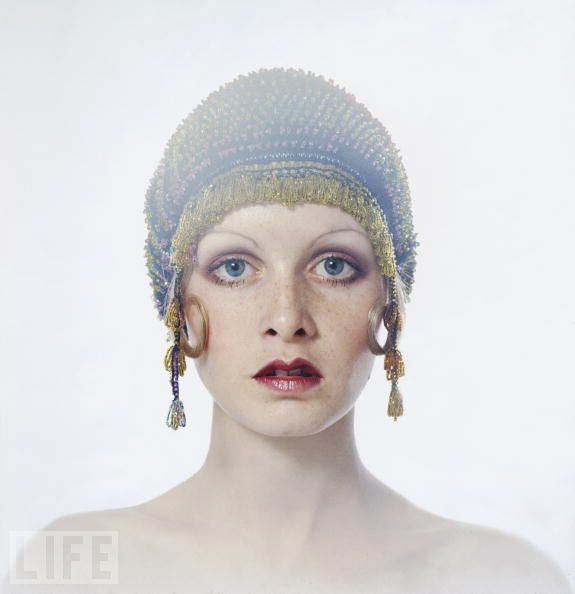
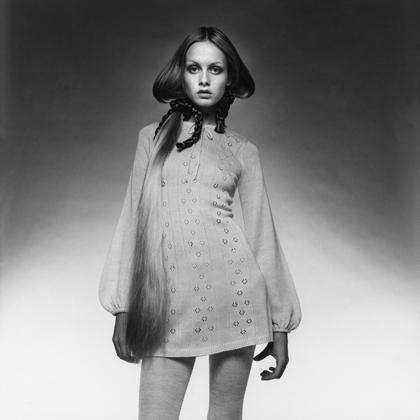
Twiggy in BibaIconic photographs of Twiggy in Biba by Justin de Villeneuve

Twiggy by Justin de Villeneuve, Dudu make-up by BibaTwiggy in Dudu make-up advertisement for Biba by Justin de Villeneuve

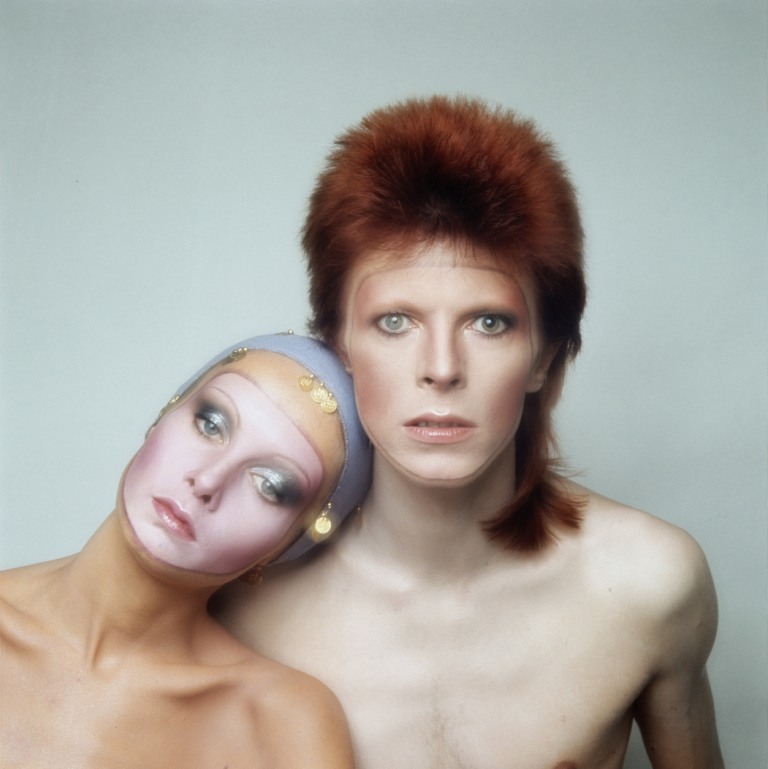
“By 1973, we were no longer a couple, but I remained her manager. David Bowie’s Aladdin Sane had just come out, and we loved the line: ‘Twig the wonder kid.’ We met Bowie a few times socially, and he mentioned that he wanted to be the first man on the cover of Vogue. I called them to suggest this, with Twiggy, of course, and after a bit of a hoo-ha, they agreed. T

o be honest, I wasn’t a professional photographer. I had watched Bert Stern, a hero of mine, do a cover with Twigs. I was fascinated by the set up: he would disappear into an office while the assistants set everything up. Then, when it was ready, he would return, utter those immortal words, “Strike a pose”, click the picture and go. I thought: “Justin, you can do that.” That’s the moment I became a photographer. 

Twiggy, Justin, VogueTwiggy for Vogue by Justin de Villeneuve

Twiggy, 1971. Picture by Justin de Villeneuve
Twiggy, justin, vogue italiaTwiggy for Italian Vogue by Justin de Villeneuve


Bowie was working on Pin Ups in Paris, so we flew there to do the shoot. When Twigs and Bowie were together and lit up, I looked through the viewfinder and realised that David was pure white, whereas Twiggy was tanned from a holiday in Bermuda. There was a moment of panic because I knew it would look bizarre; but the makeup artist suggested drawing masks on them, and this worked out even better. 

I remember distinctly that I’d got it with the first shot. It was too good to be true. When I showed Bowie the test Polaroids, he asked if he could use it for the Pin Ups record sleeve. I said: “I don’t think so, since this is for Vogue. How many albums do you think you will sell?” “A million,” he replied. “This is your next album cover!” I said. When I got back to London and told Vogue, they never spoke to me again. Several weeks later, Twigs and I were driving along Sunset Boulevard and we passed a 60ft billboard of the picture. I knew I had made the right decision.”

Twiggy and David Bowie

Photo of twiggy & David Bowie, commissioned by Vogue, but ends up as album cover for 'Pin Ups'

 .

In 1973, Twiggy severs her ties with de Villeneuve. And with that out went his main source of income. For a few years, De Villeneuve traded on the old name, doing a bit of interior decorating here (“Some poor sap in the City gave me a grand for doing out their restaurant; I hadn’t a clue”), a bit of pop management there (two of his clients were Tim Hardin and – we all make mistakes – Clifford T Ward). But it was not enough to sustain the domestics. 

“I was used to picking up the phone and making it work,” he says. “All of a sudden you’ve got receptionists saying, ‘How do you spell that name?’ “

Then, in the middle of a very barren run in the Eighties, came a crushing revelation. “I realised that I was only any good at that sort of thing when I was with Twigs,” he says. “It became an enormous handicap, my name. You could feel people assuming everything I did must be a load of old bollocks. People seemed to take enormous pleasure in my fall.”  Moreover, by then, Twiggy wasn’t around to help him make a few quid. All this self-assessment, though, had a positive outcome. De Villeneuve decided to write about the good times in book form (An Affectionate Punch, published in 1986).

http://www.amazon.co.uk/An-Affectionate-Punch-Justin-Villeneuve/dp/0283993464

.

.

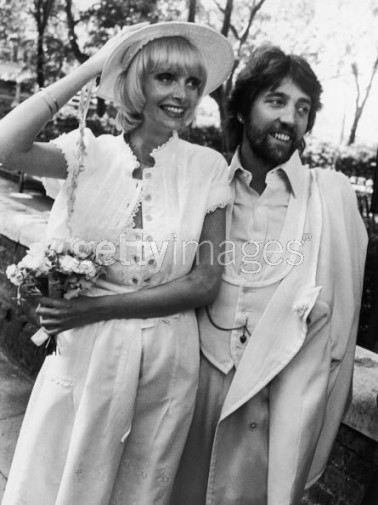
1975 Justin weds American Model Jan Ward. Together they have to baby girls, who now have made a name for themselves in fashion styling, Poppy de Villeneuve and illustration, Daisy de Villeneuve. 

510037491-378x505Jan (Ward) & Justin de Villeneuve

.

Another marvelous scheme

Justin worked as a studio producer for a while, after his split from Twiggy. You can find an entertaining story about this when you click on the next link!!!

http://www.studiowner.com/essays/essay.asp?books=0&pagnum=123

.

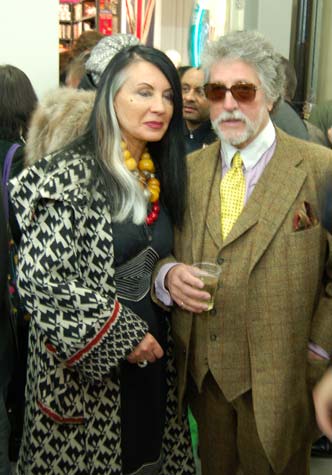
2007 Justin married Sue Timney, president of the British Institute of Interior Design, at Chelsea Town Hall, they live in Kent 

jones_56

Justin de Villeneuve & Sue Timney

.

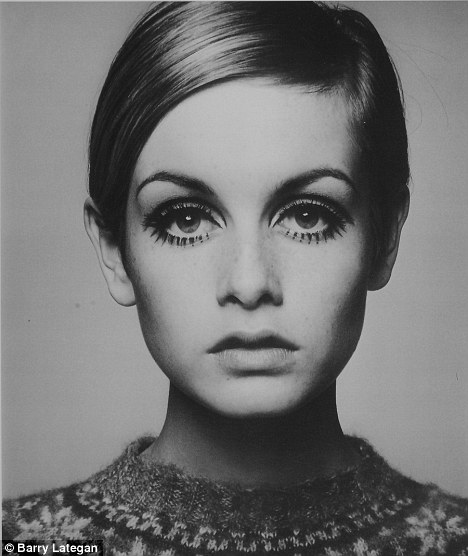
Now retired, Justin’s influence on Twiggy’s career was again highlighted when Bonhams auctioned the iconic photograph by Barry Lategan from her first modelling shoot in 1966. It had been arranged by de Villeneuve. The picture, which fetched £5,600, propelled Twiggy to international stardom.

article-1212047-059FF469000005DC-495_468x556
.

Exhibition in 2011

.

FACES OF THE SIXTIES: Justin de Villeneuve With a portfolio full of celebrated fashion shots and iconic portrait sittings with a number superstars of his era and glossy magazine publications, the new exhibition in Proud Chelsea is a marvellous look back at a prolific career. Featuring Twiggy, Pattie Boyd, Marsha Hunt and David Bowie, this exhibition showcases an exclusive collection of de Villeneuve’s rare and unseen photographs. Not only his famous sitters, but de Villeneuve himself is one of the most intriguing characters in British fashion history.

.
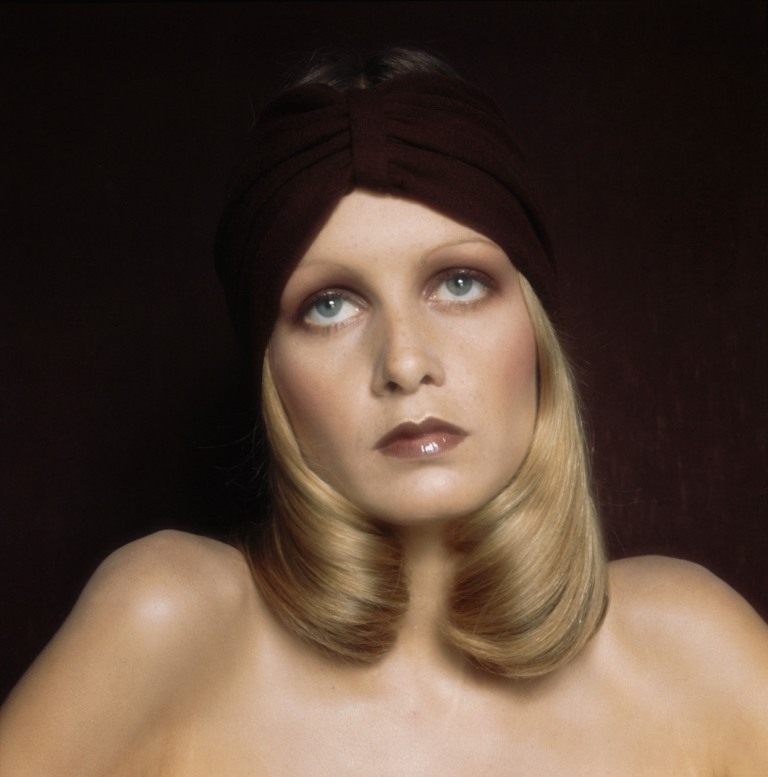
???????????A beauty shot of Twiggy for Biba’s new range of cosmetics, 1970

???????????American singer and novelist Marsha Hunt at the time of her appearance in the stage musical ‘Hair’, 1968

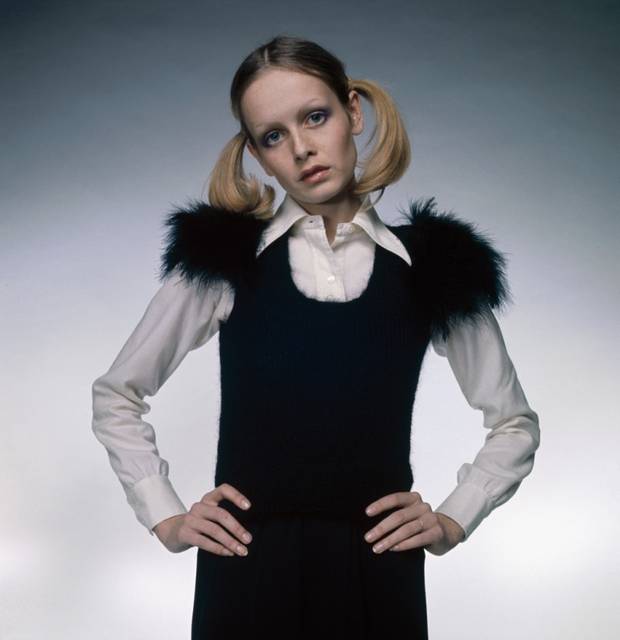
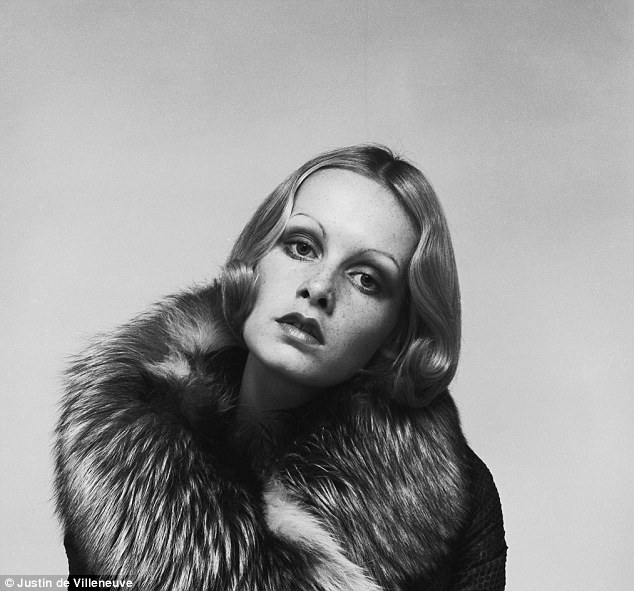
5133174310Twiggy wearing a fur-trimmed dress knitted by herself, over a white blouse, 1972

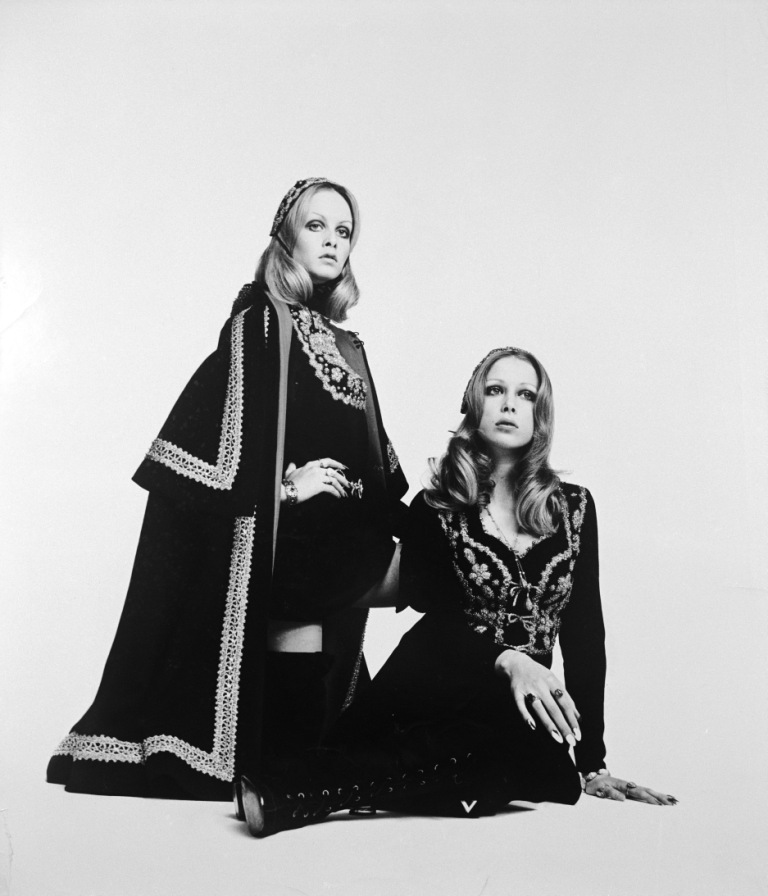
???????????Twiggy & Patti Boyd for Italian Vogue, 1970

56013784_10Twiggy & Patti Boyd for Italian Vogue, 1970

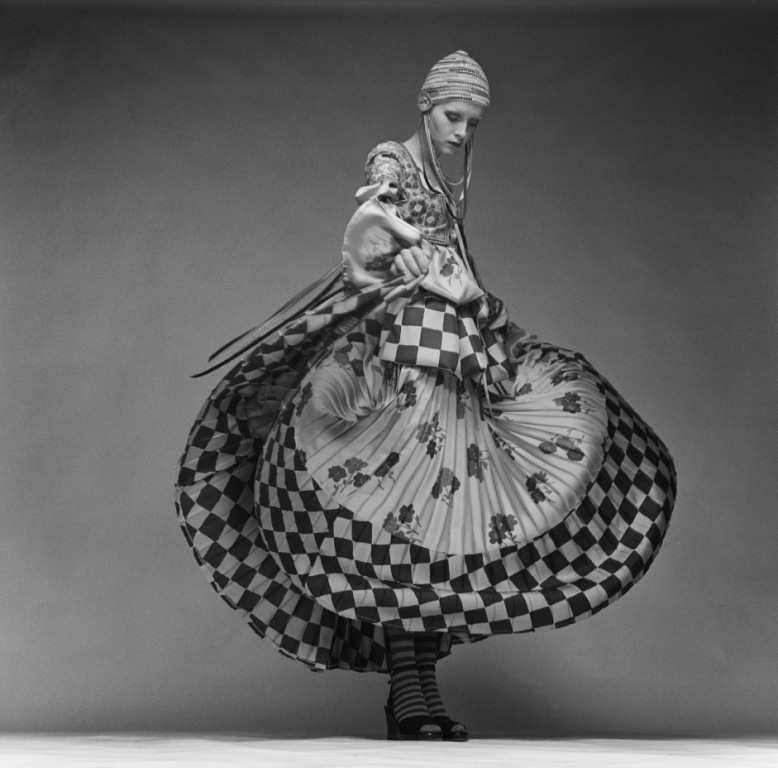
???????????Twiggy wearing a peasant-style dress in a promotional shot for Ken Russell’s ‘The Boy Friend’

article-2282392-182E5B77000005DC-768_634x591Twiggy wearing an Ossie Clark fox fur coat from 1970

Twiggy by justin de villeneuve

  .

Book

51td-3uKWIL__SY344_BO1,204,203,200_

http://www.amazon.com/Twiggy-Justin-Thomas-Whiteside/dp/B0006BUYPO

.

Justin_de_Villeneuve_700Justin de Villleneuve, 2006
.

Information for this postInterview by Jim White, 1995

http://www.independent.co.uk/arts-entertainment/books/no-more-mr-twiggy-1603492.html

Jackie Kennedy, the Presidential Wardrobe

27 Oct
1_1953-09-Jackie-Kennedy_181532490638_jpg_article_gallery_slideshow_v2
Jacqueline Bouvier, photographed by Horst P. Horst on the 
announcement of her marriage to John F. Kennedy, 1953
.

Introduction

The 1960’s were considered to be a time for change, and that is  exactly what first lady Jacqueline Kennedy did for White House fashion. Jackie Kennedy became a fashion icon during her few years as first lady  and her influence on women’s attire continued throughout her life.  Everyone fell in love with Jackie’s grace and style largely because of  her wonderful fashion choices.

Jackie Kennedy loved wearing bright colors such as pink, yellow, red  and ivory. Her own personal fashion icon was Audrey Hepburn and  throughout her life, Jackie’s style would always feature the flavor of  Hepburn’s old Hollywood glamor. As a result, Jackie chose Hubert de  Givenchy as her go-to designer since Givenchy created looks for Audrey  Hepburn in ‘Breakfast at Tiffany’s.’ Jackie Kennedy’s daywear generally consisted of simple sleeveless  dresses, Chanel jackets and A-line skirts by Dior, paired with her  signature pillbox hat, pumps, long white gloves and usually pearls or  brooches. 

For days around the White House or in the office, Jackie  opted for a high-waist trousers paired with a blouse, turtleneck or  cashmere sweater.  Jackie always completed her daywear with her black,  oversized sunglasses – a trend that is still in style. 

 For eveningwear, Jackie’s style was generally a sleeveless look in a  single color with a founded or bateau neckline as well as long sheath  dresses that showed off her slim figure.  Jackie also loved backless or  off-the shoulder gowns, which made her look like Hollywood royalty. Her  shoes and accessories would always match her evening apparel perfectly. A pair of white gloves was another signature accessory of Jackie  Kennedy’s. 

She also knew the meaning of the word ‘occasion.’  When  traveling to foreign countries, Jackie always dressed accordingly to  complement the customs of her host nation. For example, when visiting  India, her style was more conservative than what she would wear to an  American event. It’s this quality that helped foster Jackie’s classic  and classy sense of style and drew infatuation from people all over the  world.

115113-jackie-kennedy-had-a-signature-style

Amazing experience

Where to start a post about Jackie Bouvier, Kennedy, Onassis, who was and still is a style icon? I did go to the exhibition ‘Jackie Kennedy, the White House Years’ in the Metropolitan Museum of Art in 2001 and it was one of the best I’ve ever seen (except ofcourse the exhibition of Alexander McQueen at the same museum). To see these clothes, you know so well from all pictures and tv broadcasts, from nearby was an amazing experience.

.

Exhibition

The reason for the exhibition was to mark the 40th anniversary of her emergence as America’s First Lady and to explore her enduring global influence on style. Some 80 original costumes and accessories had come from the collection of the John F. Kennedy Library and Museum in Boston, to which the former First Lady donated these landmark pieces after she left the White House. The collection included elements from her formal White House wardrobe – what Mrs. Kennedy herself called her “state clothes” – as well as pieces worn during her husband’s 1960 presidential campaign. Hamish Bowles, European editor-at-large of Vogue, served as creative consultant. Jacqueline Kennedy is one of history’s great style icons. Her profound influence on the way an entire generation wanted to look, dress, and behave cannot be overestimated.” Hamish Bowles  Hollywood’s preeminent designer, Edith Head, called her ‘the greatest single influence [on fashion] in history’ 

.

Advice to Jackie

jackie-and-diana-vreeland

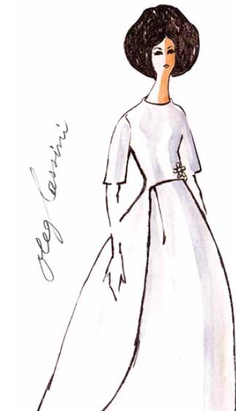
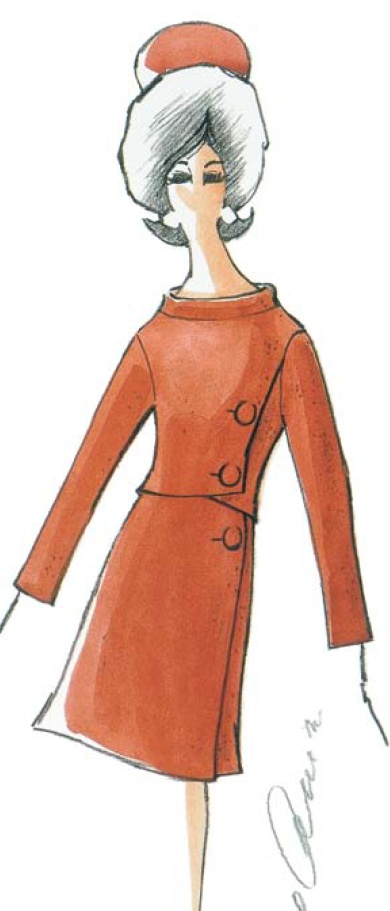
Jackie studied at the Sorbonne in Paris and she returned with a smart, sophisticated Parisian wardrobe, containing pieces of Givenchy, Balenciaga and Chanel. When John F.’s career climbed the ladder, Jackie was issued a discreet ultimatum: For political expediency : Cut the Paris cord. She began consulting with Diana Vreeland, the fashion oracle, on a selection of American designers. In December, the Hollywood costumer Oleg Cassini, a French-born American of aristocratic Russian and Italian descent, was made official designer of her White House wardrobe. An old family friend, Cassini would create for his star client a polished wardrobe of both original designs and Paris copies—for which Jackie often supplied sketches, pages torn from magazines, and fabric swatches.

drawing Oleg Cassini

drawing Oleg Cassini

.

Another advice came from Manhattan hairdresser Kenneth: loose the short, wavy “Italian Cut” hairdo, grow your hair and stretch it out on rollers. (In the coming years, Kenneth will be responsible for Jackie’s famous trend-setting bouffant)

Jackie Kennedy

.

Famous outfits

Inauguration Day

Jackie Kennedy, with her husband on Inauguration Day, January 20, 1961, wears a hat designed for her by Halston.

jackie-inagural-coat

images-1

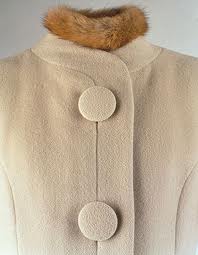
On the Inauguration Day, January 20, 1961, Jackie dressed in Cassini’s trim greige coat, worn with Halston’s news-making pillbox hat and a little sable circlet and muff. It set the tone for the new first lady’s wardrobe.

.

Inaugural Bal

inaugural-ball-jackie-kennedy-640x823

010909_kennedy03_300x400

PicMonkey Collage

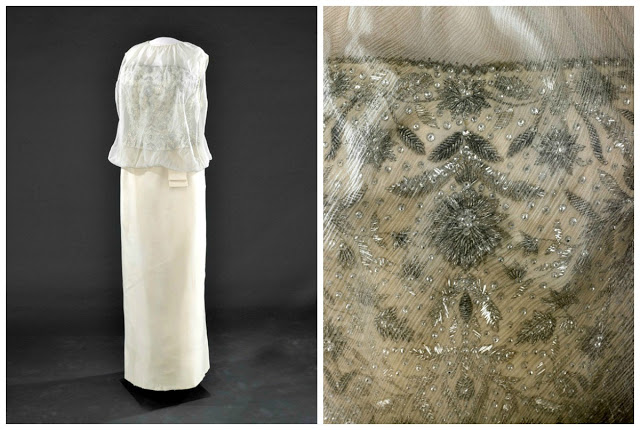
For the 1961 celebration,Jackie Kennedy collaborated on a design with Bergdorf Goodman’s Ethel Frankau and Emeric Partos. “What you see with the inaugural gown is the triumph of her own personal style,” the Fashion Institute of Technology’s Valerie Steele has said. “To use fashion as a way of representing her husband’s presidency—to look modern, elegant, simple and American.”  An Ivory column with silver embellished bodice, veiled with a sheer overblouse and a matching cape to add a royal touch.

.

Inaugural Gala

115306307.jpg

259731103480091849_w1plItWC_c

Jacqueline Kennedy’s Inaugural Gala Gown. Ivory silk satin evening gown, by Oleg Cassini, American, 1961. Worn by Jacqueline Kennedy to the Inaugural Gala, National Guard Armory, Washington, D.C., January 19, 1961 the evening before President Kennedy’s inauguration. The cockade at the waist pointed to Jacqueline Kennedy’s pride in her French Bouvier ancestry and her profound love of history.

 .

Television broadcast

slide_240368_1267375_free

ap_jacqueline_onassis_red_dress_jrs_110908_ssh

Jackie Kennedy wears a red wool day dress by Christian Dior for a televised tour of the White House on Valentine’s Day in 1962

.

Nobel Prize winners diner

jbkatnobeldinner

16a_l

oleg-cassini-evening-dress-in-celadon-silk-jersey-1962

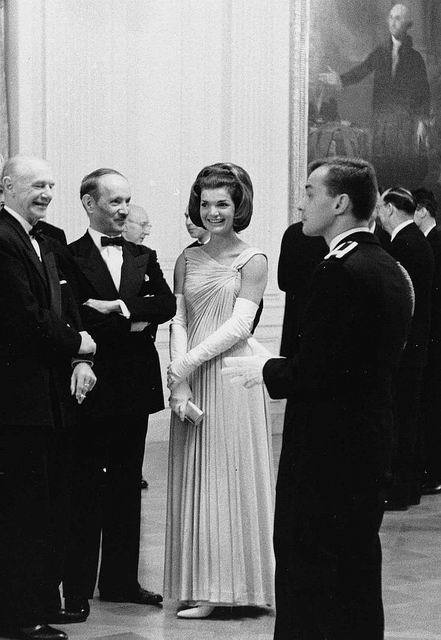
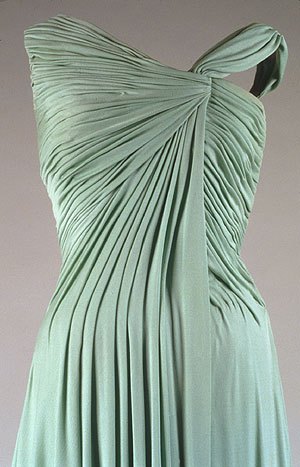
A Grecian draped Celadon column in silk jersey, draped to form a pleated skirt and a gathered bust line. Designed by Oleg Cassini.

This dress was worn by the First Lady to the dinner honoring the Nobel Prize winners of the Western Hemisphere at the White House in Washington, 1962.

.

Opening of the Mona Lisa exhibit

himyf jackie pink

JFKMUS-MO-1963-1399-MAIN

n-inspired-slim-yellow-silk-column-with-white-beading-is-audreys-favorite-of-givenchys-spring-collection-photo-by-howell-conant-for-life-magazine-may-1962

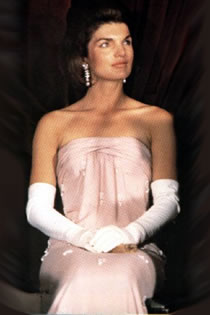
Pink silk chiffon strapless evening dress. This sari inspired evening dress is delicately beaded with porcelain and rhinestones. Jackie had noticed a photograph of Audrey Hepburn wearing the original yellow version of the dress in the May 11, 1962 issue of Life magazine, designed by Hubert de Givenchy.  She supplied Cassini with a sketch from which he created this version after a spring-summer 1962

This gown was worn by Jackie to the opening of the Mona Lisa exhibit at the National Gallery of Art, Washington, 1963. The First Lady also wore this dress at the White House state dinner honoring President Sarvepalli Radhakrishnan of India, June 3, 1963.

.

Visiting the Pope

Jacqueline Kennedy Visiting Pope Paul VI

d

4080489901_e132d7ecab

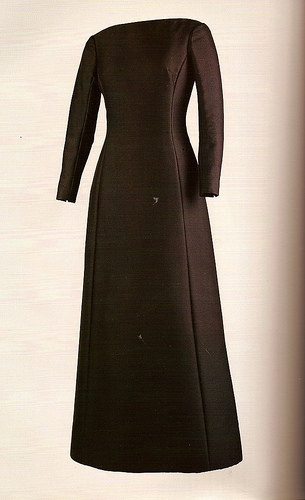
A full-length long-sleeved black dress in black Alaskine with a taffeta petticoat. This dress was worn by Jacqueline Kennedy during her audience with Pope John XXIII, Vatican, Rome, March 11, 1962. Protocol requires that women wear a mantilla or hat and dressed in black.

This dress is one of my  favorites worn by the First Lady, because of the  fabulous simplicity.

.

Fatal day

72d721f7aa4e04c8eb96d49375381ce0

Jacqueline Kennedy wore a double-breasted, strawberry pink and navy trim collared Chanel wool suit on November 22, 1963, when her husband, President John F. Kennedy was assassinated in Dallas, Texas. Accompanying the suit was a trademark pillbox hat in matching pink. The suit has become an emblem for her husband’s assassination and one of the iconic items of fashion of the 1960s. It has been variously described as “a famous pink suit which will forever be embedded in America’s historical conscience“, as “one of those indelible images Americans had stored: Jackie in the blood-stained pink Chanel suit”, as “the most legendary garment in American history“, and as “emblematic of the ending of innocence“. Jacqueline Kennedy was a fashion icon, and this outfit is arguably the most referenced and revisited of all of her items of clothing and her trademark.
.

Catalogue-Book Exhibition

A beautiful illustrated, very inspirational, must-have book.

020

http://www.amazon.com/Jacqueline-Kennedy-Selections-Library-Museum/dp/0821227459

.

“I am the man who accompanied Jacqueline Kennedy to Paris, and I have enjoyed it.

-John F. Kennedy-

.

.

Bettina Graziani inspired all Great Couturiers

20 Oct

bettina

I was a success in my job as a cover girl,” she writes, “and I owe that success more to an expressive face than to my good looks.”

Bettina

.

Bettina Graziani

Biography

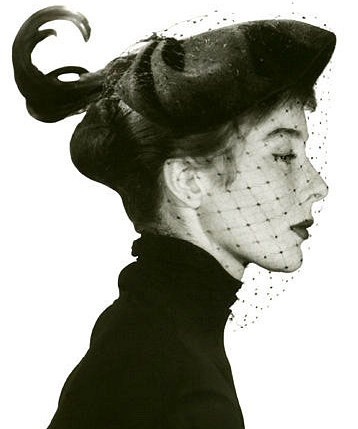
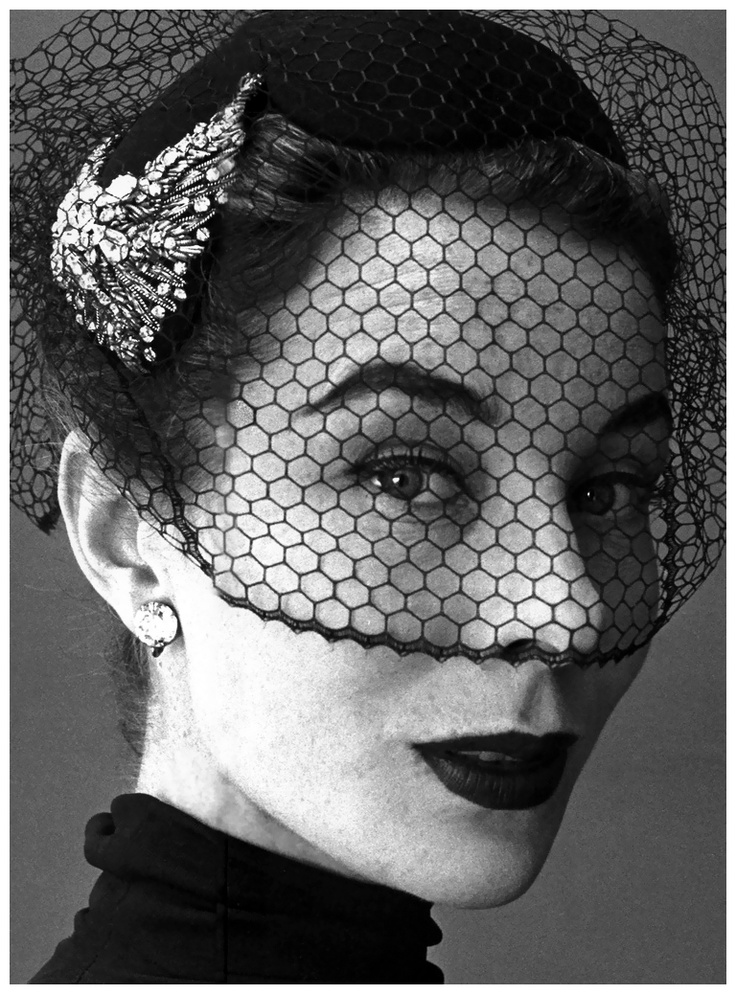
Simone Micheline Bodin (born in France, 1925), known professionally as Bettina or Bettina Graziani, was a French fashion model of the 1940s and 1950. Simone spends her childhood in Lavel, France. Her first job is tinting drawings for an architect, while she’s  dreaming of becoming a fashion designer. She moves to Paris and presents her drawings to couturier Jacques Costet at his atelier at 4 Rue de la Paix. Costet isn’t interested in her drawings, but takes Simone on as a model. “My round country-girl’s cheeks and healthy appearance made me look quite unlike all the other mannequins,” she will later write.

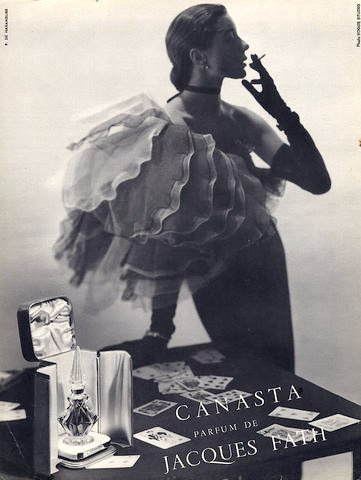
Simone meets Gilbert “Beno” Graziani, a genial man-about-town (who will later become a well-known Paris Match photographer). Together they move to the Cote d’Azur to run a bar in Juan-les-Pins to make ends meet. Back in Paris, Simone marries Graziani in a borrowed Jacques Fath dress.

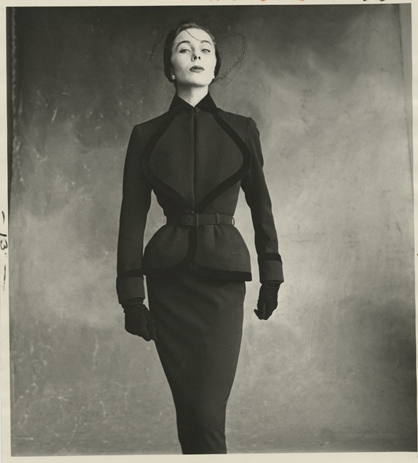
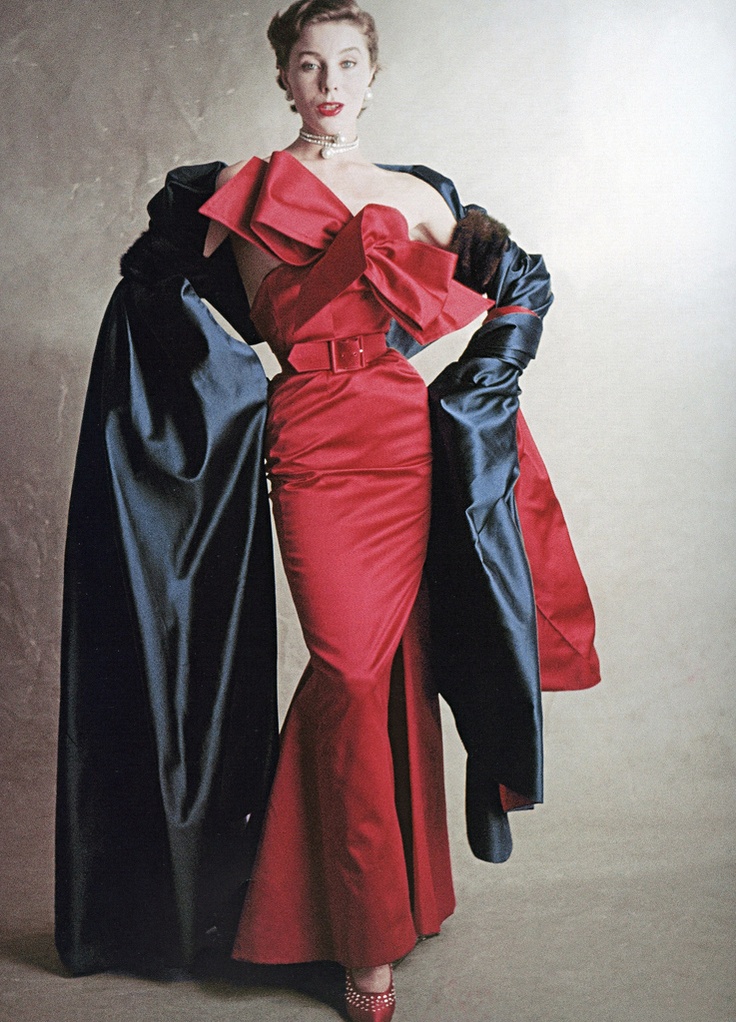
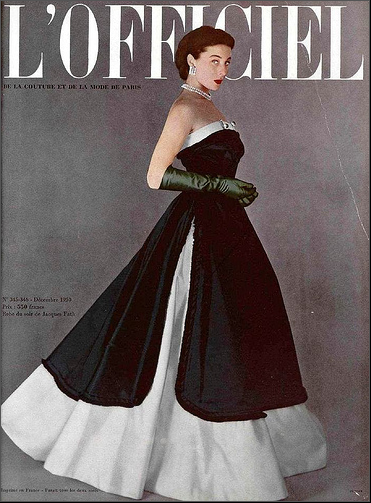
In 1947 Jacques Fath hires Simone to model for him and transforms her “from a long-legged redhead with freckles to a supremely elegant, streamlined girl”. He renames her Bettina (because there is another model named Simone in his troupe) and she is photographed in Fath finery by Erwin Blumenfeld for Vogue. A year later Bettina makes her runway debut for Jacques Fath for spring.

Bettina
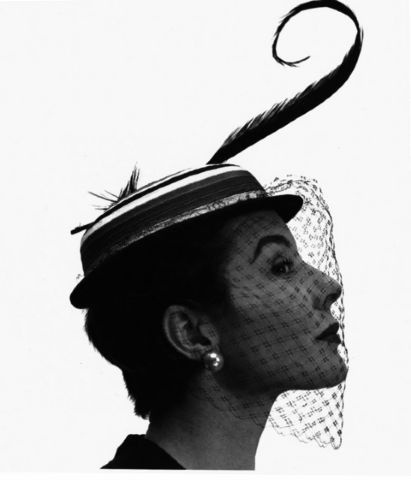
Photograph by Irving Penn.Published in Vogue, September 1, 1950.

Jacques Fath directs her to shed her chignon in favor of a boyish “Greek shepherd” cut in 1949, which will spark a revolution in women’s hairstyles.. The same year Bettina makes her first trip to America, to work with Vogue’s Irving Penn. She gets offered a contract by 20th Century Fox, which she turns down. She is also invited by Christian Dior to join his fashion house, but  chooses instead to work for Jacques Fath.

Bettina divorces from Beno Graziani in 1950 and later befriends Peter Viertel, screenwriter of The African Queen.

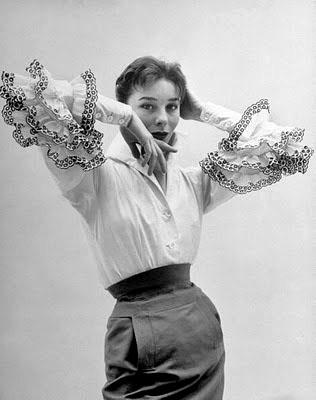
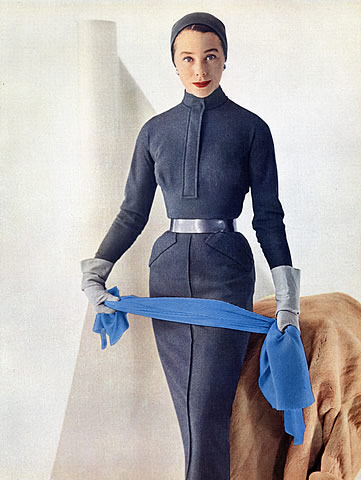
After Jacques Fath’s tragic early death, Bettina goes to work for “handsome giant” Hubert de Givenchy, as a muse and press agent in 1952. Bettina organizes and models Givenchy’s first collection, which includes an embroidered and frilled, Byronesque “Bettina” blouse, which becomes a fashion icon in the early 1950s and inspired the bottle for the best-selling Givenchy parfum “Amarige.”. In his early seasons, Givenchy channels Bettina’s personal style, sending her out barefoot in cotton separates, revolutionizing the couture at that time. Together they travel to New York for the “April in Paris” benefit at the Waldorf-Astoria. Designer and muse do a television interview with newsman Edward R. Murrow.

Bettina

Bettina in parfume ad for Canasta by Jaques Fath

Bettina blouse

Bettina blouse by Givenchy

The Alliance with Givenchy ends after two years and Bettina is now a freelance model. She  moves for a time to Hollywood with her boyfriend. Peter Viertel.  Approached by a Hungarian manufacturer, Monsieur Hein, to create a line of sweaters called Bettina.

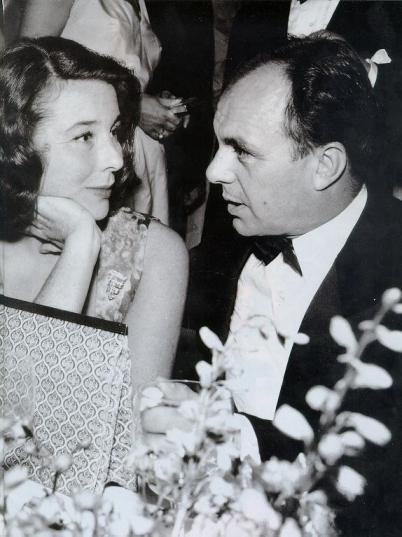
In 1955 Bettina meets Prince Aly Khan, a playboy who briefly was the United Nations ambassador from Pakistan. She gives up modeling to be his constant companion. This, she’ll later write, requires a change of style. “When I looked in the mirror I sometimes found it hard to recognize myself. Where was Bettina, the leading mannequin, ever in the forefront of fashion? The Bettina I saw had hair as long as Mélisande’s, and extremely decorous dresses that were sometimes even longer than fashion dictated. But I accepted what I saw in the mirror with perfectly good grace, since I knew that this was how Aly liked me to look.”

Bettina & Prince Aly Khan

Bettina & Prince Aly Khan

“No. 1 topic among the marriage-makers of the International Smart Set these days is the romance of Prince Aly Khan, ex-husband of Rita Hayworth, and the beauteous ‘Bettina,’ . . . ex–cover girl.” Bettina receives two dozen roses from the prince daily, the press reports

In 1960 disaster strikes when Aly Khan is killed in a car accident, which Bettina survives, though she’ll suffer a miscarriage. She inherits Khan’s Chantilly château, Green Lodge (which she’ll later sell to Khan’s son, Karim).

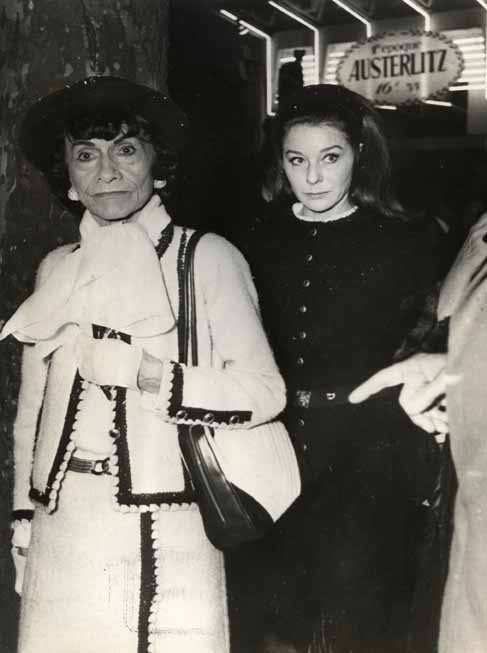
In 1967 Bettina, “the green-eyed railway worker’s daughter” goes back to modeling at the age of 42. And all because she’s bored. Bettina works for Coco Chanel, but she has a problem, for as the couturier says of her, “She needs to lose a little weight. I have told her to follow my example and don’t eat at weekends.”  After presenting Chanel’s collection in July, Bettina says, “It was fun to do it once. I never will again.”

Coco Chanel & Bettina

Bettina becomes director of haute couture at Emanuel Ungaro in 1976. “I needed to go to work for the money,” she later says.

In 2010 Frédéric Mitterrand presents Bettina with France’s Ordre des Arts et des Lettres award, saying, “You are, in a word, the embodiment of the modern woman.”

.

Portrets

Bettina

Bettina

Bettina

Bettina

 .

Interview Magazine

Interview by Colleen Nika,   publised: 18 December, 2008  

During the postwar creative boom of early 50s France, three fashion designers revolutionized couture: Christian Dior, Pierre Balmain, and Jacques Fath. Supermodel Simone Micheline Bodin Graziani, pet named “Bettina”, rubbed shoulders with all of them, and played muse to the youngest of them, Jacques Fath. With her red hair and fresh face, Bettina personified the innovation, wit, and accessibility of Fath’s brand. Fath died in 1954, but his bold silhouettes, dramatic necklines, and unorthodox flourishes—”flying saucer buttons,” popularized by Hollywood starlets and Bettina’s editorials—continue to influence designers like Viktor & Rolf, John Galliano, and Giambattista Valli. Bettina famously lent her name to an iconic blouse by Hubert de Givenchy, from his first collection, but she considers her formative Fath years the highlight of her career. .  

jacques Fath in studio with top model Bettina_ photo Louis Dahl-Wolfe

Jacques Fath in studio with Bettina. Photo Louis Dahl-Wolfe

Colleen Nika: History has come to associate you with Givenchy, but before your worked with him, you were a muse to Jacques Fath. How did he jumpstart your career?

Bettina: I started working with Fath when I was very young, back in 1947. I had modeled before then, but on a much smaller scale. And I worked with Fath longer than any other designer in my career—four years. From the draping process through our presentations and campaigns, he used me for all of his new collections. He liked that I was “different”: I was very young, very genuine. I wore no makeup and I had red hair. At the time, Fath was interested in conveying an American spirit and a brand new attitude. He wanted to communicate a modern image to the media; it was very important to him. So, I became the face of Fath. 

CN: What do you consider most memorable during your years as Fath’s muse?

B: Fath would throw costume balls in the countryside, at the Château de Corbeville. All the best buyers, stars, writers, even other designers like Balenciaga and Balmain would come. Sometimes we would throw 20s– and 30s–themed partiesm, or cowboy-themed parties. Imagination was everything. And we had a great time at Fath’s studio, especially during draping sessions. Givenchy, who worked there when he was very young, says it was a beautiful experience and that he learned so much during that time. Guy Laroche got his start there, too. This was just after the French liberation; we all lived for the creative moment.

Jacques Fath 1950Bettina in Jacques Fath, 1950

35208-givenchy-1955-bettina-winter-dress-hprints-com

Bettina in Givenchy winter dress, 1955

CN: After your Fath years, what path did your modeling career take?

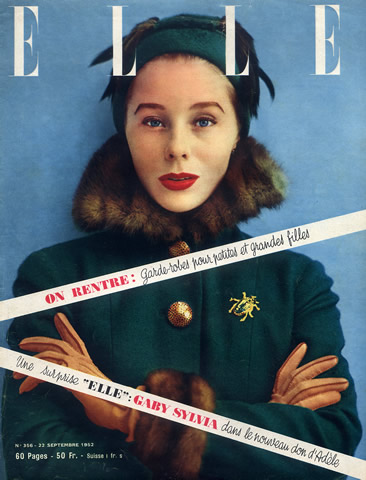
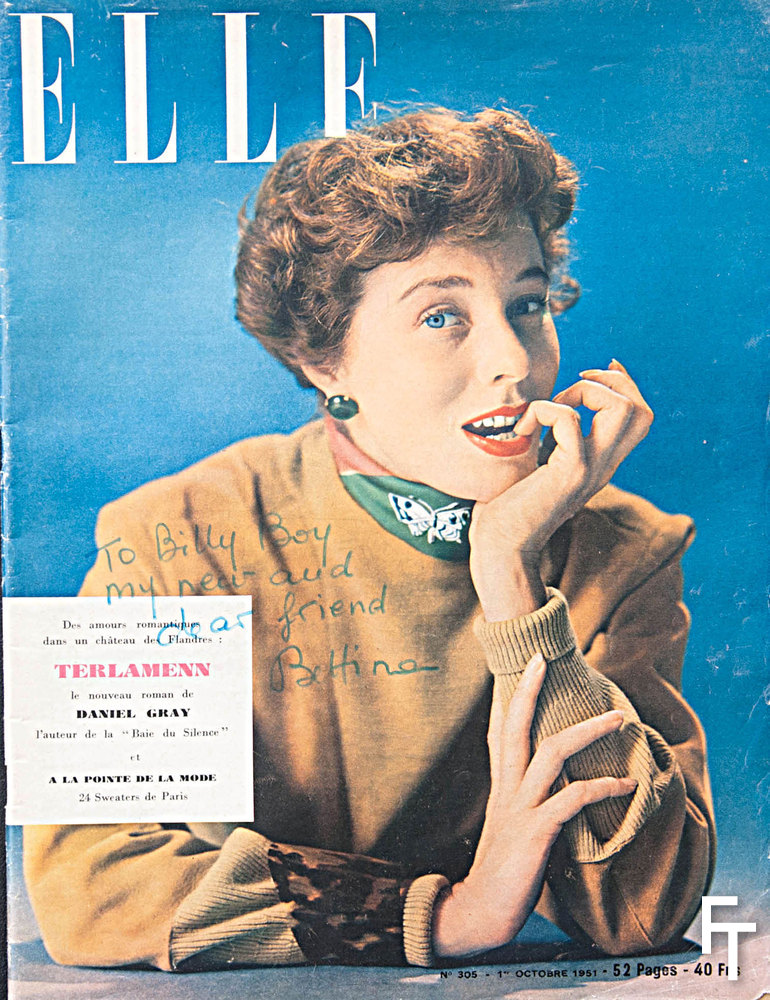
B: I worked for Givenchy for two years. I also did a lot of magazine work. I was everywhere: in Vogue, of course, but also in Elle, which was a very new magazine at that time. In those days, the models would have their name credited in the magazines, so I had a lot of publicity. I stopped modeling in the late 50s, but later, I did some work for Valentino and I was a US press agent for Emanuel Ungaro.

CN: What are your thoughts on the contemporary modeling profession?
.
029_bettina_grazianni_theredlist
B: The models are different now—they are so young, and they all look the same. Of course, I was young when I started, too, but there was so much less competition, less big names. But then, the entire business was different. The presentations were much smaller; collections were shown to select clients in salons, like a trunk show. You could reach out and touch the clothes. It was approachable. Back then, there was no ready-to-wear, only couture. Of course, because the runway events are so costly now, the industry is returning to smaller presentations. But the model’s role has definitely changed.
CN: Speaking of the present, how are you keeping busy these days? Are you still actively involved in fashion? What designers interest you?
B: Well, I travel a lot; I recently was in Malta and the Riviera. But I live in Paris, so I am still very engaged with fashion. I go the shows every season. My favorite designers? Azzedine Alaia and Yohji Yamomoto. But especially Alaia; he is the ultimate innovator. Actually, I am wearing couture Alaia now—he made this for me two years ago. [stands up to show sculptural black sheath]. And I still am very busy; I have many projects. People call me all time—they want to interview me: they ask me about the Parisian fashion scene of the 50s; they want my pictures and commentary. And I love talking about fashion history, so I am happy to do it.
.
42333-schiaparelli-1952-bettina-as-model-photographer-chevalier-hprints-com
BB-Bettina-Elle

Paul Harnden Shoemakers (Additional)

13 Oct

SOMESLASHTHINGS-CHAPTER004-LAUNCH-3-STEPHEN-MCLVENNA-PAUL-HARNDEN

Paul Harnden
.

October 13, 2013

This comment I got on the Paul Harnden Shoemaker I posted on February 5, 2012
.

Just read your very interesting article on Paul Harnden…………..I worked with him, and Helena, in 2005 and 2006 when he was doing specially commissioned fabrics with Fox Bros of Wellington (Somerset), where I was Designer at that time.       He liked to go through the archive books (some dating back to 1779), looking for his ‘inspirations…..and he really could ‘tweak’ original new concepts from those old swatches….we made some amazing fabrics for him during those years.       The other thing that stands out for me, is that he used to take the fabric from us straight from the loom (unwashed!!!, unfinished!!!) which was almost unheard of because it is during finishing that fine woollen / worsted fabrics transform from a raw, rough commodity to a thing of beauty!! — not for him though, he explained to us that he would “bury the cloth underground for several weeks and let nature do the finishing work”!!! — which is how the fabrics achieve his ‘antique’ appearance.

Finally, I left Fox Bros myself in 2007, after six VERY interesting years, (so I don’t know if they are still doing fabrics for Paul) and I am now based in Yorkshire, near Huddersfield, where the old pattern weaving mill is located…….Gordon Hawley is now retired, but the mill is still going strong – now run by a very nice guy called Adrian (sorry his surname escapes me)……..in fact they are weaving some of the blankets I design for my current employer, Lassiere Mills, of Bradford.

Hope this info is of some interest, Pete Cunningham.

http://www.lassieremills.co.uk/

14115039

.

.