Archive | inspiration RSS feed for this section

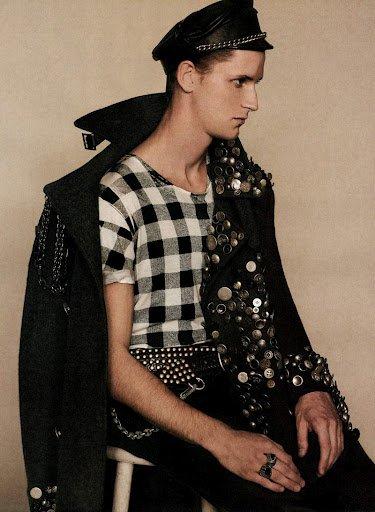
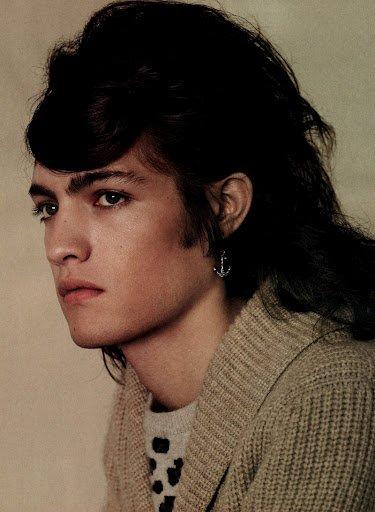
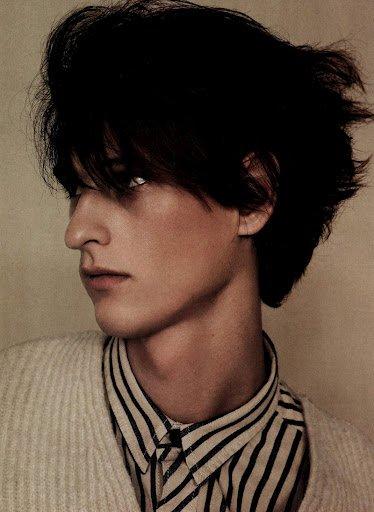
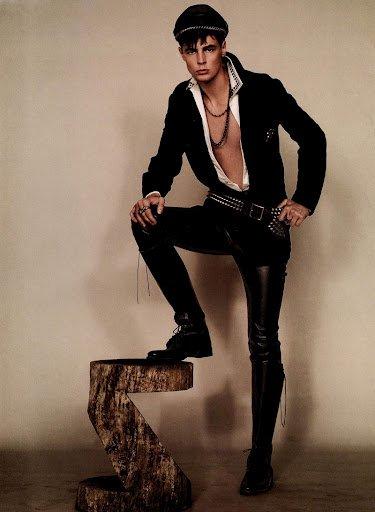
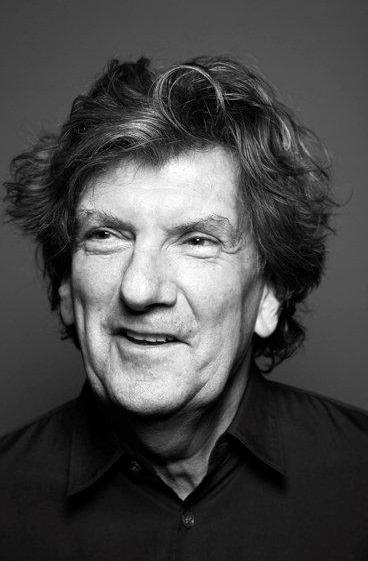
Hairstylist Didier Malige, the Master

14 Oct

Didier Malige grew up in Paris and was not particularly interested in hair, still he chose to become a hairdresser. His mother ,who worked in a veterinary clinic where one of the Carita sisters was a costumer, got him an apprenticeship in the Carita salon. This was pretty much the way he became involved in fashion.

Didier started working at the Carita salon in the mid-sixties, while he was still living with his parents. At that time Carita was one of the top beauty salons, with about 125 employees. Women who could afford it, would come back every two or three days to get a ‘do’. It was a set, with teasing and hairspray (Elnett was huge those days). In France they were a little bit backwards when it came to trends: the leading country was definitely England, where everybody wanted to be a hairdresser, manager or musician.

At that time for photoshoots, it was a different system: ‘You used to go to the studio, you did the hair and you left. They were using a lot of hairspray, doing up-do’s, nothing was really moving, so there was nothing more to do once you set the hair.’ Models were also more handy and could correct their hair themselves, also because it wasn’t as precise as nowadays.’

After his apprenticeship at Carita’s, Didier went to another really big salon, Jean Louis David, who also came from Carita. He was still assisting other hairdressers and didn’t really have any customers. Around that time there began a demand for hairdressers for magazine work and that was the beginning of Didier Malige’s career as a hairstylist. Not many were working as a hairstylist and he very quickly began working with Helmut Newton, Bob Richardson (father of Terry) and sometimes Guy Bourdin. Because Didier didn’t speak much English, there wasn’t much verbal communication, it was more about naming a movie as a reference.

In the seventies Didier went to America and worked for Glamour and Mademoiselle. ‘Photographers are very opinionated about what a woman should look like. Some give you a little bit more freedom than the other, but they definitely see a woman one way. Helmut Newton’s woman may have shorter or longer hair, but it was always the woman who goes to the hairdresser every day, who doesn’t really have an occupation except maybe taking care of certain man. (laughs) Or be taken care of. You had to be technically very good for that hairstyle.’

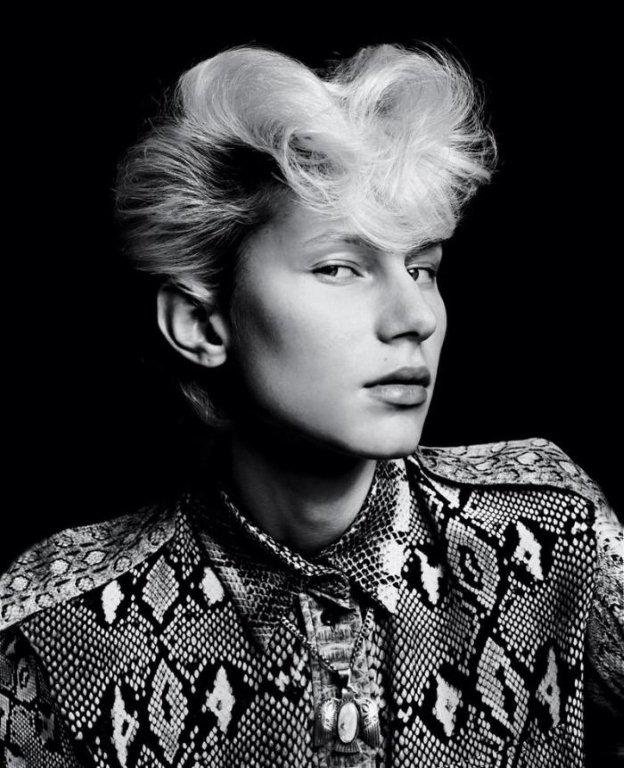
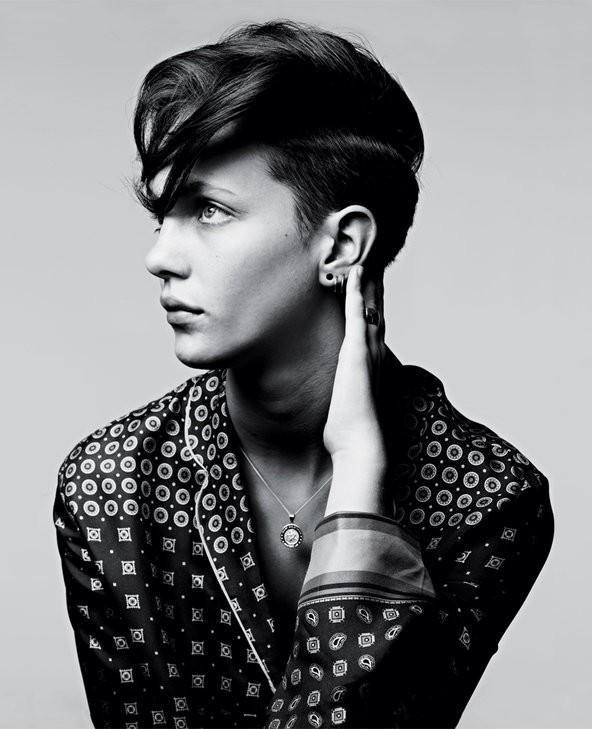
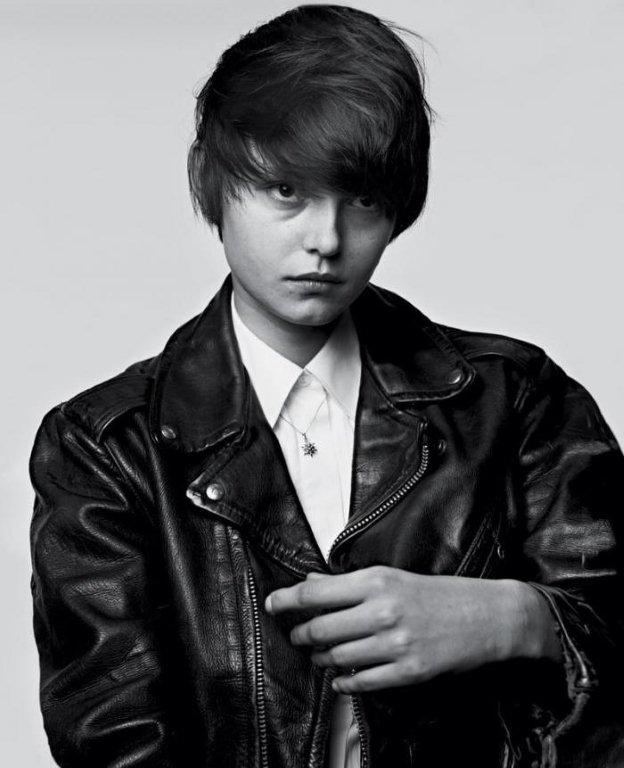
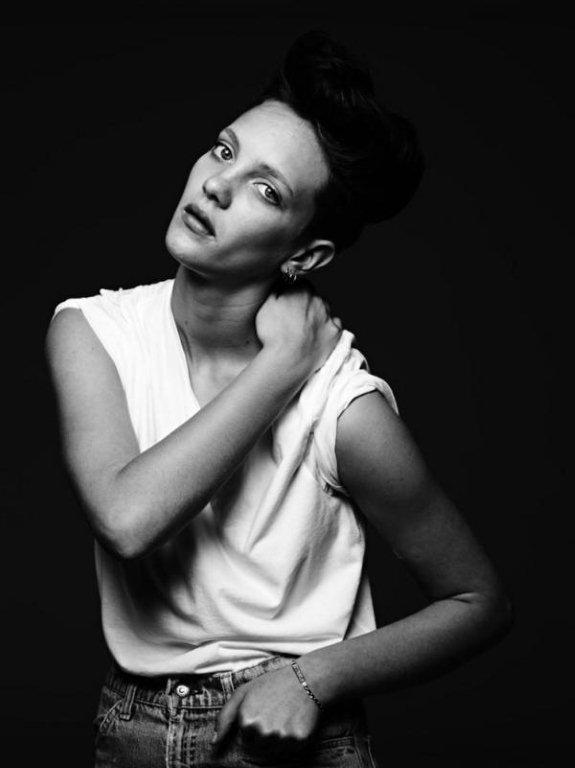
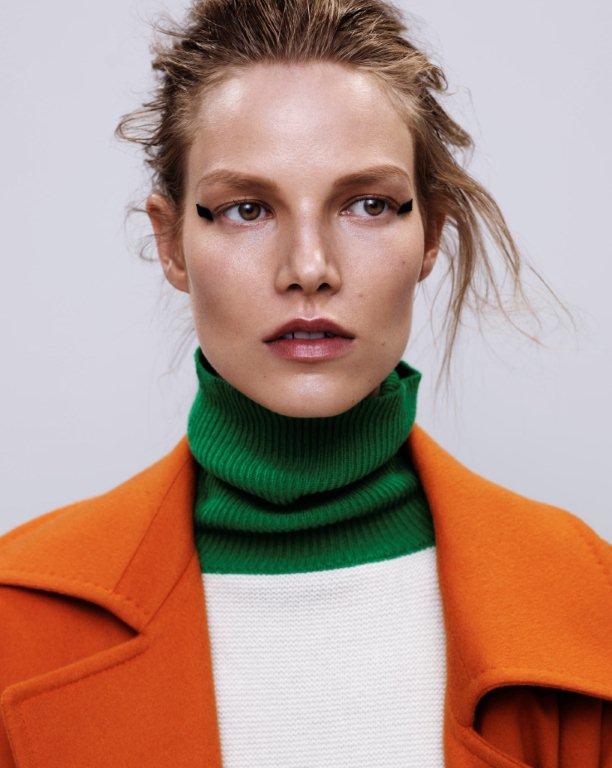
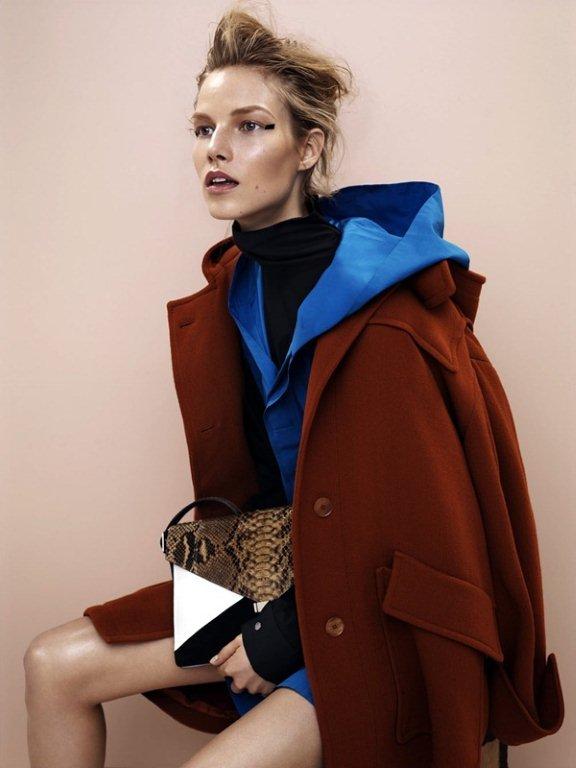
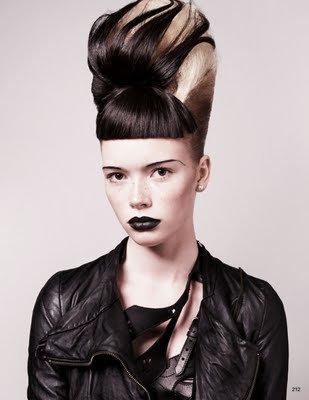
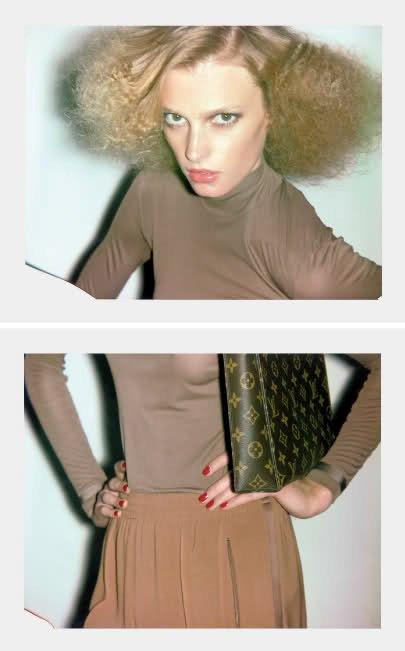
Over the decades Didier Malige collaborated with many famous photographers including Patrick Demarchelier, Athur Elgort, Annie Leibovitz, Mario Sorrenti, Inez van Lamsweerde & Vinoodh Matadin, David Sims and Mario Testino. His ability to not only style, but flawlessly sculpt both men’s and women’s hair led to develop long-standing relationships with the houses of Dior, Dior Homme, Helmut Lang, Jil Sander, Raf Simons and Hedi Simane. As chef-de-cabine, recently Didier worked with Hedi Slimane on Slimane’s first women’s fashion show for Yves Saint Laurent.

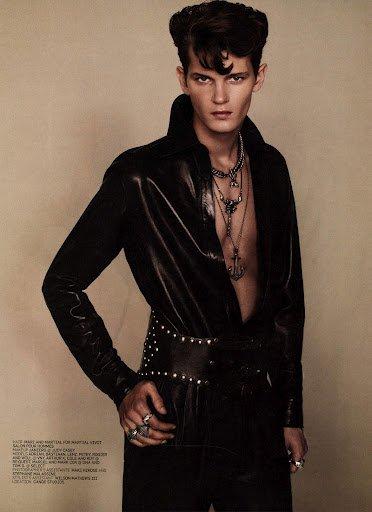
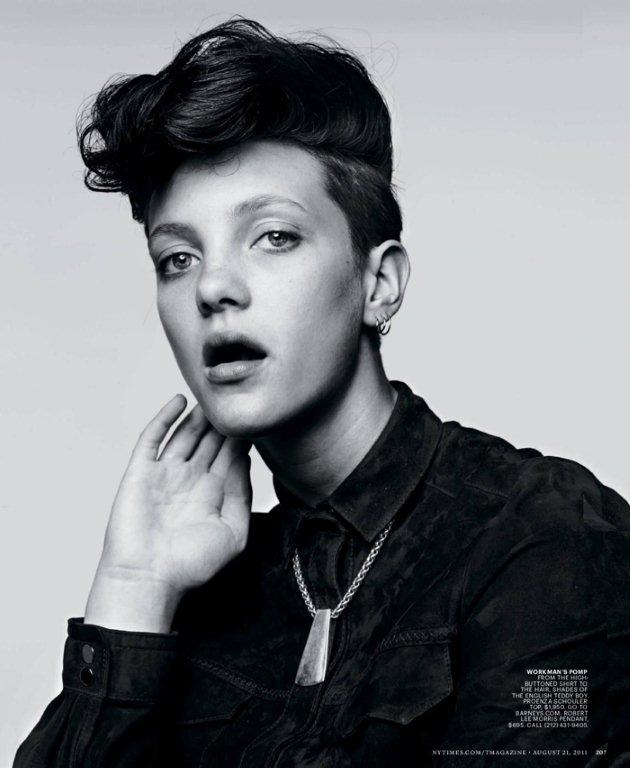
BOY CRAZY. Photography: Hedi Slimane for NY TIMES T magazine fall 2011
Prada Homme campaign photography: David Sims

Prada perfume, Candy 

Vogue Italia cover photography: Nathaniel Goldberg

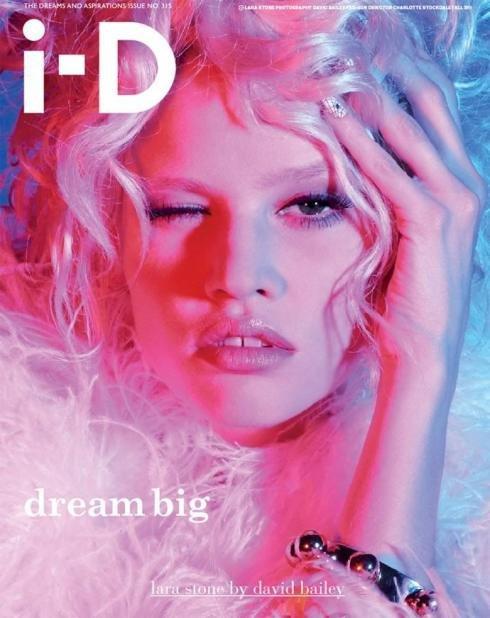
I-D cover with Lara Stone photography: David Bailey
V magazine cover photography: Inez Van Lamsweerde & Vinoodh Matadin
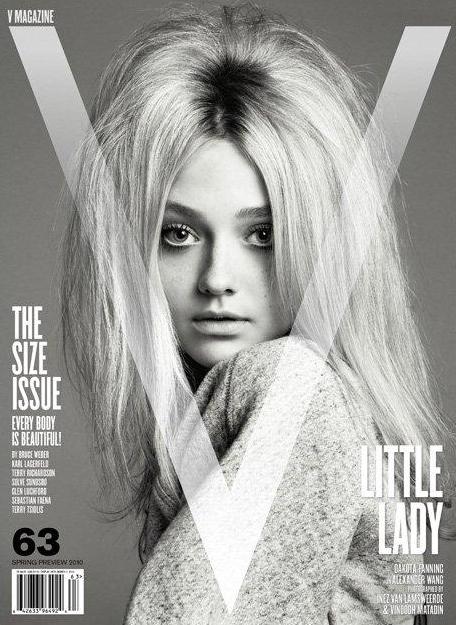
Didier Malige loves to do fashionshows, deciding together with the designers on the look for the models in the catwalk. He worked with Proenza Schouler, Giorgio Armani, Philosophy, Prada, Miu Miu, Louis Vuitton, Botega Veneta and many others. He has a collaboration with (another hairstylist/hairdresser) Frederic Fekkai and his brand for over two decades.

Didier Malige is an undisputed master of his craft and especially enjoys collaborating with photographers and editors who allow him the freedom to realize his vision. He believes that the biggest compliment he has received is learning that someone has become a hairstylist because they were inspired by his work.

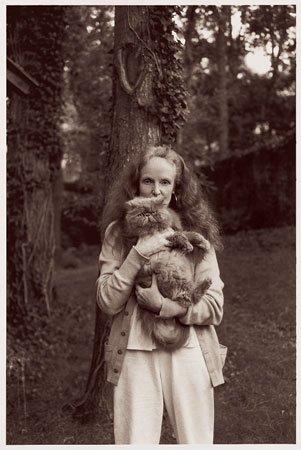
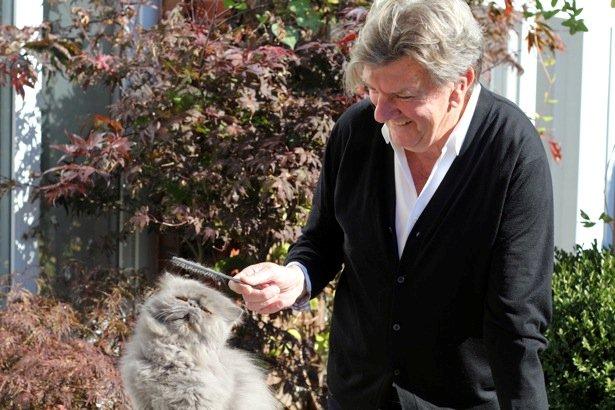
He is living together with his partner Grace Coddington (read:  Grace Coddington, a legend in her own time, part 1&2) for over 25 years, whose style he describes as very feminine and fashionable without being too obvious.

I admire Didier Malige, specially for keeping a ‘young vision in his work’ all those years. If you look at his recent work, it’s hard to believe he’s already in the business for many decades, this is probably also the reason why younger people in fashion love to work with him!

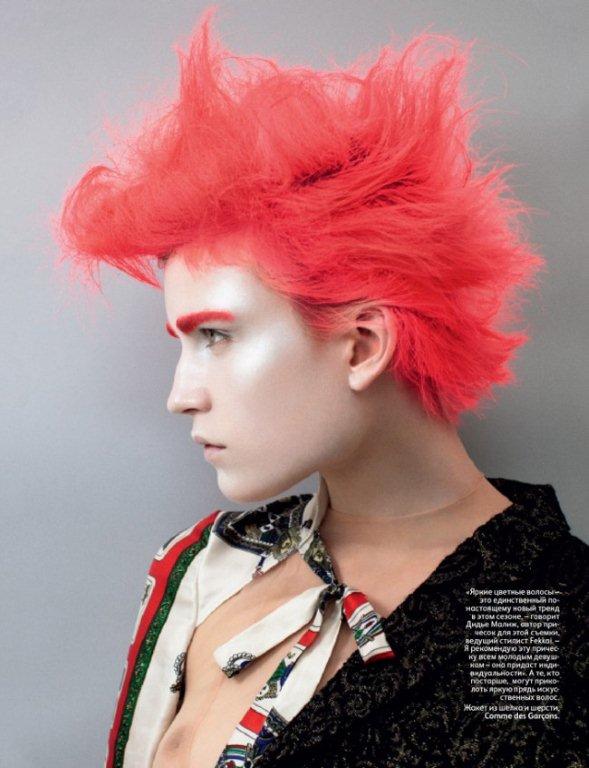
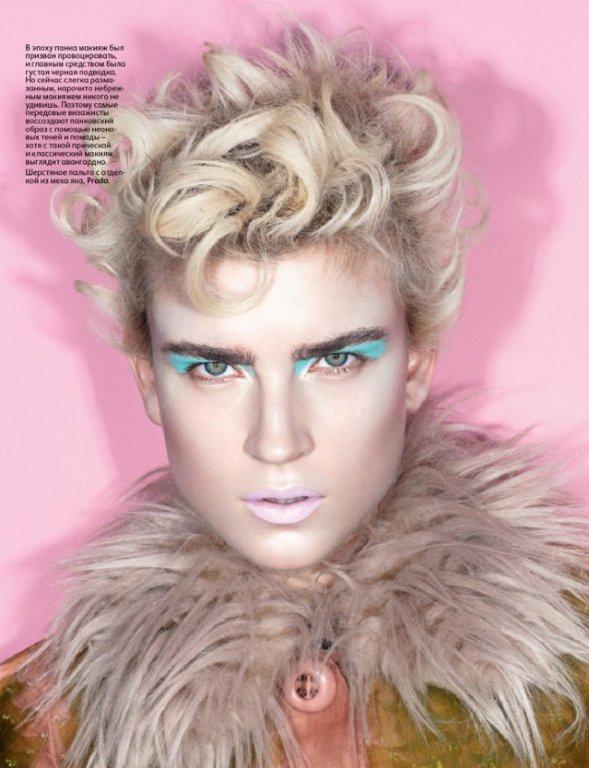
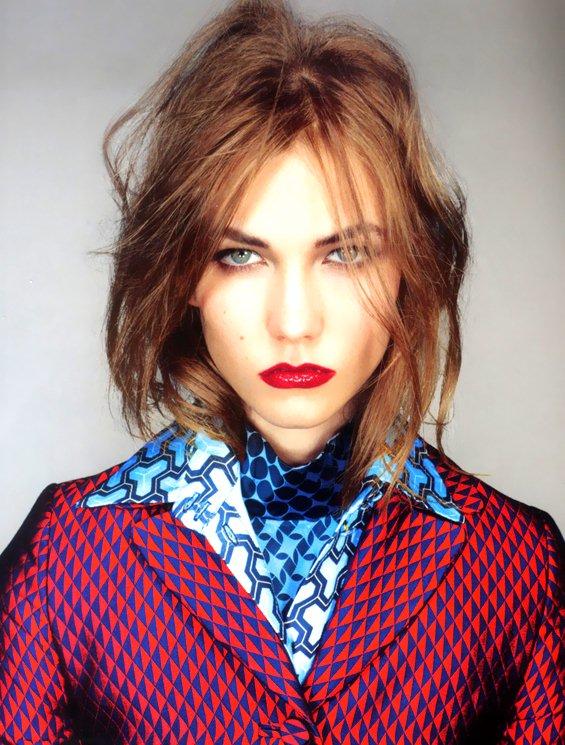
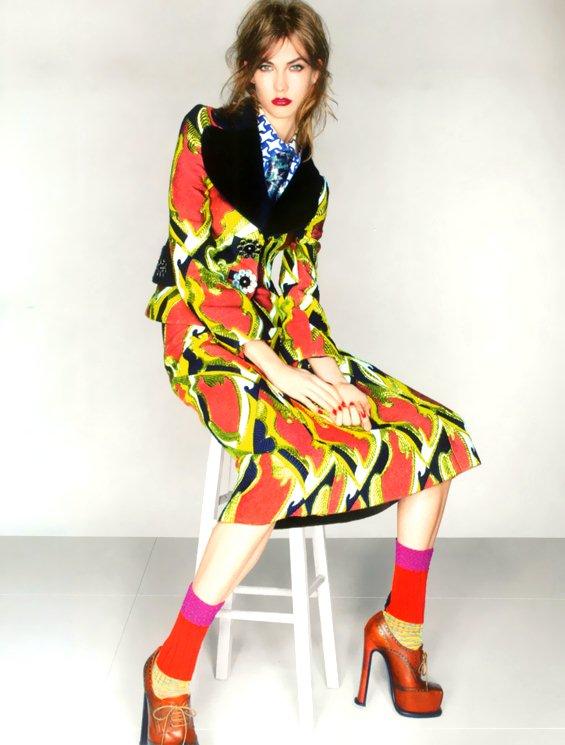
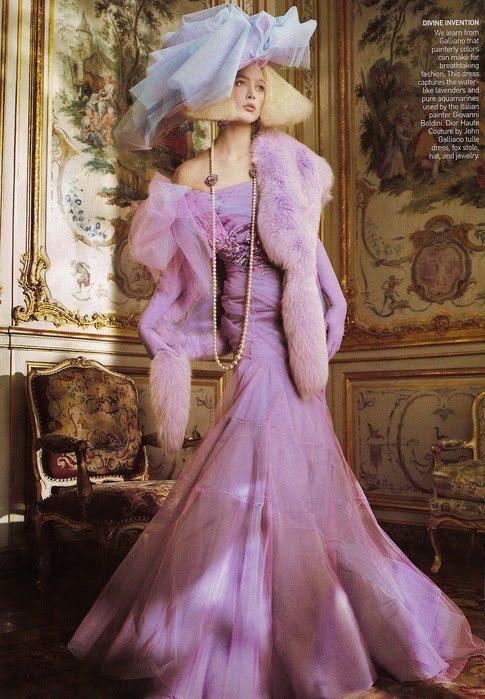
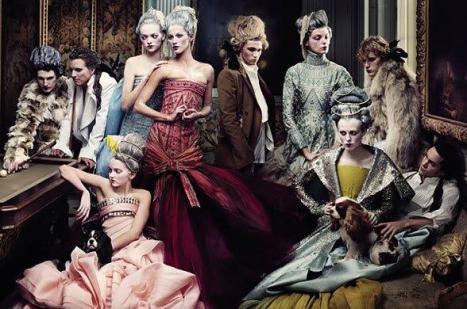
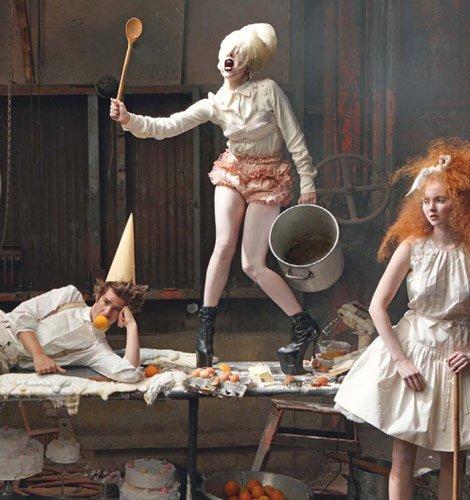
A variety of recent work
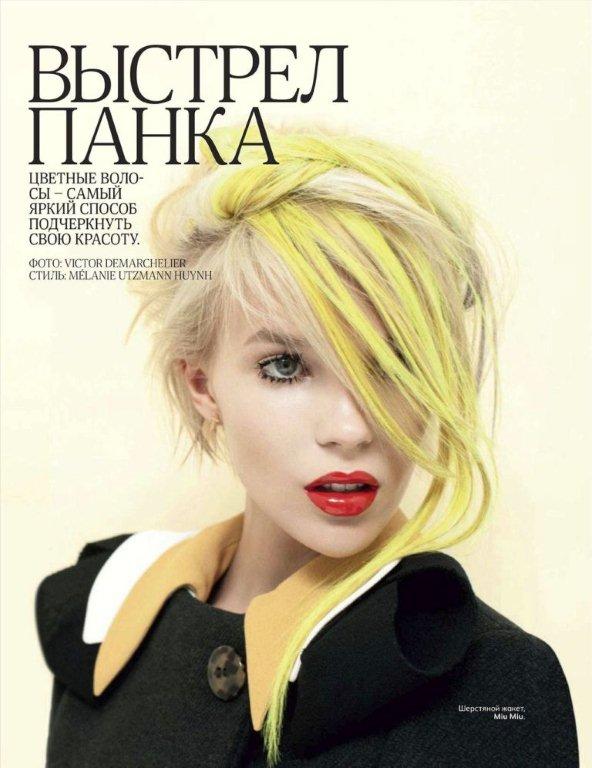
Didier Malige, The Master
Grace Coddington, a legend in her own time (part 2)

7 Oct

Patsy Stone, television character in Absolutely Fabulous, referred to Grace, her idol, as ‘Fash Ed. Supreme’.

Julie Kavanagh, Grace Coddington’s assistant in the 1970s and a friend ever since:‘Working for Grace converted me to fashion overnight. It was simply the power of Grace’s personality and style. “Fashion isn’t just frocks,” Grace has always maintained. “It’s how we do our houses, our gardens, it’s what we eat and drink.” 

Documentary The September Issue

In January 2009 the documentary The September Issue premieres at the Sundance Film Festival. The documentary, about the making of the important September issue of American Vogue (2007), highlights Grace Coddington instead of her boss Anna Wintour.

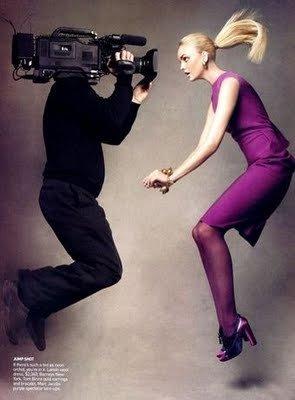
Amongst other things the documentary features a difference of opinion between Anna Wintour and Grace Coddington. During a photo shoot Grace asks the camera man of the film crew to star in the shoot together with the model, jumping and filming at the same time. When Anna Wintour views the photo, she doesn’t approve of the camara men’s ‘ big belly’ and orders it to be photoshopped. Grace gets furious when she is informed about this and persuades the staff member not to photoshop the picture…

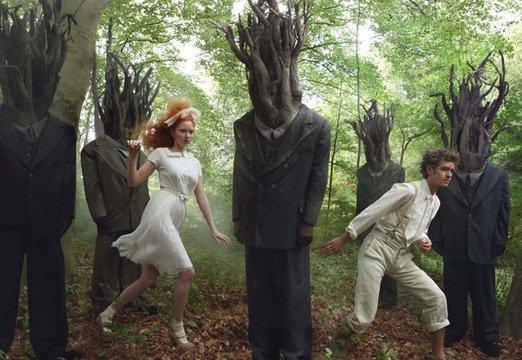
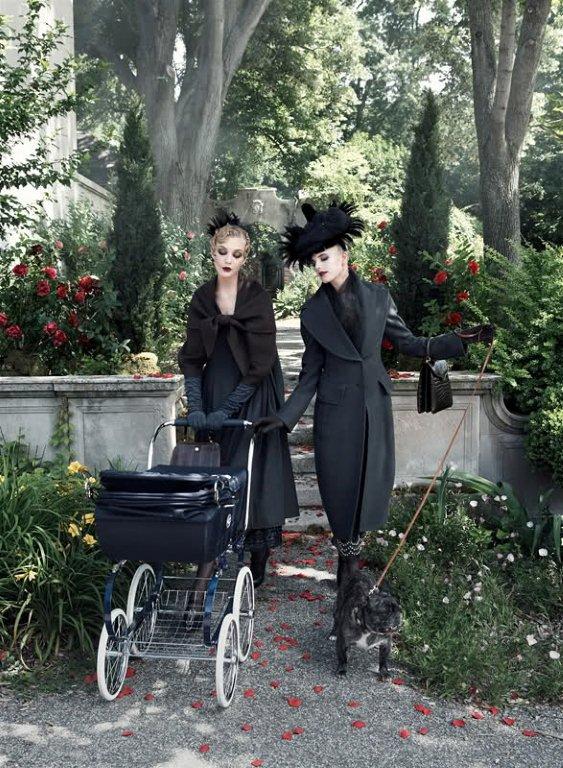
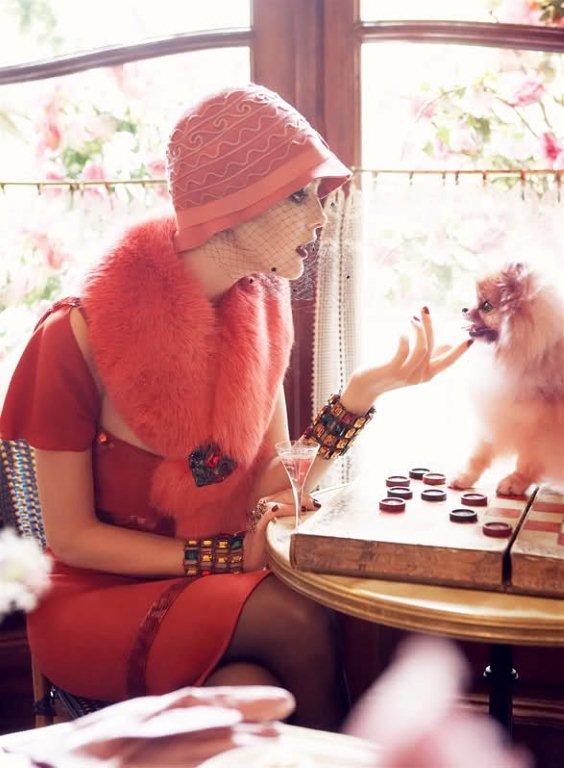
Some of Grace’s work for Vogue

Vogue colleagues and collaborators on Grace and her work


Some quotes from an interview with Grace Coddington on Huffington Post.com , posted October 22, 2009 by author, journalist, contributing style editor Lesley Blume.

On photographer Irving Penn:

“It was one the great joys of my life to work with him.  He had a tiny, tiny studio, minimal lights, minimal people.  Everyone was very focused and he produced these extraordinary pictures.  I don’t know how he did it …  He was the last of those great photographers like Avedon and Helmut and all those guys; I’m sad to see them go … It’s our challenge now to find more and more and something different [and] I know we’ll find another way, but there will never be another Penn.”

On photographer Bruce Weber:

“He taught me so much about America, [and gave me] a whole new way of looking at things.  He was really responsible for scrubbing everyone’s faces, for fresh-looking women who you could touch, making them look vulnerable.”

On photographer David Sims:

“He’s much younger than me, and it’s a challenge.  I have to keep on my toes and be modern and keep up with him.  He’ll talk for three hours about a white background and I’m trying to go along with him and understand, and then we end up with a white background.  But I could do the same shot with a different photographer and it wouldn’t look the same.  He has that undefinable modern edge.”

On how celebrity culture is affecting the fashion world:

“I have the reputation of not working with [celebrities] … I just feel more comfortable working with models because I can push them around.   But I do work with them; I took Keira Knightley to Africa and you have to like someone to do that.  [However,] I hope it doesn’t go completely to the celebs because it will kill off the models, but it’s not my call.  It’s all your call.  It’s what you all are asking for.”

Grace and her beloved cats

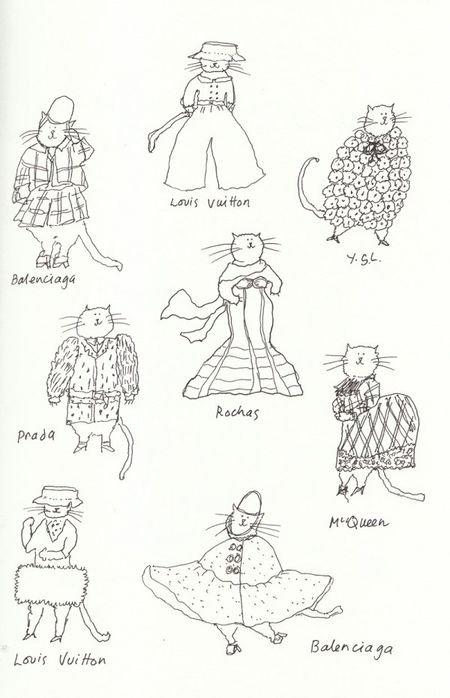
In 2006 the book The Catwalk Cats was published. It is based on 20 years’ worth of sketches and notes she has faxed to her husband while they were apart. “Instead of calling him when I was in Milan or when he was traveling in India, I would do a sketch of where I was and put the cats in my place”. Didier Malige (her husband) photographs accompany Grace’s drawings throughout the book. Grace is well-known for her love for cats and so is Didier.

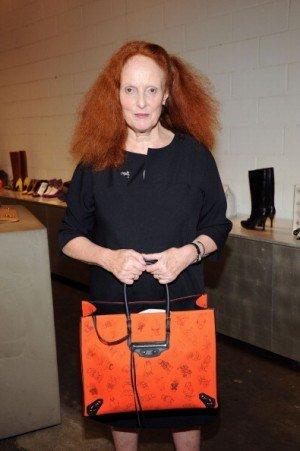
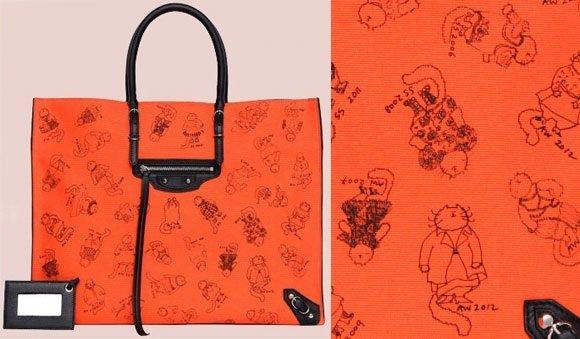
In 2012 Grace has designed a capsule collection with Nicolas Ghesquiere for Balenciaga named after her cat, Pumpkin. The line of scarves and bags will feature Coddington’s drawings of her petit chat modeling various Balenciaga looks from the past decade. Central to the new accessories line is the “Pumpkin Papier” tote bag and two printed “Pumpkin” scarves round out the collection, one in a classic silk twill and one in fringed wool and silk. (20 percent of the proceeds will be donated to the Animal Rescue Fund of the Hamptons)

Books on Grace Coddington’s work and life:
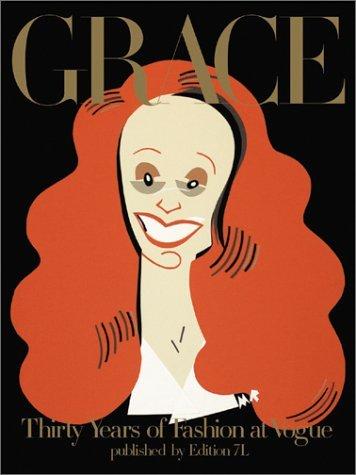
Grace, Thirty years of Fashion at Vogue was published in 2002.
It’s not only a collection of Coddington’s greatest work, it is a visual reminiscence of her life in fashion.

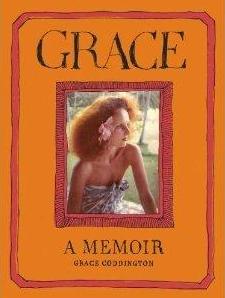
Grace, A Memoir will be published November 20, 2012   ( ISBN: 978-0-8129-9335-6)

Random House has offered Coddington a reported $1.2 million book deal for a tell-all memoir…. If Wintour is the Pope . . . Coddington is Michelangelo, trying to paint a fresh version of the Sistine Chapel twelve times a year.”—Time

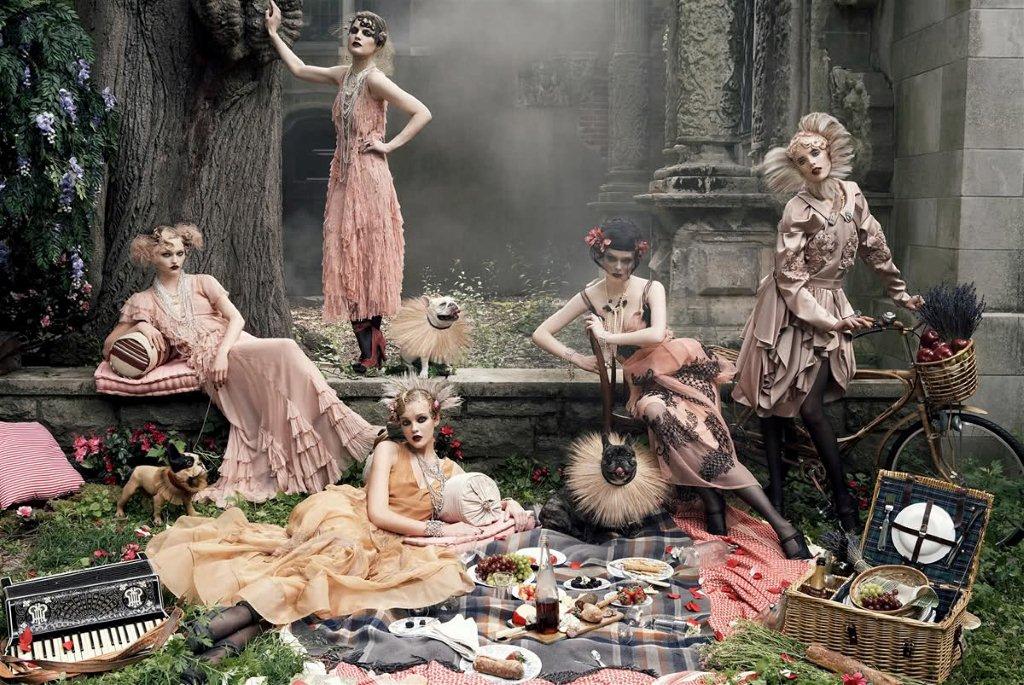
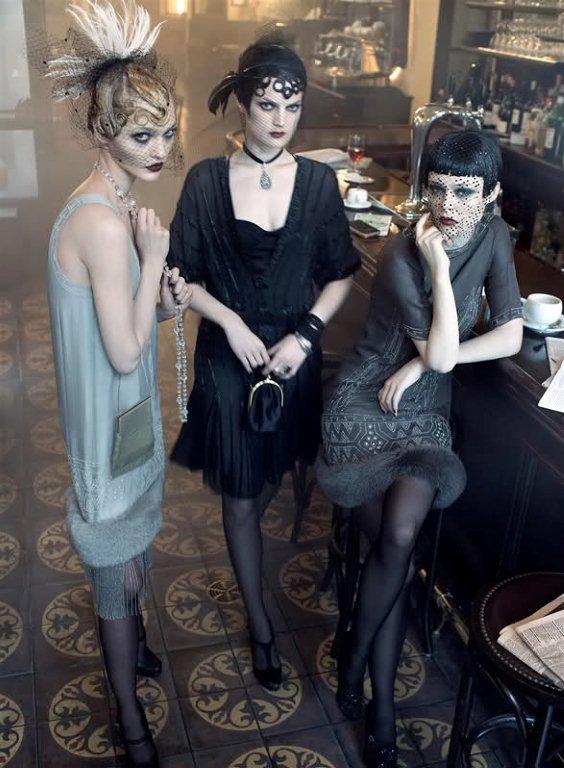
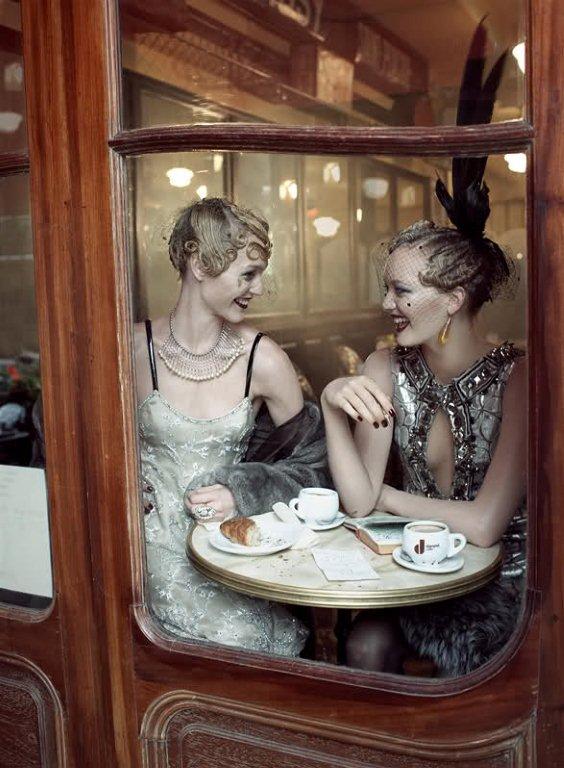
The divine Brassai-inspired 1920s-in-Paris spread. Title: Paris, je t’aime  Photographer: Steven Meisel

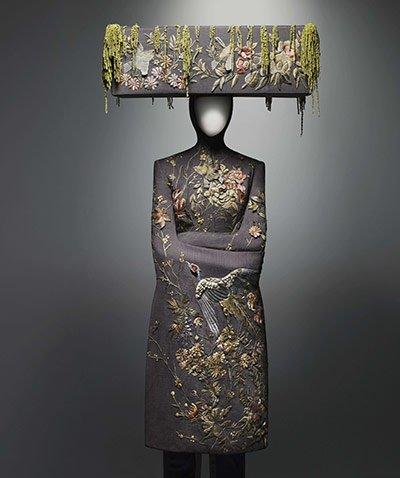
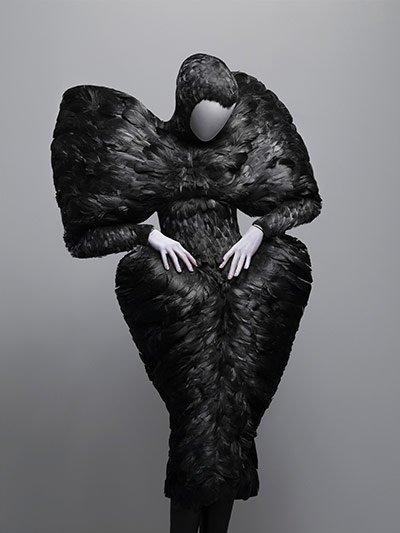
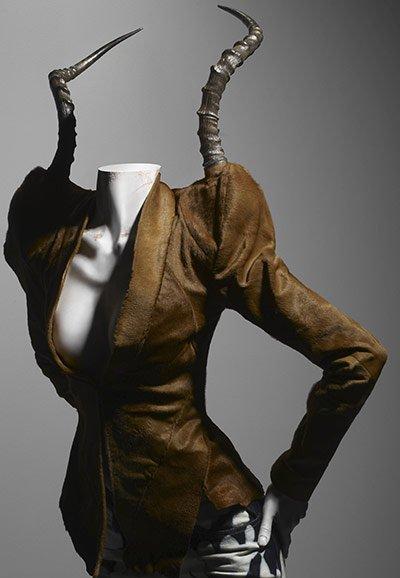
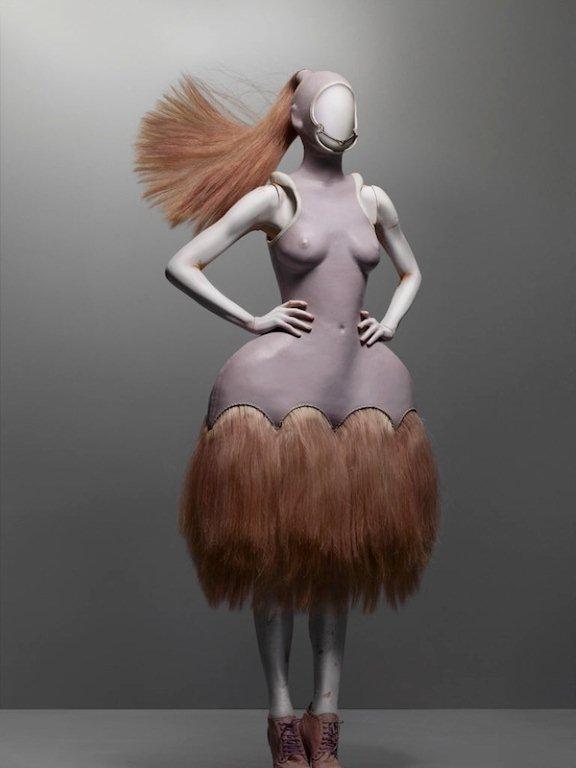
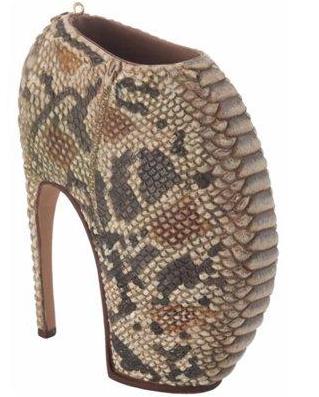
Alexander McQueen’s posthumous exhibition SAVAGE BEAUTY

23 Sep

First I want to say, I have so much respect for Sarah Burton for filling Alexander McQueen’s shoes after he died. It could have ruined her name and reputation in fashion had she failed, but she didn’t. The house Alexander McQueen is still at the top of the fashion industry…Sarah Burton was named one of the 100 most influential people in Time Magazine on April 2012 and was awarded an Order of the British Empire (OBE) for her services to the British fashion industry. Chapeau!!

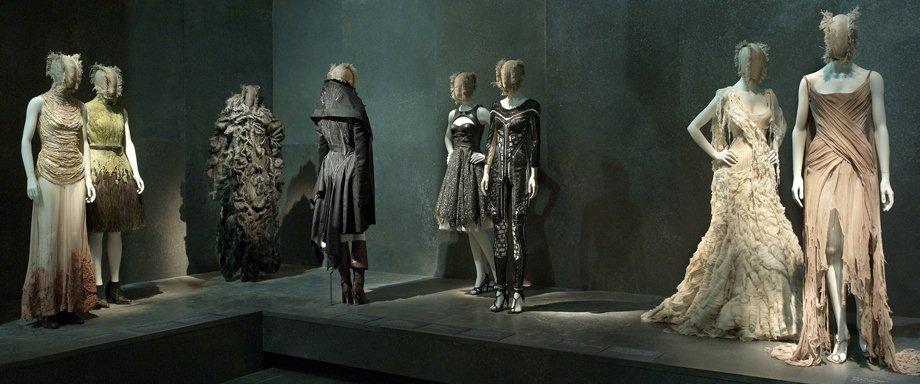
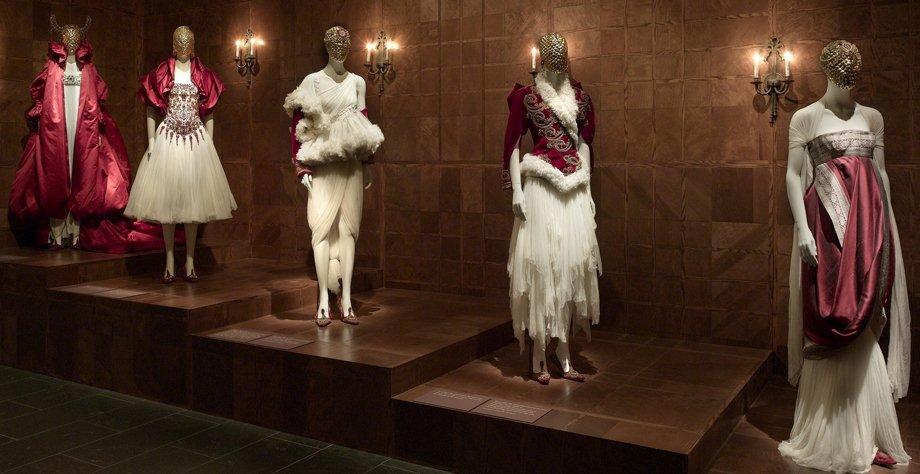
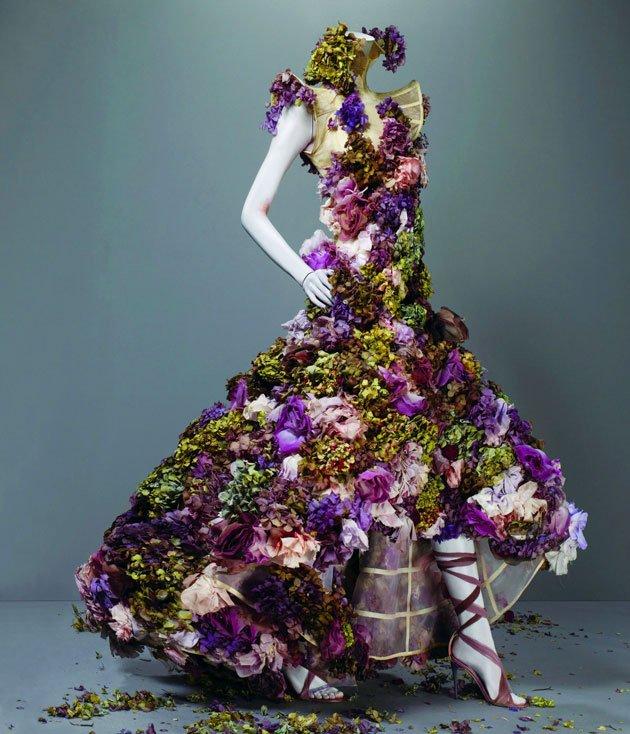
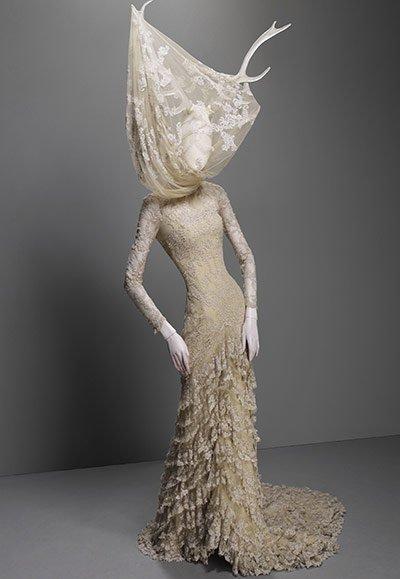
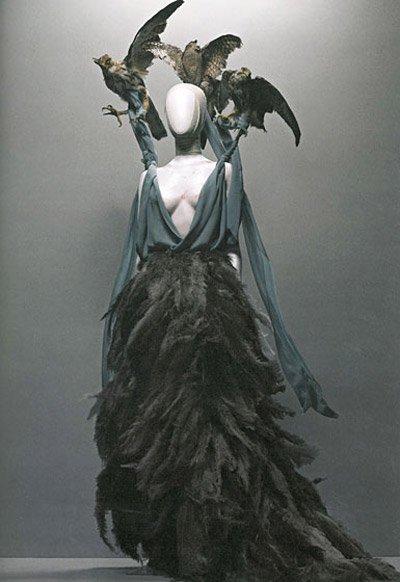
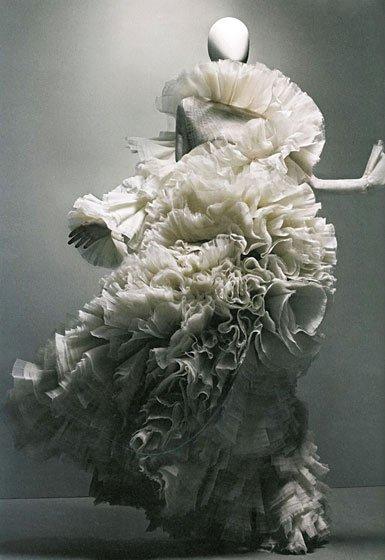
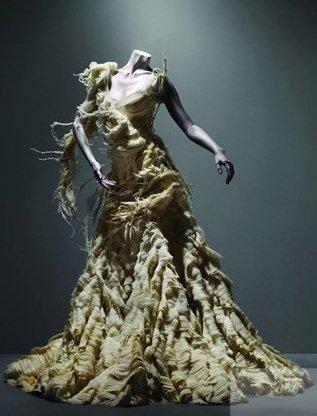
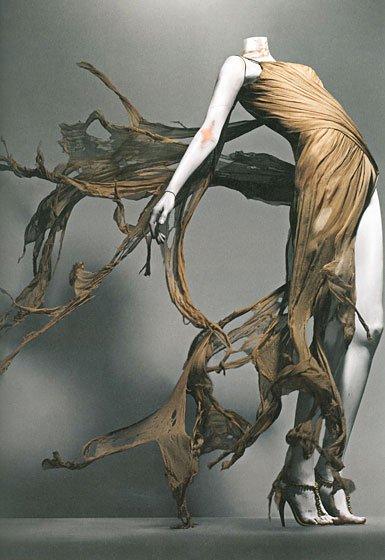
In 2011 the Metropolitan Museum of Art hosted a posthumous exhibition of McQueen’s work  titled Savage Beauty. The exhibition’s elaborate staging included unique architectural finishes and soundtracks for each room. Despite being open for only three months, it was one of the most popular exhibitions in the museum’s history.

I flew to New York in May 2011, just to visit the exhibition and it was the best money I’ve ever spent on fashion! I left my hotel early, hoping to avoid the crowd which stood in line every day, but no such luck. As soon as I reached the floor were the exhibition was to be found, I saw a huge amount of people patiently waiting behind a fence. I joined the line and it must have taken an hour and a half before it was my turn to enter.

Inside it was so crowded you could only shuffle slowly from one item to the other, but because it was so dark inside and the music directed me into a certain mood, it felt like I was on my own in Alexander McQueen’s amazing world. I was impressed by the outstanding craftmanship each piece showed. I knew already McQueen was a fantastic craftsmen, but seeing the clothes so nearby I noticed he was even much better I’d ever realised.

Alexander McQueen didn’t start a new design with the silhouette of the front (or back), he started his designs with a silhouette ‘en profile’ (from the side). He first decided on the theme for a show, before beginning to design the collection. His education included an apprenticeship at the Saville Row tailors Anderson & Sheppard where he learned all about impeccable tailoring, later he joined theatrical costumiers Angels and Bermans, where he learned all about pattern cutting. Next to being a creative wonder these skills helped to make him into one of the best fashion designers ever, he know exactly what a seam or a cut could accomplice in a garment.

The fantastic craftmanship he owned, he also looked for in the people he collaborated with and that’s what made the exhibition so incredible: not only the explosion of creativity in all designs, but also the perfectionism in the finish of them. Being an admirer of craftmanship, Savage Beauty was Walhalla.

The photographs for the catalogue are taken by fashion photographer Sølve Sundsbø

There has been rumor of  the exhibition going to London, but so far it hasn’t happened.

The catalogue of the exhibition is a piece of art by itself, with a hologram picture of Alexander McQueen’s face turning into the picture of a skull.  At the museum shop you could also buy a miniature replica of the famous Armadillo shoe by McQueen. You can order the catalogue/book at the Metropolitan Museum shop or at www.amazon.com

After Kate Moss was pilloried by the public and the fashion world (for using cocaine), Alexander McQueen proved to be true friend and honoured her by showing an amazing moving hologram of her at the end of his fall/winter runway show 2006. To me the entire affair seemed so hypocritical, knowing how many people do the same thing (every day), also some of the people who were eager to judge her!

If you want to see or read more about the exhibition, visit http://blog.metmuseum.org/alexandermcqueen/

Karlheinz Weinberger

9 Sep

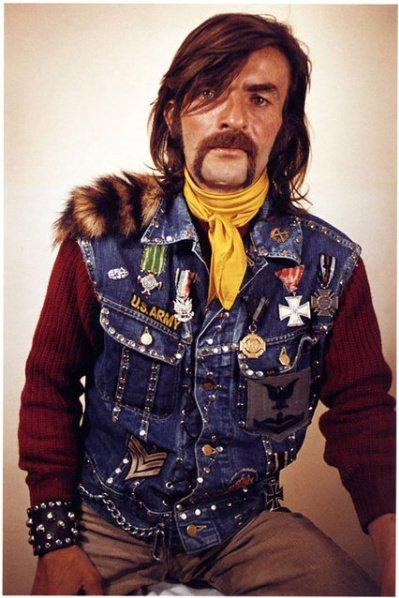
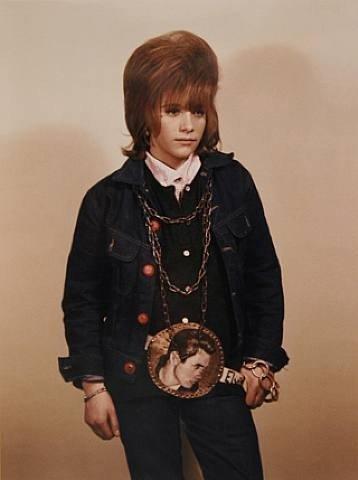
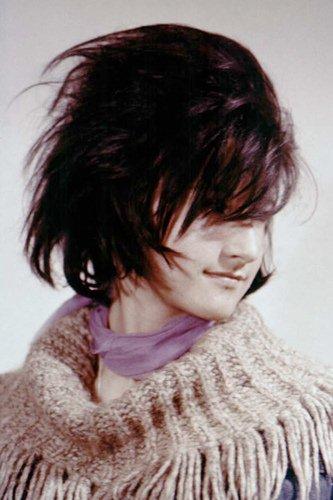
During one of my visits to New York, I found this amazing book of a photographer I never heard of: Karlheinz Weinberger. At that time I worked together with a stylist to produce a series of fashion-stories for a magazine called BLVD. One of the stories we made was based on the photographs of Karlheinz Weinberger.
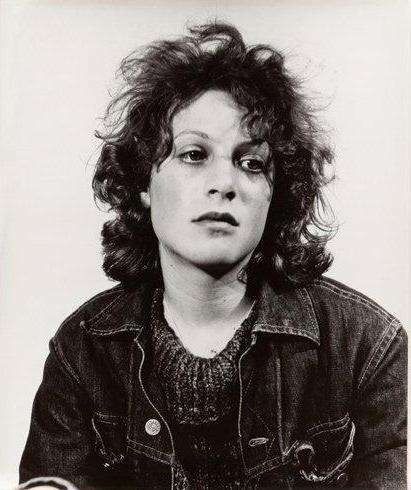
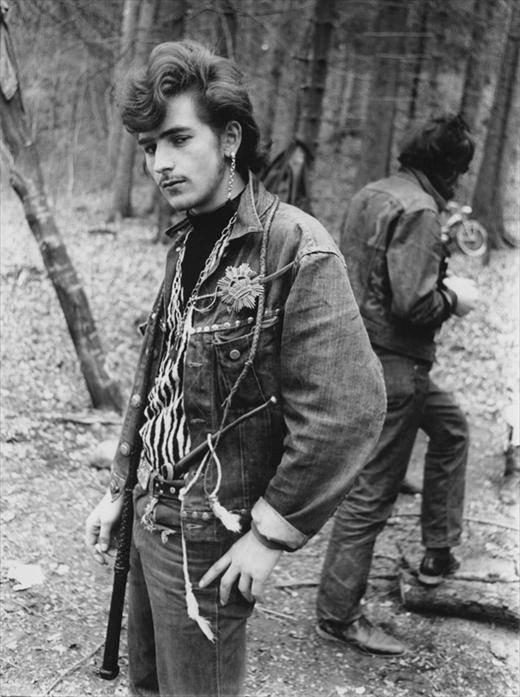
In 1938, Swiss-born Karlheinz Weinberger (1921-2006) encounters a young rocker on the streets of Zürich, who posed for a shot. It was then that this photographer for gay magazines worked his way into the culture of swiss gangs. Weinberger who was most of the time without work, finally found a job at Siemens working in the inventory department and spent most of his free time and off-houres working passionately, almost obsessively at his photographs.
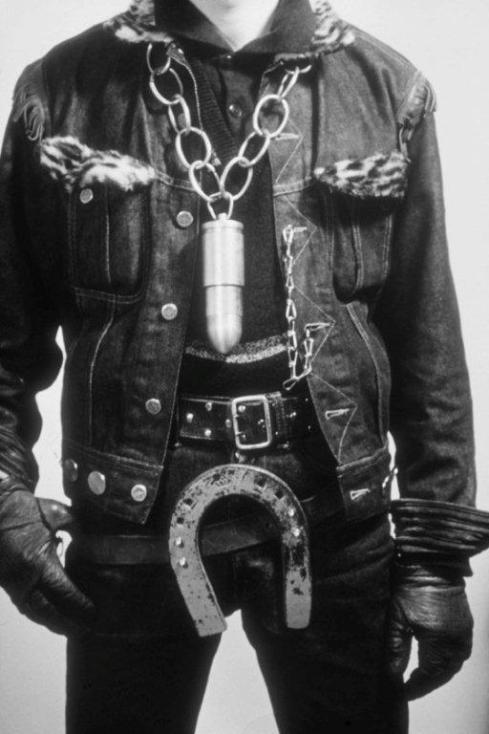
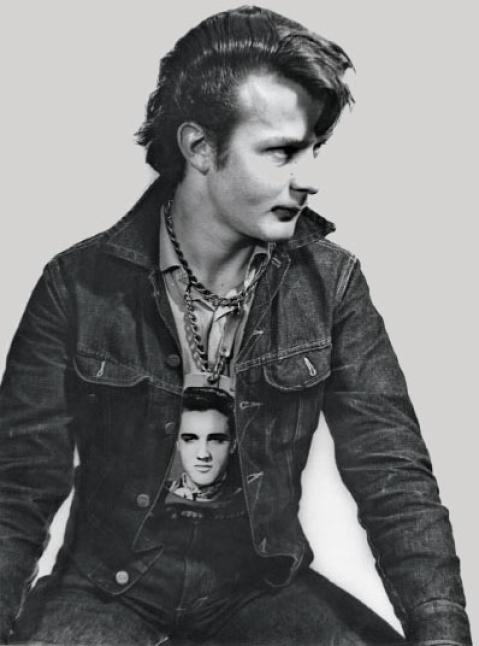
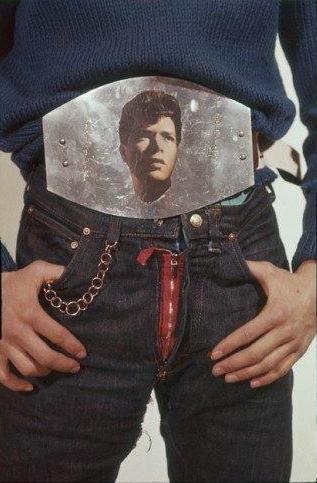
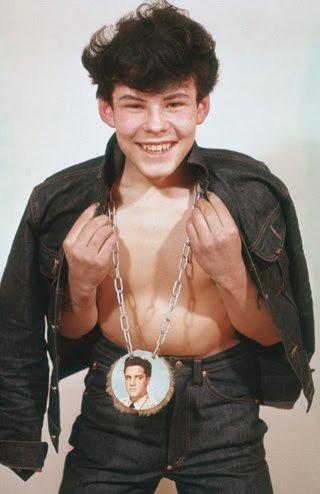
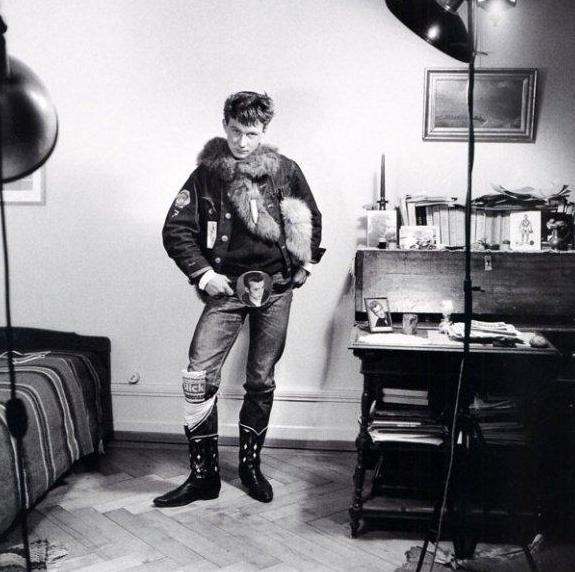
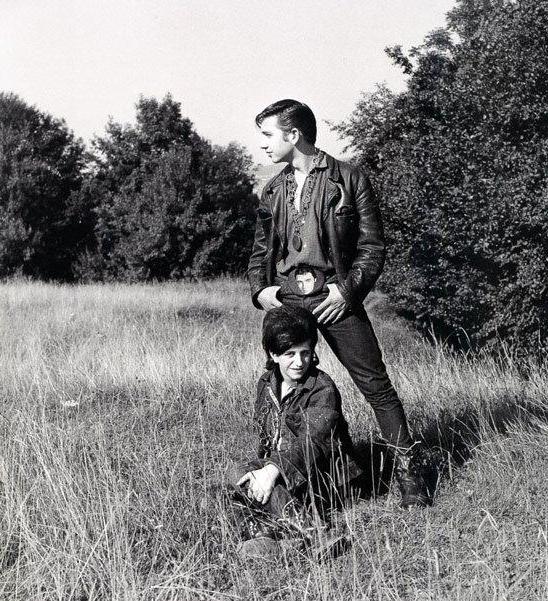
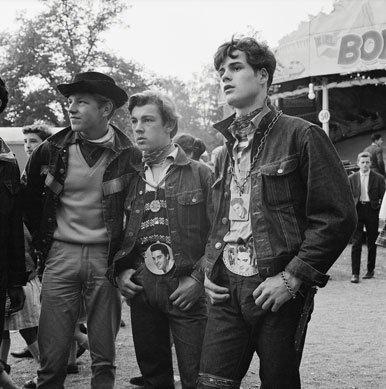
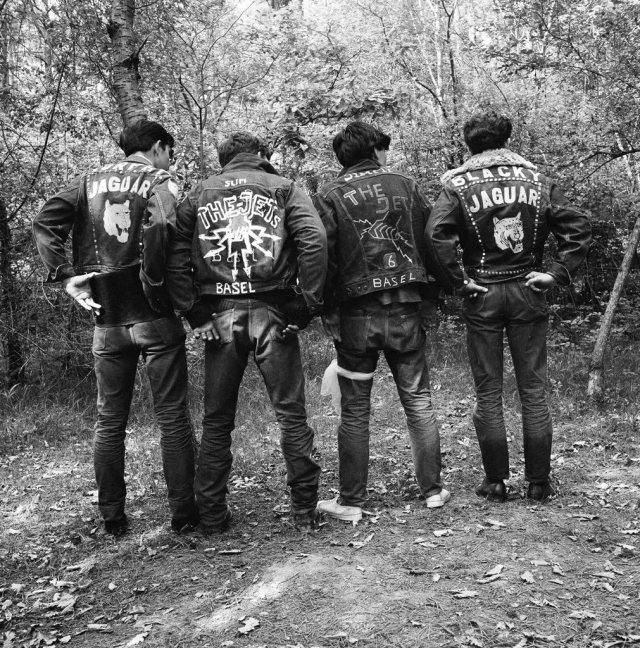
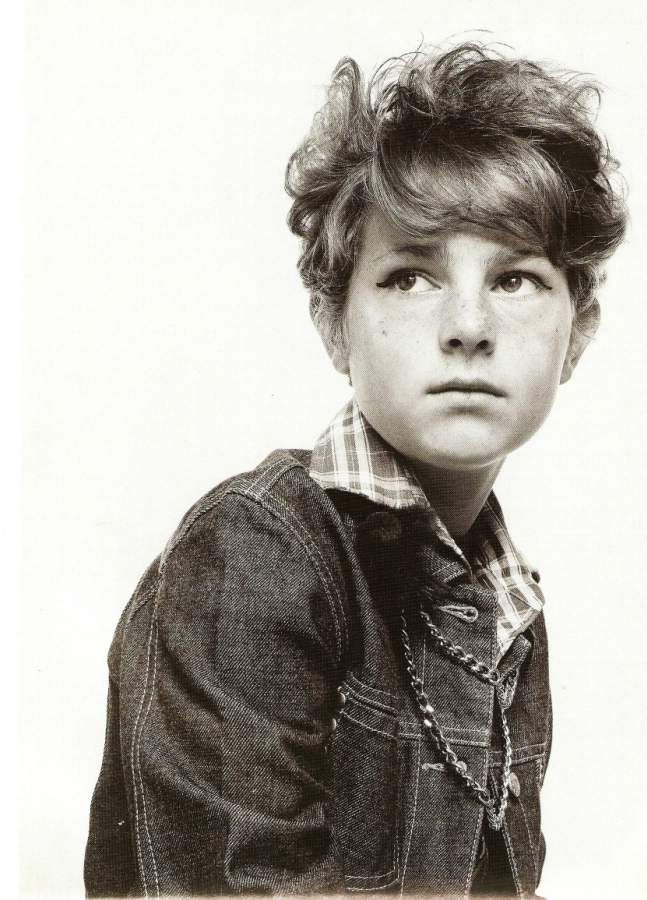
The adolescents, under American influence, were playing tough guys on big bikes, displaying the name of their bands, rolling around on the ground and kissing in the woods. They would wear horseshoe symbols, helmets of the Wehrmacht as a sign of their rejection of authority. They replaced the zippers of their jeans with chains. screws or belt buckles with Elvis’ head. Weinberger got fascinated by this phenomenon and started photographing them during their daily life in a very raw but personal way. Sometimes bringing them one by one to his studio, an industrial warehouse in which he worked for a large part of his life.
The kids were called ‘Halbstarke’ which literally means ‘half strong’ and Weinberger captured them in a rightly sexy, shocking and iconic way. It’s during the last 10 years collectors, fashion and film directors have become interested in the photographs of Weinberger, while they remain almost unknown to the grand public.
.

KARLHEINZ WEINBERGER’S WORK IN HIS STUDIO

weinberger

_karlheinz-weinberger

Karlheinz weinberger

.

KARLHEINZ WEINBERGER’S WORK ON LOCATION


karlheinz weinberger
Karlheinz weinberger
.

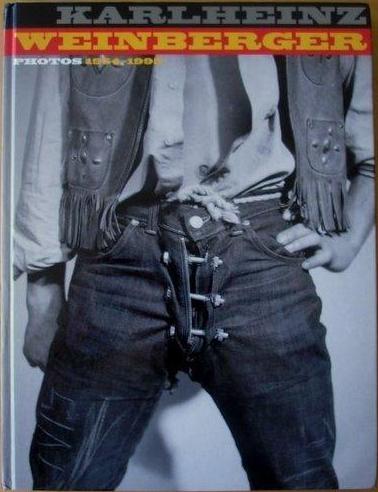
In 2000, Weinberger’s exhibition catalog Karlheinz Weinberger: Photos 1954-1995  was published and has become a hard-to-find collectors item.

I’m selling my original exhibition cataloge Karlheinz Weinger: Photos 1954-1995. The cover is a bit damaged on the left top corner, but the inside and all pictures are in a used-very good condition.

It had an immediate influence on Steven Meisel (Versace jeans campaign) and Martin Margiela (huge tough looking belts).
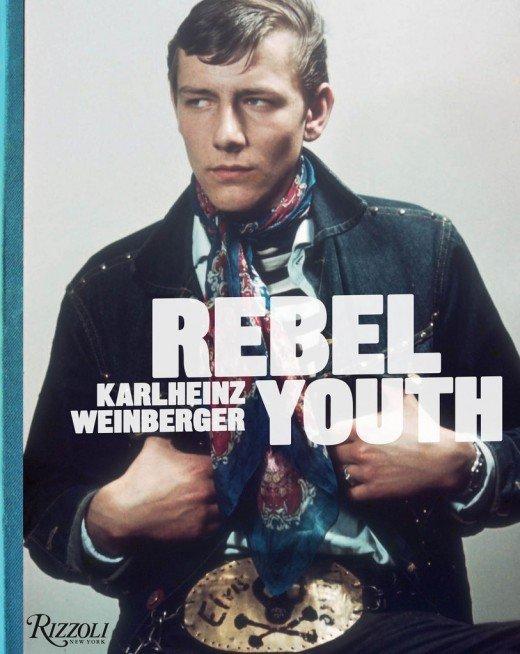
On February 8, 2011, Rizzoli published posthumous a second book of the work of Karlheinz Weinberger Rebel Youth, the foreword written by film director John Waters.
Book cover
.
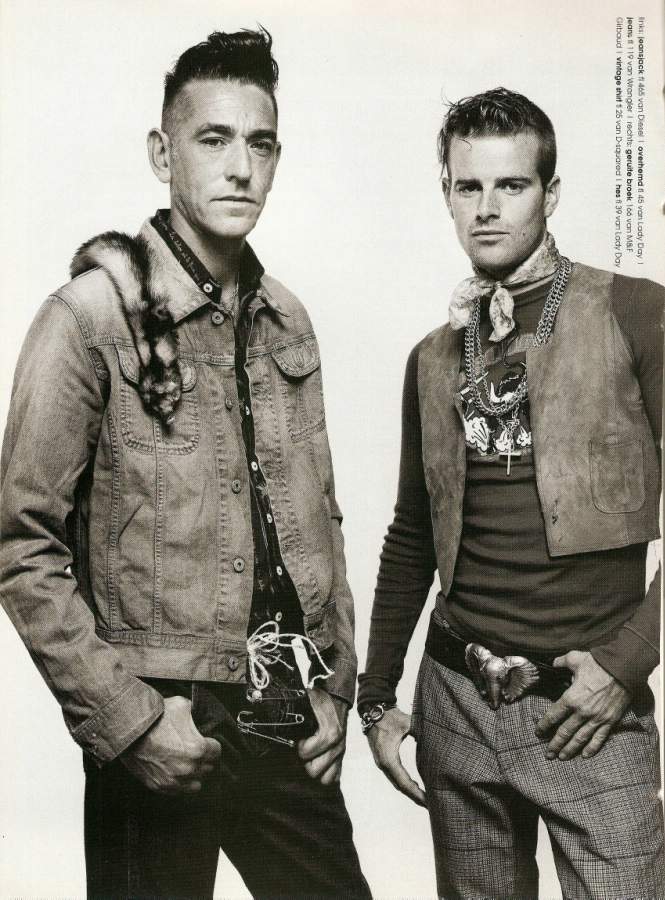
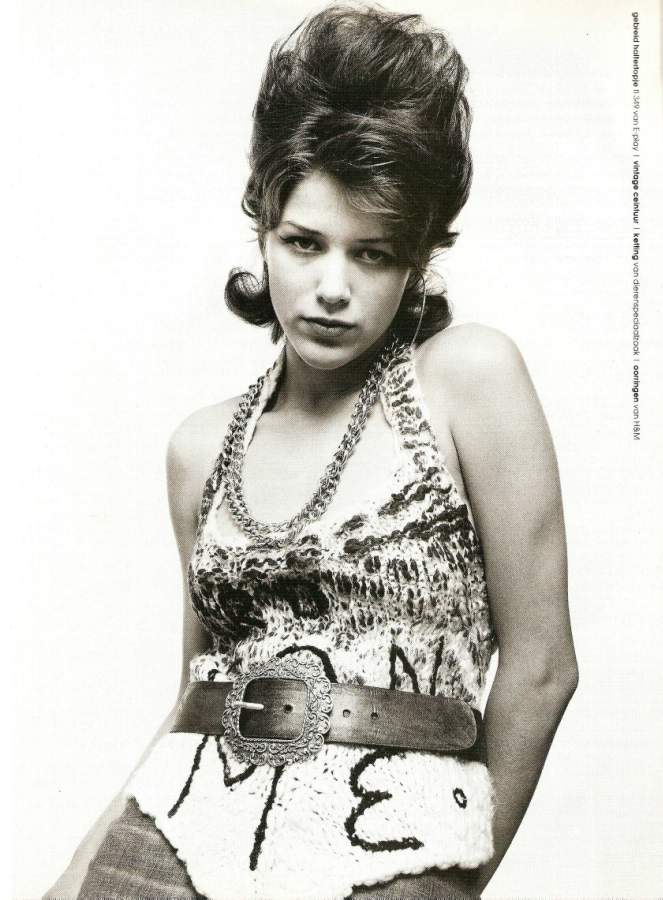
Pictures inspired by the work of Weinberger for BLVD magazine.
.
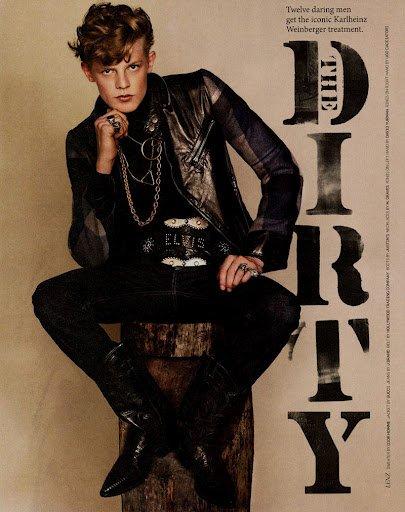
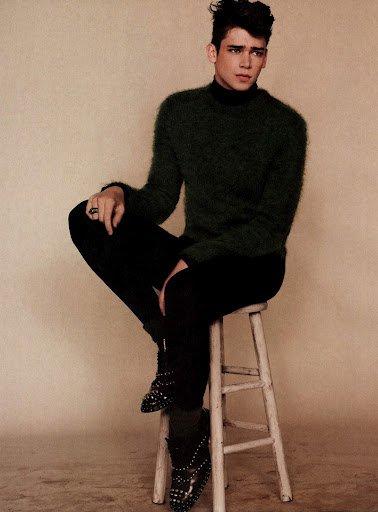
In the november issue 2009 of Blackbook, a fashion story is published inspired on the work of Karlheinz Weinberger, called The Dirty Dozen.

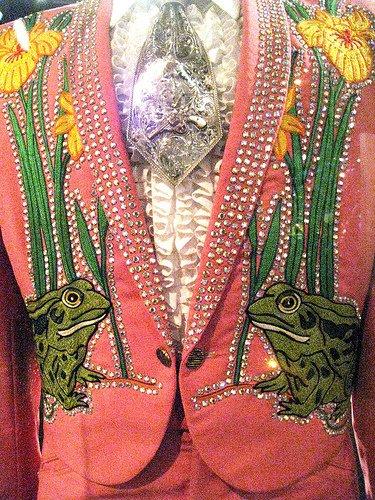
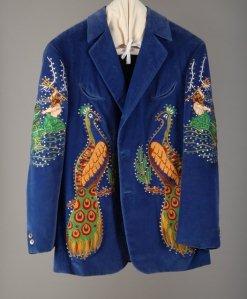
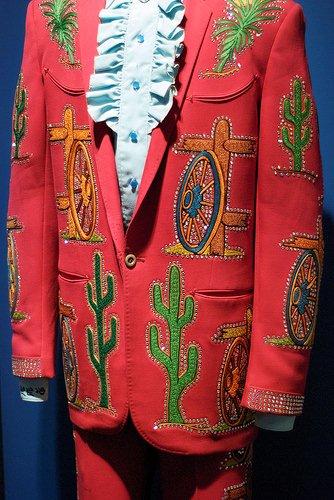
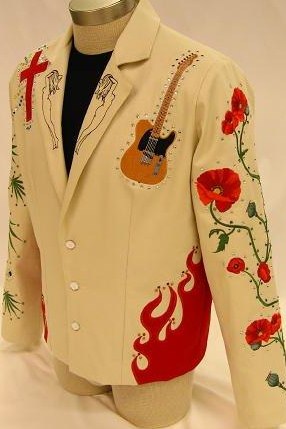
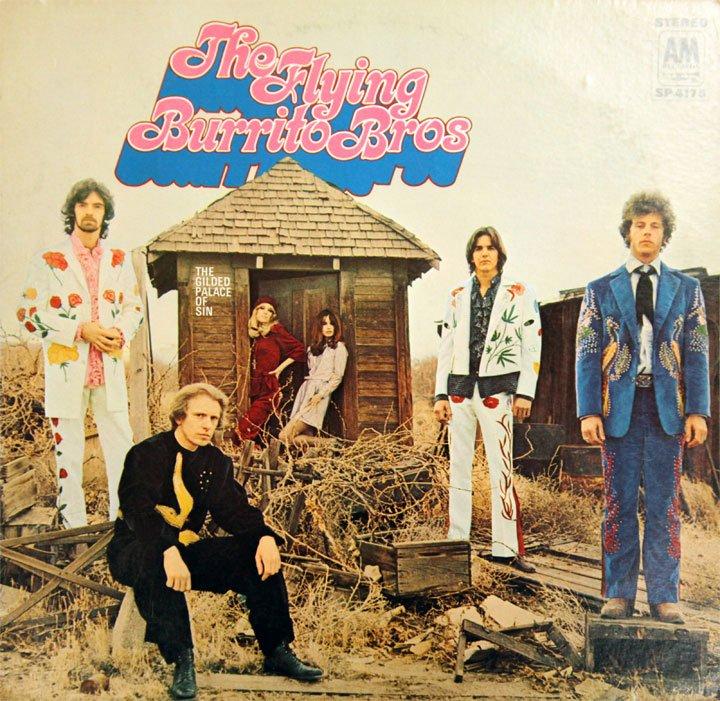
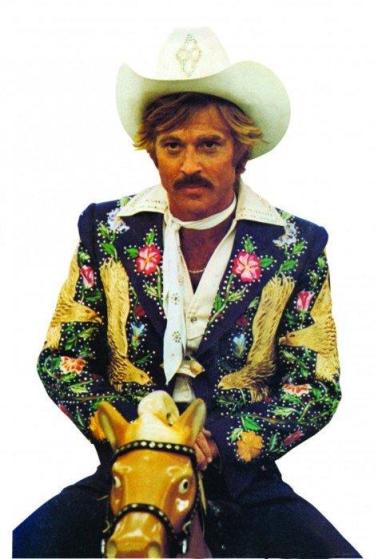
Nudie Cohn, the Rhinestone Cowboy.

2 Sep

Born in a middle-class Jewish family in highly anti-semitic Russia of 1902, little Nutya Kotlyrenko was shipped off to America at the age of eleven. At Ellis Island he took the Americanized surname his brother and cousins had already adopted, Cohn, and unable to write or spell his first name, he left Ellis Island with a botched version of it: Nudie.

‘I guess that the man never knew what a favor he did me by giving me that name,” Nudie wrote later in his life, “but it’s been a trademark for years. People are always impressed by an unusual name, and Nudie has suited me just fine.”

Nudie grew up poor in New York City’s garment district, apprenticing under tailors and dressmakers while dreaming of a career in music and movies. After years of traveling the United States working odd jobs, he wound up back in New York city making g-strings and burlesque costumes for strippers in Times Square at a shop called ‘Nudies for the Ladies’.

After a number of business ventures and financial hardships, the Russian immigrant who dreamed of being a singin’ cowboy moved out to San Fernando Valley along with his wife Bobbie, operating a small tailoring business out of their garage. Unable to afford a decent sewing machine or fabric to work on his own designs, Nudie decided in 1947 that country vocalist Tex Williams would be his springboard into burgeoning field of cowboy costuming.

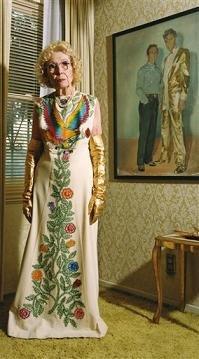
The couple soon found celebrity by selling wildly embroidered, rhinestone-studded duds to cowboy stars, country singers and … Elvis Presley. (A $10,000 gold lamé number made the cover of Rolling Stone and netted a profit of $ 9,950.)

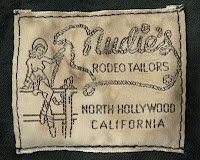
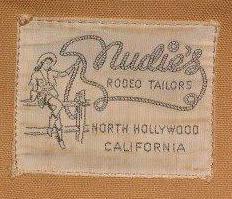
Not knowing of the story is true, its been said Bobbie inspired her husband for the logo the company used on its labels for more than 20 years; One evening in the early 1940’s, Bobbie emerged from the boudoir wearing nothing but a cowboy hat, boots and a holster and coyly asked her husband,”When are you going to make the rest of the outfit?’ The result was what became known as the ‘naked cowgirl’ label. After Nudie converted to Christianity around 1963, the cowgirl was clothed…, making the old-label garments collector’s items.
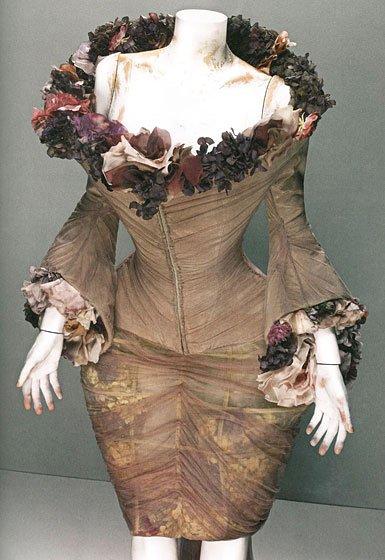
Nudie and Bobbie produced clothes for many famous celebrities, which are now museum pieces. Mr. Cohn died in 1984, Bobbie passed away in 2006. it is unclear which one of the couple came up with the Nudie motto: “It is better to be looked over than overlooked.”….
 

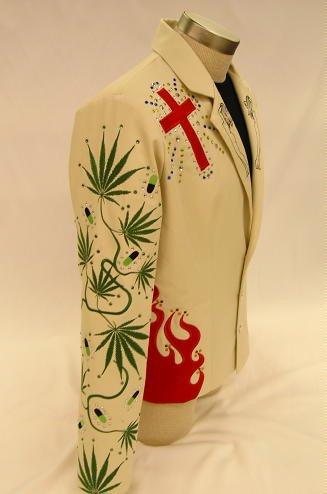
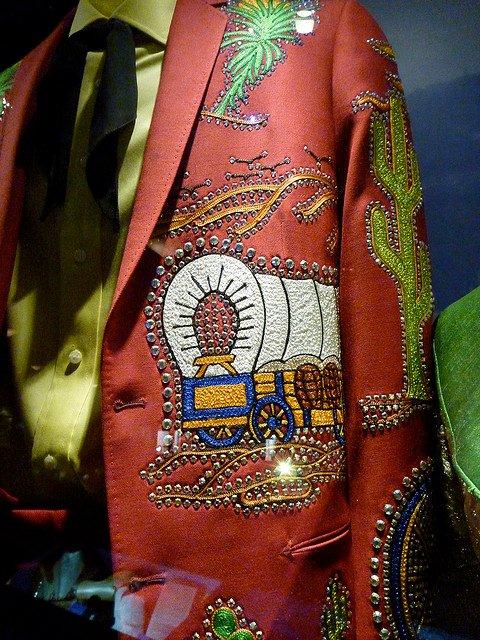
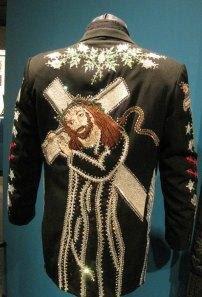
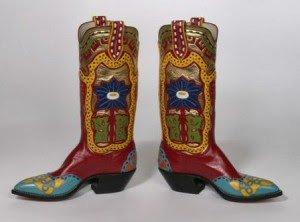
Other designs of Nudie’s rodeo tailors
Nudie’s rodeo tailor’s influence on fashion:

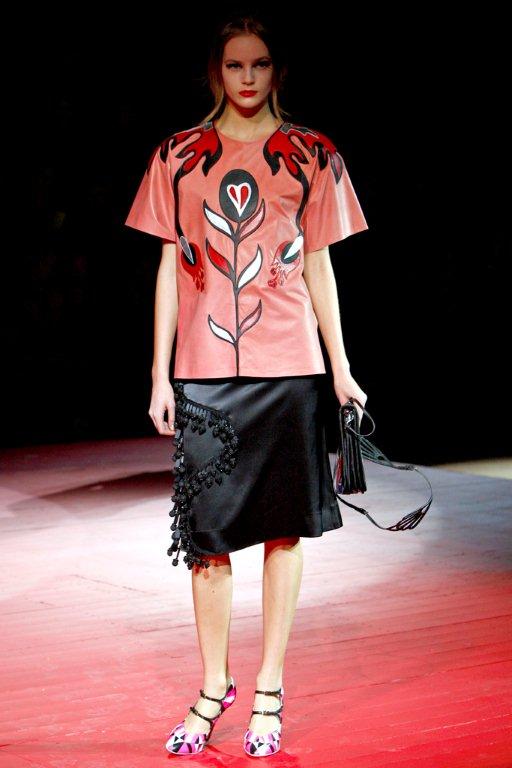
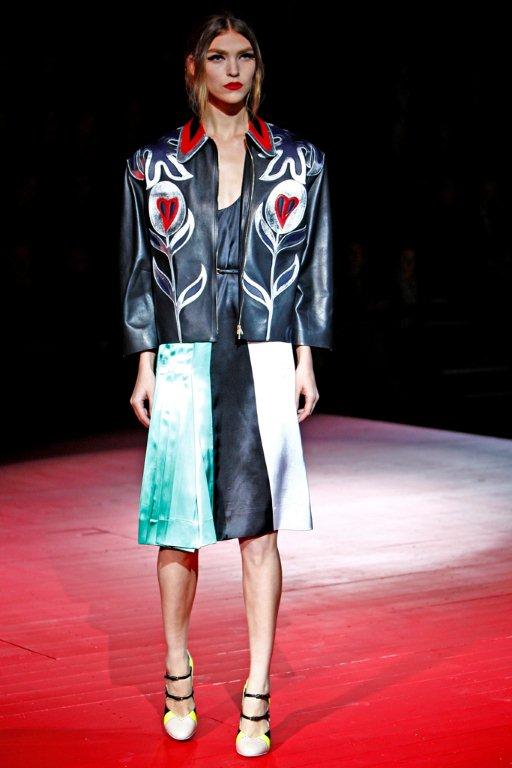
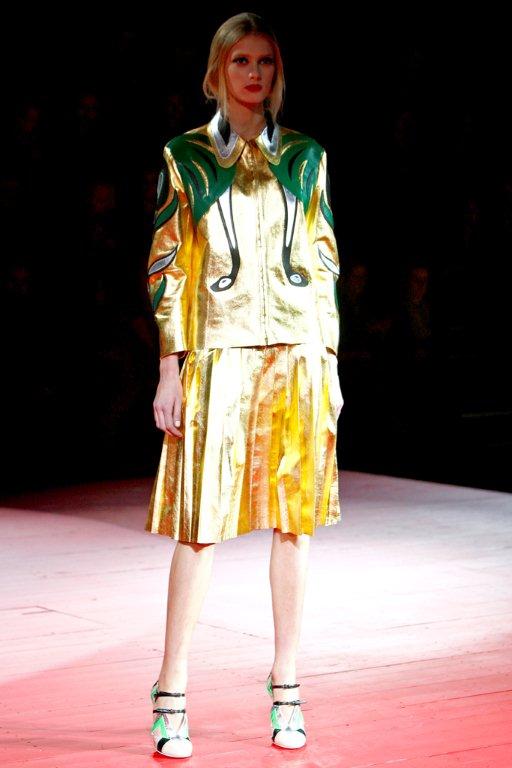
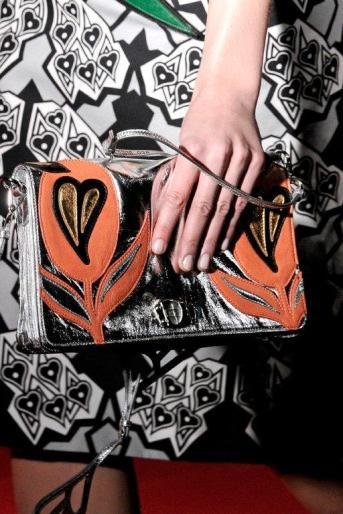
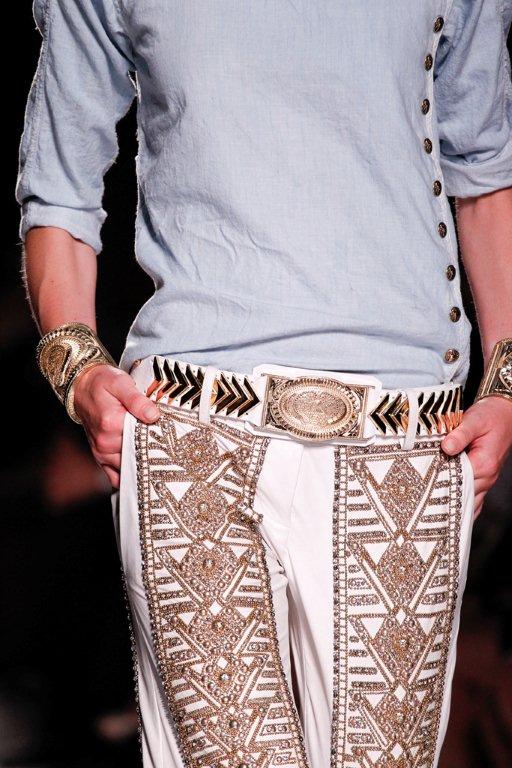
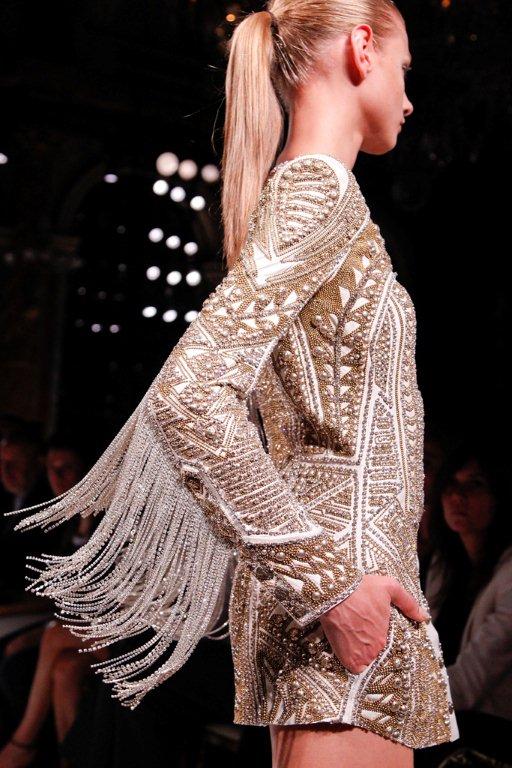
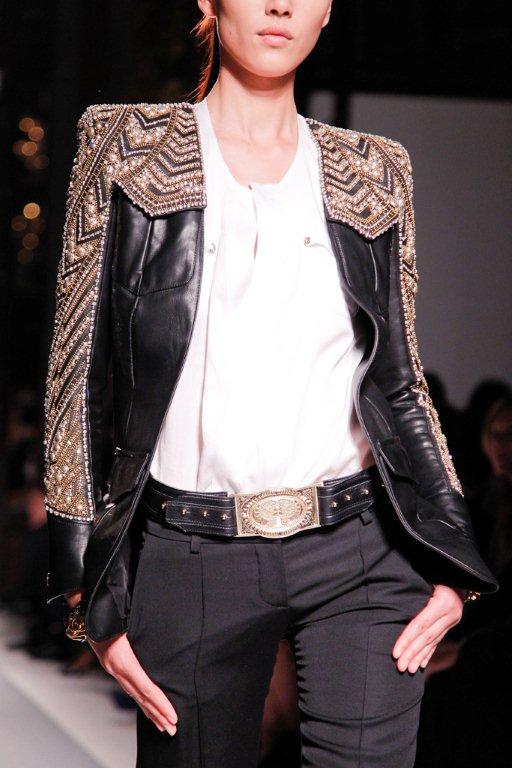
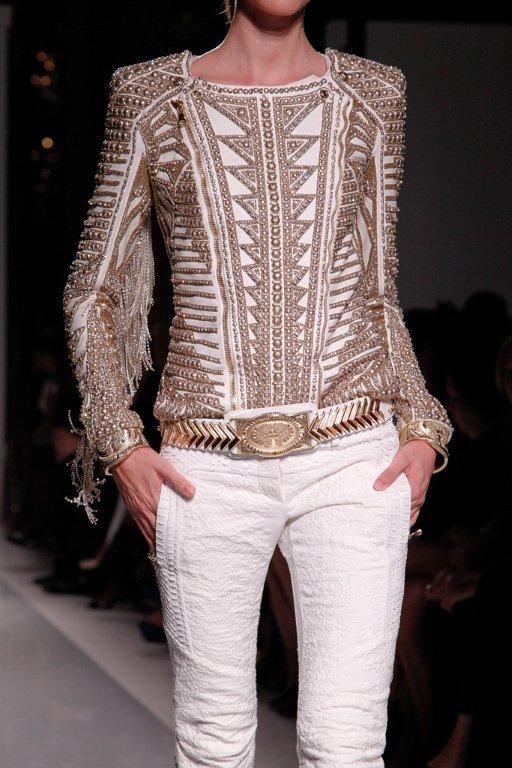
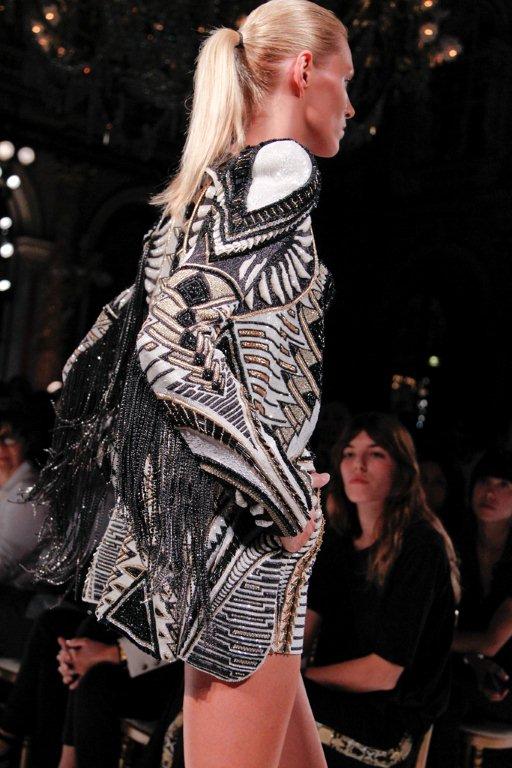
The Nudie style still inspires fashion designers like Tommy Hilfiger, Ralph Lauren, Tom Ford, Miuccia Prada and for his first Balmain collection SS 2012, Olivier Rousteing looked to Nudie Cohn’s rhinestone-covered suits….
Miu  Miu collection SS/2011

Balmain  collection SS/2012

Fashion photographer Craig McDean filmed Amber Valetta in a humble salute to Nudie’s Rodeo Tailors.

http://showstudio.com/project/made_in_hollywood/filmCraig Mcdean

In 2011, Belgian fashion museum  MoMu presented  Dreamsuits. Designs by Nudie Cohn, the Rodeo Tailor – featuring the collection of Bobbejaan Schoepen’ in the MoMu Gallery, an exhibition of fascinating outfits, accessories and ephemera by the legendary Nudie Cohn.