Archive | biography RSS feed for this section

Corinne Day, remembered for transforming fashion photography

23 Jun

Corinne Day

From sudden Fame to harsh Criticism

In many ways Corinne Day  memory is shadowed by the moment of her greatest good fortune: her spotting of a Polaroid of a gangly Croydon teenager among the files of a London model agency in the spring of 1990. She brought a photograph of the 14-year-old Kate Moss to Phil Bicker, the visionary art director of the Face magazine, then the single most influential style magazine in Europe. Back then, Bicker was busy reinventing British fashion photography as a gritty, altogether less glamorous form. He had gathered a bunch of young and ambitious photographers, including Glen Luchford, David Sims and Nigel Shafran, all of whom became successful in the fashion and art world. Corinne Day was perhaps the most temperamental, a feisty, self-taught, model-turned-photographer with attitude to burn.

“It was an exciting time because we were making up the rules as we went along,” says Bicker, “I saw the same thing in Kate as Corinne saw, that she represented something very real: the opposite, in fact, of all the unreal high glamour of fashion. I sent Corinne and stylist, Melanie Ward, down to Camber Sands to do a shoot with her.”

The cover of the July 1990 issue of the Face gained iconic status in the fashion world and beyond. On it, the young Moss, who appears to be wearing no make-up, grins like an excited and slightly gauche teenager from beneath a headdress made of fabric and feathers. The cover line announces “The 3rd Summer of Love” and promises features on the Stone Roses, Daisy Age fashion and psychedelia. The summer – and the decade, and the style-obsessed world in which we now live – had found its face.

.The-Face-Cover-Kate-Moss-by-Corinne-Day-e1326810400856.

Inside, Kate Moss cavorted on Camber Sands in hippy-style clothes, sometimes topless, like a girl who could not quite believe her luck. Bicker is quick to point out that, although the fashion shoot seemed casual and unstyled, it was, in reality, the opposite. “It looked natural and simple but it was carefully constructed to look like that. In fact, as I recall, I sent them down there two or three times until they got it right. Kate hadn’t been modelling for very long but, even in her awkwardness, she had that thing about her that Twiggy had in the 60s, a freshness that matched the times.”

Juergen Teller, one of Corinne Day’s peers, and now the most globally successful photographer of all the young iconoclasts of that time, concurs. “I loved Corinne’s first photographs of Kate. They had that end-of-summer feel and seemed very fresh and almost naive, but in a good way. To me, they were her best photographs.”

The 3rd Summer of Love

Corinne Day

Corinne Day

Corinne Day

Corinne Day

Corinne Day

Corinne Day

Corinne Day

.
Revealingly, neither Kate Moss or her model agency were pleased with the photographs, finding them too raw and unadorned. Corinne Day had brought her own experience of being a model into the shoot. She later said, “It was something so deep inside, being a model and hating the way I was made up. The photographer always made me into someone I wasn’t. I wanted to go in the opposite direction.”

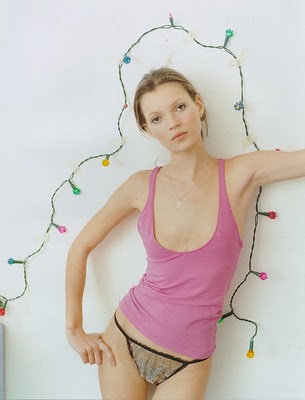
But the next time Corinne Day impinged on the public consciousness, that freshness had been replaced by a darker, harsher vision. In 1993, she photographed Kate Moss for a fashion shoot for British Vogue, Under-exposure. In it, the model looked strung out and sad, dressed down in baggy tights and stringy underwear that exacerbated her skinniness. Again, the photographs were a reaction to the glitzy unrealness of the fashion photography that Vogue usually featured, but here the extremity of Corinne Day’s vision provoked outrage and hysterical headlines about the glamorization of anorexia and hard drug use.

The terms “heroin chic” and “grunge fashion” were born and bandied about in the tabloids. By then, the troubled and troublesome photographer had burned too many bridges in the fashion world and, more problematically, was actually living in, and intimately photographing, a bohemian milieu defined by hard drug use.

Under-exposure

Corinne Day

Corinne Day

Corinne Day

Corinne Day later said that she took the shot above on a day when Kate had been crying after a fight with her then-boyfriend, resulting in the vulnerability that turned this into one of the most iconic and controversial images produced in the 90s (on, of course, the charge that Kate was too thin, heroin chic,etc). It’s the most reproduced image of the entire editorial, but the clothes (pink Liza Bruce vest and Hennes- now known as H&M- chiffon knickers) are rarely remembered, or credited. I have the picture on my Wall of Fame. The vulnerability, innocence & simplicity of the image made it iconic picture to me too.

55793_fash8195_122_613lo

55798_fash8196_122_215lo

55799_fash8197_122_613lo

55804_fash8198_122_251lo

55815_fash8199_122_684lo

Start photography

Corinne grew up in Ickenham with her younger brother and her grandparents. She left school aged sixteen and worked as an assistant in a local bank. After a year at the bank she became an international mail courier. It was during this period that someone suggested she try modelling – she worked consistently as a catalogue model for several years. In 1985 she met Mark Szaszy on a train in Tokyo – Mark was a male model and had a keen interest in film and photography.

During an extended trip to Hong Kong and Thailand, Mark taught Corinne how to use a camera and in 1987 they moved to Milan. It was in Milan that Day’s career as a fashion photographer started. Having produced photographs of Mark and her friends for their modelling portfolios, Corinne began approaching magazines for work.

From Fashion to Documentary

Corinne retreated from fashion work in the wake of the heroin chic debate, instead choosing to tour America with the band Pusherman and concentrate on her documentary photography. She also undertook work photographing musicians, including the image of Moby, used on his 1999 album Play.

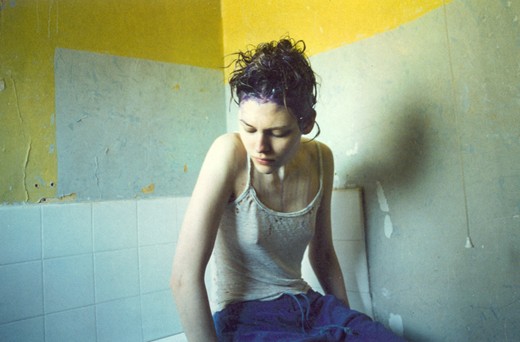
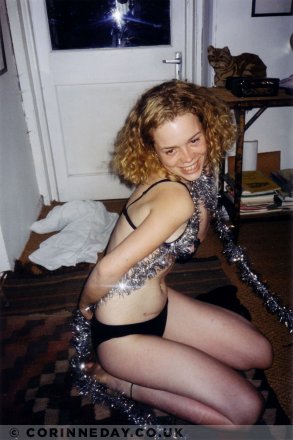
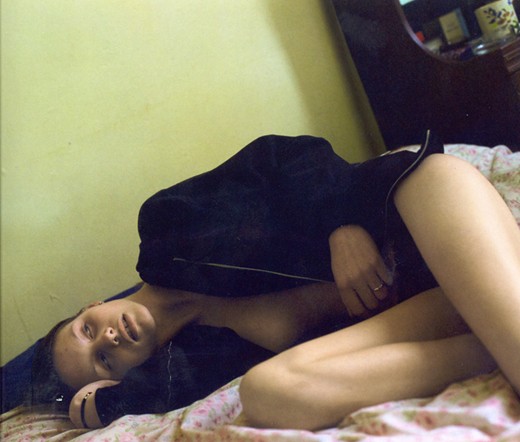
Her autobiographical book, Diary was published by Krus Verlag in 2000, and contained frank and at times shocking images of Corinne and her friends. The images in Diary featured young people hanging out, taking drugs and having sex, and have been compared to the documentary realism of Nan Goldin. Coinciding with the publication of Diary,  Corinne had two large-scale exhibitions in London in 2000.

Diary

diary

Diary

Diary

Diary3

Diary

Diary

Diary

Diary

corrine-day-diary-2

Diary

Diary also records the dramatic events of the fateful night in 1996 when Corinne collapsed in her New York apartment and was rushed to Bellevue hospital. There, she underwent an emergency operation for a brain tumour. She insisted that Mark photographed her, even in the moments leading up to her surgery. She looks dazed, helpless, disoriented. “To me, photography is about showing us things we don’t normally see,” she said later, “Getting as close as you can to real life.” The book’s final picture is of a beach strewn with beer cans: a glimmer of hope, and yet a tarnished one.

After her initial illness, Corinne made an uneasy truce with fashion photography. She abandoned her raw, edgy style for something more traditional in the fashion shoots she did for, among others, British, French and Italian Vogue, Arena and Vivienne Westwood.

Corinne Day

Corinne Day

Corinne Day

Corinne Day

Corinne Day

Corinne Day

Corinne Day

Corinne Day

Corinne’s tumour returned in 2008 and a campaign called Save the Day was started by her friends to pay for treatment in a clinic in Arizona. It raised £100,000, much of it from the sale of signed, limited-edition prints, including several of Kate Moss that were signed by the model and the photographer.
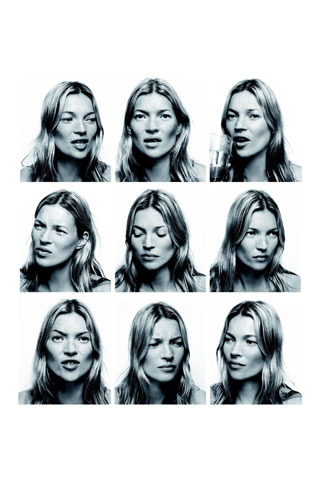
Corinne Day/Kate Moss

Corinne Day, who died 27 August 2010 , will be remembered for transforming fashion with her pictures of the young Kate Moss for the Face.

Kate Moss & Corinne Day

Most information for this post from:  The Observer, article by  Sean O’Hagan & Wikipedia

Official website Corinne Day:  http://www.corinneday.co.uk/home.php
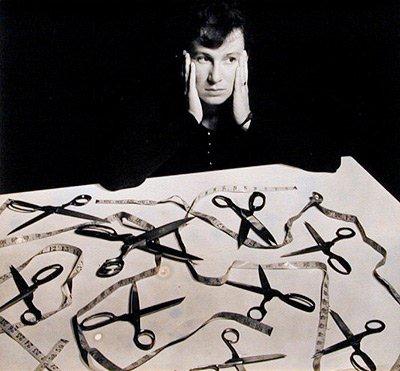
Elisabeth Hawes believed the Fashion Industry in General was a Farce

26 May

Elisabeth Hawes

“I don’t know when the word fashion came into being, but it was an evil day.”

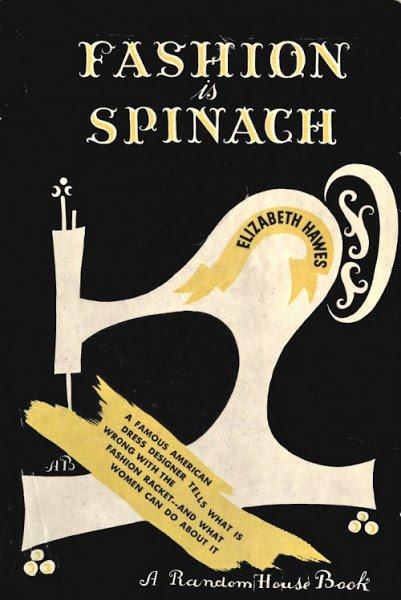
These words came from an American fashion designer working at the top of her game. Elizabeth Hawes wrote the line in her bestselling book Fashion Is Spinach published in 1938. The full 337 pages are an ongoing smack-down of fashion, fashion designers and, mostly, the fashion industry Elisabeth Hawes blamed for creating a planet of fashion victims. “Fashion is a parasite on style”, Fashion is that horrid little man with an evil eye, that tells you last winter’s coat may be in perfect condition, but you can’t wear it because it has a belt”, “Fashion gets up those perfectly ghastly ideas, such as accessories should match…” And so on and so on until briskly closing the book with six finite capital letters in bold print: I SAY TO HELL WITH IT.
Fashion is Spinach bookcover

If you want to read the book and can’t find a copy, you can read the full text on:

http://archive.org/stream/fashionisspinach00hawerich/fashionisspinach00hawerich_djvu.txt
.

Biography

Elisabeth Hawes

Elisabeth Hawes (1903-1971), the American clothing (nót fashion) designer, who was very outspoken and critical of the fashion industry. In addition to her work as clothing designer, sketcher, copyist and stylist, she was also a journalist, author, union organizer, fighter for gender equality and political activist.

Already at an early age Elisabeth made clothes and hats for her dolls (Elisabeth’s mother taught her children various handicrafts, such as raffia basket-weaving and beadwork) and later she began sewing her own clothes. At the age of 12 she became a professional dressmaker, sewing clothes for the children of her mother’s friends and even selling some at a shop, but only for a brief period, untill she went to  highschool.

She was very intelligent and got mostly good grades at school. Her free time Elisabeth focused on clothing and during summer break 1924, she took an unpaid apprenticeship in Bergdorf  Goodman workrooms, where she learned about how expensive clothes were made to order. She also got a peek at French imports that came into the store and Elisabeth decided she wanted to find out all about fashion in Paris. She made clothes for classmates and sold some at a dress shop just outside of campus, this way she earned a few hundred dollars for her trip to France.

July 8, 1925 Elisabeth sailed of to Paris with a friend, Evelyn Johnson.

Elisabeth Hawes

Hawes Daywear

Hawes daywear

Elisabeth Hawes

Evelyn’s mother had arranged for Elisabeth a job at her dressmaker’s on Faubourg St Honoré, where high quality illegal copies were made of haute couture dresses. Elisabeth sold these garments to non-speaking-French Americans and she went to visit couture salons dressed as a legitimate customer, to purchase dresses that would be copied. She also became a sketcher for a New York manufacturer of mass-produced clothing, for whom she draw the designs she memorized at fashion shows…., but not for long, because she got a guilty conscience.

In Paris, Elisabeth started working as a journalist for the New Yorker contributing a regular column, worked as a buyer for Macy’s and as a stylist for Lord and Taylor’s offices. In 1928, Main Bocher,editor of French Vogue offered her a job, but Elisabeth preferred to work for Nicole Groult, the sister of Paul Poiret. Here she developed her method of designing based on Vionnet’s technique of draping on a wooden mannequin.

After her return to New York Elisabeth opened a shop together with Rosemary Harden, Hawes-Harden. They only used good materials for their designs which were well-sewn and well-fitted. ‘Original without being eccentric‘ was said about the clothes. After Harden had sold her share of the company to Elisabeth, she went to Paris again in 1931 to present her collection and being the first non-French designer to show during the Paris season, she won a great deal of media attention.

Hawes

Hawes

Hawes

Hawes

Hawes

Hawes 1936

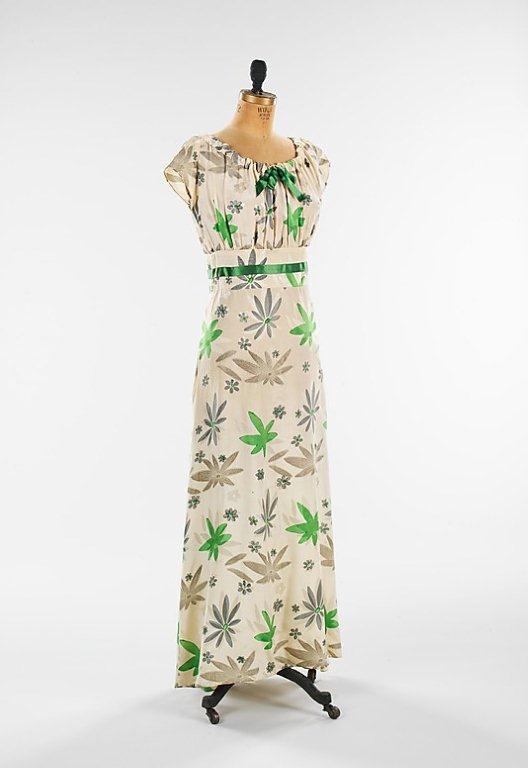
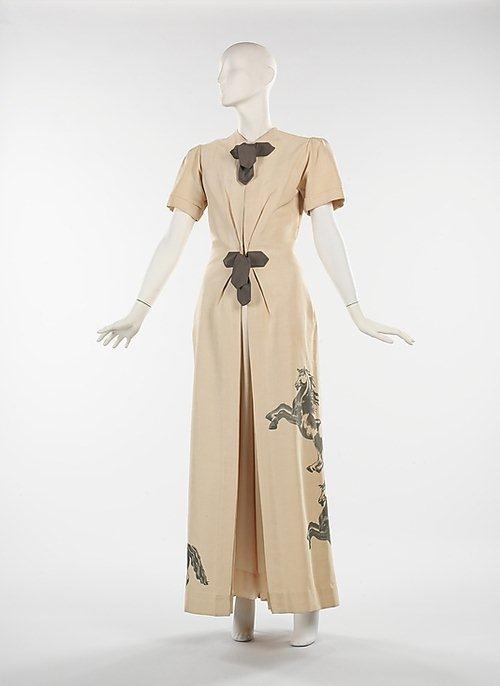
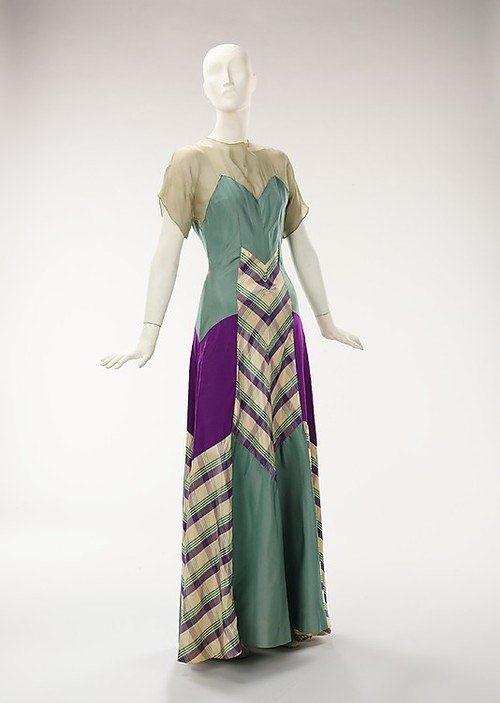
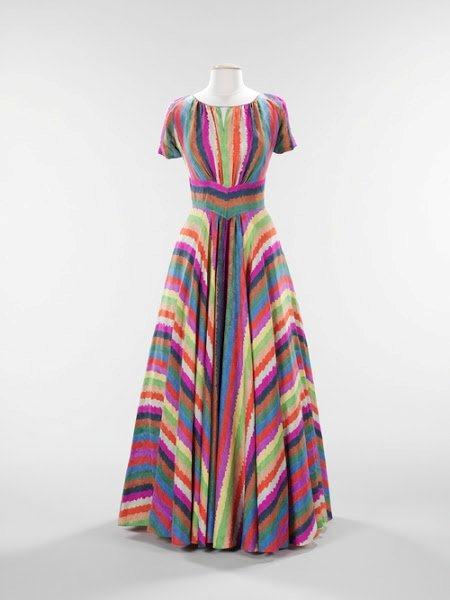
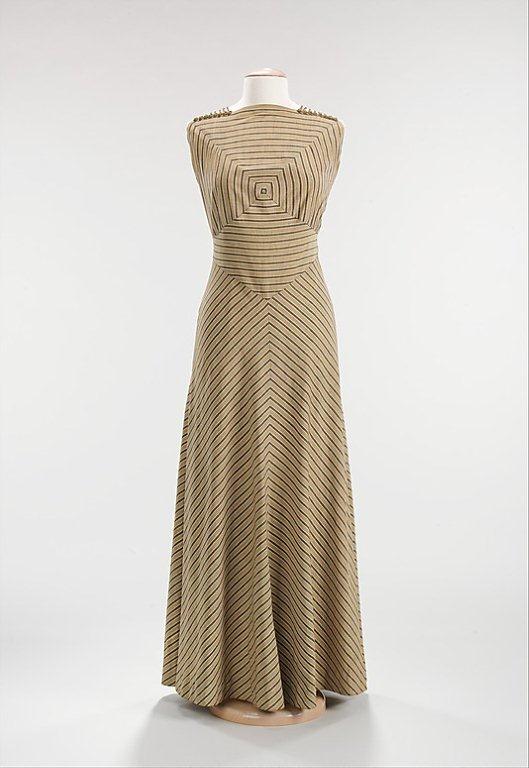
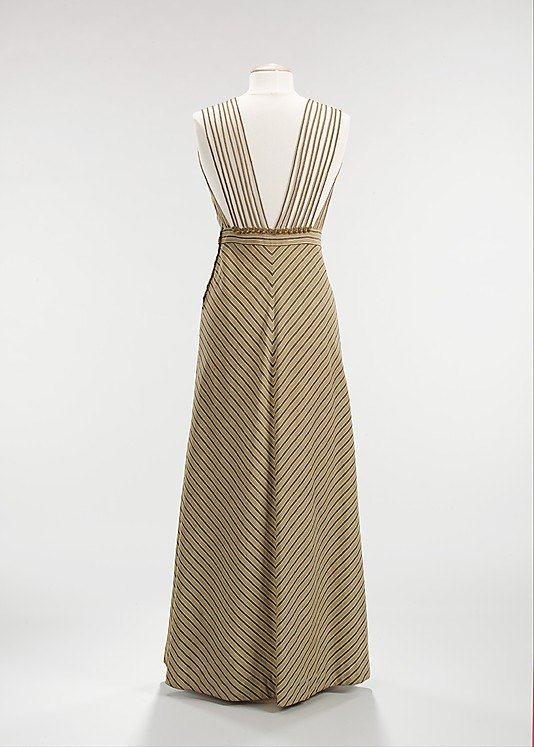
Elisabeth had made name for herself and got lots of publicity by giving humorous political names to her collections, like ‘The Five-Year Plan’, ‘The Yellow Peril’ and ‘Disarmament’. She made simple, witty, distinctive, elegant and practical garments for women of means. Her designs were so smart and timeless that they were as contemporary in the early 1930s as they were in the late 1940s due to her commitment to quality of materials and simplicity of line.

She was committed to the notion that form follows function and  her design sensibilities was the desire to make clothes that were stylish, easy to move in, and by incorporating breathable fabrics, easy to wear. Elisabeth  focused on construction and comfort, she draped fabrics on the body and creatively pieced together wearable garments that were also beautiful works of art.

In 1933, Elisabeth designed ready-made clothes for a manufacturer. Her goal was high fashion at a reasonable price for the ready-to-wear customer, but although it was a great success, she ended the deal when she found out the designs were made from inferior materials.

Since the Russian Revolution of 1917, there was no display of haute couture in Russia, till Elisabeth showed her designs in 1935 and two years later she presented an all male fashion show with brightly coloured designs. She encouraged women to wear trousers and felt men should feel free to wear robes.

Hawes-styx-1936

Hawes dress

Hawes dress

Hawes-gown

1936

“Style is dressing to fit your own self – it lasts.”

Finally Elisabeth didn’t revolutionize the fashion industry, but today her perfectly fitted, smart and practical designs are held in private and museum collections. Elisabeth herself became bored with couture, and shut down her business when WW II broke out. She continued to write the words women wanted to read, namely, that the fashion industry was a sham and that they should wear what fits and looks good and lasts, rather than just “a red lobster painted onto any old dress.” She even confronted men and teenagers, daring them to break out of the stiff  molds created for them, and to ditch their hats and wear more color and short pants. Elisabeth Hawes, long before the Gap and J. Crew, basically invented the idea of casual Friday.

Hawes

Hawes

Hawes

Hawes

Hawes

Hawes

Elisabeth Hawes dared to speak her mind

.

Jeanne Lanvin, Founder of World’s Oldest Fashion House

19 May

1930s-jeanne-lanvin-par-harcourt

Nowadays Alber Elbaz does a fantastic job as head of Lanvin, but it all started with Jeanne Lanvin, the founder of the house of Lanvin. The grande dame was one of the greatest and least-know designers of the 20th century.

.

Biography

jeanne_lanvin

Jeanne-Marie Lanvin ( 1 January 1867, Paris – 6 July 1946, Paris) was the eldest of 11 children. She trained as a dressmaker at a French fashion house called Talbot and then later worked as a milliner. She had the passion, unique talent, energy and enormous potential. In 1890, backed by a devoted client, she opened up a millinery shop (Coco Chanel also started as a milliner and opened a millinery shop, before she went into fashion design).

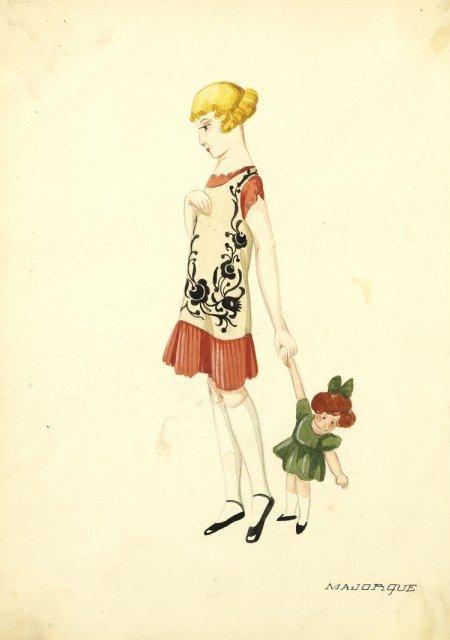
Jeanne Lanvin, who by now was a doting mother, also designed an extensive mini-me wardrobe for her daughter Marguerite Marie-Blanche di Pietro. She made such beautiful clothes for her daughter, using sophisticated textiles and colours, that they began to attract the attention of a number of wealthy people who requested copies for their own children and Jeanne branched out into childrenswear.

Jeanne-Lanvin-original-childrenswear-sketch-from-early-1900s-7

Jeanne-Lanvin-original-childrenswear-sketch-from-early-1900s-4

Jeanne-Lanvin-original-childrenswear-sketch-from-early-1900s

Jeanne-Lanvin-original-childrenswear-sketch-from-early-1900s-5

Lanvin children dress

Lanvin children dress

.

Marguerite was the inspiration and driving force behind Lanvin’s designs. Jeanne created the looks of eternal youth, so that her daughter was the most beautiful woman in the world. Designing dream outfits that her daughter could wear gave Lanvin a chance to relive her own life as she’d always dreamed of. The life she had to sacrifice to her work.

Following customer demand for adult versions of her exquisite children’s clothing, she created women’s and girls’ lines. Her first garments follow the simple, Empire-waisted chemise silhouette. As a full-fledged couturière, she now joined the Chambre Syndicale de la Couture and becomes known for her mother-and-daughter outfits.

.

The Lanvin logo

lanvin-logo

Jeanne Lanvin & her daughter

(The Lanvin logo is inspired by a picture of Jeanne and her daughter Marguerite.)

.

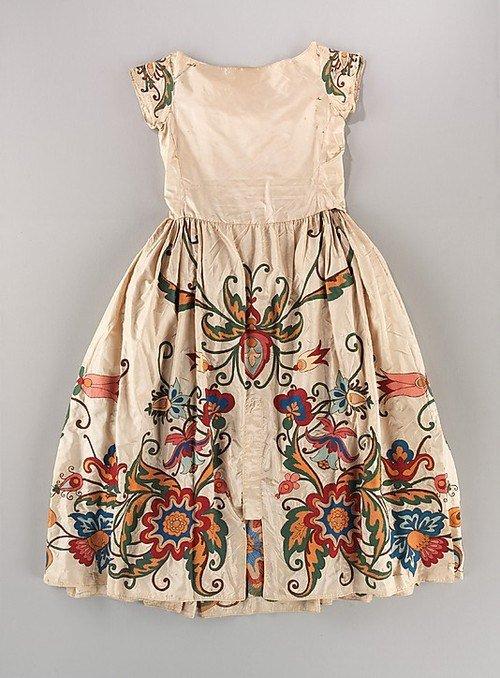
Jeanne was in her fifties when she became famous for her designs for grown-ups and was not like her rival, Coco Chanel, designing for slim women, but continued her bouffant style for women with a larger size, like Paul Poiret did. The robe de style bouffant dress became her signature piece.

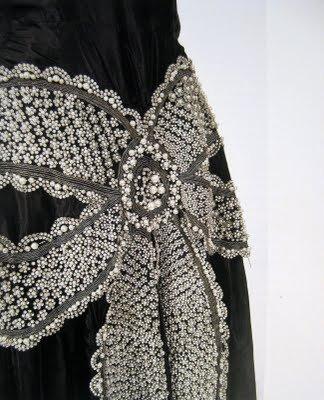
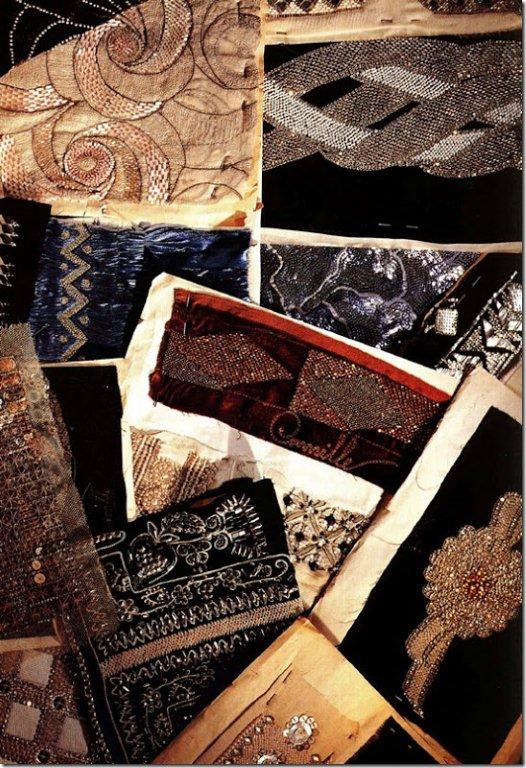
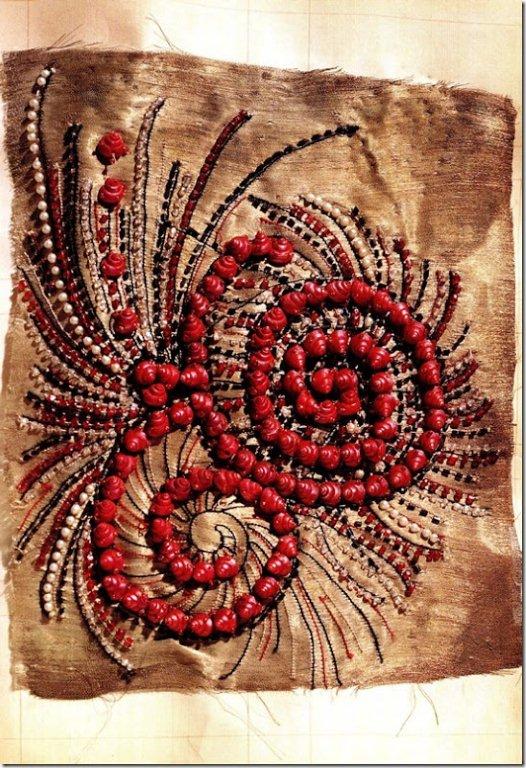
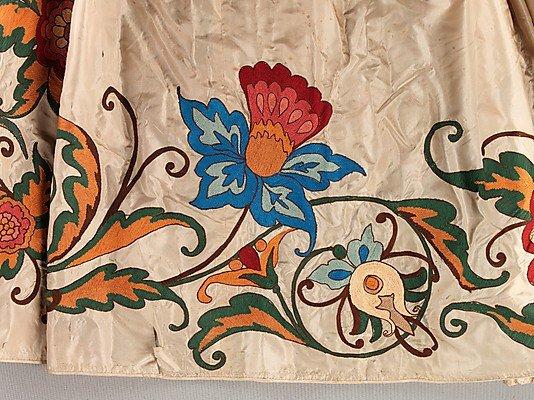
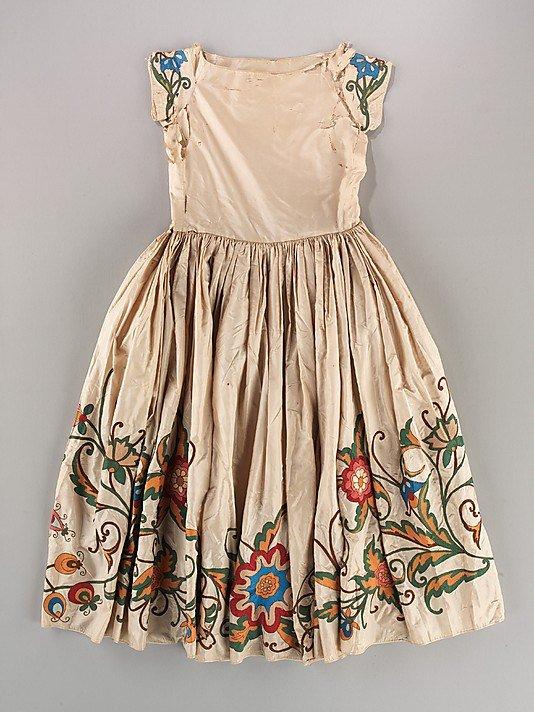
Jeanne loved to work with expensive fabrics and her garments were easily recognisable for her masterful use of embellishment, her delicate trimmings and her embroideries along with exquisite beadwork in floral inspired colours. Often her embellishments included free-flowing ribbons, ruffles, flowers, lace or mirrors inspired by her travels. Ornamentation included appliqué, couching, quilting, parallel stitching, embroidery and discreet use of sequins.

Jeanne+Lanvin

lanvin-fabrics

lanvin-design-embroidery

Lanvin

Lanvin

Lanvin

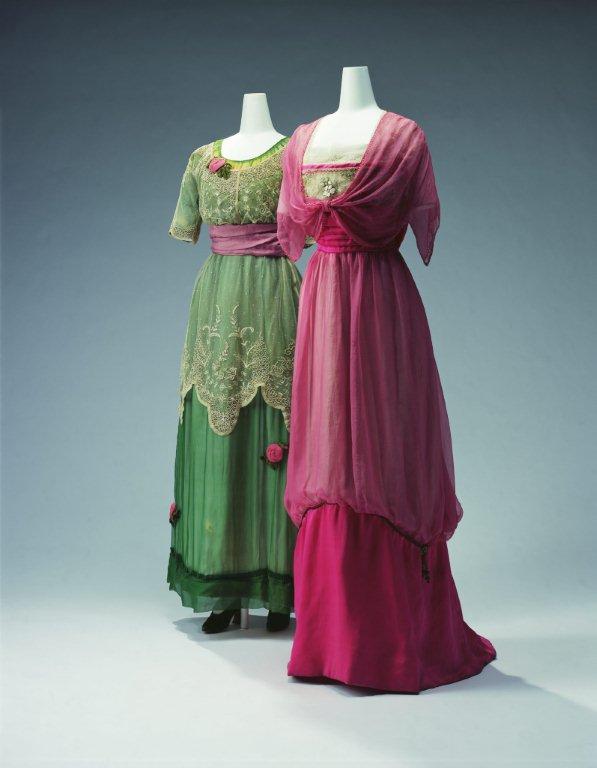
Jeanne’s clothes were about perfection. She chose the fabrics, then developed her own  colour schemes and even built a dye factory in Nanterre in 1922 to achieve the subtle  inimitable shades she was after. She used pieces of mica, coral, minute shells,  gold and silver threads, ribbons and raffia along side of pearls and sequins, so  that the beading would match the fabric, the mood and the motif.  Fabrics most often used were silk, taffeta, velvet, silk chiffon, organza, lace, fur and tulle.

Unlike her rivals Coco Chanel, Paul Poiret or Elsa Schiaparelli, Jeanne Lanvin was a very private person – she would rather stay on background than dissolve herself into the lights of fame and social glamour. Dressed in black, she was more keen on concentrating on her designs and communicating with fabrics rather than people.

This was also the problem, Jeanne Lanvin had no public image and no public relations in the industry. Her rivals all understood that they needed to embody their house in their own appearance, so they were tireless self-promoters. Karl Elberfeld wrote about Jeanne: “Her image wasn’t as strong as that of Chanel because she was a nice old lady and not a fashion plate”.

Lanvin

Lanvin

Lanvin

Lanvin

On the other hand, Jeanne was a great businesswoman and 1918 she took over the whole building at 22 Rue du Faubourg Saint-Honore. It included two workrooms for semi-tailored clothes, two for tailored ones, one for lingerie, one for hats, one that was used as a design studio, and two that were given over to embroidery; the latter was a speciality which Lanvin, unlike other couturiers, did not entrust to outside workers.

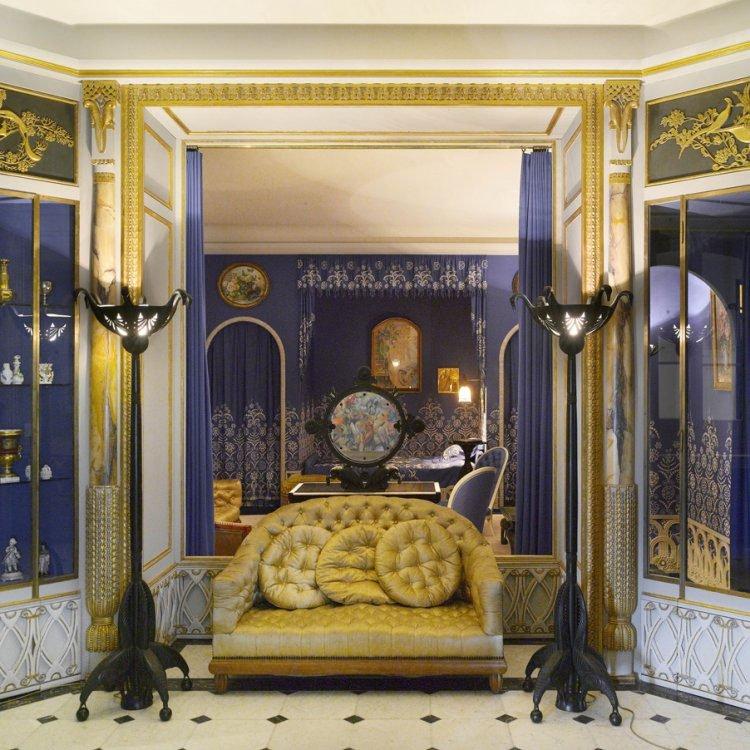
And Jeanne did understand that fashion isn’t just about clothes, it is a way of life and in the 1920s she already opened shops devoted to home décor (Lanvin Décoration, at 15 Rue du Faubourg Saint-Honoré), sportswear,  menswear, furs, swimwear and lingerie. Lanvin became the first house to dress the whole family!

lanvin-arpege-bottle

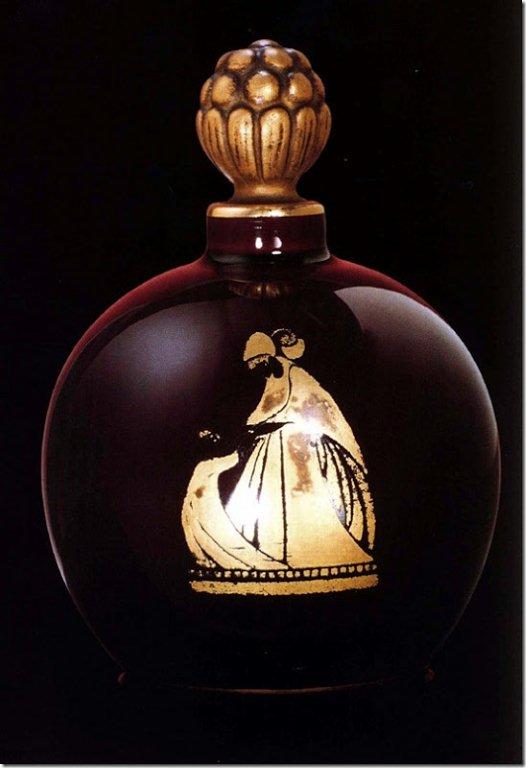
In 1924, Jeanne was one of the first couturiers to create a division for fragrances, Lanvin Parfums and the next years a fragrance factory is constructed near Nanterre. Mon Peche scent debuted, but didn’t do so well untill the name was changed into My Sin. In honor of Marguerite’s (who, by then, calls herself by her middle name: Marie-Blanche) 30th birthday Arpege, lanvin’s first perfume, debuted. Later many new fragrances followed, like Scandal, Eau de Lanvin and Rumeur.

During WWII, Jeanne continued to operate her house, creating special collections for women engaged in war work and regulation uniforms for female armed-service members.

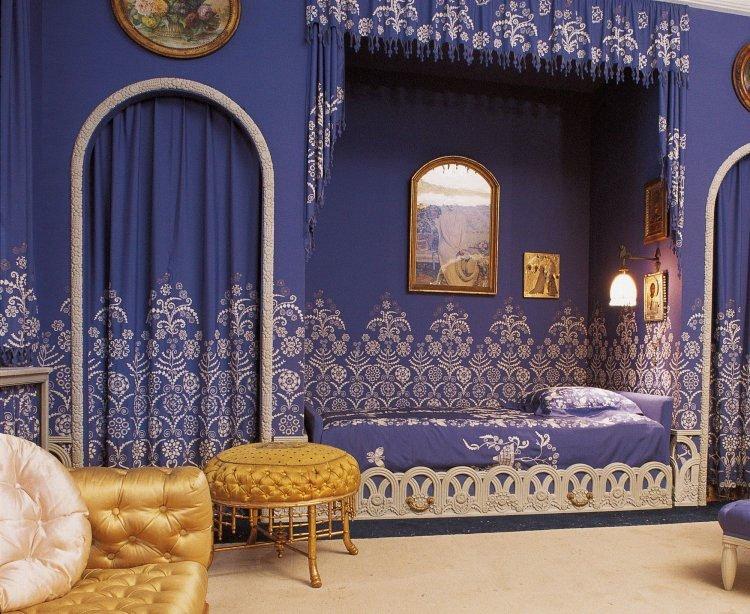
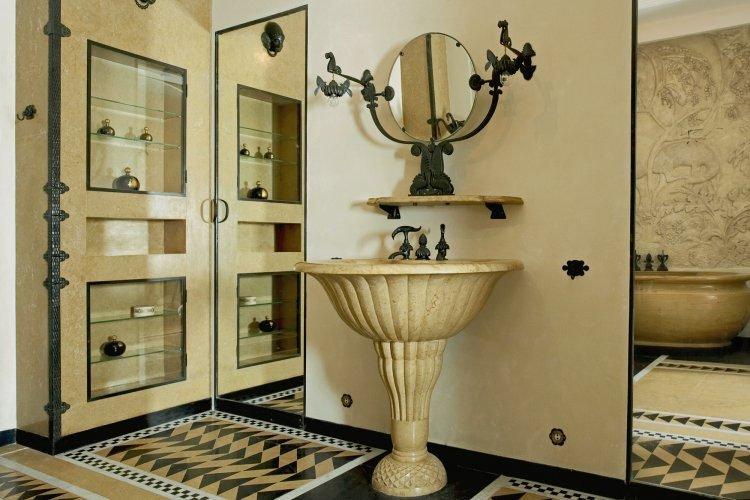
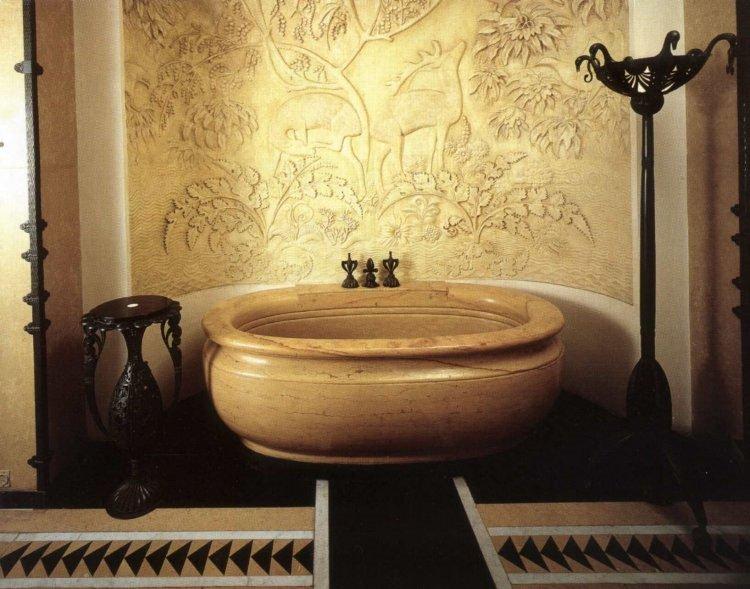
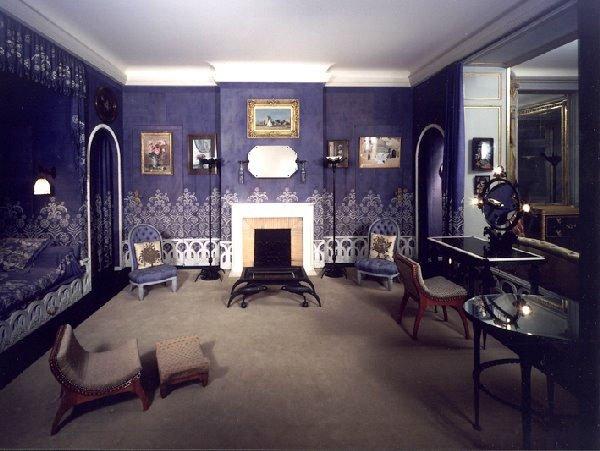
Jeanne Lanvin’s Art Deco appartement

jeanne-lanvin-art-deco-apartment-1

jeanne-lanvin-art-deco-apartment-2
jeanne-lanvin-art-deco-apartment-3
jeanne-lanvin-art-deco-apartment-4
jeanne-lanvin-art-deco-apartment-5
.

“When you are constantly thinking about new designs everything you see is  transformed and adapted to whatever is in hand. The process happens naturally  and becomes an instinct, a truth, a necessity, another language.”

.

.

In 1946, Jeanne Lanvin died at age 79. her daughter, Marie- Blanche de Polignac took ownership until she herself passed in 1958, and the house of Lanvin went to their cousin Yves Lanvin. From then on the label passed from hand to hand. By the time Alber Elbaz took over in 2002 it was the oldest fashion house in continuous operation, and despite its dimmed reputation, it somehow survived and overnight became a huge success again!

Alber_Elbaz

.

Books on Jeanne Lanvin

Jeanne Lanvin book cover

http://www.assouline.com/lanvin.html

.

lanvin book cover

www.amazon.com

.

henri-cartier-bresson-madame-lanvin-1945

.

Madeleine Vionnet, master in manipulating fabric

12 May

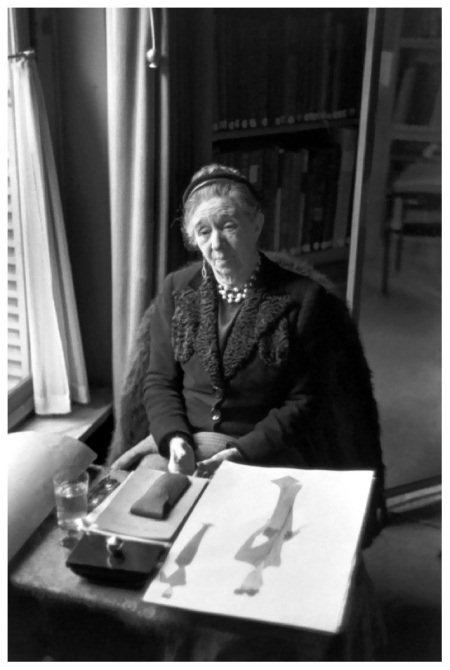
madeleine-vionnet

” I admire her. I have been surging for her shadow all my life, it’s tiring.”

Yohji Yamamoto about Madeleine Vionnet

.

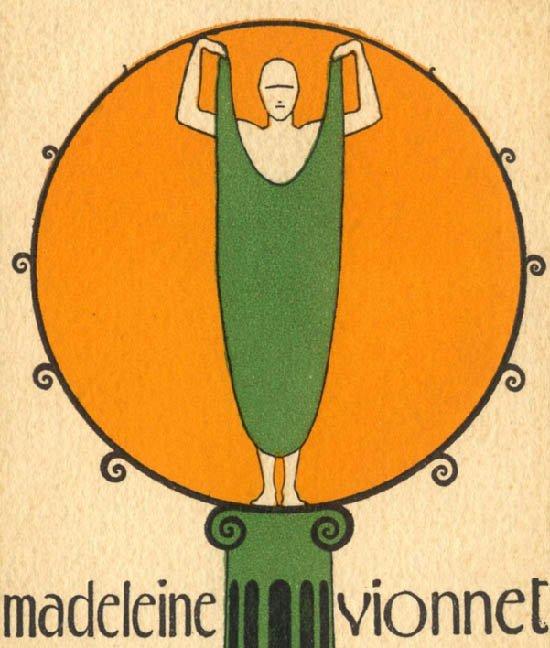
madeleine-vionnet  logo

Biography

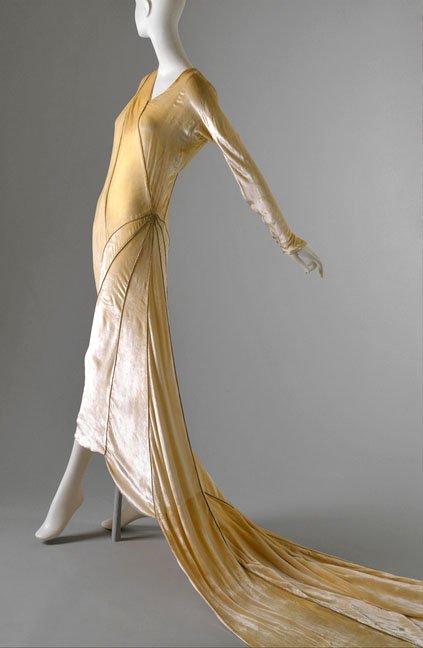
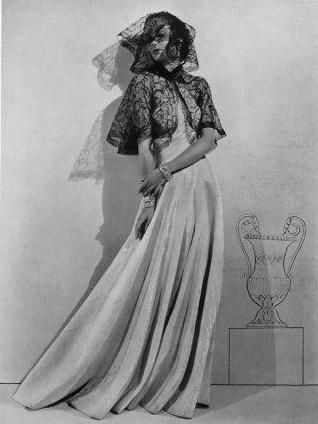
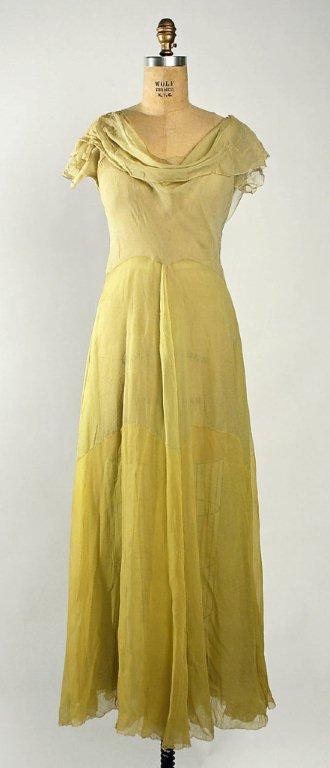
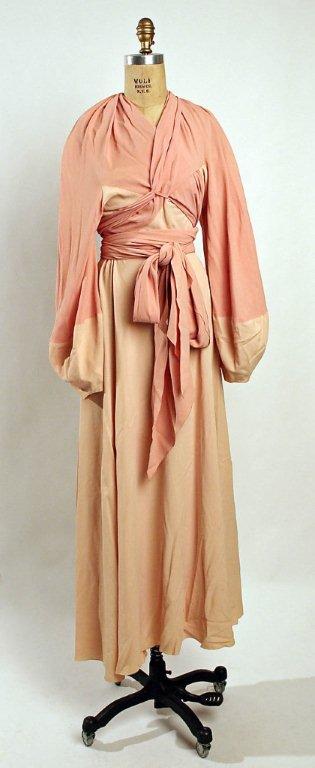
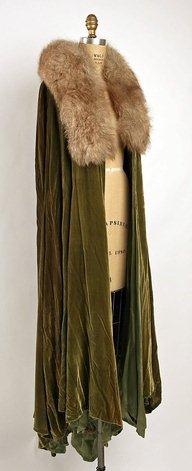
Madeleine Vionnet (Madame Vionnet) was born in June 1876 and started her apprenticeship as a seamstress at age 11. After a short marriage, she left her husband and went to London to work as a hospital seamstress, where she learnt about mass-production. Eventually she returned to Paris to be trained at the fashion houses of the Callot Soeurs and Jaques Doucet. At the Callot Soeurs she learned about the bias cut. Madeleine is often credited as the inventor of that cut, which did upset her very much, because she never claimed herself that place in history! But she did expand the use of the bias cut to perfection.

Bias cut dresses

madeline vionnet gown

Vionnet

Vionnet

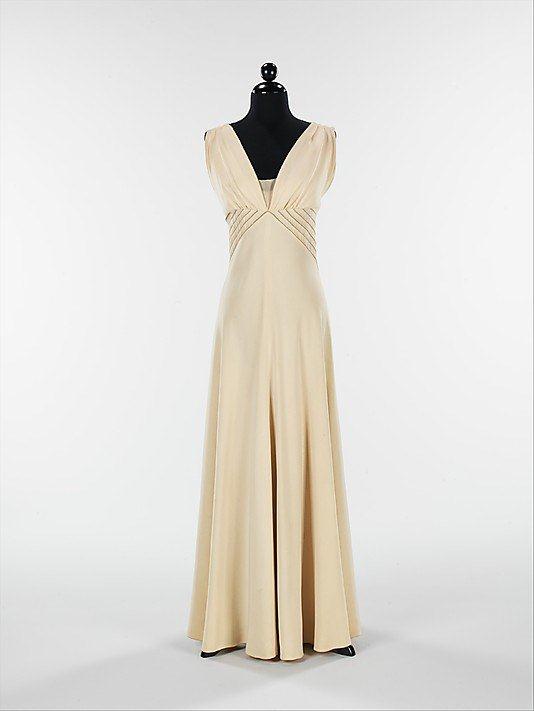
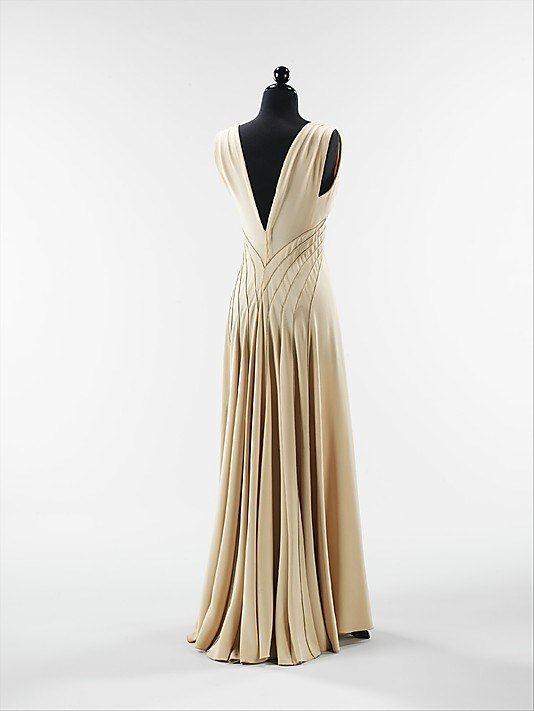
The bias cut: a diagonal way of cutting fabric in order to give it stretchability. By making dresses that could be put over the head, because of the stretching, Madeleine created garments that were both easy to get in & out of (and that was revolutionary by itself)  and were comfortable to wear, something we find in tricot knits today. The bias cut made that the dresses clung to women’s bodies, accentuating the natural form as opposed to ‘distorting’ them with corsettes and other popular (and uncomfortable) undergarments.

.

In 1912 Madeleine founded her fashion house Madeleine Vionnet, but two years later she had to close again because of WWI and set off to visit Rome.

In 1919, the house was reopened and Madeleine asked Thayaht (the pseudonym of artist and designer Ernesto Michahelles) to create a logo. He also started to design textiles, clothing and jewelry for the house.

madeleine-vionnet

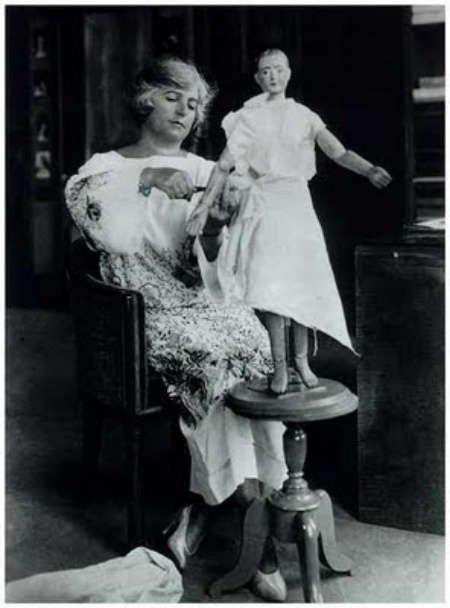
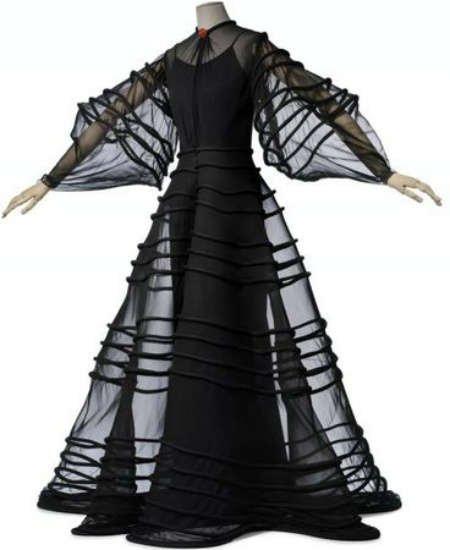
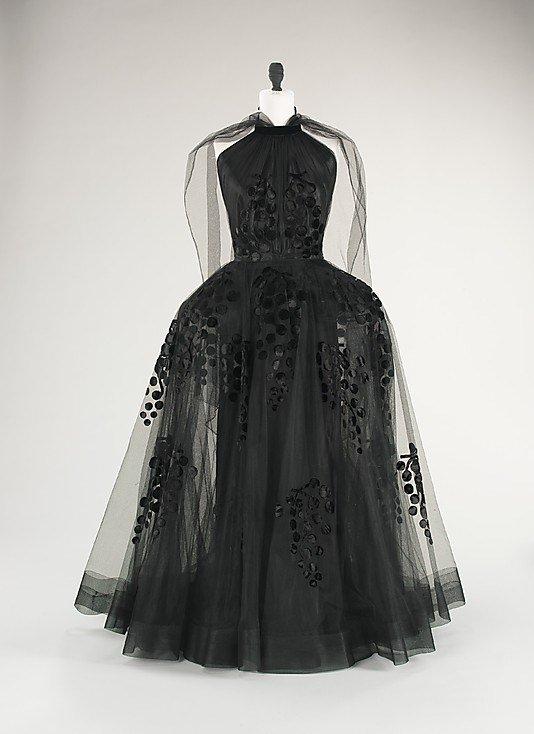
Madeleine always designed her new garments by draping on a reduced-scale doll (mannequin), which was half the size of an average body. The pattern was made afterwards by the house’s premiére (first seamstress), it was a new way of creating patterns. Normally the pattern is made before a toile (first-try) is made. Because every fabric, by its fiber and weave, reacts a little different Madeleine’s dresses were not lined. If they were sheer, a separate lining or slip was supplied, and each part was allowed to go its own way.

The house was at its peak in the 20’s and 30’s and Madeleine’s designs were inspired by Greek vases and Egyptian frescoes. She also designed ‘seam decorations’, decorating visible seams in star of flower shapes. Madeleine’s vision of the female form revolutionized modern clothing. But her revolutionary vision didn’t stop there…

Greek influences

madeleine-vionnet-1937-ella-wells-empire-dress-fashion-photography-hprints-com

madeleine-vionnet-1936-evening-gown-andre-durst-fashion-photography-hprints-com

madeleine-vionnet-1937-man-ray-fashion-photography-evening-gown-hprints-com

In 1922, Théophile Bader, the owner of the Galeries Lafayette department store, joint the current shareholders in a new venture called Vionnet & Cie and a few months later the so-called ‘Temple of Fashion’ opened at 50, Avenue Montaigne, a collaboration of  architect Ferdinand Chanut, decorator George de Feure and crystal sculptor René Lalique, incorporated  a spectacular Salon de Présentation and two boutiques: a fur salon and a lingerie salon.

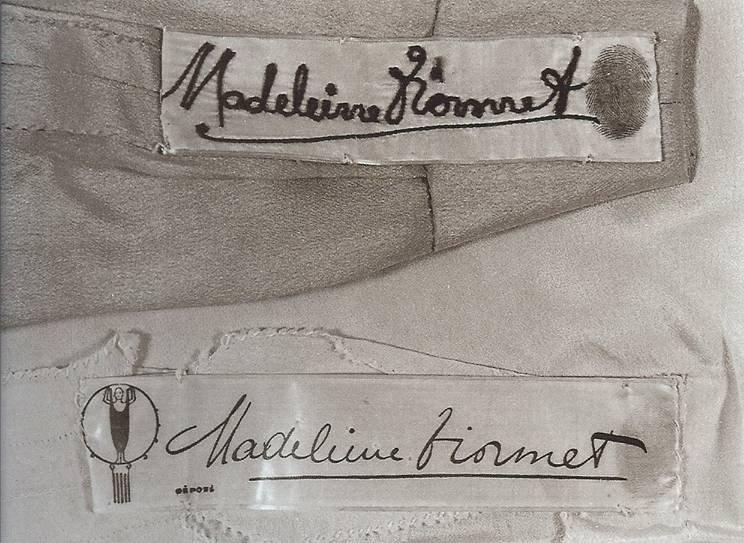
At the same time Madeleine Vionnet was one of the co-founders of the first anticopyist Association. To assure authenticity, Madeleine introduced fingerprinted labels: each garment produced in Vionnet studios bears a label featuring Vionnet’s original signing and an imprint of Vionnet’s right thumb.

Madeleine Vionnet labels

In the mid-1920s Vionnet & Cie signed an exclusive agreement with Fifth Avenue retail store Hickson Inc. and a Vionnet New York Salon was opened. And in 1925 Vionnet was the first French couture house to open a subsidiary in New York: Madeleine Vionnet Inc. , a salon that sold ‘one-size-fits-all’ designs with unfinished hems, which could be adjusted to fit the client.

In those days, high fashion was unavailable for the poor and Madeleine, having worked as a hospital seamstress, knew some about mass production, which she used for her own label. The designs for the US wholesale were called ‘Repeated Original’ as a trademark name. Arguably it was the first ‘prêt-á-porter ever made.

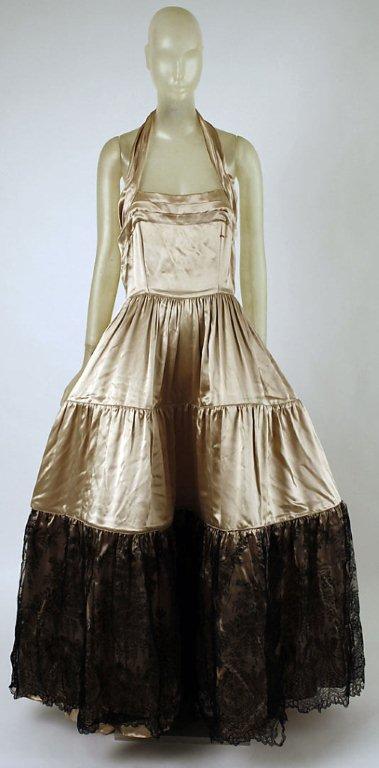
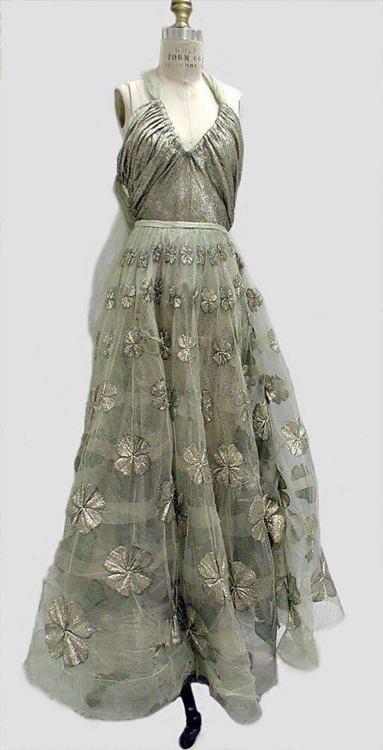
Honeycomb dress

madeleine-vionnet-gown

Vionnet

Vionnet

.

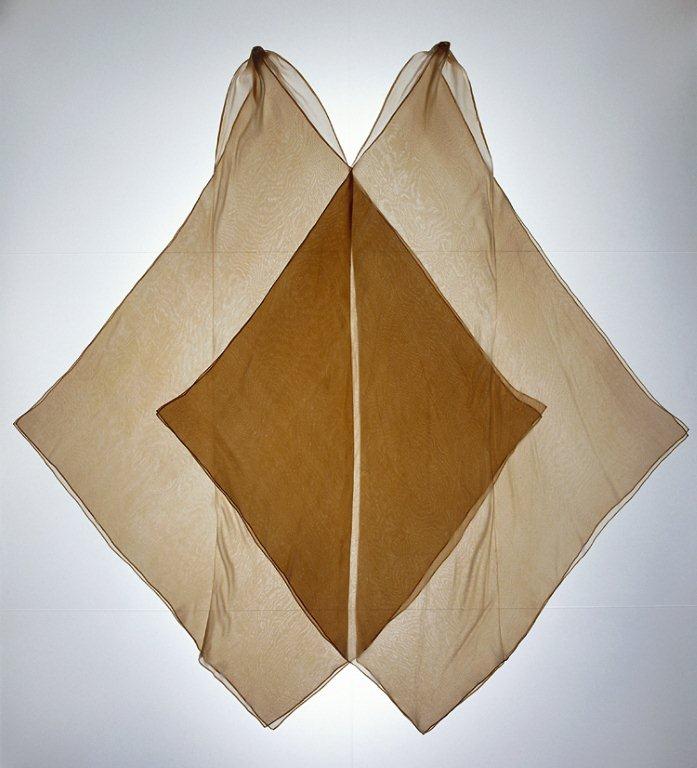
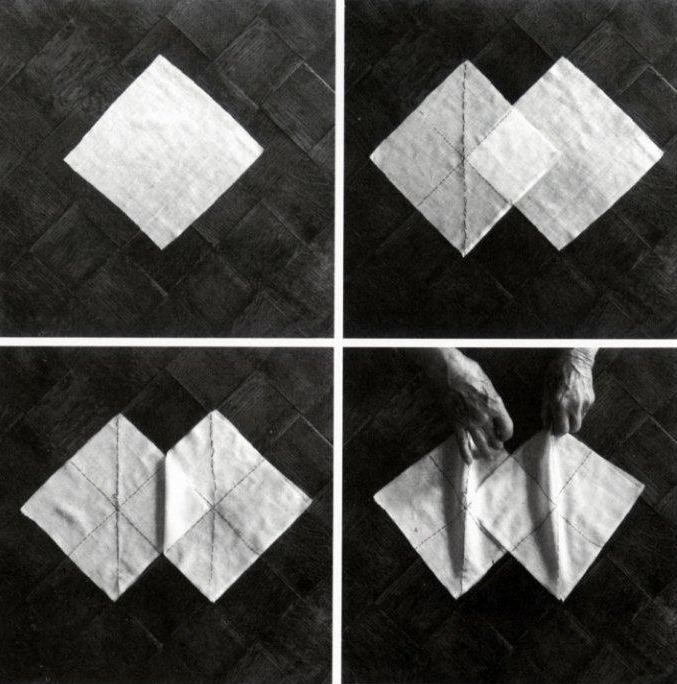
Handkerchief dress

Vionnet

Handkerchief dress

In 1932, The House Vionnet acquired a new five-storey building, housing 21 workshops, producing garments, shoes and accessories, but also clinic equipped with both doctors and dentists and a gymnasium. Madeleine employed what were considered revolutionary labor practices at the time, also providing a canteen, maternity leave, paid holidays and daycare. The house of Vionnet grew to employ 1,100 seamstresses.

In 1939, when WWII started, Madeleine closed her house, never to reopen it again. She lived to the age of 99 and died in 1975.

Madeleine Vionnet is considered one of the greatest designers.

.

vionnet

Vionnet

Vionnet

Vionnet

The bias cut quickly emulated in the Paris couture before World War II, but Madeleine Vionnet’s influences didn’t stop there. Geoffrey Beene, Halston, and other Americans in the 1960s and 1970s, Azzedine Alaïa in France, and Japanese designers Issey Miyake and Rei Kawakubo in the 1970s and 1980s used the techniques of Madeleine. Mikaye and Kawakubo were alerted to Madame Vionnet by her strong presence in The 10s, 20s, 30s exhibition organized by Diana Vreeland for the Costume Institute of the Metropolitan Museum of Art in 1973 and 1974.

Since 2006 the label Vionnet is in operating again. It has already employed many different designers, starting with of Sophia Kokosalaki (a ‘draping genius’ herself). By now Vionnet is designed by Rodolfo Paglialunga, who has been the womerswear designer for Prada for 13 years.

.

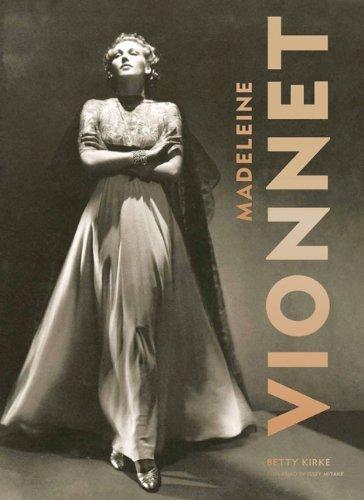
The best book written about Madeleine Vionnet

Vionnet

“Vionnet’s passion and spirit have been carried on by Mrs. Betty Kirke…  Although many people were aware of the designer’s greatness, researching and writing the book was a difficult task which no one had dared to undertake in the past. Thanks to Mrs. Kirke, we are able to preserve and to pass on the precious legacy of Madeleine Vionnet.”

Issey Miyake from the foreward to “Madeleine Vionnet” by Betty Kirke

to order at:   http://www.bettykirke.com/

.

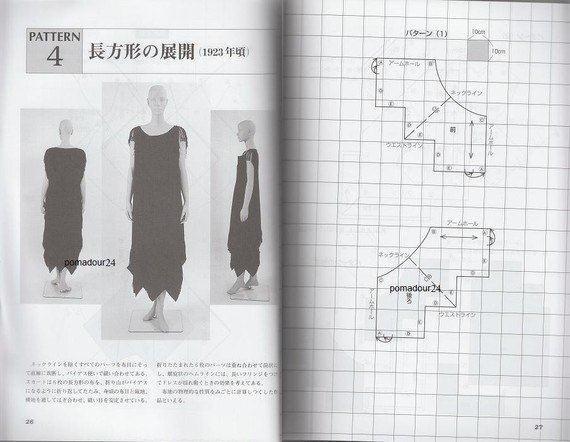
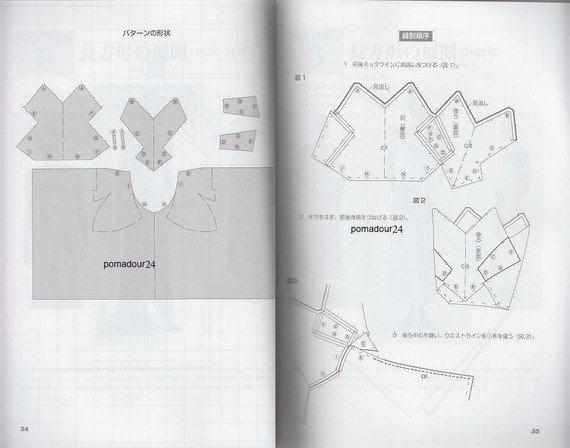
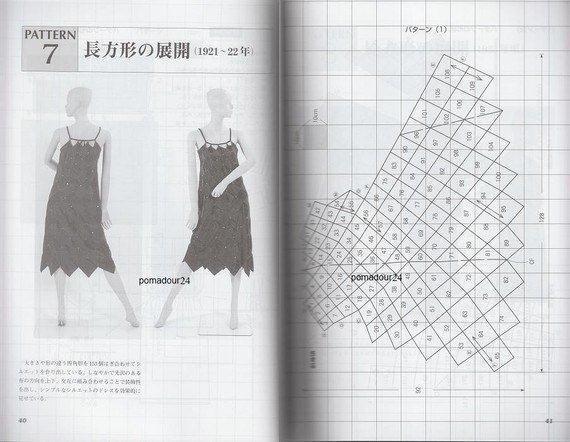
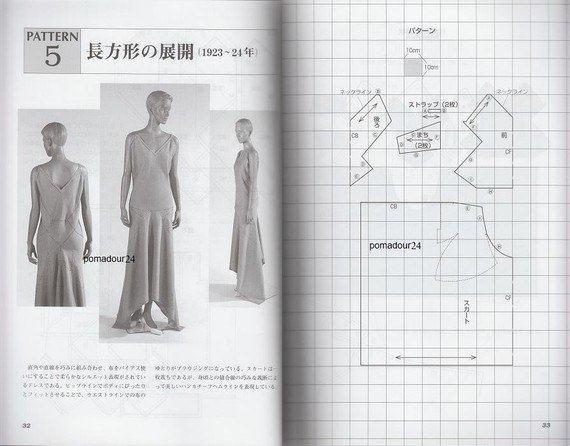
This Vionnet Pattern book  is written in Japanese, so advanced skills are needed to understand the patterns.

Vionnet pattern book

Vionnet pattern

Vionnet pattern

Vionnet pattern

Vionnet pattern

http://nl.etsy.com/listing/61691579/vionnet-japanese-dress-pattern-book?ref=sr_gallery_1&ga_search_query=patronen+boek+Vionnet&ga_order=most_relevant&ga_view_type=gallery&ga_ship_to=NL&ga_item_language=en-US&ga_search_type=all&ga_facet=patronen+boek+Vionnet

.

Short video of the 2009 exhibition in Paris

.

Madame Vionnet

.

Jacques Fath, Self-Taught Fashion Designer

5 May

Jacques Fath

“Fifty years from now, Parisian women will no longer have hips; their bosoms will diminish. Tomorrow’s woman will be an eternal little girl; there will be no place for the mature woman.”

(around 1950)

Jacques Fath  

Jacques Fath.

Biography

Jacques Fath (born Maisons-Laffitte, France, 6 September 1912 – Paris, France, 13 November 1954) was a French fashion designer who was considered one of the three dominant influences on postwar haute couture, the others being Christian Dior and Pierre Balmain.

Young Jacques, although already very interested in fashion, studies bookkeeping and business law at his father’s urges and has a brief career at the Paris Bourse. He had also completed a year of military service, when film director Léonide Moguy casts the handsome young man in one of his films and Jacques enrolls in drama school. Here he befriends model and aspiring actress Geneniéve Boucher de la Bruyére, a former secretary to Coco Chanel.

JacquesFath

At 21, Jacques begins educating himself about fashion and costume design by exploring museums, books and the seams of his mother’s and sister’s dresses. Four years later Jacques takes the plunge and starts his business in a small space at 32 Rue la Boétie, working together with dressmaker Mme Gulbenkian, soon his partner and house premiére (head of all seamstresses and dressmakers).

The first few years his success remains modest and financially Jacques’ business barely survived and when the Chic Parisiennes begin to visit his studio he uses the down payment for a dress commission to buy the fabric to create it…

Monsieur-et-Madame-Jacques-Fath,1

In 1939 Jacques asks Geneviéve to marry him and when she is wearing her husband’s asymmetrical drape dress and fluttery cape, she creates a stir at the Grande Nuit de Longchamps, a horse race society event. For the first time Vogue reports about Jacques: “He is inspired. He has a vision. He will succeed.”  Jacques and Geneviéve become one of the most photographed couples in Paris, her being a celebrity as a cover girl and him for his good looks. Business takes of, but soon World War II erupts and Jacques is drafted to serve the French Army as a gunner second class. He is taken prisoner by the German forces shortly before Paris falls under the Occupation.

Not for long though and Jacques returns to Paris and resumes control of the House of Fath by buying out his partner, Mme Gulbenkian. He joins other couturiers in keeping the city’s fashion pride alive, while being closed off from the rest of the world. Finally Jacques finds his first successes, using yards of tartan (which he did to mock the germans occupiers) and designing a number of tunic dresses and peasant skirts, suitable for women riding bikes, which were feminine and sporty at the same time. Jacques is determined to reinvent seduction. The house of Fath relocates and a son, Philippe, is born.

After the liberation of Paris, the House of Fath starts its legendary years of success, which will go on till Jacques death in 1954.

Jacques+Fath

Jacques+Fath

Jacques+Fath

Jacques+Fath+1951

“One cannot understand the workings of haute couture without the realization that it is based on publicity.”

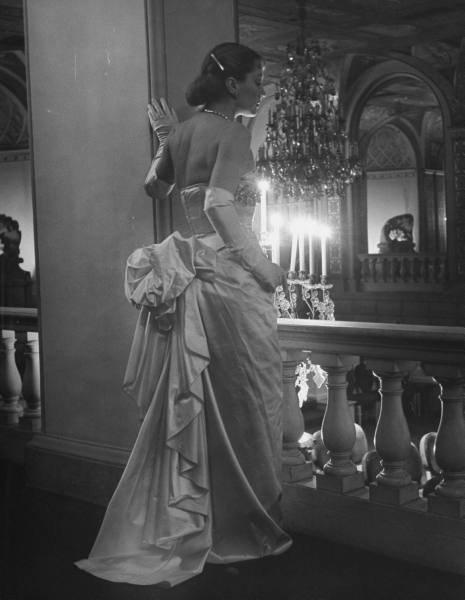
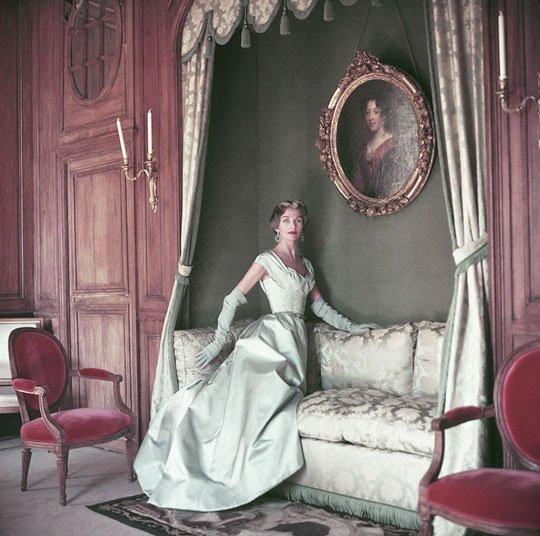
Jacques and Geneviéve use their celebrity status for marketing purposes (and pleasure ofcourse….). They could be seen everywhere and their yearly themed balls, held at their home the Chateau de Corbeville, were highly anticipated events. The guest list could top 800 and included the press as well as society patrons and hollywood stars. Genevieve personified the early ’50’s desire for a return to femininity and the editors of the style magazines were happy to take her lead.

Jacques fath

Jacques Fath

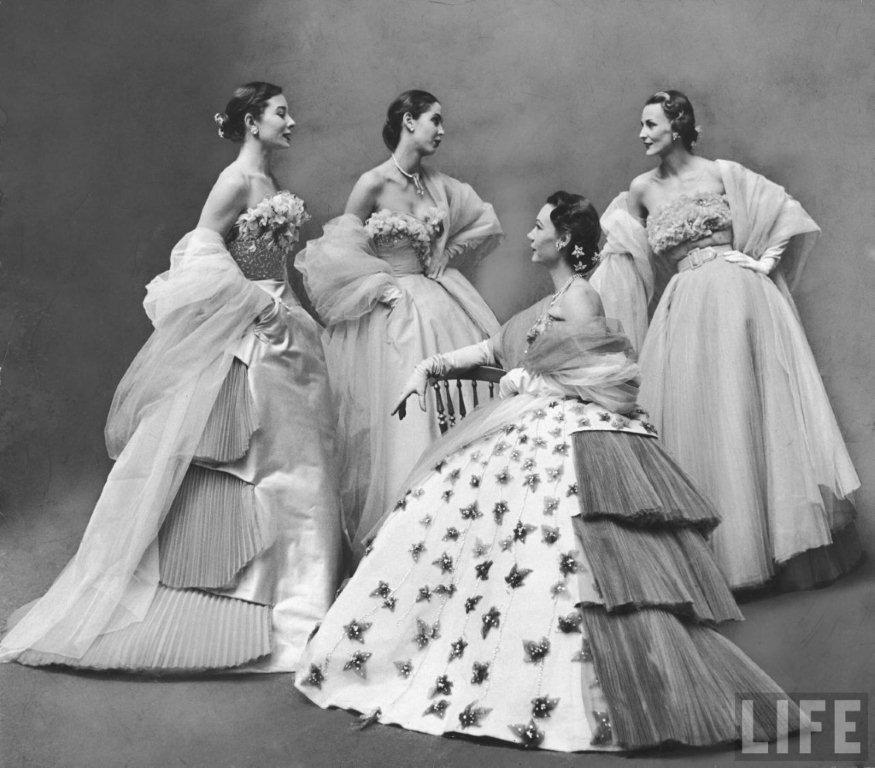
The White and Red Ball on June 15, 1951, is one of their most famous events. The scenery is recreating an 18th century masterpieces like Gilles and l’Indifferent from Watteau and a stunning painting from Princess Troubetzkoi posing as the Marquise de Pompadour for La Tour. Each guest must interpret his or her own interpretation of a costume for a 18th century white ball with ruby accessories. More than four hundred guests attending the ball, one of the years foremost social events, arrive one after the other at the Chateau, whose gardens are attributed to Le Notre, the garden architect from Versailles.

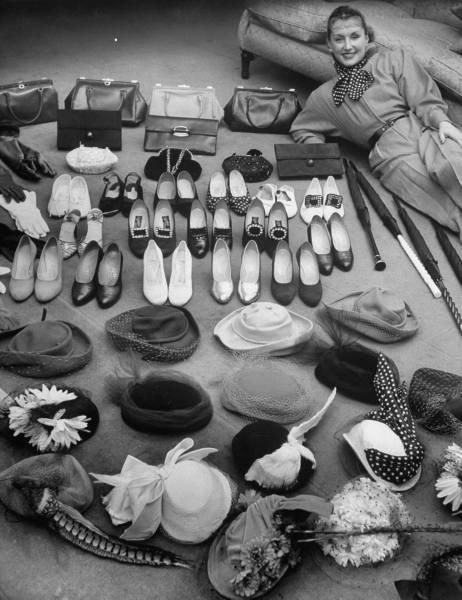
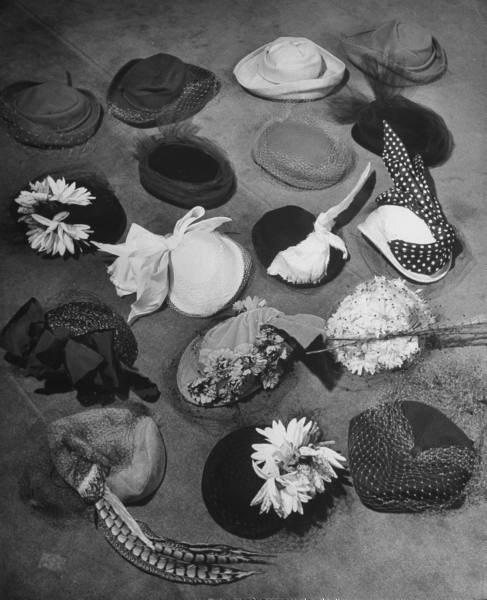
The post war world was ready to embrace everything French and wealthy Americans preferred the French fashion over the collections of the American designers, but for an unknown reason the House of Fath wasn’t embraced by them yet. So Jacques and Geneviéve decided to use their celebrity status once again and travelled to the United States for a  three month tour. Geneviéve’s wardrobe consisted of 35 outfits for day and evening, 17 hats, 16 pairs of shoes, 10 handbags, 4 umbrella’s and numerous other accessories.

Geneviéve  Fath

Madame Fath

Madame Fath

Geneviéve Fath

After their return, Jacques secures a deal with Seventh Avenue manufacturer Joseph Halpert to design two ready-to-wear collections a year under the label “Jacques Fath for Joseph Halpert”.

Jacques Fath was a visionair and had an ability to predict trends. His choice of models was brilliant and after he restyled them, they all became the most sought after mannequins in Paris, like his favorite Simone Micheline Bodin. She was renamed and recreated (he let her cut her hair extremely short) by Jacques , who told her, “We already have a Simone; you look to me like a Bettina.”

Bettina

jacques-fath-gowns

During his career, Jacques Fath hired several young new designers as assistants and apprentices, many continued to form their own Fashion Houses, including Hubert de Givenchy, Guy Laroche, and Valentino Garavan. He was also very polite and respectful for his team. He called his seamstresses always by their first name, never forgot a birthday and offered a wedding dress to his female workers getting married. And the more than 500 workers had tremendous respect for Jacques.

The House of Fath also produces a lot fragrances, starting of with Chasuble, Iris Gris and Canasta. And in 1950 Jacques opens a boutique in Paris, offering affordable luxuries like scarves, stockings and men’s ties.  In 1954, Jacques launches a prêt-a-porter line, Jacques Fath Université, this to the snobbish horror of many in the haute couture establishment!  

At the end of the year, Jacques Fath dies of leukemia, only 42 years old and just a few weeks after his last collection. Geneviéve keeps the House running for three more years with er husband’s former associates. In 1957 the company’s haute couture operations ceased to exist, but the business went on producing perfumes, gloves, hosiery and other accessories.

Jacques Fath, who has been described as extremely effeminate and a former lover of the French film director Léonide Moguy. Geneviève Boucher de la Bruyère, his wife came from an aristocratic family and was supposedly a lesbian.

Fath

jacques fath

Jacques fath

.

In 2010, after several tries to revive Jacques Fath as an haute couture house, the Alliance Designers Group, current owner of the name Jacques Fath is now reviving the famed label as an accessories brand under the creative direction of Laurence Dumenil.

There were at least two unsuccessful attempts to revive the House, with the global economic downturn and the Great Recession as much as mitigating factors as the changing fortunes of haute couture as probably reason for the disappointing results.

.

.

jacques Fath

Jacques Fath

Signature J.Fath

Jacques Fath