Archive by Author

Lynn Yaeger, ‘Fashion makes me happy’

6 Jan

Lynn Yeager

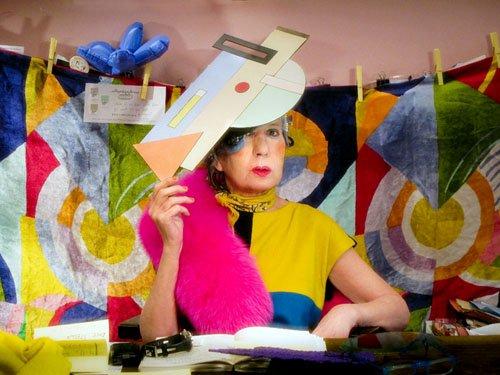
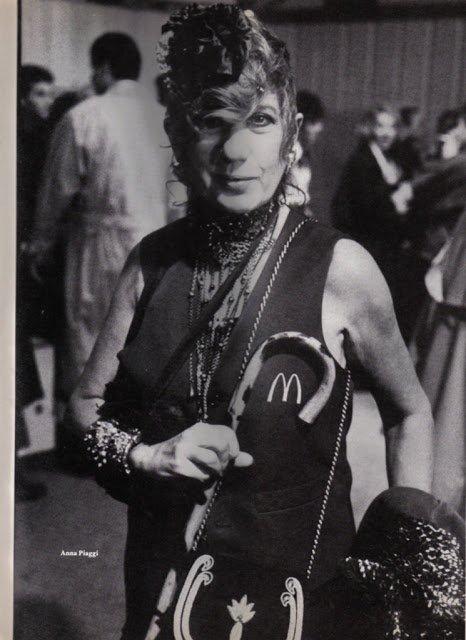
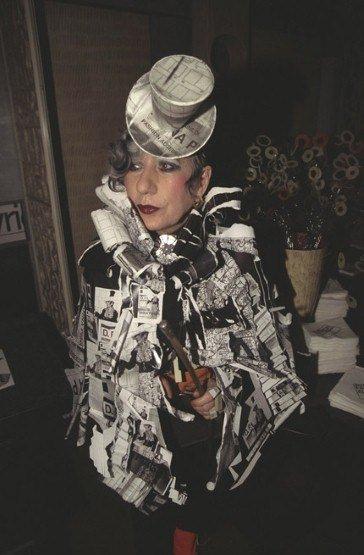
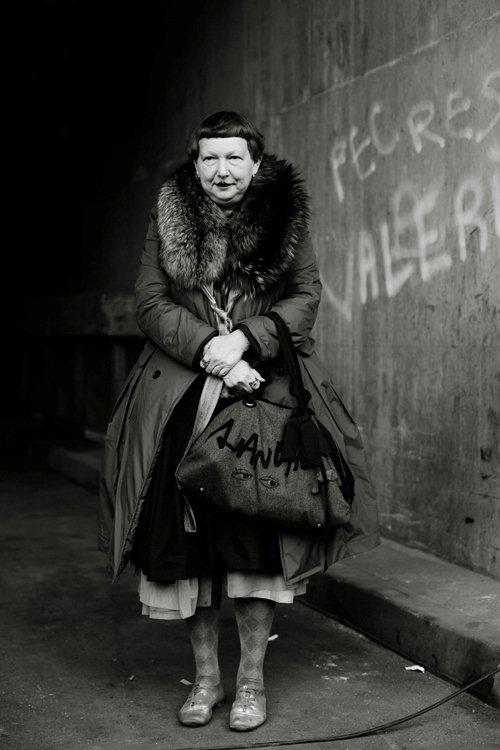
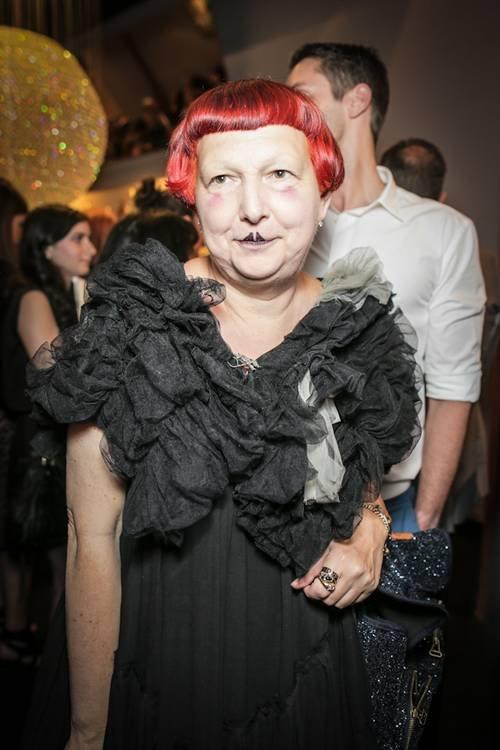
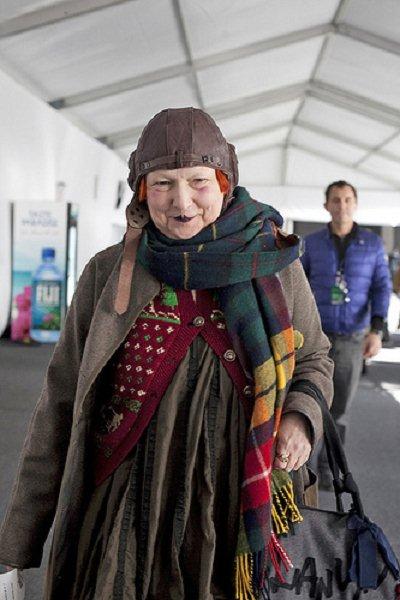
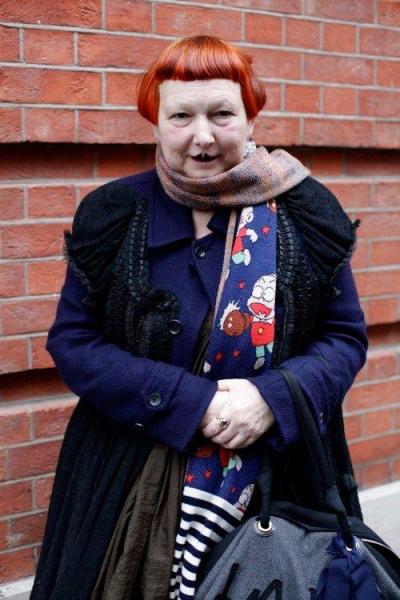
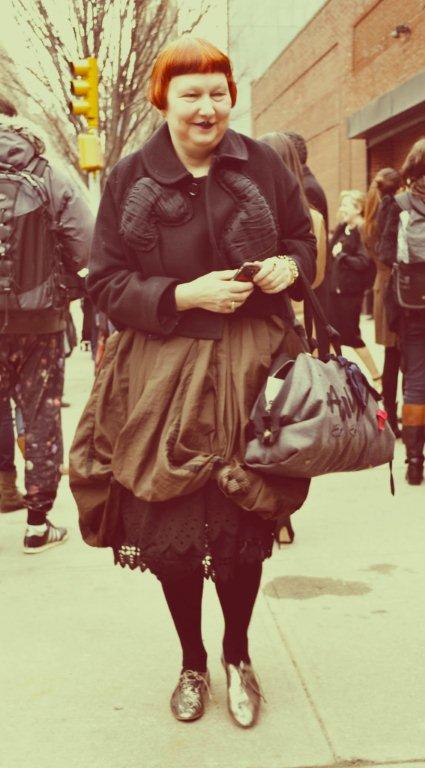
Lynn Yaeger is a contributing fashion editor to Vogue.com and a contributing writer to Vogue. She is a former fashion reporter for The Village Voice, having worked for the paper for 30 years. Her column, “Elements of Style”, was renamed “Frock Star” in February 2007. Yaeger is also a regular contributor to The New York Times, Style Magazine, American Vogue, Travel & Leisure, and countless antiques & collectibles dealers. Lynn is also a fashion columnist for Full Frontal Fashion, a style website in association with Sundance Channel. She is known for her eccentric personal style, powdered face and dark, cupid’s-bow lipstick.

Lynn recently won first place in the National Society of Newspaper Columnists’ category of humor writing for newspapers with more than 100,000 circulation.

Lynn Yeager describes her hairdo as that of  ‘the world’s oldest French orphan’

People have asked how I get the courage to walk the streets in, say, a shredded Comme des Garçons coat over a tutu, with metallic orange hair. I owe my confidence at least in part to my parents, who were convinced I was the cutest thing on earth and told me so every single day. (Recently, seeing my reflection at a party, I could almost hear my mom saying, “Lynnie, you look so pretty!”)

Lynn Yeager

.

An interview with Lynn Yeager

by Michelle Liu

You have a very distinctive signature look.  How did Lynn Yaeger become “Lynn Yaeger”? Describe your fashion philosophy. 

It evolved over the years. It is a very flapper look. Originally, I wore a lot of vintage clothes. I thought that as I got older, I would get more and more conservative, but the opposite happened.

It was a way of working out my obsession with clothing and style without actually having to pay attention to trends, because most of the time they didn’t suit me. It’s hard to say how these things happen. It’s a very organic process.

I have a two-part style philosophy, and it may seem like the two parts contradict each other but they don’t. The first part is that you should really feel free to invent yourself and wear whatever you want. And the second part is that you should spend a lot of time in front of the mirror to make sure this is the perfect rendering of what you think you want. I really like it when people make a huge effort.

Lynn Yeager

You are known for your hilarious observations about fashion and everything that influences it. How has humor shaped your view of fashion?

It’s ALL humor! I mean not all, but I really do try to take the long view of the things, see what’s fun about it, and the absurdities. It’s a question that cuts both ways. I think people like to read things that are funny.
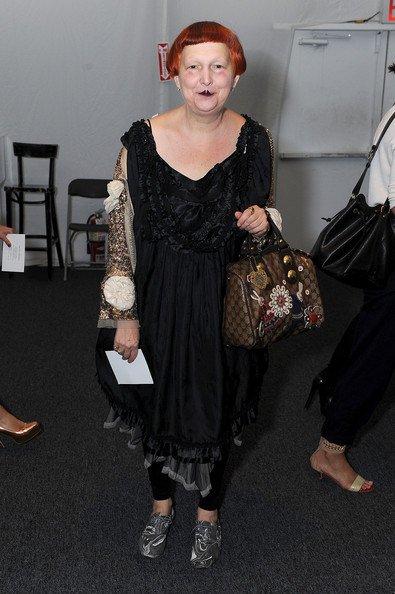
Lynn Yeager with an expensive bag

How do you think you have influenced the New York fashion scene? 

I always hope to inspire young people who may be feeling like they are not accepted, or they are a little funny, or they are a little off the mainstream.  My hope is that by being so out-there and so much of an individual myself, that will inspire them. Also, every time I see a tulle petticoat on the runway I’m like, “They copied me!”

What are your favorite shopping destinations in New York? 

I love the Fifth Avenue department stores. I would be lying if I said I didn’t. I love both Bergdorf and Barney’s. I like the Comme des Garçons store. I like the Garage flea market on the weekends on 25th street. I go there every weekend. I’m a really compulsive shopper. I’m in stores all the time. I’m a daily shopper, let’s face it. I don’t buy that much. I feel like I’m there just for the experience.
Lynn Yeager

If I only had a day in New York, what are the things I must do?  Eating, relaxing, anything.

I’m not much of a eater. I would go shopping in the morning at the department stores, and if it was the weekend I would go to the flea market on 25th street. I think it’s fun to just walk around downtown in the Village or Nolita. It’s a great walking town. If you have never been to Century 21, you should go there.

What’s your pick for the best fashion people-watching in New York?

When the fashion shows are on, outside the shows is great, but the whole town is a fabulous array of people watching. It also depends on what you are looking for: Madison Avenue for rich people all dressed up in the latest styles; Union Square for cute kids.
Lynn Yeager

What are your must-haves when you travel?  Do you have a pre-packed suitcase? 

I have a pre-packed bag with my cosmetics and miniature toothpaste and things, but I don’t have a pre-packed suitcase. I don’t bring the sort of clothes that seem like they would be easy to travel with – I bring all my tutus and everything, and this is further complicated by the fact that I don’t check my clothes because they are too precious to me. I would have to cram all my clothes into my carry-on, and check the other bag with the things that can be replaced. It’s a bit of a nightmare packing-wise.

When I was in Paris last spring, it was really cold and I had my one coat with me. All the Frenchies had their cute little fur coats. I was like: “Damn it!  It’s not fair!” I was stuck with the same green coat everyday. I don’t plan my outfits for everyday, but the items I have with me are usually fairly elaborate.

Lynn Yeager wearing Comme des Garçons

What is your number one travel destination?

This is the most boring answer in the whole world. I like Paris, France. I know it’s ridiculous. I like everything about it: the way it looks, the things you can buy, hearing people speak French. I even like it that the French are so mean — it’s more of a challenge. I also like it when it’s not fashion week, arguably even more.

What inspires you when you travel? 

I like looking at the people when I go to a new city. I travel a lot because I also write for Travel + Leisure. A lot of times I’ll be in the taxi from the airport going to Buenos Aires or Amsterdam, I look out the window and realize I packed all the wrong things – this is how people look and I’ve got this all wrong. I would see people riding their bikes with a big sweater on. And of course I didn’t pack a big sweater. I love to observe these regional differences.
Lynn Yeager wearing Comme Des Garçons

How about any favorite travel finds? 

Tons. That’s what I do. I go shopping and buy things. I had a rule for a while to not buy clothes, only accessories, because I would buy clothes and it would not be the right thing. Lately, I’ve going off that rule and bought clothes, some more successful than others.

.

Lynn  Yeager asks some questions….

some Birds of Paradise

Style Icons Suzanne Golden, Patricia Fox, Lynn Yeager, Iris Apfel and Tziporah Salamon came together for tea and a discussion about their fashion sense….

Lynn Yeager asks the group if there is a time when style failed them. Lynn: “I confess that there have been rare occasions — a business meeting, say, or a funeral — when I’ve looked at my wardrobe and thought, Why, this is a clown’s closet! Did the others ever face a similar dilemma?”Ah, indeed I have, Ms. Yeager, though I did not realize it. I have donned what I considered to be perfectly appropriate attire, only to be hounded by school children hoping to follow me to the circus.  I have arrived at business meetings only to realize that metallic green harem pants were undermining my credibility. And in these cases I have watched people’s faces pucker in disdain. Oh yes, I have. 

What to do if this should happen? Well, goslings, there is a tunnel out of this mess: dazzle them with what you are saying.  Trot out the upper echelons of your vocabulary, make eye-contact, and pretend that you feel confident.  Of course this only works if you really know what you are talking about (I also have to resist the urge to over-enunciate like Julie Andrews when my back is to the wall). But a few times I’ve been able to pull it out of the fire this way.  And it can be exciting to watch someone change their opinion of you as you speak.

A workplace can deform one’s sense of style to be sure.  An oncologist can’t really wear a sun dress, and you should never see your lawyer’s feet.

Lynn Yeager has great advice on this issue. With her extreme, Weimar Republic broken-porcelain-doll looks, Lynn says that in order to look sane when she’s gotta go somewhere and be a journalist, she always carries a very expensive designer bag.

Lynn Yeager: ‘Fashion makes me happy’
Lynn yeager

Anna Piaggi, one of the last great exotics (part 2)

30 Dec

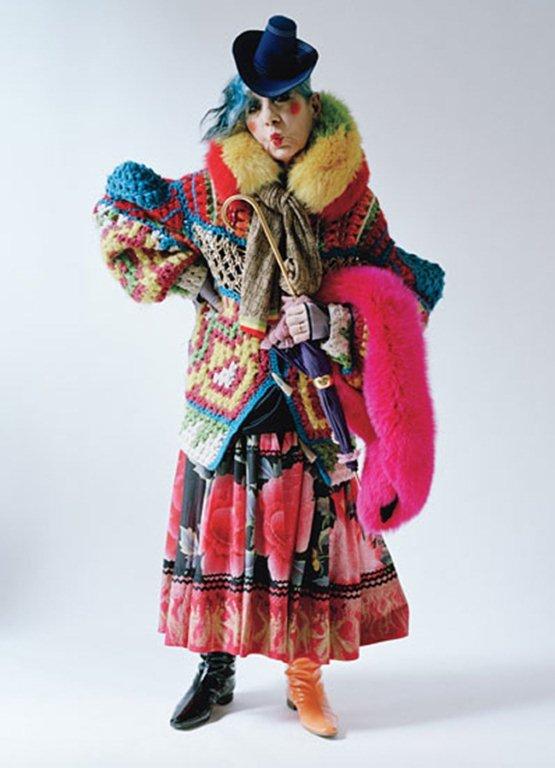
Anna Piaggi photographed by Edland Man

.

Anna Piaggi: ‘My nature has always been to be superficial’.

Manolo Blahnik dubbed her ‘The world’s last great authority on frocks’.

Anna Piaggi stated she had never been photogenic and, as she got older, she adopted Queen Elisabeth I’s technique to style her appearance, white face, cartoon features painted on like doll-cheeks and mouth, blue and silver waves on her cut-short hair (because it was better to support a small cockamamie hat).  She made the International Best Dressed List repeatedly and joined its hall of fame in 2007.

She combined history with eclecticism and electrified this with eccentricity. Her collages of garments were styled to tell a story, like her famous Doppie Pagine (D.P.) in Italian Vogue were collages of pictures which told a story.

She became a spectacle, an entertainment and both a commentary on as a remark to what was shown on the catwalks. Whatever it was, Anna had one already and had been wearing it for years. Predicting what would come next, through knowing what had come before, was her talent.

.

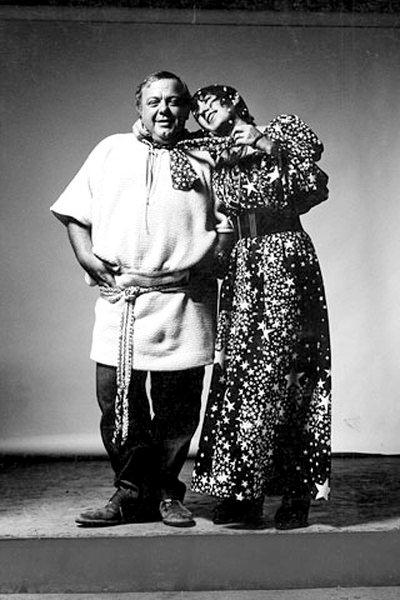
Anna Piaggi and her husband Alfa Castaldi

Alfa Castaldi & Anna Piaggi

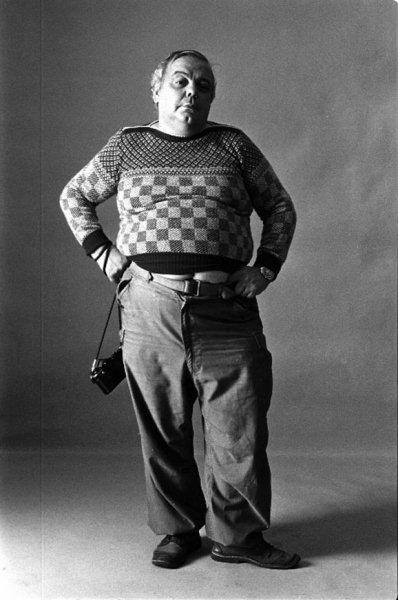
Alfa Castaldi

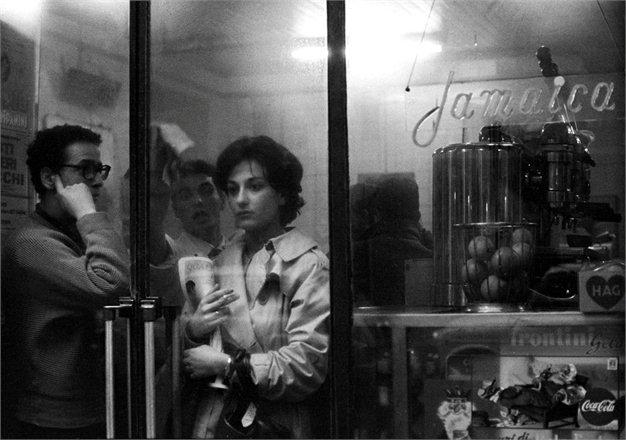
Alfa Castaldi (1926-1995) has been one of the key figures in Italian fashion photography. He started his career in the ’50s as a reporter in post-war Milan where he worked in a close relationship with Ugo Mulas. The base was the ‘Bar Jamaica’ in Brera where all the artistic and literary intelligentsia of the city used to gather in a sort of bohemian lifestyle. Alfa was a sophisticated intellectual, coming out of an academic career in History of the Arts at the University of Florence. But becoming a critic didn’t appeal to him and soon he became fascinated by the editorial world and the new photographic reportage language. So he turned to photography and started to collaborate as a free-lance with the major italian magazines of the time.

Anna Piaggi met Alfa Castaldi while working as a translator for publishing house The Mondadori Group. They got married in 1962 in New York. Alfa charmed Anna into his bohemian word and encouraged her to work in fashion. Clothes were not her original interest.

In the late ‘60s Alfa opened a studio to work on portraits, still life and fashion in association with Anna. His range of collaborations spanned from the main italian fashion magazines to weekly news magazines until Condè Nast opened the italian Vogue edition in 1969 (Novità became Vogue Italia in 1966) of which Alfa became a regular contributor.He has published two books on the italian fashion scene: “Mass moda” with Adriana Mulassano in 1979 and “L’Italia della Moda” with Silvia Giacomoni in 1984.  He expanded into advertising, creating campaigns for the likes of Giorgio Armani, Laura Biagiotti, Fendi, Gianfranco Ferré, Karl Lagerfield and Ottavio and Rosita Missoni. His magazine coverage also expanded, with his work appearing in L’Uomo Vogue, Vanity, Vogue Bambini, Vogue Sposa, and, outside the Condé Nast Publications, Amica, Panorama and L’Espresso.

Alfa Castaldi photograph of Bar Jamaica

Anna Piaggi: ‘It has been a pleasant and moving experience, thanks to the quiet determination and the pure ‘being Aries’ of Paolo Castaldi (both of us were born under the sign of Aries – Paolo on March 21st, I on March 22nd). Fate and for me, the detached but deep sensation of feeling a mother-son bond.

I’m grateful to Alfa and Paolo for this reason, too. I’ve never had children and my story with Alfa was, in a certain sense, ‘monomaniac. We shared a deep affection and the love for our jobs: my admiration for Alfa’s culture had no limits and the same can be said for his ‘entity’ through the bond between us, which gave us a mutual freedom. The shots selected by Paolo express Alfa’s spirit at its best in the world of the Bar Jamaica. I cannot help but thank Paolo and the Bar Jamaica, where I met Alfa in the late 50’s. This was a world that really belonged to Alfa; thanks to his pictures, it still belongs to him today…’
.

Anna Piaggi at work

Anna Piaggi at work

Anna Piaggi at work 2

.

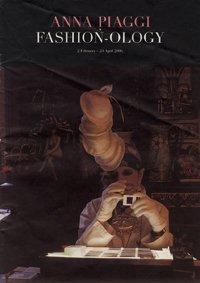
Anna Piaggi’s Fashion-ology exhibition

Poster for Fashion-ology exhibition

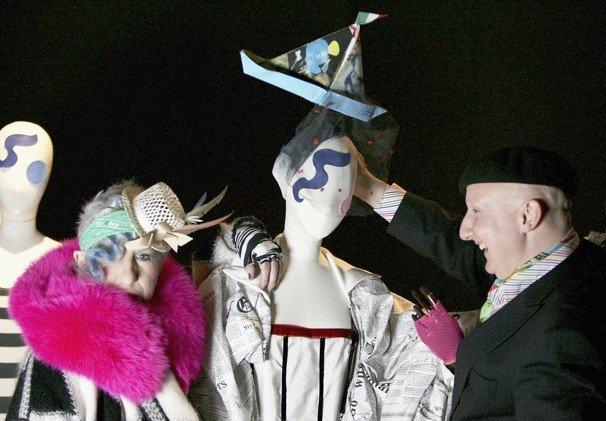
Anna Piaggi Fashion-ology with Stephen Jones

Anna Piaggi Fashion-ology

Anna Piaggi Fashion-ology

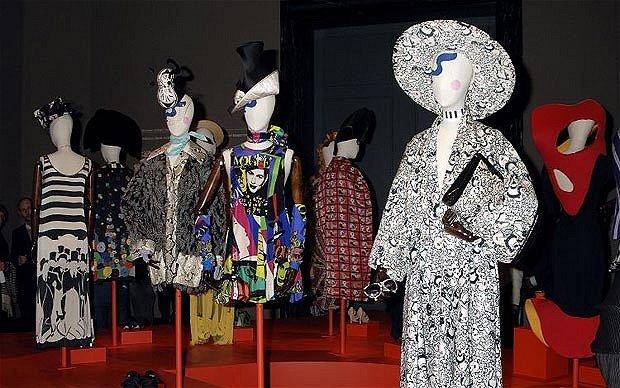
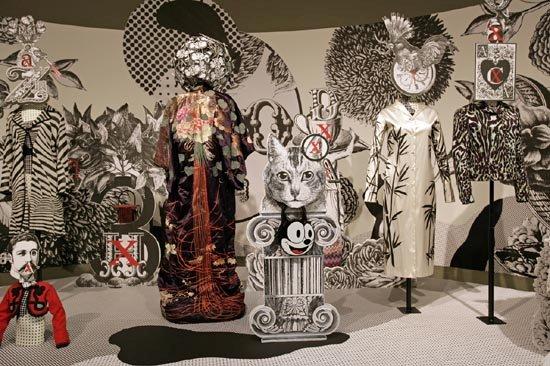
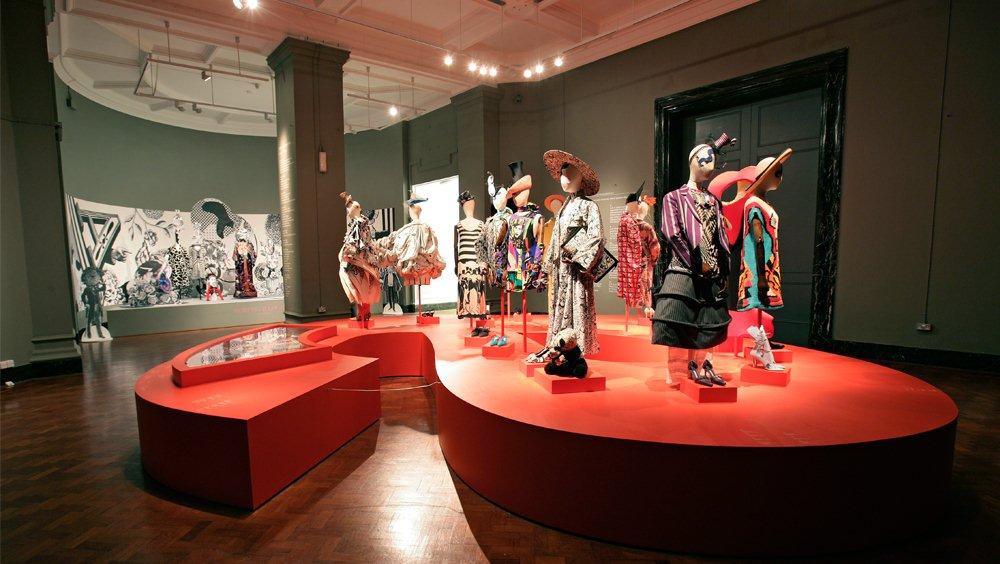
The Victoria & Albert museum displayed an exhibition on Anna Piaggi in 2006, named Fashion-ology, which attracted 25.00 visitors. All items were drawn from Anna’s personal archive, which was stored in Milan. fashion-ology highlighted her extensive collection of vintage couture and designer clothing including garments by Balenciaga, Fendi, Galliano and Poiret. Drawings, photographs, faxes, storyboards and Polaroids revealed Anna’s working style and a film brought to life her extraordinary home and archive.

Anna was reluctant to spell out what she did and only very rarely showed her methodological hand. The –ology suffix which transformed the word fashion in the title was an attempt to capture her world of contradictions, her illogical logic as she called it, as well as revealed systems of frivolity, patterns and angles in her work, her algebra of intuition.

The exhibition also celebrated Anna’s love of fashion illustration, drawings by Karl Lagerfeld of her inimitable style, the dramatic spreads for Vanity magazine by Antonio Lopez (see my posts on Antonio Lopez), and a specially commissioned 3D tableau by Richard Gray, the British illustrator who for years contributed to her pages. Luca Stoppini, art director of Italian Vogue and the designer of her Doppie Pagine spreads, had together with Anna created a dramatic work especially for the exhibition. The presence of collaborators showed her loyalty and explained the thirteen ‘favourite’ outfits in the final section, created by the designers she promoted at the beginning of her career. They were displayed on a final A, painted in the bright red used by Ettore Sottsass for the 1969 Olivetti typewriter which Anna Piaggi used daily – and of course the red of her lipstick.

The Red A with 13 favorite outfits ,Fahion-ology exhibition

.

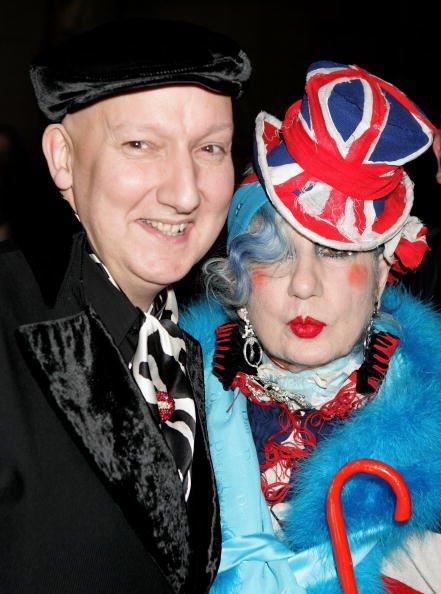
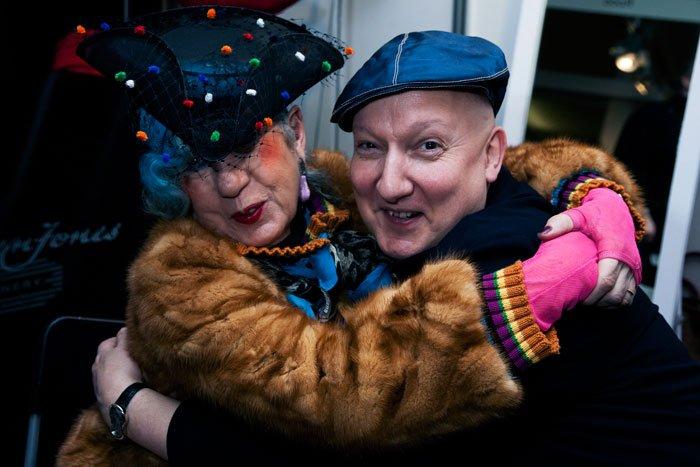
Anna Piaggi and milliner Stephen Jones

Anna Piaggi & Stephen Jones

Anna Piaggi & Stephen Jones

Anna Piaggi & Stephen Jones

‘Stephen Jones is the maker of the most beautiful hats in the world’ : Anna Piaggi once said.

She was the muse of the British milliner and one of his most loyal fans. She suggested the title Stephen Jones & The Accent of Fashion, referring to the unique accent Stephen Jones brings in every new collaboration with designers.

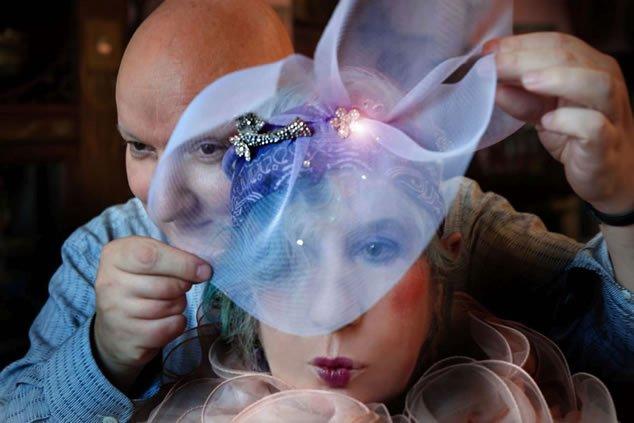
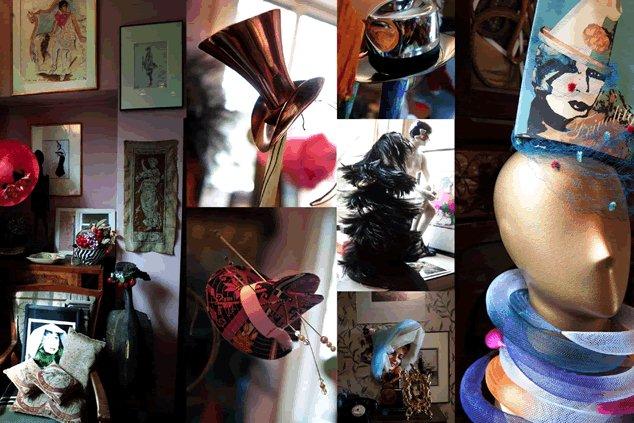
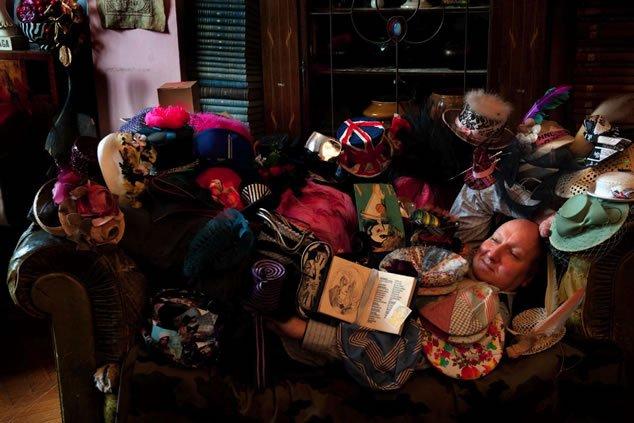
For the exhibition  and accompanying catalogue, Anna Piaggi, paid homage to Stephen Jones in the form of a photo collage, especially designed for the exhibition. Together with Jones, Brado Fabiani and Luca Stoppini, she created a series of images of her own collection of Stephen Jones hats, in the familiar environment of her apartment in Milan.

Anna Piaggi's collage for Stephen Jones

Stephen Jones between a collection of hats he made for Anna Piaggi

.

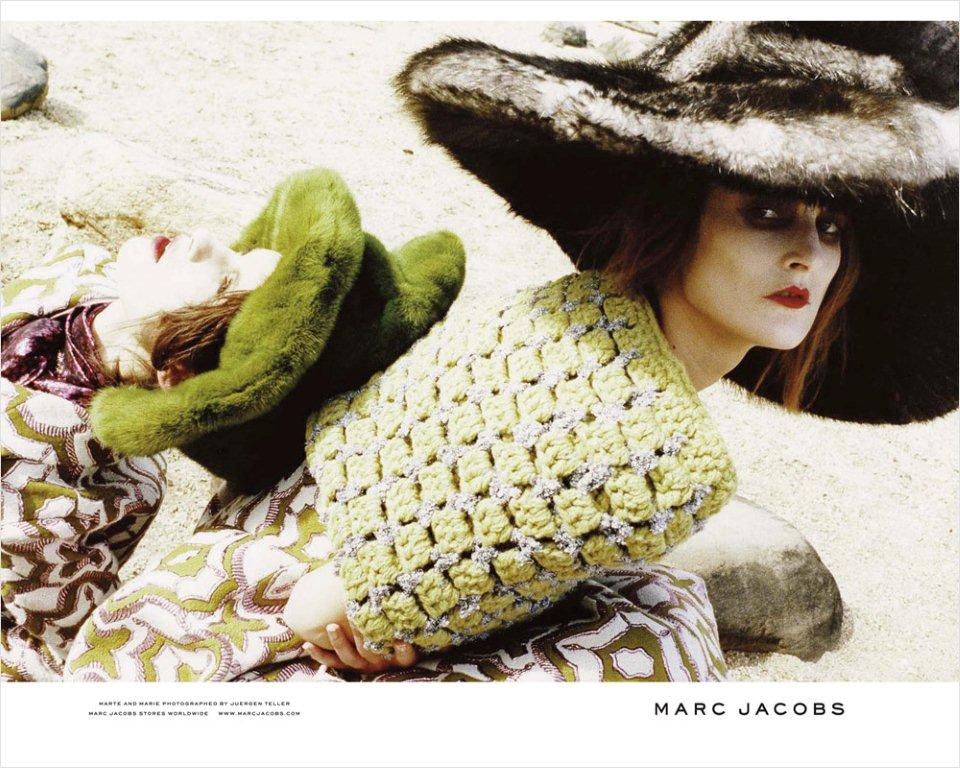
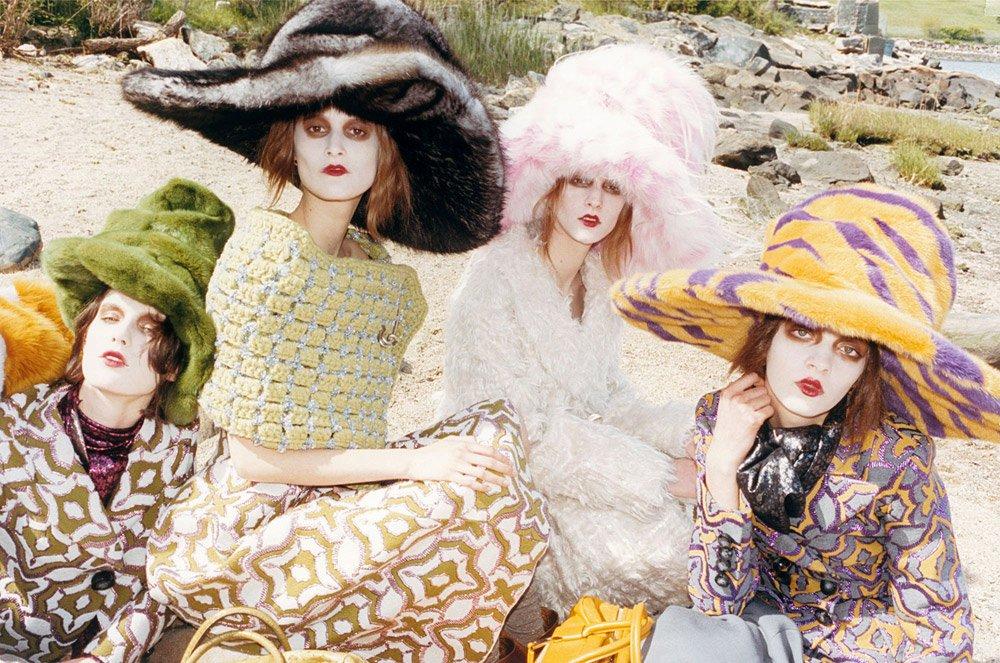
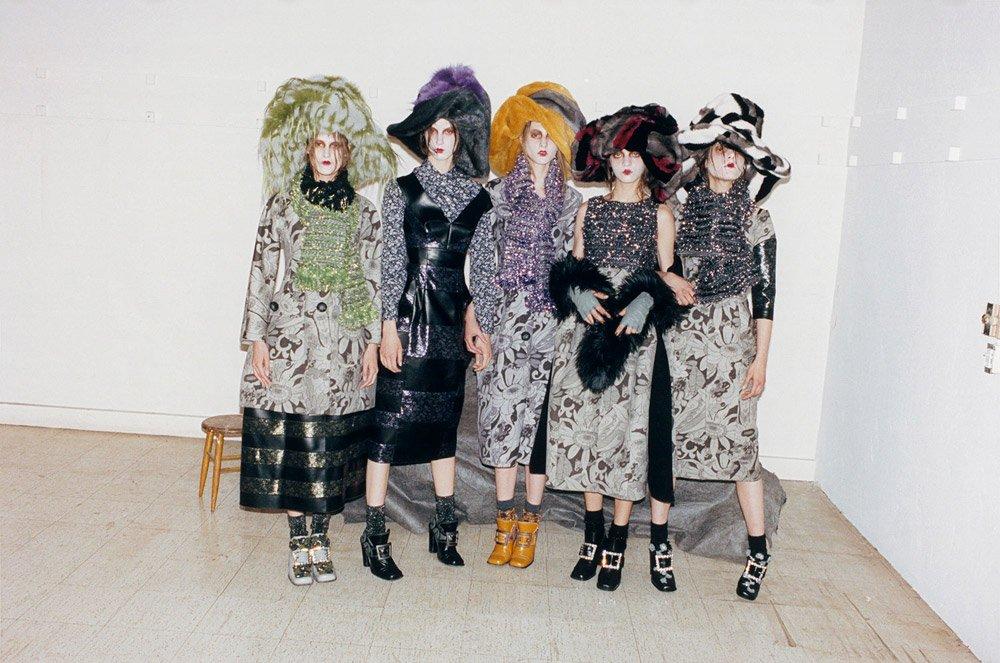
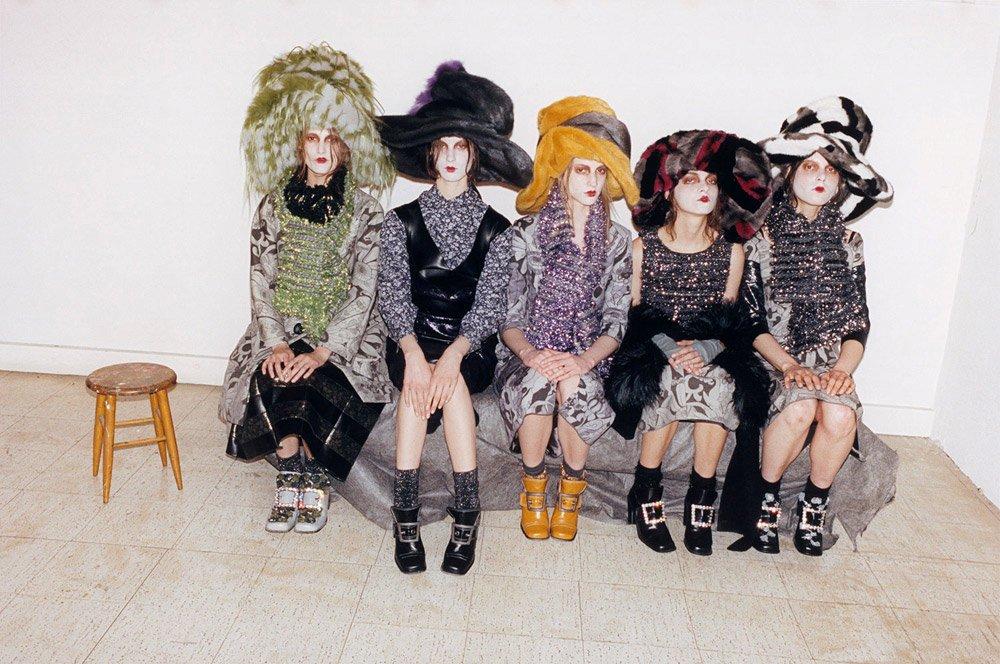
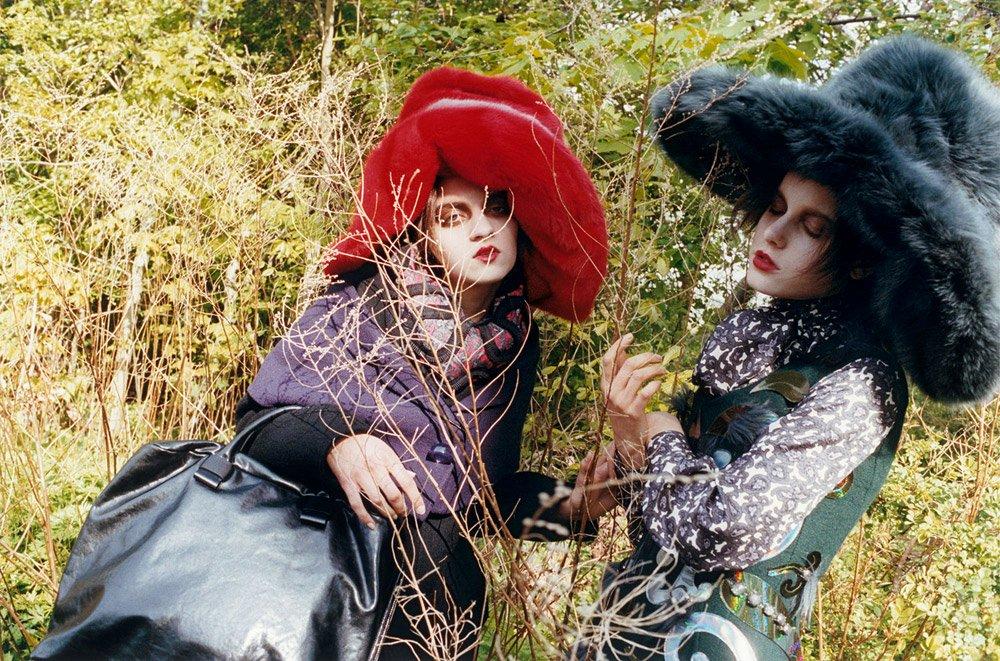
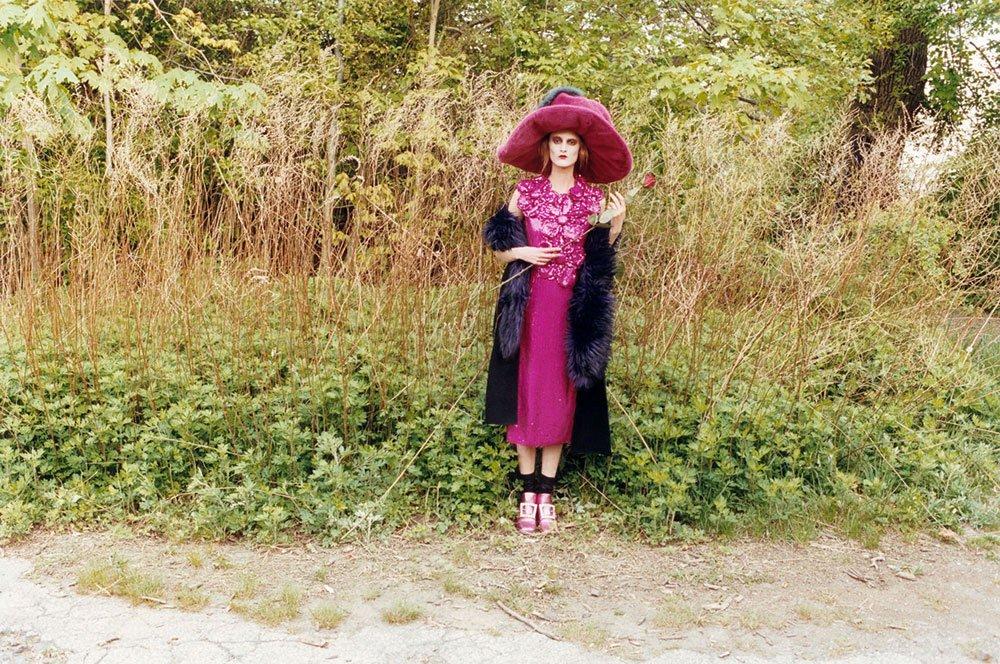
Marc Jacobs winter 2012 inspired by Anna Piaggi and Lynn Yeager

marc-jacobs-fall-winter-2012-13-08

marc-jacobs-fall-winter-2012-13-01

marc-jacobs-fall-winter-2012-13-03

marc-jacobs-fall-winter-2012-13-06

marc-jacobs-fall-winter-2012-13-09

marc-jacobs-fall-winter-2012-13-10

.

Anna Piaggi by fashion illustrator Joana Avillez

Anna Piaggi, one of the last great exotics (part 1)

23 Dec

Anna Piaggi

Anna Piaggi ( (22 March 1931 – 7 August 2012) was one of the last great exotics – a fashion editor in the true and traditional sense of the word, in possession of the finest eye and, most importantly, sparkling intelligence and wit.  

This year the fashion world lost one of its true eccentrics when the scene-stealing,  print-mixing, hat-wearing, blue-haired style icon and contributor to countless fashion magazines, Anna Piaggi, passed away at age 81. A woman with a closet so over-the-top containing 932 hats, 265 pairs of shoes, and 2,865 dresses….(according to the Victoria & Albert museum)

I saw Anna Piaggi many times in Paris during fashion week and a few times I dared to go up to her, I needed to compliment her on yet another outstanding outfit. As she left a show, a crowd always stirred around to photograph her. When the Victoria & Albert museum dedicated an exhibition to Anna, I went to London with my friends. I had to experience being in a room filled with Anna Piaggi’s outfits and see all those drawings Karl Lagerfeld made of her. I cherish the memories.

.

Anna Piaggi and Vern Lambert

Anna Piaggi & Vern Lambert

Bohemian fashion in the ’60s meant regular trips to London and there Anna met dandy antique clothing dealer Vernon Lambert (born in Melbourne Australia 1 August 1937 and died Milan Italy 19 August 1992). Together, dawn after dawn, they would set off torch in hand to trawl the street markets of Bermondsey, Portobello Road and Petticoat Lane in search of treasures of fashion’s past. These weren’t destined for some museum but worn by them to surprise, inspire and please passers-by: a Mary Quant mini, worn with a Georgian waistcoat or a war officer’s jacket and a Victorian courtesan’s feathered toque. Together they played a delightful dressing-up game that lasted over 25 years and was often more entertaining and original than the catwalk fashion shows witnessed in all the fashion capitals of the world.

Anna Piaggi persuaded Vern to move to Milan in 1973, where he opened a gallery with antique clothing, aesthetic and Arts & Crafts furniture and objets d’art. His incredible knowledge – he could spot a Dior or Lanvin across a room and date it – was mixed with a love for the frivolity and joy of the subject. Holding a dress up to the light, he would tell when it was made, by whom and even when it was altered.

To Vern life was the joy of researching, seeing, making connections and sharing his passions. He became a close friend and inspiration to Karl Lagerfeld, who celebrated Vern’s last birthday with him and Anna in Paris. They admired one another and shared a curiosity for fashion in its different guises. Vern was a fantasist, but he was always modest, generous and impeccably mannered.

.

Anna Piaggi And Karl Lagerfeld

Anna Piaggi & Karl Lagerfeld 4

Anna Piaggi & Karl Lagerfeld

Anna Piaggi &  Karl Lagerfeld

Karl Lagerfeld once wrote ‘Anna invents fashion’ (and you know that’s true when the Kaiser says it)

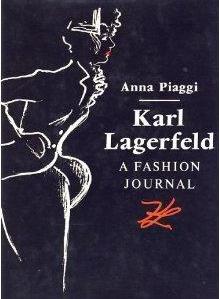
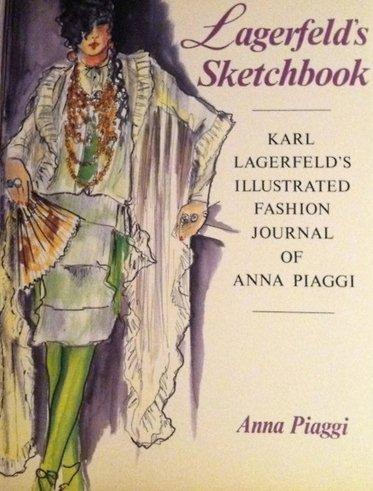
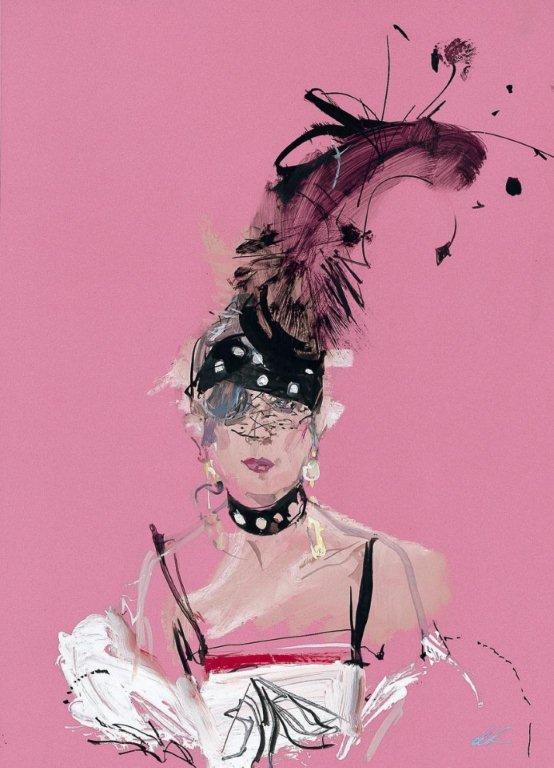
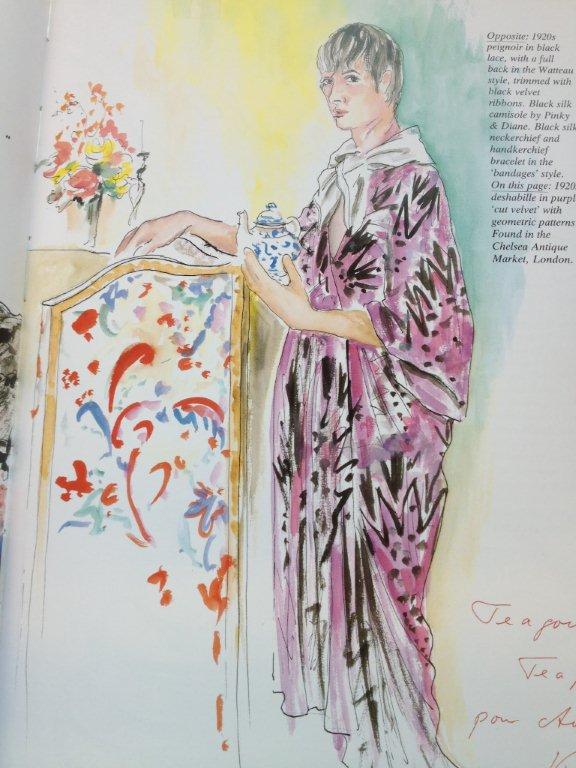
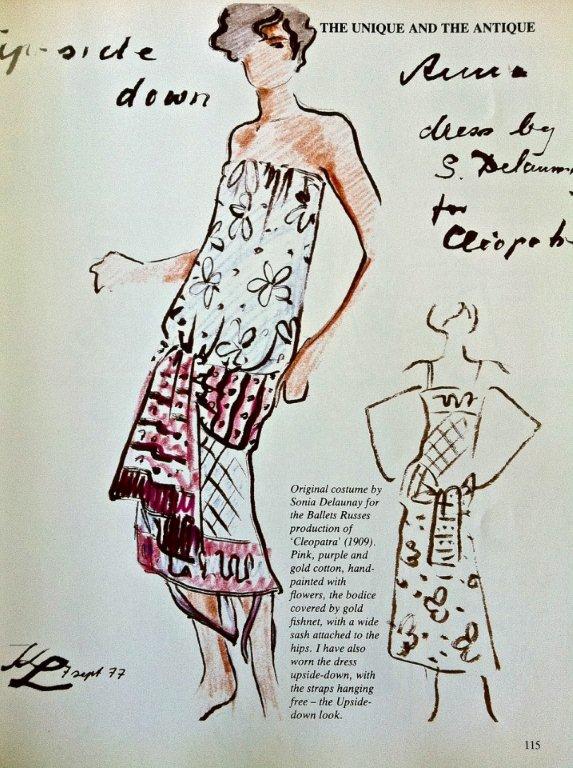
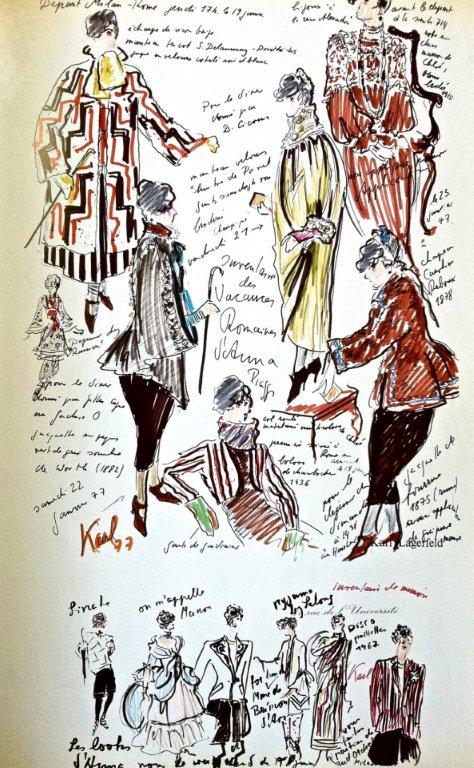
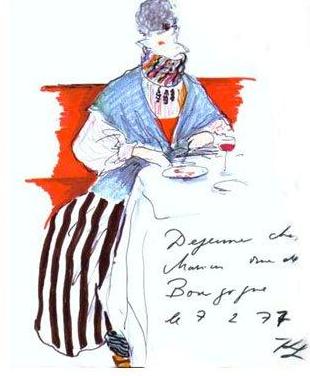
For a decade after their first meeting in 1974, Karl Lagerfeld and Anna Piaggi were a unit. Karl drew her regularly for years to record the combinations of the day, the mixing of vintage couture, fashion and costume. Karl appreciated her motto, to dress as performance art: ‘She was a great performer, but she is also the writer of the play’. The drawings by Karl during the ’70s and ’80s were collected into the book Karl Lagerfeld: A Fashion Journal. Later Karl and Anna also published another one  Lagerfeld’s Sketchbook. Both books are real treasures and beautiful records of Karl’s sketches and Anna’s dressing art. Nowadays they are very collectable.

Karl Lagerfeld, A fashion Journal

Karl Lagerfeld Sketchbook-cover

Karl Lagerfeld sketch 1

Karl Lagerfeld sketch 2

Karl Lagerfeld sketch 3

Karl Lagerfeld sketch 4

Karl Lagerfeld sketch 5

Karl Lagerfeld sketch 6

.

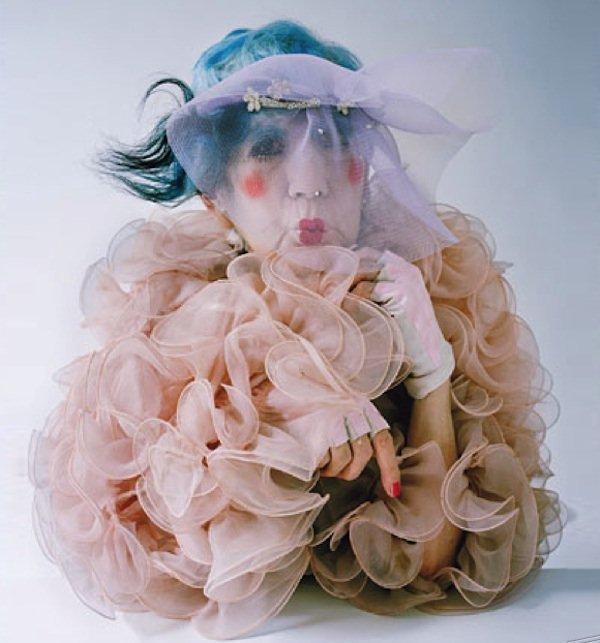
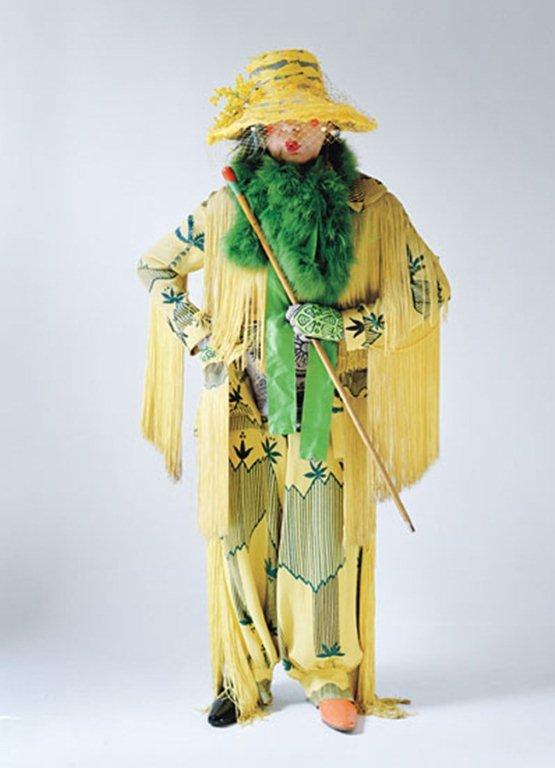
Anna Piaggi photographed by Tim Walker for W magazine

Anna Piaggi by Tim walker

Anna Piaggi by Tim Walker 2

Anna Piaggi by Tim Walker 3

Anna Piaggi by Tim Walker 4

.

Vogue Italia, D.P. by Anna Piaggi

D.P. by Anna Piaggi

D.P. by Anna Piaggi 2

D.P. by Anna Piaggi 3

D.P.by Anna Piaggi 4

D.P. by Anna Piaggi 5

D.P. by Anna Piaggi 6

D.P. by Anna Piaggi 7

D.P. by Anna Piaggi 8

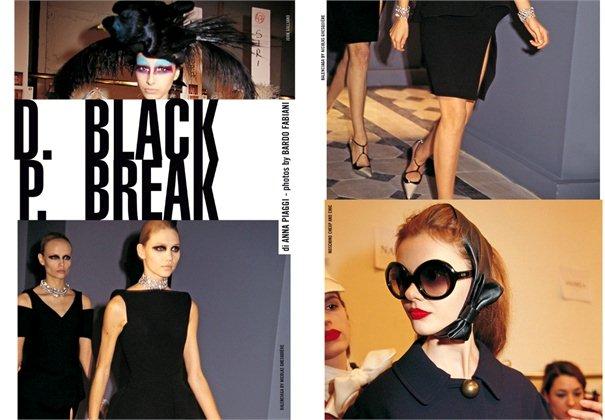
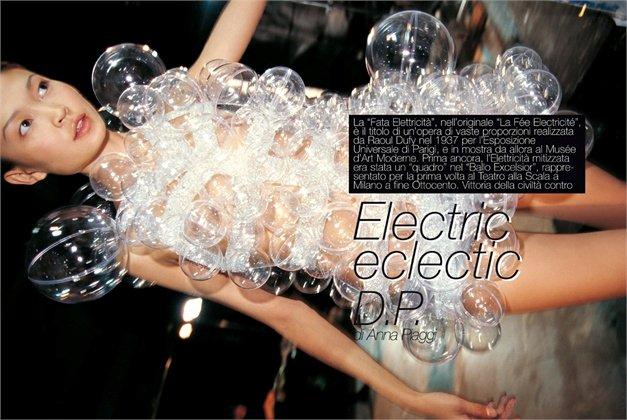
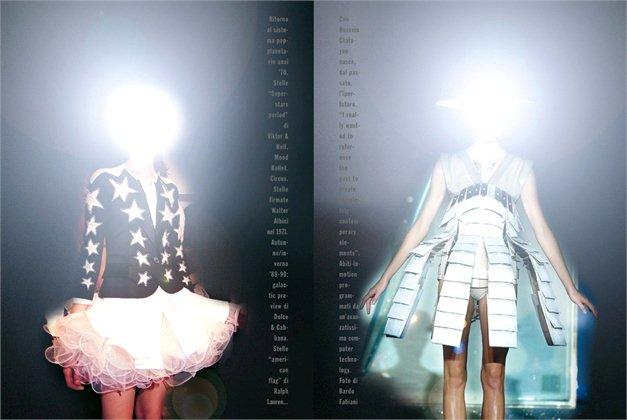
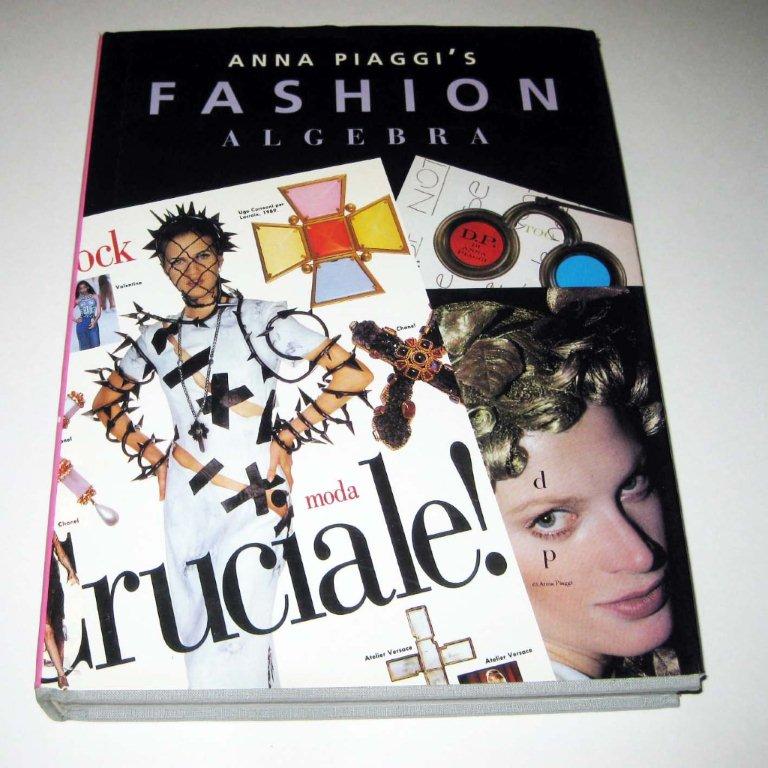
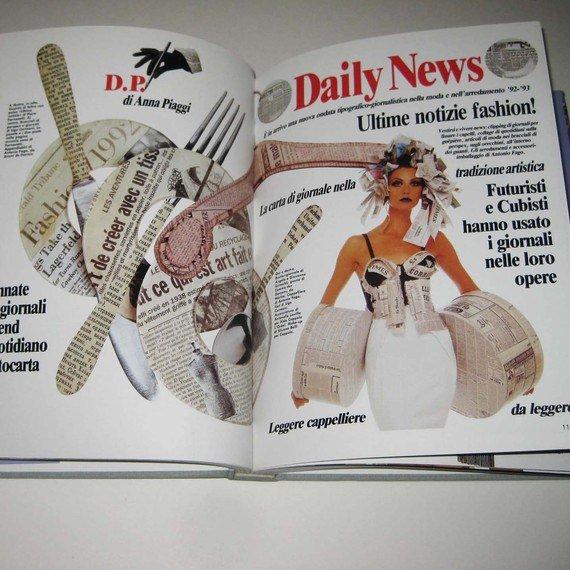
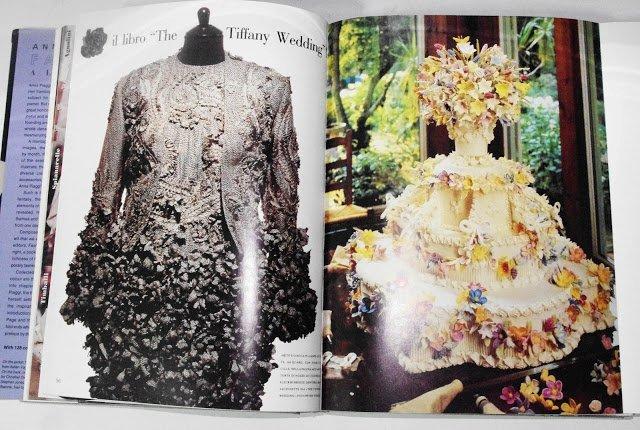
Anna Piaggi had a long relationship with Italian Vogue as a freelance fashion editor, starting in 1969 as reporter of trends and from 1988 as creator of her famous D.P.-Doppie Pagine (double pages), also revered to as Di Piaggi. Together with her husband, Alfa Castaldi, Anna set out each month to analyze an event, a happening, a garment, an accessory, a personality or a stylist, blending text and photographs in a unique and innovative way to create visual messages of rare effectiveness, admired by journalists all over the world. These double-page spreads were the subject for Fashion Algebra, published in 1998 to celebrate the first ten years in Vogue. The book brings together the best of the Vogue ‘Doppie Pagines’. Fashion Algebra is a very sought-after item,.

Fashion Algebra bookcover

Fashion Algebra pages

Fashion Algebra pages 2

Fashion Algebra pages3

Fashion Algebra pages 4

fashion Algebra pages 5

.

 Anna Piaggi was in possession of sparkling intelligence and wit

In 1978, Anna described fashion to be like a ‘trance’, telling WWD (Women’s Wear Dailey): “It’s a moment, an expression. My philosophy of fashion is humor, jokes and games, I make my own rules. I never pick up something and just trow it on my back like that. There’s a little bit of study and it’s always better if I think about what I’m going to wear the next day. And what is to be avoided at all costs is the twinset look, the total look.”

Anna Piaggi in 1987

Anna Piaggi

Anna Piaggi .

.

Next week part 2, about her husband Alfa Castaldi, the Fashion-ology exhibition, Stephen Jones and Anna Piaggi’s influence on fashion of today….

Granny Takes a Trip, a boutique everybody wanted to be seen in…..

16 Dec

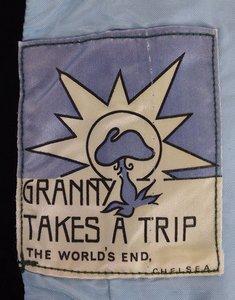
Granny Takes a Trip stamp

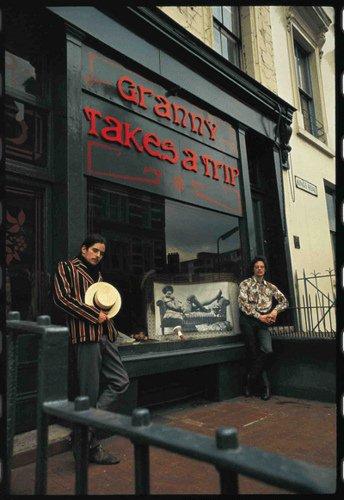
Granny Takes a Trip (Granny’s) was a boutique in the 60ties through mid 70ties,  founded by Nigel Weymouth and his girlfriend Sheila Cohen. Nigel was/is a graphic designer, who was mostly responsable for the interior, originally decked out as a psychedelic New Orleans bordello complete with an old horn gramophone and exterior of the boutique. Sheila, who was a dedicated collector of vintage clothes, Victorian and oriental, was responsable for the garments which were sold in Granny’s together with John Pearse, an ex mod and former apprentice tailor at Hawes & Curtis on Savile Row.

Granny Takes a Trip artwork

The Purple Gang -Granny Takes a Trip

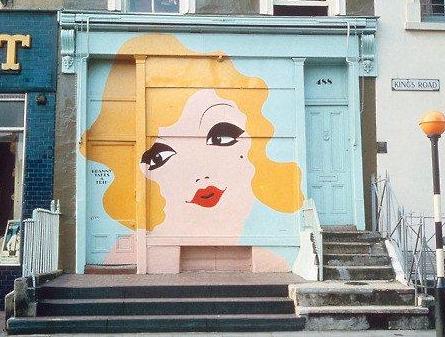
The name of the boutique was giving away its policy – ‘Granny’ symbolized the influence of the past, and ‘Trip’ , a colourful world of bougeoing hippie movement and its drug of choice – LSD. Granny’s opened in February 1966 at 488 King’s Road, a previously unfashionable part of the road also revered to as the World’s End, in London. The trio originally started “simply because we think young people have got the money to spend but they want to see more style. So many boutiques are beginning to sell the same things. We can offer an exclusive thing to everyone, because we rarely find two dresses which are identical. Probably the next biggest reason was that we all wanted to work for ourselves.”
Granny Takes a trip label

A videoclip for the 1967 single, Granny Takes a Trip by the Purple Gang.

.

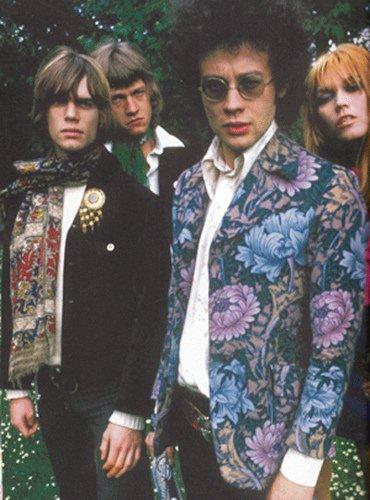
The garments sold in Granny’s were vintage clothes, twisted by John Pearse into the shapes preferred in the 60ties. They mended and cleaned all of their vintage fashions, using “a theatrical costume cleaner who cleans the things beautifully”, and then adapted other items which were handcut and beautifully made into brand new styles. The high prices at Granny’s were determined by the use of expensive fabrics Sheila and John were buying at Liberty fabrics and they were using the same outworkers as Savile Row tailors. As a result, shirts from Granny’s were prized at anything between 4 to 10 guineas. A floral jacket inspired by William Morris designs would set a buyer back an extortionate 15 guineas. Skinny trousers made out of velvet or satin (John: “They were sort of more foppish alternative to levi’s” ) would cost 6 guineas, and satin ties were priced at £1.10. However, the quality of the clothes was very good and John was putting a lot of emphasis on fine tailoring. Velvet suits were tightly fitting with tight buttoning. Double – breasted jackets were tailored in floral-printed fabrics.

George Harrison in a Granny Takes a Trip jacket

Nigel waymouth in Granny Takes a Trip, in the background Amanda Lear

One of the sales assistants, Johnny Moke remembers: “We used to cut up blouses and dresses and turn them into shirts or tops for men. What was great about Granny’s was that there were no boundaries. Anything went and they kept on changing. The effect of Granny’s clothes was foppish, flamboyant and decadent – a 1960’s reinvention on fin-de siecle dandyism.

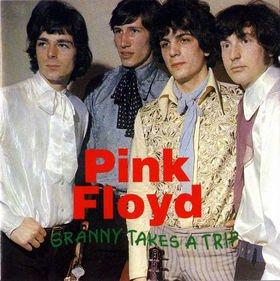
Granny Takes a trip cd, Pink Floyd dandy look

Granny Takes a Trip quickly developed elite clientele. Nigel: ” The first people to sniff us out were the mixture of Chelsea gays and debutantes. Then pop stars started quickly coming after them. We had all these personalities coming through and groups like the Animals would have their photos taken outside”. The relaxed atmosphere was one of the attractions of Granny’s. Anybody who was rich enough to shop there – young upper middle class men, young aristocrats and pop stars enjoyed buying fancy clothes in the casual atmosphere of the boutique which epitomized Swinging London as a fashion epicentre in the 1960’s.

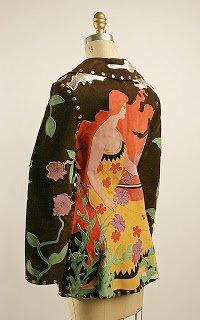
Granny Takes a Trip garment

Granny takes a trip jacket at the Metropolitan Museum

Granny Takes a Trip boots

When the unique new designs became a major element of Pink Floyd’s shows (Pink Floyd founder Syd Barrett notoriously carried his dirty clothes into the London boutique because he thought it was a dry-cleaners) at the UFO club their clientele soon expanded to include The Small Faces, The Byrds, Jimi Hendrix, The Who, The Rolling Stones and of course The Beatles. Nigel: “One morning we were sitting around cross-legged on the floor, passing a joint around and these two blokes came in. They looked around and said, ‘This is a nice place isn’t it?’ We looked up and it was John and Paul.”

But not only the clothes sold at Granny’s were revolutionary, the boutique also became known for its changing facade. In 1966 it featured giant portraits of Native American chiefs Low Dog and Kicking Bear. In 1967 the entire front was painted with a giant pop-art face of Jean Harlow and was later replaced by an actual 1948 Dodge saloon car which appeared to crash out from the window onto the forecourt.

Granny Takes a trip 1966

Granny Takes a trip 1967

Granny takes a trip with the Dodge front

Granny Takes a trip Dodge front all yellow

Granny Takes a trip facade

Granny’s success, however was short-lived.When Granny started selling Afghan coats, there was a row between John and Sheila over the priorities of their business establishment. John did not like the increasingly hippy image of the shop: “My partners went more in that direction, but I was considered to be more urban creature(…) I never wore jeans (…) I was always more streamlined in my appearance. We may have been construed as being in the centre of hippydom, but we weren’t; what we did had a subtle difference”. Nigel, Sheila and John ended up selling the shop to manager Freddie Hornick in 1969.

Freddie Hornick

Freddie brought in two New YorkerB, Gene Krell and Marty Breslau. They introduced a new, more dandified phase with rhinestones and applique’d velvet suits and stack-heeled boots.

In 1970 a branch was opened in New York and an outlet in Los Angeles. The London boutique closed in 1974 with the acquisition of the name by Byron Hector, who moved the premises along the King’s Road. It finally closed in 1979. The New York and Los Angeles also closed, mid-70ties.

Granny Takes a Trip became a legendary boutique that defined King’s Road of the 60’s. Original garments from Granny’s – especially from John Pearse-Sheila Cohen-Nigel Weymouth  era, are highly sought vintage items. In 2012 a Royal Mail stamp, commemorating contribution to British fashion by designers from Granny Takes a Trip along with other revolutionary fashion designers as Ossie Clark, Alexander McQueen and Vivienne Westwood.

2012 Royal Mail Fashion stamps

.

John Pearse, Salman Rushdie & Paul Smith talk about Granny Takes a Trip

.

(I found a lot of information about Granny Takes a Trip on the fantastic blog: http://www.dandyinaspic.blogspot.nl/   )


Jean Shrimpton made a major contribution to fashion

9 Dec

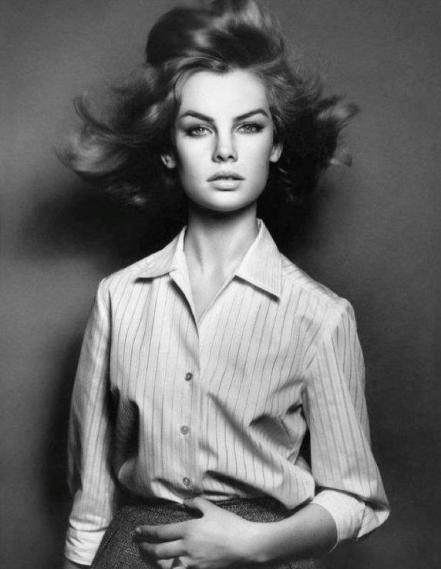
Jean Shrimpton 1961,by David Bailey

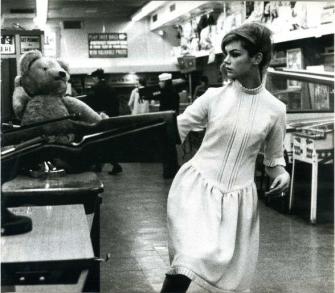
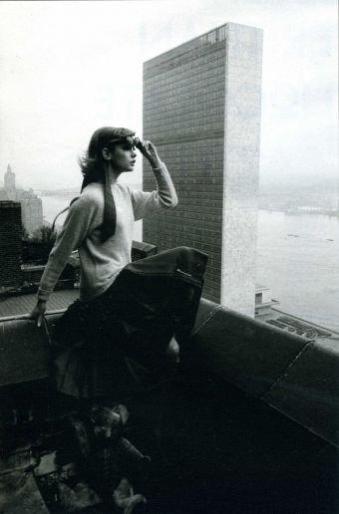
The BBC4 drama ‘We’ll Take Manhattan’ shows a young photographer David Bailey in 1962, who got commissioned (by fashion editor Lady Clare Rendlesham) to create a 14 page story for British Vogue in New York and the style had to be ‘young and fresh’. Bailey , as Jean always called David, insisted on using his girlfriend Jean Shrimpton as the model. Jean had a very clean, fresh look to her and was different to all other models working for Vogue. At the time almost everything was shot in  a studio and all followed a classic guideline of poses and looks. David Bailey, being passionate and stubborn about his work, changed all this by breaking the rules. He took offbeat, realistic poses against gritty backgrounds. This changed fashion forever and made David Bailey and Jean Shrimpton fashion icons.

Jean Shrimpton in NY by David Bailey 1

Jean Shrimpton in NY by David Bailey 2

Jean Shrimpton in NY by David Bailey 3

Jean Shrimpton in NY by David Bailey 6

Jean Shrimpton in NY by David Bailey 4

Jean Shrimpton in NY by David Bailey 5

Jean Shrimpton in NY by David Bailey 7

Jean Shrimpton in NY by David Bailey 8

Jean Shrimpton in NY by David Bailey 9

Trailer ‘We’ll Take Manhattan’

.

Jean Rosemary Shrimpton (born 7 November 1942) was born in High Wycombe, Buckinghamshire and brought up on a farm. She enrolled at Langham Secretarial College in London when she was 17. Director Cy Endfield suggested she attend the Lucy Clayton Charm Academy’s model course. In 1960, aged 17, she began modelling and later appeared on the covers of Vogue, Harper’s Bazaar and Vanity Fair. During her career Jean Shrimpton was widely reported as ‘the world highest paid model’  and ‘the most famous model’. She was described as having ‘world’s most beautiful face’, was dubbed ‘The It Girl’  and ‘The Face of the ’60s’.

Jean contrasted with the aristocratic-looking models of the 1950s by representing the fresh, cute coltish look of the 1960s Swinging London. Breaking the popular mould of voluptuous figures with her long legs and slim figure. Jean (nicknamed ‘The Shrimp’, a name she hated. ‘Shrimps are horrible pink things that get their heads pulled off! ) was also known for her long hair with fringe, wide doe-eyes, long wispy eyelashes, arched brows and pouty lips.

Jean Shrimpton fabulous

Jean Shrimpton, The It-Girl

Jean was once engaged to David Bailey. They met in 1960 at a photo shoot that Jean, who was still an unknown model, was working on with photographer Brian Duffy. Duffy told Bailey she was too posh for him, but Bailey was not discouraged.

Jean Shrimpton:”‘Bailey’ was how he introduced himself and that was all I ever called him.” Aged 18, Jean rapidly found herself entwined with the East End boy on the up, who was five years her elder. “We were instantly attracted to each other.” She broke off a relationship and Bailey ended his marriage so they could be together. “He was a larger-than-life character, and still is. There’s a force about him. He doesn’t give a damn about anything. But he’s shrewd, too. He made a lot of money out of me. I’m not bitter, but I’m irked. That’s all. Bailey was very important to me. I’m sure today’s models are a lot more switched-on than we were. Image rights didn’t exist back then. What happened – the creation of the fashion industry – just happened.”

Jean started to become known in the modelling world around the time she was dating Bailey. She has stated she owed Bailey her career. In turn she was Bailey’s muse and his photographs of her helped him rise to prominence in his early career. Yet she was never comfortable with the trappings of their success-when Bailey took her to trendy nightclubs, Jean would take her knitting along…

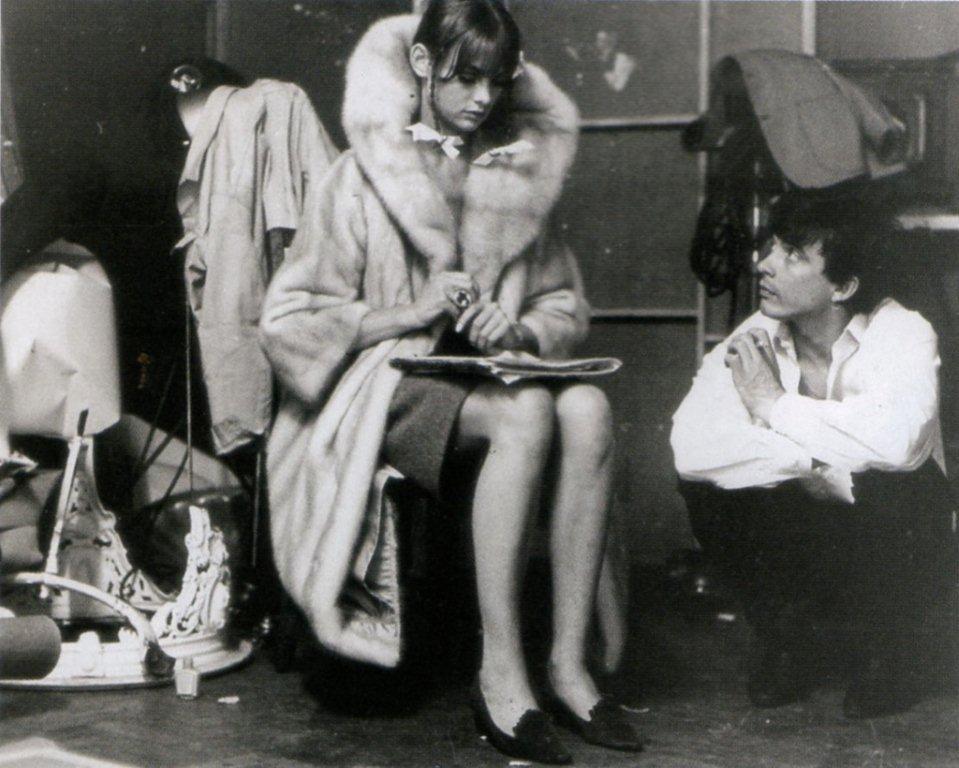
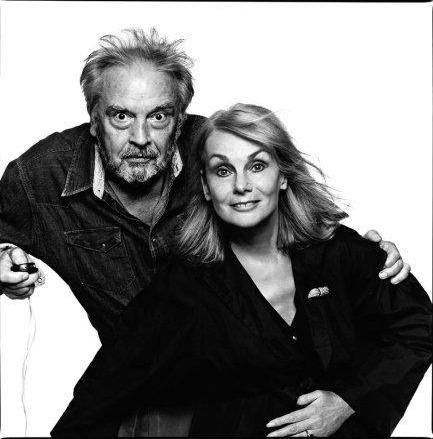
Jean Shrimpton & David Bailey

Jean Shrimpton & David Bailey  at work

Jean Shrimpton & David Bailey taking a break

Bailey ones said of Jean: “She was magic. In a way she was the cheapest model in the world-you only needed to shoot half a roll of film and then you had it.”

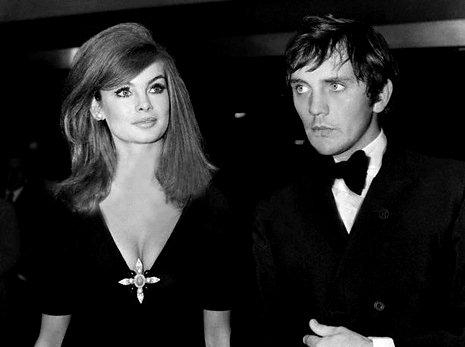
Jean’s romance with Bailey did not last long, only 4 years. It was the heady, early days of the swinging 60s and the couple worked tirelessly together, but Jean left Bailey to begin a relationship with Terence Stamp. “Our paths first crossed when Bailey photographed us together for Vogue and then we met again at a wedding. I was aware of him because he was so good-looking. But it was Bailey who accidentally brought us together. Terry seemed ill at ease, self-conscious and standoffish, but Bailey talked to him, as he always does with people, and ended up inviting him to come with us to see my parents in Buckinghamshire later that day.”

But if Stamp’s looks captivated  Jean, his personality was less straightforward. The beautiful duo were soon an item – to Bailey’s dismay – but their three years together left Shrimpton puzzled. Certainly, there is no love lost now: “Terry has said that I was the love of his life, but he had a very strange way of showing it. We lived together in a flat in Mayfair, but he never gave me a set of keys; one day I walked into his room to talk to him and he simply turned his back on me, swivelling his chair to stare silently out of the window. That sort of thing was typical. He was very peculiar.”

Famous portrait of the Sixties: Jean Shrimpton&Terrence Stamp

Jean Shrimpton & Terrence Stamp

Work, though, was good. By her mid-twenties she was known the world over and she’d also made a major, if unwitting, contribution to fashion when she was hired to present prizes for the Melbourne Cup in Australia. Jean’s dressmaker, Colin Rolfe, was given insufficient fabric, but pressed ahead regardless, making four outfits which were all cut just above the knee. The miniskirt was born – to the shock of conservative Australia at the time. (this is one of a few stories about how the miniskirt was born….)

.

.

But for all the fame, the exotic travel and approaches from famous stars such as Warren Beatty and Jack Nicholson – “they’re the kind who can’t help themselves, it’s in their nature, though Jack was more subtle than Warren” –Jean was not happy. She loathed the name “The Shrimp” and felt disenchanted with the fashion world. With hindsight, she said her true self only began to emerge in her next relationship, with photographer Jordan Kalfus, 12 years her senior, in New York. “I discovered museums, art and literature. It was an awakening. There was so much happening in American literature at the time. Mailer, Bellow, Burroughs, Ginsberg – they were all the rage.”

She began to read eagerly and bought fine art. Back in Britain a turbulent relationship with the anarchic poet Heathcote Williams was followed by another with writer Malcolm Richey, with whom she moved initially to Cornwall. By now, in her early thirties, Jean was only too pleased to forsake modelling completely. She opened an antiques shop in Marazion and took a series of intriguing black-and-white photographs of local Cornish characters. She has never exhibited the images and has no intention of doing so, but one was of Susan Clayton, then a waitress at the Abbey Hotel. After Jean met her husband, Michael Cox and became pregnant with their son, Thaddeus, she was told by Clayton that the Abbey might be up for sale.

I jumped at it. If we’d had a survey, we wouldn’t have bought it and running it has been a labour of love, but it’s been my life for over 30 years.” She and Michael had their reception at the Abbey, a million miles from the fashion-world weddings of St James’s. “We had champagne with fish’n’chips, but the only guests were our two registry office witnesses.”

Jean Shrimpton loves the raw, wild beauty of the far west of Cornwall, but does she have any regrets about turning her back on the life she once led? “No, but I am a melancholy soul. I’m not sure contentment is obtainable and I find the banality of modern life terrifying. I sometimes feel I’m damaged goods. But Michael, Thaddeus and the Abbey transformed my life.”

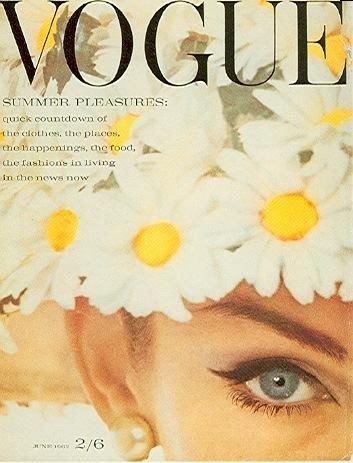
Jean Shrimpton on the cover of Vogue

Jean Shrimpton beauty cover

CREATELOVES Style Inspiration Jean Shrimpton

Jean Shrimpton in space...

Jean Shrimpton Quotes:
 
‘It’s hypocritical to pretend that fashion is normal, that people in it are role models’
 
About Kate Moss, Jean Shrimpton is a fan. ‘I like her. She’s a free spirit. Somewhere in herself she’s honest. She’s a naughty girl – but you’ve got to have a few naughty girls.’

Jean Shrimpton

Jean Shrimpton on Vogue Cover

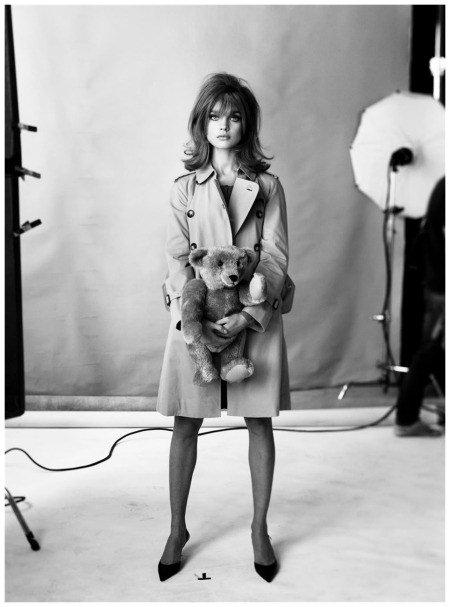
Steven Meisel photographed Natalia Vodianova as Jean Shrimpton voor Vogue May 2009

Natalia Vodianova as Jean Shrimpton Vogue US may 2009 by Steven Meisel

.

.

Jean Shrimpton book cover

Jean Shrimpton : An Autobiography

http://www.amazon.co.uk/Jean-Shrimpton-Autobiography-Unity-Hall/dp/0852238584

.

David Bailey & Jean Shrimpton selfportrait 2010