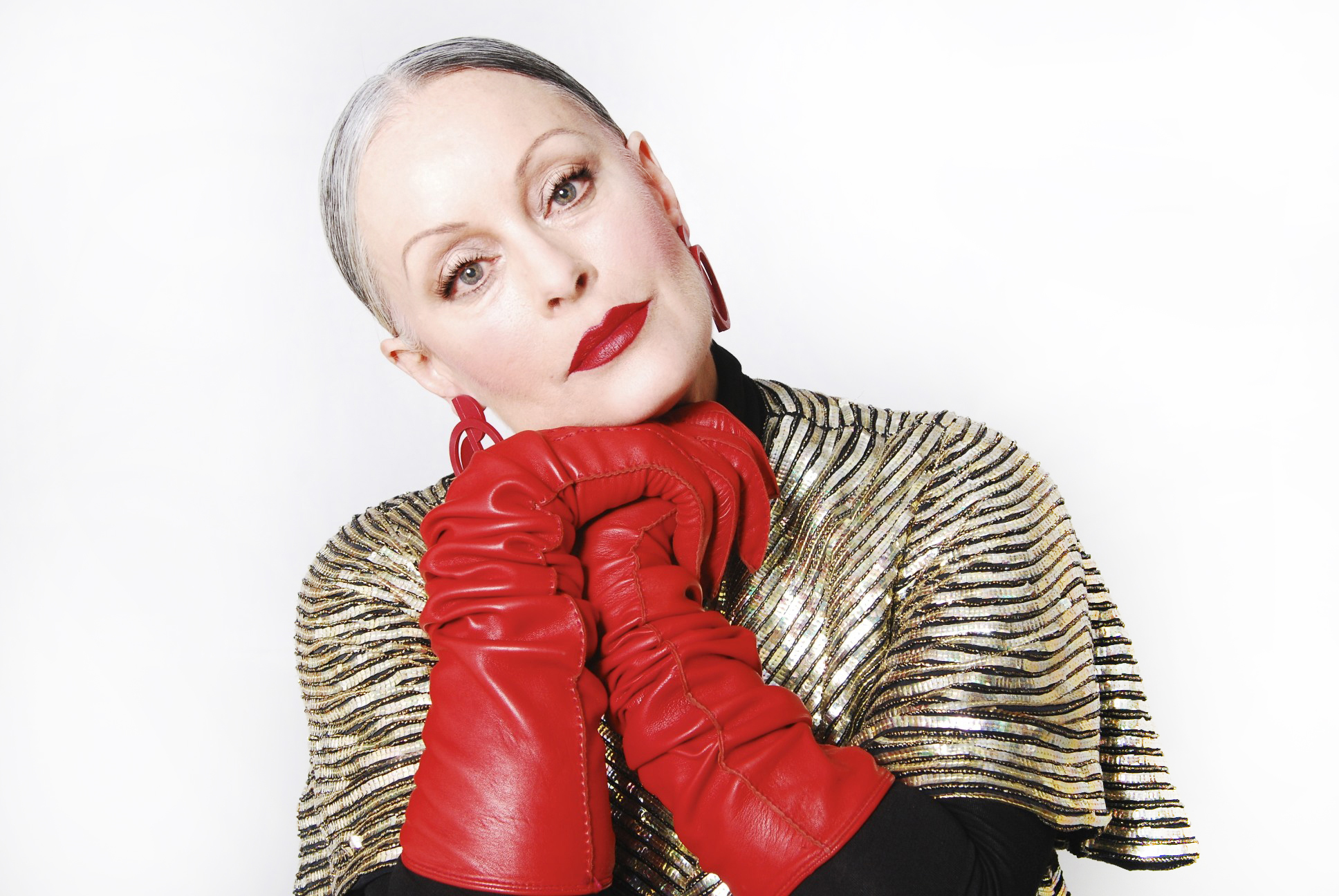
Archive | 2015

Naomi Sims, two Model of the Year Awards

18 Oct
Naomi Sims

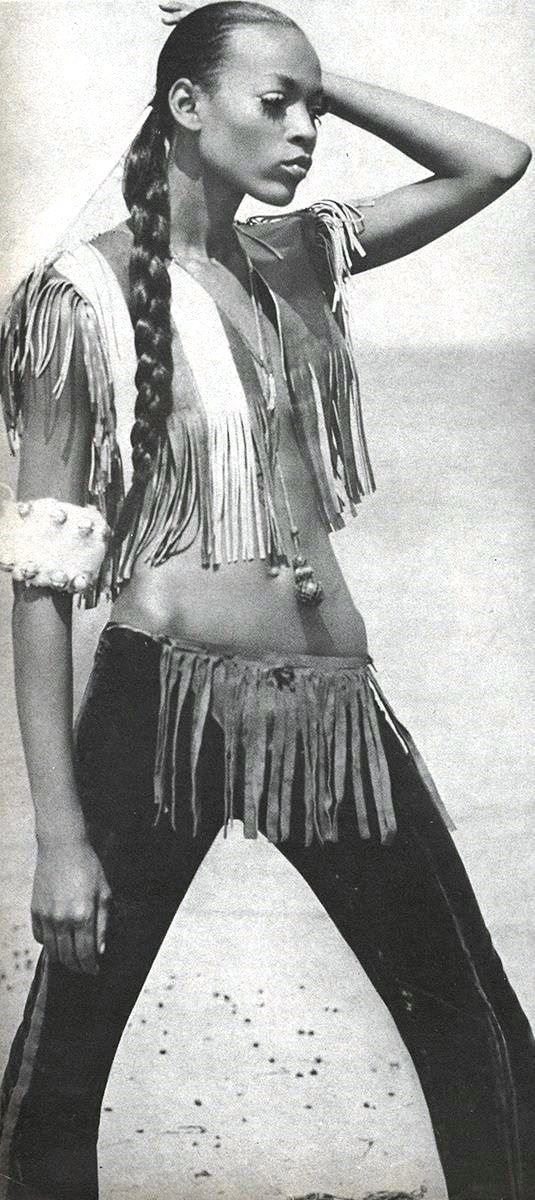
Naomi Ruth Sims (March 30, 1948 – August 1, 2009) was an American model, businesswoman and author. She was the first African-American model to appear on the cover of Ladies’ Home Journal, and is widely credited as being the first African-American supermodel.

Sims was born in Oxford, Mississippi, the youngest of three daughters born to John and Elizabeth Sims. Her father (whom she never knew) reportedly worked as a porter, but Sims’ mother later described him “an absolute bum” and her parents divorced shortly after she was born. She was teased for her height of 5’10 at the age of 13. Mrs Sims later moved with her three daughters to Pittsburgh, Pennsylvania, where Naomi’s mother was forced to put her child into foster care. She attended Westinghouse High School. There due to her height, she was ostracized by many of her classmates.

Naomi Sims

vogue italia 1969Vogue Italia, 1969
1971, Naomi Sims
Irving Penn for Vogueph. Irving Penn for Vogue
vogue 1970Vogue 1970

Sims often said childhood insecurities and a painful upbringing — living in foster homes, towering over her classmates and living in a largely poor white neighborhood in Pittsburgh — had inspired her to strive to become “somebody really important” at a time when cultural perceptions of black Americans were being challenged by the civil rights movement and a renewed stress on racial pride.

Sims began college after winning a scholarship to the Fashion Institute of Technology in New York City in 1966, while also taking night classes in psychology at New York University. Her early attempts to get modeling work through established agencies were frustrated by racial prejudice, with some agencies telling her that her skin was too dark. There was very little interest in fashion for black models and only a handful who had been successful, like Dorothea Towles Church, who starred in the couture shows in 1950s Paris, and Donyale Luna, who was named Vogue’s model of the year in 1966.

Her first career breakthrough came after she decided to sidestep the agencies and go directly to fashion photographers and Gosta Peterson, a photographer for The New York Times, agreed to photograph her for the cover of the paper’s August 1967 fashion supplement, then called Fashions of The Times.

Naomi Sims

Irving PennPh. Irving Penn

Naomi Sims

Despite this breakthrough, Sims still found it difficult to get work, so she approached Wilhelmina Cooper, a former model who was starting her own agency, saying that she would send out copies of the Times supplement to advertising agencies, attaching Cooper’s telephone number, and that Cooper’s agency would get a commission if Naomi received any work. Within a year Sims was earning US$1000 a week. The key breakthrough came when she was selected for a national television campaign for AT&T, wearing clothes by designer Bill Blass. In 1968 Sims told Ladies’ Home Journal: “It helped me more than anything else because it showed my face. After it was aired, people wanted to find out about me and use me.”

Sims was suddenly in high demand, modeling for top designers like Halston, Teal Traina, Fernando Sánchez and Giorgio di Sant’Angelo, and standing at the vanguard of a fashion movement for black models that would give rise to runway stars of the 1970s, including Pat Cleveland, Alva Chinn and Beverly Johnson.

She became one of the first successful black models while still in her teens, and achieved worldwide recognition from the late 1960s into the early 1970s, appearing on the covers of prestigious fashion and popular magazines. The New York Times wrote that (her) “appearance as the first black model on the cover of Ladies’ Home Journal in November 1968 was a consummate moment of the Black is Beautiful movement”. She also appeared on the cover of the October 17, 1969 issue of Life magazine. This was the first African-American model on the cover of the magazine. The images from the 1967 New York Times fashion magazine cover and the 1969 Life magazine cover were exhibited at the Metropolitan Museum of Art in an exhibition entitled The Model as Muse.
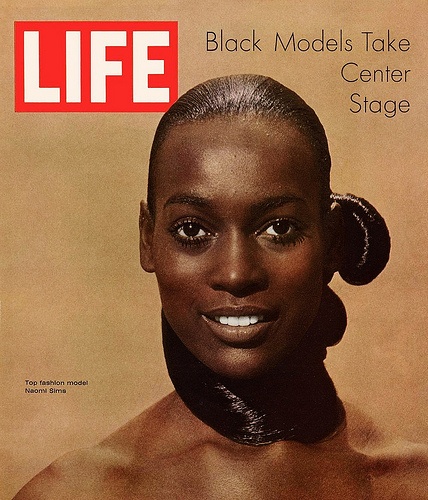
Naomi Sims, LIFE cover

In 1969 and 1970, Naomi Sims received the Model of the Year award. In 1972 she received the Woman of Achievement Medal and then the Top Hat Award in 1974.

By 1972, Hollywood took an interest in her as a potential actress and offered her the title role in the movie Cleopatra Jones, but when Sims read the script, she was appalled by the racist portrayal of blacks in the movie and turned it down. Sims ultimately decided to go into the beauty business for herself. Sims retired from modeling after five years to start her own business which created a successful wig collection fashioned after the texture of straightened black hair. It eventually expanded into a multimillion-dollar beauty empire and at least five books on modeling and beauty. 

She authored several books on modeling, health, and beauty, including All About Health and Beauty for the Black Woman, How to Be a Top Model and All About Success for the Black Woman, as well as an advice column for teenage girls in Right On! magazine.

Naomi Sims

In the 1980s, she expanded the Naomi Sims Collection to include a prestige fragrance, beauty salons and cosmetics, but by the end of the decade she had become less involved with its daily operations. Many images of  Sims from that period are still used to promote the products that bear her name.

In August 1973, she married art dealer Michael Findlay. Findlay and Sims caused a stir as Findlay was white and interracial marriage in 1973 was still considered taboo. Findlay and Sims were both profiled separately in the February 1, 1970 issue of Vogue before they met and married. They had one son, Bob. Their marriage ended in divorce in 1991.

Sims died of breast cancer on August 1, 2009, aged 61, in Newark, New Jersey.
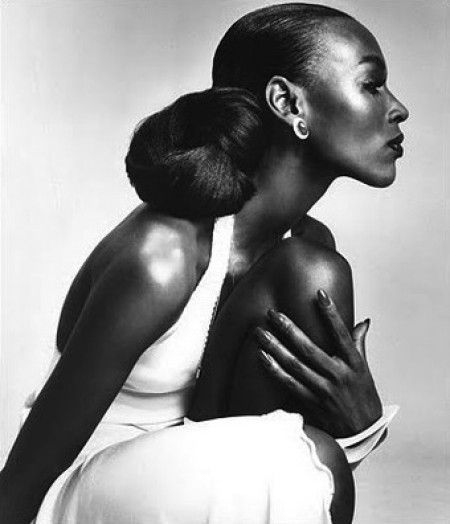
Naomi Sims

“Naomi was the first. She was the great ambassador for all black people. She broke down all the social barriers.”   

Halston in 1974


.

Book

Naomi Sims book, not the real Book cover

How to be a top model

Hardcover – 1979

1ste edition is over € 1.350,- !!!!

ISBN-10: 0385133618

ISBN-13: 978-0385133616


.

ph. Steven Meisel 1990Naomi Sims, ph. Steven Meisel 1990

.

.

info: WikiPedia &

Wilhelmina Cooper, from Model to Model Agencie

11 Oct

Wilhelmina Cooper

Wilhelmina Cooper (1 May 1939 – 1 March 1980) was a Dutch model who began with Ford Models and, at the peak of her success, founded her own agency, Wilhelmina Models, in New York City in 1967.


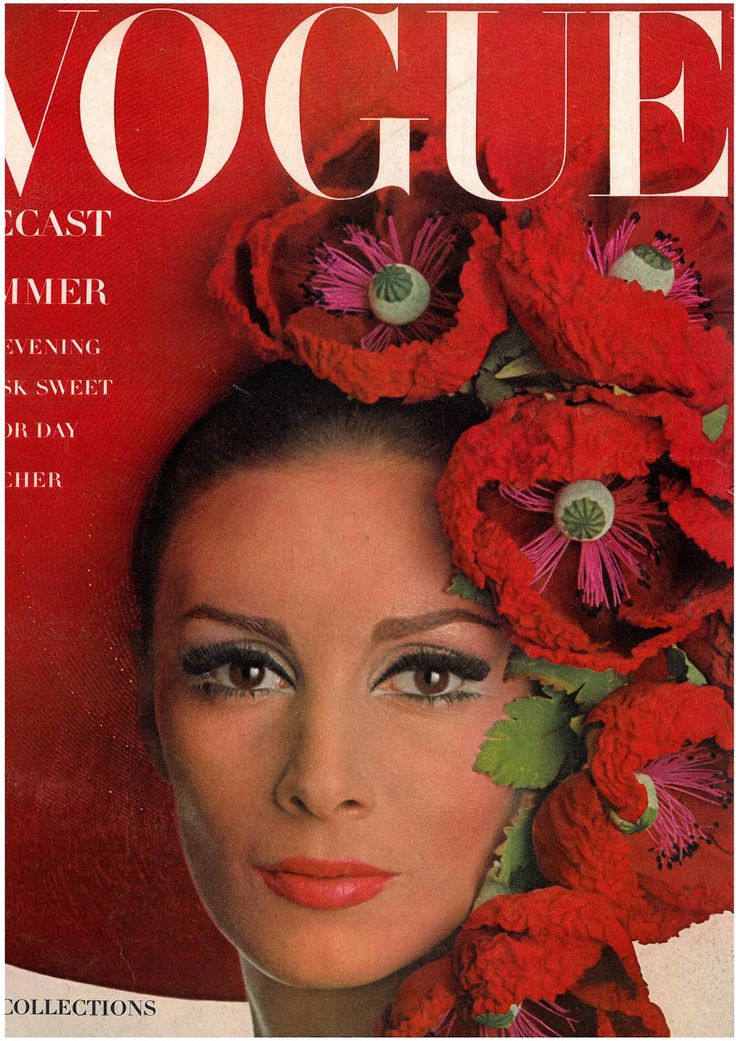
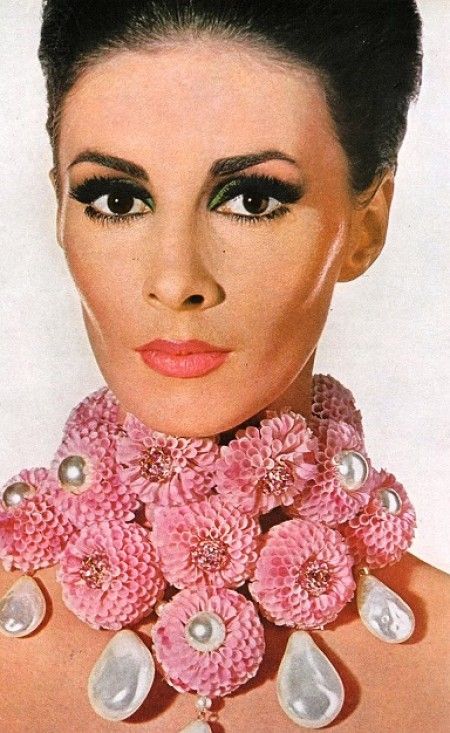
Born Wilhelmina Behmenburg in Culemborg, the Netherlands, she was known professionally simply as “Wilhelmina,” or “Willy” to intimates. Wilhelmina grew up in Oldenburg, Germany. She moved with her family to Chicago, USA, in 1954. She became one of the most famous models of the 1950s and 1960s. During her career as a model she was on the cover of 255 magazines. For a long time she also held the record for most covers on American Vogue, appearing 27 or 28 times.

Vogue Covers

1965. Irving Penn.ph. Irving Penn, 1965bert-stern-wilhelmina-cooper-vogue-janaury-15-1964-1ph. Bert Stern, 1964

Wilhelmina Cooper

Wilhelmina Cooper

Wilhelmina Cooper

Wilhelmina Cooper

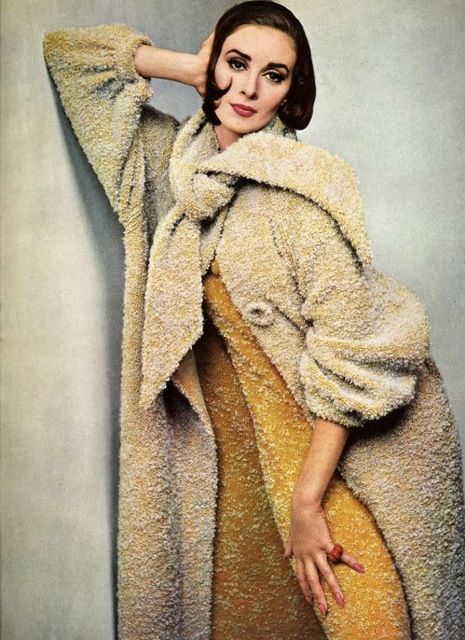
She was one of the most recognizable models of her time and she was considered the last star of the couture era in modeling.

In 1965 she married Bruce Cooper, former executive producer of The Tonight Show Starring Johnny Carson. In 1967 they founded Wilhelmina Models, which became the other leading model agency alongside Ford Models, years before Elite Model Management and other agencies began.

1964 .Wilhelmina Cooper

Wilhelmina Cooper

Wilhelmina Cooper

irving penn,1965ph. Irving Penn, 1965

Cooper’s agency played a major role in launching the career of Naomi Sims, credited as the first African-American supermodel. Sims began her modeling career in the mid-1960s but despite a breakthrough appearance in the New York Times fashion supplement in 1967, she found it difficult to get work. Sims approached Cooper and told her that she would send out copies of the Times supplement to agencies and that Cooper would receive a commission on any work Sims received from this. Within a year, Sims was earning US$1000 a week; in 1968 she appeared on the cover of the Ladies’Home Journal and the following year she appeared on the cover of Life magazine.

On 1 March 1980, Cooper died of lung cancer at the age of 40 in Greenwich Hospital.

According to her obituary in Time magazine:

During her cover-girl days, Wilhelmina boasted that she was “one of the few high-fashion models built like a woman.” And she was. With her 5 ft. 11 in., 38-24-36 frame, doe eyes, delicate cheekbones and mane of high-piled dark hair, she epitomized the classical, aristocratic look that she helped to make the style standard of the 1950s and ’60s…

Wilhelmina Cooper

Wilhelmina Cooper

Wilhelmina Cooper

vogue , 1965

Cooper’s daughter, Melissa, told Michael Gross (author of “Model: the Ugly Business of Being Beautiful”) she believes her mother chose to kill herself with cigarettes instead of facing, and fixing, her horribly imperfect life, suffering as an abused wife of an alcoholic husband.

Cooper was portrayed by Faye Dunaway (who won a Golden Globe for her performance) in the 1998 movie Gia, which tells the story of Gia Carangi, a model who was discovered by Cooper and later died of AIDS.

In American sitcom Ugly Betty, the antagonist Wilhelmina Slater (Vanessa L. Williams) is named as a tribute to Cooper. Her nickname, Willy, and the fact that she became a successful businesswoman in fashion after being a model were attached directly to the character.

Wilhelmina Cooper

.

Movie

Gia film poster

Gia is a 1998  biographical film about the tragic life and times of one of America’s first supermodels, Gia Marie Carangi. The film stars Angelina Jolie as Gia and Faye Dunaway as Wilhelmina Cooper.

Gia Carangi is a Philadelphia native who moves to New York City to become a fashion model and immediately catches the attention of powerful agent Wilhelmina Cooper. Gia’s attitude and beauty help her rise quickly to the forefront of the modeling industry, but her persistent loneliness after the death of Wilhelmina drives her to experiment with mood-altering drugs like cocaine. She becomes entangled in a passionate affair with Linda, a make-up artist. Their love affair first starts when both pose nude and make love to each other after a photo shoot. However, after a while Linda begins to worry about Gia’s drug use and gives her an ultimatum; Gia chooses the drugs. Failed attempts at reconciliation with Linda and with her mother, Kathleen, drive Gia to begin abusing heroin. Although she is eventually able to break her drug habit after much effort, she has already contracted HIV from a needle containing infected blood.

.
.
Wilhelmina Cooper
.
.

info:Wikipedia

Lud, a Russian Exile, one of Horst P. Horst’s favorite Models

4 Oct
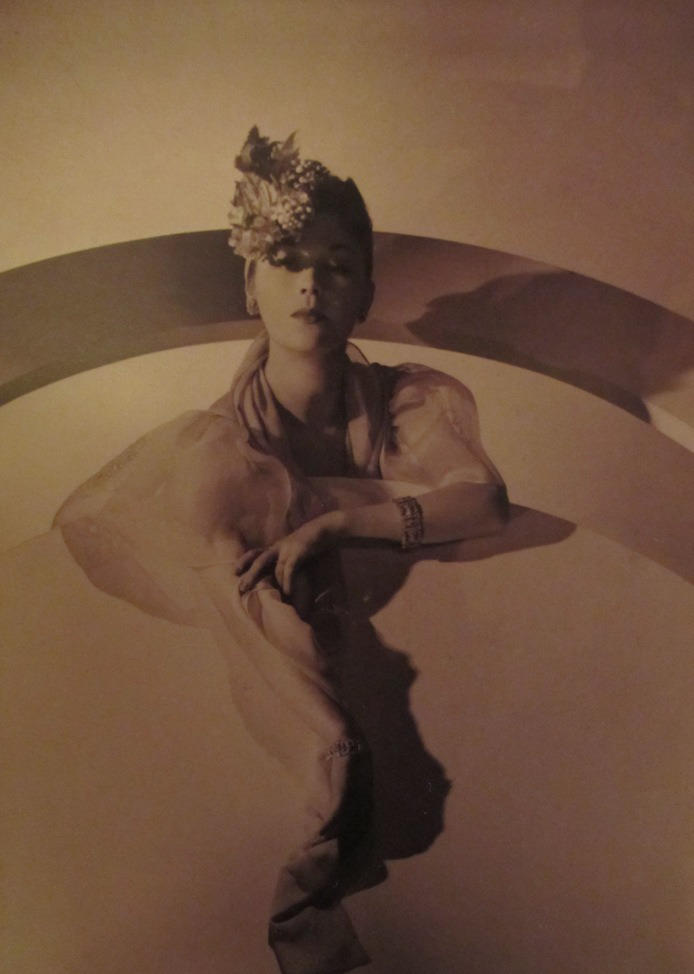
Lud by Horst P. HorstLud wearing Cartier jewels, ph. Horst P.Horst

..
Lud looked, and was, solidly Russian. She had the cheekbones, the lips at once frankly sensual and playfully amused, the slightly upward slanted eyes that hinted at something distantly, fantastically oriental. Those eyes were her greatest feature, because they were different in every photo, from every angle the blue of ice one moment, the blue of warm bright gemstones the next, powerful proof of the Russian’s proverbial variety of moods.
.

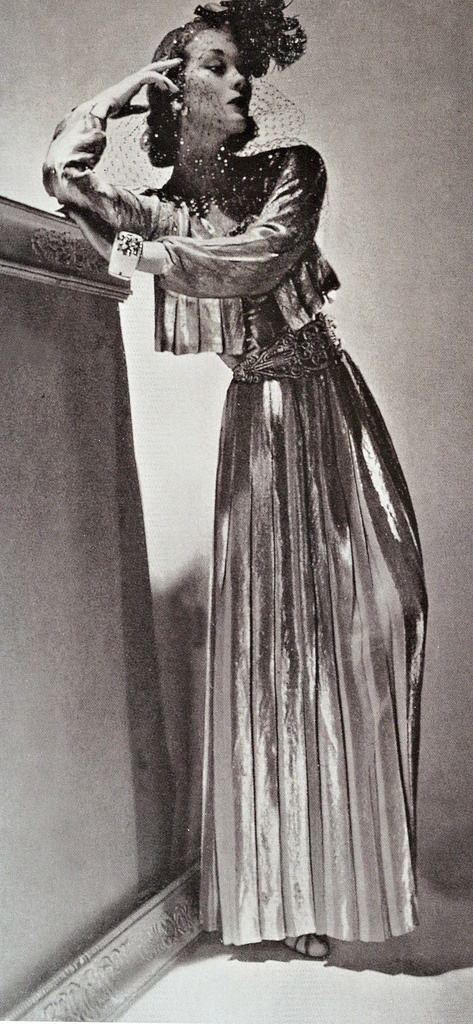
Lud by Horst P. HorstLud by Horst P. Horst
.

Born Ludmila Feodoseyevna in St Petersburg in 1913 to a vice-governor of Vladimir province, Lud escaped with her family to the Crimea after the Bolshevik revolution, thence to Constantinople, Greece and France. In exile, Lud proved to be more than just a pretty face. While her widowed mother struggled to make ends meet, Lud took high grades at a French lycée and planned to enter university to study philology.

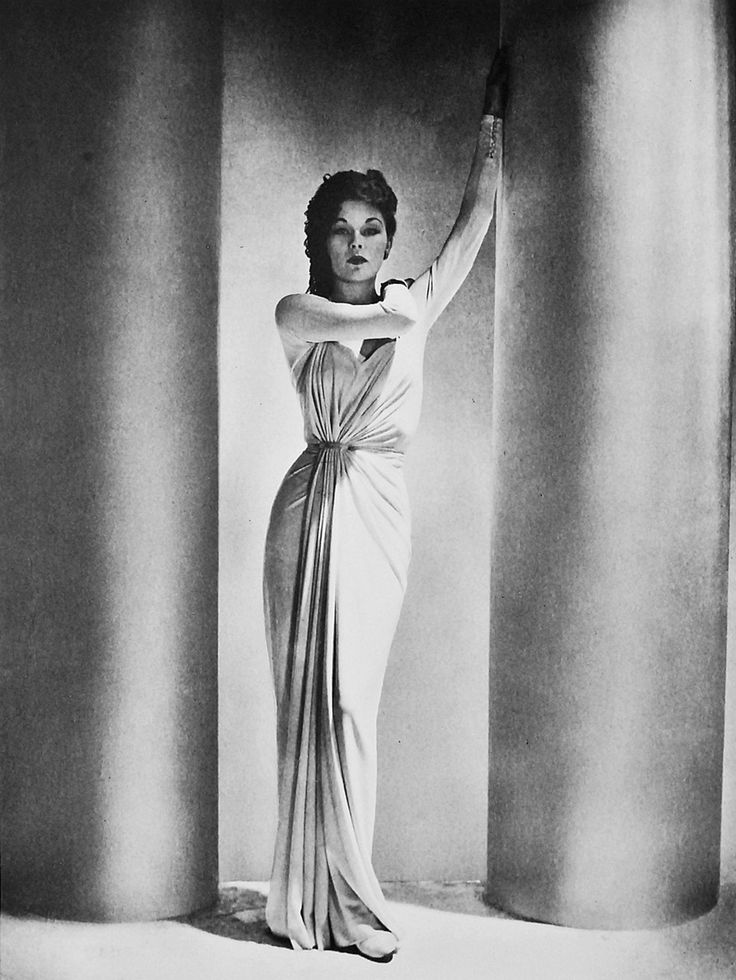
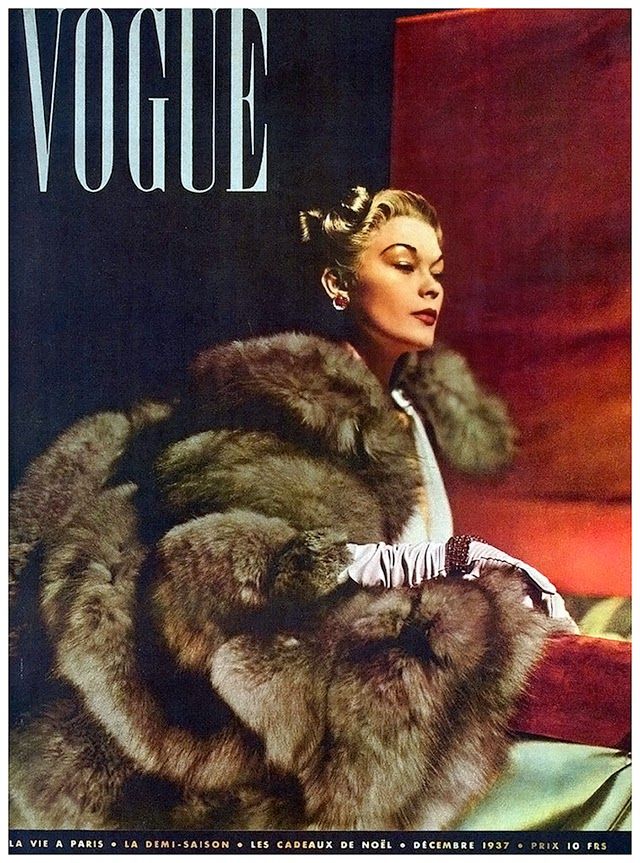
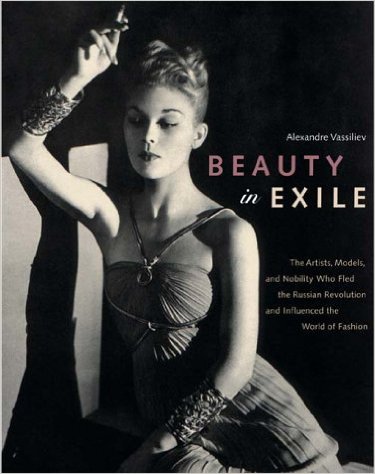
Fate determined a different course for Lud when the famed photographer Horst espied her delivering dresses to Vogue’s Paris studios (she got the wrong ­studio and ended up throwing it at the photographer in a temper, and became one of his favourite models) . Thus at age eighteen, Lud began what was to be a fabulous modeling career, first with the house of Countess Vera Borea, then Patou, then Chanel. She married a French marquis, and knew the delicious experience of having rivals Elsa Schiaparelli and Coco Chanel vie graspingly for her services. In 1937, wearing a draped white gown from Alix  (Madame Grès) and posed like some lethally beautiful Medea between fluted columns, Lud was photographed by Horst in what Alexandre Vassiliev  (writer of ‘Beauty in Exile’) describes as “one of the immortal images of twentieth century fashion.”

Alix Dress, Lud, 1938 Horst P HorstLud in Alix (Madame Grès) Dress, by Horst P Horst, 1937
.

We all know beauty and wealth do not guarantee happiness, but the gods sought to use Lud to press the point home. First her marriage to the marquis failed; she married again, to a naval engineer, and began to appear in films. She left France for a time, living first in Argentina and later in the United States, and her second marriage broke up. By the time she returned to France in the early 50’s and began working for Balenciaga, she sensed that somehow her sun had set. There were financial woes, brought on by her unflagging addiction to high living. She ended up taking a job at the Slenderella beauty institute, earning some cash on the side by singing in the chorus of the Paris Opéra. In 1959, the once glorious Lud was living in the resort town of Le Touquet, where the only work she could find was as an airport clerk. When that job ended, she found a new position, as head of curriculum at a private school, and when that job ended, Lud was hired as director of a home for aged Russians, where among the charges she oversaw was another faded Russian model, Princess Maria Eristova. Still, there was a little happiness for Lud at the end: in 1982, she married a childhood friend, Pierre de la Grandière, and lived with him in the French Alps until her death from cancer in 1990.

Lud in more photographs by Horst

Ludmila Feodoseyeva aka Lud in Chanel 1937 Ivory cuff bracelet by Verdura Photo by Horst P. HorstModeling a Chanel dress & Ivory cuff bracelet by Verdura, 1937
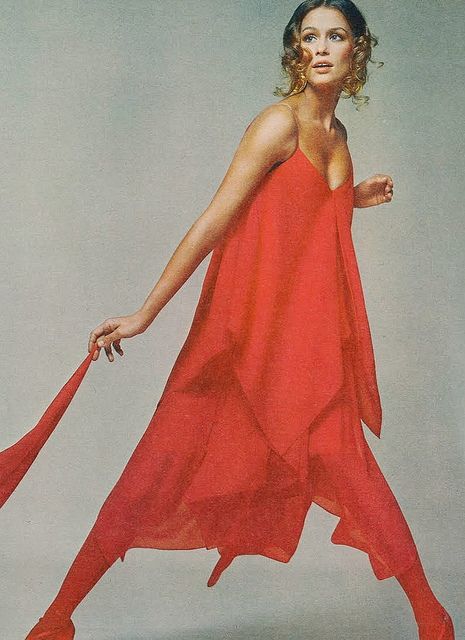
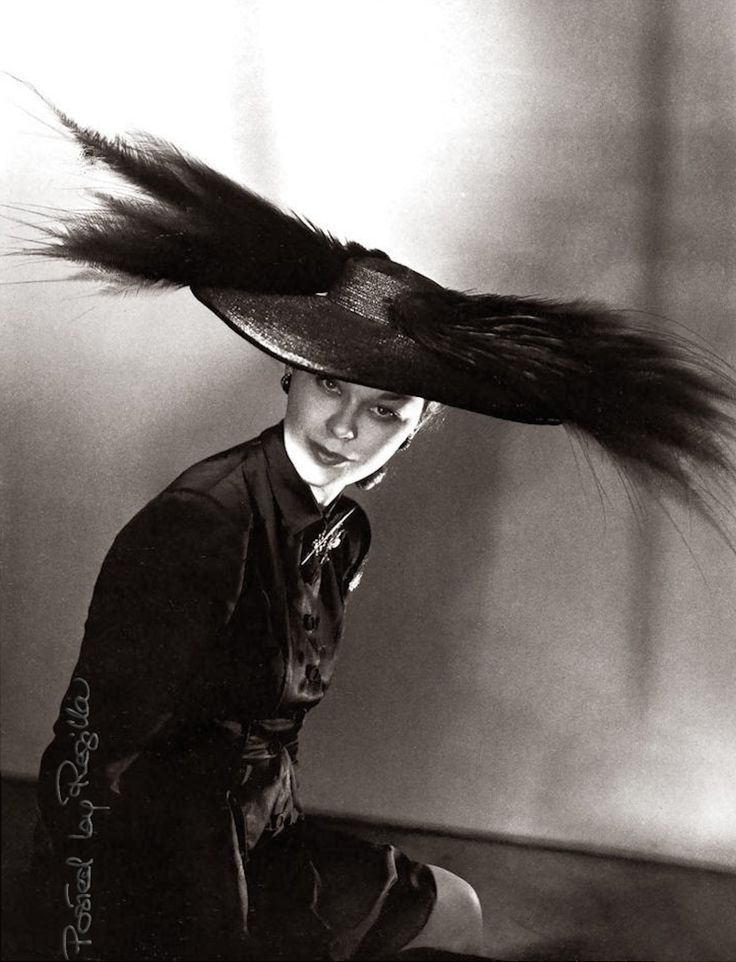
Schiaparelli hat modeled by Lud photograph by Horst 1946Moddeling a Schiaparelli hat 
Lud by Horst P. Horst
Ludmila Feodoseyeva (aka Lud), 1937
Lud by Horst P. Horst

In describing her mother, Lud’s daughter also gives a fair account of most of the other artistic Russian émigrés. Lud feared nothing and no one, remembered her daughter, never hesitating to sail a boat out onto a stormy lake or take a stroll through a crime-ridden Paris purlieu. Lud was in love with living: “She was the daughter of Epicurus”.

Life for Lud, and indeed, for most of the Russian exiles living in Europe or Great Britain, America northern or southern, was far more colorful and probably far more blessed with longevity than it would have been had they or their parents remained in Soviet Russia. Thanks to Alexandre Vassiliev’s  study of just where these many-colored threads began and ended, we can know that there was, after all, a future for them.

1937 Paris Vogue cover. Lud by Horst P. Horst1937 Paris Vogue cover ph. by Horst P. Horst
.

Lud was once described as “a lethally beautiful Medea”.

It is said that she cut off parts of her breasts and thighs to make her figure the perfect silhouette for Horst photographs! Prove of this cannot be found…..


.
.

Book

Bookcover

Beauty in Exile

The Artists, Models, and Nobility who Fled the Russian Revolution and Influenced the World of Fashion

by Alexander Vassiliev

http://www.amazon.com/Beauty-Exile-Nobility-Revolution-Influenced/dp/0810957019

.,

The Russian model Lud, a favorite of Horst 1939 photographer unknown.Lud in 1939, photographer unknown

.

.

Info:

http://www.vassiliev.com/review.htm

http://dianesmakeup.com/horsts-very-modern-muse/

Lauren Hutton, Facts of her Life & Career
27 Sep
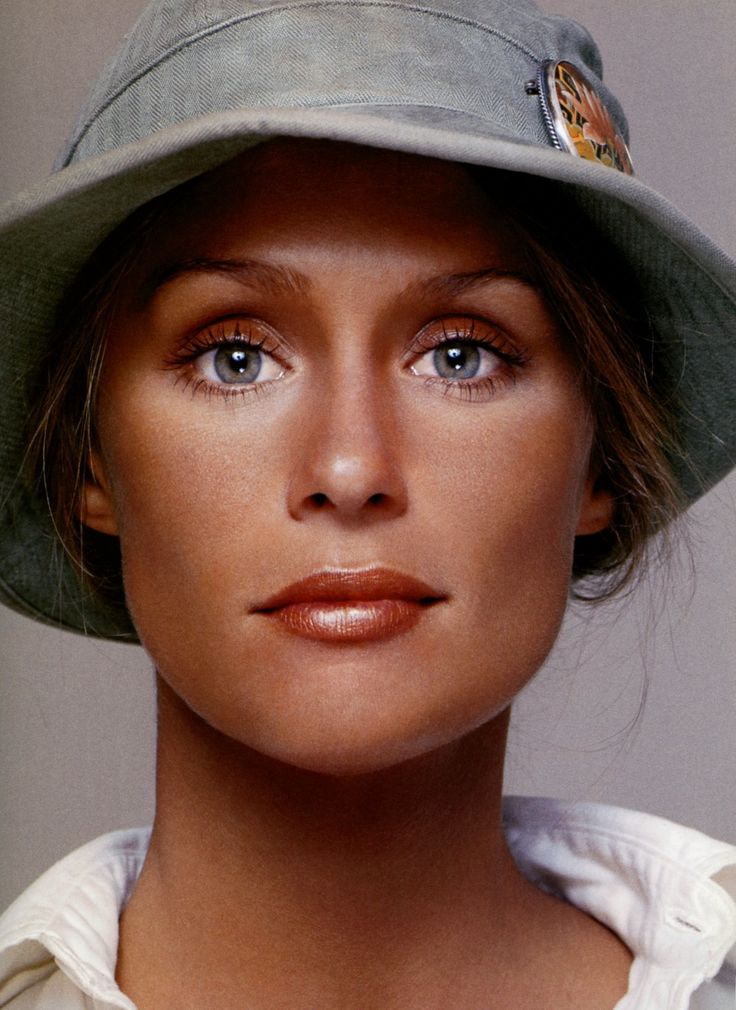
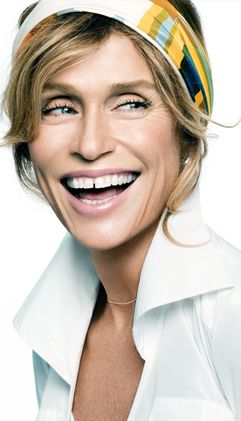
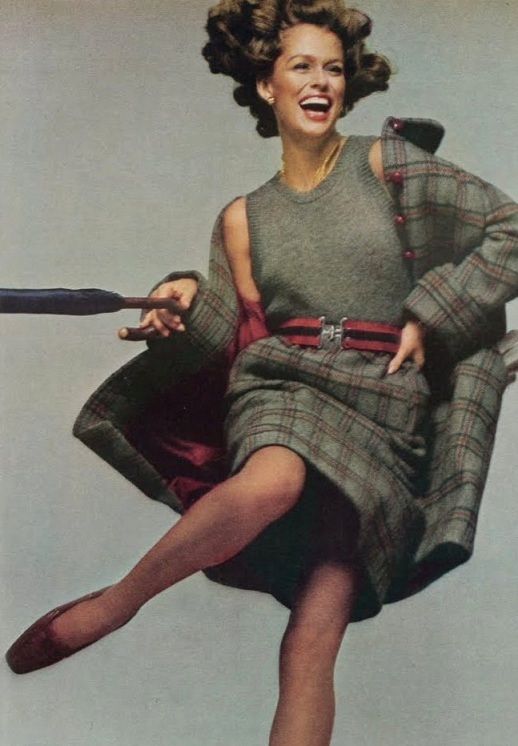
Lauren HuttonPh. by Richard Avedon, 1973
.

Lauren Hutton was advised to correct the slight gap in her teeth and tried using morticians’ wax to cover the gap, cutting a line in the middle of it; this was followed by the use of a cap, which she would often swallow, laugh out or misplace. She eventually retained this “imperfection”…..

Lauren Hutton

Hutton, who is now 71, was the Kate Moss of her time – almost as famous for her partying as for her incredible and enduring fashion career – and the outspoken beauty explained that there were millions of dollars to be made from modelling, even in the Seventies.

She was illiterate until age 11. After her mother remarried (Hutton never knew her father), the family of three moved from Charleston to the swamplands of Tampa, which she calls “a magical place.” Hutton spent her days as a carefree tomboy, and learned how to interact with wildlife from her stepfather.

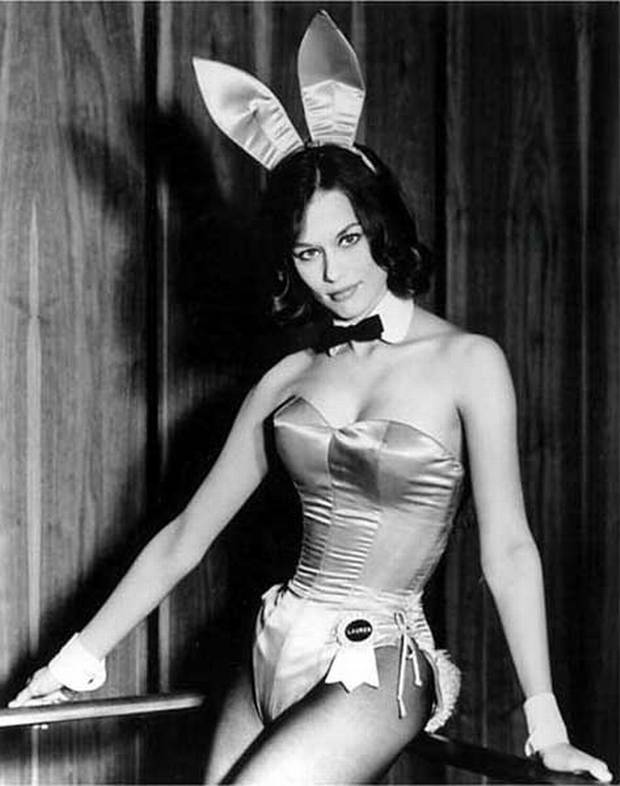
She first came to NYC for a few-month stint, earning her rent as a “Lunchtime Bunny” at the Playboy Club. (She explained that the position of “Lunchtime Bunny” was reserved for 18-20 year-olds). She was there around the same time that Gloria Steinem and Debbie Harry were also working at the Club, although they never interacted, since the ladies who would later be known as the godmother of feminism and Blondie, respectively, had the distinction of being Nighttime Bunnies.

Lauren HuttonLauren Hutton as a Lunchtime [Playboy] Bunny
.

She was born as Mary Laurence Hutton, but blame it on Playboy for the switcheroo: There were apparently too many cocktail waitresses named Mary, so she decided to riff on her middle name and go with Lauren, inspired by none other than Lauren Bacall.

Hutton got into moddeling after she saw a want ad in the New York Times for a Christian Dior model, “experience required.” Her friend’s boyfriend told her she needed to go to the audition anyway. “I said, ‘I don’t have experience,and he said, ‘Of course you do.’ I had my first great New York lesson: Lie.” She did get the job—though the fact that she offered to do it for less than minimum wage ($50 a week) was probably also a factor.

.

.

Hutton about her first meeting with Vogue editor Diana Vreeland. “‘You have quite a presence,’ Vreeland told me. I did not know what presence meant.  I figured it was good. I said, ‘Yes ma’am, so do you.’ She said, ‘You stay after.’ I opened my book and she said, ‘I think I’ll call Dick [Avedon.]'” 

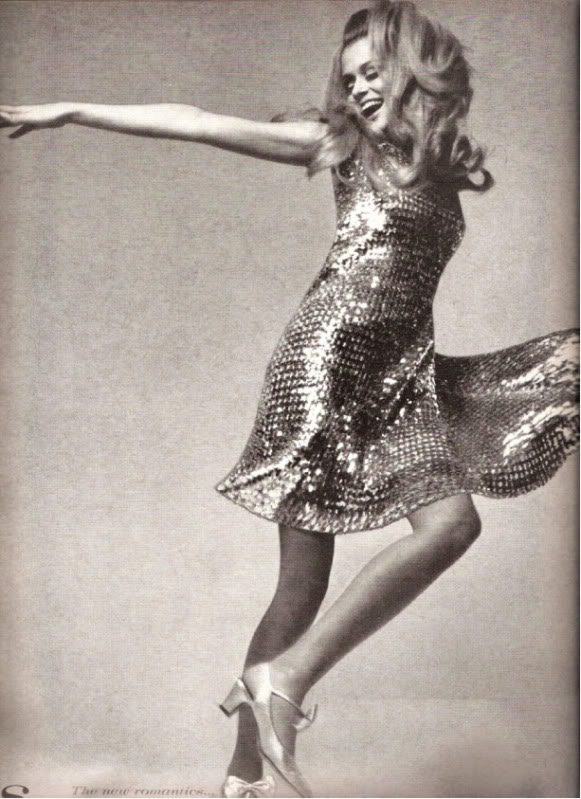
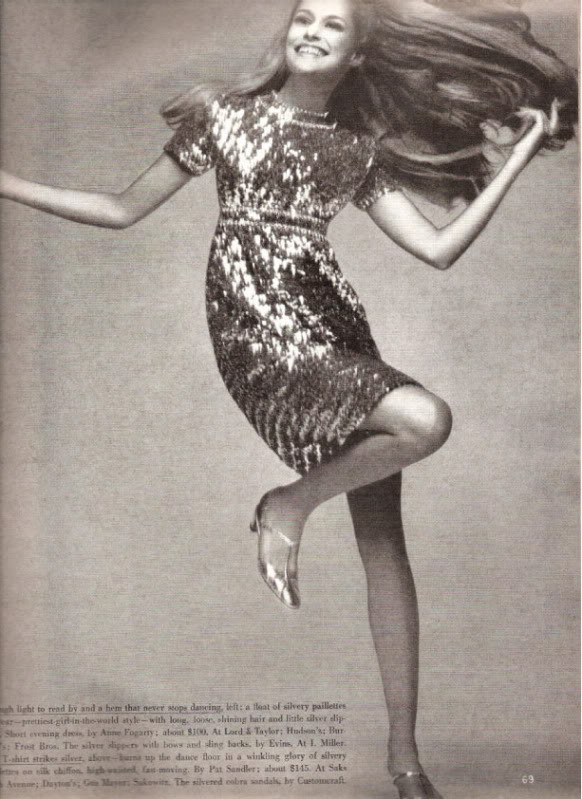
It was her first big shoot with famed photographer Richard Avedon, and things were not going well. “I was trying to be Veruschka, and that was terrible,” she says. When, in the hopes of finding something that would inspire her, Avedon asked her questions about her childhood, she revealed that she used to love jumping over snakes. He told her to leap and jump in the photo, and the rest was history. “That started the run-and-jump pictures…because I couldn’t model.”

Run-and-Jump Pictures by Richard Avedon

Lauren Hutton by Avedon

Lauren Hutton by Avedon

Lauren Hutton by Avedon

Lauren Hutton by Avedon

Lauren Hutton by Avedon 1971

Lauren Hutton by Avedon 73

She was the very first model to nab a beauty contract—and it was all her idea. Up until then, modeling was an occupation that was paid by the hour. But Hutton knew that she was a hot commodity. “Twiggy had quit, Veruschka was doing something else, Shrimpton was off doing something else—everyone had quit. I was the only one left!” But when she caught a glimpse of a New York Times article about a man who had received a $1 million contract for his own job, she said, “How can I do that?” She mentioned her idea to Avedon, who told her to up the ante and make it exclusive. She pitched it to Revlon, and in 1973, at age 31, she signed the first-ever modeling contract with Revlon for a sum of $400,000. She was the face of the mega-brand until they let her go about 10 years later.

.

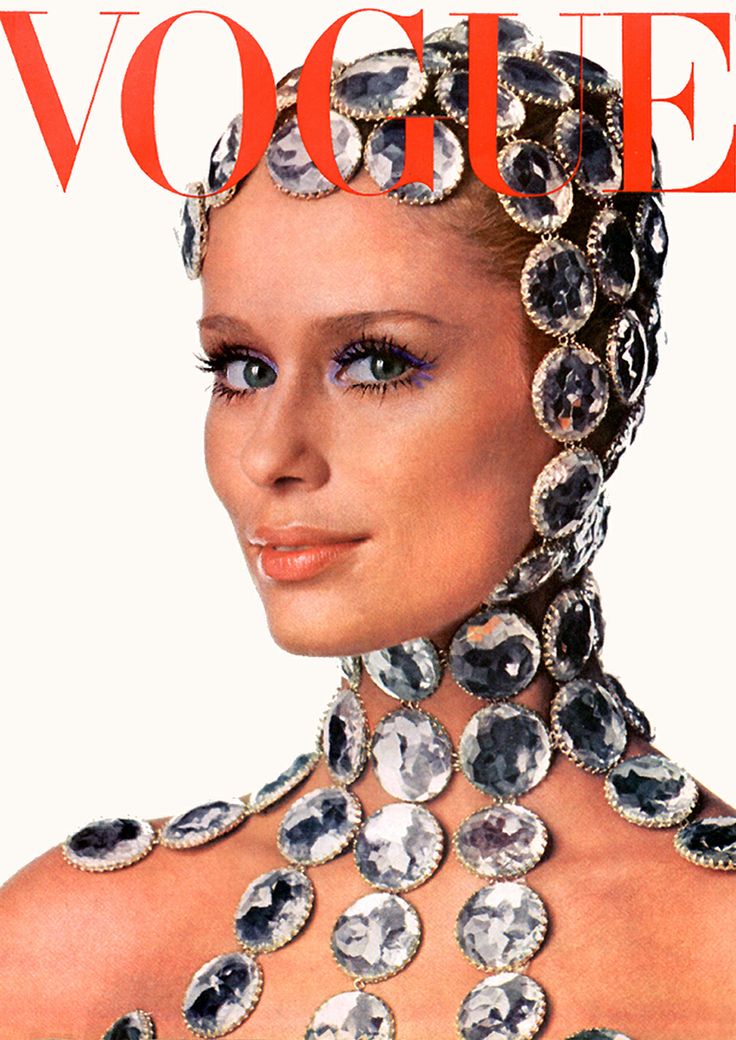
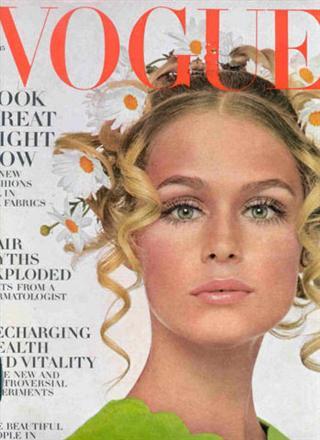
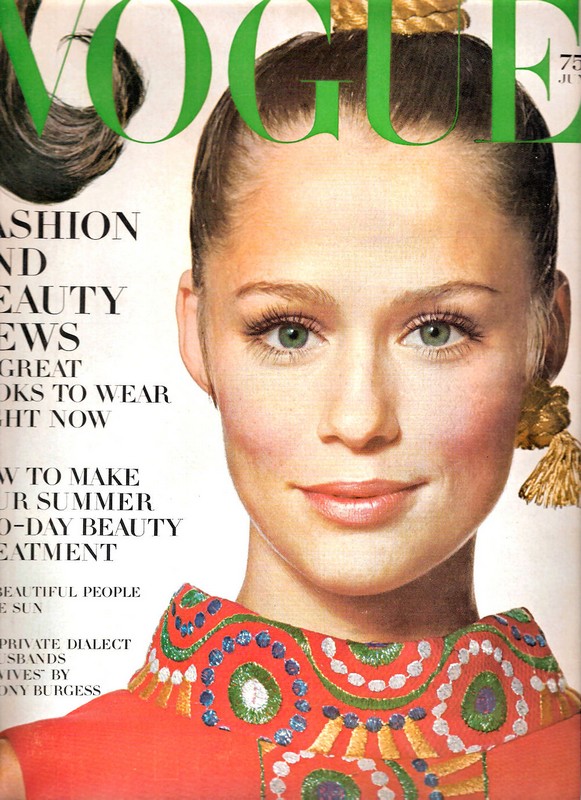
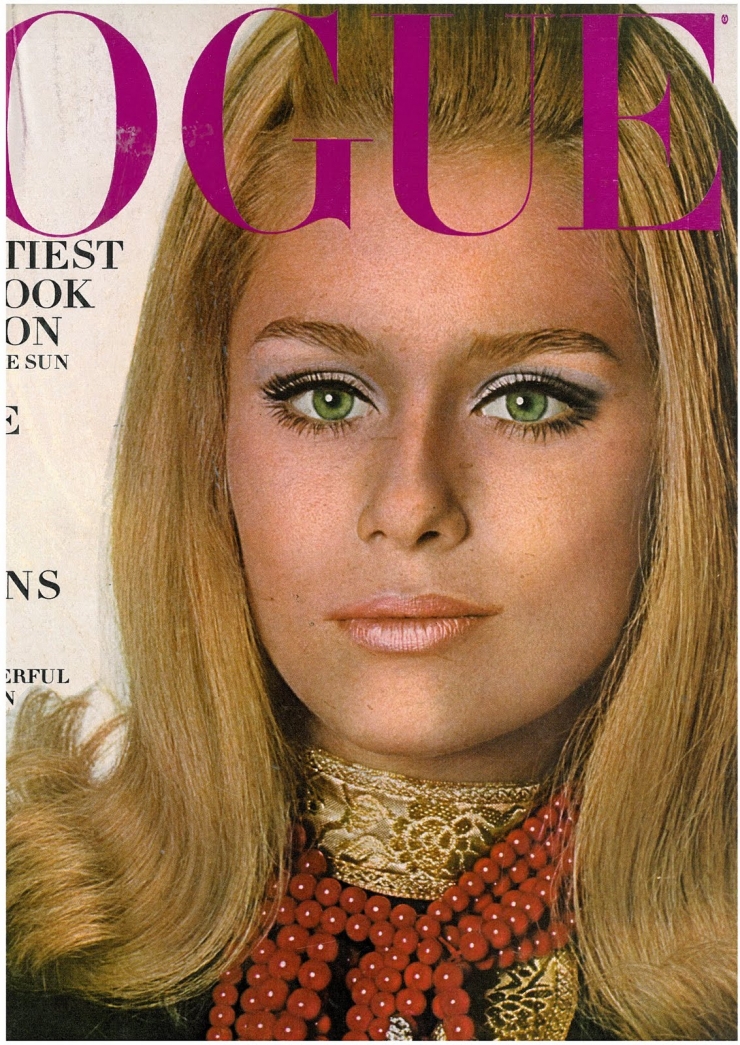
Lauren Hutton appeared on the front cover of Vogue magazine a record 41 times!

Lauren Hutton by Irving Penn, December 1968.

-lauren-hutton

Irving Penn vogue

-lauren-hutton

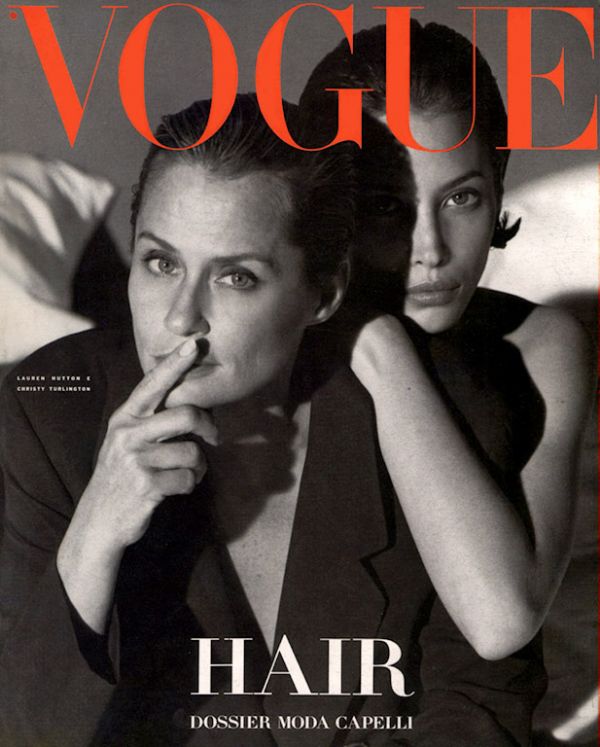
lauren-huttonLauren Hutton & Christy Turlington
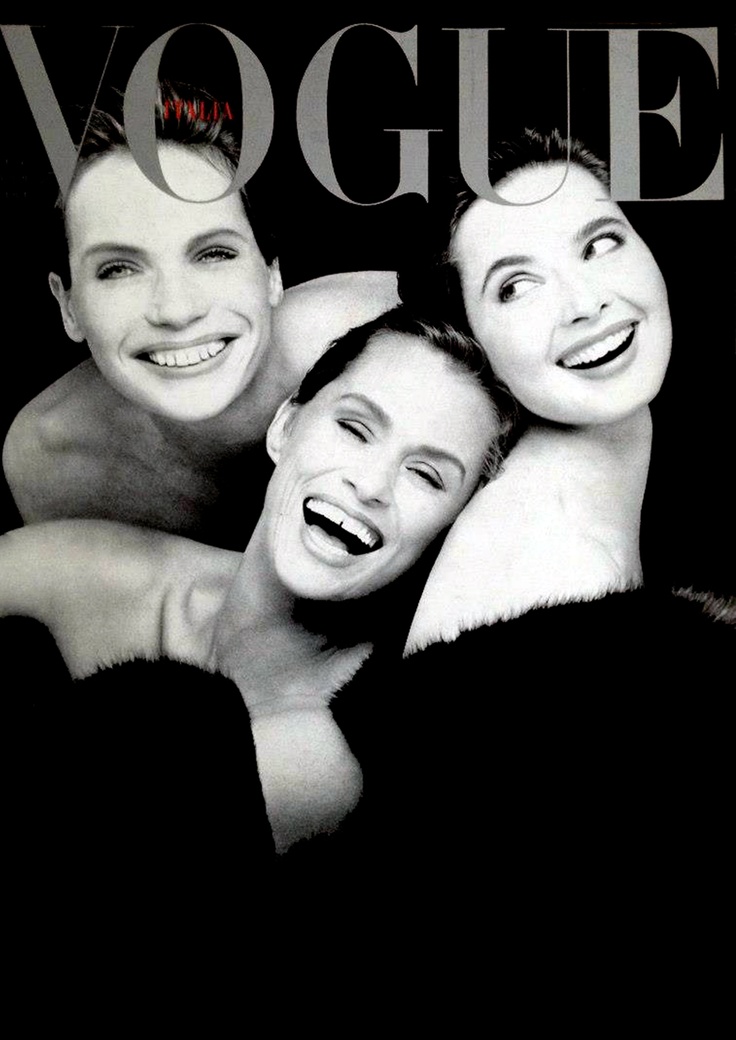
Veruschka, Isabella Rossellini Lauren Hutton by Steven Meisel 1988.Veruschka, Isabella Rossellini Lauren Hutton, Steven Meisel 1988

.

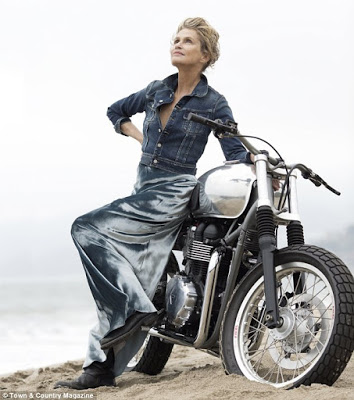
In October 2000, Hutton joined a motorbike group, which included actors Dennis Hopper, Laurence Fishburne and Jeremy Irons, to celebrate “The Art of the Motorcycle” exhibit at the Hermitage-Guggenheim museum in Las Vegas, Nevada. Prior to the journey, Hutton informed the Las Vegas Review-Journal: “I love the feeling of being a naked egg atop that throbbing steel. You feel vulnerable — but so alive.” En route, Hutton crashed near Hoover Dam, on the border between the US states of Arizona and Nevada, going over 100 miles (160 km) per hour, and suffered multiple leg fractures, a fractured arm, broken ribs and sternum, and a punctured lung. Hopper later recalled from before the start of the ride: “She had on a little helmet, sort of tied under her chin. It was cute. And Jeremy [Irons] came up to her and said, ‘You got to be kidding.’ He took it off her and gave her a proper helmet.”

Lauren Hutton


.

About American Gigolo:

“Everyone knew it was great, that it was ahead of its time. Paul [Schrader] had been trying to get it made for ten years. He’s a genius idea man, and a genius producer. He was one of the first people to use popular music the way he did in that film, with Blondie. Originally, John Travolta had the lead role. He was fresh off of Saturday Night Feverand Grease, which together had made a quarter of a billion dollars. There were entire rooms in Paramount stuffed with his fan mail. What happened was, two weeks before we were to start, John’s mother died. He was just a 24 year-old kid. He was in real agony. Then his dad had a heart attack. So John asked for a two week extension so he could pull himself together emotionally, and also lose some of the weight he’d put on during this time. And they wouldn’t give him an extension. Everyone was going to sue him. It was just a mess. So what John had to do to get out of it, was give Paramount a deal where they chose his movies, and he had no say. And prior to that, John had what no other actor in town had, which was final cut. Plus, John was very romantic. If John had played the role, it would have been much more romantic and you would have seen the gigolo kiss. With Richard [Gere], you never really see the gigolo kissing. You see everything leading up to it. You see his expertise in dressing, more than his expertise at romance.”

“The character of Julian Kaye was a bit removed and completely narcissistic. It was his narcissism that blinded him to the conspiracy around him, but you would have had a populist hit if there had been more romance in the film. As it was, it wasn’t a hit when it came out, but became a classic in retrospect on cable and home video. So we ended up being lucky, because Richard is such a wonderful actor, and he became a star because of that role, deservedly.”

.

.

Lauren Hutton

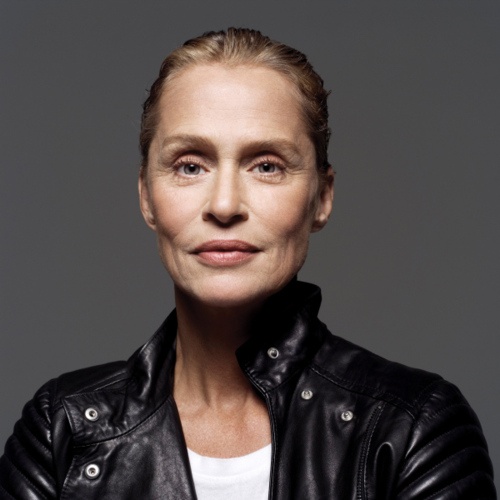
“We have to be able to grow up. Our wrinkles are our medals of the passage of life. They are what we have been through and who we want to be. I don’t think I will ever cut my face, because once I cut it, I’ll never know where I’ve been.” 

Lauren Hutton


.

.

info:

Wikipedia

http://www.vogue.co.uk/news/2014/05/16/lauren-hutton-interview—model-on-fashion-and-dating

Click to access LAUREN_HUTTON.pdf

Jane Forth, Teenage Model & Warhol Superstar

20 Sep

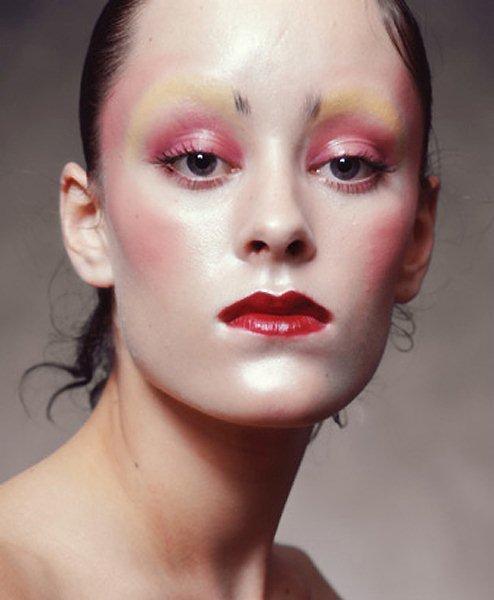
Jane Forth by Jack MitchellJane Forth by Jack Mitchell

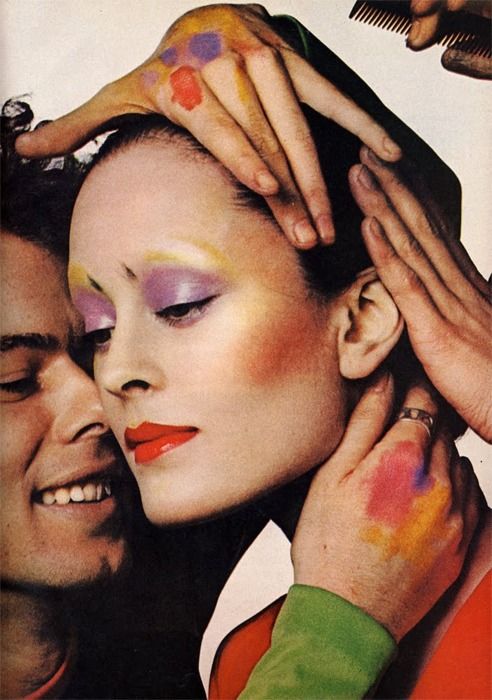
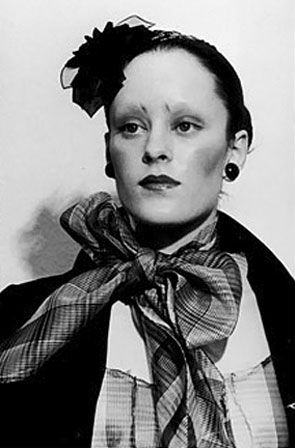
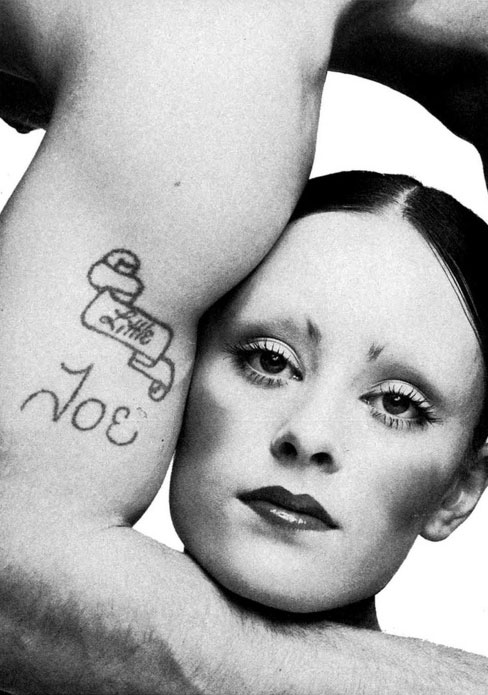
In July 1970 Jane Forth, teenage supermodel appears on the cover of Life magazine. The four page colour spread with photos by Jack Mitchell was titled “Just Plain Jane” and described Forth as “a new now face in the awesome tradition of Twiggy and Penelope Tree.” It also noted that she had just turned seventeen and “claims no special talents.”

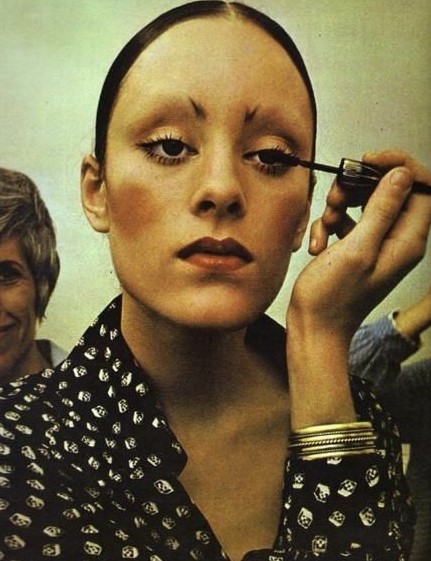
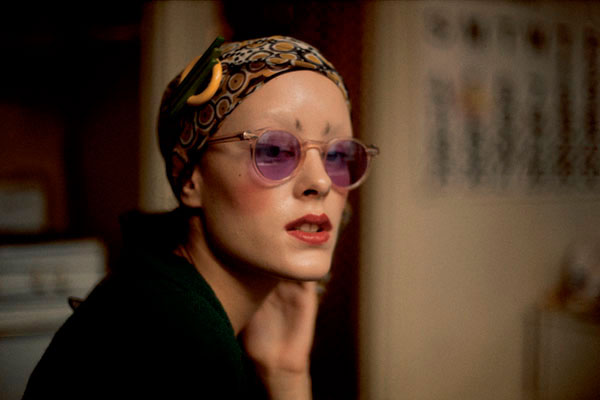
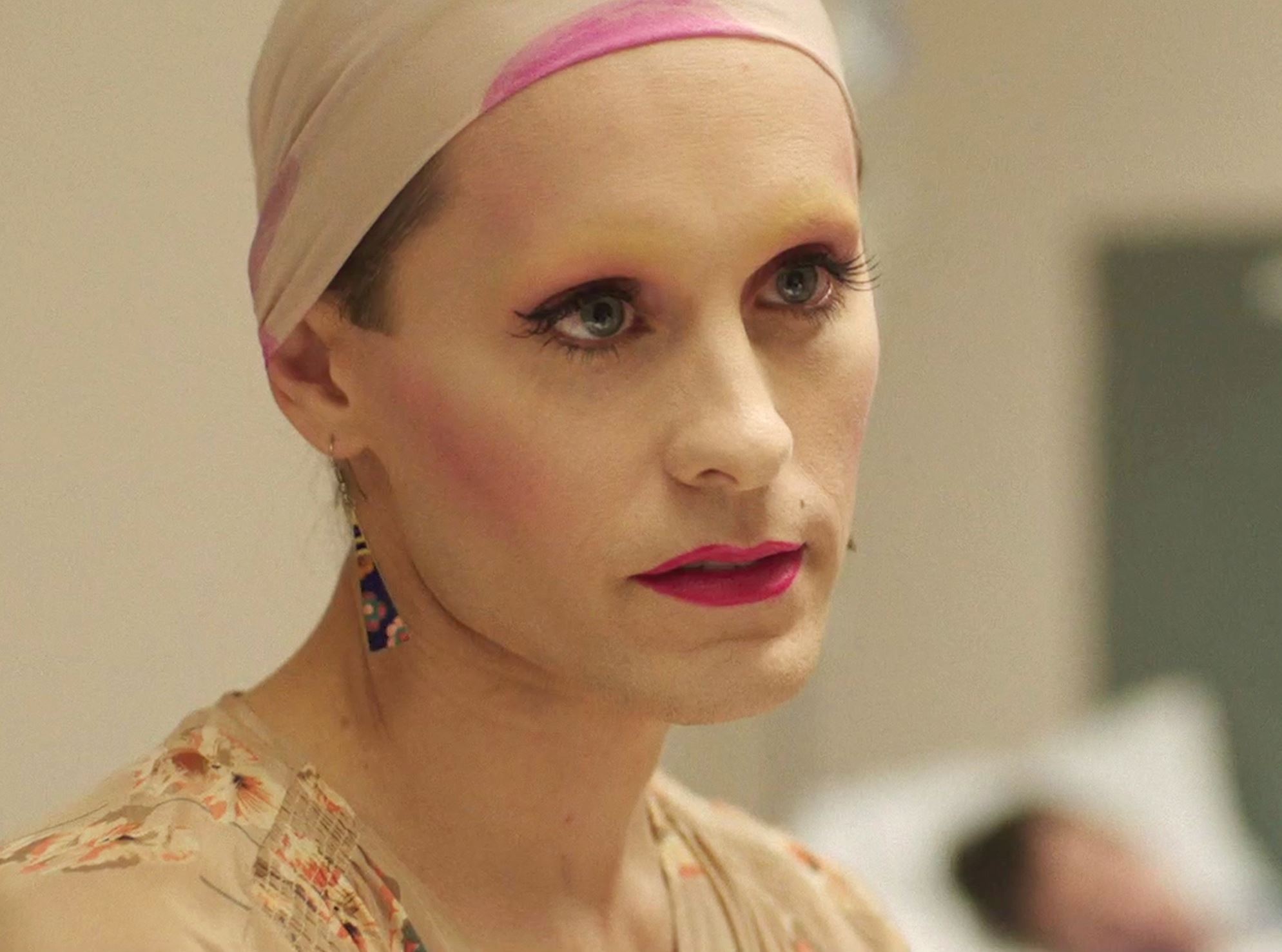
She was featured not only in several of Andy Warhol’s movies, but in the pages of American Vogue,Harper’s Bazaar, and many more magazines of the time. She modeled early wrap dresses for Diana Von Furstenberg and apprenticed with Halston. Known for her original style, and creative hair and makeup – she inspired many with her look then and now – including the creators of Dallas Buyers Club, who referenced her photos as inspiration for Jared Leto’s character in his Oscar winning role.

Jane Forth

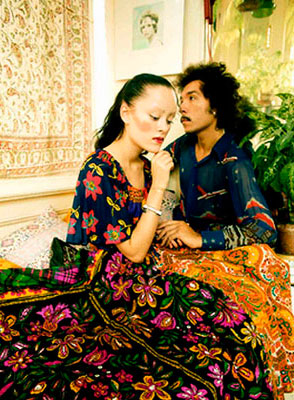
Jane Forth & Antonio LopezJane Forth & Antonio Lopez

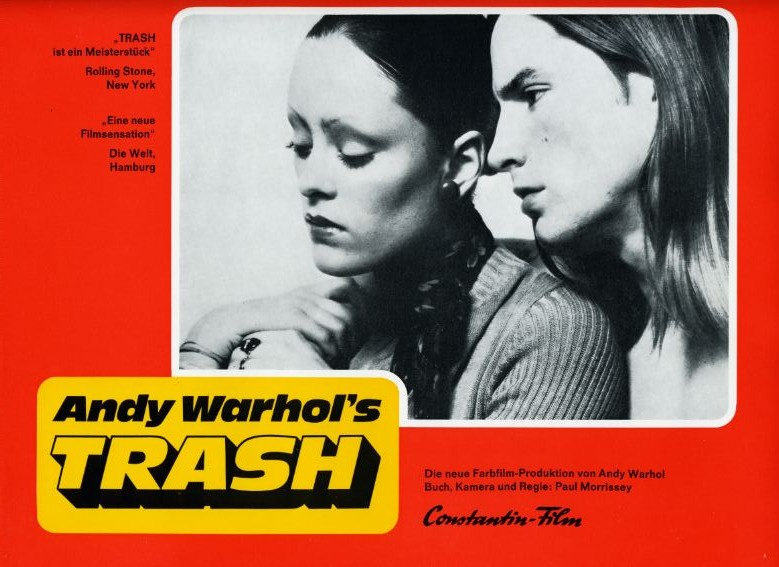
Jane-ForthForth became a sensation, Warhol Superstar and the downtown New york It Girl. Discovered working as a receptionist at the infamous Factory, she appeared in Warhol’s films ‘Women in Revolt’, ‘Trash’ and ‘L’Armour’. She also became the creative inspiration to fashion’s editorial elite.

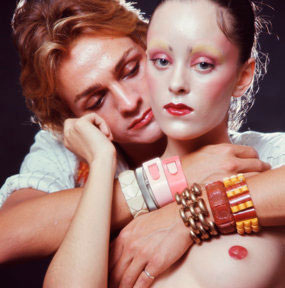
In een interview in 2014, Forth (born 1953) recalls the inspiration behind her own famous use of make-up. She was being pulled toward older movies, particularly black-and-white films “due to their contrast,” she says. Forth’s favorites included Clara Bow, Claudette Colbert, Bette Davis, Hedy Lamarr, Dorothy Lamour, Vivian Leigh, and Myrna Loy. To develop her own style, she says, “I experimented with many different looks as a young adolescent. I was not consciously looking to create something new as an image. I took my inspirations one step further and mixed it with my own creativity and artistic eye and my look appeared. It felt right and it felt very comfortable to me when I finally found it.

Jane Forth

Jane Forth

“There were no hair products in those days. There was like Aquanet hairspray and shampoo. There were very little choices for products. I started to like the idea of very shiny hair– shiny hair pulled back, very flat and put in a bun. So that’s how I started to use Wesson oil. I would use cooking oil and I’d slick my hair and make it almost like patent leather!

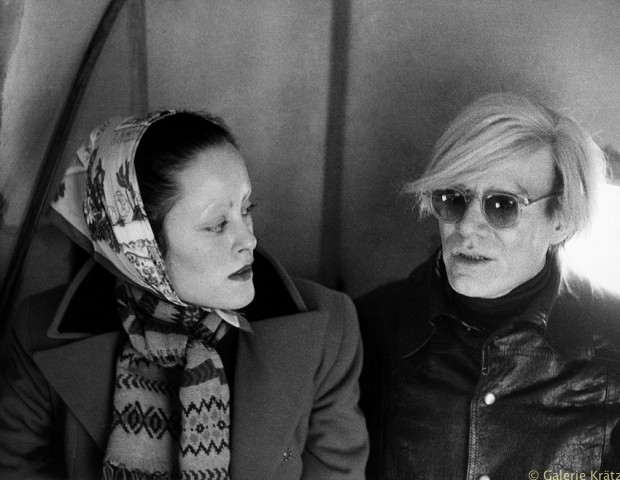
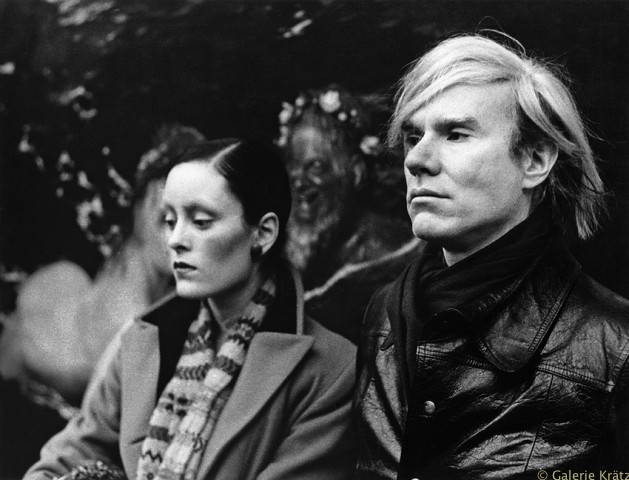
To the question how she met Andy Warhol, Forth answers: “I had a boyfriend by the name of Jay Johnson. He was my first boyfriend and he had a twin brother. His twin brother was Jed Johnson, who was Andy’s boyfriend for many, many years. Jed lived with Andy for many years. I was seeing Jay, who is still alive and kicking. We had to go meet his twin brother Jed and that was in Andy’s home on Madison Avenue in his brownstone, where he lived with his mother. It’s odd because very rarely did anyone ever get to enter that brownstone, and that was my first meeting, which was actually in his home in his bedroom. It was a very unusual situation, because so many people (except for maybe Paul Morrissey and Jane Jett) were ever in that brownstone—and Fred Hughes. So, Jay had picked something up, and I was sitting in Andy’s bedroom. I remember there was a beautiful powder blue satin quilt on the bed. I was sitting there not even knowing whose home I was in, and just sort of rubbing my hand on this quilt, and I heard a voice go, ‘And who are you?’ I turned around and I said, ‘Oh, hi. I’m Jane. And I’m Jay’s girlfriend’ and that was it.”

Jane Forth & Andy Warhol

Jane Forth & Andy Warhol

Jane Forth & Andy Warhol in der Kutsche, Bayern 1971

Jane Forth & Andy Warhol

Jane Forth & Andy Warhol

Forth traveled with Warhol and attended events with him. Yet her recollections are marked by more private moments Forth recalls, “My most vivid memory of Andy was receiving phone calls in the middle of the night from him to see if I was watching the same classic movie that he was watching.” And she usually was, she remembers. Forth also recalls spending summer weekends in Southampton with Warhol, Jed Johnson, Peter Brant, and Fred Hughes. On Sunday mornings, Warhol would sit under a giant tree and read the newspaper. Hughes would play Gershwin’s Rhapsody in Blue and the group would at times venture into town to buy rhubarb pies, lobster salad, and fresh berries. She adds, “I would always buy my Yoo-hoos [chocolate milk]. I loved Yoo-hoo. […] It would be so quiet, relaxed, beautiful, so normal and peaceful and tranquil.”

About Andy Warhol:

There were many faces of Warhol and it depended on your relationship with him and where you came into play with him. I can only speak to my relationship with Andy, in which he was very warm; he was very talkative with me. He was also flirtatious! He could be very flirtatious, absolutely.”

Jane-Forth-Jane Forth & Corey Tippen
Jared Leto in Dallas Buyers ClubJared Leto in Dallas Buyers Club

Forth decided to give up her unique spot among the Factory Superstars. Warhol and her had a fight about it. “I found myself pregnant and did give up my career. I went into a whole different mode. In those days there weren’t a lot of single moms having babies on their own. I raised my child, my son, until I met my husband at that time, Oliver Wood, who I stayed married to for 22 years. He was a director of photography from England and he actually ended up doing  a lot of big movies in Hollywood. That’s who I ended up having two other children—my daughters—with. Later I went into makeup. After I had my son Emerson–when he was about six years old–I decided to start doing makeup for film work and special effects. I went to school at night, I self-taught myself and I got into the union. For many, many years I worked in the film business with makeup and special effects.”

Jane-Forth

Jane-Forth-


.

Trash

Film poster Trash

Jane Forth, then 17 years old, is best known for appearing in Paul Morrissey’s ‘Trash” (1970), alongside Joe Dallesandro. About her part in the movie, she says: “I played an upscale, richer woman who was a very bored, stay-at-home housewife. Well, I created this myself. This was the most exciting thing in the world– to have this junkie break into my apartment. It’s like, I was so bored day in and day out that this was like ‘Wow, this is fun!’”

.

.


Jane-Forth-Veronica-Ibarra-2012Jane Forth in 2012, ph. by Veronica Ibarra

.

Info:

ANDY WARHOL SUPERSTAR JANE FORTH ON THE FACTORY DAYS – EXCLUSIVE INTERVIEW

http://www.refinery29.com/trend-watch

http://www.examiner.com/article/july-4th-1970-jane-forth-i-use-the-cheapest-make-up-on-the-market