Archive | 2013

Body Modification in Fashion; Crinolines, Yohji Yamamoto & Comme Des Garçons

9 Jun

crinoline shop

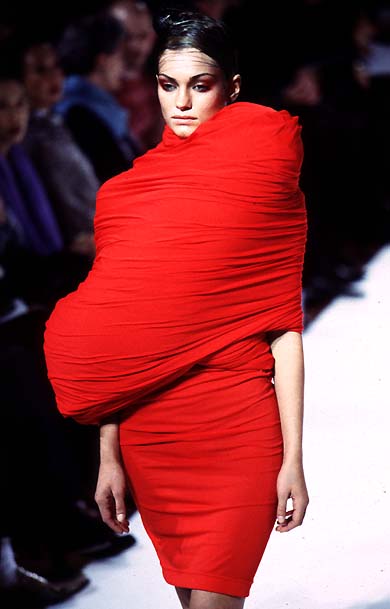
It sounds a bit scary, body manipulation in fashion, but this post is about changing the natural shapes of the body though a garment or undergarment, not changing the body itself. It’s about Crinolines, Yohji Yamamoto and Comme Des Garçons inspired by crinolines and the “Dress Meets Body, Body Meets Dress” collection by Comme Des Garçons. These, together with for instance corsets and shoulder pads, are samples of body modification in fashion.

.

Crinolines

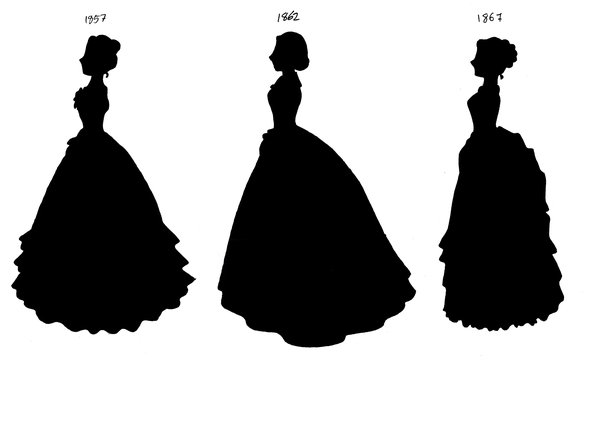
Victorian_Silhouettes_1837_52_by_lady_of_crow

Victorian_Silhouettes_1857_67_by_lady_of_crow

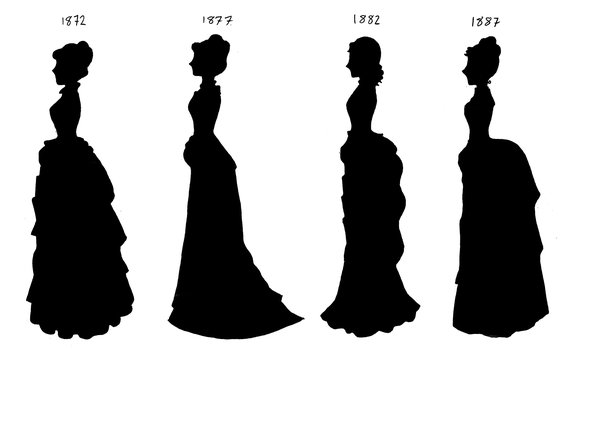
Victorian_Silhouettes_1872_87_by_lady_of_crow

Women did suffer for the sake of fashion for many centuries and many do so today with high heels and plastic surgery. Ridiculously large crinolines, protruding bustles and heavily boned corsets often did restrict movement and the range of activities women could engage in.

In 1837 Victoria ascended to the throne. The fashion press looked to this new young queen to endorse new fashions. Contrary to popular belief Victoria was, until Prince Albert’s death at least, interested in fashion. She was not a frivolous royal leader and her belief in simplicity and demure elegance is echoed by the fashion plates of the day. Gone were the flamboyant fashions of the mid-1830s with the huge balloon-like sleeves, large bonnets and trailing ribbons. Dresses of the late 1830s and 1840s were characterised by drooping shoulders, long pointed angles and a low pinched-in waist.

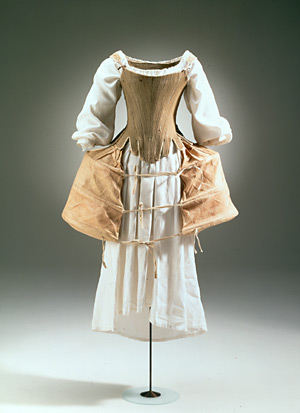
Panniers
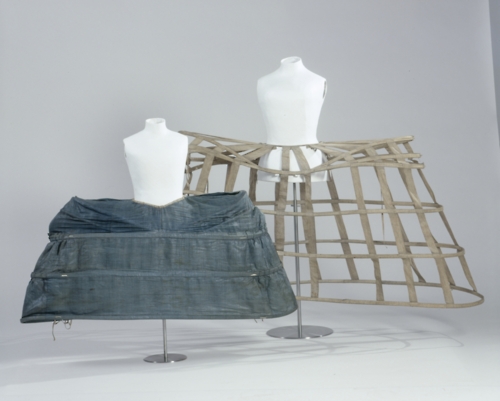
Panniers

tumblr_ltxhbr3Isk1r3u80ao1_500

tumblr_ltxhbr3Isk1r3u80ao3_500

Then fashion changed and the skirts of the new dresses  presented new problems. They increased in size and had to be supported by layers of heavy petticoats which were very hot and unhygienic – particularly in the summer. Bustle-like structures made of down-filled pads or whalebone and stiffened petticoats helped give added support. The most popular type of stiffened petticoat was made out of horsehair and linen which earned it the name crinoline (‘crin’ is the French for horsehair and ‘lin’ the linen thread it was woven with).

The development of the sewing machine in the early 1850s was one of the most important innovations of the 19th century as it led to the mass production of clothes including underwear. Although many corsets and crinolines of the 1850s were still stitched by hand, the speed of sewing on a machine meant that manufacturers could produce in far greater numbers and increase the variety of designs. Corsetry and underwear manufacture therefore became a major industry with a turnover of millions of pounds per year. During the 1850s the skirts became the focus of attention. They grew ever wider and wider, and the flounces and light materials they were made of meant that they needed more and more support. Layers of petticoats including the horsehair crinolines were no longer sufficient, and they were very heavy and uncomfortable. Something more structured was required.

Partial Panniers

il_fullxfull-102705511

corset-chemise-pocket-hoops1

tumblr_lw98v0llYO1qegasto1_500

A patent was taken out in May 1856 for a garment inflated by means of bellows and deflated to enable the wearer to sit down.

In 1858, the American W.S. Thomson greatly facilitated the development of the cage crinoline by developing an eyelet fastener to connect the steel crinoline hoops with the vertical tapes descending from a band around the wearer’s waist. The cage crinoline was adopted with enthusiasm: the numerous petticoats, even the stiffened or hooped ones, were heavy, bulky and generally uncomfortable. The cage crinoline was light — it only required one or two petticoats worn over the top to prevent the steel bands appearing as ridges in the skirt — and freed the wearer’s legs from tangling petticoats.

Unlike the farthingale and panniers, the crinoline was worn by women of every social class. The wider circulation of magazines and newspapers spread news of the new fashion, also fueling desire for it, and mass production made it affordable. It took several years for high society to accept the wearing of the cage crinoline as it started as — and remained in perception — a middle class affectation. It not only freed women from the weight of massive numbers of petticoats, but also the expense of owning, washing, and starching such copious petticoats. The wider skirts were now achievable by a greater number of less wealthy women.

Crinolines
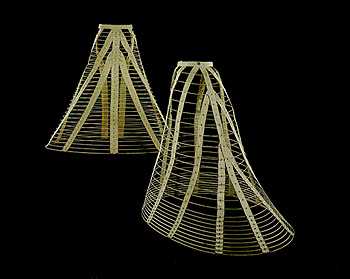
1865-8_hoop_skirts-horsehair

Crinolines

Crinoline-inspired skirt by Comme Des Garçons
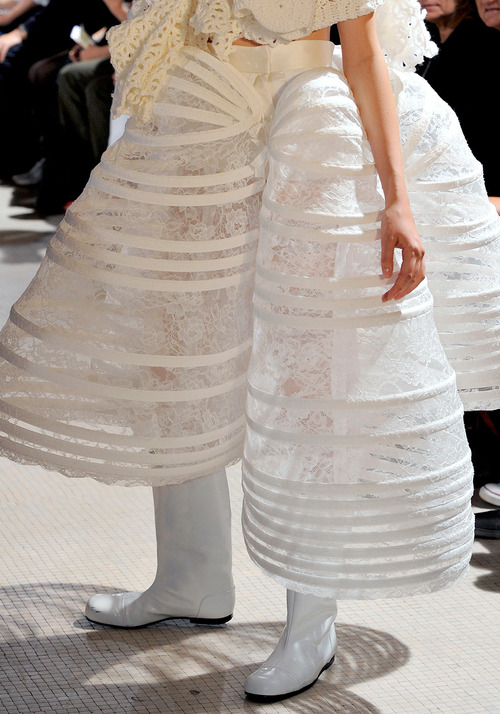
tumblr_m9nu6aqcOx1rpvcxgo1_500

There were many tales of accidents that could befall wearers of crinolines, such as being caught in her hoops as she descended from a carriage or of causing damage if she were a factory girl or servant as china, glass and other delicate materials could easily be swept off shelves and tables. In 1860 the textile firm Courtaulds instructed its workers ‘to leave Hoop and Crinoline at Home’. The most frequent, and terrible, accidents were caused by sparks from open fires, a situation not helped by the wearing of highly flammable fabrics such as muslin and silks. Some husbands were even advised to insure their wives at Fire Insurance offices.

It’s easy to imagine how women could stray too near an open fire in their large crinolines.  The stories about ladies not being able to fit into carriages or through narrow doorways are exaggerated. The cage crinolines might look very rigid but spring steel is in fact incredibly flexible and could be compressed. Accidents did happen but women would learn how to walk in crinolines and how to sit down so that they did not reveal all their underclothes.

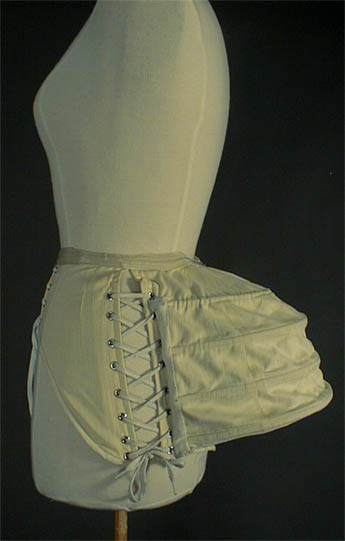
Crinolettes

Crinolette

crinolette

Crinolette

The spring steel structures were  very light so rather than imprisoning women in cages (as some of the reports and images suggest) they had a liberating effect. They freed women from the layers and layers of heavy petticoats and were much more hygienic and comfortable.

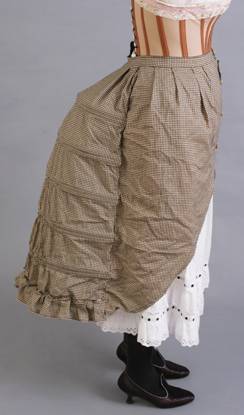
The crinoline had grown to its maximum dimensions by 1860. However, as the fashionable silhouette never remains the same for long, the huge skirts began to fall from favour. Around 1864, the shape of the crinoline began to change. Rather than being dome-shaped, the front and sides began to contract, leaving volume only at the back. The kind of crinoline that supported this style was sometimes known as a crinolette. The cage structure was still attached around the waist and extended down to the ground, but only extended down the back of the wearer’s legs. The crinolette itself was quickly superseded by the bustle, which was sufficient for supporting the drapery and train at the back of the skirt.

Crinolines are still worn today. They are usually part of a formal outfit, such as an evening gown or a wedding dress. The volume of the skirt is not as great as during the Victorian era (except for ‘Big Fat Gipsy Weddings’), so modern crinolines are most often constructed of several layers of stiff net, with flounces to extend the skirt. If there is a hoop in the crinoline, it will probably be made of plastic or nylon, which are low in cost, lightweight and flexible, or steel.

Bustle
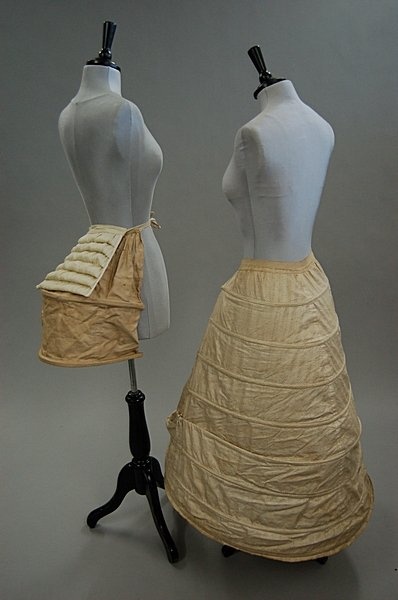
Bustle & Crinoline

bustle

Bustle

bustleImage by Ian The Staymaker

.

.

Bustle-inspired skirts by Comme Des Garçons

CDG

CDG

.

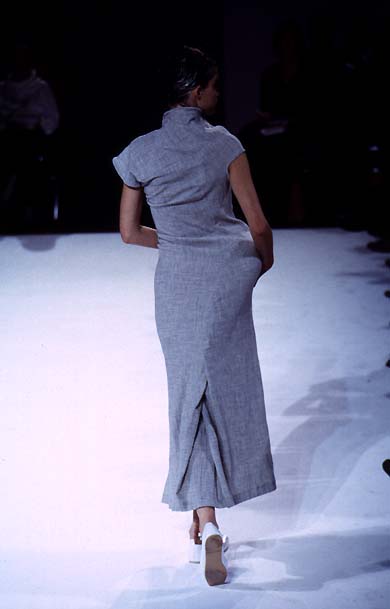
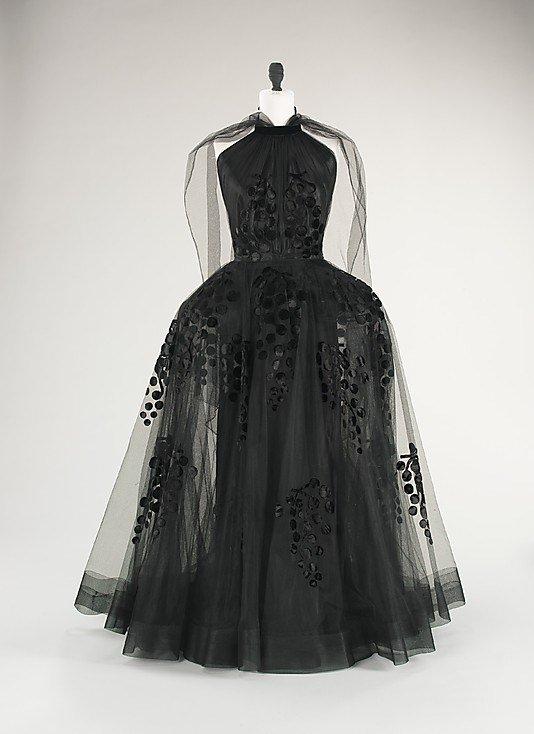
Yohji Yamamoto

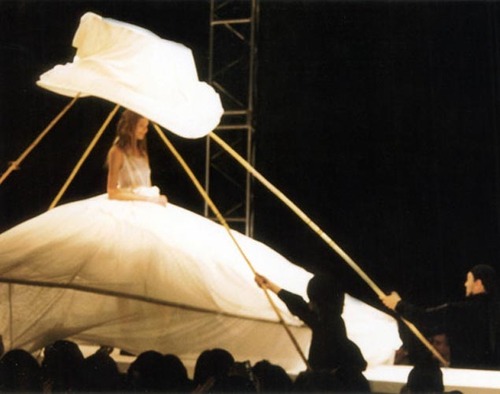
was inspired by an old picture of a woman being dressed and wearing a ridiculously large crinoline.

crinoline

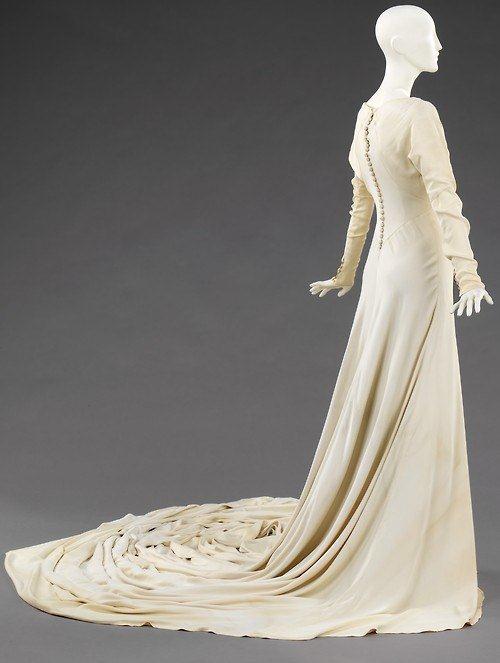
Yohji Yamamoto wedding dress

yohji yamamoto_

Yohji Yamamoto

.

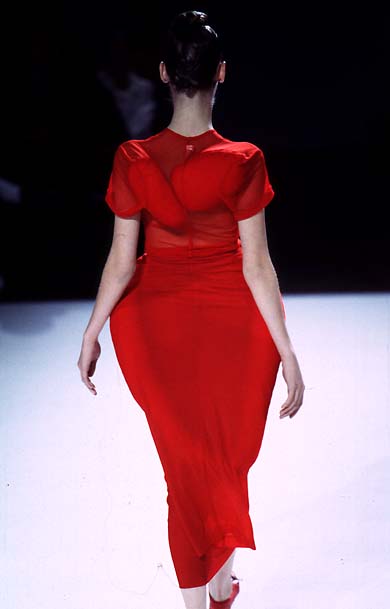
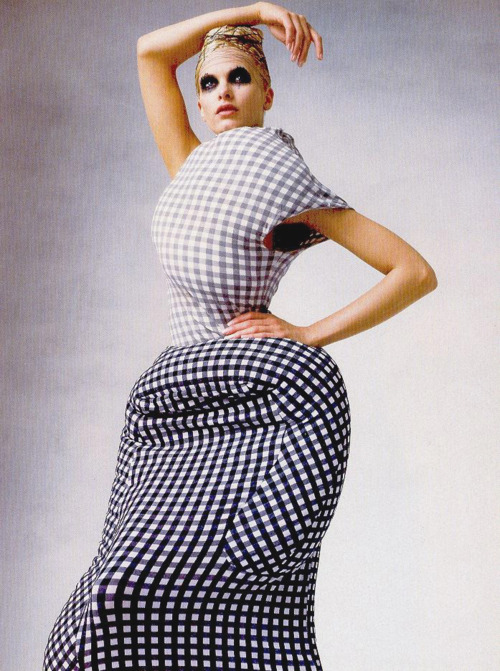
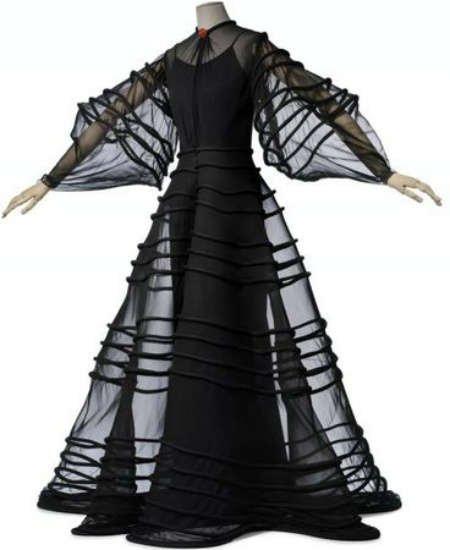
Dress Meets Body, Body Meets Dress

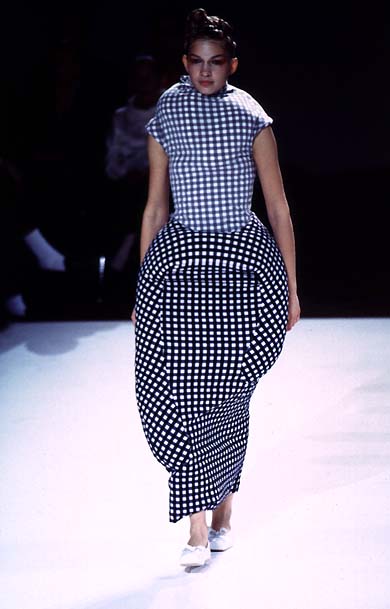
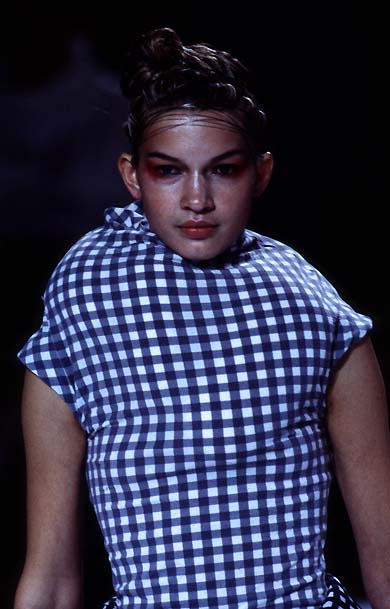
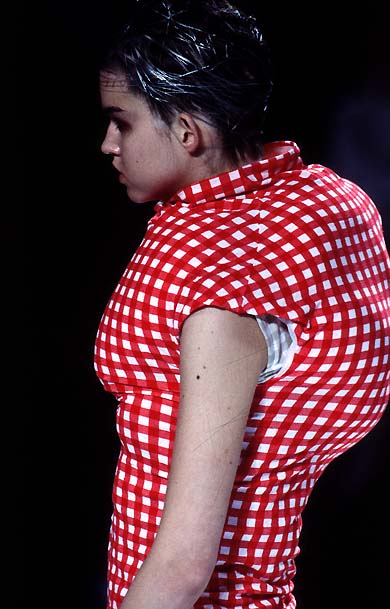
The s/s 1997 collection by Comme Des Garçons, often referred to the ‘lumps and bumps’ collection, was a much talked about show in Paris that season. It featured predominately tight tops and skirts that were swollen by goosedown-filled lumps which distorted the body shape.
cdg

cdg

cdg

cdg

CDG

cdg

cdg

cdg

cdg

cdg

cdg

CDG

CDG

.

 thanks to www.TheStaymaker.co.uk

“A bikini is not a bikini unless it can be pulled through a wedding ring.”

2 Jun

ursula andress

This bikini made me a success.”

 Ursula Andress

.

.

The History of the Bikini

bikini-happy-birthday

The history of the bikini begins far before the official introduction of the bikini swimsuit in the summer of 1946. Some historians believe that the bikini may have been one of the first public swimming costumes in existence. Drawing evidence from 300 A.D. Roman mosaics, historians point to the bikini as the swimsuit of choice for ancient Roman women. The history of the bikini, however, may begin nearly 2000 years sooner than even ancient Rome! Minoan wall paintings from approximately 1600 B.C. also depict women wearing the seemingly quite popular two-piece bathing costume.

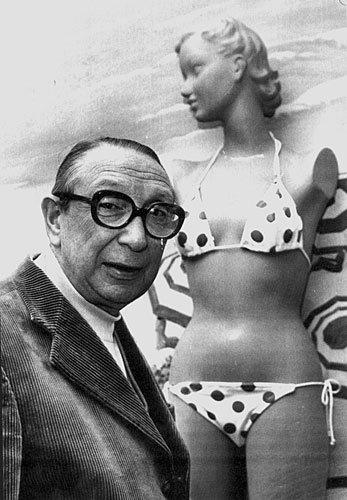
The official history of the bikini, under that name, begins in the summer of 1946, just one year after the tumultuous end of World War II. During that summer, as France was seeking to recover from the dreadful effects of the war, two French designers almost simultaneously created and marketed the bikini swimsuit. Barely leading the charge, Jacques Heim, a fashion designer and beach shop owner in the French resort town of Cannes, introduced his swimsuit creation, the “Atome,” early in the summer of 1946. The swimsuit was named the Atome because of its miniscule size (as compared to the then smallest known particle of matter, the atom). Heim intended to sell his swimsuit in his beach shop. To drum up business and increase awareness of the new swimsuit, Heim sent skywriters high above the Cannes sky, proclaiming the new Atome to be “the world’s smallest bathing suit.”

Jaques Heim
Jacques Heim
.
“Women shop for a bikini with more care than they do a husband. The rules are the same. Look for something you’ll feel comfortable wearing. Allow for room to grow.”
Erma Bombeck
 

Sadly for Jacques Heim, another French fashion designer was also hard at work creating a remarkably similar swimsuit in the summer of 1946. Just three weeks after Heim began marketing his swimsuit, Louis Reard, a mechanical engineer who had decided to dabble in swimsuit design, sent out skywriters over the French Riviera. The message these skywriters carried was simple but powerful marketing: “Bikini—smaller than the smallest bathing suit in the world.” Perhaps due to Reard’s obvious marketing skills or a simple turn of fate, the name bikini became the official tag for the two-piece swimsuit.

The bikini made its first proper introduction to the world of fashion design on July 5, 1946, as it is was worn and displayed at a Paris fashion show by French model Micheline Bernardini. Reaction to the bikini was immediate and explosive. As one American correspondent put it (in typical Texan style), “All of a sudden, a blond named Micheline Bernardini ambles out in what any dern (sic) fool could see was the smallest bathing in the world, including West Texas. Why folks, that suit was so small that…” Any number of phrases could complete this statement and would adequately describe the male reaction to the bikini. Needless to say, most of those who viewed the new swimsuit were equally shocked and titillated by its minimalist style.

“A bikini is not a bikini unless it can be pulled through a wedding ring.”
 
Louis Reard
Louis Reard

The bikini began to be marketed and sold in the United States just one year after its introduction in France. Reaction to the swimsuit was great, but sales were initially quite slow. Men and women alike assumed that the suit was simply too bare and scandalous for conservative American women to don in public. American women did indeed approach the swimsuit quite  cautiously until the revolutionary decade of the 1960s, in which bikini sales soared tremendously.

The bikini has now become such an entrenched part of swimsuit design that it is a wonder the modern swimsuit is only 60 years old. True to its explosive nature, the bikini has inspired even more shocking innovations in swimsuit design, including the short-lived monokini and the immensely popular thong bikini. It would be interesting to learn if Louis Reard has the foresight to
know of the far-reaching implications of the scanty two pieces of cloth that comprised the original bikini.

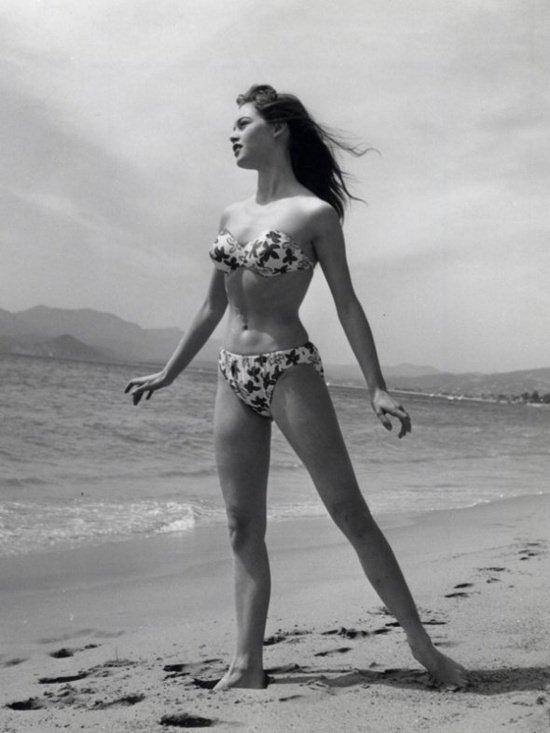
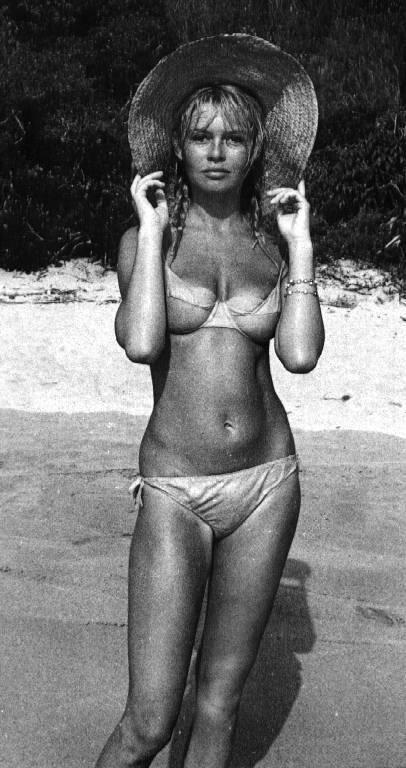
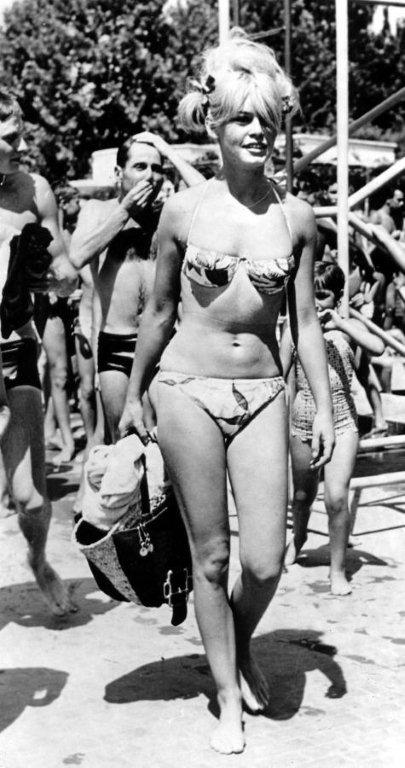
Brigitte Bardot
Brigitte Bardot
 
brigitte-bardot
 
vintage-inspired-swimsuits-bardot-bikini
Ava Gardner
Ava+Gardner
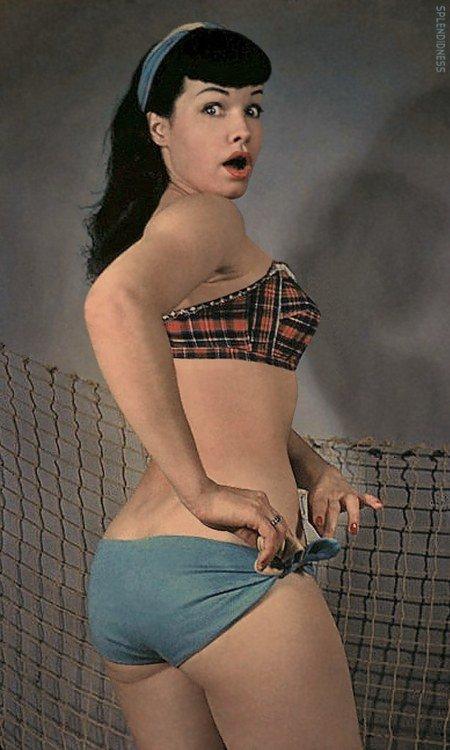
Betty Page
Betty Page
Joan Collins
Joan Collins
Rita Hayworth
rita-hayworth
Jayne Mansfield
Jane Mansfield
.
“Statistics are like a bikini. What they reveal is suggestive, but what they conceal is vital.”
Aaron Levenstein
 

The word bikini has rather an interesting etymology. Unlike the word swimsuit, which is entirely functional and descriptive in its purpose, the word bikini implies much more about the bikini’s history than it does the bikini’s purpose.

Most scholars assume that the bikini swimsuit was named after the famous Bikini Atoll in the Pacific Marshall Islands. While it may seem strange for the birthplace of the actual bikini swimsuit to be in France and the birthplace of the name bikini to be in the South Pacific, these two areas of the world actually had quite a bit in common during the historical time period of the introduction of the bikini.

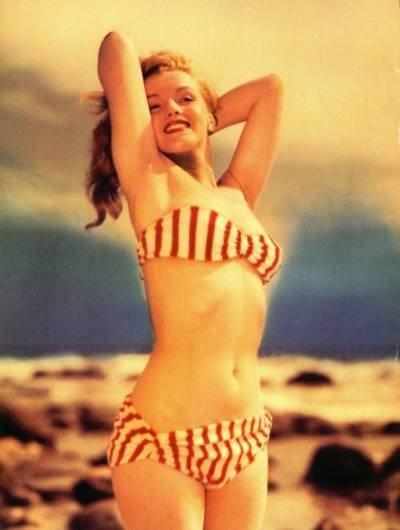
Marilyn Monroe
Marilyn Monroe
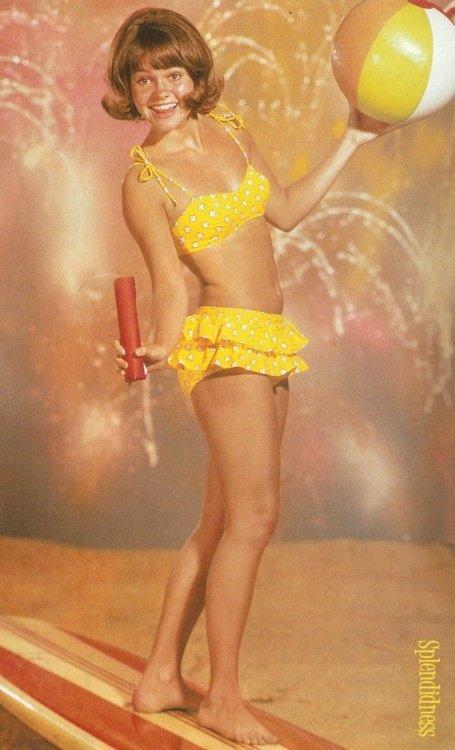
Sally Field

Sally Field

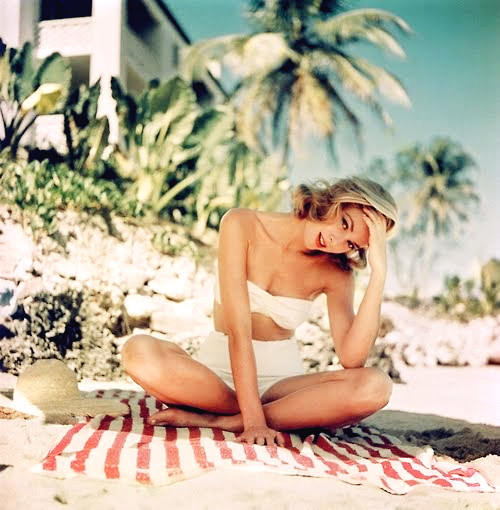
Grace Kelly
Grace Kelly
.
“At Sports Illustrated we would try on hundreds of bikinis. It’s important to find one that complements your body and not try to fit into something that doesn’t work.”
Kathy Ireland
 

When the bikini was introduced to the world in 1946, World War II had just ended the spring before, and the world was still rollicking from the horrendous nature of that war. After detonating the controversial atomic bomb on two Japanese cities to end the Pacific war, the United States was setting off further test bombs on the Marshall Islands during that same summer. Needless to say, the destructive power of the atomic bomb was still quite a shock to people around the world. While Jacques Heim and Louis Reard were simultaneously inventing and marketing their own versions of the bikini swimsuit, people all over the world were marveling at the awesome power of the atomic bomb.

No one knows for sure whether Louis Reard was inspired enough by the atomic bomb detonations in the Bikini Atoll to christen his swimsuit the bikini or if he chose the name at random. Whatever the reason, the name bikini stuck as the official title of the midriff-baring, two-piece swimsuit. Many etymologists have assumed that Reard believed his swimsuit creation would create a shock equal in its reverberation to that of the atomic bomb (as it proved to do in the following years). The term bikini has now become so lodged in the vocabulary of swimsuits that several new types of swimsuits have spawned from it, including the bandini, tankini, camikini, monokini and burkini.

War bikini
 
Wrong bikini
 
Not so sexy bikini

Betty Page

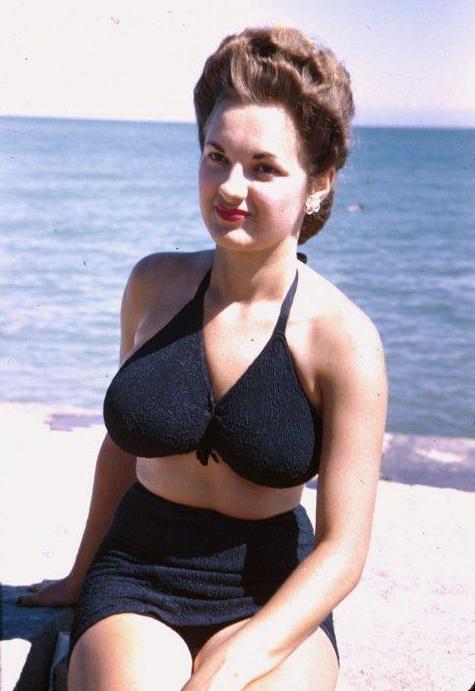
Vintage bikini's

.

“A bikini is a thoughtless act.”

Esther Williams

.

Modern Swimwear

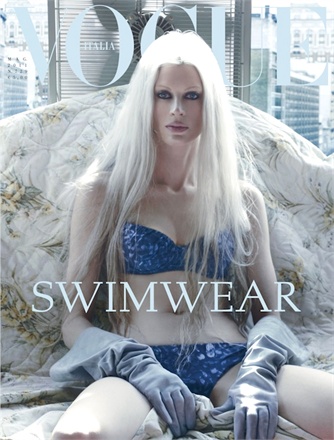
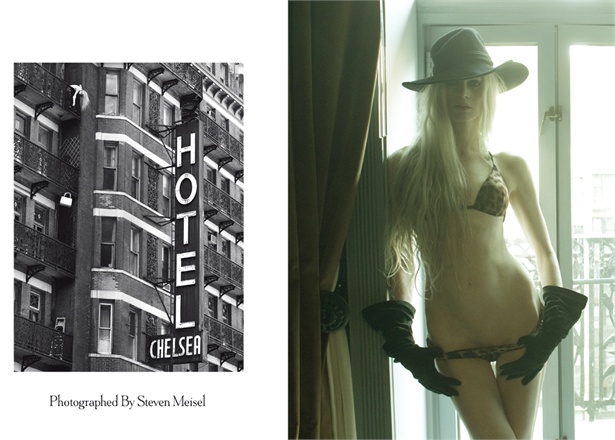
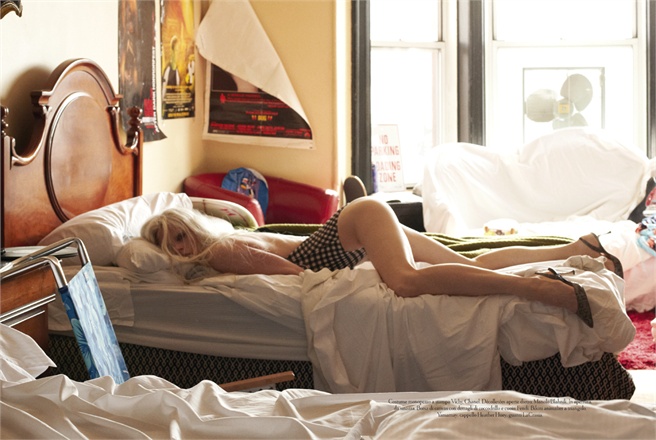
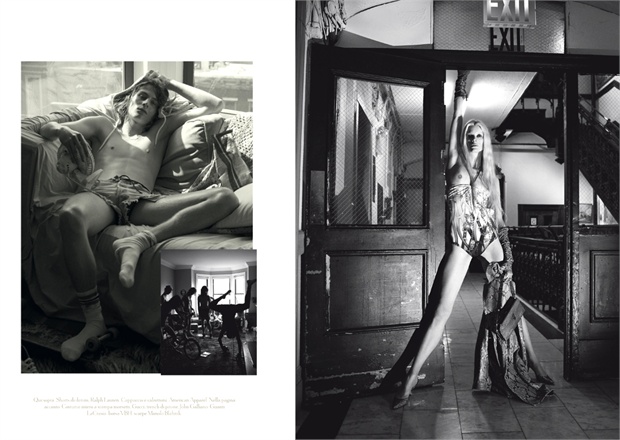
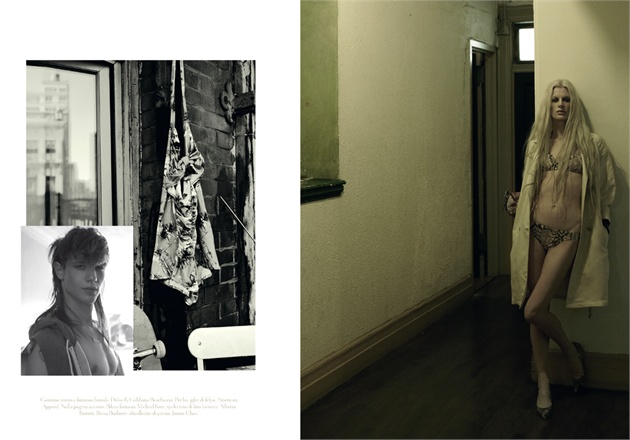
Vogue Italia Swimwear 2013 by Steven Meisel, model Kristen McMenamy

coverVogue Italia

vi01105d0132-013301meisel-1501399_0x440

vi01105d0134-013502meisel-413408_0x440

vi01105d0136-013703meisel-300491_0x440

vi01105d0140-014105meisel-5858_0x440

vi01105d0142-014306meisel-152030_0x440

vi01105d0144-014507meisel-116736_0x440

vi01105d0146-014708meisel-1073348_0x440

vi01105d0148-014909meisel-1382053_0x440

vi01105d0152-015311meisel-224007_0x440

.

.

most information for this post can be found on: http://www.everythingbikini.com/

Elisabeth Hawes believed the Fashion Industry in General was a Farce

26 May

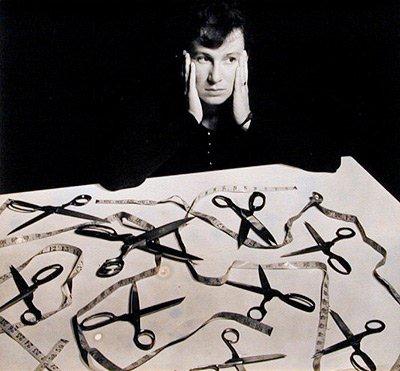
Elisabeth Hawes

“I don’t know when the word fashion came into being, but it was an evil day.”

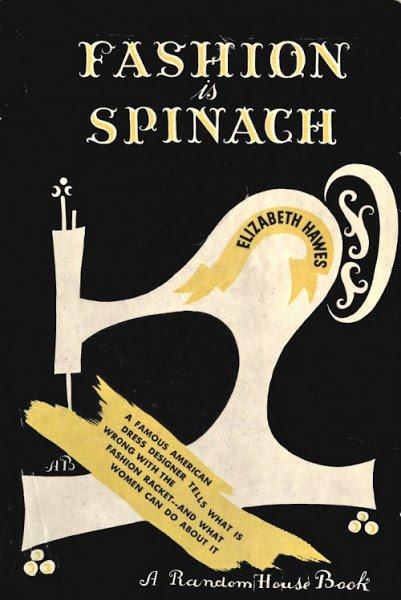
These words came from an American fashion designer working at the top of her game. Elizabeth Hawes wrote the line in her bestselling book Fashion Is Spinach published in 1938. The full 337 pages are an ongoing smack-down of fashion, fashion designers and, mostly, the fashion industry Elisabeth Hawes blamed for creating a planet of fashion victims. “Fashion is a parasite on style”, Fashion is that horrid little man with an evil eye, that tells you last winter’s coat may be in perfect condition, but you can’t wear it because it has a belt”, “Fashion gets up those perfectly ghastly ideas, such as accessories should match…” And so on and so on until briskly closing the book with six finite capital letters in bold print: I SAY TO HELL WITH IT.

Fashion is Spinach bookcover

If you want to read the book and can’t find a copy, you can read the full text on:

http://archive.org/stream/fashionisspinach00hawerich/fashionisspinach00hawerich_djvu.txt
.

Biography

Elisabeth Hawes

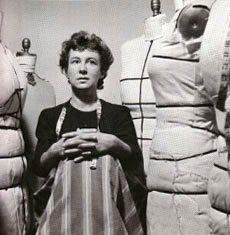
Elisabeth Hawes (1903-1971), the American clothing (nót fashion) designer, who was very outspoken and critical of the fashion industry. In addition to her work as clothing designer, sketcher, copyist and stylist, she was also a journalist, author, union organizer, fighter for gender equality and political activist.

Already at an early age Elisabeth made clothes and hats for her dolls (Elisabeth’s mother taught her children various handicrafts, such as raffia basket-weaving and beadwork) and later she began sewing her own clothes. At the age of 12 she became a professional dressmaker, sewing clothes for the children of her mother’s friends and even selling some at a shop, but only for a brief period, untill she went to  highschool.

She was very intelligent and got mostly good grades at school. Her free time Elisabeth focused on clothing and during summer break 1924, she took an unpaid apprenticeship in Bergdorf  Goodman workrooms, where she learned about how expensive clothes were made to order. She also got a peek at French imports that came into the store and Elisabeth decided she wanted to find out all about fashion in Paris. She made clothes for classmates and sold some at a dress shop just outside of campus, this way she earned a few hundred dollars for her trip to France.

July 8, 1925 Elisabeth sailed of to Paris with a friend, Evelyn Johnson.

Elisabeth Hawes

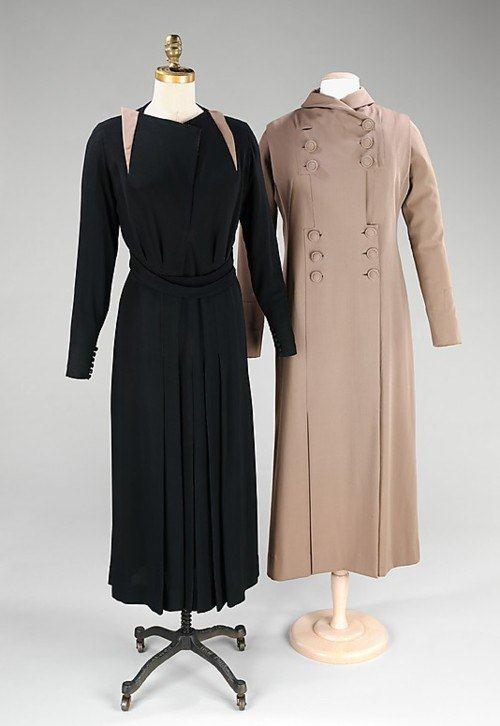
Hawes Daywear

Hawes daywear

Elisabeth Hawes

Evelyn’s mother had arranged for Elisabeth a job at her dressmaker’s on Faubourg St Honoré, where high quality illegal copies were made of haute couture dresses. Elisabeth sold these garments to non-speaking-French Americans and she went to visit couture salons dressed as a legitimate customer, to purchase dresses that would be copied. She also became a sketcher for a New York manufacturer of mass-produced clothing, for whom she draw the designs she memorized at fashion shows…., but not for long, because she got a guilty conscience.

In Paris, Elisabeth started working as a journalist for the New Yorker contributing a regular column, worked as a buyer for Macy’s and as a stylist for Lord and Taylor’s offices. In 1928, Main Bocher,editor of French Vogue offered her a job, but Elisabeth preferred to work for Nicole Groult, the sister of Paul Poiret. Here she developed her method of designing based on Vionnet’s technique of draping on a wooden mannequin.

After her return to New York Elisabeth opened a shop together with Rosemary Harden, Hawes-Harden. They only used good materials for their designs which were well-sewn and well-fitted. ‘Original without being eccentric‘ was said about the clothes. After Harden had sold her share of the company to Elisabeth, she went to Paris again in 1931 to present her collection and being the first non-French designer to show during the Paris season, she won a great deal of media attention.

Hawes

Hawes

Hawes

Hawes

Hawes

Hawes 1936

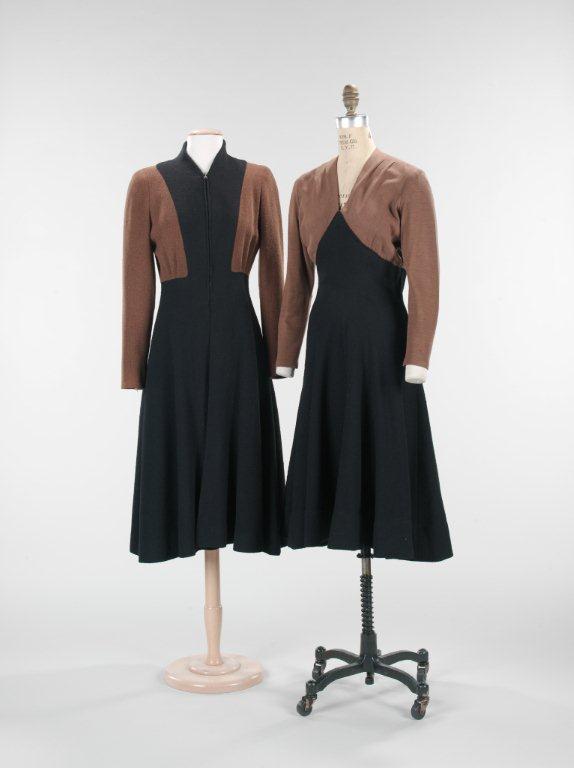
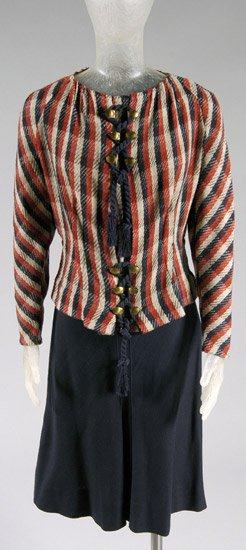
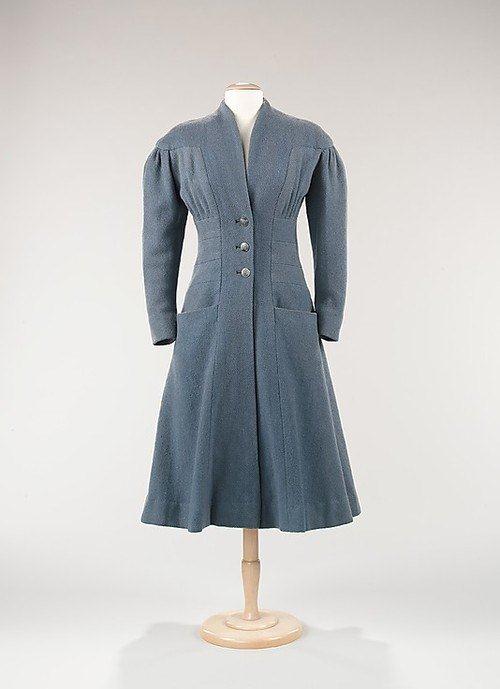
Elisabeth had made name for herself and got lots of publicity by giving humorous political names to her collections, like ‘The Five-Year Plan’, ‘The Yellow Peril’ and ‘Disarmament’. She made simple, witty, distinctive, elegant and practical garments for women of means. Her designs were so smart and timeless that they were as contemporary in the early 1930s as they were in the late 1940s due to her commitment to quality of materials and simplicity of line.

She was committed to the notion that form follows function and  her design sensibilities was the desire to make clothes that were stylish, easy to move in, and by incorporating breathable fabrics, easy to wear. Elisabeth  focused on construction and comfort, she draped fabrics on the body and creatively pieced together wearable garments that were also beautiful works of art.

In 1933, Elisabeth designed ready-made clothes for a manufacturer. Her goal was high fashion at a reasonable price for the ready-to-wear customer, but although it was a great success, she ended the deal when she found out the designs were made from inferior materials.

Since the Russian Revolution of 1917, there was no display of haute couture in Russia, till Elisabeth showed her designs in 1935 and two years later she presented an all male fashion show with brightly coloured designs. She encouraged women to wear trousers and felt men should feel free to wear robes.

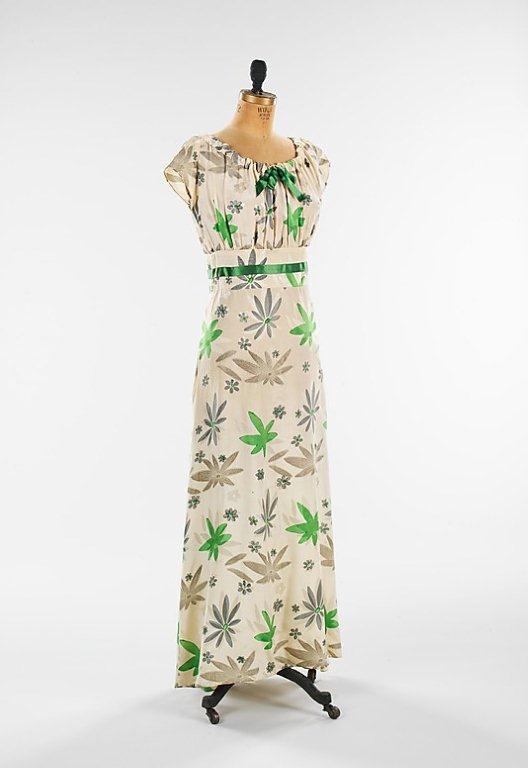
Hawes-styx-1936

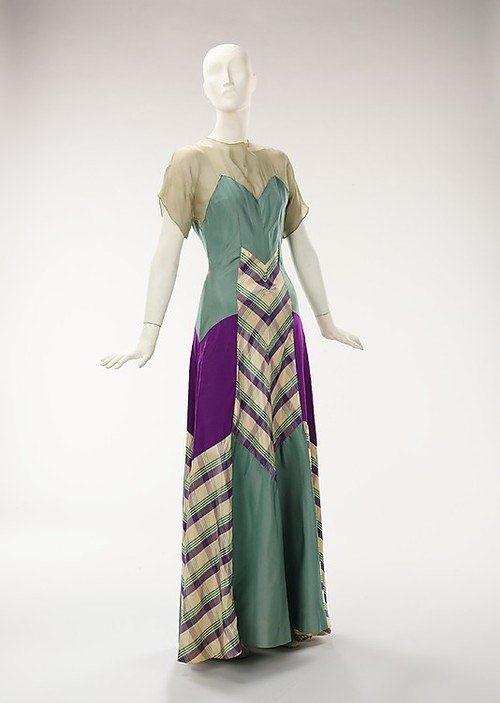
Hawes dress

Hawes dress

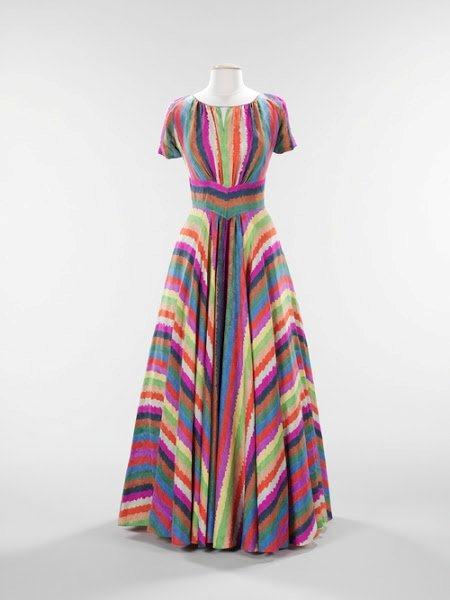
Hawes-gown

1936

“Style is dressing to fit your own self – it lasts.”

Finally Elisabeth didn’t revolutionize the fashion industry, but today her perfectly fitted, smart and practical designs are held in private and museum collections. Elisabeth herself became bored with couture, and shut down her business when WW II broke out. She continued to write the words women wanted to read, namely, that the fashion industry was a sham and that they should wear what fits and looks good and lasts, rather than just “a red lobster painted onto any old dress.” She even confronted men and teenagers, daring them to break out of the stiff  molds created for them, and to ditch their hats and wear more color and short pants. Elisabeth Hawes, long before the Gap and J. Crew, basically invented the idea of casual Friday.

Hawes

Hawes

Hawes

Hawes

Hawes

Hawes

Elisabeth Hawes dared to speak her mind

.

Jeanne Lanvin, Founder of World’s Oldest Fashion House

19 May

1930s-jeanne-lanvin-par-harcourt

Nowadays Alber Elbaz does a fantastic job as head of Lanvin, but it all started with Jeanne Lanvin, the founder of the house of Lanvin. The grande dame was one of the greatest and least-know designers of the 20th century.

.

Biography

jeanne_lanvin

Jeanne-Marie Lanvin ( 1 January 1867, Paris – 6 July 1946, Paris) was the eldest of 11 children. She trained as a dressmaker at a French fashion house called Talbot and then later worked as a milliner. She had the passion, unique talent, energy and enormous potential. In 1890, backed by a devoted client, she opened up a millinery shop (Coco Chanel also started as a milliner and opened a millinery shop, before she went into fashion design).

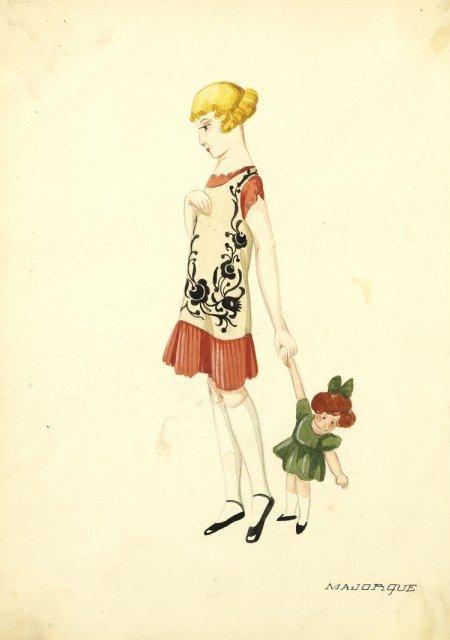
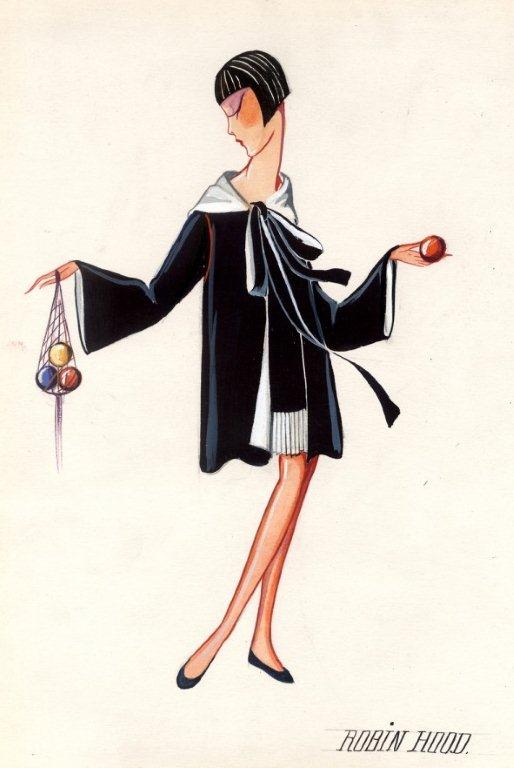
Jeanne Lanvin, who by now was a doting mother, also designed an extensive mini-me wardrobe for her daughter Marguerite Marie-Blanche di Pietro. She made such beautiful clothes for her daughter, using sophisticated textiles and colours, that they began to attract the attention of a number of wealthy people who requested copies for their own children and Jeanne branched out into childrenswear.

Jeanne-Lanvin-original-childrenswear-sketch-from-early-1900s-7

Jeanne-Lanvin-original-childrenswear-sketch-from-early-1900s-4

Jeanne-Lanvin-original-childrenswear-sketch-from-early-1900s

Jeanne-Lanvin-original-childrenswear-sketch-from-early-1900s-5

Lanvin children dress

Lanvin children dress

.

Marguerite was the inspiration and driving force behind Lanvin’s designs. Jeanne created the looks of eternal youth, so that her daughter was the most beautiful woman in the world. Designing dream outfits that her daughter could wear gave Lanvin a chance to relive her own life as she’d always dreamed of. The life she had to sacrifice to her work.

Following customer demand for adult versions of her exquisite children’s clothing, she created women’s and girls’ lines. Her first garments follow the simple, Empire-waisted chemise silhouette. As a full-fledged couturière, she now joined the Chambre Syndicale de la Couture and becomes known for her mother-and-daughter outfits.

.

The Lanvin logo

lanvin-logo

Jeanne Lanvin & her daughter

(The Lanvin logo is inspired by a picture of Jeanne and her daughter Marguerite.)

.

Jeanne was in her fifties when she became famous for her designs for grown-ups and was not like her rival, Coco Chanel, designing for slim women, but continued her bouffant style for women with a larger size, like Paul Poiret did. The robe de style bouffant dress became her signature piece.

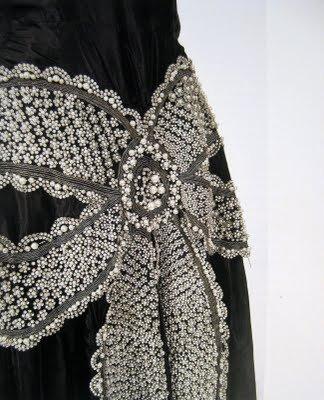
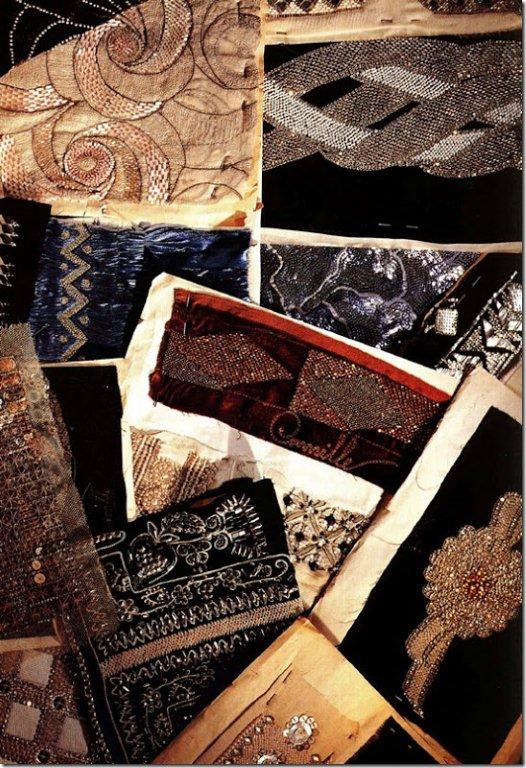
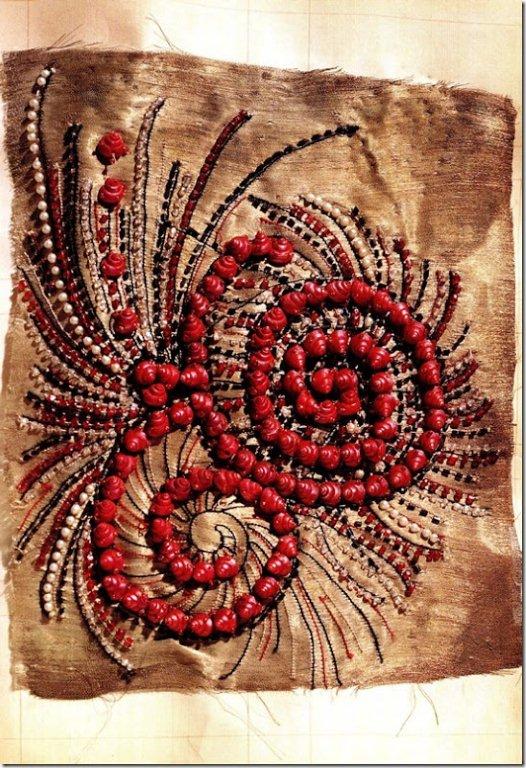
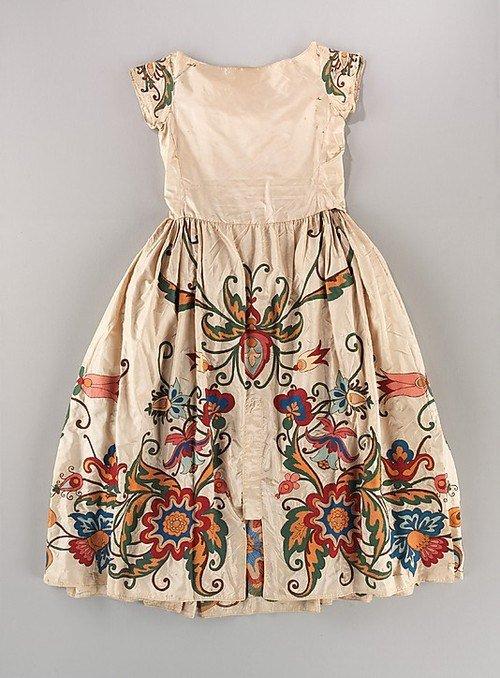
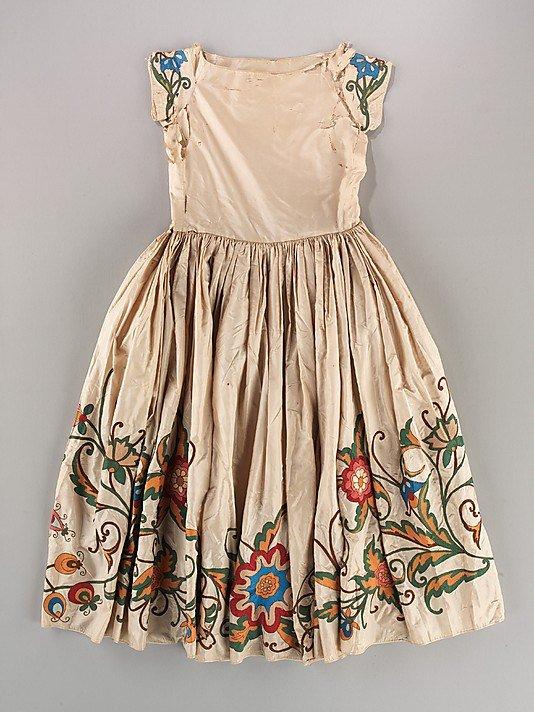
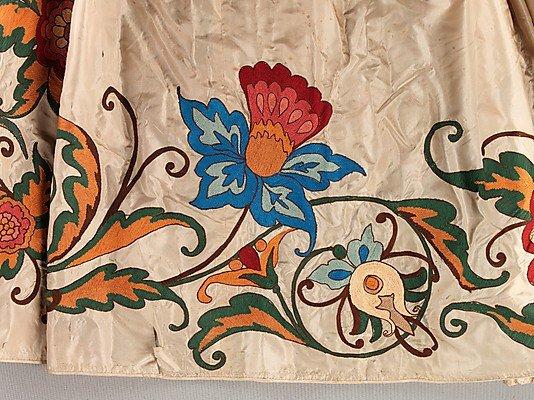
Jeanne loved to work with expensive fabrics and her garments were easily recognisable for her masterful use of embellishment, her delicate trimmings and her embroideries along with exquisite beadwork in floral inspired colours. Often her embellishments included free-flowing ribbons, ruffles, flowers, lace or mirrors inspired by her travels. Ornamentation included appliqué, couching, quilting, parallel stitching, embroidery and discreet use of sequins.

Jeanne+Lanvin

lanvin-fabrics

lanvin-design-embroidery

Lanvin

Lanvin

Lanvin

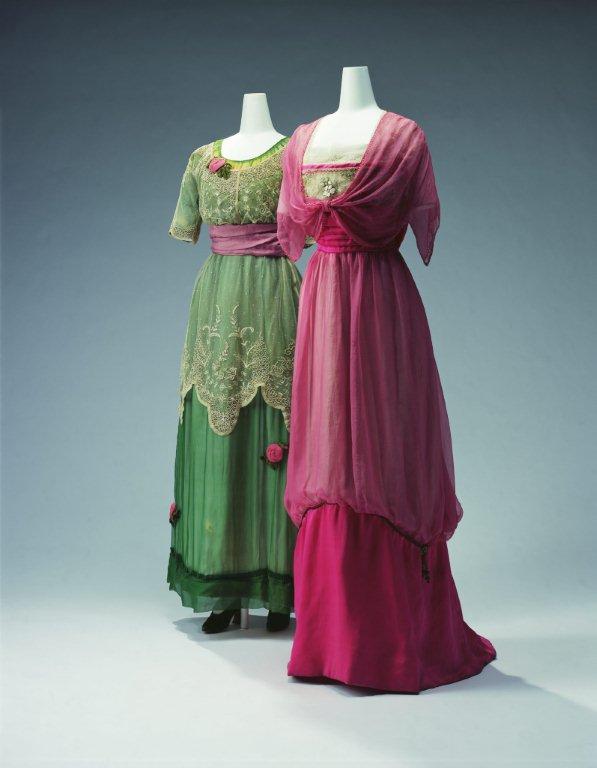
Jeanne’s clothes were about perfection. She chose the fabrics, then developed her own  colour schemes and even built a dye factory in Nanterre in 1922 to achieve the subtle  inimitable shades she was after. She used pieces of mica, coral, minute shells,  gold and silver threads, ribbons and raffia along side of pearls and sequins, so  that the beading would match the fabric, the mood and the motif.  Fabrics most often used were silk, taffeta, velvet, silk chiffon, organza, lace, fur and tulle.

Unlike her rivals Coco Chanel, Paul Poiret or Elsa Schiaparelli, Jeanne Lanvin was a very private person – she would rather stay on background than dissolve herself into the lights of fame and social glamour. Dressed in black, she was more keen on concentrating on her designs and communicating with fabrics rather than people.

This was also the problem, Jeanne Lanvin had no public image and no public relations in the industry. Her rivals all understood that they needed to embody their house in their own appearance, so they were tireless self-promoters. Karl Elberfeld wrote about Jeanne: “Her image wasn’t as strong as that of Chanel because she was a nice old lady and not a fashion plate”.

Lanvin

Lanvin

Lanvin

Lanvin

On the other hand, Jeanne was a great businesswoman and 1918 she took over the whole building at 22 Rue du Faubourg Saint-Honore. It included two workrooms for semi-tailored clothes, two for tailored ones, one for lingerie, one for hats, one that was used as a design studio, and two that were given over to embroidery; the latter was a speciality which Lanvin, unlike other couturiers, did not entrust to outside workers.

And Jeanne did understand that fashion isn’t just about clothes, it is a way of life and in the 1920s she already opened shops devoted to home décor (Lanvin Décoration, at 15 Rue du Faubourg Saint-Honoré), sportswear,  menswear, furs, swimwear and lingerie. Lanvin became the first house to dress the whole family!

lanvin-arpege-bottle

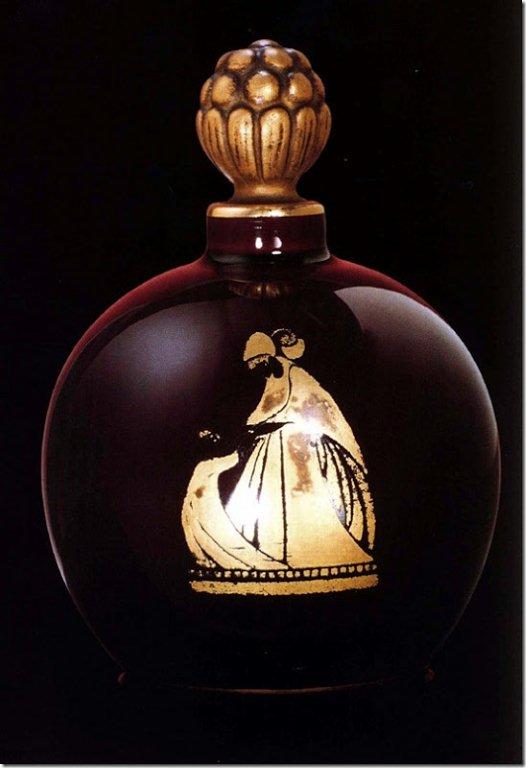
In 1924, Jeanne was one of the first couturiers to create a division for fragrances, Lanvin Parfums and the next years a fragrance factory is constructed near Nanterre. Mon Peche scent debuted, but didn’t do so well untill the name was changed into My Sin. In honor of Marguerite’s (who, by then, calls herself by her middle name: Marie-Blanche) 30th birthday Arpege, lanvin’s first perfume, debuted. Later many new fragrances followed, like Scandal, Eau de Lanvin and Rumeur.

During WWII, Jeanne continued to operate her house, creating special collections for women engaged in war work and regulation uniforms for female armed-service members.

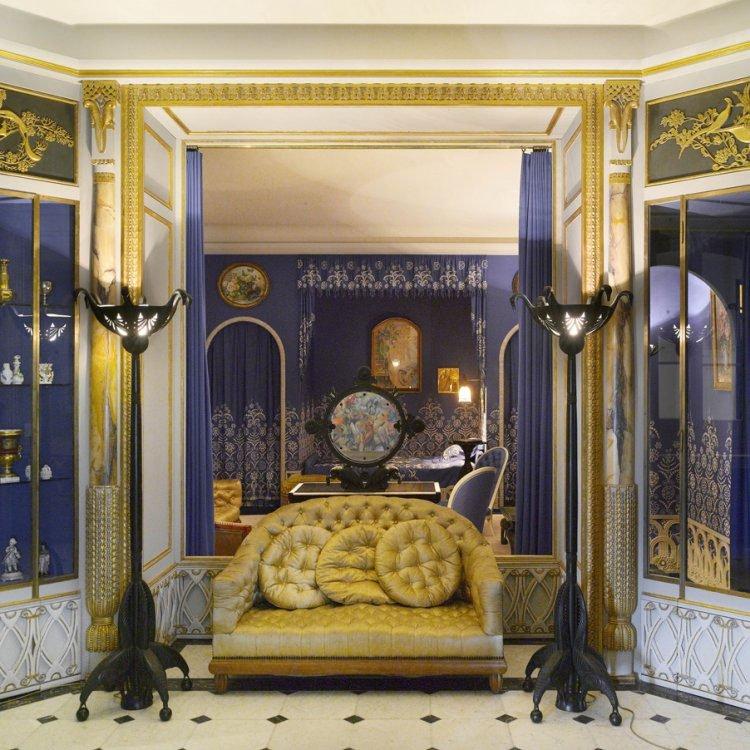
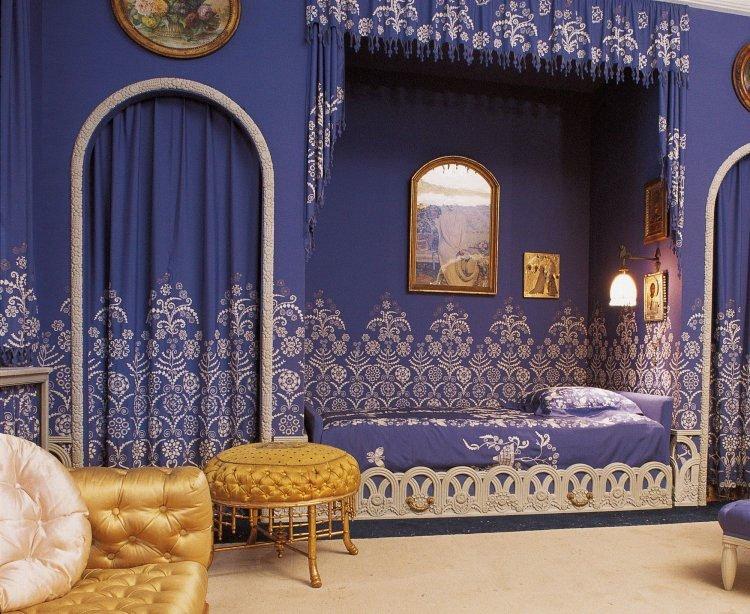
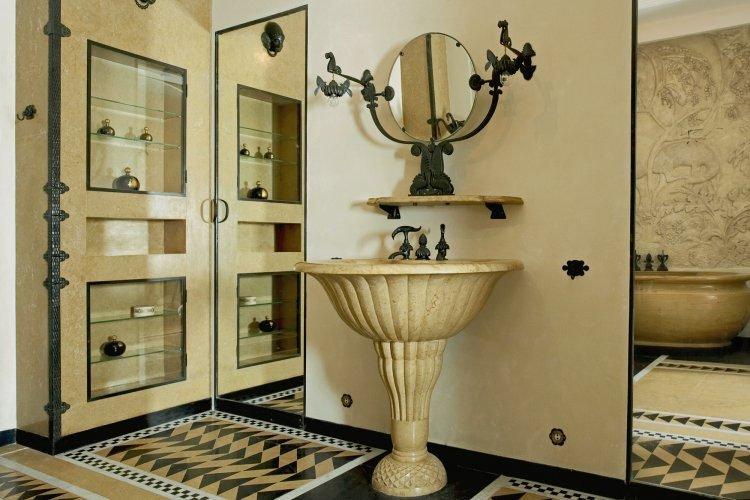
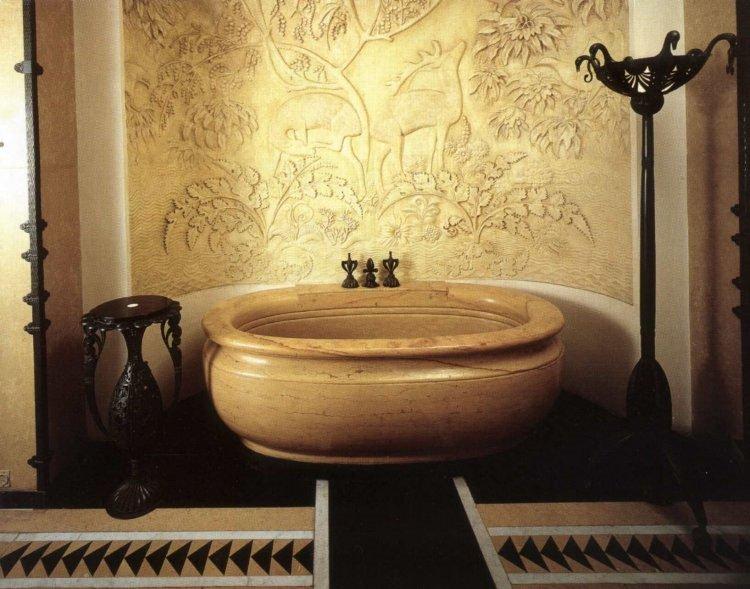
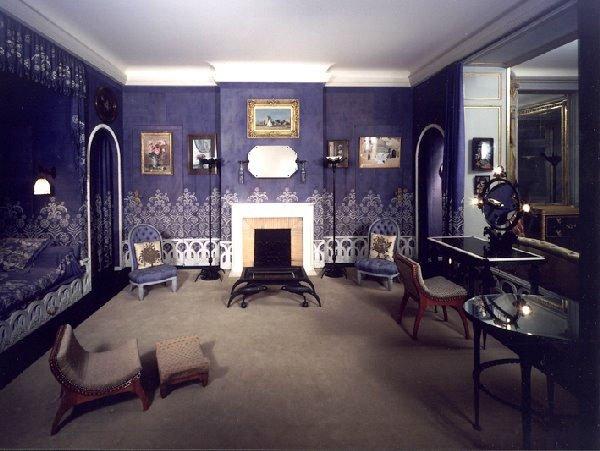
Jeanne Lanvin’s Art Deco appartement

jeanne-lanvin-art-deco-apartment-1

jeanne-lanvin-art-deco-apartment-2
jeanne-lanvin-art-deco-apartment-3
jeanne-lanvin-art-deco-apartment-4
jeanne-lanvin-art-deco-apartment-5
.

“When you are constantly thinking about new designs everything you see is  transformed and adapted to whatever is in hand. The process happens naturally  and becomes an instinct, a truth, a necessity, another language.”

.

.

In 1946, Jeanne Lanvin died at age 79. her daughter, Marie- Blanche de Polignac took ownership until she herself passed in 1958, and the house of Lanvin went to their cousin Yves Lanvin. From then on the label passed from hand to hand. By the time Alber Elbaz took over in 2002 it was the oldest fashion house in continuous operation, and despite its dimmed reputation, it somehow survived and overnight became a huge success again!

Alber_Elbaz

.

Books on Jeanne Lanvin

Jeanne Lanvin book cover

http://www.assouline.com/lanvin.html

.

lanvin book cover

www.amazon.com

.

henri-cartier-bresson-madame-lanvin-1945

.

Madeleine Vionnet, master in manipulating fabric

12 May

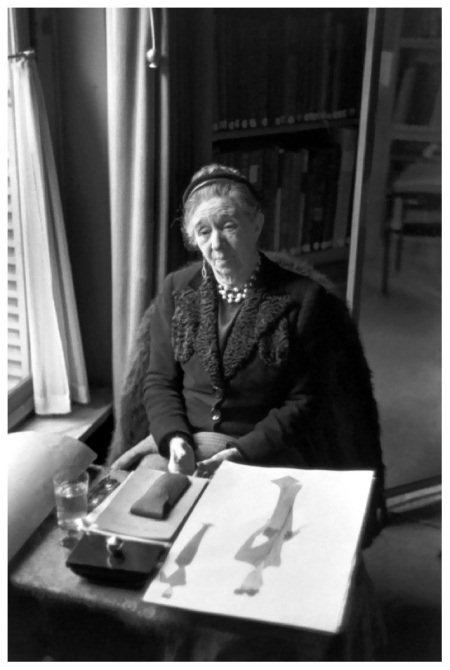
madeleine-vionnet

” I admire her. I have been surging for her shadow all my life, it’s tiring.”

Yohji Yamamoto about Madeleine Vionnet

.

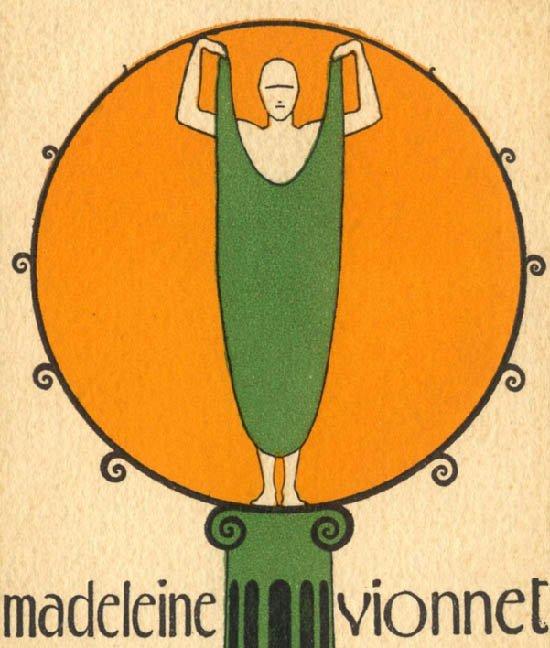
madeleine-vionnet  logo

Biography

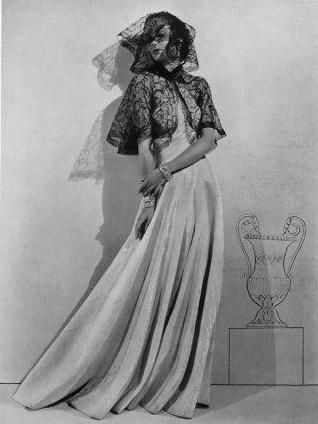
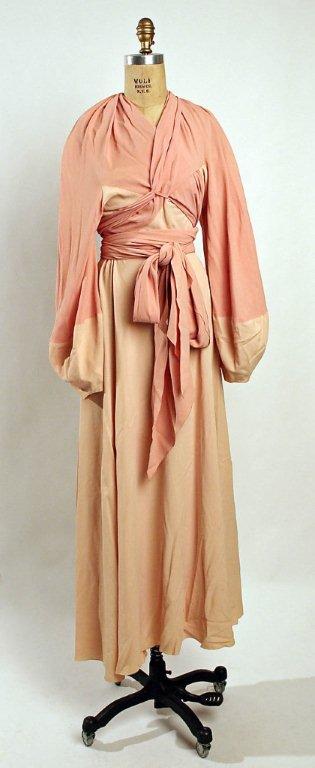
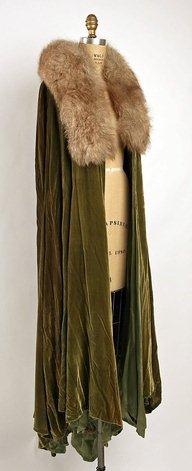
Madeleine Vionnet (Madame Vionnet) was born in June 1876 and started her apprenticeship as a seamstress at age 11. After a short marriage, she left her husband and went to London to work as a hospital seamstress, where she learnt about mass-production. Eventually she returned to Paris to be trained at the fashion houses of the Callot Soeurs and Jaques Doucet. At the Callot Soeurs she learned about the bias cut. Madeleine is often credited as the inventor of that cut, which did upset her very much, because she never claimed herself that place in history! But she did expand the use of the bias cut to perfection.

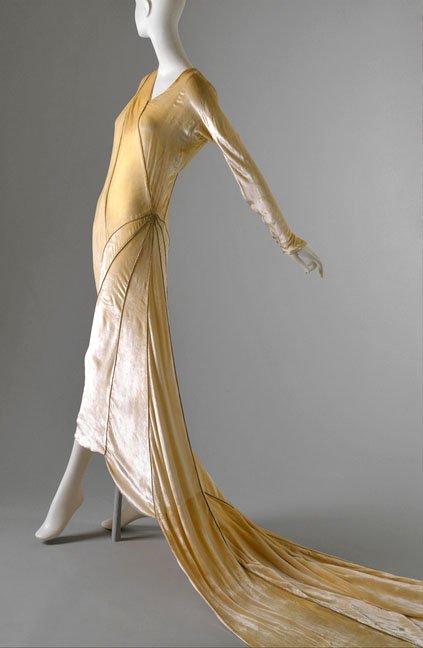
Bias cut dresses

madeline vionnet gown

Vionnet

Vionnet

The bias cut: a diagonal way of cutting fabric in order to give it stretchability. By making dresses that could be put over the head, because of the stretching, Madeleine created garments that were both easy to get in & out of (and that was revolutionary by itself)  and were comfortable to wear, something we find in tricot knits today. The bias cut made that the dresses clung to women’s bodies, accentuating the natural form as opposed to ‘distorting’ them with corsettes and other popular (and uncomfortable) undergarments.

.

In 1912 Madeleine founded her fashion house Madeleine Vionnet, but two years later she had to close again because of WWI and set off to visit Rome.

In 1919, the house was reopened and Madeleine asked Thayaht (the pseudonym of artist and designer Ernesto Michahelles) to create a logo. He also started to design textiles, clothing and jewelry for the house.

madeleine-vionnet

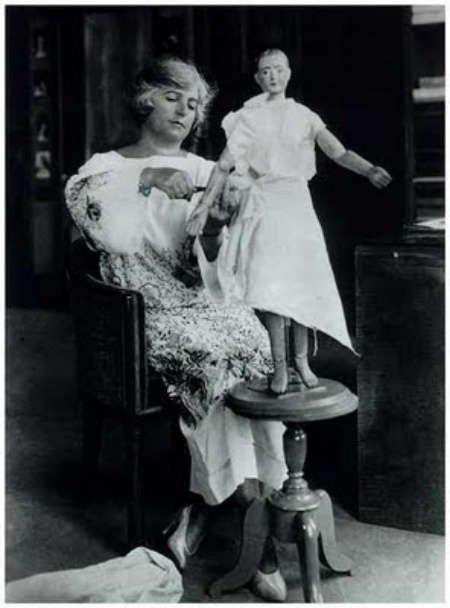
Madeleine always designed her new garments by draping on a reduced-scale doll (mannequin), which was half the size of an average body. The pattern was made afterwards by the house’s premiére (first seamstress), it was a new way of creating patterns. Normally the pattern is made before a toile (first-try) is made. Because every fabric, by its fiber and weave, reacts a little different Madeleine’s dresses were not lined. If they were sheer, a separate lining or slip was supplied, and each part was allowed to go its own way.

The house was at its peak in the 20’s and 30’s and Madeleine’s designs were inspired by Greek vases and Egyptian frescoes. She also designed ‘seam decorations’, decorating visible seams in star of flower shapes. Madeleine’s vision of the female form revolutionized modern clothing. But her revolutionary vision didn’t stop there…

Greek influences

madeleine-vionnet-1937-ella-wells-empire-dress-fashion-photography-hprints-com

madeleine-vionnet-1936-evening-gown-andre-durst-fashion-photography-hprints-com

madeleine-vionnet-1937-man-ray-fashion-photography-evening-gown-hprints-com

In 1922, Théophile Bader, the owner of the Galeries Lafayette department store, joint the current shareholders in a new venture called Vionnet & Cie and a few months later the so-called ‘Temple of Fashion’ opened at 50, Avenue Montaigne, a collaboration of  architect Ferdinand Chanut, decorator George de Feure and crystal sculptor René Lalique, incorporated  a spectacular Salon de Présentation and two boutiques: a fur salon and a lingerie salon.

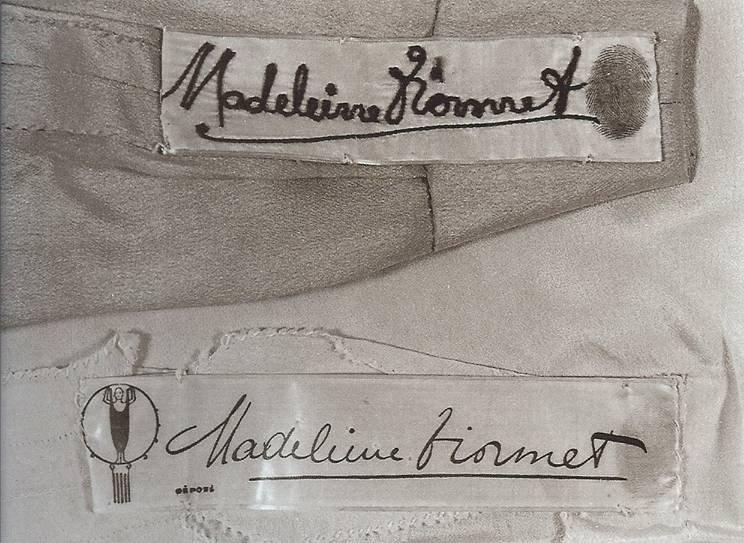
At the same time Madeleine Vionnet was one of the co-founders of the first anticopyist Association. To assure authenticity, Madeleine introduced fingerprinted labels: each garment produced in Vionnet studios bears a label featuring Vionnet’s original signing and an imprint of Vionnet’s right thumb.

Madeleine Vionnet labels

In the mid-1920s Vionnet & Cie signed an exclusive agreement with Fifth Avenue retail store Hickson Inc. and a Vionnet New York Salon was opened. And in 1925 Vionnet was the first French couture house to open a subsidiary in New York: Madeleine Vionnet Inc. , a salon that sold ‘one-size-fits-all’ designs with unfinished hems, which could be adjusted to fit the client.

In those days, high fashion was unavailable for the poor and Madeleine, having worked as a hospital seamstress, knew some about mass production, which she used for her own label. The designs for the US wholesale were called ‘Repeated Original’ as a trademark name. Arguably it was the first ‘prêt-á-porter ever made.

Honeycomb dress

madeleine-vionnet-gown

Vionnet

Vionnet

.

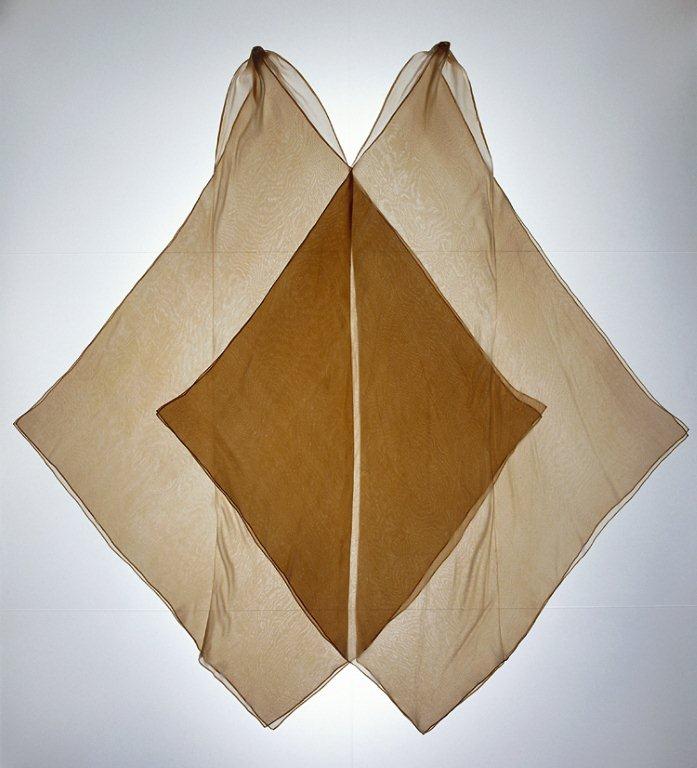
Handkerchief dress

Vionnet

Handkerchief dress

In 1932, The House Vionnet acquired a new five-storey building, housing 21 workshops, producing garments, shoes and accessories, but also clinic equipped with both doctors and dentists and a gymnasium. Madeleine employed what were considered revolutionary labor practices at the time, also providing a canteen, maternity leave, paid holidays and daycare. The house of Vionnet grew to employ 1,100 seamstresses.

In 1939, when WWII started, Madeleine closed her house, never to reopen it again. She lived to the age of 99 and died in 1975.

Madeleine Vionnet is considered one of the greatest designers.

.

vionnet

Vionnet

Vionnet

Vionnet

The bias cut quickly emulated in the Paris couture before World War II, but Madeleine Vionnet’s influences didn’t stop there. Geoffrey Beene, Halston, and other Americans in the 1960s and 1970s, Azzedine Alaïa in France, and Japanese designers Issey Miyake and Rei Kawakubo in the 1970s and 1980s used the techniques of Madeleine. Mikaye and Kawakubo were alerted to Madame Vionnet by her strong presence in The 10s, 20s, 30s exhibition organized by Diana Vreeland for the Costume Institute of the Metropolitan Museum of Art in 1973 and 1974.

Since 2006 the label Vionnet is in operating again. It has already employed many different designers, starting with of Sophia Kokosalaki (a ‘draping genius’ herself). By now Vionnet is designed by Rodolfo Paglialunga, who has been the womerswear designer for Prada for 13 years.

.

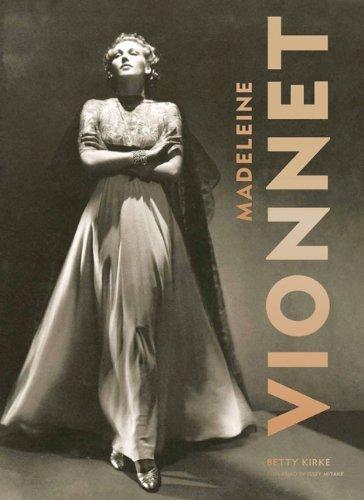
The best book written about Madeleine Vionnet

Vionnet

“Vionnet’s passion and spirit have been carried on by Mrs. Betty Kirke…  Although many people were aware of the designer’s greatness, researching and writing the book was a difficult task which no one had dared to undertake in the past. Thanks to Mrs. Kirke, we are able to preserve and to pass on the precious legacy of Madeleine Vionnet.”

Issey Miyake from the foreward to “Madeleine Vionnet” by Betty Kirke

to order at:   http://www.bettykirke.com/

.

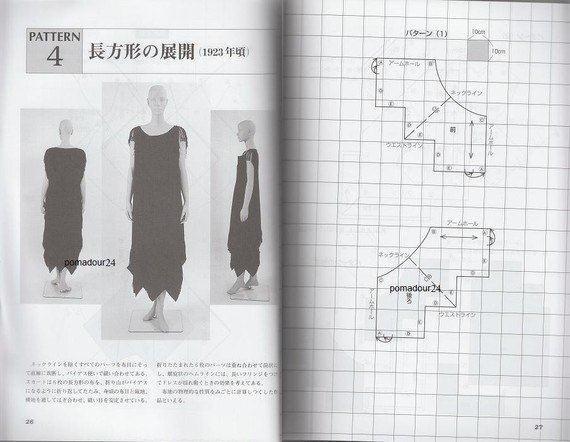
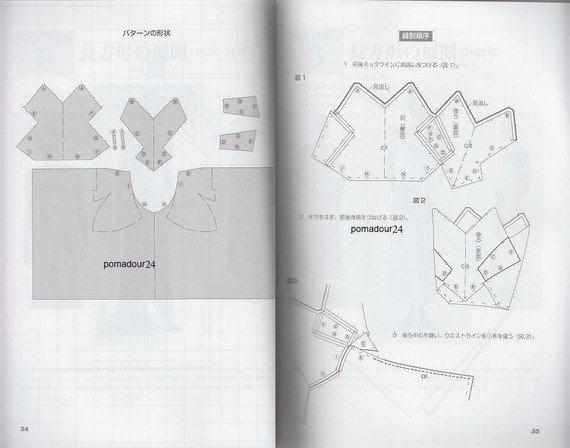
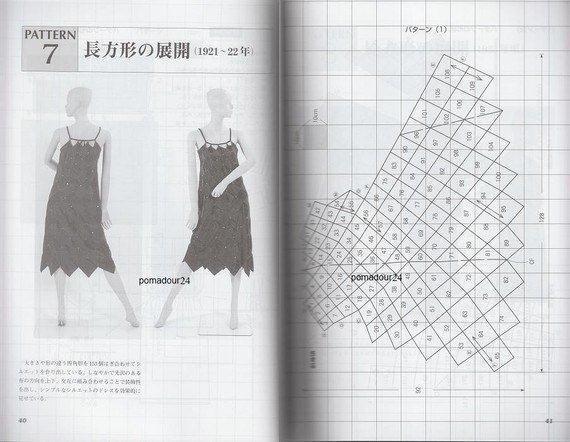
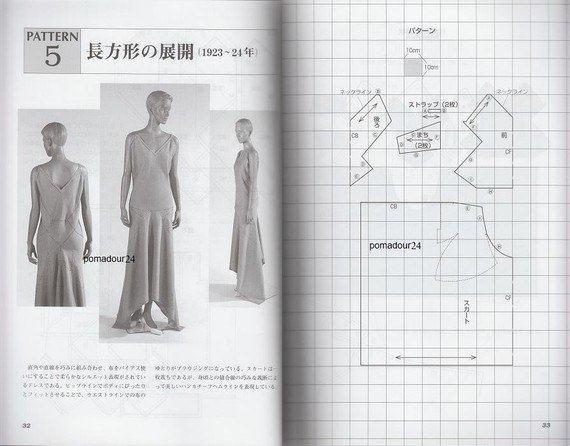
This Vionnet Pattern book  is written in Japanese, so advanced skills are needed to understand the patterns.

Vionnet pattern book

Vionnet pattern

Vionnet pattern

Vionnet pattern

Vionnet pattern

http://nl.etsy.com/listing/61691579/vionnet-japanese-dress-pattern-book?ref=sr_gallery_1&ga_search_query=patronen+boek+Vionnet&ga_order=most_relevant&ga_view_type=gallery&ga_ship_to=NL&ga_item_language=en-US&ga_search_type=all&ga_facet=patronen+boek+Vionnet

.

Short video of the 2009 exhibition in Paris

.

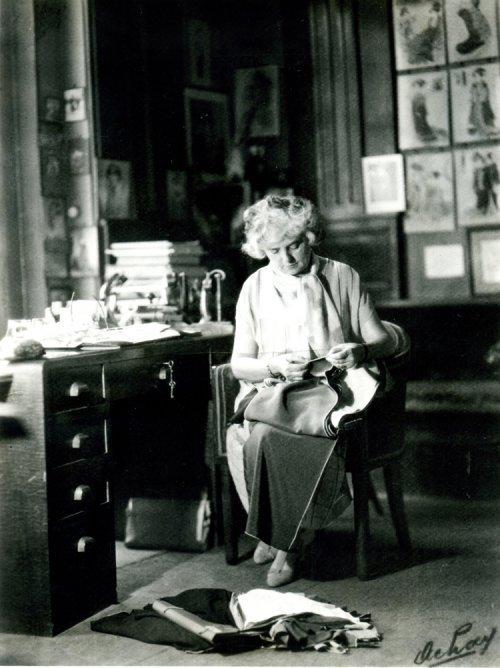
Madame Vionnet

.