Archive | 2013

Bettina Graziani inspired all Great Couturiers

20 Oct

bettina

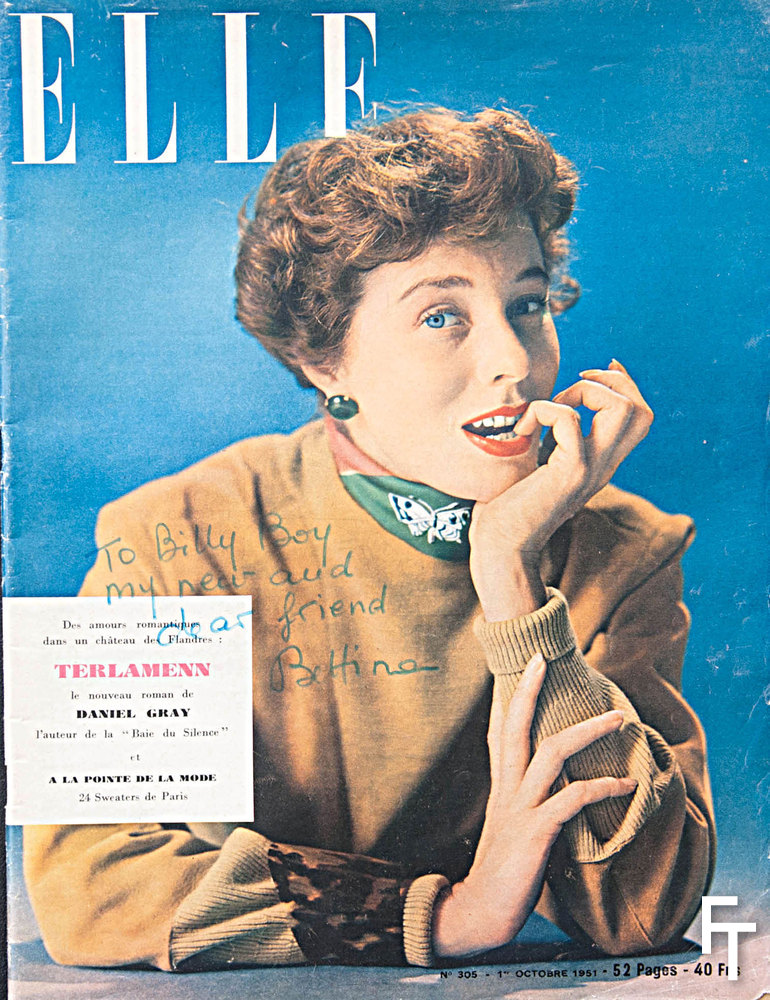
I was a success in my job as a cover girl,” she writes, “and I owe that success more to an expressive face than to my good looks.”

Bettina

.
Bettina Graziani

Biography

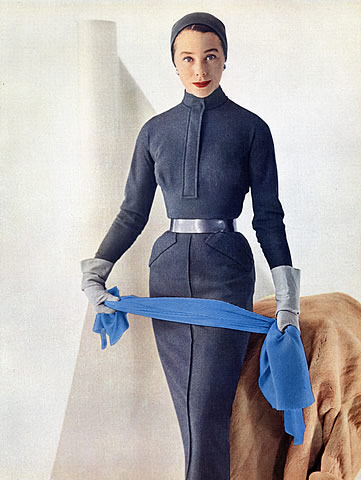
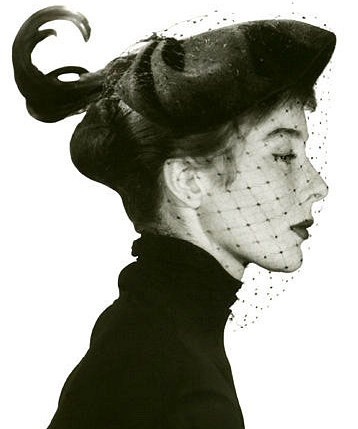
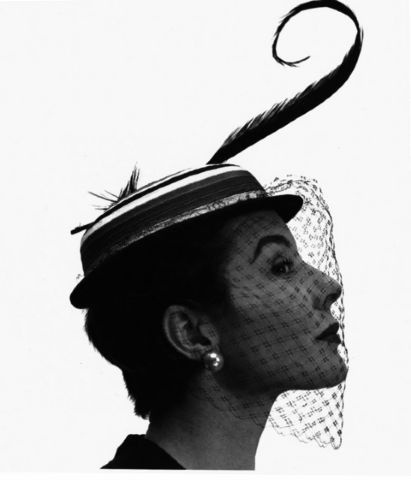
Simone Micheline Bodin (born in France, 1925), known professionally as Bettina or Bettina Graziani, was a French fashion model of the 1940s and 1950. Simone spends her childhood in Lavel, France. Her first job is tinting drawings for an architect, while she’s  dreaming of becoming a fashion designer. She moves to Paris and presents her drawings to couturier Jacques Costet at his atelier at 4 Rue de la Paix. Costet isn’t interested in her drawings, but takes Simone on as a model. “My round country-girl’s cheeks and healthy appearance made me look quite unlike all the other mannequins,” she will later write.

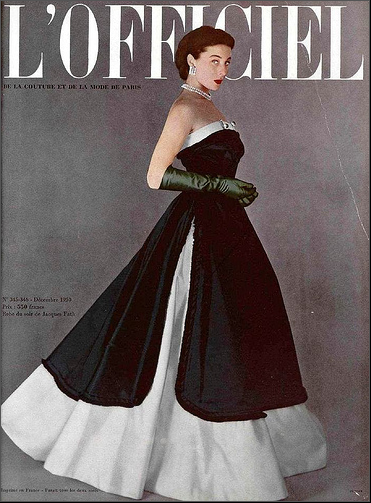
Simone meets Gilbert “Beno” Graziani, a genial man-about-town (who will later become a well-known Paris Match photographer). Together they move to the Cote d’Azur to run a bar in Juan-les-Pins to make ends meet. Back in Paris, Simone marries Graziani in a borrowed Jacques Fath dress.

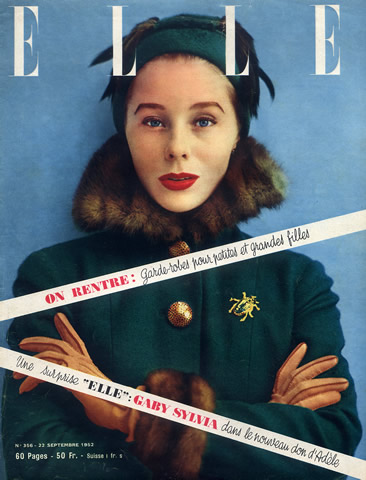
In 1947 Jacques Fath hires Simone to model for him and transforms her “from a long-legged redhead with freckles to a supremely elegant, streamlined girl”. He renames her Bettina (because there is another model named Simone in his troupe) and she is photographed in Fath finery by Erwin Blumenfeld for Vogue. A year later Bettina makes her runway debut for Jacques Fath for spring.
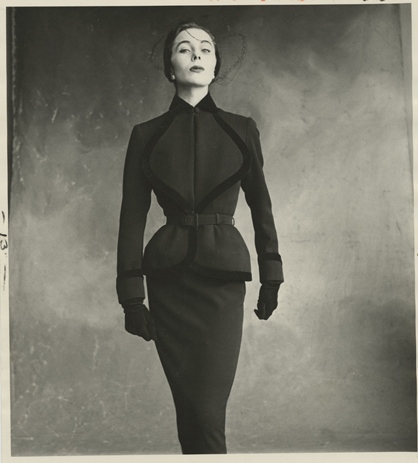
Bettina
Photograph by Irving Penn.Published in Vogue, September 1, 1950.

Jacques Fath directs her to shed her chignon in favor of a boyish “Greek shepherd” cut in 1949, which will spark a revolution in women’s hairstyles.. The same year Bettina makes her first trip to America, to work with Vogue’s Irving Penn. She gets offered a contract by 20th Century Fox, which she turns down. She is also invited by Christian Dior to join his fashion house, but  chooses instead to work for Jacques Fath.

Bettina divorces from Beno Graziani in 1950 and later befriends Peter Viertel, screenwriter of The African Queen.

After Jacques Fath’s tragic early death, Bettina goes to work for “handsome giant” Hubert de Givenchy, as a muse and press agent in 1952. Bettina organizes and models Givenchy’s first collection, which includes an embroidered and frilled, Byronesque “Bettina” blouse, which becomes a fashion icon in the early 1950s and inspired the bottle for the best-selling Givenchy parfum “Amarige.”. In his early seasons, Givenchy channels Bettina’s personal style, sending her out barefoot in cotton separates, revolutionizing the couture at that time. Together they travel to New York for the “April in Paris” benefit at the Waldorf-Astoria. Designer and muse do a television interview with newsman Edward R. Murrow.
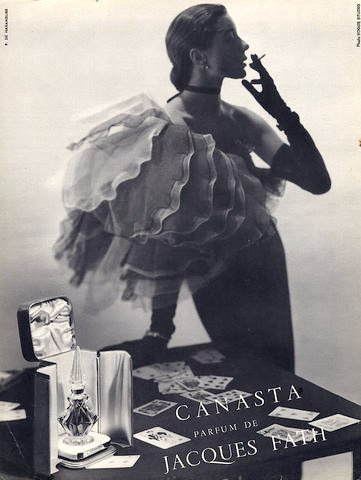
Bettina

Bettina in parfume ad for Canasta by Jaques Fath
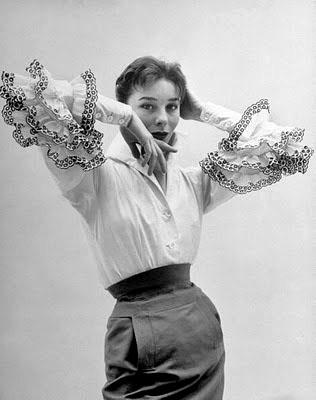
Bettina blouse

Bettina blouse by Givenchy

The Alliance with Givenchy ends after two years and Bettina is now a freelance model. She  moves for a time to Hollywood with her boyfriend. Peter Viertel.  Approached by a Hungarian manufacturer, Monsieur Hein, to create a line of sweaters called Bettina.

In 1955 Bettina meets Prince Aly Khan, a playboy who briefly was the United Nations ambassador from Pakistan. She gives up modeling to be his constant companion. This, she’ll later write, requires a change of style. “When I looked in the mirror I sometimes found it hard to recognize myself. Where was Bettina, the leading mannequin, ever in the forefront of fashion? The Bettina I saw had hair as long as Mélisande’s, and extremely decorous dresses that were sometimes even longer than fashion dictated. But I accepted what I saw in the mirror with perfectly good grace, since I knew that this was how Aly liked me to look.”
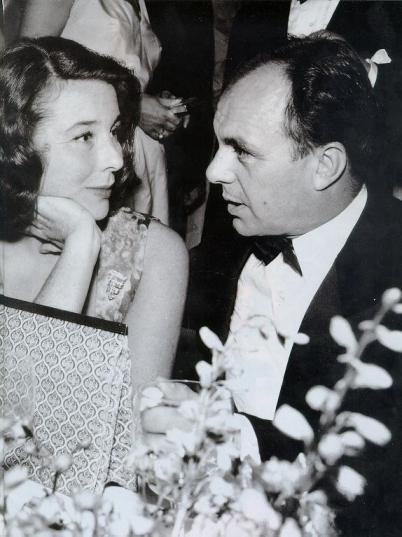
Bettina & Prince Aly Khan

Bettina & Prince Aly Khan

“No. 1 topic among the marriage-makers of the International Smart Set these days is the romance of Prince Aly Khan, ex-husband of Rita Hayworth, and the beauteous ‘Bettina,’ . . . ex–cover girl.” Bettina receives two dozen roses from the prince daily, the press reports

In 1960 disaster strikes when Aly Khan is killed in a car accident, which Bettina survives, though she’ll suffer a miscarriage. She inherits Khan’s Chantilly château, Green Lodge (which she’ll later sell to Khan’s son, Karim).

In 1967 Bettina, “the green-eyed railway worker’s daughter” goes back to modeling at the age of 42. And all because she’s bored. Bettina works for Coco Chanel, but she has a problem, for as the couturier says of her, “She needs to lose a little weight. I have told her to follow my example and don’t eat at weekends.”  After presenting Chanel’s collection in July, Bettina says, “It was fun to do it once. I never will again.”
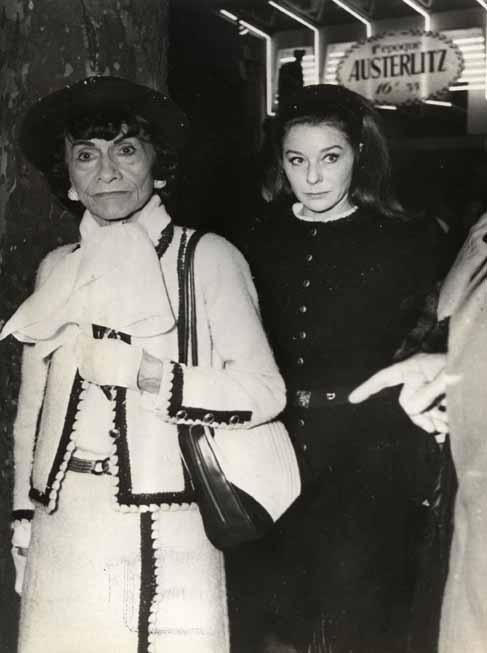
Coco Chanel & Bettina

Bettina becomes director of haute couture at Emanuel Ungaro in 1976. “I needed to go to work for the money,” she later says.

In 2010 Frédéric Mitterrand presents Bettina with France’s Ordre des Arts et des Lettres award, saying, “You are, in a word, the embodiment of the modern woman.”

.

Portrets
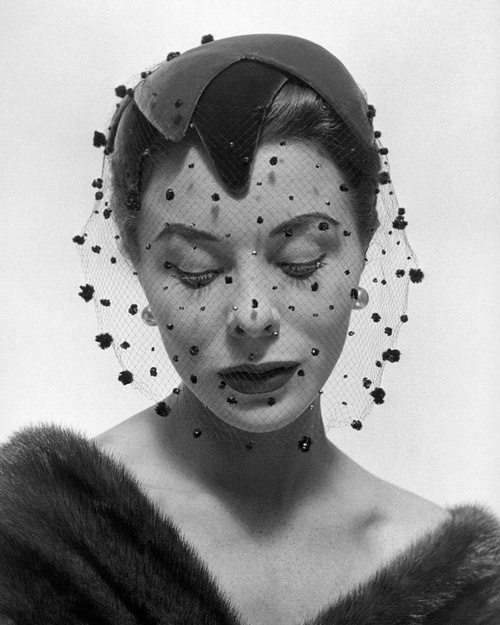
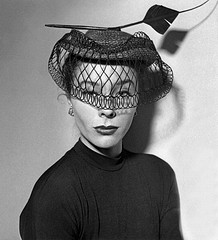
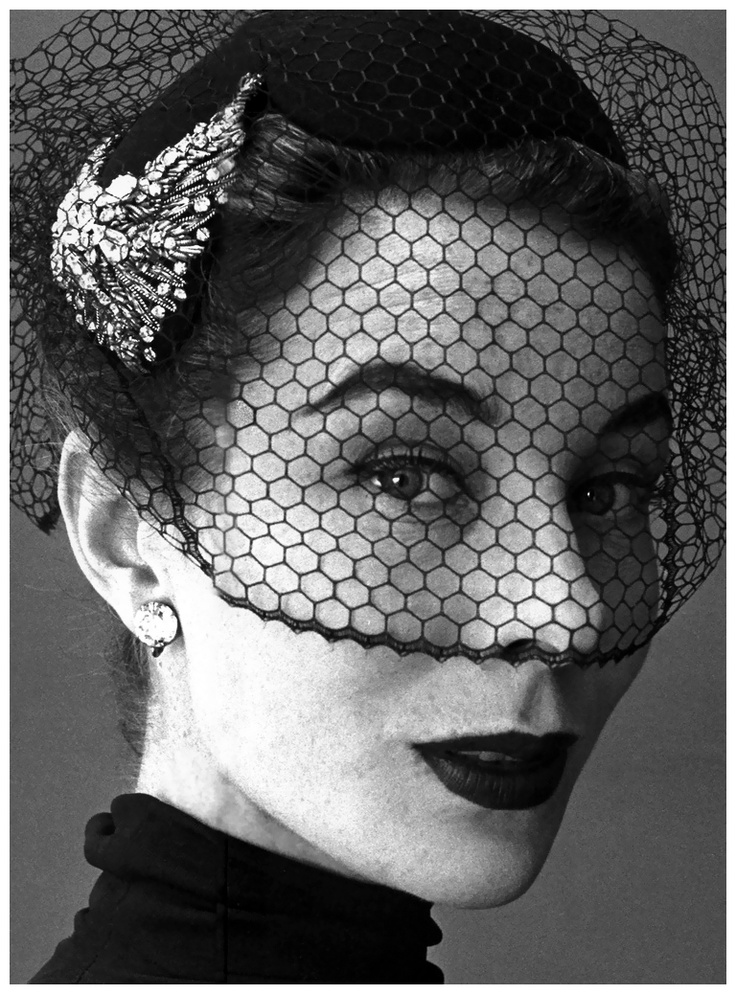
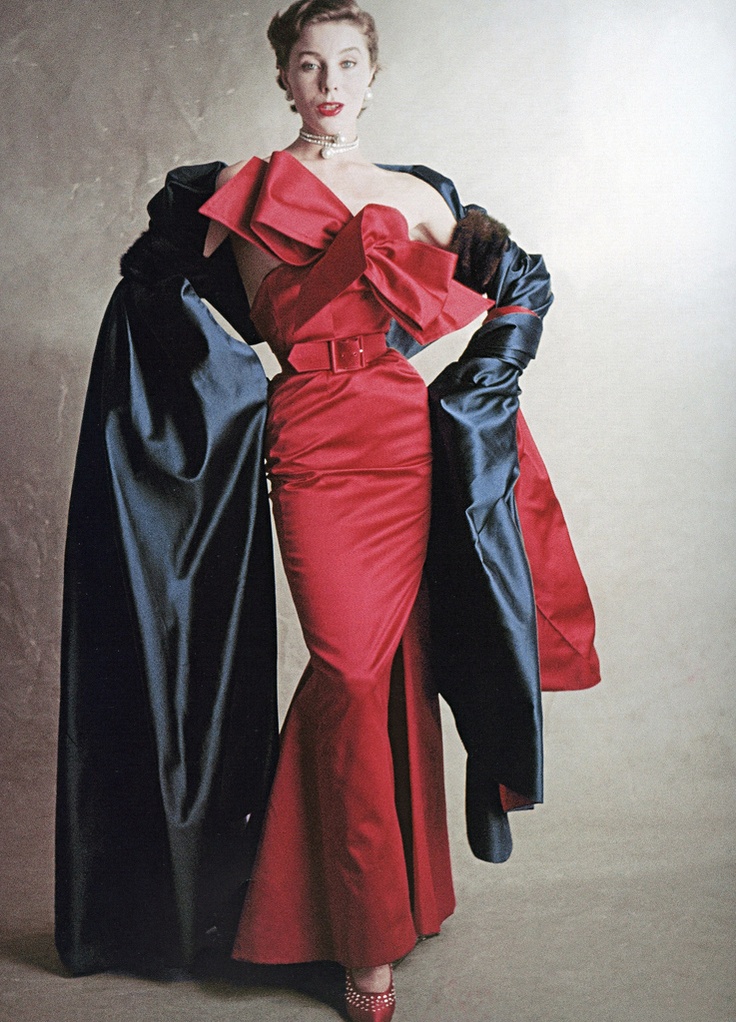
Bettina

Bettina

Bettina

Bettina

 .

Interview Magazine

Interview by Colleen Nika,   publised: 18 December, 2008  

During the postwar creative boom of early 50s France, three fashion designers revolutionized couture: Christian Dior, Pierre Balmain, and Jacques Fath. Supermodel Simone Micheline Bodin Graziani, pet named “Bettina”, rubbed shoulders with all of them, and played muse to the youngest of them, Jacques Fath. With her red hair and fresh face, Bettina personified the innovation, wit, and accessibility of Fath’s brand. Fath died in 1954, but his bold silhouettes, dramatic necklines, and unorthodox flourishes—”flying saucer buttons,” popularized by Hollywood starlets and Bettina’s editorials—continue to influence designers like Viktor & Rolf, John Galliano, and Giambattista Valli. Bettina famously lent her name to an iconic blouse by Hubert de Givenchy, from his first collection, but she considers her formative Fath years the highlight of her career. .  

jacques Fath in studio with top model Bettina_ photo Louis Dahl-Wolfe

Jacques Fath in studio with Bettina. Photo Louis Dahl-Wolfe

Colleen Nika: History has come to associate you with Givenchy, but before your worked with him, you were a muse to Jacques Fath. How did he jumpstart your career?

Bettina: I started working with Fath when I was very young, back in 1947. I had modeled before then, but on a much smaller scale. And I worked with Fath longer than any other designer in my career—four years. From the draping process through our presentations and campaigns, he used me for all of his new collections. He liked that I was “different”: I was very young, very genuine. I wore no makeup and I had red hair. At the time, Fath was interested in conveying an American spirit and a brand new attitude. He wanted to communicate a modern image to the media; it was very important to him. So, I became the face of Fath. 

CN: What do you consider most memorable during your years as Fath’s muse?

B: Fath would throw costume balls in the countryside, at the Château de Corbeville. All the best buyers, stars, writers, even other designers like Balenciaga and Balmain would come. Sometimes we would throw 20s– and 30s–themed partiesm, or cowboy-themed parties. Imagination was everything. And we had a great time at Fath’s studio, especially during draping sessions. Givenchy, who worked there when he was very young, says it was a beautiful experience and that he learned so much during that time. Guy Laroche got his start there, too. This was just after the French liberation; we all lived for the creative moment.

Jacques Fath 1950Bettina in Jacques Fath, 1950

35208-givenchy-1955-bettina-winter-dress-hprints-com

Bettina in Givenchy winter dress, 1955

CN: After your Fath years, what path did your modeling career take?

B: I worked for Givenchy for two years. I also did a lot of magazine work. I was everywhere: in Vogue, of course, but also in Elle, which was a very new magazine at that time. In those days, the models would have their name credited in the magazines, so I had a lot of publicity. I stopped modeling in the late 50s, but later, I did some work for Valentino and I was a US press agent for Emanuel Ungaro.
CN: What are your thoughts on the contemporary modeling profession?
.
029_bettina_grazianni_theredlist
B: The models are different now—they are so young, and they all look the same. Of course, I was young when I started, too, but there was so much less competition, less big names. But then, the entire business was different. The presentations were much smaller; collections were shown to select clients in salons, like a trunk show. You could reach out and touch the clothes. It was approachable. Back then, there was no ready-to-wear, only couture. Of course, because the runway events are so costly now, the industry is returning to smaller presentations. But the model’s role has definitely changed.
CN: Speaking of the present, how are you keeping busy these days? Are you still actively involved in fashion? What designers interest you?
B: Well, I travel a lot; I recently was in Malta and the Riviera. But I live in Paris, so I am still very engaged with fashion. I go the shows every season. My favorite designers? Azzedine Alaia and Yohji Yamomoto. But especially Alaia; he is the ultimate innovator. Actually, I am wearing couture Alaia now—he made this for me two years ago. [stands up to show sculptural black sheath]. And I still am very busy; I have many projects. People call me all time—they want to interview me: they ask me about the Parisian fashion scene of the 50s; they want my pictures and commentary. And I love talking about fashion history, so I am happy to do it.
.
42333-schiaparelli-1952-bettina-as-model-photographer-chevalier-hprints-com
BB-Bettina-Elle

Paul Harnden Shoemakers (Additional)

13 Oct

SOMESLASHTHINGS-CHAPTER004-LAUNCH-3-STEPHEN-MCLVENNA-PAUL-HARNDEN

Paul Harnden
.

October 13, 2013

This comment I got on the Paul Harnden Shoemaker I posted on February 5, 2012
.

Just read your very interesting article on Paul Harnden…………..I worked with him, and Helena, in 2005 and 2006 when he was doing specially commissioned fabrics with Fox Bros of Wellington (Somerset), where I was Designer at that time.       He liked to go through the archive books (some dating back to 1779), looking for his ‘inspirations…..and he really could ‘tweak’ original new concepts from those old swatches….we made some amazing fabrics for him during those years.       The other thing that stands out for me, is that he used to take the fabric from us straight from the loom (unwashed!!!, unfinished!!!) which was almost unheard of because it is during finishing that fine woollen / worsted fabrics transform from a raw, rough commodity to a thing of beauty!! — not for him though, he explained to us that he would “bury the cloth underground for several weeks and let nature do the finishing work”!!! — which is how the fabrics achieve his ‘antique’ appearance.

Finally, I left Fox Bros myself in 2007, after six VERY interesting years, (so I don’t know if they are still doing fabrics for Paul) and I am now based in Yorkshire, near Huddersfield, where the old pattern weaving mill is located…….Gordon Hawley is now retired, but the mill is still going strong – now run by a very nice guy called Adrian (sorry his surname escapes me)……..in fact they are weaving some of the blankets I design for my current employer, Lassiere Mills, of Bradford.

Hope this info is of some interest, Pete Cunningham.

http://www.lassieremills.co.uk/

14115039

.

.

Audrey Hepburn & Hubert de Givenchy

13 Oct

Givenchy-book-9-26Sept13-Bert-Stern-Vogue-Conde-Nast-inc-1963_b_426x639

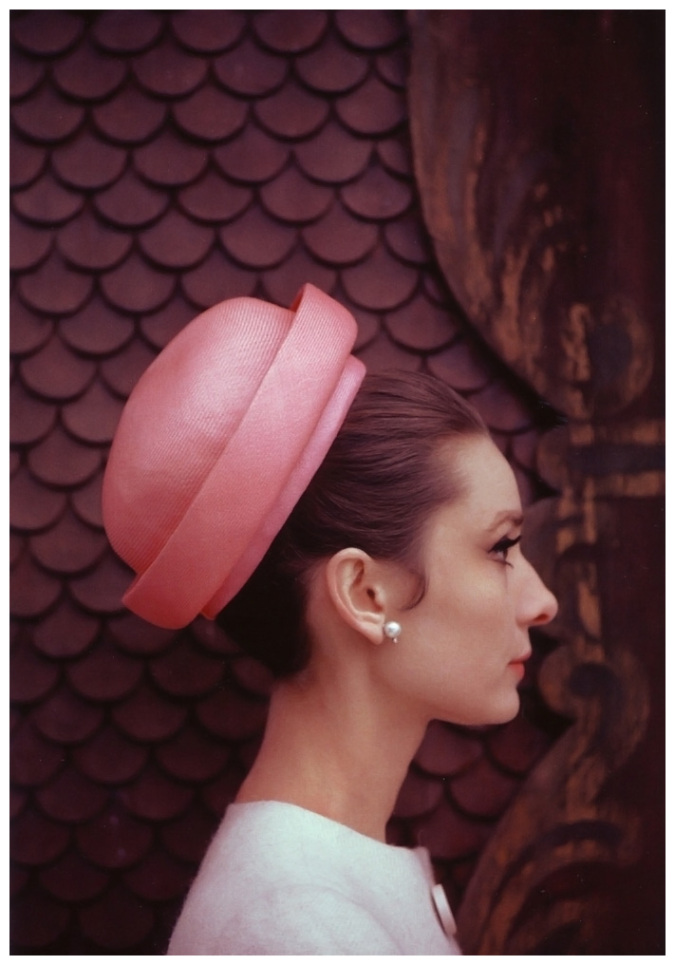
Audrey Hepburn wearing Givenchy, photographed by Bert Stern for Vogue, 1963

.

Hubert de Givenchy and Audrey Hepburn – a match made in heaven. Similar ages, the French couturier and Iconic screen star immediately empathized with each other – an intimate relationship that continued into old age. 

Givenchy intuitively understood Audrey’s petite frame – the perfect foil it would seem for the sophisticated and ladylike look of the late 1950s and early 1960s – tiny waist, full skirt – often with underlay and a simply cut bodice, often collarless to show Audrey’s swanlike neck. 

In turn, Audrey’s iconic movies served as the perfect environment for the ultimate catwalk – raising Givenchy’s profile. And perhaps due to the timeless design of both the couture and the movies both are still much admired decades later.

screen-shot-2012-03-07-at-1-25-45-pm

“His are the only clothes in which I am myself. He is far more than a couturier, he is a creator of personality.”

Audrey Hepburn

audrey-hepburn-wearing-hat-and-dress-designed-by-givenchy-photo-howell-conant-for-a-fashion-editorial-at-her-house-in-switzerland-in-february-1962

“Balenciaga once said the secret of elegance is elimination. I believe that. That’s why I love Hubert de Givenchy… They’re clothes without ornament, with everything stripped away.”

Audrey Hepburn

.

Audrey & Hubert

Audrey & Hubert

Start of Audrey Hepburn’s movie career

In the Italian-set Roman Holiday (1953), Audrey Hepburn had her first starring role as Princess Ann, an incognito European princess who, escaping the reins of royalty, falls in love with an American newsman (Gregory Peck). While producers initially wanted Elizabeth Taylor for the role, director William Wyler was so impressed by Hepburn’s screen test that he cast her in the lead. Wyler later commented, “She had everything I was looking for: charm, innocence, and talent. She also was very funny. She was absolutely enchanting and we said, ‘That’s the girl!'”

Originally, the film was to have had only Gregory Peck’s name above its title, with “Introducing Audrey Hepburn” beneath in smaller font. However, Peck suggested to Wyler that he elevate her to equal billing so that her name appeared before the title and in type as large as his: “You’ve got to change that because she’ll be a big star and I’ll look like a big jerk.”

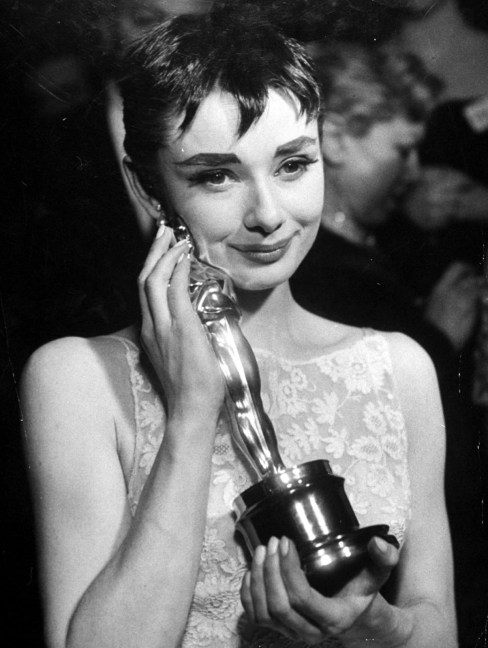
Audrey was nominated for an Academy Award for Sabrina, Breakfast at Tiffany’s and Wait until Dark and did win an Oscar for Roman Holiday. She was the first actress to win an Oscar, a Golden Globe and a BAFTA Award for a single performance.

Audrey with her oscar

And than they met

Audrey and Hubert de Givenchy first met in 1953, in a romantic twist of fate that rivals any of her films. He had in fact been expecting Katharine as the Mademoiselle Hepburn he was to dress for the forthcoming picture “Sabrina”. Audrey is said to have arrived in a tied-up T-shirt, tight trousers, sandals and a gondolier’s hat.

At that time the twenty-six-year-old Hubert de Givenchy was already the rising star of French couture, competing with the famous  forty-eight-years-old Christian Dior. The technique of Givenchy was influenced by his mentor and friend Cristobal Balenciaga. After he had worked for the well-known Lucien Lelong and Elsa Schiaparelli, the young designer  opened his own salon in Paris in 1952. His clothes were revolutionary for his time: feminine, yet very simple, and beautifully tailored.

Givenchy was in the middle of putting together his new collection. He suggested to Audrey to choose anything she liked from his current collection, a suggestion that satisfied her.  According to Givenchy, Audrey knew exactly what she wanted to have, as well as the fine points and faults of her body. She only wanted to adapt some designs… This would eventually become an incredibly popular  fashion style named after the film.

“Sabrina” would win only one Oscar, for the costume designs, and Edith Head would take all the credit. Audrey Hepburn felt very sorry for Givenchy, she called him immediately in Paris to apologize.

“I was very touched, but told her not to worry, because Sabrina had brought me more new clients than I could handle,” Givenchy recalled. “But Audrey was still upset, and she made a promise to me that  in the future she would make sure that it never happened again. And she kept her promise. This was one of the most marvelous things about her. She thought constantly of others.”

.

Perfume

Audrey Hepburn Perfume

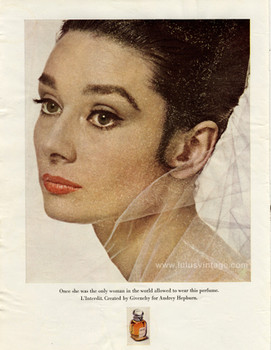
l'Interdit

It was meant for Audrey’s personal use, and was given to her as a surprise. She loved it. Because many of her friends wanted to have it also, she kept asking Givenchy to put L’Interdit on the market. As soon as the designer was ready to launch it, Audrey offered her help for the advertising campaign. The color ad with a beautiful photo of Audrey Hepburn made by Richard Avedon, stated: “Once she was the only woman in the world allowed to wear this perfume. It was the first time the world had seen an actress as the face of a perfume.

.

Pixie Haircut

Audrey-Hepburn

Audrey Hepburn by Richard Avedon

A pixie cut is a short hairstyle worn by women, generally short on the back and sides of the head and slightly longer on the top. Pixie cuts were popularized first in the late 1950s when Audrey Hepburn wore the style in her debut film Roman Holiday, and later in the 1960s by actress Mia Farrow and British supermodel Twiggy.

roman_holiday_1

Hair cutting scene in Roman Holliday 

.

Auction

audrey auction

audrey auction

audrey auction

audrey auction

audrey auction

audrey auction

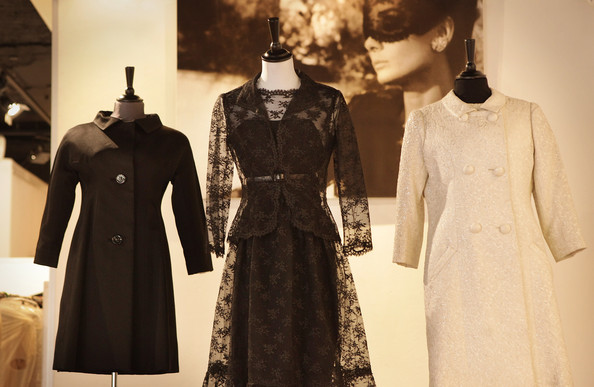
The clothes worn by Audrey Hepburn in the many movies she made are auctioned of through the years, like when Kerry Taylor previewed her Audrey Hepburn auction in Paris, 2,000 people showed up, including Hubert de Givenchy, who’d designed most of the dresses on display. Taylor introduced a little crowd control for Monday’s London preview—you had to buy a £10 catalog before you got in the door—but if the turnout was substantially smaller, it was just as avid. No surprises there: Given Hepburn’s unimpeachable style icon status.

.

Book

Book cocer

Vogue on  Hubert de Givenchy

The fashions of handsome, aristocratic Hubert de Givenchy combined the traditions of haute couture creative, luxurious and perfectionist with a modern entrepreneurial sensibility. In a career spanning forty years he created the most glamorous of evening dresses, developed the influential ‘sack’ dress, pioneered the princess silhouette and fielded debonair daytime suits that have never gone out of fashion. He famously defined the sartorial image of Audrey Hepburn both on-screen and off creating the Sabrina neckline and the little black dress for Breakfast at Tiffany’s. A history of chic caught by leading photographers and illustrators, Vogue on Givenchy reveals what the magazine called his ‘stardust touch’.

 http://www.amazon.co.uk/Vogue-Hubert-De-Givenchy-Designers/dp/1849493138

.

audrey-hepburn

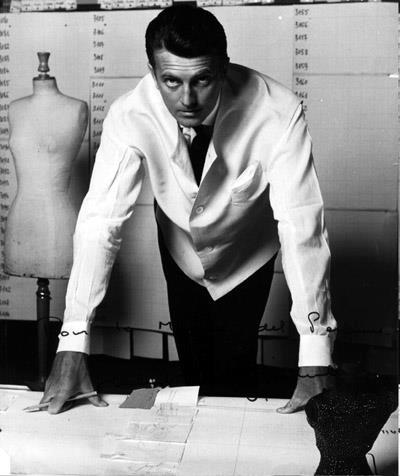
Hubert de Givenchy

.

.

information for this post : Wikipeia, Famous Women and Beauty & Vogue

Audrey Hepburn, Hubert de Givenchy & The Dress with its own Wikipedia Page…

6 Oct
Audrey Hepburn & Hubert de Givenchy
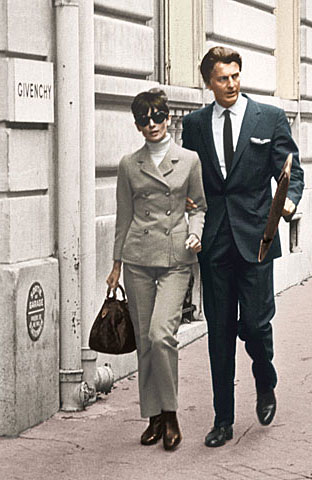
Audrey Hepburn & Hubert de Givenchy on the banks of Paris
.

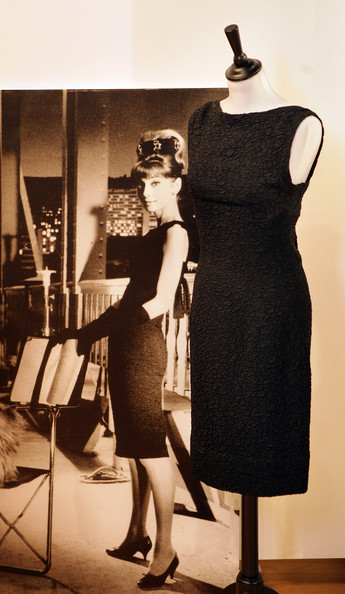
Audrey Hepburn dress from  Breakfast At Tiffany’s, 1961 , by Givenchy

Auction description:
An evening gown of black Italian satin designed by Hubert de Givenchy for Audrey Hepburn as Holly Golightly in the 1961 Paramount film Breakfast At Tiffany’s, the sleeveless, floor-length gown with fitted bodice embellished at the back with distinctive cut-out décolleté, the skirt slightly gathered at the waist and slit to the thigh on one side, labelled inside on the waistband Givenchy; accompanied by a pair of black elbow-length gloves [made later]; an envelope addressed in Givenchy’s hand to Monsieur Dominique Lapierre in Paris; and a the November 2006 U.S. edition of Harper’s Bazaar magazine, the cover featuring Natalie Portman modelling the dress in this lot (4)

Audrey Hepburn’s iconic black dress designed by Hubert de Givenchy from the much-loved 1961 classic film, Breakfast at Tiffany’s, sold for €692.390,- at Christie’s South Kensington in the Film and Entertainment Sale on 5 December 2006.
The price establishes a new world auction record for a dress made for a film.

natalie portman in Harper's Bazaar

original Givenchy dress

The sale price was estimated by the auction house to have ended somewhere between £50,000 and £70,000, but the final price was  €692.390,- ($923,187). The money raised in the auction of the black dress ended in helping the poor people of Calcutta to build a school. It so happened that Givenchy, the designer of the dress, had donated the dress to Dominique Lapierre, the author of the book City of Joy, and his wife for raising funds for the charity. When they witnessed such a frenzied auction, the funds raised so astonished Lapierre that he made a very appropriate observation: “I’m absolutely dumbfounded to believe that a piece of cloth which belonged to such a magical actress will now enable me to buy bricks and cement to put the most destitute children in the world into schools.” Sarah Hodgson, a film specialist of Christie’s said, “This is one of the most famous black dresses in the world—an iconic piece of cinematic history—and we are glad it fetched a historic price.”

The little black dress attained such iconic fame and status that it became an integral part of a woman’s wardrobe. Givenchy not only chose the dress for the character in the film, but also added the right accessories to match the long gown in the form of a pearl choker of many strands, a foot long cigarette holder, a large black hat and opera gloves which not only “visually defined the character but indelibly linked Audrey with her”.

Breakfast at Tiffany's

Given her physical assets, she, along with her designer friend Givenchy created a dress to fit her role in the film of a waif. A well-chosen black silk dress with appropriate accessories hit the bull’s eye to bring out her effervescent personality to the fore; the dark oversized sunglasses completed the ensemble of the little black dress (LBD) which was called “the definitive LBD”. The dress, which outlined her lean shoulder blades, thus became the Hepburn style.

In a survey conducted in 2010 by LOVEFiLM, Hepburn’s little black dress was chosen as the best dress ever worn by a woman in a film. In this respect, Helen Cowley, publisher of LOVEFiLM, declared: “Audrey Hepburn has truly made that little black dress a fashion staple which has stood the test of time despite competition from some of the most stylish females around.”  Hepburn’s white dress and hat worn in My Fair Lady was voted sixth.

myfair3

.

Not the Original dress….

Why not the poster-picture of Audrey Hepburn wearing perhaps the most famous ‘little black dress’ of all time at the auction?

In 1961, Givenchy designed a little black dress for the opening scene of Blake Edwards’ romantic comedy, Breakfast at Tiffany’s, where Hepburn plays a leading role alongside actor George Peppard. Audrey took two copies of the dress back to Paramount, but the dresses, which revealed a considerable amount of Audrey’s leg, were not suitable for the movie and the lower half of the dress was redesigned by Edith Head. The original hand-stitched dress is currently in Givenchy’s private archive, whilst one copy Audrey took back to Paramount is on display at The Museum of Film in Madrid and the other was auctioned at Christie’s in December 2006. None of the actual dresses created by Givenchy were used in either the movie or the promotional photography. The movie poster was designed by artist Robert McGinnis and in Sam Wasson’s book, Fifth Avenue, 5am, he explains that the photos he based the poster on did not show any leg and he added the leg to make the poster more appealing. The actual dresses used in the movie, created by Edith Head, were destroyed by Head and Hepburn at Western Costume in California after shooting.

And the dress has its own Wikipedia page!

movie poster

284860_277080672405283_1171168838_n

Breakfast at Tiffany's

Breakfast at Tiffany's

Backstage at Breakfast at Tiffany's

.

More Audrey Hepburn in Breakfast in Tiffany’s

Audrey Hepburn

Audrey Hepburn

Audrey Hepburn

breakfast-at-tiffanys-8-520x335

.
.

Next week more Audrey Hepburn & Hubert de Givenchy

Audrey Hepburn

.

Dimitri from Paris fantastic ‘A very stylish Girl’ with Audrey Hepburn & George Peppard phrases from ‘Breakfast at Tiffany’s’ 

.

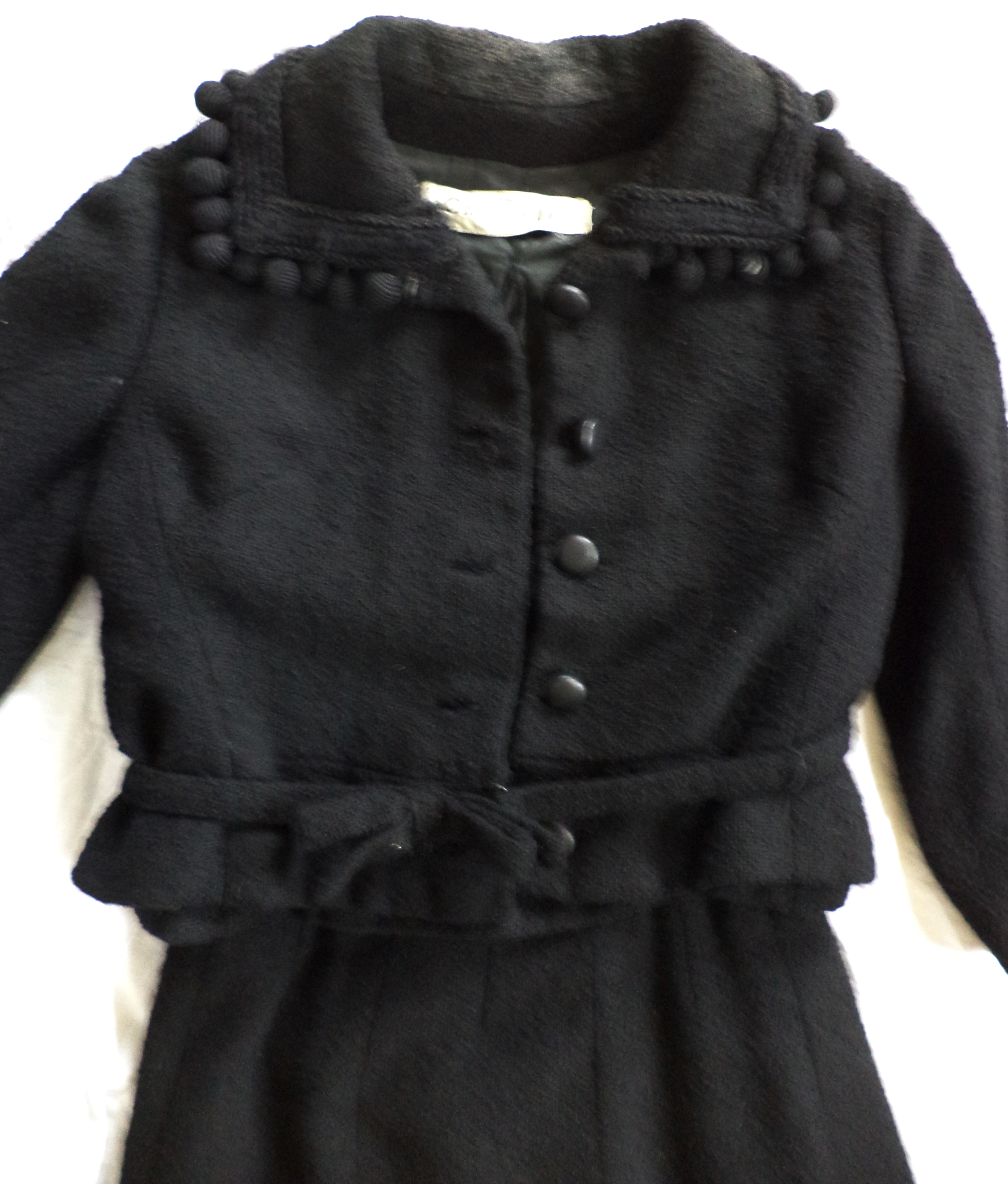
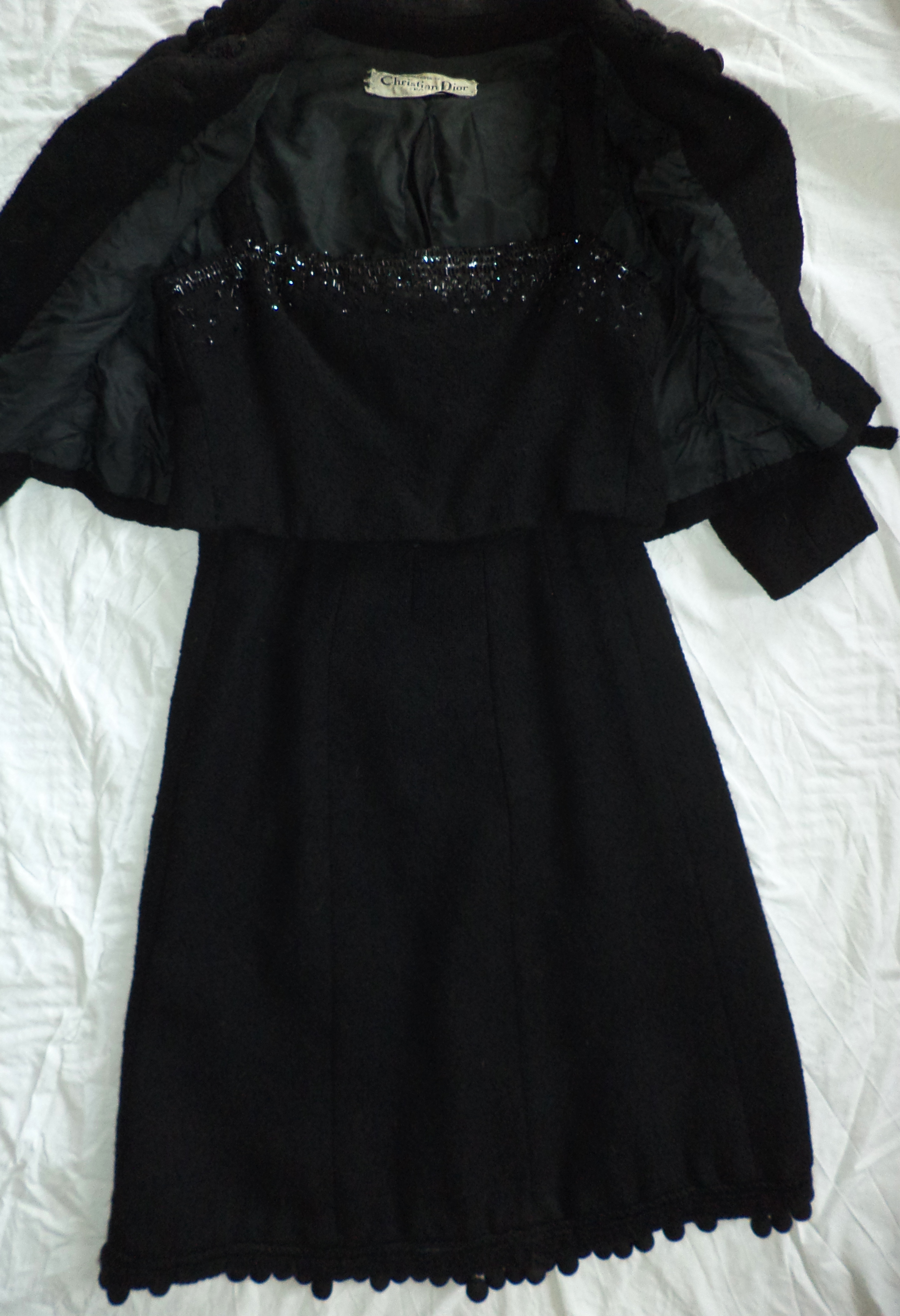
My Beautiful Vintage Christian Dior Dress Suit

22 Sep

Dior dress suit

I found this beautiful Christian Dior dress suit about 15 years ago in a second-hand shop (that’s how vintage shops were called at the time). The place belonged to an ex-girlfriend of my neighbour and he advised me to walk in there once in a while, because between all the regular second-hand stock, sometimes real treasures could be found. That’s how I came to know of the shop, which was situated in a neighbourhood you would normally never look for extraordinary second-hand finds.

I got to now the owner, who one day tipped me, a wardrobe of an old lady would arrive and probably it contained some great finds. Being a collector of vintage clothes, shoes and handbags,  I got really excited with the prospect.

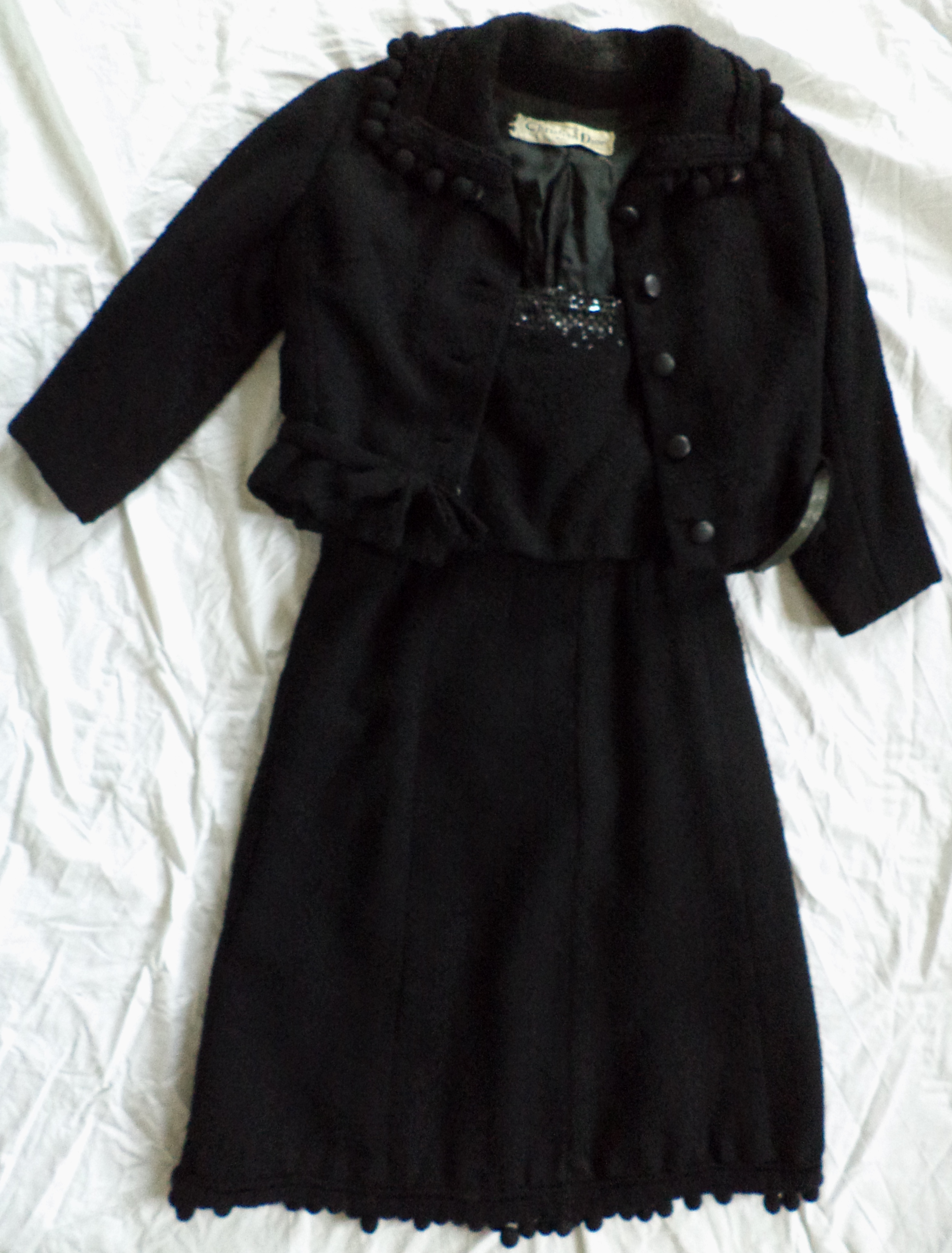
That day I walked in and immediately spotted the Christian Dior dress suit, which was hanging behind the counter. I didn’t want to seem to eager, so I walked around the shop, looking for other beautiful things, but nothing could beat the Dior suit. I went to the owner and informed about the price of the suit, but of course she already had noticed I my excitement ( I am the worst actor in the world) about the suit and had upgraded the price to a number she had never asked for a garment in her shop before. But I had fallen in love with the suit, which was made out from  black bouclé fabric and didn’t even try to negotiate about the price.

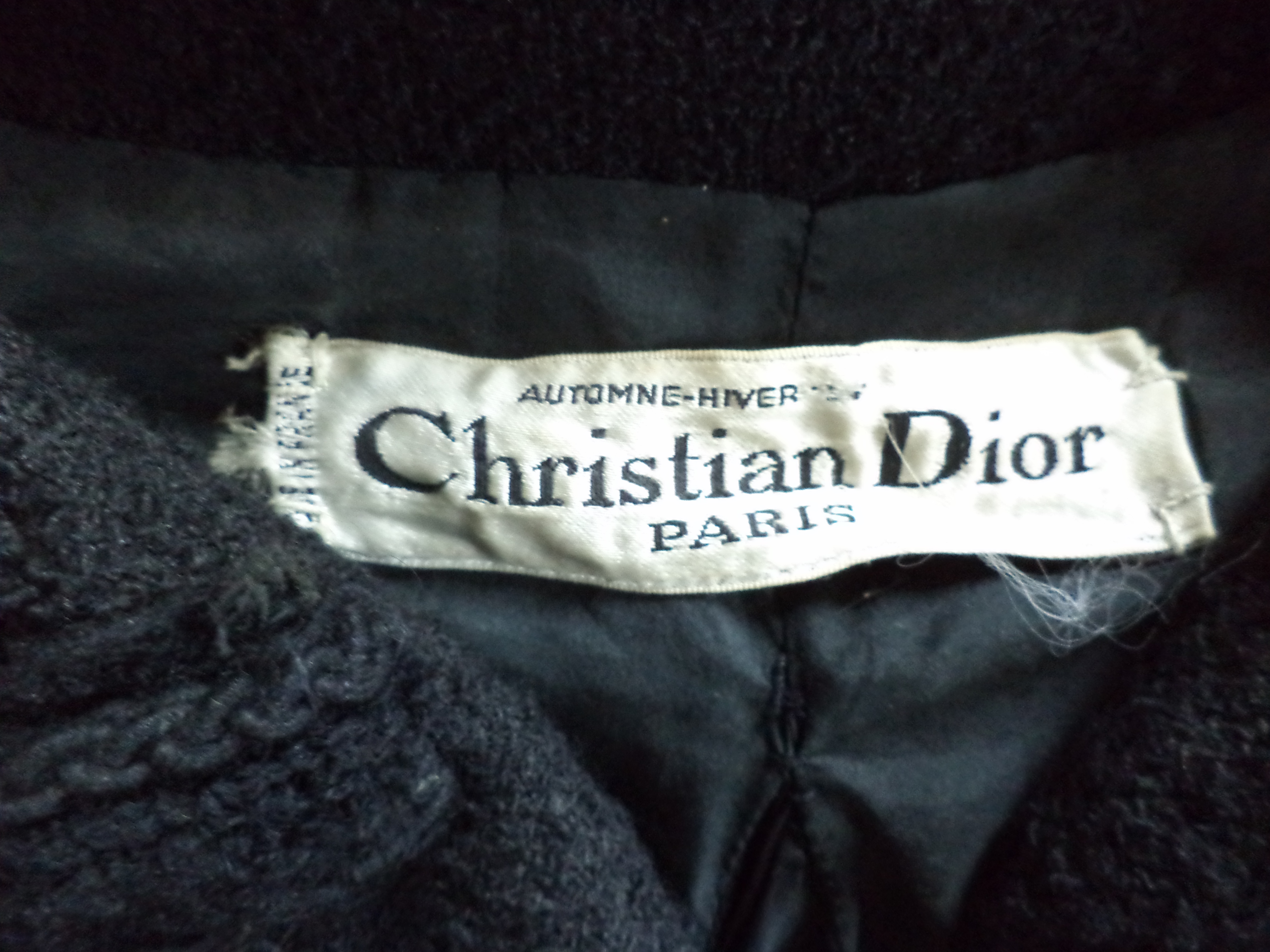
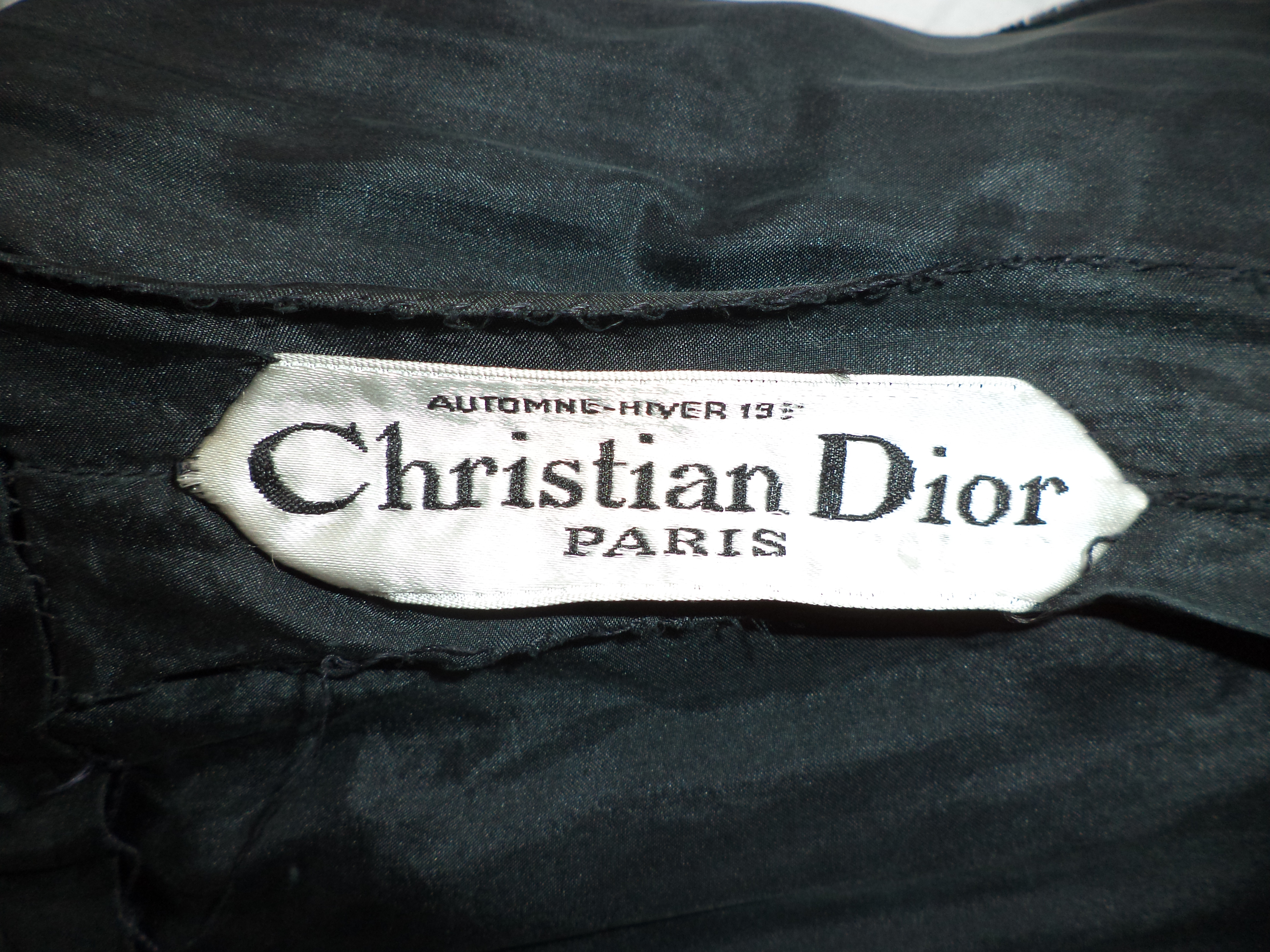
That is how I got to own the suit and for all these years I have taken good care of it. Because Christian Dior was the first one to number his garments, I knew I could find out more about the sui;, the year it was made (somewhere in the 1940ties?) and maybe even if it was made to order for a certain person. I didn’t do anything about this, till about a month ago. I emailed to Dior Paris about the suit and I was advised to photograph it from every side and send these pictures, together with a letter with all possible information about it, to Dior Heritage.

This week I got an email from Dior Heritage, to thank me for the photographs  and if I was willing to consider selling the suit to Dior. I haven’t thought about selling it before, but the idea of the suit returning to Dior after all these years seems very appealing to me, even romantic……

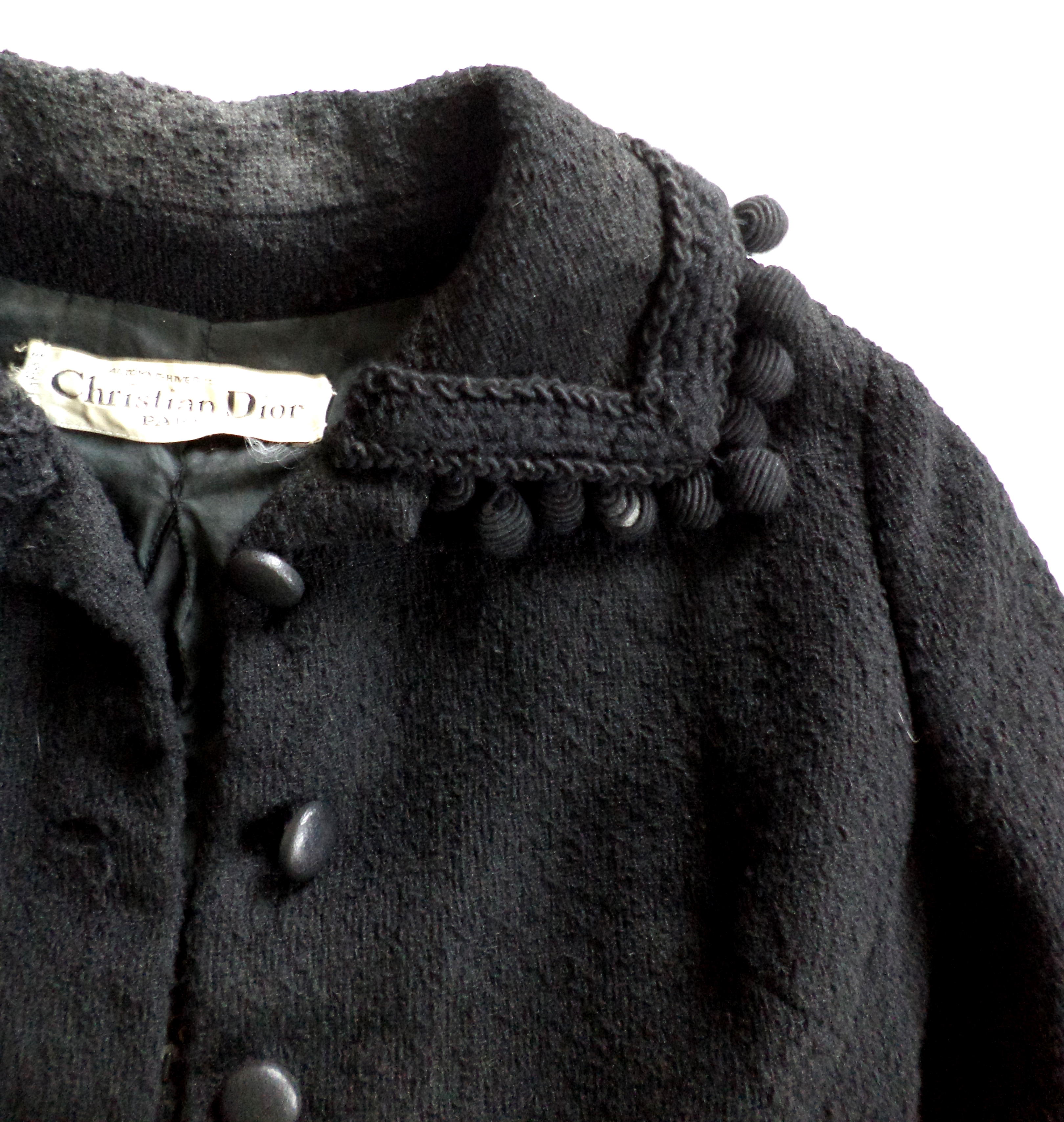
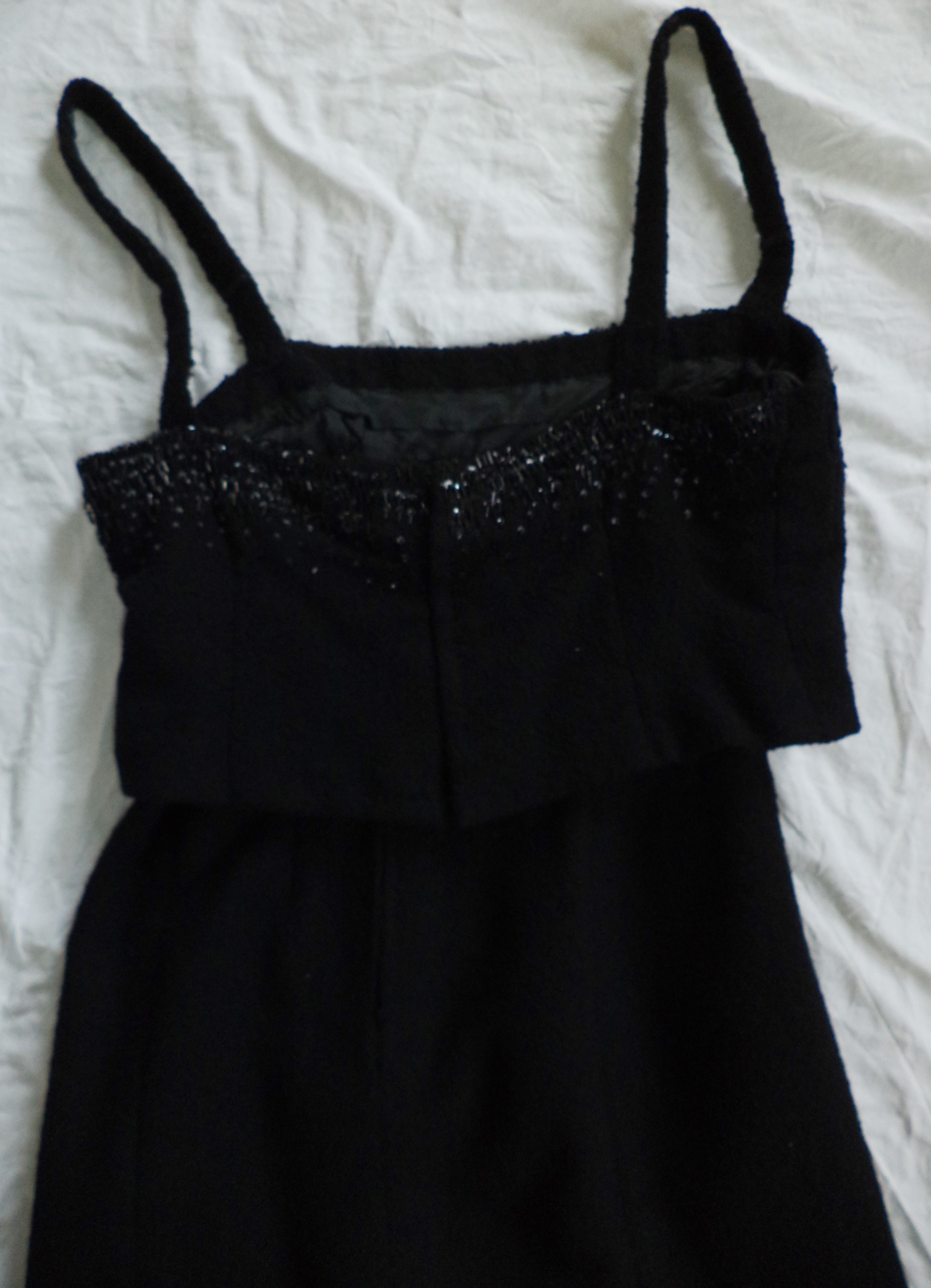
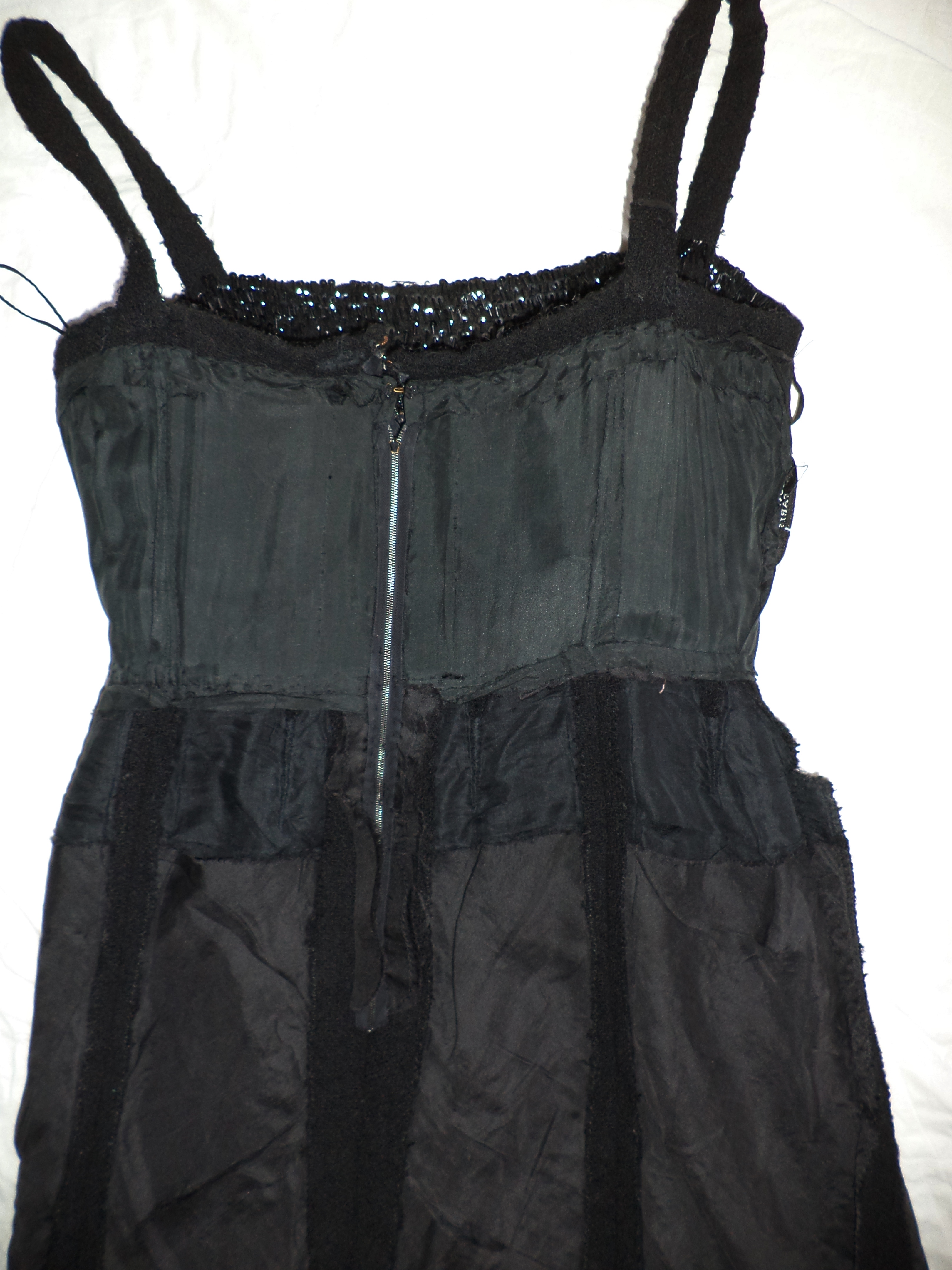
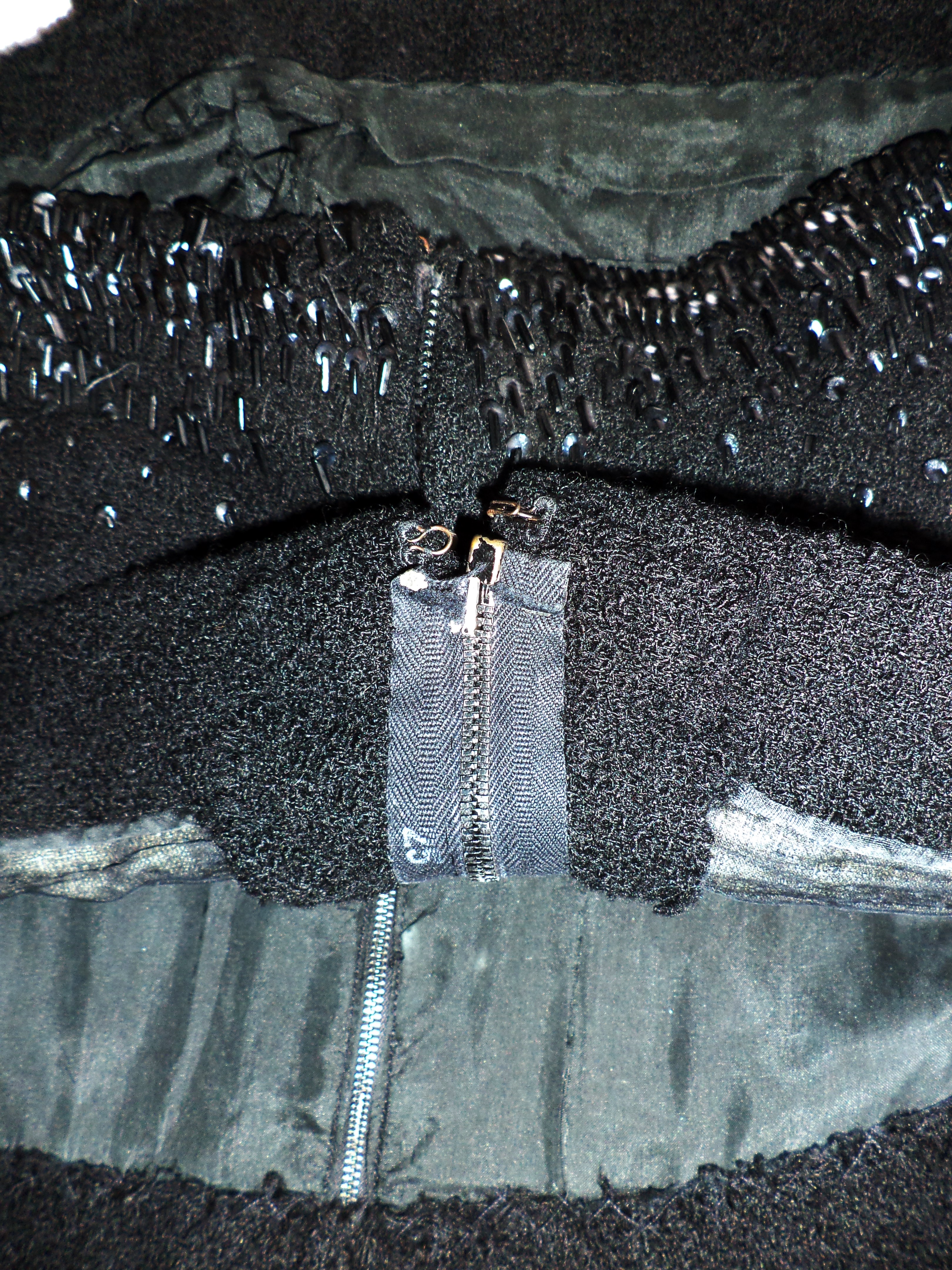
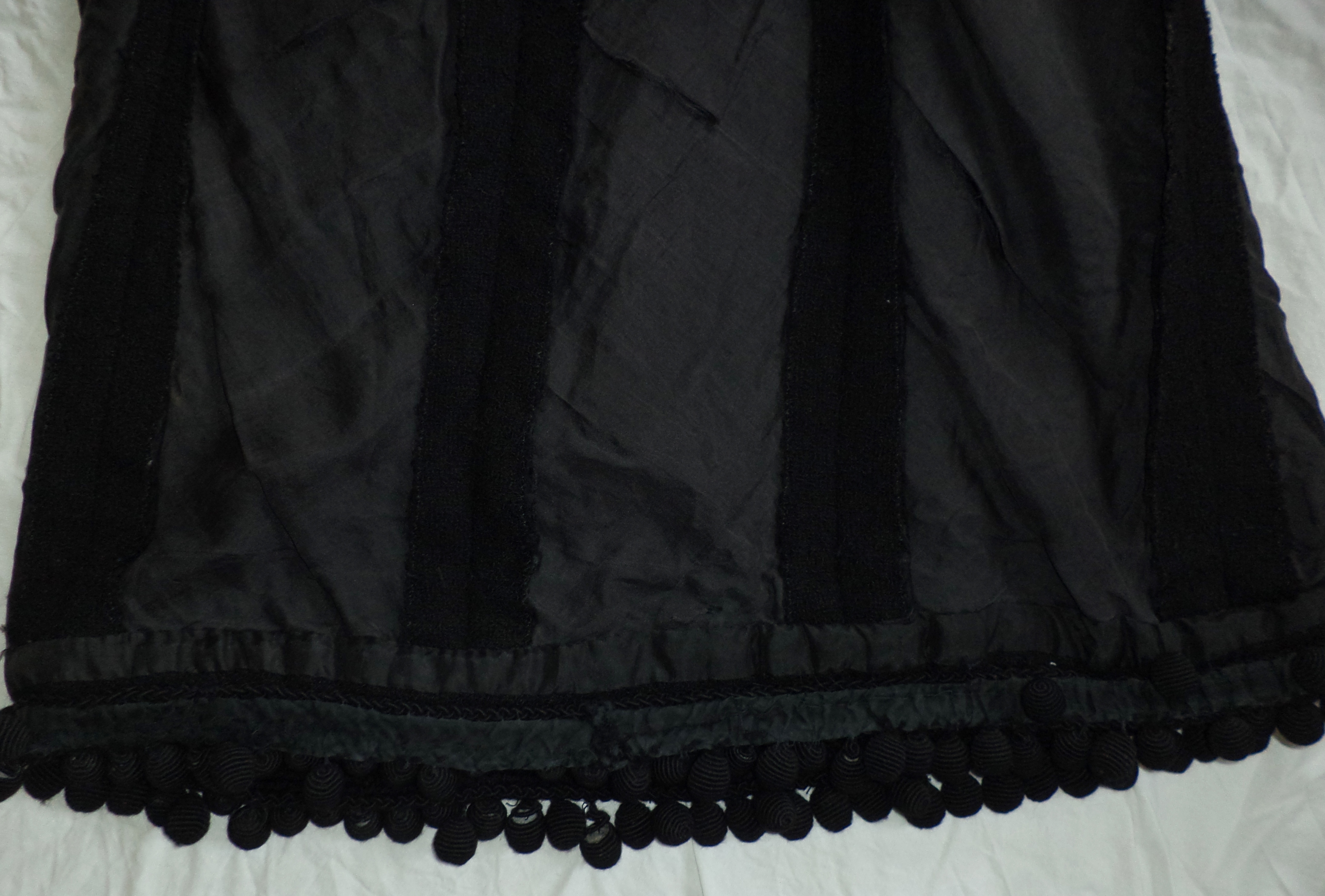
I have been able to study the suit and I want to share the pictures, so others can also see how it was made.

DSC00405

The label in the back of the jacket. The number in the label is quiet faded:  30442

???????????????????????????????

Top front of the jacket with close look on the finishing work of the collar.

???????????????????????????????

The jacket has a ‘fake’ bow belt, which closes with a hook-and-eye underneath the bow

???????????????????????????????

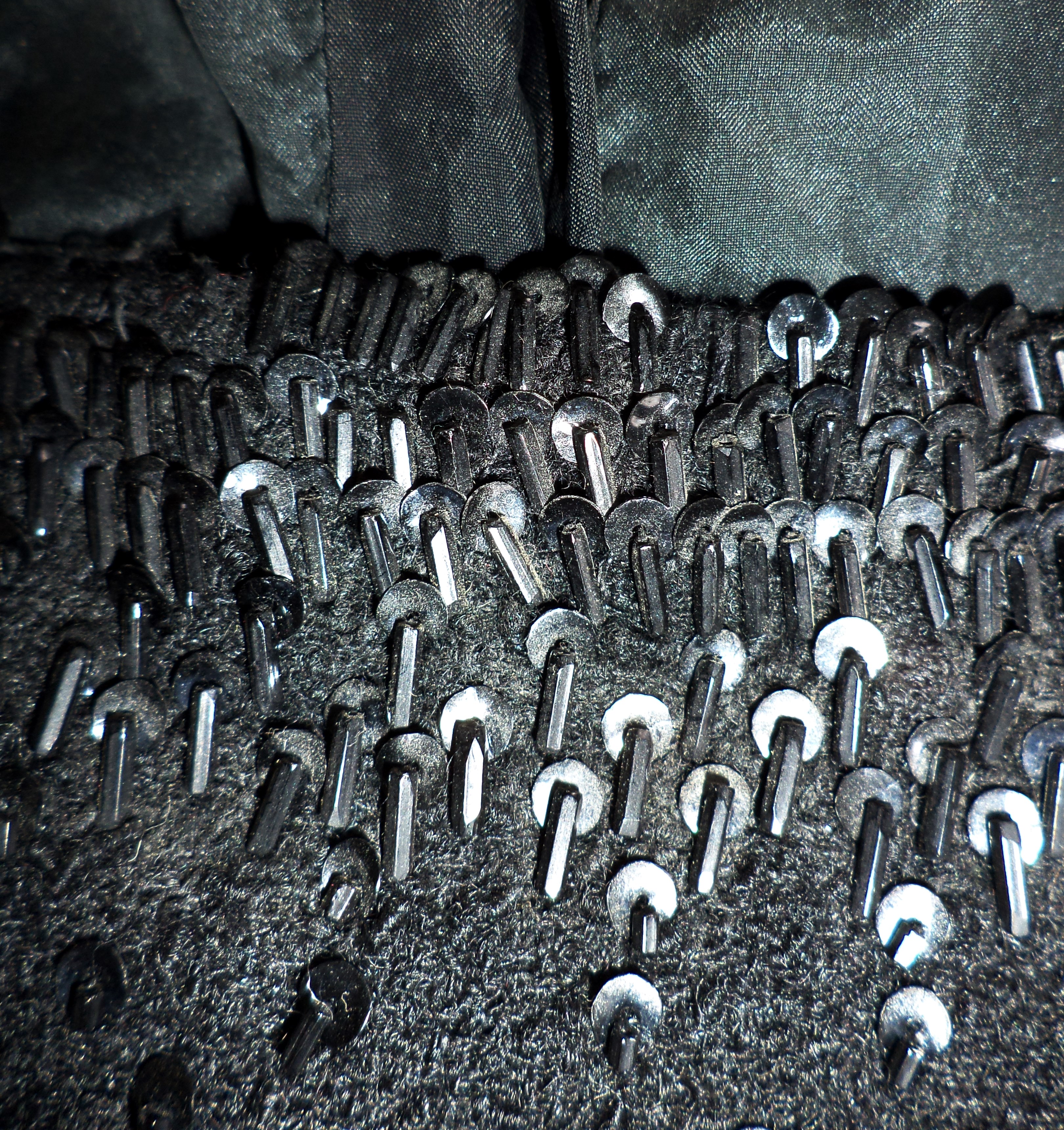
The jacket open showing the full front of the dress, with beads and sequences on the top

???????????????????????????????

Close-up beads and sequences work

???????????????????????????????

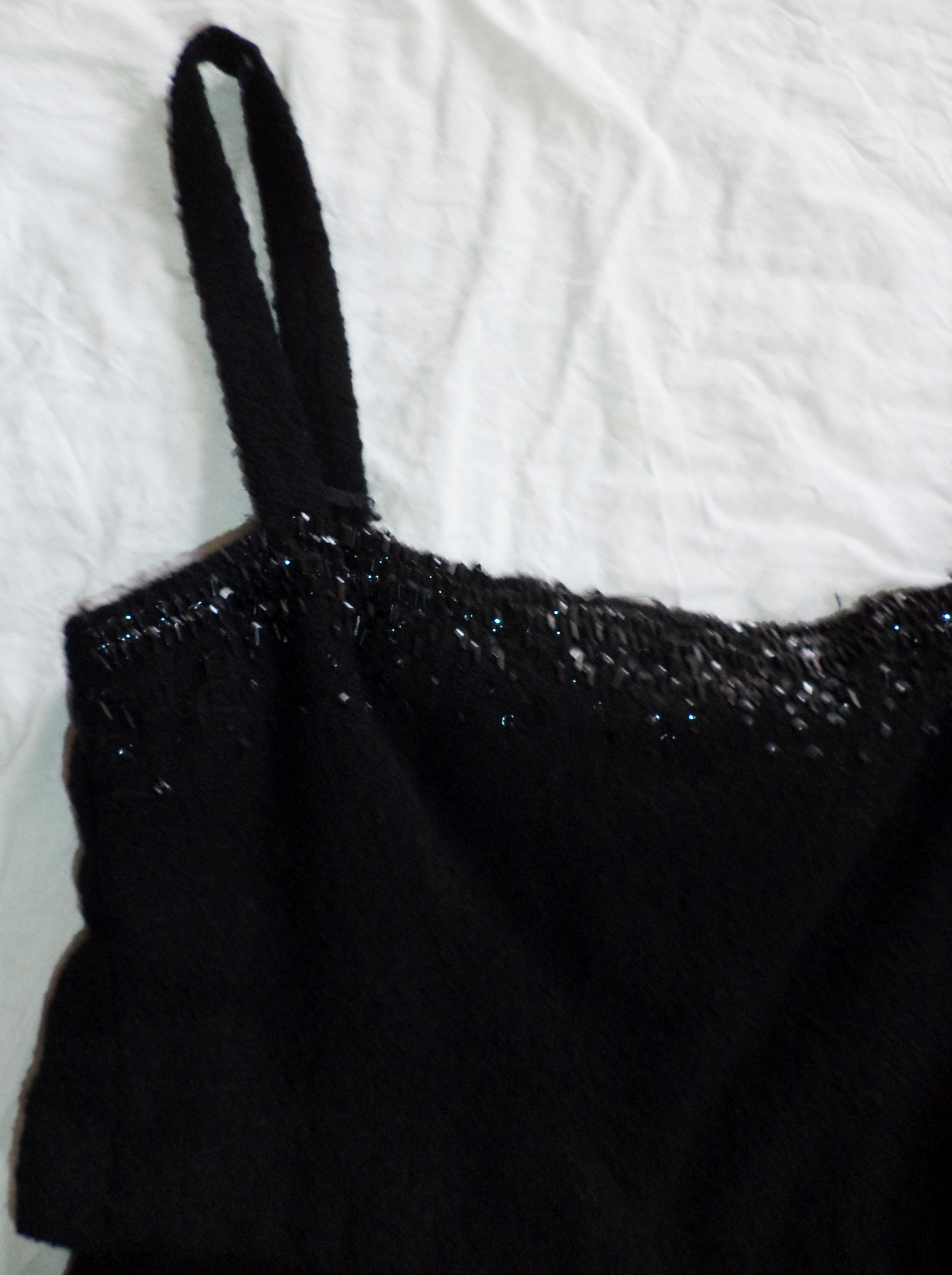
Top front of the dress

??????????????????????????????? Back of the dress, which shows the dress looks like a two-piece, but it is one piece!

???????????????????????????????

The dress inside-out. the lining of the top is made from silk fabric

???????????????????????????????

The dress has two zippers in the back; one trough the silk lining+skirt and one in the beaded top which can open completely from top to bottom and has an extra hook-and-eye to keep it perfectly closed.

???????????????????????????????

The bottom of the inside out dress, with extra wide seams (in case it has be be made bigger)

DSC00431

The label inside the dress

.